How expectations shape natural results in aesthetics


TL;DR:

  • Satisfaction in aesthetics depends more on aligning expectations with realistic outcomes than on the treatment itself.
  • Clear, honest communication about achievable results and gradual improvements is essential for genuine satisfaction.

A technically flawless treatment can still leave you disappointed. That might sound counterintuitive, but research consistently confirms it: satisfaction in aesthetics depends less on what happens in the treatment room and more on how well your expectations align with what is actually achievable. Whether you are considering injectables, skin resurfacing, or any other non-surgical enhancement, the quality of your experience begins long before any treatment starts. Understanding how expectations work, and how to set them well, is the clearest path to results that feel genuinely satisfying.

Table of Contents

Key Takeaways

Point Details
Expectations change perception How you anticipate results directly shapes your experience and satisfaction after aesthetic treatments.
Transparent conversations matter Open, realistic discussions with your provider boost satisfaction and reduce disappointment.
Gradual enhancements deliver natural results Natural-looking outcomes come from tiered, informed approaches—never overnight transformations.
Align goals to outcomes Clarifying what is achievable ensures your results match your vision and needs.

How expectations shape your aesthetic experience

Your brain is not a passive observer. It is constantly making predictions about what you are about to feel, see, and experience. This process, known as predictive processing, means that your nervous system compares incoming information against what it expected to receive. When the two align, or when reality slightly exceeds the prediction, you feel satisfied. When there is a significant mismatch in either direction, the experience feels off.

In aesthetics, this matters enormously. Research published in Scientific Reports confirms that aesthetic pleasure arises from resolved uncertainty when sensory input matches prior predictions within an optimal unpredictability range. Too much surprise feels unsettling. Too little feels flat. The sweet spot is a result that feels just a little better than you hoped, not dramatically different from your starting point.

What makes this even more significant is that expectations do not just color how you interpret results after the fact. They actively change your experience in real time. A separate fMRI cross-over placebo study found that expectations causally shift subjective experience and emotion, even when the treatment itself is inert. Your top-down cognitive resources, meaning your beliefs, mental framing, and prior knowledge, shape the physical and emotional response you have. This is not a minor effect. It is central to how aesthetic satisfaction works.

This is also why the impact on confidence from any treatment is never purely about the physical change. It is about whether the change matches what you believed was possible and what you hoped to feel.

Key ways expectations influence your aesthetic experience:

  • They set the emotional baseline against which results are measured
  • They influence how you perceive subtle changes in the mirror over time
  • They shape whether you feel supported or unsettled during recovery
  • They determine whether you communicate concerns to your provider or stay silent
  • They affect your willingness to follow aftercare instructions consistently

“Results that read as rested begin with expectations that are grounded in reality. When you understand what a treatment can and cannot do, the outcome feels earned, not accidental.”

Pro Tip: Before any treatment, write down two or three specific things you hope to feel or see. Share these with your provider. Concrete goals are far easier to align with achievable outcomes than vague wishes like “look younger.”

Establishing this science-based foundation allows us to see why real-world satisfaction depends so much on pre-treatment expectation-setting. The conversation before treatment is not a formality. It is part of the treatment itself.
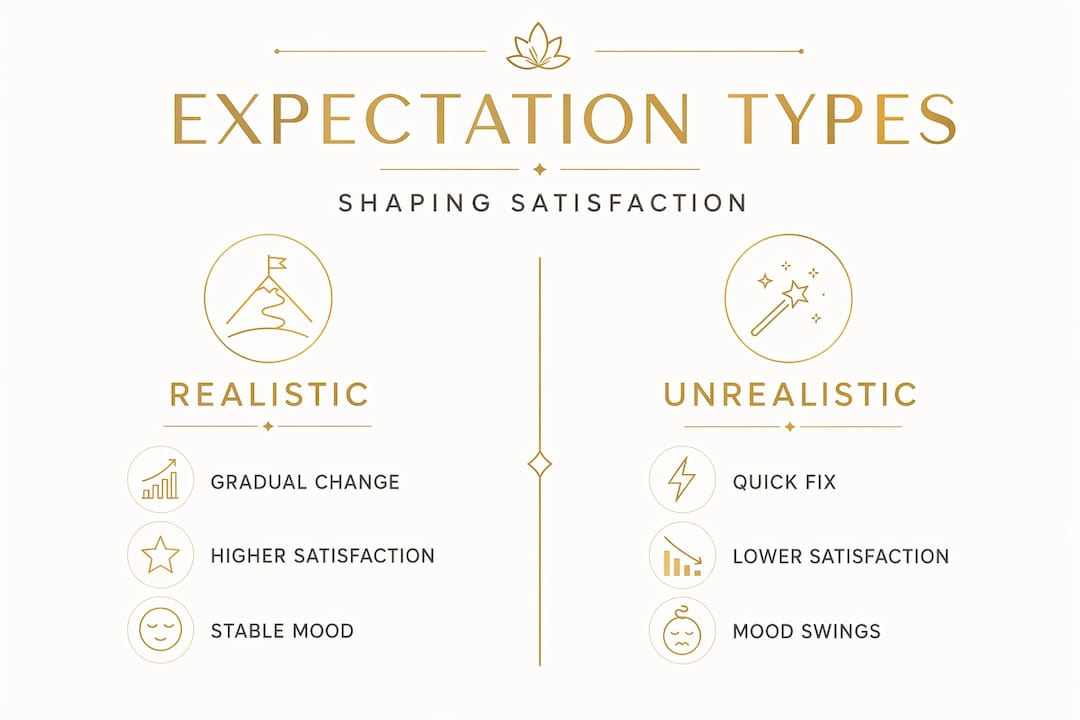
Infographic comparing realistic and unrealistic expectations

Expectation type Likely emotional outcome Satisfaction risk
Realistic, gradual improvement Calm, supported, pleased Low
Vague or undefined Uncertain, anxious post-treatment Moderate
Dramatic or overnight change Disappointed, critical of results High
Informed and tiered Confident, engaged, patient Very low

Why transparent expectation-setting matters

Even when a provider delivers technically excellent results, satisfaction can fall short if the client arrived with a different picture in mind. This gap is not about skill. It is about communication. Patient education in aesthetics is the bridge between what is possible and what feels meaningful to you.

A prospective multicenter study found that satisfaction links to preoperative information quality and psychological factors related to how patients evaluate their own appearance. In plain terms: how well you are counseled before treatment meaningfully shifts how satisfied you feel after it. This holds true across surgical and non-surgical settings.

Transparent expectation-setting involves more than a quick overview of the procedure. It means walking through what the result will look like at one week, one month, and three months. It means discussing what the treatment cannot address, not just what it can. It means planning consultations that are unhurried and genuinely educational, not a sales conversation.

Clinic guidance from experienced non-surgical providers confirms that transparent expectation-setting around realism, gradual results, and timelines is the primary mechanism for achieving natural outcomes and reducing disappointment. The goal is not to lower your excitement. It is to channel it toward what is genuinely achievable.

Steps for transparent expectation-setting before any non-surgical treatment:

  1. Ask your provider to describe the result in specific, observable terms
  2. Request a realistic timeline for when you will see changes
  3. Ask what the treatment cannot address, not just what it can
  4. Discuss how many sessions may be needed for your specific goal
  5. Confirm what normal side effects look like and how long they last
  6. Ask whether your goals align with your current skin health and anatomy

Setting clear goals before your appointment gives your provider the information they need to be honest with you. Vague goals make honest counseling harder for everyone.

Pro Tip: Ask your provider directly: “What is one thing I might be hoping for that this treatment cannot deliver?” A confident, trustworthy provider will answer that question clearly and without hesitation.

Comparison of realistic vs. unrealistic expectation scenarios:

Scenario Expectation Outcome Satisfaction
First-time filler client Subtle volume restoration Gradual, natural improvement High
Client expecting “erased” lines Complete elimination of deep lines Softening, not removal Low
Informed skincare client Gradual texture improvement over sessions Visible improvement at 6 weeks High
Client comparing to filtered photos Match a heavily edited image Natural, believable result Low

Edge-case nuances: Expectations, satisfaction, and natural results

The most overlooked reality in aesthetics is this: you can have a technically perfect treatment and still feel let down. This is not rare. It is one of the most common patterns seen in real-world clinical settings.

Research from a multicenter surgical cohort confirms that unfulfilled expectations lower satisfaction even when technical delivery is adequate. The variables that drive this are psychological and informational, not clinical. Satisfaction, in these cases, is tied to whether the client felt heard, informed, and prepared, not just whether the procedure went well.

Woman quietly reviewing post-treatment results at home

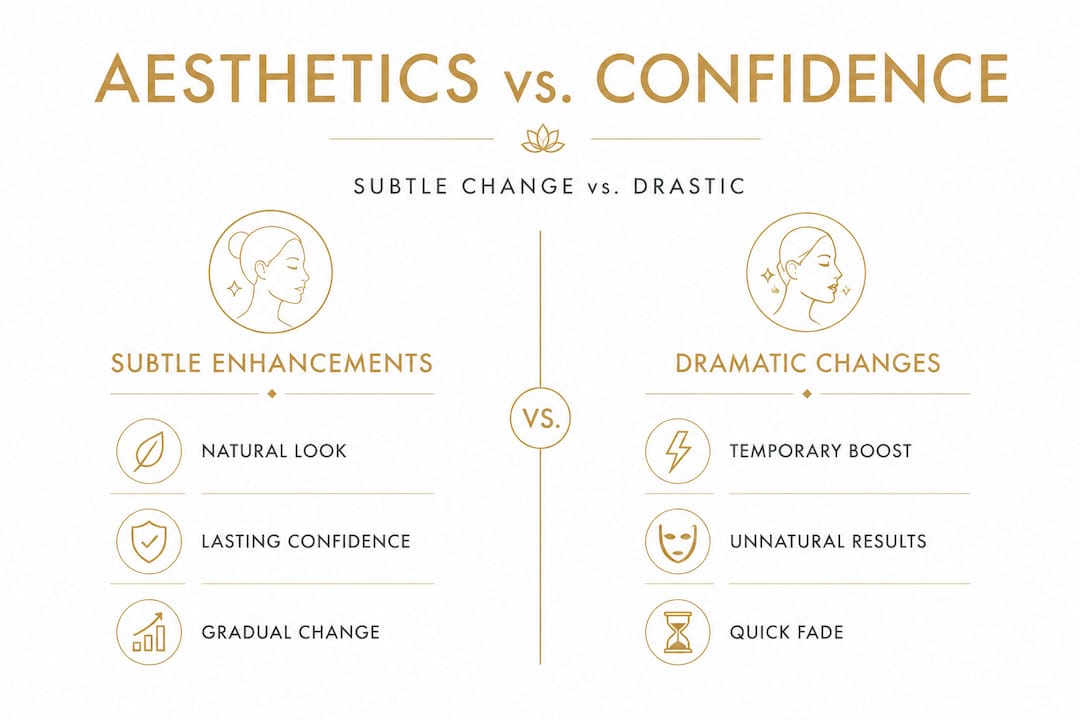
Perfectionistic expectations are a particular risk. When someone enters treatment hoping for a flawless, overnight transformation, no result will feel adequate. The standard they are measuring against is not a real person’s face. It is a filtered image, a memory of youth, or an idealized version of themselves that no treatment can reliably reproduce. This is where the subtle enhancements for lasting confidence approach becomes genuinely protective. Gradual, believable changes build confidence over time. Dramatic changes often create new anxieties.

Common mismatches between expectation and outcome:

  • Expecting one session to resolve a concern that developed over years
  • Believing injectables will replicate the look of a surgical procedure
  • Assuming results will be permanent after a single treatment
  • Expecting zero downtime and zero visible change during recovery
  • Comparing your result to someone else’s face rather than your own baseline

The average satisfaction rate in real-world aesthetic cohorts sits around 69%, and that number is strongly shaped by these invisible variables. Not by technique. Not by product quality. By whether the client’s internal picture of success matched what was actually possible.

This is also why avoiding quick fixes is not just a safety recommendation. It is a satisfaction strategy. Quick fixes invite unrealistic timelines and dramatic expectations. Measured, planned treatment respects both your anatomy and your psychology.

Practical steps: Setting realistic expectations for natural enhancements

Moving from theory to practice, here is what thoughtful expectation management actually looks like before, during, and after a non-surgical treatment.

Clinic guidance consistently recommends gradual interventions over multiple sessions with transparent communication about what is achievable. The goal is not to erase every line or turn back the clock dramatically. It is to enhance your natural features in a way that looks believable and feels supported.

Pre-treatment checklist for realistic expectations:

  • Identify one to three specific, observable goals
  • Research what the treatment typically achieves, not what filters suggest
  • Bring reference photos that reflect realistic, natural results
  • Ask about the full treatment plan, not just the first session
  • Confirm your provider’s approach to conservative, gradual enhancement
  • Understand the recovery window and what it will look like day by day

Numbered steps for the expectation-setting process:

  1. Start with a thorough consultation, not a rushed intake
  2. Share your goals and ask your provider to reflect them back in realistic terms
  3. Review before-and-after examples from real clients with similar anatomy
  4. Discuss the timeline for results, including when you will see peak effect
  5. Agree on a follow-up appointment to assess and adjust
  6. Document your starting point with photos so progress is measurable

For clients exploring at-home supplementary care, choosing microcurrent facial devices thoughtfully can support your in-clinic results, but the same expectation principles apply. Understand what the device can and cannot do before you invest.

Pro Tip: Ask your provider for a personalized roadmap that includes expected timelines, likely outcomes at each stage, and how often you will need sessions to maintain results. A written plan gives you something concrete to return to when you are evaluating your progress.

Conservative treatments for natural results are not about doing less for the sake of it. They are about doing the right amount, at the right pace, with the right information. That combination produces results that feel genuinely yours.

Our take: Why expectation management is the real secret to natural results

Here is what most aesthetic conversations miss: the gap between a good result and a satisfying one is almost never about technique. It is about the psychological anchor the client brought into the room.

We have seen this consistently. A client leaves with beautifully placed filler, subtle and natural, and feels disappointed because she expected to look like she did at 28. Another client has a nearly identical result and feels genuinely renewed because she understood she was supporting her face, not rewinding it. Same treatment. Same skill. Completely different experiences. The difference was the expectation each person carried in.

This is why we believe expectation management is not a soft add-on to aesthetic care. It is the foundation of it. The role of medical providers in this process is not just to deliver a technically sound treatment. It is to help you arrive at a realistic, grounded picture of what success looks like for your face, your timeline, and your goals.

Confidence and self-evaluation genuinely improve when expectations are aligned with achievable, gradual results. Not because the change is dramatic, but because it is believable. You recognize yourself. You look rested, not altered. That recognition is what builds lasting satisfaction.

The uncomfortable truth is that some clients are not ready for treatment. Not because their concern is not valid, but because their expectation is not yet calibrated to what is safely and naturally achievable. The most responsible thing a provider can do in that moment is slow down, educate, and revisit.

Pro Tip: Revisit your goals at every stage of the process. What you hoped for at the start may shift as you see gradual changes. Ongoing, honest feedback from your provider is more valuable than a single before-and-after comparison.

Ready to experience natural results? Start with expert guidance in Raleigh

Understanding the science of expectations is the first step. Acting on it with the right support is what makes the difference.
https://raleigh.theaestheticsloungeandspa.com

At The Aesthetics Lounge and Spa Raleigh, every appointment begins with a calm, unhurried conversation about your goals, your anatomy, and what is genuinely achievable for you. We do not start with products. We start with a plan. Explore our full range of aesthetic treatments in Raleigh designed for gradual, natural enhancement, and learn more about the top non-surgical treatments we offer for clients who want results that still look like themselves. When you are ready to take the first step, we are here to guide it thoughtfully, with transparent information and planning for fewer side effects built into every stage of your care.

Frequently asked questions

How can I make sure my expectations are realistic before a non-surgical aesthetic treatment?

Discuss your goals openly with your provider and ask for detailed information about achievable results, timelines, and potential side effects. Transparent expectation-setting is the most reliable way to reduce disappointment and achieve natural outcomes.

What is the most common reason for disappointment after a cosmetic procedure?

Most dissatisfaction comes from mismatched or poorly managed expectations, not technical errors. Research confirms that satisfaction ties to counseling quality and the psychological variables each client brings to the experience.

Can my mood or confidence actually change based on what I expect from a treatment?

Yes, and the effect is measurable. Studies show that expectations causally shift emotion and subjective experience even when the treatment itself contains no active ingredient.

What should I ask during my consultation to avoid unrealistic expectations?

Request a step-by-step roadmap covering what is achievable, how gradual the results will be, potential side effects, and what the treatment cannot address. Gradual interventions and transparency about realistic outcomes are the standard at reputable clinics.


How education shapes aesthetic choices and safer results


TL;DR:

  • Aesthetic decisions are significantly influenced by a patient’s education and health literacy, affecting understanding of risks and realistic outcomes. Higher literacy levels lead to more active engagement and better-informed choices, while effective communication and trust-focused relationships improve safety and satisfaction. Healthcare providers play a crucial role by tailoring education and fostering open, clear dialogue to ensure truly informed, confident aesthetic decisions.

Not everyone walks into an aesthetic consultation with the same knowledge, and that gap matters more than most people realize. Your educational background and health literacy quietly influence how you assess risk, interpret treatment options, and ultimately decide what feels right for your face. This isn’t about intelligence. It’s about how well the information you receive actually lands. Understanding this connection is the first step toward making aesthetic choices that are genuinely informed, genuinely safe, and genuinely yours.

Table of Contents

Key Takeaways

Point Details
Education boosts safety Higher health literacy improves aesthetic outcomes and safer choices.
Communication is essential Effective provider-patient communication matters as much as formal education for achieving natural results.
Tailored guidance reduces risk Education strategies like teach-back help avoid misunderstandings and minimize complications.
Check provider credentials Always verify the qualifications of anyone performing your aesthetic enhancements.

Why education matters in aesthetic decisions

Most people assume aesthetic choices come down to personal taste. You see something you like, you book an appointment, you move forward. But the reality is more layered than that. Your ability to understand risk, interpret consent forms, and evaluate provider recommendations is shaped significantly by your educational background and health literacy.

Higher education levels correlate with increased likelihood of undergoing facial aesthetic procedures. That’s a meaningful finding. It suggests that education doesn’t just influence what you choose, it influences whether you feel equipped to choose at all. Patients with stronger educational foundations tend to approach consultations with more specific questions, a clearer sense of their goals, and a more realistic understanding of what outcomes are achievable.

Hierarchy infographic linking education to safer outcomes

The concern, though, is what happens on the other side of that equation. Inadequate health literacy affects about 50% of plastic surgery patients, which means a significant portion of people seeking aesthetic care may struggle to fully understand what they’re consenting to. That’s not a small issue. Informed consent isn’t a signature on a form. It’s a genuine understanding of what’s being done, why, and what the realistic outcomes look like.

This is why patient education in aesthetics isn’t a bonus feature at a quality practice. It’s the foundation. And it’s why the role of medical providers extends well beyond the treatment room.

Here’s a quick look at how education level tends to shape the aesthetic decision process:

Factor Lower health literacy Higher health literacy
Risk interpretation Often misunderstood Generally accurate
Consent comprehension Frequently incomplete More thorough
Question-asking behavior Passive, less frequent Active, more specific
Outcome expectations Sometimes unrealistic Generally well-calibrated
Provider evaluation Based mostly on reputation Includes credentials and training

Key ways education shapes your aesthetic experience:

  • Risk awareness: Understanding what complications are possible and how likely they are
  • Consent quality: Genuinely grasping what you’re agreeing to, not just signing
  • Expectation setting: Knowing the difference between what’s achievable and what’s aspirational
  • Provider selection: Evaluating qualifications alongside reviews and social media presence
  • Follow-through: Understanding aftercare instructions and why they matter

The Raleigh demographic skews well-educated, which is encouraging. But even among highly educated patients, health-specific literacy can vary widely. A PhD in engineering doesn’t automatically translate to comfort reading a clinical risk disclosure. That’s why the conversation in the consultation room matters as much as the credentials on the wall.

Health literacy: The key to informed aesthetic choices

Health literacy is your ability to find, understand, and use health information to make decisions. Health numeracy is a subset of that: your ability to interpret numbers, percentages, and statistics in a medical context. Both matter enormously when you’re considering a non-surgical enhancement.

Postgraduate education is associated with improved health numeracy, which helps patients better interpret risks in procedures like breast augmentation and facial injectables. That means someone with advanced education is more likely to correctly understand what “a 2% complication rate” actually means in practical terms. They’re more likely to ask whether that statistic applies to their specific situation. They’re more likely to compare it to alternative options.

But here’s where it gets genuinely surprising. Even among educated patients, the format of information matters enormously. Low health literacy leads to misinterpretation of data formats: in one study, only 5.4% of patients correctly identified the safest implant option when data was presented in a standard statistical format. That’s not a failure of intelligence. That’s a failure of communication. And it’s a problem that falls squarely on the provider’s shoulders to solve.

Consider this scenario: a patient is told that a particular filler carries a “less than 1% risk of vascular occlusion.” Without context, that number is almost meaningless. Is that high? Low? How does it compare to other options? What does vascular occlusion actually feel like, and what happens if it occurs? A patient with strong health numeracy will ask those follow-up questions. A patient without it may nod and sign the form without truly understanding.

“The goal of patient education isn’t to overwhelm with data. It’s to ensure that when a patient says yes, they mean it fully, with clarity and confidence.”

Here’s a numbered breakdown of how higher health literacy actually changes the consultation experience:

  1. You interpret risk percentages accurately rather than defaulting to “it probably won’t happen to me”
  2. You ask clarifying questions when something in the consent form doesn’t make sense
  3. You evaluate before-and-after images critically rather than assuming they represent typical results
  4. You understand the difference between short-term and long-term outcomes and plan accordingly
  5. You recognize when a recommendation doesn’t align with your goals and feel confident saying so

This is why planning consultations for results requires more than a checklist. And it’s why knowing how to communicate your aesthetic goals clearly is a skill worth developing before you ever sit down with a provider.

A broader study on health literacy in plastic surgery reinforces that methods like teach-back, where a provider asks you to repeat information back in your own words, significantly improve comprehension and reduce misunderstandings.

Pro Tip: Before your next consultation, write down two or three questions where you want the answer explained without medical jargon. Asking your provider to “explain it like I’ve never heard of this before” is not a sign of weakness. It’s one of the smartest things you can do.

Beyond education: What really influences your aesthetic choices?

Here’s something that complicates the picture in an interesting way. While higher education increases the likelihood of seeking medically led procedures, it doesn’t actually determine which procedures you want. Research shows no significant association between education level and the specific types of cosmetic procedures requested. In other words, whether you want lip filler, a brow lift, or laser resurfacing has very little to do with how many degrees you hold.

That’s a meaningful distinction. Education shapes how you make decisions. It doesn’t determine what you want. Your aesthetic preferences are shaped by a much more personal mix of influences.

What actually drives the specific choices people make:

  • Social environment and peer influence: What you see normalized in your social circle carries significant weight
  • Media and social platforms: Filtered images and trending treatments shape what feels desirable
  • Provider trust: A warm, credible provider can influence your choices more than any brochure
  • Real-world results: Seeing a friend look naturally refreshed, not overdone, is often the most compelling factor
  • Personal milestones: Life events like a career change, a reunion, or a relationship shift often prompt aesthetic consideration
  • Emotional readiness: Sometimes the timing matters more than the information

The trust factor deserves particular attention. Many aesthetic patients lack knowledge of provider qualifications, prioritizing subjective factors like friendliness, office atmosphere, and word-of-mouth over verified credentials and training. That’s understandable. Warmth matters. But it shouldn’t replace due diligence.

Understanding the natural aesthetics benefits of a medically led approach helps you see why provider qualifications aren’t just a technicality. They’re the difference between results that look like you and results that don’t.

Pro Tip: Before booking any aesthetic treatment, verify your provider’s medical license and specific training in the procedure you’re considering. Most state medical boards have public lookup tools that take less than two minutes to use. Reputation is a starting point, not a finish line.

How tailored education improves safety and satisfaction

Knowing that education matters is one thing. Knowing how to use that understanding in a real appointment is another. The good news is that the burden of education doesn’t rest entirely on you. A skilled, ethical provider meets you where you are.

Patient education and health literacy are crucial for shared decision-making, informed consent, and realistic expectations in aesthetic medicine. The word “shared” is important here. It means the conversation flows both ways. You bring your goals and your questions. Your provider brings clinical knowledge and the responsibility to translate it clearly.

Shared decision making during medical appointment

Tailoring education to patient literacy levels via methodologies like teach-back and visual aids improves decision-making and reduces complications in aesthetic contexts. That’s not a theoretical benefit. It’s a measurable one.

Effective patient education methods used in quality aesthetic practices include:

  • Teach-back: You explain the procedure back to your provider in your own words, confirming real understanding rather than passive receipt of information
  • Visual aids: Anatomical diagrams, before-and-after photo reviews, and digital simulations that make abstract concepts concrete
  • Repeat sessions: A second consultation or follow-up call before treatment to revisit questions that arise after the first appointment
  • Written handouts and digital resources: Take-home materials that let you review information at your own pace, without the pressure of the appointment room
  • Paced disclosure: Releasing information in digestible stages rather than front-loading everything at once

“When a patient truly understands what they’re agreeing to, the entire experience changes. Anxiety decreases. Trust increases. And the results are better because expectations were set with clarity from the start.”

For those seeking safer, natural medical aesthetics, this kind of structured, patient-specific education isn’t optional. It’s what separates a refined outcome from a regrettable one. And it’s why medical expertise for results includes the ability to communicate as clearly as the ability to treat.

The overlooked truth: Education is powerful, but relationships matter most

Here’s something most guides on this topic won’t tell you. Education, yours and your provider’s, is necessary but not sufficient. The variable that actually determines whether you walk away feeling confident and supported is the quality of the relationship you build in that consultation room.

We’ve seen patients with impressive academic credentials leave appointments with completely unrealistic expectations, because they never felt comfortable asking the questions they actually had. And we’ve seen patients with minimal formal education make beautifully informed, measured decisions, because they found a provider who made them feel safe enough to speak honestly.

The research confirms what experience shows: safer results with medical-led care come from practices where communication is built into the process, not treated as an afterthought. A provider who checks your understanding, invites your questions, and slows down when something isn’t clear is worth more than any credential list.

What this means practically: don’t measure the quality of a consultation by how much information was delivered. Measure it by how much you understood, how comfortable you felt asking for clarification, and whether you left with a plan that genuinely reflected your goals. If a consultation felt rushed, or if you left with unanswered questions you were too uncertain to raise, that’s important information. It tells you something about whether that practice is truly built around your care.

Education opens the door. The relationship is what you walk through it with.

Explore medically led aesthetic options in Raleigh

Understanding how education and communication shape your aesthetic outcomes is the first step. The next is finding a practice where those principles are built into every appointment, not just described on a website.

https://raleigh.theaestheticsloungeandspa.com

At The Aesthetics Lounge and Spa Raleigh, every consultation is designed around clarity, not pressure. We plan first, educate always, and treat with precision. Whether you’re exploring medical-led aesthetics safer results for the first time or refining an existing approach, we meet you where you are and move at your pace. If you’re ready to choose your aesthetic treatment with genuine confidence, or simply want to explore medical aesthetics insights before committing to anything, we’re here for that conversation. Calm, informed, and entirely yours.

Frequently asked questions

Does having a higher education level guarantee better aesthetic results?

No. While higher education improves your ability to understand information, results depend equally on the quality of communication with your provider. Research confirms no significant association between education level and the specific procedures patients choose, which means the conversation in the room matters just as much as the knowledge you bring to it.

What is the most important question to ask my provider before a non-surgical enhancement?

Ask for risks and expected outcomes to be explained in plain, everyday language, and request clarification on anything that feels unclear. Shared decision-making and informed consent are ethical standards in aesthetic medicine, which means your provider is responsible for ensuring you genuinely understand, not just that you’ve been told.

Can patient education really reduce the risk of complications?

Yes. Teach-back and visual aids have been shown to reduce misunderstandings and complications in aesthetic contexts by ensuring patients genuinely comprehend what they’ve agreed to before treatment begins.

How do I know if my provider is medically qualified?

Check for a valid medical license, board certifications, and documented training specific to the procedure you’re considering. Studies show that many aesthetic patients lack knowledge of provider qualifications and prioritize subjective impressions over verified credentials, which is a gap worth closing before you book.

Top benefits of subtle aesthetics for natural results


TL;DR:

  • Subtle aesthetics focus on enhancing natural features with precise, restrained treatment approaches that support skin health and facial harmony. These minimally invasive options, like microneedling and gentle RF, offer gradual, lasting improvements with low downtime and minimal risk, fostering confidence through subtle, authentic results. A medically guided, personalized plan ensures safe, effective, and natural-looking rejuvenation tailored to individual skin types and goals.

The desire to look like yourself, only more rested, is real and increasingly common. More adults in North Raleigh are choosing aesthetic care that enhances without announcing itself, treatments that quietly support what’s already there rather than replace it with something unfamiliar. This shift isn’t about doing less. It’s about doing it right. Subtle aesthetics sit at the intersection of clinical precision and thoughtful restraint, offering meaningful improvements with lower risk and no jarring transformation. If you’ve been weighing your options carefully, this is what you need to know before your first consultation.

Table of Contents

Key Takeaways

Point Details
Natural enhancements Subtle treatments help you look refreshed, not overdone, by working with your natural features.
Short downtime Most options allow you to maintain your routine with minimal interruption.
Personalized choices Treatment plans adapt to your goals, skin type, and long-term health priorities.
Safer results Lower risk of dramatic changes or side effects with professional guidance.

What is subtle aesthetics? Core criteria and philosophy

With the desire for a refreshed appearance, it’s important to clarify what subtle aesthetics really mean and why this philosophy matters.

Subtle aesthetics is not simply about choosing smaller doses or cheaper treatments. It’s a guiding philosophy that places harmony above correction, and skin health above dramatic effect. The goal is always to support your natural proportions, not override them. That distinction changes everything about how a treatment is planned and delivered.

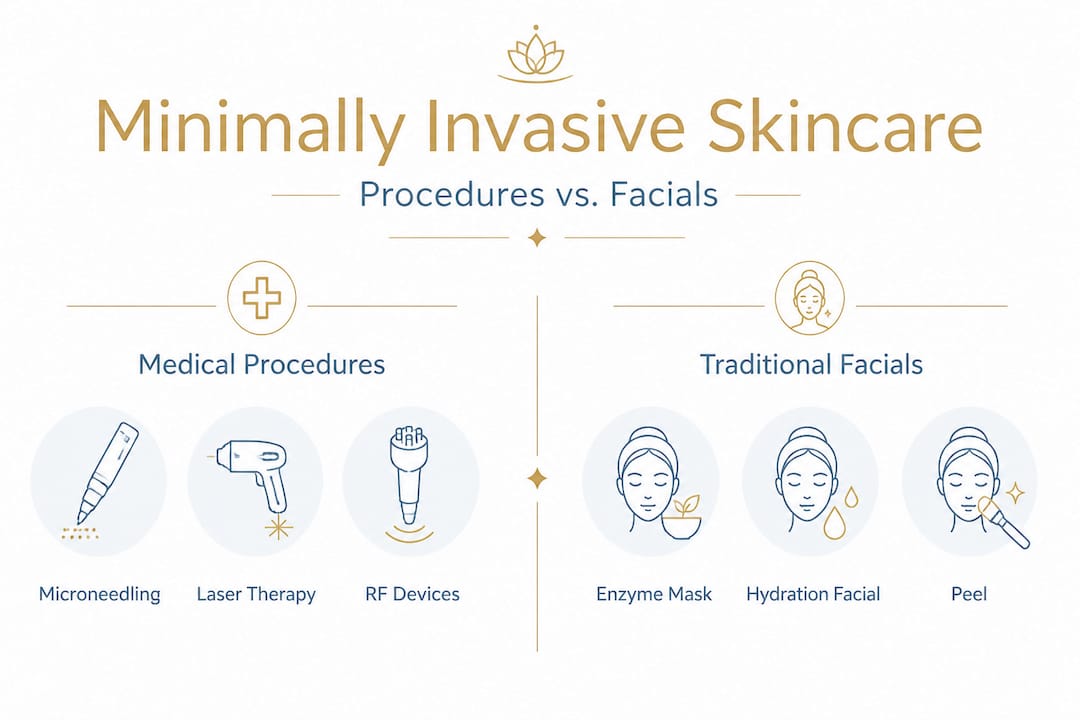
At its core, this approach relies on technologies that work with your body’s own repair systems. Treatments like microneedling, gentle fractional lasers, radiofrequency (RF) skin tightening, and thoughtfully placed injectables are the tools most aligned with this philosophy. They’re designed to stimulate rather than ablate, to soften rather than freeze, and to refine rather than reconstruct. If you’re new to this framework, a conservative aesthetics primer can ground you in the key principles before your first visit.

Key principles of subtle aesthetics include:

  • Prioritizing natural facial proportion and movement
  • Selecting low-downtime treatments appropriate to skin type and tone
  • Building results gradually across multiple sessions
  • Choosing practitioners who plan before they treat
  • Evaluating both short-term outcomes and long-term skin health

The medical spa benefits of a medically led environment matter here too. When a licensed provider guides your plan, the risk calculus is different than at a general aesthetics studio.

Research supports the importance of careful treatment selection. Choosing between laser and microneedling options can meaningfully change tolerability and post-inflammatory hyperpigmentation (PIH) risk, even when both treatments show similar efficacy on paper. This is not a minor distinction, especially for those with medium to deeper skin tones where PIH is a real and lasting concern.

Pro Tip: During any consultation, ask specifically about pigment risk, expected downtime, depth of treatment, and how your provider’s approach differs by skin tone. These questions separate informed clinics from reactive ones.

Top benefits of subtle aesthetic treatments

Now that you understand the guiding philosophy of subtle aesthetics, let’s explore the practical rewards you can expect from these approaches.

Woman with natural skin in kitchen routine

The advantages of subtle treatments aren’t just cosmetic. They ripple into daily life in ways that more aggressive procedures simply can’t match. When you look quietly refreshed rather than visibly altered, the change stays yours. That matters more than people often admit before treatment.

Here’s what the evidence supports:

  • Gradual, natural-looking improvements: Treatments like microneedling prompt your skin to produce its own collagen through controlled micro-injuries. The result is better texture, smoothness, and firmness that builds over time rather than appearing overnight. Microneedling-based treatments trigger growth factors and collagen synthesis, with temporary redness as the most common short-term effect. That redness typically resolves within 24 to 48 hours.

  • Shorter downtime and less social disruption: Most subtle treatments require nothing more than a weekend to recover. You can return to work, your social routine, and your life with little interruption. Contrast this with ablative lasers or surgical procedures, where weeks of downtime and visible healing are expected.

  • Lower risk of extreme outcomes: Subtle treatments are calibrated to improve without overcorrecting. You’re far less likely to end up with overfilled features, hollowed volume, or significant pigment changes when treatments are conservative by design.

  • Sustained confidence: Looking refreshed, not different, builds a specific kind of confidence. You know you look better, and so do the people around you, but no one can quite say why. That invisibility is the point.

Clinical research adds precision to these benefits. A split-face, double-blinded, placebo-controlled trial using microneedle fractional radiofrequency across 30 participants found statistically significant improvements in skin roughness at later follow-up points. The results weren’t instant, but they were measurable and real.

Explore confidence benefits and real-world examples of what these outcomes look like in practice for North Raleigh clients.

Pro Tip: Stage your treatments strategically. Spreading microneedling or RF sessions across several months allows results to compound. You’ll maintain improvement longer and avoid the peaks and valleys that come from single, high-intensity sessions.

Comparing subtle treatments: Microneedling, lasers, and injectables

Understanding the range of benefits is helpful, but side-by-side comparisons can make your treatment choice even clearer.

Not all subtle treatments are equal in strength, recovery, or suitability. Each technology has a different mechanism, risk profile, and ideal candidate. Here’s how the most common options compare.

Treatment Primary benefit Downtime Pigment risk Best for
Microneedling Collagen stimulation, texture 1-2 days Low to moderate Most skin tones, fine lines
Fractional CO2 laser Deeper resurfacing, scar revision 5-10 days Moderate to high Lighter skin tones, scars
Microneedle fractional RF Remodeling, tightening 2-3 days Low All tones, laxity, texture
Neurotoxin injectables Softening dynamic lines None None Expression lines, brow lift
Dermal fillers Volume restoration 1-2 days None Volume loss, contour

What these differences mean in practice:

  • Microneedling is one of the most versatile options in this space. It’s well-tolerated across skin types, requires minimal downtime, and produces cumulative collagen improvements. The microneedling benefits for texture, tone, and mild laxity are well-documented.

  • Fractional CO2 laser produces stronger results, particularly for atrophic acne scars and deeper texture issues. However, comparative reviews consistently note higher pain, longer downtime, and greater post-inflammatory hyperpigmentation risk compared to microneedling radiofrequency. It’s an excellent tool in the right hands, for the right candidate.

  • Injectables like neurotoxins (botulinum toxin) work on dynamic wrinkles, the lines formed by muscle movement. They’re fast, precise, and reversible in many senses. That said, randomized evidence for certain aesthetic uses shows variability in trial quality and availability, which is why provider expertise and anatomical knowledge matter enormously here.

For those exploring skin tightening options, microneedle fractional RF is often a strong starting point before committing to more intensive laser protocols.

Choosing technology should balance effect, tolerability, and pigmentation risk, not just the strongest possible result. The treatment that works best is the one you can recover from well, repeat safely, and sustain over time.

Who benefits most? Real-world scenarios and a decision guide

After comparing treatment options, it helps to see what real choices look like for people at different stages and with varied goals.

Subtle aesthetics aren’t one-size-fits-all, even within a conservative framework. Your skin’s current condition, your age, your tone, and your goals all shape the most appropriate path forward.

Scenario 1: Early 30s, noticing first fine lines
You’re not unhappy with your appearance, but forehead lines or faint crow’s feet appear earlier than expected. Microneedling, possibly combined with a mild neurotoxin, addresses texture while softening early expression lines. Results look natural because the changes are gentle. You’re building a foundation, not making corrections.

Scenario 2: Mid-40s, dealing with acne scarring and uneven texture
Atrophic scars and uneven surface tone are more structural concerns. Here, microneedle fractional RF or a carefully selected fractional CO2 protocol may deliver more meaningful remodeling. Microneedle fractional radiofrequency provides clinically measurable skin remodeling rather than only temporary effects, making it particularly valuable for this group. The key is individualization.

Scenario 3: Late 20s to early 50s, wanting to look like a rested version of yourself
Combination approaches work best here. A strategic blend of collagen-stimulating treatments, conservative filler placement, and targeted neurotoxin can refresh without revealing. This is the most nuanced path and benefits most from a medically guided plan. Explore treatment options for natural results to understand what a layered approach might look like.

Decision guide: What to ask your provider

  1. What is your approach when a client is unsure about the right treatment?
  2. How do you assess pigment risk before recommending laser or RF?
  3. Do you offer staged treatment plans, or are you recommending a single session?
  4. How long have you been treating clients with my skin tone?
  5. What does realistic improvement look like for my specific concern?
Goal Starting treatment Upgrade path
Texture and tone Microneedling series Add RF or light laser
Line softening Neurotoxin Add filler if volume loss present
Scar revision Microneedle RF Fractional CO2 if needed
Overall refresh Combination approach Reassess every 6 months

Pro Tip: Seek out providers with documented experience in treating diverse skin tones. PIH risk is real and preventable with the right protocols. A provider who doesn’t ask about your tone before recommending lasers or RF is a provider who hasn’t thought the plan through.

Our take: Why subtle aesthetics deliver confidence that lasts

Finally, let’s step back and share what years of medically guided aesthetic care have taught us about choosing the subtle path.

Most guides to aesthetic treatments focus on what procedures do to skin. Very few focus on what they do to how you feel about yourself over time. That gap matters, and it’s where subtle aesthetics distinguishes itself most clearly.

When enhancements are done with restraint, something quietly significant happens. You stop tracking the treatment and start enjoying the outcome. There’s no anxious scan of your reflection for asymmetry or over-correction. No wondering if colleagues have noticed. You simply look like yourself, only more rested, more supported, and more at ease. That emotional ease is not incidental. It’s the real result.

Overt procedures age poorly, and not just literally. The social experience of visible aesthetic work creates its own weight. When someone can see the work, you wear that awareness everywhere you go. Subtle, natural aesthetics applied gradually over years let you look like a well-preserved version of yourself rather than a frozen or inflated departure from who you were at 35.

Here’s the view most articles won’t share: the greatest value of subtle aesthetics is not any single result. It’s the accumulation of small, well-timed improvements that add up to looking genuinely well over a long span of time. A conservative microneedling series at 32 changes the trajectory of your skin by 42. Small neurotoxin appointments done annually preserve natural movement while smoothing lines before they deepen. The math of restraint is powerful.

The best aesthetic outcome is one you forget you had. You simply enjoy your reflection, without mentally cataloging the work behind it. That’s the standard we hold ourselves to, and the one we encourage you to expect from any provider you trust with your face.

Ready to explore subtle, natural results?

If you’re considering the next step toward refreshed confidence, specialized help is available right here in North Raleigh.

At The Aesthetics Lounge and Spa Raleigh on Six Forks Road, every consultation begins with a plan, not a procedure. We take the time to understand your skin, your goals, and your comfort before recommending any treatment. Our medically led team guides you through options that align with your anatomy, your lifestyle, and your timeline.

https://raleigh.theaestheticsloungeandspa.com

Browse our full menu of subtle treatments to see what’s available for North Raleigh adults seeking natural, evidence-informed results. For those earlier in their research, facial rejuvenation tips offer practical guidance on supporting skin health between appointments. And if you want to understand what sets a medically led environment apart, our overview of medically led spa benefits explains the difference clearly. Book a consultation when you’re ready. No pressure, just clarity.

Frequently asked questions

What is the main goal of subtle aesthetic treatments?

The main goal is to enhance your appearance naturally, with results that look refreshed rather than altered, while actively preserving long-term skin health and natural facial movement.

How safe are microneedling and other subtle treatments?

Microneedling and similar treatments are generally safe, with temporary redness and mild pigment changes as the most common short-term effects. Expert supervision and proper skin assessment significantly reduce those risks.

How long before you see results from subtle aesthetic treatments?

Many subtle treatments show progressive improvement over several sessions, with measurable improvements building over months rather than appearing immediately after a single appointment.

Do subtle aesthetic options require downtime?

Most subtle approaches require minimal downtime, typically a short period of redness or mild swelling that resolves within one to two days, making them easy to fit around work and social commitments.

Can these treatments help all skin types?

Subtle treatments can be tailored for most skin types, but pigment risk differences between options mean that darker skin tones require careful provider assessment before choosing laser or RF protocols.

Step-by-step injectables guide for natural results in Raleigh


TL;DR:

  • Most adults seeking injectables aim for a natural, rested appearance achieved through careful, medically guided techniques. Proper preparation, understanding each procedural stage, and vigilant aftercare minimize risks and enhance long-term results. Subtle enhancements, grounded in anatomy knowledge and restraint, prioritize safety and authenticity over dramatic change.

You want to look like yourself, only more rested. Not frozen. Not overdone. Just quietly supported. That’s the goal most adults bring into an injectable consultation, and it’s a reasonable, attainable one when the process is guided by trained clinicians who understand both anatomy and restraint. The challenge is that without a clear roadmap, injectables can feel intimidating or, worse, unpredictable. This guide walks you through every stage of the process, from choosing the right provider and preparing your skin, to understanding aftercare and recognizing when something needs attention.

Table of Contents

Key Takeaways

Point Details
Choose a credentialed provider Safety and natural results start with a medically qualified injector and in-person exam.
Follow preparation guidelines Avoid certain medications, alcohol, and strenuous activities before and after your appointment.
Monitor your recovery Swelling and bruising are temporary; know the warning signs of uncommon complications.
Plan touch-ups wisely Maintenance and subtle enhancements ensure you look natural and feel confident long-term.
Trust subtle, medically led methods Expert technique and anatomy knowledge deliver safer, more satisfying enhancements.

Preparing for your injectable treatment

With anxiety about risks and outcomes addressed, let’s start by detailing how you should prepare for your injectable appointment. Preparation isn’t a formality. It’s the foundation of a clean, comfortable procedure and a result that looks natural from day one.

Choosing a credentialed provider

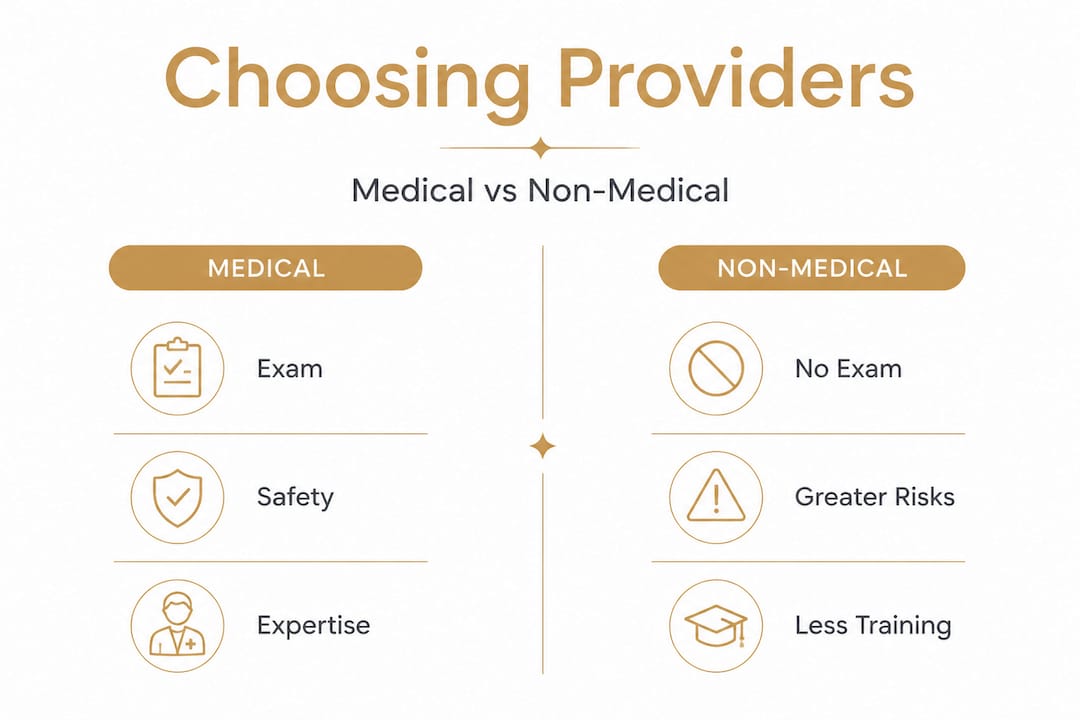
The single most important decision you make happens before any needle is uncapped. Fillers are medical treatments, and as the American Med Spa Association emphasizes, they should be administered only after an in-person exam by an appropriately licensed clinician. Working with a medically trained provider means your facial anatomy is evaluated, your health history is reviewed, and your goals are matched to the right product and placement strategy.

Infographic comparing medical versus non-medical injectables providers

Explore Raleigh injectables overview to understand what a medically led approach looks like in practice before you book.

Standard Medical provider Non-medical provider
In-person exam required Yes Not always
Licensed clinician on site Yes Varies
Emergency protocol available Yes Rarely
Anatomy-specific technique Yes Inconsistent
Product sourcing transparency Yes Often unclear

Pre-treatment instructions to follow

Following your provider’s pre-treatment guidelines reduces bruising, swelling, and interference with your results. Based on ASPS guidance, here’s what to avoid before your appointment:

  • Aspirin and NSAIDs (ibuprofen, naproxen) for 5 to 7 days before treatment, as they thin the blood and increase bruising risk
  • Alcohol for at least 24 to 48 hours before your appointment
  • Strenuous exercise for 24 hours prior
  • Excessive heat, including saunas and hot tubs, for 24 to 48 hours
  • Massage or aggressive facial manipulation in the treatment area

These restrictions are not arbitrary. Blood thinners and alcohol both increase capillary fragility, which means even a precise injection can produce more visible bruising when these substances are in your system.

Pro Tip: Schedule your appointment at least two weeks before any major social event. Even when everything goes perfectly, early swelling can affect how you feel about your results in the first few days. Give yourself time to settle before a wedding, reunion, or work event.

For a broader look at how preparation connects to your overall outcome, review these injectables best practices from a clinical perspective.

Step-by-step: The injectable procedure

After preparing thoroughly, here’s what you can expect during your injectable visit, from clinical exam to final touch. Understanding each step makes the experience feel measured and calm, not clinical and rushed.

The procedural stages, explained

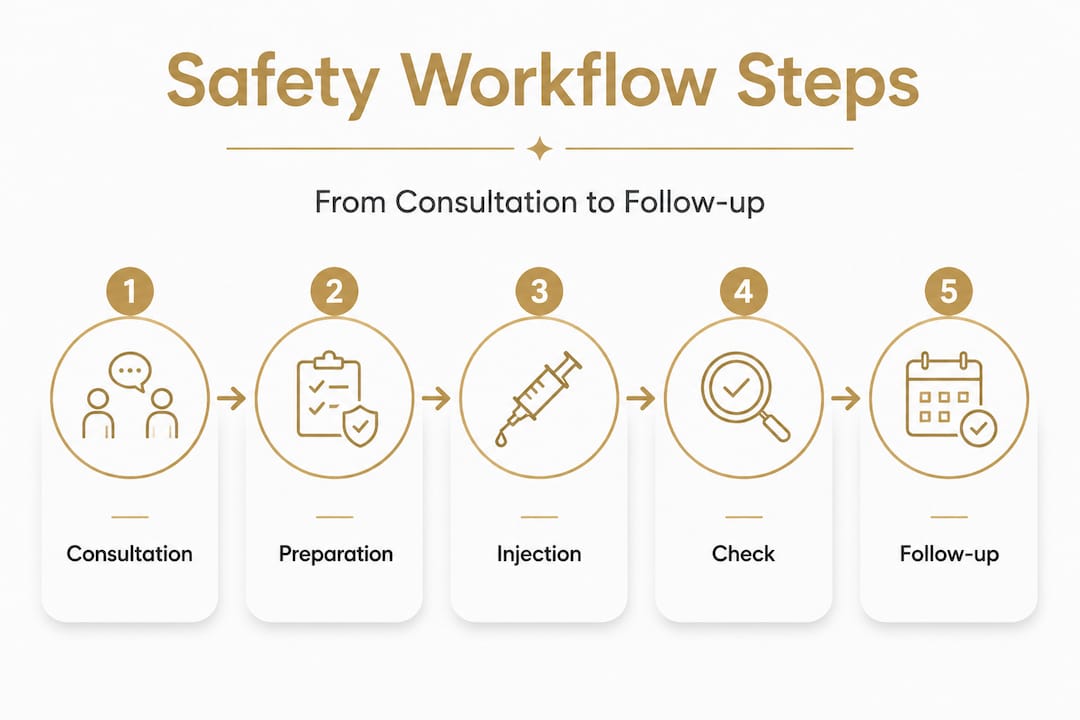
  1. Consultation and clinical exam. Your provider reviews your goals, assesses your facial anatomy, and identifies any contraindications. This is where treatment is planned, not just confirmed.
  2. Photography. Before photos document your baseline and serve as a reference throughout treatment and follow-up.
  3. Marking and mapping. Injection points are marked based on anatomy, not templates. Each face has unique muscle structure and vascular geography.
  4. Cleansing and preparation. The treatment area is cleaned with an antiseptic solution to minimize infection risk.
  5. Topical numbing (if applicable). A topical anesthetic may be applied and allowed to take effect for 10 to 20 minutes, depending on the area being treated.
  6. Injection. Product is placed using careful, anatomy-aware technique. Layering, depth, and volume are adjusted in real time based on how your tissue responds.
  7. Gentle molding. The provider may lightly smooth the treated area to distribute product evenly and check symmetry.
  8. Assessment and review. Results are evaluated while you’re still in the chair. Minor adjustments may be made. Your provider discusses what to expect over the next several days.
Stage Approximate time
Consultation and exam 15 to 30 minutes
Photography and marking 5 to 10 minutes
Cleansing and numbing 10 to 20 minutes
Injection and molding 10 to 30 minutes
Assessment and review 5 to 10 minutes
Total visit time 45 to 90 minutes

As the American Med Spa Association notes, fillers are medical treatments that should be administered after an in-person exam by a licensed clinician. Skipping that exam step to save time is one of the most common ways patients end up with outcomes they didn’t want.

Natural facial enhancement is not about adding volume indiscriminately. It’s about restoring proportion and softness in places where age or stress has quietly diminished it. And injectables in aesthetics have matured considerably, with modern techniques prioritizing movement and believability over correction for its own sake. You can also explore specific Raleigh dermal fillers to understand which product categories are used for different concerns.

Safety note: Know the warning signs of vascular occlusion (a blockage of a blood vessel) before you leave your appointment. These include sudden, severe pain at the injection site, white or mottled skin discoloration, and increasing pressure or blanching. If any of these occur, contact your provider immediately or seek emergency care. Understanding risks of fillers is part of being a well-prepared patient.

Pro Tip: Before your procedure begins, ask your provider which filler product is being used, where it will be placed, and why. A confident, medically trained clinician welcomes this conversation. Transparency is a signal of quality care.

Aftercare and recovery: What to expect

Once the procedure is finished, proper aftercare is key to both your comfort and achieving ideal, natural-looking results. The first 48 hours matter most, but the full settling process takes longer than most people expect.

Woman practicing post-injectable facial care at home

Immediate aftercare: What to avoid

According to ASPS filler aftercare guidance, the following activities and substances increase bruising, swelling, or the risk of product migration:

  • NSAIDs and aspirin for 24 to 48 hours post-treatment
  • Alcohol for at least 24 hours
  • Strenuous exercise for 24 hours (raises blood pressure and can worsen bruising)
  • Excessive heat, including hot showers, saunas, and heated yoga, for 24 to 48 hours
  • Massaging or pressing on the treated area, which can displace filler before it has fully integrated
  • Lying face-down or sleeping on the treated area in the first night or two

Sleep position matters more than most people realize. Pressure on freshly injected tissue while you’re horizontal can subtly shift product placement. Sleeping on your back, or at least avoiding direct face pressure, is a small habit that protects your result.

What the healing timeline actually looks like

Most filler aftercare tips focus on the first few days, but a realistic timeline helps you feel grounded:

  • Days 1 to 3: Swelling and possible bruising are most visible. Some firmness at the injection site is normal.
  • Days 4 to 7: Swelling begins to resolve. Early results become more readable.
  • Weeks 2 to 3: Filler continues to soften and integrate into surrounding tissue. This is when most patients see their true result.
  • Week 4 and beyond: Full settling is complete. At this stage, follow-up appointments are most productive.

Wondering about techniques that preserve natural movement as your filler settles? Movement-friendly filler approaches are worth understanding when choosing your provider. And if you’re still in the decision phase, choosing injectables naturally walks through the key considerations.

Pro Tip: Mild bruising is common and not a sign that anything went wrong. It typically resolves within 3 to 5 days. Don’t evaluate your results in the mirror during the first week. Give the tissue time to settle before drawing any conclusions.

Risks, warning signs, and knowing when to seek help

As you recover, being informed about normal vs. abnormal reactions helps you act swiftly if issues arise. Most people have a comfortable, uneventful recovery. But knowing what to watch for keeps you safe and confident throughout the process.

Common side effects vs. red flag symptoms

Normal side effects include mild swelling, light bruising, temporary tenderness, and minor redness at injection points. These are expected and resolve on their own.

Red flag symptoms are different. They signal that something needs immediate attention:

  • Severe or worsening pain at or around the injection site
  • White, gray, or blue discoloration of the skin, which may indicate vascular occlusion
  • A hard, growing lump that doesn’t respond to gentle warmth
  • Sudden asymmetry that appears days after the procedure
  • Signs of infection: increasing redness, warmth, pus, or fever

Urgent warning: According to the American Academy of Facial Esthetics, vascular occlusion (blockage of a blood vessel by filler) is a serious but rare complication that presents with severe pain and skin color changes including white or blue discoloration. This is a medical emergency. Do not wait to see if it improves on its own.

When to contact your provider or seek immediate care

  • Call your provider if you notice unexpected bruising patterns, growing lumps, or asymmetry after day 7
  • Seek immediate care if you experience vascular occlusion symptoms, signs of allergic reaction, or fever
  • Don’t manage serious symptoms with over-the-counter remedies. Reach out to the clinic that treated you first

Reviewing top fillers for natural results also helps you understand which products carry different profiles of risk and longevity, which is useful context when discussing options with your provider.

Making your results last: Expert strategies for natural enhancement

Having understood recovery and risks, here’s how you can extend your injectables’ benefits and enjoy continued confidence. Longevity isn’t just about product choice. It’s about lifestyle, timing, and a thoughtful maintenance strategy.

Planning touch-ups and maintenance appointments

Most hyaluronic acid fillers last between 6 and 18 months, depending on product, placement, and your body’s metabolism. Rather than waiting until the result has fully faded, scheduling a touch-up before complete resorption often allows your provider to use less product to maintain the same effect. This means smaller volumes over time, which supports a natural, gradual approach to enhancement rather than cycling between “full” and “empty.”

As ASPS notes, complete settling can take several weeks, which is why planning appointments around your social and work calendar reduces the chance of early-appearance anxiety. Building a treatment timeline with your provider means each visit feels intentional, not reactive.

Lifestyle factors that support your results

  • Stay well-hydrated. Hyaluronic acid-based fillers are hydrophilic (meaning they attract water), and good hydration supports their volume and softness.
  • Wear SPF daily. UV exposure accelerates tissue breakdown and affects how long your results look their best.
  • Avoid smoking, which reduces circulation and speeds the degradation of both filler and collagen.
  • Manage inflammation through diet and stress reduction where possible.
  • Protect your skin with clinical-grade skincare to support the broader tissue environment around your filler.

Pro Tip: Anatomy-aware injectables placed with conservative volume often last longer and look more consistent over time than high-volume treatments. Subtle, precise placement works with your facial structure rather than against it, which means less correction needed at follow-up.

Revisiting injectables for facial rejuvenation gives you a strong foundation for planning a long-term strategy with your provider rather than treating each visit as a standalone event.

Why subtle, medically guided injectables make all the difference

The conventional thinking in aesthetics has long leaned toward visible change as proof of value. More volume, sharper angles, noticeable transformation. But in practice, the outcomes that hold up over time, both aesthetically and emotionally, are the ones that read as you, just supported.

We’ve seen this pattern clearly in our clinical work. Patients who begin with a gradual, conservative approach tend to feel more confident in their results and more comfortable maintaining them. They aren’t self-conscious about whether people can tell. They simply look rested, calm, and well. That’s a different outcome than looking noticeably changed, and for most adults seeking subtle enhancement, it’s the more satisfying one.

The anatomy piece is non-negotiable. Injecting without understanding the vascular geography of the face is where serious complications originate. A skilled, medically trained provider doesn’t just know where to place product. They know where not to. The danger zones around certain arteries and nerves require respect, not guesswork.

The value of subtle enhancements is often underestimated because the results are quieter. But quiet is the point. When your result reads as rested and natural rather than treated and altered, it holds up across every setting, every lighting condition, every expression. That kind of believability is not an accident. It’s the outcome of planning, restraint, and genuine clinical expertise working together.

Ready for natural enhancement? Explore your options in Raleigh

If this guide has helped clarify what a well-supported injectable experience actually looks like, the next step is finding a provider whose approach matches those standards.

https://raleigh.theaestheticsloungeandspa.com

At The Aesthetics Lounge and Spa Raleigh, every treatment is built around your anatomy, your goals, and a deliberate pace that never feels rushed. We plan first, educate always, and treat with the kind of precision that keeps you looking like yourself. Explore our full range of aesthetic treatments in Raleigh, learn why clients trust medically led spas for this kind of care, or browse facial enhancement examples to see what subtle, natural results actually look like. We’re on Six Forks Road in North Raleigh, and we’d be glad to start a conversation.

Frequently asked questions

How long does swelling and bruising last after injectables?

Most patients see swelling or bruising resolve within 3 days, but full settling may take up to 3 weeks. Avoid evaluating your final result until at least week two.

What activities should I avoid after fillers?

Avoid NSAIDs, alcohol, strenuous exercise, excessive heat, and massaging the treated area for at least 24 to 48 hours post-treatment. Aspirin and NSAIDs should also be stopped 5 to 7 days before your appointment.

How can I recognize an emergency after injectables?

Watch for severe pain, white or blue skin discoloration, or sudden swelling that worsens rather than resolves. These are signs of vascular occlusion and require immediate medical attention.

Do I need an in-person exam before getting fillers?

Yes. Fillers should be administered after an exam by a licensed clinician who can evaluate your anatomy and health history before any product is introduced.

Aesthetic trends vs. timeless results: your guide to natural skin


TL;DR:

  • Most adults in their 30s and 40s prefer subtle, regenerative aesthetic treatments that support long-term skin health. Trend-based procedures often offer temporary, dramatic results, whereas natural approaches build lasting, believable improvements by working with the body’s biology. Personalized planning and early prevention optimize outcomes, emphasizing medical expertise and restraint over fleeting social media trends.

Most adults in their 30s and 40s have felt it at some point: a quiet pressure to stay current with whatever aesthetic treatment is trending on social media this season. The problem is that trends cycle faster than collagen rebuilds. What looks fresh today can read as overdone within a year, and more importantly, chasing dramatic changes rarely supports your long-term skin health. A calmer, more medically grounded approach, one that favors subtle enhancement and regenerative science, consistently outperforms whatever’s viral. This guide explains why, and what it means for how you plan your care.

Table of Contents

Key Takeaways

Point Details
Natural beats trendy Evidence shows that subtle, regenerative treatments yield healthier, longer-lasting skin results than quick-fix trends.
Timing matters Starting preventative, non-surgical treatments in your late 20s or 30s leads to better outcomes and lower risk.
Personalization is key The most successful aesthetic results are always tailored to your goals and skin biology by medical professionals.
Prevention and sequence win Gradually layered treatments and ongoing skin care outlast even the most popular beauty trends.
Medically led guidance Choosing a skilled, medically qualified provider ensures safe strategies and results that stand the test of time.

Beauty culture has always been influenced by media, but the speed of that influence has accelerated sharply. Social platforms now push beauty ideals that shift seasonally, and many adults feel genuine pressure to keep up. That pressure leads to decisions made quickly, without the kind of measured evaluation that produces lasting results.

The good news is that a meaningful shift is underway. Current aesthetic trends now emphasize natural, subtle enhancements using regenerative therapies like PRP (platelet-rich plasma), PRF (platelet-rich fibrin), biostimulators, and stem cells, prioritizing skin health over dramatic changes. This directly contrasts the overfilled lips and cheeks that defined an earlier era of popular aesthetics.

The reason this shift is happening matters. Clients are better educated. They’ve seen the longer-term results of trend-chasing on others, and many have experienced the disappointment themselves. What they want now is different: faces that look like themselves, just rested, supported, and well cared for. That’s a much more attainable and satisfying outcome.

“The most lasting results in aesthetics come not from following trends, but from understanding your own anatomy and working with it rather than against it.”

Understanding natural aesthetics and subtle enhancements means knowing what distinguishes a thoughtful approach from one driven by social media cycles. Here’s what separates the two philosophies:

  • Trend-driven care prioritizes volume, dramatic change, and visible transformation, often with little regard for facial structure.
  • Regenerative and natural care stimulates the skin’s own repair processes, working with your existing anatomy for gradual, believable improvement.
  • Skin health comes first in modern, medically led approaches. This means addressing hydration, collagen density, texture, and tone before considering any cosmetic additions.
  • Longevity matters. Treatments that support cellular health and collagen scaffolding deliver results that persist and improve over time, unlike filler-heavy procedures that may require correction.

Exploring examples of aesthetic treatments with a medically qualified provider helps clarify which options align with your structure and goals. The benefits of medical aesthetics extend well beyond surface appearance when the approach is grounded in science and restraint.

With current trends in mind, let’s see how today’s treatments actually compare to fad-driven approaches side by side.

The clearest way to understand the difference is to measure both approaches across the outcomes that actually matter to your long-term appearance and wellbeing. The evidence behind subtle enhancements is growing steadily, and the results are consistent.

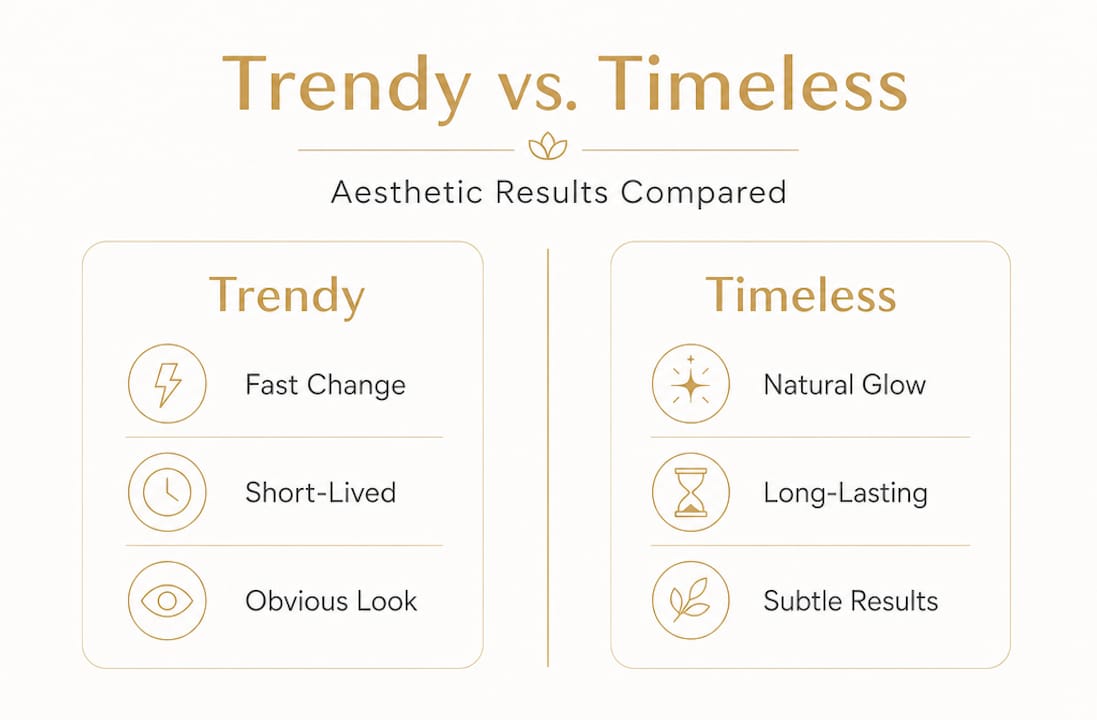
Feature Trend-driven treatments Timeless, natural approach
Primary goal Dramatic visible change Subtle, believable improvement
Duration of results Short-term, may require correction Cumulative, builds over time
Downtime Often 5-10+ days Typically 1-5 days
Risk profile Higher risk of overcorrection Lower risk, gradual change
Skin health impact Neutral to negative long term Actively improves skin quality
Cost over time Repeat corrections add up Prevention reduces cost
Patient satisfaction High initially, declines over time Builds steadily with results

Infographic comparing trendy vs timeless skin results

Regenerative treatments, including PRP, PRF, radiofrequency (RF), and biostimulants, work by signaling the skin’s fibroblasts to produce more collagen and elastin through targeted mechanisms including A2A receptor activation and controlled micro-injuries. According to mechanics of regenerative aesthetics, ultrasound and RF energy heat dermal layers to trigger repair, with particularly strong efficacy in photoaged skin (Glogau classification II-III), minimal downtime of one to five days, and lower risk of post-inflammatory hyperpigmentation compared to ablative lasers.

Here’s what a natural, sequenced approach typically looks like in practice:

  1. Start with a skin health assessment. Understand your current collagen density, hydration levels, and any early signs of aging before selecting treatments.
  2. Prioritize regenerative therapies first. PRP, PRF, and biostimulators build your foundational skin quality without adding foreign volume.
  3. Layer in structural support if needed. Once skin health is established, targeted, minimal injectables can be considered for specific concerns.
  4. Evaluate and adjust. Allow time between sessions to observe cumulative results before adding more.

Reviewing non-surgical treatment comparisons with a qualified provider gives you clarity on which sequence fits your skin type, your age, and your goals.

Pro Tip: The best aesthetic outcomes almost always come from personalized, gradual plans built around your anatomy. Resist the temptation to replicate someone else’s result. Your face has its own structure, and working with that structure will always outperform working against it.

How regenerative treatments support healthy, lasting beauty

Understanding the science helps, but successful results also depend on planning your approach with expert guidance.

Regenerative therapies do something that trend-based treatments rarely do: they actively improve the biological quality of your skin. Rather than masking changes or adding volume, they prompt your body to produce more of what it naturally contains. Collagen gives skin its firmness. Elastin supports bounce and resilience. Both decline with age, typically beginning in your late 20s, and regenerative treatments are designed specifically to counter that process.

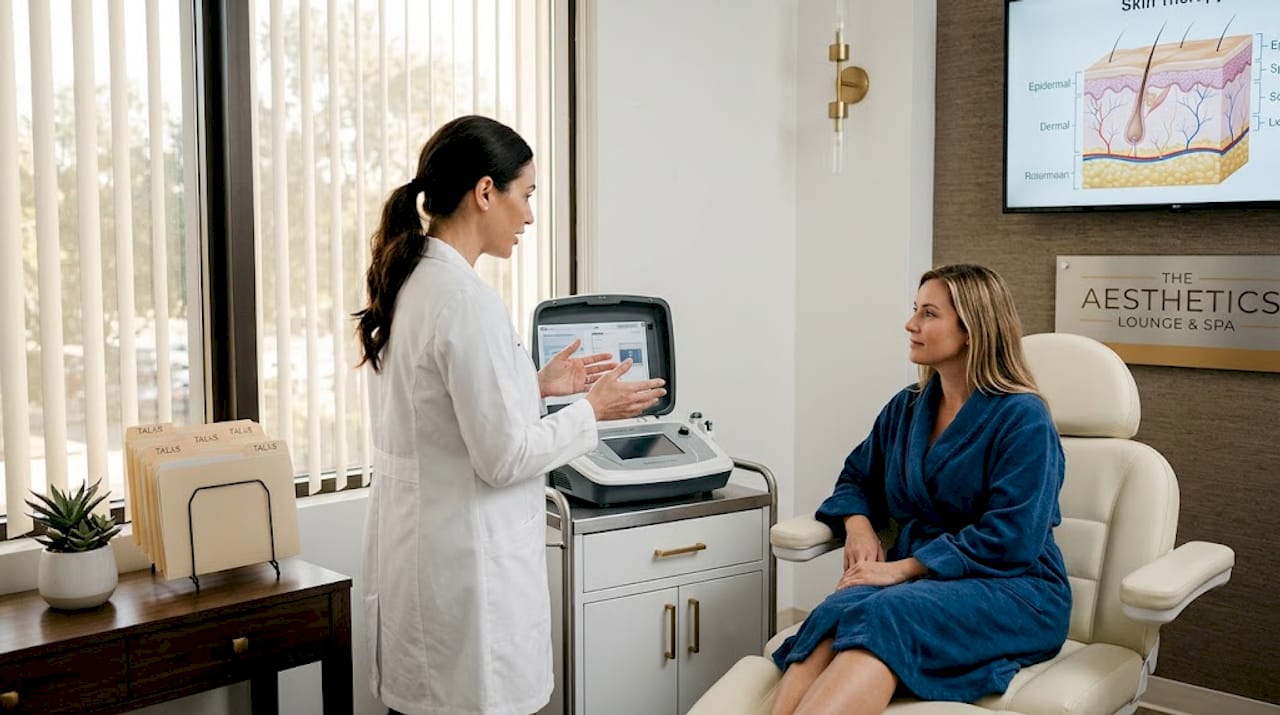
Aesthetician discussing regenerative skin device with client

Microneedle RF (radiofrequency combined with microneedling) is one of the most well-studied options in this category. Research confirms that microneedle RF outperforms standard microneedling in reducing senescent fibroblasts (aged, less functional skin cells) while simultaneously boosting the proliferation of healthy, non-senescent fibroblasts, even in older skin. This has important implications for adults in the 25-55 range who are focused on prevention: the earlier you start supporting cellular health, the less correction you’ll need later.

Treatment Mechanism Downtime Ideal for
PRP/PRF Growth factors stimulate repair 1-3 days Tone, texture, early volume loss
Microneedle RF Heat + micro-injury triggers collagen 2-5 days Firmness, fine lines, pore size
Biostimulators Stimulate collagen scaffold formation 1-7 days Structure, subtle lift
RF ultrasound Deep dermal heating Minimal Tightening, contouring

Here’s what makes regenerative treatments particularly well-suited for adults who prioritize long-term skin health:

  • Results build cumulatively. Each session adds to the last. This is very different from temporary filler, which metabolizes and requires repeat treatment to maintain.
  • The treatments support prevention. Starting in your late 20s or early 30s means you’re maintaining collagen density rather than trying to restore it later.
  • Risk profiles are favorable. Lower rates of complications, shorter downtime, and minimal post-treatment visibility make these options practical for working adults.
  • No foreign materials added. PRP and PRF use your own biology. There’s nothing to dissolve, migrate, or correct later.

Exploring skin tightening options gives you a practical view of which technologies are appropriate for your current skin concerns. And if you want a broader understanding of how to support skin health across your 30s, 40s, and beyond, that context makes every treatment decision clearer and more confident.

Planning for timeless results: sequence, strategy, and starting age

With a clear strategy, you can achieve healthy, confidence-boosting results that genuinely outlast passing fads.

One of the most consistent findings in modern aesthetic medicine is that gradual improvement is not just more natural-looking. It’s more satisfying. Gradual results align with patient psychology in a documented way: clients who see measured, incremental improvement over time report higher satisfaction and lower rates of regret than those who pursue dramatic changes in a single session. Starting in your late 20s or early 30s for prevention, and sequencing regenerative treatments first, supports sustainable aging rather than reactive correction.

Here’s how to approach your aesthetic journey with a strategy that holds up over time:

  1. Begin earlier than you think you need to. The most effective time to start regenerative care is before you notice significant aging, typically in your late 20s or early 30s. Prevention requires far less intervention than restoration.
  2. Establish your baseline first. Before any treatment, work with a medically qualified provider to map your facial structure, skin quality, and specific concerns. This prevents unnecessary procedures.
  3. Start with regenerative therapies. PRP, PRF, and biostimulators set the foundation. They improve the actual biological condition of your skin before anything else is layered on top.
  4. Add structure only where needed. After skin quality is established, minimal targeted injectables or tightening treatments can be introduced if specific concerns remain.
  5. Build in maintenance intervals. Most regenerative treatments benefit from a series of initial sessions followed by maintenance every six to twelve months, depending on your skin’s response.
  6. Track your results. Photography at baseline and after each treatment helps you and your provider evaluate what’s working and adjust accordingly.

Maintenance habits outside of treatment sessions matter just as much as what happens in the clinic. Supporting your skin daily with medical-grade SPF, consistent hydration, retinoids where appropriate, and a simplified but active skincare routine extends the life of every in-clinic result significantly.

For guidance on conservative aesthetic treatment advice, particularly if you’re weighing your options for the first time, the most important step is finding a provider who plans before treating and educates before suggesting.

Pro Tip: Before committing to any treatment, ask your provider to explain what they see in your anatomy and why they’re recommending that specific option. A strong provider welcomes that question. A plan built on your structure will always serve you better than one built on what’s popular.

The truth about what really lasts in aesthetic results

There’s a belief the beauty industry quietly encourages: that newer is better, that this season’s technique will outperform everything that came before, and that visible, obvious change is the goal. Most experienced aesthetic providers know this isn’t true. The results that age well are almost always the ones done quietly.

Refined, lasting results don’t come from chasing what’s popular. They come from understanding your face well enough to leave most of it exactly as it is, while supporting what’s beginning to soften. That requires restraint. And restraint requires a provider who is genuinely invested in your long-term appearance, not just today’s appointment.

Just as timelessness in other art forms outlasts trend-driven work because it’s rooted in something deeper than the moment, the same principle holds in aesthetics. Treatments grounded in biology and prevention outlast those designed to make an impression in the short term.

Patient education is the most underrated element in this field. When you genuinely understand what a treatment does, how long it takes to see results, and what realistic expectations look like, you make better decisions. You ask better questions. You build a relationship with your provider rather than chasing a result. That relationship is what protects you from the cycle of overcorrection that so many trend-followers experience.

The most confident aesthetic clients we work with are not the ones who’ve done the most. They’re the ones who started early, moved slowly, and stayed consistent.

Take your next step towards timeless, natural results

If this perspective resonates with you, you’re already thinking about aesthetics the right way. The next step is finding the care that matches that thinking.

https://raleigh.theaestheticsloungeandspa.com

At The Aesthetics Lounge and Spa Raleigh, our approach is built on exactly what this article describes: medical expertise, conservative planning, and a genuine commitment to results that look like you. We don’t chase trends, and we don’t push treatments that aren’t right for your anatomy. We plan first, educate always, and treat with precision. Explore our full range of aesthetic treatments in Raleigh to understand what’s available, or read our skin health maintenance guide to build the foundation for lasting results. When you’re ready to take the first step, our facial rejuvenation tips offer a clear starting point. We’re here when you are, calm, unrushed, and ready to build a plan that truly fits you.

Frequently asked questions

What are regenerative aesthetic treatments?

Regenerative treatments use your body’s own healing mechanisms, including PRP, PRF, and RF energy, to naturally stimulate collagen and elastin, with current evidence confirming their role as the leading edge of natural, health-focused aesthetics. Results develop gradually and read as authentic rather than artificial.

Are natural results really better for long-term skin health?

Yes. Research shows that regenerative mechanisms actively improve collagen and elastin production with minimal downtime and lower complication risk compared to more aggressive trending procedures. The biological improvement is real and cumulative.

When should I consider starting non-surgical treatments?

Expert guidance consistently recommends beginning in your late 20s to early 30s, when prevention is far more effective and requires significantly less intervention than trying to restore what’s already been lost.

How does microneedle RF compare to other skin rejuvenation options?

Studies confirm that microneedle RF is superior to standard microneedling in reducing aged, less functional skin cells while boosting healthy cellular activity, making it one of the most effective options for adults focused on prevention and long-term firmness.

Can natural results be customized for my skin type?

Absolutely. The most satisfying outcomes come from personalized plans developed by medically qualified providers who assess your unique facial structure, skin condition, and goals before recommending any treatment sequence.

Minimally invasive skincare: safe, subtle rejuvenation explained


TL;DR:

  • Minimally invasive skincare uses targeted, controlled energy or mechanical interventions beneath the skin to promote natural collagen production. These procedures are safer, require medical oversight, and produce gradual, authentic results without substantial downtime or surgery. Choosing qualified providers and setting realistic expectations are essential for safe, effective rejuvenation tailored to individual goals.

Most people assume they face a binary choice with aging skin: accept it or overhaul it. That assumption quietly keeps a lot of adults in Raleigh from exploring what’s actually available to them. The truth is more nuanced, and more encouraging. Minimally invasive skincare sits in a genuinely different category, one that relies on medical science, controlled technique, and your skin’s own biology to create results that look rested rather than redone. This guide walks you through what the term really means clinically, how these treatments work, what safety looks like in practice, and how to find the approach that fits your goals without sacrificing what makes your face yours.


Table of Contents

Key Takeaways

Point Details
Science-backed definition Minimally invasive skincare means medically guided procedures targeting deeper skin changes, not just quicker recovery.
Gradual, natural results Treatments like microneedling naturally boost collagen over time for subtle rejuvenation.
Safety matters most Choose trained providers to minimize risks and ensure clean, effective treatments.
Options can be tailored There are several minimally invasive methods and combinations to match your skin’s needs and goals.
Personalized guidance helps A consultation ensures you get a custom, medically guided plan for best results in Raleigh.

Defining minimally invasive skincare: more than just less downtime

The phrase “minimally invasive” gets applied to everything from a gentle enzyme mask to a laser resurfacing session. That broad usage creates real confusion, especially when you’re trying to make informed decisions about your skin. So let’s establish a grounded starting point.

Infographic comparing procedures and facials

From a medical standpoint, minimally invasive skincare refers to procedures that deliver targeted mechanical or energy-based interventions beneath the skin’s surface to produce specific biological effects. These are not topical products. They are not traditional facials. But they are also not surgery. They occupy a precise middle ground, and that distinction matters enormously.

The most defensible clinical definition in dermatology centers on method and mechanism, not marketing language. A treatment qualifies when it creates a controlled response at the tissue level, such as collagen remodeling, elastin stimulation, or pigment correction, using precisely delivered micro-injury or energy. “Less downtime” is a benefit, not the defining feature.

Here’s what separates minimally invasive procedures from ordinary skincare:

  • Depth of effect: They act at the dermal level (the layer beneath the surface), not just on the epidermis (the top layer).
  • Biological trigger: They prompt your body’s own repair systems to activate, producing new collagen and elastin.
  • Medical oversight: They require trained providers, proper device handling, and clinical assessment before treatment.
  • Measurable outcomes: Results are tracked and documented, not assumed.

You can explore the range of types of skin rejuvenation available today, and it quickly becomes clear how much variety exists within this category. Understanding the industry terms for facial rejuvenation also helps you ask better questions when you’re evaluating providers and treatment plans.

Feature Topical skincare Minimally invasive Surgical
Depth of action Surface (epidermis) Dermis and deeper Full tissue layers
Collagen stimulation Indirect, gradual Direct, controlled Significant but structural
Downtime None Minimal to moderate Days to weeks
Medical supervision required No Yes Yes
Results timeline Weeks to months Weeks to months Immediate but recovery needed

“The most meaningful distinction isn’t how dramatic the procedure looks—it’s whether the mechanism produces a true biological response at the tissue level.” That principle shapes every treatment decision made well.


How minimally invasive treatments rejuvenate skin naturally

Understanding the definition sets the stage. So how do these procedures actually work, and what should you expect along the way?

Routine microneedling in professional spa setting

The most widely studied option is microneedling. Microneedling creates controlled micro-injuries using fine needles that penetrate the skin at precise depths. Those micro-injuries activate your skin’s wound-healing cascade: growth factors release, fibroblasts (the cells that build structural proteins) activate, and new collagen and elastin begin forming over the following weeks. The surface of the skin stays largely intact. The repair happens below, quietly and steadily.

What makes this compelling for natural rejuvenation is the pacing. Because your skin is generating new support structures organically, results emerge gradually. You don’t look different overnight. You look like yourself, but progressively more supported, more even, more rested. That gradual arc is not a limitation. For most people seeking believable results, it’s exactly the point.

Research also shows that combining microneedling with topical antioxidant serums produces significantly greater rejuvenation improvements than microneedling alone, with the majority of patients reporting marked improvement and only transient side effects. This combination approach, where a clinically validated serum is applied immediately after treatment when absorption is highest, represents current best practice for anti-aging outcomes.

What to expect from procedure to results:

  1. Consultation and assessment: Your provider evaluates your skin type, concerns, and medical history to determine suitability and depth of treatment.
  2. Preparation: A topical numbing cream is applied 30 to 45 minutes before the procedure for comfort.
  3. Treatment: The microneedling device moves across the skin in measured passes, typically over 20 to 30 minutes.
  4. Immediate post-care: Medical-grade serums or growth factors are applied while skin is most receptive.
  5. Initial recovery: Redness and mild sensitivity last 24 to 48 hours in most cases.
  6. Weeks two through four: Collagen synthesis accelerates beneath the surface. Skin texture begins to refine.
  7. Months one through three: Cumulative improvement in tone, firmness, and fine line appearance becomes visible.
  8. Maintenance planning: A series of two to four sessions spaced four to six weeks apart is typical for meaningful results.

You can learn more about how microneedling works at the tissue level, and find practical facial rejuvenation tips to support your results between sessions.

Pro Tip: Ask your provider specifically which device they use and whether it’s FDA-cleared. Validated technology and clinical protocols make a meaningful difference in both safety and the quality of your results.


Safety, risks, and choosing the right provider

Now that you understand how these treatments achieve their effects, let’s examine what you need to know to stay safe and set yourself up for the best possible outcome.

Minimally invasive does not mean risk-free. It means the risk profile is well-defined and manageable when the procedure is performed correctly. That distinction is worth holding onto.

Microneedle-based devices are not appropriate for everyone, and the FDA recommends that individuals seek out specially trained healthcare providers who understand proper device handling, candidacy screening, and sterile technique. The FDA also notes that microneedling devices are cleared for adults ages 22 and older, and certain conditions including active infections, open wounds, or specific skin disorders may disqualify a candidate regardless of age.

Common side effects that are expected and temporary:

  • Redness and warmth in the treated area (typically 24 to 48 hours)
  • Minor swelling or tightness
  • Skin sensitivity to sunlight for several days
  • Occasional mild bruising depending on treatment depth

Risks that require proper provider screening to minimize:

  • Post-inflammatory hyperpigmentation (darkening), particularly in deeper skin tones if incorrect depths are used
  • Infection from improper device sterilization or post-care negligence
  • Scarring from excessive depth or inappropriate patient selection
  • Hypopigmentation (lightening) in rare cases

Choosing a provider is genuinely consequential. The benefits of medically supervised spa care extend well beyond comfort. Medical oversight means your treatment plan is built on assessment, not assumption. When evaluating a provider, ask directly about their credentials, the cleaning and sterilization protocols for devices, and how they screen patients for contraindications.

You can also review guidance on choosing qualified med spa providers to understand what benchmarks matter most.

Pro Tip: If a provider does not ask about your medical history or skin conditions before treatment, that’s a signal to pause. A thorough intake process is not a bureaucratic formality. It’s the foundation of safe, effective care.


With safety in mind, it’s worth comparing the leading options so you can find what best fits your goals, your skin type, and where you are in your rejuvenation journey.

Standard microneedling and RF (radiofrequency) microneedling are both well-established, but they work differently and suit different needs. RF microneedling delivers radiofrequency energy through the needles into the dermis simultaneously with the micro-injury. That dual mechanism adds a thermal (heat-based) component that tightens existing collagen while also stimulating new production. A split-face study in mature women found that RF microneedling showed greater clinical and histological (tissue-level) improvements compared to standard microneedling alone, particularly for skin laxity and textural change.

Treatment Mechanism Best suited for Typical downtime
Standard microneedling Micro-injury only Texture, fine lines, mild laxity 24 to 48 hours
RF microneedling Micro-injury plus heat energy Moderate laxity, firming, deeper lines 48 to 72 hours
Microneedling plus serum Micro-injury with enhanced absorption Anti-aging, brightness, tone 24 to 48 hours
Combined series Multiple modalities over time Comprehensive rejuvenation Varies by protocol

You can explore specific skin tightening treatments and review details on Exceed microneedling to compare clinical device options available in Raleigh.

How to match treatment to your goals:

  1. Define your primary concern. Is it fine lines, skin laxity, uneven tone, enlarged pores, or a combination? Naming your priority shapes the protocol.
  2. Consider your skin type and history. Deeper skin tones require careful depth calibration. Previous skin conditions factor into candidacy.
  3. Assess your tolerance for downtime. Both options involve minimal recovery, but RF microneedling may extend sensitivity slightly.
  4. Think in series, not single sessions. Most meaningful results come from a planned course of treatment, not one appointment.
  5. Ask your provider what they recommend and why. A thoughtful answer that references your specific anatomy is a good sign.

The right approach is rarely the most aggressive one. It’s the one that aligns with your skin’s biology, your goals, and a realistic timeline.


A realistic perspective: what most people miss about minimally invasive skincare

Here is something that experienced practitioners observe repeatedly: the clients who are most satisfied with their results are almost never the ones who expected the most dramatic change. They’re the ones who came in with realistic expectations, trusted the plan, and let their skin respond on its own timeline.

There’s a real temptation when exploring these treatments to want fast, visible proof that something worked. That instinct is understandable. But the visible, almost overnight changes that circulate on social media are rarely from minimally invasive procedures. They’re from more aggressive interventions, heavy post-procedure swelling that temporarily masks texture, or strategic lighting. Gradual improvement, the kind that takes eight to twelve weeks to fully reveal itself, is biologically more authentic. It’s also more sustainable.

The most natural-looking result is one that no one can quite place. Not “she had something done.” Just: she looks well. She looks like herself, but more so.

The second thing most people miss is this: the procedure itself is only one part of the outcome. Who performs it, how they assess your skin beforehand, what protocols they follow post-treatment, and whether they build a long-term plan around your goals all contribute just as much. A technically well-executed procedure with poor aftercare guidance can underperform. A modest procedure within a well-designed treatment strategy can exceed expectations.

Exploring top non-surgical options and understanding how to go about choosing treatments naturally are worthwhile steps before any consultation. Coming in informed puts you in a far better position to collaborate with your provider rather than simply defer to them.

The most honest advice we can offer: choose a provider whose first instinct is to slow down and listen, not to fill a treatment slot. The restraint to recommend less when less is right is a mark of genuine clinical integrity.


Ready for subtle, natural transformation? Explore your options in Raleigh

You’ve walked through the science, the safety, the comparisons, and the honest perspective. Now the question is simply: where do you go from here?

https://raleigh.theaestheticsloungeandspa.com

At The Aesthetics Lounge and Spa Raleigh, every conversation starts with your goals, your skin’s current condition, and a clear, unpressured explanation of what’s realistic for you. Our aesthetic treatments menu covers the full range of medically guided minimally invasive options, and our approach is always to build a plan that fits your anatomy and your timeline. You can review the rejuvenation process explained to understand what a thoughtful treatment journey looks like from start to finish. For deeper reading, our skincare resources library covers a wide range of topics to support informed decisions. We’re on Six Forks Road in North Raleigh, and we’re here when you’re ready.


Frequently asked questions

How is minimally invasive skincare different from traditional facials or topical products?

Minimally invasive skincare uses medical procedures like microneedling to trigger deeper skin changes at the dermal level, while traditional facials and topicals act mainly on the skin’s surface without stimulating the wound-healing cascade that builds new collagen.

Is microneedling safe for all skin types and ages?

Microneedling is generally cleared for adults ages 22 and older, but safety depends on skin type, medical history, and provider expertise, which is why candidacy screening before treatment is essential.

How long do results from minimally invasive treatments typically last?

Results vary by individual and treatment, but most people see gradual improvements that develop over eight to twelve weeks and can last several months or longer with a proper maintenance plan.

What are common side effects after a minimally invasive procedure?

Temporary side effects including redness, swelling, tightness, itching, peeling, and occasional minor bruising are common and typically resolve within a few days.

Can minimally invasive treatments be combined for better results?

Yes. Combining microneedling with antioxidant serums has been shown in clinical trials to produce significantly greater rejuvenation improvements than microneedling alone, making combination protocols a well-supported strategy for anti-aging outcomes.

Medically guided skin health optimization for lasting results


TL;DR:

  • True skin health is a continuous, science-based process that focuses on individual needs rather than fleeting products. It involves a personalized approach addressing visual, mechanical, and topographical skin quality, emphasizing prevention and consistent care over quick fixes. Medical guidance ensures natural, lasting results through tailored treatments, skincare routines, and lifestyle adjustments.

True skin health is not found in the latest viral serum or an impulse purchase at a beauty counter. It is a process, shaped by science, guided by clinical expertise, and built around your skin’s actual biology. For adults in Raleigh navigating a market flooded with promises, the distinction between reactive product use and genuine, medically guided optimization matters enormously. What follows is a calm, evidence-based look at what skin health optimization actually means, what it requires, and how a thoughtful, personalized strategy delivers results that read as naturally refreshed rather than obviously altered.

Table of Contents

Key Takeaways

Point Details
Optimize beyond products Medically guided skin optimization is more comprehensive and effective than product-only routines.
Prevention is essential Daily SPF and early use of gentle actives prevent over 80% of visible aging.
Personalization delivers best results A tailored approach, based on expert assessment, achieves the most natural, lasting skin rejuvenation.
Synergy drives improvement Combining medical-grade topicals with advanced procedures produces optimal skin firmness and glow.

What is skin health optimization?

Skin health optimization is a systematic, evidence-based process of assessing, treating, and maintaining skin in its healthiest functional state. It is not about erasing every line or chasing a filtered appearance. It is about understanding your skin’s specific needs and supporting them with science-backed tools, applied consistently over time.

The clinical framework for this approach categorizes skin quality into three distinct pillars:

  • Visual attributes: Tone evenness, radiance, and glow. These are what most people notice first when they look in the mirror.
  • Mechanical attributes: Elasticity, firmness, and resilience. These reflect how well your skin’s structural proteins, primarily collagen and elastin, are functioning.
  • Topographical attributes: Surface texture, smoothness, and pore appearance. These affect how light reflects off your skin and how skin feels to the touch.

Research confirms that skin quality attributes span visual, mechanical, and topographical components, each requiring its own assessment and targeted approach. A plan that only addresses one pillar while ignoring the others will always fall short.

“Skin health optimization is not a destination. It is an ongoing process of informed decision-making, guided by clinical assessment and adjusted as your skin evolves over time.”

For those interested in building a strong foundation, customized skincare represents the first meaningful step toward an evidence-based plan rather than a trial-and-error approach.

Why does this matter specifically for adults between 25 and 55? Because this is the window when prevention is most powerful. Skin changes are measurable, addressable, and, if managed intelligently, preventable in their most accelerated forms. Starting early, with the right guidance, is what separates long-term skin health from reactive correction later in life.

Core elements of an optimized skin health plan

Once you understand what optimization covers, the next question is practical: what does an effective plan actually include? The answer involves several interacting layers, and their combined effect is greater than any single product or treatment alone.

Photoprotection as the non-negotiable foundation. Daily broad-spectrum SPF application is not optional in a serious skin health plan. Approximately 80% of visible aging comes from sun exposure, making SPF the single most impactful daily habit you can establish. For Raleigh’s climate, with warm seasons that stretch well into fall, consistent SPF 30 or higher is particularly critical. This applies year-round, not only on beach days.

Barrier repair and hydration. Ceramides and humectants form the backbone of healthy barrier function. When your skin barrier is compromised, it loses water faster (a process called transepidermal water loss, or TEWL), becomes more reactive, and responds poorly to active ingredients. Restoring and maintaining barrier integrity is foundational before introducing more potent treatments.

Woman applies moisturizer at bathroom mirror

Antioxidants and retinoids. Antioxidants for skin, particularly vitamins C and E, neutralize free radicals generated by UV exposure and environmental pollutants. Retinoids, derived from vitamin A, are among the most studied active ingredients in dermatology. Clinical evidence supports their role in barrier repair and collagen stimulation, with measurable improvements in fine lines and texture when used consistently. Following best skincare practices means layering these actives strategically, not stacking them all at once.

Hierarchy infographic of core skin health essentials

Lifestyle as a co-treatment. Sleep, nutrition, and avoiding smoking are not separate from your skincare plan. They are part of it. Poor sleep elevates cortisol, which degrades collagen. Chronic smoking impairs circulation and accelerates visible aging. Nutritional choices that support skin health from the inside out amplify what topical treatments can achieve.

Here is how core approaches compare in their primary functions:

Strategy Primary benefit Timeline to results
Daily SPF 30+ Prevents photoaging, protects collagen Immediate protection; long-term prevention
Ceramide moisturizer Barrier repair, reduces water loss 2 to 4 weeks
Vitamin C serum Brightening, antioxidant defense 4 to 8 weeks
Retinoids (2-3x/week) Collagen stimulation, texture improvement 8 to 12 weeks
Photoprotection for mature skin Preserves existing elasticity Cumulative, ongoing

For adults in their late 20s and 30s, the priority is prevention. For those in their 40s and 50s, the balance shifts toward targeted correction alongside continued prevention. Age-appropriate sequencing matters enormously.

Pro Tip: Introduce actives like retinoids and acids slowly, starting two to three nights per week before building frequency. Skin that is irritated or compromised will not respond well to any treatment, topical or procedural.

Advanced approaches and procedural options

A well-designed topical routine forms the backbone of skin health, but for many people, it is not the whole story. Advanced, multi-modal treatments bring a level of structural renewal that topicals alone cannot replicate. The key is understanding how they work together.

Medical-grade procedures commonly integrated into skin health optimization plans include:

  1. Microneedling and RF microneedling: These stimulate collagen production by creating controlled micro-injuries in the skin. RF (radiofrequency) microneedling adds targeted heat energy to enhance firmness and tightening, particularly in the mid-face and jawline.
  2. Laser resurfacing: Targeted light energy addresses pigmentation, surface texture, and tone evenness. Different wavelengths treat different concerns, which is why clinical guidance is essential.
  3. PRP and exosomes: Platelet-rich plasma and exosome therapies use regenerative signals from the body’s own biology to accelerate repair and support skin longevity. These are among the most nuanced and quietly effective options available.
  4. Dermal fillers: Used conservatively and anatomically, fillers restore volume in areas where loss contributes to structural sagging. When placed with restraint, they support the face without altering its fundamental character.
  5. Injectables for muscle relaxation: Carefully dosed neuromodulators soften dynamic lines while preserving natural movement. The goal is always to look rested, not frozen.

The relationship between topicals and procedures matters significantly. Research on skin longevity supports a multi-layered model, sometimes called the CALM framework, encompassing collagen preservation, antioxidants, lipid barrier integrity, and mitochondrial health. Combination therapies, such as RF microneedling paired with fillers, produce measurably greater firmness improvements than either approach in isolation.

Treatment What it targets Results timeline
RF microneedling Firmness, laxity, texture 3 to 6 months (collagen maturation)
Laser resurfacing Pigmentation, tone, surface texture 4 to 8 weeks post-treatment
PRP or exosomes Cellular regeneration, skin quality 8 to 12 weeks, cumulative
Conservative fillers Volume loss, structural support Immediate, with refinement over 2 weeks
Neuromodulators Dynamic lines, natural expression 7 to 14 days for full effect

Understanding the difference between non-surgical treatments and their procedural counterparts helps you ask better questions and make clearer decisions. A useful overview of types of skin rejuvenation can further clarify which modality fits your goals.

The difference between a serum versus cream in your daily routine also influences how procedural results are maintained. Active serums preserve and extend what procedures initiate.

“The most effective skin health strategies are not dramatic. They are consistent, layered, and guided by ongoing assessment rather than single transformative moments.”

Exploring aesthetic treatment examples can help you visualize how different approaches fit together over time.

Personalization, monitoring, and what Raleigh specialists recommend

Generic skin advice has limits. Real optimization requires a plan built specifically for you, one that accounts for your skin type, your history, your lifestyle, and your goals. This is where working with a medically led provider in Raleigh makes a meaningful difference.

A thorough professional evaluation typically includes:

  • Skin analysis: Advanced imaging tools assess tone, texture, hydration levels, and subsurface pigmentation that may not yet be visible.
  • Medical history review: Medications, health conditions, and previous treatments affect how your skin will respond to any intervention.
  • Lifestyle assessment: Sleep patterns, diet, sun exposure, and stress all shape your skin’s behavior and resilience.
  • Photographic documentation: Baseline photos allow accurate progress tracking at 4, 8, and 12-week intervals.

The sequencing of a personalized plan follows a clinical logic. Firmness and structural integrity are addressed first because they form the foundation on which everything else rests. Glow, tone, and surface concerns are then addressed once structural support is in place. Reversing this order leads to results that look temporarily improved but quickly reveal their underlying instability.

Raleigh providers who specialize in the 25 to 55 demographic increasingly favor regenerative treatments like exosomes and PRP for their capacity to produce natural, believable results without dramatic intervention. These approaches integrate seamlessly with wellness-focused care, creating a continuity between how your skin looks and how your overall health supports it.

Pro Tip: A personalized plan built from clinical assessment consistently outperforms any generic protocol. The results are more natural, more lasting, and more aligned with your actual facial structure.

The value of a medically guided workflow lies precisely in this ongoing adjustment. Skin changes across seasons, hormonal shifts, and aging stages. Your plan should too.

The uncomfortable truth about skin health optimization most overlook

Here is what most articles in this space will not tell you plainly: the majority of people who seek skin improvement are focused on visible, fast results, and that focus consistently leads them toward decisions that undermine long-term skin health.

Dramatic peels, repeated high-intensity procedures, or layering trendy actives without clinical guidance can erode barrier integrity over time, create sensitization, and paradoxically accelerate the very aging they were meant to address. The appeal of the visible and the immediate is real. But it works against the slower, quieter logic of genuine optimization.

What actually works is less exciting to market. Daily SPF, consistently applied. Retinoids introduced gradually and maintained. Barrier support that never gets skipped. Procedures timed thoughtfully, not stacked impulsively. Progress tracked with photos every few weeks so adjustments are based on evidence, not feelings. Following medically guided skincare steps is not glamorous. But it is what produces skin that still looks like yours, just steadier and more supported, five and ten years from now.

Raleigh’s best providers stand out precisely because they resist the trend cycle. The clinical culture here favors thoughtful pacing, transparent expectations, and outcomes measured in years rather than days. That approach will always feel slower than a viral shortcut. It will also always outperform one.

The uncomfortable truth is that skin health optimization is not a product you buy or a single treatment you schedule. It is a relationship between your biology, your habits, and your clinical team, maintained with patience and adjusted with expertise. Everything else is noise.

Find your optimal skin health pathway with Raleigh’s experts

Everything covered in this article points toward one clear conclusion: skin health responds best to medical guidance, personalization, and consistency. At The Aesthetics Lounge and Spa Raleigh, that is precisely the experience you will find.

https://raleigh.theaestheticsloungeandspa.com

Our medically led team on Six Forks Road approaches every consultation with the same calm, anatomical precision that guides every treatment we offer. Whether you are beginning with aesthetic treatments in Raleigh or deepening an existing routine, we build a plan that fits your actual skin, your lifestyle, and your long-term goals. The benefits of medical spa care extend far beyond any single visit. If you are curious about where to start, our medical-led skincare guide is an excellent first step before scheduling your consultation.

Frequently asked questions

How quickly can I see results from medically guided skin health optimization?

Retinoids typically improve texture and fine lines in 8 to 12 weeks, while procedural benefits such as those from microneedling or RF treatments often become visible within a few sessions over several months. Consistency and clinical guidance determine how quickly improvements compound.

Why is prevention prioritized over correction in skin health optimization?

Because 80% of visible aging comes from cumulative sun exposure, prevention through daily SPF and early use of actives like retinoids preserves collagen and radiance long before correction becomes necessary. Starting in your mid-20s dramatically reduces how much correction you will need later.

What role do in-office procedures play versus topical products?

Topical products maintain and extend results, while combination therapies like RF microneedling deliver structural renewal that topicals cannot achieve alone. The two approaches work best in sequence, with procedures initiating deeper change and topicals sustaining it daily.

How is a skin health plan personalized for my needs?

A thorough clinical evaluation including skin analysis and labs determines which actives, procedures, and lifestyle modifications are most appropriate for your specific biology, concerns, and goals. No two plans should look identical, because no two people share the same skin.

Why avoid quick fixes in aesthetics: safer results


TL;DR:

  • Medically guided aesthetic treatments promote lasting skin health through gradual, tissue-friendly methods.
  • Quick fixes carry risks such as hyperpigmentation, scarring, and higher complication rates, especially in darker skin.
  • Choosing licensed professionals and staged protocols ensures safer, more natural, and sustainable facial rejuvenation.

Most people assume faster means better when it comes to looking refreshed. That assumption makes sense on the surface, but regenerative treatments like biostimulators, exosomes, and energy-based devices consistently outperform quick fixes by promoting real collagen production, improved skin thickness, and resilience that holds over time. The appeal of an instant transformation is real. But so are the complications that often follow. This guide walks you through what quick fixes actually are, what the risks look like in clinical terms, and why a measured, medically guided approach is the smarter long-term investment for your skin.

Table of Contents

Key Takeaways

Point Details
Quick fixes carry risks Rapid results increase chances of complications like scarring, infections, and uneven skin.
Medical guidance matters Qualified providers tailor treatments for your safety and skin health, reducing adverse outcomes.
Regenerative methods last Treatments like exosomes and biostimulators stimulate your body for gradual, natural improvement.
Patience rewards beauty A slower, expert-guided approach leads to healthier, more natural results that truly last.
Choose certified experts Partner with board-certified, medically supervised specialists in Raleigh for the safest outcomes.

The phrase “quick fix” gets used loosely in aesthetics, so it’s worth being precise. In clinical terms, quick fixes refer to treatments prioritized for immediate visual impact rather than gradual, tissue-level improvement. They include aggressive chemical peels applied at high concentrations, heavy-volume filler placements designed to produce dramatic changes in a single visit, intense resurfacing treatments without staged protocols, and off-label injectables used without a full skin health assessment.

Their popularity is easy to understand. Social media shows before-and-after images in seconds. Certain medspa promotions advertise same-day transformation. And when you’re tired of looking tired, the promise of instant change is genuinely hard to resist. The emotional pull is real, and it’s not a weakness. It’s a very human response to wanting to feel like yourself again.

The problem is that instant results and sustainable results are not the same thing. Evidence shows that quick fixes often create dependency cycles, where more product or more aggressive treatment becomes necessary to maintain what was achieved, while the underlying skin health continues to decline. That’s not a path toward confidence. That’s a treadmill.

Common quick-fix approaches include:

  • High-concentration chemical peels without a proper skin prep phase
  • Aggressive laser resurfacing in a single session
  • Overcorrection with dermal fillers for immediate volume
  • Microneedling at unsafe depths without medical oversight
  • Unguided botulinum toxin treatments that ignore facial anatomy

For a deeper look at how non-surgical natural options compare to these approaches, the contrast is striking once you see it laid out clearly.

“Sustained results in aesthetic medicine require building skin health from within, not overriding its natural processes with aggressive interventions that prioritize optics over biology.” The clinical consensus is clear: patience, not pressure, produces beauty that lasts.

Hidden risks: Complications from quick fixes

Once you see why instant results are tempting, it’s important to understand the downsides that often go unspoken during a consultation or social media scroll.

Quick cosmetic fixes can lead to a range of complications, some temporary and some permanent. Research confirms that risks include post-inflammatory hyperpigmentation (PIH), which is a darkening of the skin that can persist for months or years, as well as scarring, infections, prolonged redness, allergic reactions, and uneven skin texture. These aren’t rare outcomes reserved for outliers. They’re documented, measurable risks that increase when treatments are applied without proper assessment.

Dermatologist discusses procedure risks with client

The risk picture gets more specific when you factor in skin type. Individuals with Fitzpatrick skin types IV through VI (darker skin tones) face a significantly elevated risk of PIH and scarring following aggressive resurfacing procedures. A treatment protocol that’s appropriate for someone with fair skin may produce lasting discoloration in someone with deeper pigmentation. This is not a minor consideration. It’s a clinical reality that demands individualized care.

Complication data across facial aesthetic procedures shows meaningful rates: major complications occur in approximately 1.44% of facial aesthetic surgeries, blepharoplasty (eyelid surgery) carries up to a 4.68% complication rate when combined with other procedures, and risk increases substantially with multiple simultaneous procedures, a BMI at or above 25, or smoking history.

Procedure type Common complications Elevated risk factors
Aggressive chemical peel PIH, scarring, infection Darker skin types, no prep phase
High-intensity laser resurfacing Burns, hypopigmentation, redness Fitzpatrick IV-VI, sun exposure
Heavy-volume filler in one session Vascular occlusion, lumpiness, migration Anatomical inexperience
Microneedling at unsafe depth Infection, scarring, bruising No medical oversight
Combined multi-procedure sessions Higher systemic and local complication rates BMI above 25, smoking

The risks above are not meant to alarm you. They exist to help you ask better questions before agreeing to any treatment.

Pro Tip: Before any aesthetic procedure, ask your provider directly: “What are the top three risks for my specific skin type, and how do you mitigate them?” A medically trained provider will answer this clearly and without hesitation. Vague or deflecting answers are a signal to pause.

Choosing lasting slow-paced results over aggressive intervention isn’t about being timid. It’s about protecting the skin you’re investing in.

Why medically guided treatments deliver safer, natural results

With risks clearly mapped out, the better question becomes: what are the medically validated alternatives, and why do they outperform quick fixes in the long run?

The answer starts with assessment. Medically guided aesthetic care begins before a single treatment is chosen. A comprehensive health history, a review of your skin type, a conversation about your goals, and an evaluation of your facial anatomy all inform the plan. Nothing is applied in a vacuum. Nothing is rushed to produce optics at the expense of biology.

Regenerative treatments work with your body rather than forcing rapid visual change. Biostimulators such as Sculptra and Radiesse stimulate your own collagen production gradually. Energy-based devices like radiofrequency and focused ultrasound tighten tissue by triggering natural healing responses over weeks. Exosome therapy, one of the more exciting emerging options, delivers growth factors that support cellular renewal at a fundamental level. These are not instant. But they are real, and they hold.

Infographic comparing quick fixes and guided care

Here’s how medically guided care compares to common quick-fix approaches:

Quick-fix approach Medically guided alternative Key difference
High-peel in one session Staged peel protocol with skin prep Reduces PIH risk, improves outcome
Heavy filler volume at once Incremental filler with anatomy mapping Avoids migration and overcorrection
Single aggressive laser Multi-session energy-based treatment Safer for all skin types
Unguided microneedling Medical microneedling with growth factors Controlled depth, enhanced healing
Off-label injectables FDA-cleared products with clinical protocols Predictable, trackable outcomes

In Raleigh, medical-led aesthetics are becoming the standard rather than the exception among patients who have experienced the difference firsthand. Local expertise in regenerative approaches is growing, with practitioners who understand that a beautiful result should look like you on a good day, not a version of you that someone else designed quickly.

Pro Tip: When evaluating a provider, ask these three questions before booking: Do you customize protocols based on my Fitzpatrick skin type? Do you offer staged treatment plans rather than single-session fixes? Can you show me what a six-month treatment roadmap looks like? If the answers are specific and confident, you’re in the right hands.

For a broader understanding of how non-surgical rejuvenation fits into a long-term plan, the framework is consistent: medical oversight, realistic timelines, and treatments that respect your anatomy.

Here’s a simple checklist for identifying a medically guided practice:

  1. A licensed medical professional oversees all treatment planning.
  2. Consultations include a full health and skin history review.
  3. Treatment plans are staged and adjusted over time.
  4. Providers discuss risks openly and document informed consent.
  5. Results are tracked, not assumed.

How to choose the right path for long-term skin health

Now that you understand the advantages of the medical model, here’s how to actually apply that knowledge in Raleigh and make decisions that protect your results.

Choosing wisely starts well before you walk into any provider’s office. Here’s a step-by-step approach:

  1. Research your provider’s credentials. Verify that the practice is overseen by a licensed medical professional, ideally a physician, nurse practitioner, or registered nurse with specialized aesthetic training. Unqualified providers increase risk and are less equipped to personalize care based on your full health history.

  2. Prioritize the consultation. A thorough consultation should feel more like a conversation than a sales pitch. If a provider recommends a full treatment plan in the first five minutes without asking about your health history, skin concerns, or goals, that’s a concern.

  3. Ask specifically about diverse skin type experience. Not every provider has deep experience treating Fitzpatrick IV-VI skin. This matters. If you have a deeper skin tone and a provider can’t speak specifically to PIH risk and mitigation, look elsewhere.

  4. Evaluate the pace of the proposed plan. A thoughtful provider will propose a staged protocol, not a same-day overhaul. Gradual improvements are not a sign of timidity. They’re a sign of medical intelligence.

  5. Check for regenerative options. Practices that offer choosing natural treatments alongside traditional approaches tend to reflect a more complete understanding of skin health.

  6. Verify follow-up protocols. Safe aesthetic care doesn’t end when you leave the chair. Ask what the post-treatment monitoring plan looks like, and how side effects are handled if they occur.

  7. Trust your instincts during the consultation. If the environment feels pressured, rushed, or unclear, those feelings are data. Excellent aesthetic providers specialize in making you feel informed, never pressured.

Pro Tip: Between treatments, protect your investment with consistent SPF 30 or higher daily, a gentle retinoid introduced slowly if your provider recommends it, and a stable hydration routine. Skin that is well maintained between appointments responds better to regenerative treatments and holds results longer.

For a full guide on medical expertise for safety and how to evaluate providers by those standards, the criteria are consistent across every reputable source: training, individualization, and transparency.

The uncomfortable truth: Why slow and steady is worth it in aesthetics

Here’s what most articles on this topic won’t say directly: the real cost of quick fixes isn’t just medical complications. It’s the emotional fatigue of constantly chasing a result that never quite holds.

When you rush your aesthetic outcomes, you often step onto a cycle that demands more. The filler migrates slightly, so you need a correction. The aggressive peel leaves texture unevenness, so you need another treatment to smooth it. The dramatic change fades faster than expected, so you come back sooner. Each intervention creates a new baseline, and that baseline often requires maintenance at a frequency and volume that no one mentioned at the first appointment.

Evidence consistently shows that quick fixes produce higher long-term dependency compared to regenerative approaches that build real tissue quality over time. The data supports what many experienced patients have already learned the hard way: slow is sustainable.

The deeper truth is that most people don’t actually want a dramatic transformation. They want to look like themselves, just more rested, more supported, more quietly renewed. That result doesn’t come from urgency. It comes from a provider who sees your face as a whole, understands your anatomy, and builds a plan that respects both.

In Raleigh, the benefits of medical spa care done correctly are visible in results that don’t announce themselves. Colleagues who wonder if you’ve been on vacation. A version of yourself that feels supported without being altered. That’s the real goal, and it’s worth the patience it requires.

Impatience is understandable. Life moves fast, and wanting to feel your best now is completely reasonable. But the most sophisticated aesthetic result is one that builds over months, reflects your natural structure, and stays believable for years. That’s not a compromise. That’s the standard.

Explore safer, natural alternatives with expert guidance

Understanding the difference between quick fixes and medically guided care is the first step. The next is working with a team that applies these principles with every appointment.

https://raleigh.theaestheticsloungeandspa.com

At The Aesthetics Lounge and Spa Raleigh, every treatment plan starts with a thorough consultation, never a pressure-driven recommendation. We specialize in aesthetic treatments in Raleigh that are staged, anatomy-informed, and built for longevity. Whether you’re exploring regenerative options for the first time or reconsidering a quick-fix path that hasn’t delivered what you hoped, we’re here to offer clarity and a plan that actually fits your skin, your goals, and your timeline. You can also explore how to choose natural treatments or review our approach to medical-led results before booking. We’re on Six Forks Road, and we’d be glad to help you take the next step with confidence.

Frequently asked questions

What are the most common complications of quick-fix cosmetic treatments?

The most common risks are scarring, PIH (hyperpigmentation), infections, allergic reactions, and uneven skin texture, particularly after aggressive resurfacing procedures.

Why is medical supervision important for aesthetic treatments?

Medically supervised care lowers risk and ensures treatments are matched to your full health profile, skin type, and long-term goals, which unqualified providers are far less equipped to deliver safely.

Can regenerative aesthetics truly replace quick fixes for natural results?

Yes, regenerative treatments like biostimulators and exosomes have demonstrated real improvements in collagen production, skin elasticity, and texture through gradual, biology-respecting mechanisms.

Are quick-fix risks higher for people with darker skin?

Yes, darker skin types (Fitzpatrick IV through VI) face a significantly elevated risk of PIH and scarring, especially following aggressive resurfacing treatments applied without appropriate skin-type protocols.

How aesthetics enhance confidence: Evidence and subtle solutions


TL;DR:

  • Subtle, medically guided aesthetic enhancements improve confidence by aligning appearance with internal self-perception.
  • Authentic results supporting self-identity foster lasting psychological wellbeing through autonomy, competence, and relatedness.
  • Gradual, natural-looking treatments preserve self-authenticity, ensuring confidence is integrated and sustainable.

Aesthetics are often dismissed as vanity, a luxury concern reserved for those with too much time and too little depth. That framing misses something important. For adults navigating demanding careers, shifting self-images, and the quiet pressures of daily life in Raleigh, the way you feel about your appearance connects directly to how you move through the world. This guide examines the evidence behind that connection, explains the psychology driving it, and shows how medically guided, subtle enhancements can support genuine, lasting confidence without changing who you are.

Table of Contents

Key Takeaways

Point Details
Aesthetics boost real confidence Scientific studies show appearance improvements can raise self-esteem in authentic ways.
Psychology matters more than trends Sustainable confidence comes from meeting deeper psychological needs, not just chasing current looks.
Subtlety delivers best results Medically guided, natural enhancements create lasting confidence without obvious changes.
Personalization is essential The most effective treatments align with your unique facial features, goals, and lifestyle.

How aesthetics really influence confidence

Let’s begin by clarifying what the science actually says about how aesthetics interact with confidence.

The idea that caring about your appearance is purely superficial does not hold up under scrutiny. A growing body of research confirms that appearance satisfaction is meaningfully linked to psychological wellbeing and self-esteem across a wide range of adult populations. A 2026 self-esteem study published in Frontiers in Psychology found that better appearance correlates with psychological wellbeing and self-esteem in adult samples, with measurable effects even in aesthetic-adjacent contexts like dental aesthetics and psychosocial impact measures.

Infographic comparing subtle and dramatic enhancements

This is not a trivial finding. It suggests that how we look, and more precisely, how we feel about how we look, carries real psychological weight. The effect is not limited to people in their twenties, either. Adults across a broad age range achieve meaningful improvements in self-esteem when their appearance more closely aligns with their internal sense of themselves.

What this means practically:

  • Subtle improvements in skin quality, facial symmetry, or volume restoration can shift how you experience your own reflection
  • The confidence effect tends to carry into social and professional settings, not just quiet moments at home
  • The key factor is not dramatic transformation but a sense of alignment between how you look and how you feel inside

When you are considering choosing aesthetic treatments, the evidence points toward a clear principle: results that feel believable to you tend to produce more lasting confidence than results designed to impress others.

Approach Confidence effect Sustainability
Dramatic, trend-driven changes Short-term novelty, possible regret Often requires correction
Subtle, anatomy-based enhancements Authentic alignment, lasting improvement Builds over time naturally
No intervention despite concern Ongoing self-consciousness Unresolved, sometimes worsening

The case for lasting confidence with subtle enhancements is not built on anecdote. It is built on a growing library of validated psychological research, and that matters when you are making decisions about your face and your wellbeing.


Beyond vanity: The psychological needs behind confidence

Now that we’ve established the evidence, let’s explore why aesthetics are more meaningful than simply looking good.

Psychology offers a framework called Self-Determination Theory, or SDT, which identifies three core psychological needs that drive authentic wellbeing: autonomy (feeling in control of your choices), competence (feeling capable and effective), and relatedness (feeling genuinely connected to others). When any of these needs is threatened or undermined, wellbeing suffers. Research shows that aesthetic improvements, when approached thoughtfully, can support all three.

A study in Frontiers in Psychology (2025) confirmed that aesthetic confidence can be understood through these psychological needs and wellbeing pathways. In plain terms, the confidence you gain from a carefully selected treatment is not cosmetic. It is woven into your sense of self.

“Confidence effects are not purely cosmetic; Self-Determination Theory pathways and perceived self-authenticity can mediate wellbeing changes.” — Frontiers in Psychology, 2025

Consider what this looks like in practice. When you choose a treatment that addresses something you have privately noticed for years, you are exercising autonomy. When that treatment produces a result that feels skillfully done and natural, your sense of competence in your own choices grows. And when you move through social situations feeling more at ease in your appearance, relatedness deepens because you are not spending mental energy on self-consciousness.

Three ways aesthetic improvements support psychological wellbeing:

  • Autonomy: Making a deliberate, informed choice about your appearance reinforces your sense of agency and self-direction
  • Competence: Seeing a result that genuinely improves how you feel validates your judgment and your investment
  • Relatedness: Reduced self-consciousness allows fuller, more present engagement with the people around you

None of this requires a dramatic transformation. In fact, the research suggests that dramatic changes can undermine self-authenticity, which is the feeling that you still recognize yourself and still feel like you. When aesthetic results read as overdone, they often erode the very confidence they were meant to build.

The path toward lasting results from gradual treatments is, in many ways, the psychological path. Small, well-placed, medically guided changes that preserve your identity while quietly supporting it tend to produce the most durable wellbeing gains.

Pro Tip: Before any consultation, spend a moment identifying which specific aspect of your appearance creates the most self-consciousness. That focused reflection helps your provider make choices that address real need rather than chasing a generalized ideal.


Subtle enhancements: Striking the balance between natural and confident

But what does it look like when these psychological insights are put into practical use through actual treatments?

Minimally invasive treatments like dermal fillers, neuromodulators (such as Botox or Dysport), and microneedling have become some of the most studied tools in aesthetic medicine, and the evidence for their confidence-boosting effects is specific and meaningful. A filler confidence study published in Springer Nature (2025) found that for minimally invasive filler treatments, clinical studies report measurable improvements in aesthetics-related quality of life, self-esteem, and perceived attractiveness.

Client listening during aesthetic consult

That combination, quality of life, self-esteem, and perceived attractiveness together, represents a meaningful outcome. It is not just that people look better in photos. They feel better navigating their daily lives.

What distinguishes a confidence-building result from one that misses the mark? Here are four key principles:

  1. Start conservatively. A treatment plan that begins with less and adds carefully over time consistently outperforms aggressive initial approaches. You can always build; reversing is harder and sometimes impossible.

  2. Respect facial anatomy. Treatments that work with your bone structure, muscle movement, and natural fat distribution produce results that make people say “you look well” rather than “what did you do?” For more on this, explore facial anatomy for natural results.

  3. Address function, not just appearance. The most satisfying results often target something functional, like hollow tear troughs that make you look perpetually tired, or brow descent that gives an unintentionally stern expression. Fixing these feels corrective, not cosmetic.

  4. Pace your treatments. Confidence built gradually feels more integrated and authentic than confidence triggered by a single dramatic session. Space matters.

Treatment approach Typical outcome Best suited for
Overdone filler volume Unnatural fullness, altered identity Trend-chasers (not recommended)
Conservative, anatomy-based filler Subtle restoration, natural contour Adults wanting authentic enhancement
Microneedling for texture Improved skin quality, minimal social downtime Anyone seeking skin health improvement
Medically guided neuromodulators Softened expression lines, preserved movement Adults noticing fatigue or stress in their face

For practical guidance on what this looks like treatment by treatment, the examples of subtle treatments resource walks through specific options with clear visual context.

Pro Tip: Ask your provider to show you an amount that is 20% less than what they initially suggest. Then decide together. That one step alone dramatically reduces the risk of looking overdone and keeps you in control of your outcome.


Choosing the right aesthetic enhancement for you

Let’s translate the research and real-world options into concrete steps for selecting enhancements that fit you best.

The most common mistake adults make when exploring aesthetic treatments is approaching the decision through external pressure rather than internal clarity. Trends, social media, and well-meaning friends can all pull you toward treatments that are not actually designed for your face, your lifestyle, or your goals. The SDT research is clear: wellbeing and confidence mechanisms are rooted in autonomy and self-authenticity, not compliance with external ideals.

Here is a practical framework for making choices that are genuinely right for you:

  1. Reflect on the specific, not the general. Instead of thinking “I want to look younger,” identify one or two specific concerns that create daily self-consciousness. That precision helps your provider target with accuracy rather than guessing.

  2. Research the provider, not just the treatment. A medically guided provider will assess your facial anatomy, ask about your lifestyle, and discuss realistic expectations before recommending anything. If a consultation feels rushed or pressure-driven, that is important information.

  3. Understand the difference between trending and timeless. Treatments aligned with your natural facial structure tend to age gracefully. Treatments chasing a current aesthetic trend often create problems as that trend shifts. The guidance on why choose conservative treatments explains this distinction clearly.

  4. Ask about pacing. A well-designed treatment plan builds results over multiple sessions rather than attempting to achieve everything at once. Pacing respects your anatomy and allows natural integration.

  5. Evaluate results against your own baseline, not someone else’s. The question is not “do I look like the before and after?” but “do I still look like me, just more rested and supported?”

The guide to natural-looking enhancements offers a structured approach to this personalization process, connecting facial structure to treatment selection in practical terms.

Pro Tip: Bring a photo of yourself from five to seven years ago to your consultation. Not to reverse time, but to help your provider understand your natural facial proportions and give them a baseline to work with rather than a cultural ideal.


A fresh take: Why real confidence is about subtlety and self-authenticity

The mainstream aesthetic conversation tends to reward the dramatic. Before and after images that show stark transformation get engagement. Procedures that produce immediate, obvious results feel like proof of value. But that framing gets the psychology exactly backwards.

The evidence is consistent and somewhat counterintuitive: the confidence gains from aesthetic treatments are most durable when the results preserve self-authenticity. When treatments make you feel like a more supported, more rested version of yourself, the psychological integration is seamless. You carry the result naturally because it genuinely feels like you. When treatments push past that threshold into obvious transformation, the result can feel external. Something done to you rather than something that reflects you.

We see this play out in practice. Clients who come in asking for “a lot” often leave their first conservative treatment surprised by how satisfied they are with something subtle. The mirror shows a version of their face that feels right, not foreign. That experience, looking at your reflection and feeling recognition rather than surprise, is where genuine confidence lives. The conservative treatments for natural results approach is built precisely around that experience.

The mainstream culture around aesthetics has been slowly correcting toward this understanding, but it takes time. Adults in Raleigh, many of them navigating professional and personal demands that require them to feel genuinely grounded in who they are, tend to understand this instinctively. They are not looking to look like someone else. They want to look like themselves, at their best, without the tired or stressed overlay that life sometimes adds to a face.

That is not vanity. That is self-care with psychological depth, supported by medical precision. The SDT research validates what many adults already sense: that autonomy and self-authenticity are the real engines of aesthetic confidence, and subtlety is the most reliable way to protect them.


Next steps: Experience subtle confidence with medical aesthetics in Raleigh

Ready to translate knowledge into results? Here’s how to get started in Raleigh.

At The Aesthetics Lounge and Spa Raleigh on Six Forks Road, every consultation begins with listening. We want to understand what specifically concerns you, what feels important to preserve, and what a successful outcome looks like in your daily life. That foundation shapes a treatment plan built around your facial anatomy and your goals, not a trend or a template.

https://raleigh.theaestheticsloungeandspa.com

Whether you are exploring non-surgical treatments for natural results for the first time or refining an existing plan, our medically led team applies the same measured, anatomy-first approach. For those considering injectables specifically, our injectable best practices guide explains our protocol in detail. You can also browse all treatment options in Raleigh to begin identifying what aligns with your goals. The path forward is calm, clear, and entirely at your pace.


Frequently asked questions

How soon can I expect to feel more confident after a subtle aesthetic treatment?

Many adults report a confidence boost within weeks after minimally invasive treatments, though individual results vary based on the specific procedure and personal response. Clinical studies confirm improvements in quality of life and self-esteem following minimally invasive filler treatments.

Are aesthetic improvements only about looking younger?

No. Research shows that confidence benefits come from authenticity and aligning treatments to your specific goals, not simply reversing the signs of age. The most meaningful outcomes often involve feeling more like yourself, not someone younger.

Does research support natural-looking aesthetic treatments for adults?

Yes. Multiple studies confirm that minimally invasive, medically guided treatments can noticeably boost confidence and self-esteem in adults. A 2026 study found that appearance and psychological wellbeing correlate meaningfully in adult samples across a range of aesthetic contexts.

What’s the best way to ensure my results look subtle, not overdone?

Choose a medically guided provider who personalizes your treatment plan to your facial anatomy, lifestyle, and specific concerns rather than applying a standardized or trend-based protocol.

An evidence-based injectable safety workflow guide


TL;DR:

  • A structured safety workflow is essential for natural and safe injectable outcomes.
  • Proper preparation, expert technique, and post-treatment monitoring significantly reduce risks.
  • Informed patient engagement and choosing medically led clinics enhance safety and results.

The idea of injectable treatments can stir real hesitation. Not because results aren’t possible, but because the concern of looking “off” or experiencing something unexpected feels very real. Those worries are valid, and they deserve a clear, honest answer. A structured injectable safety workflow is exactly what separates a refined, natural outcome from one that misses the mark. This guide walks you through every stage of that workflow: from what happens before a single syringe is opened, to how your provider monitors you after treatment, and what you should know to feel genuinely confident in your care.

Table of Contents

Key Takeaways

Point Details
Safety-first workflow A structured safety workflow reduces injectable risks and supports natural results.
Know what to expect Recognize each step—consultation, prep, injection, monitoring, and documentation—for a safer experience.
Practical preparation Expect handwashing, sterile setup, and provider explanation before every injectable.
Side effects awareness Mild swelling or bruising is normal; sudden pain or color change requires urgent attention.
Choose expertise Clinics with medical supervision and full safety protocols offer the safest path to natural enhancements.

Why an injectable safety workflow matters

Cosmetic injectables occupy a unique space in medicine. Unlike a routine blood draw or vaccination, aesthetic injections are placed with artistic intent inside facial anatomy that varies significantly from person to person. That distinction matters. The risks aren’t just about infection. Vascular anatomy, tissue depth, and individual response all influence how a treatment unfolds.

The good news: most complications are entirely preventable with the right process in place. As an injectable safety workflow in aesthetic medicine typically follows a structured process, clinics that skip or compress steps are the ones where problems tend to arise. Structure is protection.

Here’s what a safety-focused workflow addresses at the outset:

  • Identifying contraindications before treatment begins
  • Mapping individual facial anatomy to guide injection placement
  • Selecting appropriate product type and volume for your goals
  • Setting realistic expectations through honest, informed conversation
  • Establishing clear communication channels for post-treatment questions

When you look at real-world data, bruising and swelling are most common and generally self-limiting, while events like vascular occlusion are rare but serious enough to justify strict protocols every single time. That’s not a reason to avoid injectables. It’s a reason to be thoughtful about where and with whom you receive them.

“The difference between a safe outcome and a problematic one often comes down not to the product, but to the process.”

Expert clinics monitor for both what’s visible, such as mild swelling or redness at the injection site, and what’s less obvious, including signs of vascular involvement that require immediate attention. Understanding injectable best practices helps you ask the right questions before you even sit in the treatment chair. And knowing the role of injectables in a broader facial strategy means you’re not making isolated decisions without context.

Clinics that follow established injectable safety standards treat every appointment, regardless of how routine it may seem, with the same level of attention. That consistency is what builds trust over time.

Tools and preparation: What you need for safe injectable treatment

Safe injectable treatment begins well before the first injection. The foundation is a thorough consultation and a detailed review of your medical history. Allergies, medications like blood thinners, previous treatments, and any autoimmune conditions are all part of that conversation. Skipping this step, even partially, creates risk.

Aseptic preparation, precise technique, and detailed documentation are non-negotiable parts of any credible safety workflow. In practice, this means you should observe your provider washing their hands, setting up a sterile field, and explaining what they’re doing and why. These aren’t formalities. They’re safeguards.

Nurse documenting aseptic preparation steps

Here’s a comparison of what preparation looks like in a medically led setting versus a less structured environment:

Preparation element Medically led clinic Less structured setting
Medical history review Thorough and documented Minimal or skipped
Informed consent Detailed discussion with written sign-off Verbal only or absent
Sterile field setup Visible and standard Inconsistent
Product traceability Lot numbers recorded Not tracked
Provider credentials Licensed medical professional Varies widely

Modern clinics often use prefilled syringes to reduce preparation errors by up to 50%. This matters because manual preparation introduces variables: air, contamination, and dosing inconsistency. A prefilled, single-use syringe removes most of those variables before the treatment even starts.

What you should look for when preparing for injectables includes clear pre-treatment instructions, a calm and unhurried consultation, and a provider who listens as much as they speak. That balance of medical expertise for safety and genuine attentiveness is what supports results that feel natural and intentional.

Essential preparation items for a safe appointment:

  • Avoid blood-thinning supplements (such as fish oil, vitamin E, and aspirin) for at least one week prior, unless medically necessary
  • Come to your appointment with a clean face, free of makeup
  • Be honest about your full medication list, including supplements
  • Arrive hydrated and well-rested
  • Bring photos of your aesthetic goals if they help communicate your vision

Pro Tip: If a clinic feels rushed during your consultation, that’s meaningful information. A provider who takes time to understand your goals and concerns before picking up a syringe is demonstrating the very standard of care that leads to safe, natural outcomes.

Step-by-step injectable safety workflow

A properly executed injectable appointment follows a clear sequence. Knowing each step helps you recognize when your provider is doing things right, and gives you the confidence to ask questions if anything feels unclear.

The complete injectable safety workflow includes review, consent, sterile prep, technique, monitoring, and documentation. Here’s how each of those stages unfolds in practice:

  1. Consultation and medical review. Your provider reviews your goals, medical history, contraindications, and facial anatomy. This is a two-way conversation, not a sales pitch. Questions are expected and welcomed.

  2. Informed consent. You receive a clear explanation of the treatment: what product will be used, where it will be placed, expected results, potential risks, and alternatives. Written consent is then obtained. This step is not a checkbox. It’s your opportunity to make a genuinely informed decision.

  3. Aseptic site preparation. The treatment area is cleansed with an appropriate antiseptic. Your provider is gloved, and all materials are single-use or properly sterilized. The setup should feel clinical and organized.

  4. Anatomy-guided injection by a qualified provider. Product is placed with intention, based on your specific facial structure. This is where choosing injectables correctly matters: the wrong product in the wrong plane can produce unnatural results even with perfect sterile technique. Expertise here is everything.

  5. Immediate post-treatment observation. You are monitored for at least 15 to 20 minutes after treatment. Your provider assesses for any early signs of adverse response, including unusual blanching (skin turning pale), pain beyond expected discomfort, or changes in sensation.

  6. Documentation, photography, and patient education. Your provider takes standardized before-and-after photos, logs product lot numbers, records the volume and placement of injections, and reviews aftercare with you. You leave knowing what’s normal and what to watch for.

Here’s a comparison of what informed patients experience versus those who arrive without knowledge:

Experience factor Informed patient Uninformed patient
Comfort during consent High; questions are answered Low; may feel pressured
Ability to spot red flags Strong Limited
Confidence in aftercare Clear and calm Uncertain and anxious
Satisfaction with results Generally higher More variable

Achieving natural-looking injectables depends on every one of these steps being executed with care. None of them are optional.

Injectable safety workflow step-by-step infographic

Pro Tip: Ask your provider to show you the product packaging, confirm the lot number, and take before photos at every appointment. These are signs of a thorough, safety-first practice. Any hesitation to provide this information is worth noting.

Common side effects and safety checks

After your treatment, some response is expected. The tissue has been touched, and your body reacts accordingly. Understanding what’s normal, and what isn’t, helps you stay calm and also stay appropriately alert.

Bruising and swelling are common and are generally self-limiting, resolving within two weeks in most cases. Mild tenderness at injection sites, slight asymmetry during the initial swelling phase, and some redness are all within the expected range.

What to watch for after your appointment:

  • Normal: Mild to moderate bruising, soft swelling, tenderness at injection sites, slight firmness under the skin in filler areas
  • Contact your provider: Significant or spreading pain, skin that appears unusually pale or purple, persistent or worsening swelling beyond 72 hours, vision changes, or any feeling that something is “wrong”
  • Seek immediate care: Blanching skin that does not return to normal color, severe pain, or any neurological symptoms

“Vascular occlusion is rare, but the window for intervention is short. Knowing the signs and having your provider’s direct contact information is part of a complete safety plan.”

Patients who understand the benefits of injectables alongside the realistic recovery experience tend to feel more satisfied with outcomes. The temporary nature of swelling doesn’t diminish results. It’s simply part of the healing process. Similarly, understanding how injectables support facial rejuvenation means you’re evaluating results in proper context: the final outcome emerges gradually, not immediately.

Patient follow-up, whether by a scheduled check-in call or a two-week review appointment, is the final ring in the safety circle. A provider who stays engaged after your treatment is one you can trust.

A clinician’s honesty: What most injectable guides don’t tell you

Most guides present injectable safety as a clean, linear checklist. Follow the steps and everything works out. The reality is more nuanced, and understanding that nuance is what actually keeps you safe.

Here’s something worth saying plainly: artistic goals should never override clinical process. There is a version of injectable treatment where a provider is so focused on achieving a particular look that they compromise aseptic technique, inject more volume than anatomy supports, or skip documentation because the appointment is running behind. Those compromises, even small ones, are where outcomes shift from refined to risky.

The value of medical expertise in aesthetic medicine isn’t just about knowing where to inject. It’s about knowing when not to. A confident, experienced provider will tell you if a treatment isn’t right for you at a given appointment, or if your current goals aren’t achievable with a particular product. That kind of honesty is a feature, not a limitation.

Your questions are also part of the safety system. When you ask about lot numbers, express a concern, or say “that doesn’t feel right,” you are actively participating in your own care. Providers who welcome that kind of open dialogue are practicing the way aesthetic medicine should be practiced.

Truly natural, safe results don’t come from speed or volume. They come from meticulous planning, anatomical respect, and a willingness to do less when less is the right answer. No shortcut leads to a result you’ll love for years.

Start your safe injectable journey in Raleigh

With everything you now understand about injectable safety, your next step is choosing a provider who brings every one of these principles into their practice, consistently and without compromise.

At The Aesthetics Lounge and Spa Raleigh, every treatment follows the evidence-based workflow described in this guide. All injections are performed by medical professionals who prioritize your anatomy, your health history, and your natural appearance above all else. We explore aesthetic treatments with you, not for you, because informed patients experience better outcomes.

https://raleigh.theaestheticsloungeandspa.com

There are real reasons to trust medically led spas for injectable care. The medically led spa benefits extend beyond the appointment itself: they include clear communication, thorough follow-up, and results that still look like you. If you’re ready to take that step with a team that plans carefully and treats with precision, we’re here and unhurried. Book your personalized consultation today.

Frequently asked questions

How long does swelling from injectables usually last?

Bruising and swelling are common after injectable treatments and typically resolve on their own within about two weeks. Most clients notice the most significant swelling in the first 48 to 72 hours, with gradual improvement after that.

What should my provider document during my injectable appointment?

Your provider should record treatment details including lot numbers and photos, along with the product type, placement, volume, and any immediate reactions you experienced. This documentation protects you and supports continuity of care.

Is there a way to reduce injectable risks further?

Choosing a medically led clinic that uses prefilled syringes and strict protocols significantly lowers your risk of complications. Honest pre-treatment disclosure of your full medical history is equally important.

What are rare but serious injectable complications?

Vascular occlusion occurs in an estimated 0.001 to 0.05% of injectable procedures, making it rare but genuinely serious. Proper anatomical technique, careful product placement, and provider vigilance during the appointment are the most effective preventive measures.