
Choosing subtle, long-lasting improvements for your skin often means finding skilled professionals who value safety as much as natural beauty. For Raleigh residents aiming for a refreshed appearance that lasts, medically led spas offer a unique blend of clinical expertise and advanced skin rejuvenation. With licensed medical professionals overseeing every treatment, these spas focus on delivering personalized, scientifically supported aesthetic enhancements that emphasize health, safety, and results you can trust.
| Point | Details |
|---|---|
| Medically Led Spas Offer Comprehensive Aesthetic Treatments | They integrate medical expertise with advanced cosmetic procedures, ensuring a focus on safety and personalized results. |
| Importance of Medical Oversight | Treatments are performed or supervised by licensed healthcare professionals, significantly reducing risks associated with aesthetic interventions. |
| Personalized Approach to Aesthetic Planning | A thorough assessment of individual health and aesthetic goals leads to tailored treatment strategies that respect unique physiological characteristics. |
| Stringent Safety Protocols Are Essential | Medically led spas adhere to rigorous safety standards, including precise medical screenings and the use of advanced, FDA-approved equipment. |
Medically led spas represent a sophisticated intersection between traditional aesthetic treatments and advanced medical expertise. Unlike standard day spas, these specialized facilities combine clinical precision with relaxing wellness experiences, focusing on delivering scientifically supported aesthetic enhancements.
Medical spas integrate professional healthcare oversight with targeted cosmetic treatments, creating a unique environment where patient safety and sophisticated aesthetic goals coexist. Medical spa treatments typically encompass a range of non-surgical interventions designed to improve skin health, address aging concerns, and provide personalized aesthetic solutions.
Key characteristics of medically led spas include:
These facilities go beyond traditional spa experiences by offering treatments like laser therapies, injectable treatments, chemical peels, and advanced skin rejuvenation techniques. The primary goal is not just aesthetic enhancement, but achieving natural, safe, and sustainable results that respect individual facial anatomy and skin health.
Pro tip: Always verify the medical credentials and professional certifications of the spa’s lead practitioners before scheduling any aesthetic treatments.
Understanding the key differences between medically led spas and traditional day spas requires a deep dive into their operational philosophies, professional standards, and treatment approaches. Medical spa industry standards reveal critical distinctions that prioritize patient safety and clinical excellence.
The most fundamental difference lies in professional oversight and regulatory compliance. While traditional day spas focus primarily on relaxation and surface-level treatments, medically led spas integrate licensed healthcare professionals directly into their treatment protocols. These facilities operate under strict medical supervision, ensuring that every procedure is performed with advanced clinical expertise and adherence to medical standards.
Key distinguishing characteristics include:
The primary distinction is not just in treatments offered, but in the depth of medical understanding and commitment to patient safety.
Traditional spas typically offer cosmetic services like basic facials, massages, and superficial skin treatments. In contrast, medical spa regulatory environments demand a much higher standard of care, with treatments performed or directly supervised by healthcare professionals who understand complex skin biology, potential interactions, and individualized patient needs.

Here’s a side-by-side overview of medically led spas versus traditional day spas:
| Aspect | Medically Led Spa | Traditional Day Spa |
|---|---|---|
| Oversight | Supervised by physicians | Managed by spa technicians |
| Treatment Focus | Medical-grade aesthetics | Basic beauty and relaxation |
| Safety Standards | Follows strict medical regulations | General wellness guidelines |
| Staff Qualifications | Licensed healthcare professionals | General spa practitioners |
| Equipment | FDA-approved, advanced devices | Standard cosmetic equipment |
Pro tip: Always request to see the medical credentials of practitioners and understand their specific qualifications before undergoing any aesthetic medical procedure.
Medical expertise transforms aesthetic treatments from generic procedures to precisely tailored experiences that respect individual physiology and aesthetic goals. Personalized aesthetic medicine represents a sophisticated approach that goes far beyond standard cosmetic interventions, integrating comprehensive medical knowledge with nuanced patient understanding.

The core of personalized aesthetic planning involves a deep, multifaceted assessment that considers more than just surface-level concerns. Medical professionals conduct thorough evaluations that examine genetic predispositions, skin health, facial anatomy, aging patterns, and individual physiological characteristics to develop truly customized treatment strategies.
Key components of personalized aesthetic planning include:
Personalized aesthetic medicine transforms treatments from standardized procedures to individualized healing and enhancement experiences.
Cutting-edge medical practices are increasingly leveraging precision medicine technologies to develop more nuanced, scientifically sophisticated treatment plans. By integrating advanced genetic insights and artificial intelligence, clinicians can now design aesthetic interventions that are uniquely calibrated to each patient’s specific biological blueprint.
Pro tip: Request a comprehensive consultation that includes detailed genetic and physiological assessments to ensure your aesthetic treatments are truly personalized to your unique biological profile.
Safety in medical aesthetic treatments is not just a recommendation—it’s an absolute necessity. Medical device safety standards establish rigorous protocols that medically led spas must meticulously follow to protect patient health and ensure treatment effectiveness. These comprehensive guidelines go far beyond surface-level requirements, creating a multi-layered approach to patient protection.
Medically led spas are distinguished by their commitment to stringent regulatory compliance, which encompasses far more than standard industry practices. Professional oversight, extensive staff training, and adherence to medical board regulations create a protective framework that significantly minimizes potential risks associated with aesthetic procedures.
Key safety protocols include:
Safety is not an afterthought—it’s the foundational principle of every aesthetic intervention.
Unlike non-medical spas, medical spa regulatory environments demand rigorous adherence to medical standards. This means every procedure is conducted under professional supervision, with strict protocols designed to protect patient well-being and minimize potential complications.
This table summarizes crucial safety protocols unique to medically led spas:
| Safety Measure | Purpose | Example |
|---|---|---|
| Medical Screening | Identify health risks | Pre-treatment health review |
| Equipment Checks | Ensure device functionality | Regular calibration schedule |
| Informed Consent | Educate patient | Written consent process |
| Staff Recertification | Maintain expertise | Annual training updates |
Pro tip: Always verify a spa’s medical credentials, ask about their safety protocols, and request information about practitioner qualifications before scheduling any aesthetic treatment.
Achieving sustainable aesthetic improvements requires more than temporary cosmetic interventions. Long-term natural aesthetic results demand a comprehensive approach that integrates advanced medical technologies, personalized treatment strategies, and ongoing client support.
Medically led spas distinguish themselves by developing nuanced, patient-specific treatment plans designed to deliver gradual, natural-looking enhancements. These strategies move beyond quick fixes, focusing instead on holistic skin health, cellular regeneration, and maintaining the body’s inherent aesthetic balance.
Key elements of sustained aesthetic improvement include:
Sustainable aesthetic improvements are about enhancing natural beauty, not transforming identity.
The medical spa industry increasingly emphasizes comprehensive client care, recognizing that true aesthetic success involves continuous education, personalized treatment plans, and ongoing professional guidance. This approach ensures clients receive not just treatments, but a complete journey toward refined, natural-looking results.
Pro tip: Request a detailed, multi-phase treatment plan that outlines expected progressions and includes scheduled reassessments to track and optimize your aesthetic goals.
Non-medical spa alternatives represent a significant health risk that many consumers unknowingly encounter. Alternative medicine safety concerns reveal profound gaps in regulatory oversight and professional expertise that can lead to potentially dangerous aesthetic interventions.
Unlike medically led spas with rigorous professional standards, non-medical alternatives frequently operate without comprehensive medical supervision. This lack of professional oversight creates multiple potential hazards, ranging from ineffective treatments to serious medical complications that could compromise client safety and long-term health outcomes.
Key risks associated with non-medical aesthetic alternatives include:
Non-medical alternatives prioritize affordability over professional expertise, potentially compromising client safety.
Medical spa industry regulations underscore the critical differences between professionally managed and unregulated aesthetic services. Non-medical alternatives frequently lack the sophisticated diagnostic tools, medical oversight, and comprehensive treatment protocols that protect client well-being.
Pro tip: Always request detailed professional credentials and medical supervision information before undergoing any aesthetic treatment, and be prepared to walk away if comprehensive safety protocols cannot be verified.
Choosing a medically led spa is essential for anyone seeking refined, natural outcomes without compromising safety or quality. This article highlights key concerns many face when exploring aesthetic treatments including the need for physician supervision, advanced treatment protocols, and personalized care based on individual anatomy and skin health. At The Aesthetics Lounge and Spa Raleigh, we understand these pain points and put medical expertise at the core of every plan ensuring your treatments are delivered with precision, transparency, and respect for your unique features.
Explore our Uncategorized Archives – The Aesthetics Lounge and Spa Raleigh | Medical Spa in Raleigh, NC to learn more about how our approach balances safety, science, and beauty.
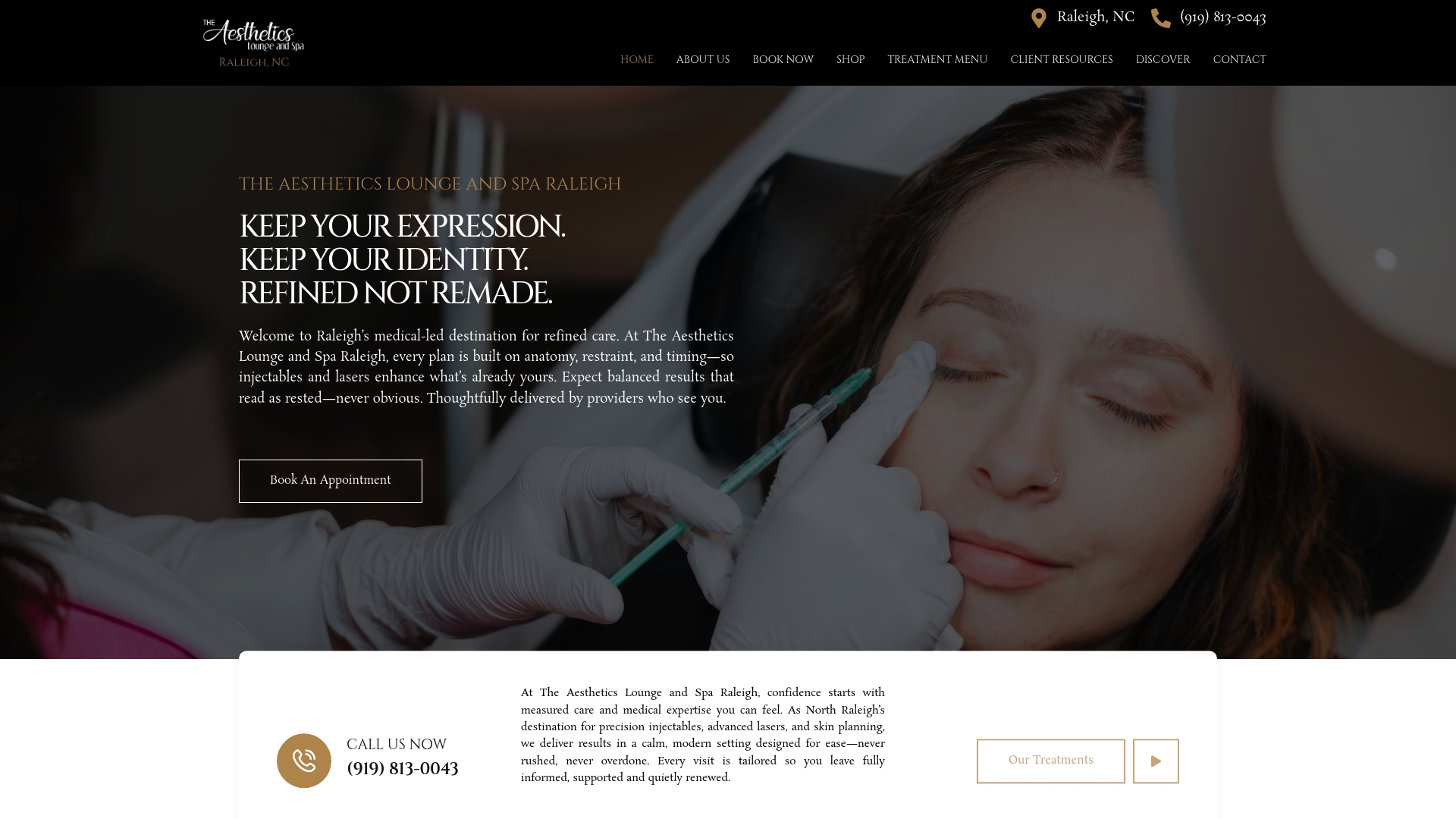
Experience the difference of a spa where medical knowledge guides every step. Visit The Aesthetics Lounge and Spa Raleigh now to schedule your personalized consultation. Discover aesthetic care designed not just for today but for the long term with clear communication and no pressure. Empower yourself with treatments led by licensed professionals who prioritize your health and natural beauty.
Learn more about our philosophy and services at The Aesthetics Lounge and Spa Raleigh.
Start your journey toward safer, smarter, and more satisfying aesthetic results today.
Medically led spas combine traditional aesthetic treatments with advanced medical expertise, ensuring that aesthetic enhancements are delivered with clinical precision and safety under the supervision of licensed medical professionals.
Medically led spas are operated under strict medical supervision, focusing on advanced and scientifically validated treatments, while traditional day spas typically offer relaxation services and surface-level beauty treatments without medical oversight.
You can expect a variety of non-surgical interventions at a medically led spa, including laser therapies, injectable treatments, chemical peels, and advanced skin rejuvenation techniques, all aimed at enhancing skin health and achieving natural results.
Safety is paramount in medically led spas because they adhere to rigorous medical standards and protocols, ensuring that treatments are performed by trained professionals who prioritize patient well-being and minimize risks associated with aesthetic procedures.