
Choosing subtle enhancements for your appearance should not mean sacrificing safety or comfort. For many in North Raleigh, the search for a trusted option often leads to medical spas—where clinically proven treatments and spa atmosphere are combined under expert guidance. This article highlights how a true medical spa sets itself apart with licensed medical supervision, advanced technology, and a focus on natural-looking results, enabling you to maintain confidence and authenticity without the risks of overdone procedures.
Table of Contents
- Defining A Medical Spa And Its Purpose
- Comparing Medical Spas And Day Spas
- Key Treatments And Expert-Led Process
- Safety, Credentials, And Client Education
- Costs, Realistic Results, And Alternatives
Key Takeaways
| Point | Details |
|---|---|
| Medical Spa Definition | Medical spas combine clinical treatments with spa comfort, offering a bridge between dermatological care and relaxation. |
| Key Differences | Unlike traditional spas, medical spas prioritize clinical outcomes, overseen by licensed medical professionals. |
| Core Purpose | The main goal is to deliver effective aesthetic treatments in a comfortable environment, focusing on natural refinement. |
| Safety and Credentials | Confirm that treatments are directed by a physician and performed by medically trained staff for safe, effective care. |
Defining A Medical Spa And Its Purpose
A medical spa (or med spa) is fundamentally different from a traditional day spa. It combines clinical treatments with spa comfort, all under the supervision of licensed medical professionals.
Think of it as a bridge between your dermatologist’s office and a relaxation sanctuary. You get results-driven aesthetic care without sacrificing the calm, supportive environment you’d expect from a spa experience.
What Sets Medical Spas Apart
Traditional spas focus on relaxation and pampering. Medical spas prioritize clinical outcomes. That distinction matters—especially when you’re considering cosmetic treatments.
Here’s what makes a true medical spa:
- Medical oversight: A licensed physician directs the treatment philosophy and supervises procedures
- Advanced technology: Laser systems, injectables, and other clinical-grade equipment not found in day spas
- Trained professionals: Aestheticians and nurses work under medical direction, not independently
- Results-based approach: Treatments target specific concerns with measurable outcomes
- Minimal downtime: Many procedures allow you to return to your day immediately
Medical spas merge medical procedures normally performed in a doctor’s office with the comfort and atmosphere of a day spa experience. This hybrid model appeals to people who want clinical precision without feeling like they’re in a sterile medical environment.
Purpose and Philosophy
The core purpose of a medical spa is straightforward: deliver effective cosmetic and skin health treatments in an environment designed for your comfort. No pressure. No overdone results. Just measured, anatomical refinement.
This is aesthetic care built for longevity, not trends. Your treatments should respect your facial structure, honor your natural movement, and support your appearance—not overhaul it.
Services typically include:
- Injectable treatments (Botox, dermal fillers)
- Laser therapies (hair removal, skin resurfacing)
- Chemical peels and advanced skincare
- Corrective skin treatments
- Preventive wellness procedures
A quality medical spa prioritizes planning and education before any treatment, ensuring decisions feel clear and aligned with your actual goals.
The difference between a medical spa and a traditional day spa comes down to credibility, expertise, and outcomes. When medically supervised aesthetic care is your goal, the distinction becomes critical.
Pro tip: When evaluating a medical spa, always confirm that a physician directs treatment protocols and that staff are medically trained—this is your assurance of safe, effective care guided by actual medical expertise.
Comparing Medical Spas And Day Spas
The two sound similar, but the difference runs deep. A day spa and a medical spa serve entirely different purposes, operate under different regulations, and deliver different outcomes.
Understanding this distinction matters before you book your first appointment. The wrong choice could leave you disappointed—or worse, unsafe.
The Core Difference
Day spas prioritize relaxation and wellness. Medical spas prioritize clinical results. That one distinction changes everything about how treatments are delivered, who performs them, and what you should expect.
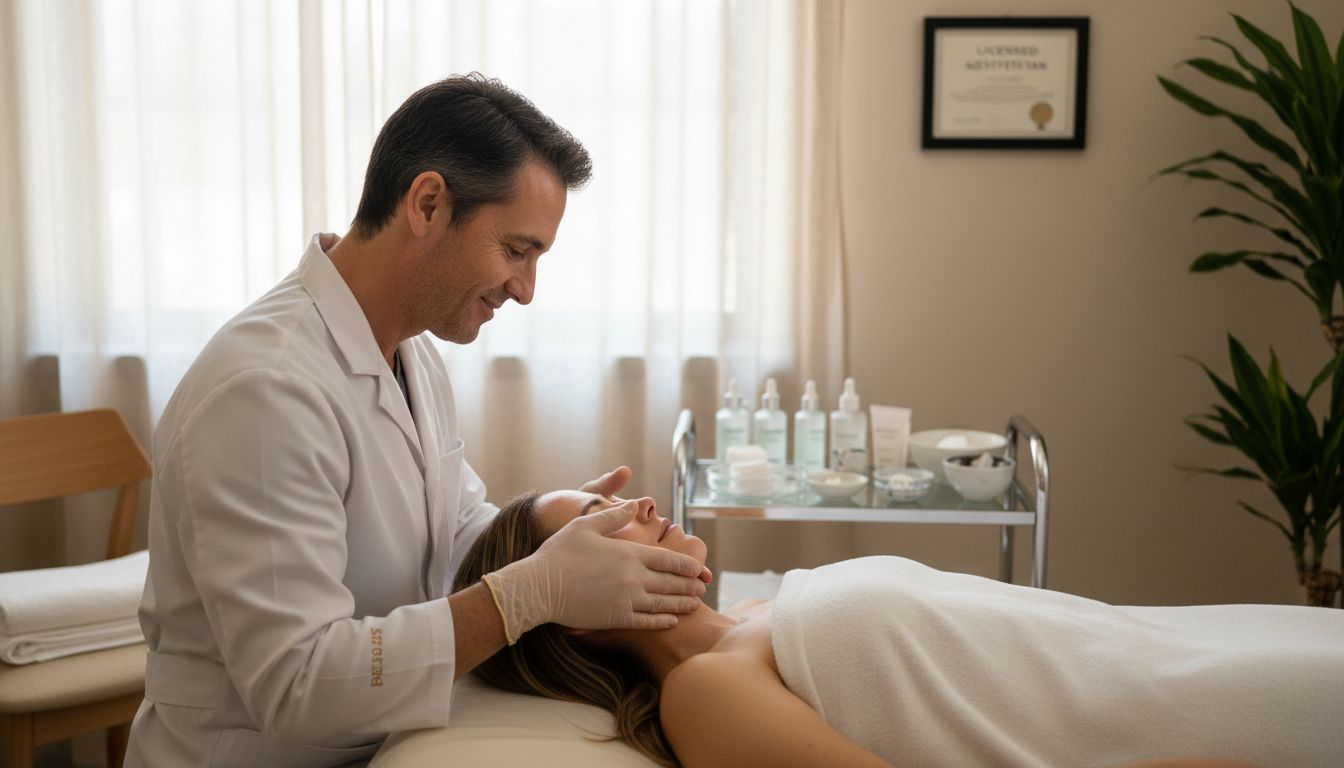
A day spa might offer a rejuvenating facial. A medical spa offers a targeted skin treatment protocol designed to address specific concerns with measurable outcomes.
Medical Spas: Clinical Precision
Medical spas operate under physician oversight. A licensed doctor directs treatment philosophy and supervises procedures, ensuring safety and efficacy.
Here’s what you get at a medical spa:
- Licensed medical professionals performing or supervising treatments
- Advanced, clinical-grade equipment (lasers, injectables, specialized devices)
- Medically supervised aesthetic treatments such as Botox, fillers, and laser therapy
- Treatment plans based on anatomical assessment and clinical goals
- Minimal downtime with measurable, reproducible results
- Ongoing evaluation and adjustment based on outcomes
This is care built on evidence, not trends. Your provider can explain exactly why a specific treatment will work for your concern and what to expect.
Day Spas: Comfort and Relaxation
Day spas focus on holistic wellness and stress relief. Treatments like massages, facials, and body therapies are designed to help you feel pampered and rejuvenated.
Day spa services include:
- Swedish massages and therapeutic bodywork
- Relaxation-focused facials and skincare
- Body treatments (wraps, scrubs, soaks)
- Aromatherapy and wellness therapies
- No medical supervision or clinical outcomes
These treatments feel wonderful and support overall wellbeing. But they’re not designed to address specific aesthetic concerns or produce clinical results.
Key Differences at a Glance
| Aspect | Medical Spa | Day Spa |
|---|---|---|
| Physician oversight | Required | Not required |
| Equipment | Clinical-grade, advanced | Standard spa equipment |
| Goal | Measurable clinical results | Relaxation and wellness |
| Treatment depth | Targets specific concerns | General rejuvenation |
| Staff qualifications | Medically trained professionals | Licensed spa therapists |
| Downtime considerations | Minimal; planned for | Not applicable |
Choosing between them isn’t about better or worse—it’s about matching your actual goal to the right environment.
If you want to relax and feel pampered, a day spa excels. If you want subtle, measured enhancements guided by medical expertise, a medical spa is the appropriate choice.
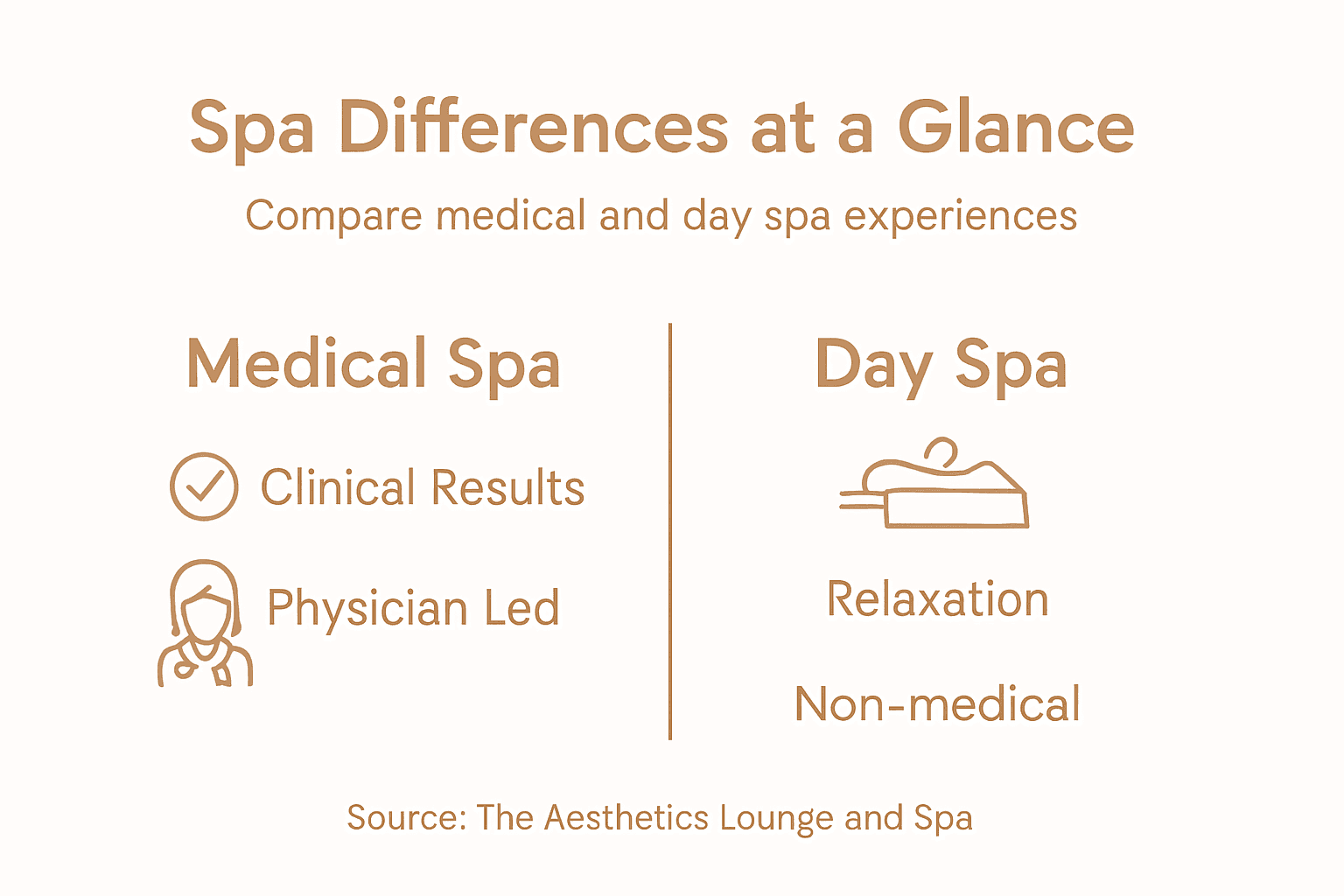
The Aesthetics Lounge and Spa operates as a medically led destination where clinical precision meets spa comfort. Your treatments are guided by medical knowledge, not spa convention.
Pro tip: Before booking, confirm that a physician directs treatment protocols and that staff are medically trained—this assurance matters far more than amenities or ambiance.
Key Treatments And Expert-Led Process
A medical spa’s value lies not just in what treatments are available, but in how they’re planned and executed. The process matters as much as the outcome.
At a true medical spa, every treatment starts with assessment, planning, and education—never pressure or quick decisions. This is how subtle, believable results happen.
Core Injectable Treatments
Injectables form the foundation of subtle enhancement. They address fine lines, lost volume, and facial structure with precision.
Common injectable treatments include:
- Botox: Smooths dynamic wrinkles by relaxing specific muscles
- Dermal fillers: Restores volume and supports facial structure
- Strategic placement: Maintains natural movement and expression
- Layered approach: Builds results over time, not all at once
The key difference? Medical spas use anatomically informed placement that respects how your face moves and ages. Results look like you—just supported.
Laser And Advanced Skin Treatments
Lasers address texture, tone, and deeper skin concerns without downtime or overdone appearance.
These treatments include:
- Laser skin resurfacing (controlled depth, minimal recovery)
- Hair removal (permanent reduction, safe for all skin types)
- Spot and pigment correction
- Skin tightening and collagen stimulation
Laser treatments require precision calibration and medical supervision. Your provider adjusts settings based on your skin type, concern, and healing capacity—not a one-size-fits-all protocol.
The Expert-Led Process
Here’s how a refined medical spa actually works:
- Consultation: Your provider assesses your goals, anatomy, and skin health without judgment
- Planning: A treatment strategy is created—not a single procedure, but a measured timeline
- Education: You understand exactly what will happen, what to expect, and why
- Conservative approach: First treatments are intentionally modest, allowing adjustment
- Follow-up evaluation: Results are assessed, and adjustments are made thoughtfully
- Maintenance protocol: A long-term plan keeps results current without overtreatment
This pacing matters. Subtle results build credibility. Rushed results look obvious.
The difference between “done” and “overdone” is often the interval between treatments—and the willingness to stop before it’s too late.
Medical expertise guides every decision. Your provider explains the “why” behind recommendations, ensuring transparency and alignment with your actual goals.
Pro tip: Ask your provider to explain their treatment philosophy before booking—if they prioritize “more” over “measured,” or trends over anatomy, look elsewhere.
Safety, Credentials, And Client Education
Safety isn’t a feature you negotiate. It’s a baseline requirement. Before choosing any medical spa, verify that credentials, oversight, and education standards are genuinely in place.
This is where the difference between a true medical spa and a facility playing dress-up becomes very clear.
Medical Oversight And Physician Direction
A licensed physician must direct your care. Not supervise loosely. Direct.
This means:
- A physician reviews your medical history before treatment
- Treatment protocols are established by the doctor, not by spa convention
- Staff perform procedures under medical direction and accountability
- Emergency protocols are established and staff are trained
- The physician is accessible for questions and adjustments
If you can’t identify the supervising physician or confirm their credentials, that’s a red flag. Walk away.
Staff Credentials And Continuous Education
Your aesthetician or injector should have verifiable training, not just a weekend certification course.
Legitimate credentials include:
- Licensed nursing (RN, LPN) or medical assistant certification
- Advanced injectable training from accredited programs
- Ongoing continuing education in aesthetic medicine
- Hands-on training under physician supervision
- Regular competency assessments and skill verification
Rigorous standards on clinical safety and staff competency ensure that practitioners maintain high expertise and ethical practice. Accredited facilities verify credentials, mandate ongoing education, and conduct regular quality audits.
Ask to see credentials. A professional spa will share them openly.
Safety Protocols And Infection Control
Medical spas must maintain standards matching any medical office.
Essential safety measures include:
- Strict infection control and sterilization procedures
- FDA-compliant equipment maintenance and calibration
- Emergency preparedness (supplies, staff training, protocols)
- Clear informed consent and documentation
- Adverse event tracking and quality improvement
- Professional liability insurance and accreditation
These aren’t optional. They protect you.
Client Education As Core Practice
Education isn’t a sales tactic at a quality medical spa. It’s a requirement.
Before any treatment, you should understand:
- Why this specific treatment addresses your concern
- What results are realistic for your situation
- What to expect during and after treatment
- Any risks or side effects (no matter how rare)
- How results will evolve over time
- What maintenance looks like long-term
A provider who pressures you before educating you isn’t operating from a place of client care. They’re operating from a quota.
Genuine medical spas take time to explain. They answer questions thoroughly. They encourage you to think, not just consent.
Questions To Ask Before Booking
Protect yourself with these questions:
- Who is the supervising physician? (Get their name and credentials)
- What training and certification does my provider have?
- Is your facility accredited by a recognized medical spa council?
- What are your infection control and sterilization protocols?
- Can you provide references or before-and-after galleries?
- What is your approach to conservative treatment?
Don’t accept vague answers. A legitimate facility welcomes scrutiny.
Pro tip: Before your first appointment, request to speak with the physician or medical director by phone—their willingness to educate you directly signals genuine confidence in their practice.
Costs, Realistic Results, And Alternatives
Medical spa treatments cost less than surgery but more than a day spa facial. Understanding pricing, what results actually look like, and when alternatives make sense helps you make informed decisions.
There’s no point pursuing treatments if your expectations don’t align with reality.
What Medical Spa Treatments Cost
Pricing varies by location, provider expertise, and treatment complexity. North Raleigh costs differ from coastal or major metropolitan areas.
Typical price ranges include:
- Botox: $200-$400 per area, lasting 3-4 months
- Dermal fillers: $300-$800 per syringe, lasting 6-18 months depending on type
- Laser treatments: $300-$1,500 per session, often requiring 3-6 sessions
- Chemical peels: $150-$500 per treatment, typically requiring a series
- Combination packages: Often discounted compared to individual treatments
Maintenance costs are predictable. Budget accordingly before committing.
To help clarify treatment options, here is a summary of common medical spa procedures, their main benefits, and expected maintenance:
| Treatment Type | Primary Benefit | Typical Maintenance |
|---|---|---|
| Botox | Reduces wrinkles | Every 3-4 months |
| Dermal fillers | Restores volume | Every 6-18 months |
| Laser therapy | Improves tone/texture | 3-6 sessions, yearly |
| Chemical peels | Smoother, brighter skin | Series, then quarterly |
| Hair removal | Permanent reduction | Annual touch-ups |
Realistic Results Timeline
Subtle results take time. This is intentional.
Here’s what to expect:
- Injectables: Results appear over 7-14 days, full effect at 2 weeks
- Laser treatments: Improvement visible after first session; optimal results after 3-6 sessions over months
- Cumulative approach: Each treatment builds on previous results
- Maintenance: Results stabilize, then gradually fade over months
- Evolution: Your appearance supports your age, not fighting it
Medical spas deliver natural, sustainable benefits through non-invasive treatments that optimize recovery and quality of life. Results improve gradually, avoiding the “done” appearance that ages you worse than doing nothing.
When Alternatives Make Sense
A medical spa isn’t always the right choice. Consider alternatives for specific situations.
Day spas work if you want relaxation and general wellness without clinical results.
Dermatology clinics are better if you have active skin conditions requiring medical diagnosis and treatment.
Surgical procedures become necessary only if non-surgical options truly cannot address your concern—rare for subtle enhancement goals.
At-home skincare complements medical spa treatments but cannot replace professional-grade interventions.
Your provider should be honest about what treatments can and cannot do. If surgery is necessary, a quality medical spa will tell you.
Understanding potential alternatives helps ensure you select the right provider for your needs:
| Option | Best For | Limitation |
|---|---|---|
| Medical spa | Subtle, aesthetic enhancement goals | Not for medical diagnosis |
| Day spa | Stress relief and wellness | No medical-grade results |
| Dermatology clinic | Skin conditions needing treatment | Limited cosmetic services |
| At-home skincare | Daily maintenance | Cannot provide deep changes |
Cost-Effectiveness Over Time
Initial investment feels high. Long-term value becomes clear.
Consider this math:
- One surgical procedure: $3,000-$15,000, recovery time, revision risks
- Medical spa program: $1,500-$3,000 annually for subtle maintenance over years
- Results longevity: Surgical results fade; medical spa results compound
- Flexibility: Adjust or pause treatments without permanent commitment
- Predictability: Monthly or quarterly budgeting works better than lump-sum procedures
True cost isn’t the price per treatment—it’s the price per year of looking supported and rested.
Quality facilities offer package pricing and maintenance plans that improve affordability. Ask about them.
Red Flags In Pricing
Watch for unrealistic cost promises:
- Suspiciously low prices (often correlates with lower standards)
- Pressure to buy large packages upfront
- Vague pricing with surprise charges
- No discussion of realistic timelines or maintenance costs
Transparency matters. A legitimate provider quotes clearly and discusses long-term cost expectations upfront.
Pro tip: Request an itemized estimate before your first appointment, including treatment costs, recommended frequency, and realistic long-term maintenance budget—this prevents surprises and aligns expectations with reality.
Discover Subtle Enhancements with Expert Care at The Aesthetics Lounge and Spa
If you are seeking natural, refined results without the fear of looking overdone, The Aesthetics Lounge and Spa in North Raleigh offers the perfect solution. The challenge many face is wanting aesthetic improvements that honor their natural facial structure and movement while avoiding drastic or unnatural changes. Our medically led approach focuses on calm, intentional planning and education that respects your unique anatomy and skin health.
Explore our tailored treatments by visiting the Skin Care Archives to learn how subtle enhancements can be achieved with precision. Experience aesthetic care built for longevity, guided by licensed medical professionals at The Aesthetics Lounge and Spa Raleigh. Take the first step today toward confident, natural beauty with treatments that keep you looking supported and authentically you.
Frequently Asked Questions
What is a medical spa?
A medical spa, or med spa, combines clinical treatments with a spa-like atmosphere, focusing on aesthetic care under the supervision of licensed medical professionals. It aims to provide effective cosmetic and skin health treatments in a comfortable environment.
How do medical spas differ from day spas?
Medical spas prioritize clinical outcomes and operate under physician oversight, while day spas focus primarily on relaxation and general wellness. Medical spas use advanced technology and are staffed by trained professionals, targeting specific aesthetic concerns.
What types of treatments are offered at medical spas?
Common treatments at medical spas include injectable treatments like Botox and dermal fillers, laser therapies, chemical peels, corrective skin treatments, and preventive wellness procedures, all designed to achieve measurable, natural-looking results.
Are medical spa treatments safe?
Yes, when performed in a legitimate medical spa directed by licensed physicians, treatments are safe. Proper medical supervision, ongoing education for staff, and strict infection control protocols help ensure safety during procedures.