
Finding the balance between looking refreshed and avoiding dramatic changes can feel challenging for professionals in North Raleigh. Many worry that aesthetic treatments push obvious results or trendy procedures that undermine a natural appearance. Boutique med spas offer a distinct approach, blending medical expertise with attentive, personalized care in a calm setting. This introduction breaks down how boutique med spas differ from busy chains, clear up common misconceptions, and explain why a medically supervised, individualized plan supports subtle enhancement and sustained confidence.
Table of Contents
- Defining Boutique Med Spas And Misconceptions
- Personalized Approach To Cosmetic Enhancements
- Medically Supervised Treatments And Expertise
- Long-Term Benefits Vs Trend-Driven Options
- Risks, Costs, And Common Mistakes To Avoid
Key Takeaways
| Point | Details |
|---|---|
| Boutique Med Spas | They focus on personalized, anatomy-driven care in a calm atmosphere, contrasting with large chain spas that often take a one-size-fits-all approach. |
| Medical Supervision | Treatments are guided by licensed physicians, ensuring safety and tailoring rather than just following standard protocols. |
| Long-Term Strategy | A focus on gradual, sustainable results avoids the pitfalls of trend-driven care, promoting natural aging rather than dramatic changes. |
| Education and Personalization | Providers prioritize client education, ensuring that treatments are unique to each individual’s facial structure and needs. |
Defining Boutique Med Spas and Misconceptions
A boutique med spa combines clinical expertise with a personalized, intimate setting. Unlike large medical chains or traditional day spas, boutique facilities focus on thoughtful aesthetics delivered by medical professionals in a calm environment.
The word “boutique” matters here. It signals exclusivity, attention to detail, and restraint—not flashiness or trend-chasing. Your experience is shaped by continuity with the same provider and a treatment philosophy built on your unique facial structure, not a one-size-fits-all menu.
What Sets Boutique Med Spas Apart
Boutique med spas operate with medical oversight while maintaining a spa-like atmosphere. This combination addresses a real gap in the aesthetic market.
Here’s a concise comparison of boutique med spas versus traditional chains:
| Aspect | Boutique Med Spa | Large Chain Spa |
|---|---|---|
| Provider Continuity | Same expert per visit | Different providers each visit |
| Treatment Philosophy | Personalized, anatomy-driven | Generic, trend-focused |
| Client Experience | Calm, intimate, unrushed | Busy, often impersonal |
| Pricing Approach | Reflects expertise, tailored | Upselling and marketing focused |
-
Medical direction: A licensed physician guides treatment protocols and ensures safety standards exceed standard regulations.
-
Intimate scale: Smaller client rosters mean fewer appointments per day and more time spent understanding your goals before proceeding.
-
Anatomical precision: Providers study your facial structure, skin health, and movement patterns rather than applying generic treatment templates.
-
Measured pacing: Conservative recommendations build results over time, respecting your comfort and natural appearance.
-
Transparency: Costs, timelines, and realistic outcomes are discussed upfront without pressure tactics.
A boutique med spa prioritizes how you feel about your results, not how quickly they appear.
Common Misconceptions
Misunderstandings about boutique med spas often stem from confusion with other aesthetic settings. Here’s what’s actually true.
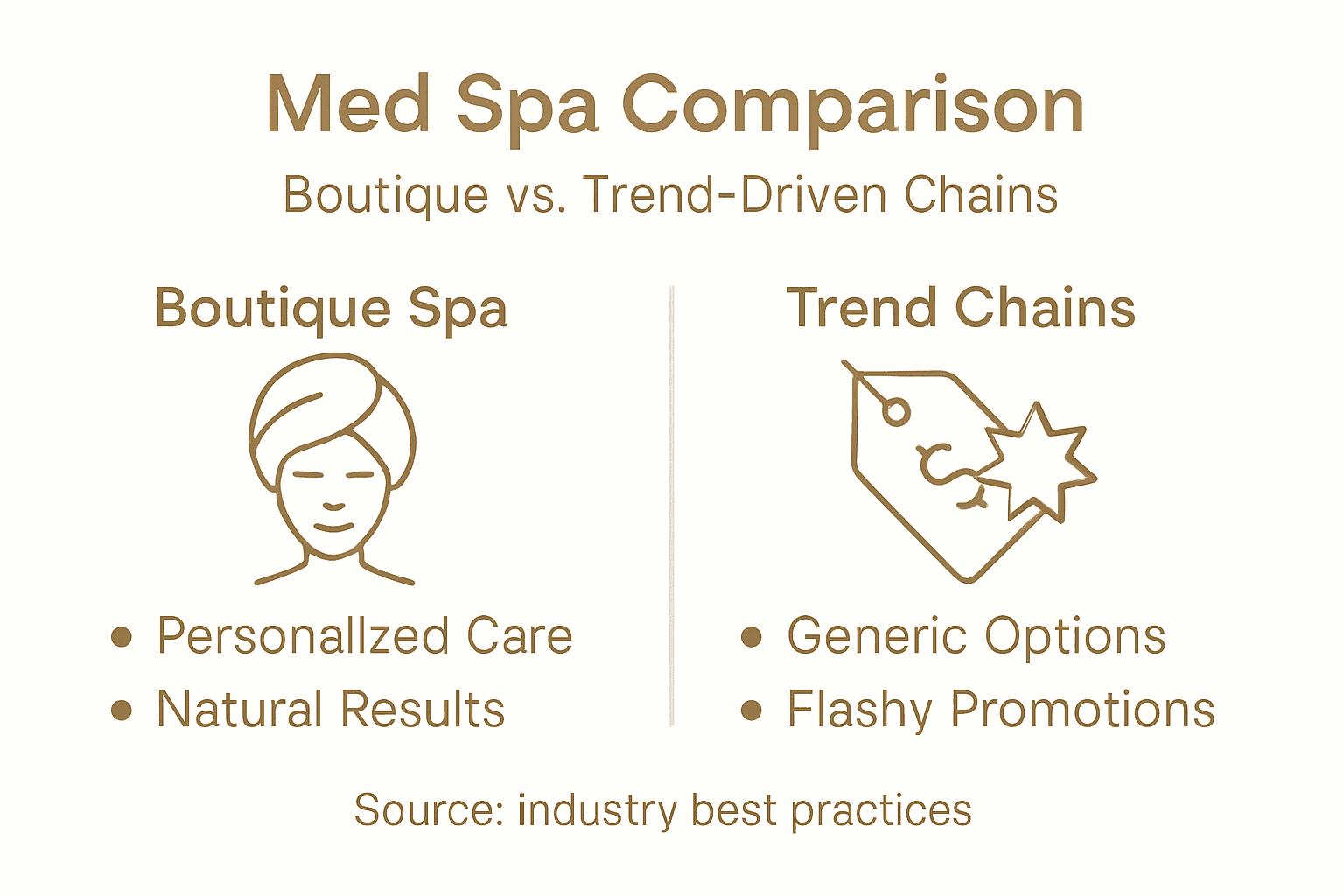
Misconception: Boutique med spas offer fewer treatment options.
Reality: Limited menus signal intentionality. When a facility offers 40+ treatments, clients often feel overwhelmed and pushed toward unnecessary procedures. Boutique providers curate services that work together, creating sustainable results rather than chasing every trend.
Misconception: Medical supervision means clinic-like, clinical experience.
Reality: Medical oversight happens behind the scenes. The medically led spa approach focuses on safety while maintaining a calm, refined atmosphere where you feel supported, not monitored.
Misconception: Boutique = luxury pricing with luxury results.
Reality: Pricing reflects expertise and personalized care, not extras you don’t need. Boutique facilities often cost less than chains because overhead is lower and treatment is strategic rather than upselling-driven.
Misconception: Boutique med spas cater only to people seeking dramatic changes.
Reality: The opposite is true. Boutique settings attract professionals seeking subtle enhancement, natural movement, and the ability to maintain their professional image. Dramatic results draw attention; quiet refinement does not.
Why This Matters for You
If you’re 30-50 and working in a professional environment, dramatic aesthetic changes can feel risky. Colleagues notice. Clients notice. A boutique med spa philosophy protects your identity while supporting the version of yourself you want to present—rested, confident, and entirely believable.
Treatment strategy matters more than treatment count. Planning first, educating always, and treating with precision means your money goes toward results that last, not temporary fixes that require constant maintenance.
Pro tip: During your initial consultation, ask a provider how they would approach your goals if you had three years instead of three months. Their answer reveals whether they’re building a sustainable strategy or selling quick results.
Personalized Approach to Cosmetic Enhancements
Personalization starts with understanding that your face is not a template. Your bone structure, skin thickness, facial proportions, and natural expression patterns are entirely your own. A generic treatment plan ignores these realities.
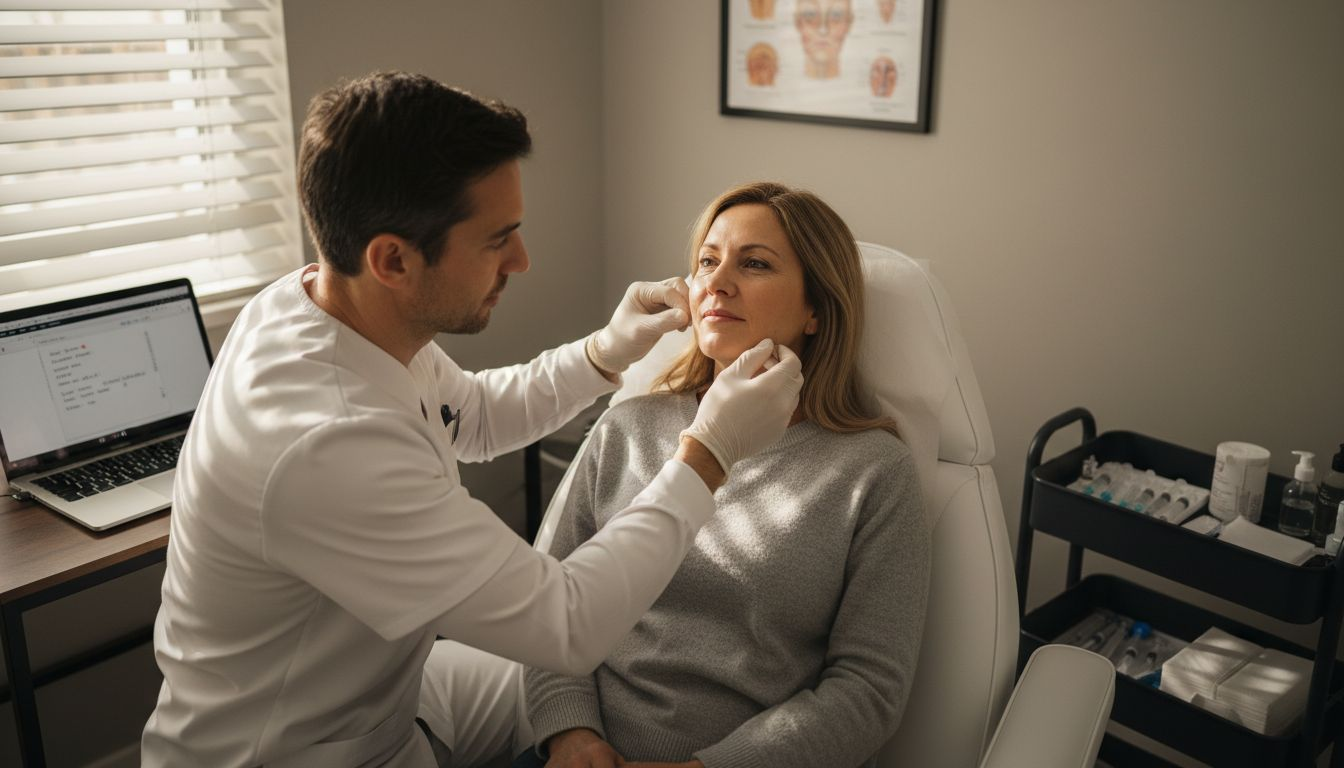
At a boutique med spa, personalization means your provider studies your face before deciding what to do. This isn’t flattery or custom packaging. It’s clinical observation that shapes everything from product selection to injection placement to timing between appointments.
How Personalization Works
The personalized approach follows a deliberate sequence. Each step matters.
-
Assessment: Your provider examines your facial structure, skin condition, and how you move and express yourself. Photos from multiple angles document starting points.
-
Goal alignment: You discuss what bothers you and what you want to preserve. This conversation reveals the gap between what you feel and what you see.
-
Strategy design: Rather than offering a menu, your provider recommends a phased plan suited to your anatomy and timeline.
-
Conservative treatment: The first phase respects your baseline. Results build gradually, allowing adjustments before adding more.
-
Follow-up refinement: Subsequent appointments assess what’s working and adjust the approach based on how your skin and expression respond.
Personalization means treating your face as a unique system, not applying a formula.
Why Generic Approaches Fail
Walking into a spa with a price list and treatment menu often leads to poor outcomes. Providers trained only to sell services lack the framework to say no.
Common pitfalls of non-personalized care include:
-
Mismatched treatments: A technique that works for one client’s anatomy may create imbalance in another’s.
-
Over-treatment: Without anatomical understanding, more product gets used, creating obvious results that read as “work done.”
-
Timing problems: Clients retreat on schedules (quarterly, biannual) rather than when their face actually needs treatment.
-
Missed opportunities: Preventative care or supportive skin treatments get overlooked because the focus is on injectables alone.
Personalization for Your Professional Life
You’re not seeking a transformation. You want to look rested, supported, and like yourself. Personalization protects this goal by respecting your baseline and building subtly.
Your provider learns your movement patterns. Injections are placed to maintain your natural expression while softening lines. The goal is that colleagues notice you look better—not that they notice you had treatment.
Understanding how to choose aesthetic treatments naturally for you helps you evaluate whether a facility truly personalizes or simply sells standard protocols.
The Role of Education
Personalized care requires continuous education. Your provider explains why certain approaches fit your anatomy, what to expect during healing, and how results will evolve.
You’re not just receiving treatment. You’re building knowledge about your face so you can make informed decisions at every stage.
Pro tip: Ask your provider to explain their recommendation using your specific facial structure—not generic anatomy. If they struggle to articulate why a treatment suits you personally, that’s a sign personalization isn’t their priority.
Medically Supervised Treatments and Expertise
Medical supervision changes everything. It’s not a credential on the wall—it’s oversight that affects every decision made during your treatment. A physician’s involvement means safety protocols, accurate product selection, and expertise that catches complications before they start.
At a boutique med spa, medical leadership shapes the entire philosophy. Your provider doesn’t just follow a protocol. They apply clinical judgment informed by anatomy, pharmacology, and years of complication management.
What Medical Supervision Actually Provides
Medical oversight operates at multiple levels. Each layer protects you differently.
-
Protocol design: A licensed physician establishes treatment standards that exceed state requirements, not just meet them.
-
Product oversight: Injectables, lasers, and skincare products are selected based on clinical evidence, not marketing or cost margins.
-
Complication management: If something unexpected occurs, a physician is trained and authorized to intervene immediately.
-
Dosing accuracy: Medical knowledge ensures products are used at appropriate concentrations. More product doesn’t equal better results—proper dosing does.
-
Client screening: A physician reviews your medical history to identify contraindications or risks others might miss.
Medical supervision means your safety is built into every treatment decision, not added as an afterthought.
The Expertise Gap
Not all providers have equal training. A spa technician can execute injections. A medical professional understands why certain placements work for your face and others don’t.
This distinction matters in real situations:
-
Asymmetry correction: If your face favors one side, a medical provider adjusts treatment accordingly. A technician applies the same dose to both sides.
-
Age-appropriate strategy: Your 40-year-old face needs different support than a 50-year-old face. Medical expertise recognizes these differences.
-
Movement preservation: Maintaining your natural expression requires understanding facial musculature. Medical training includes this knowledge.
-
Preventative thinking: A physician considers not just what bothers you now, but what will likely need support in 2-3 years.
Why This Matters for Professionals
You can’t afford visible complications or obviously treated results. Medical supervision reduces both risks. A physician-led approach prioritizes believability and longevity over dramatic change.
Your provider has treated hundreds of professional faces. They understand what works at your age, your industry, and your goals. They’ve managed rare complications and learned from them.
The role of medical providers in aesthetics emphasizes achieving natural results through clinical expertise rather than trend-driven trends. Medical oversight ensures your treatments support your professionalism, not undermine it.
Credentials That Actually Matter
Not all medical credentials are equal in aesthetics. Look for providers with:
- Board certification in dermatology, plastic surgery, or relevant specialties.
- Hands-on training in injectable techniques and laser systems.
- Continuing education in aesthetic medicine.
- Years of direct patient care—not just classroom time.
A physician’s title means less than their actual experience with injectables and aesthetic treatments. Ask how many clients they’ve treated and what complications they’ve managed.
Pro tip: Request to see before-and-after photos of clients with similar age, skin tone, and concerns as yours. Natural-looking results from a medically supervised provider show consistency across diverse clients, not just standout transformations.
Long-Term Benefits vs Trend-Driven Options
Trend-driven aesthetics feel exciting in the moment. Viral treatments promise transformation. Social media floods with before-and-afters of the latest procedure. Then reality sets in: trends fade, results age poorly, and you’re left explaining why your face looks overdone.
Long-term thinking operates differently. Instead of chasing what’s popular this season, you build a treatment strategy that respects your face and evolves with you over years. This approach costs less money overall and produces results that age gracefully.
The Problem With Trend-Driven Care
Trend-driven treatments share predictable problems. Understanding them helps you recognize the pattern.
-
Overtreatment: Trends often push maximum dosing. Results look dramatic on Instagram but unnatural in professional settings.
-
Misaligned goals: Viral procedures target younger demographics. Applying them to your 40-year-old face creates age-inappropriate results.
-
Rapid obsolescence: The treatment that’s everywhere this year looks dated next year. You’ll feel pressure to “fix” results that were fine.
-
Complication risk: New procedures lack long-term safety data. You become part of the learning curve for providers chasing revenue.
-
Financial drain: Trend treatments require frequent maintenance and updates. One procedure leads to three more to look consistent.
Trends fade. Timeless results remain.
Long-Term Strategy
A long-term approach builds incrementally. Each treatment prepares your face for the next phase of aging.
-
Year 1: Preventative care and subtle support address early concerns before they deepen. Results are noticeable to you, invisible to others.
-
Year 2-3: Additional support as skin naturally changes. You’ve proven the approach works for your face, so adjustments are confident.
-
Year 4+: Your provider understands your baseline so well that treatment feels intuitive. Maintenance is minimal because prevention happened early.
This timeline costs far less than reactive trend-chasing. You’re also aging gracefully instead of dramatically.
Financial Reality
Trend-driven clients spend more money over five years. They chase new procedures, attempt corrections when results disappoint, and rebuild consistency repeatedly.
Long-term clients spend predictably. Once your strategy stabilizes, costs decrease because you’re maintaining, not recovering from mistakes.
Compare long-term and trend-driven approaches in aesthetic care:
| Approach | Results Longevity | Annual Cost Estimate | Professional Impact |
|---|---|---|---|
| Long-Term Strategy | Gradual, lasting | $2,000–$5,000 | Supports subtle enhancement |
| Trend-Driven | Short-lived | $5,000–$10,000+ | May undermine natural look |
A medically led spa approach emphasizes sustainable results over trend cycles. Medical providers design strategies for longevity, not maximum profit from your current visit.
Your Professional Advantage
Your face is part of your professional brand. Obvious aesthetic work undermines that brand. Subtle, strategic enhancement supports it.
Clients and colleagues notice consistency. When you’ve looked rested and supported for three years, no one remembers a “before.” Your appearance becomes your normal.
Trend-driven results broadcast that you’re chasing aesthetic approval. Long-term results broadcast that you’re taking care of yourself.
Pro tip: When a provider suggests a new treatment, ask: “How does this fit my three-year plan?” If they can’t answer clearly, they’re trend-selling, not strategy-building.
Risks, Costs, and Common Mistakes to Avoid
Every treatment carries risk. The difference between a boutique med spa and other facilities lies in how they acknowledge, prevent, and manage those risks. Understanding what can go wrong helps you choose wisely.
Costs also matter. Aesthetic treatment spending can spiral without a clear strategy. Knowing where money actually goes prevents wasteful decisions and buyer’s remorse.
Real Risks to Understand
Complications are rare but possible. Medical supervision dramatically reduces their likelihood and severity.
-
Bruising and swelling: Minor and temporary, but visible for days. More common with certain injection depths or client bleeding tendencies.
-
Asymmetry: One side responds differently than the other. Requires a follow-up adjustment, not a catastrophe.
-
Overcorrection: Too much product creates stiffness or unnatural appearance. Reversible fillers can be dissolved; botulinum toxin effects fade.
-
Infection: Extremely rare with proper sterile technique. Medical oversight ensures protocols exceed minimums.
-
Allergic reactions: Possible but uncommon. A physician on-site can intervene immediately if needed.
-
Vascular compromise: Injection into a blood vessel can cause tissue damage. Proper training and anatomical knowledge prevent this.
Risk isn’t eliminated—it’s managed through expertise and oversight.
The Cost Conversation
Costs vary widely. A single syringe of filler ranges from $400 to $900 depending on product and location. Botulinum toxin injections range from $200 to $600 per treatment.
What you’re paying for:
- Provider expertise and medical oversight
- Product quality and authenticity
- Facility standards and sterilization protocols
- Time spent in assessment and treatment planning
- Complication management if needed
What you’re not paying for: flashy marketing, expensive real estate, or unnecessary procedures.
Common Mistakes
These patterns repeat across clients who struggle with aesthetic outcomes.
Mistake 1: Choosing based on price alone. The cheapest provider usually cuts corners on assessment, product quality, or provider experience. You’re not saving money—you’re increasing risk.
Mistake 2: Comparing to unrealistic standards. Before-and-after photos on social media represent best cases, professional lighting, and often editing. Your results will look different.
Mistake 3: Treating without strategy. One random treatment creates no coherent result. Medically led spas explain services clearly so you understand how each appointment fits your plan.
Mistake 4: Overtreatment on first visit. Patience produces better outcomes. Conservative first treatment allows assessment before adding more.
Mistake 5: Skipping aftercare instructions. Bruising, swelling, and results depend partly on your behavior post-treatment. Following guidelines matters.
Cost Reality Over Time
Initial treatment costs $1,500 to $3,000 depending on your concerns. Maintenance happens 2-4 times yearly, ranging from $400 to $1,200 per visit.
This costs roughly $2,000 to $5,000 annually. Over five years, that’s $10,000 to $25,000. This sounds significant until compared to trend-chasing clients spending $25,000 to $50,000 on corrections and updates.
Pro tip: Request a three-year cost projection from your provider. If they can’t outline realistic spending, they’re not planning strategically—they’re maximizing per-visit revenue.
Discover Why The Aesthetics Lounge and Spa Is Your Ideal Boutique Med Spa Choice
If you are seeking natural, refined results that truly respect your unique facial anatomy and professional image the challenges outlined in “Why Choose a Boutique Med Spa for Natural Results” are familiar. You want personalized care that values slow, thoughtful pacing instead of rushed or trend-driven treatments. You deserve a medically led environment where transparency and comfort guide every step.
At The Aesthetics Lounge and Spa Raleigh located in North Raleigh on Six Forks Road we specialize in exactly this. Our calm and intentional approach means you will experience aesthetic care designed for longevity. We prioritize your skin health and natural movement while delivering results that enhance your appearance without transforming it. Learn more about our personalized philosophy and treatment options in our Skin Care Archives – The Aesthetics Lounge and Spa Raleigh | Medical Spa in Raleigh, NC.
Take the next step toward subtle, believable enhancement that supports your confidence and professional presence. Visit The Aesthetics Lounge and Spa Raleigh to schedule your consultation and start building a smart treatment strategy that puts your unique beauty first. For insights into our medically led, boutique approach explore Uncategorized Archives – The Aesthetics Lounge and Spa Raleigh | Medical Spa in Raleigh, NC and discover why smart aesthetic care begins with expertise and thoughtful planning.
Frequently Asked Questions
What is a boutique med spa?
A boutique med spa combines clinical expertise with a personalized, intimate setting, focusing on tailored aesthetic treatments rather than a wide range of options.
How do boutique med spas differ from traditional med spas?
Boutique med spas emphasize personalized care with the same provider during each visit, anatomical precision in treatments, and a calm atmosphere, while traditional med spas may offer a more generic, busy experience with varying providers.
Are treatments at boutique med spas more expensive compared to larger chains?
Not necessarily. While boutique med spas reflect expertise, they can often cost less overall due to lower overhead and a focus on tailored treatment plans rather than upselling.
What should I expect during my first visit to a boutique med spa?
During your first visit, expect a thorough assessment of your facial structure and skin, a conversation about your goals, and a personalized treatment strategy designed specifically for you.