Facial anatomy facts for safer, natural-looking enhancements


TL;DR:

  • Understanding facial anatomy is essential for safe, natural-looking injectable treatments.
  • Proper knowledge of fat compartments and vessel locations guides effective and safe procedures.
  • Patient education on anatomy improves safety and trust in aesthetic treatments.

Before you commit to any injectable treatment, there’s one question worth asking: does your provider truly understand what lies beneath your skin? Most conversations about cosmetic enhancements focus on outcomes, product names, and before-and-after photos. Far fewer center on the intricate anatomy that makes the difference between a result that looks quietly natural and one that looks overdone or, in rare but serious cases, causes real harm. Understanding facial anatomy is not reserved for surgeons alone. It belongs in every informed patient’s toolkit.

Table of Contents

Key Takeaways

Point Details
Muscles drive movement Facial expression muscles shape wrinkles and movement, guiding safe injection points.
Fat pads affect youthfulness Superficial and deep fat compartments shape your look and reveal signs of aging.
Danger zones require precision Certain facial areas pose higher risks, so expert technique is critical for safe results.
Expertise means anatomy knowledge Providers should explain anatomical techniques to boost your safety and confidence.

The foundation: Facial muscles and expression

Your face moves the way it does because of a remarkably layered system of muscles working in precise coordination. These muscles fall into two distinct categories: muscles of expression and muscles of mastication (chewing). Each group has a different nerve supply and a different role in how your face looks and moves every day.

Facial muscles are divided into expression muscles, controlled by the facial nerve (cranial nerve VII), and mastication muscles, governed by the trigeminal nerve (cranial nerve V). Expression muscles are the ones most relevant to cosmetic care. They are thin, flat, and woven directly into the overlying skin, which is what allows them to produce the subtle movements behind a smile, a frown, or a raised eyebrow.

Some of the most clinically significant expression muscles include:

  • Frontalis: The broad muscle of the forehead responsible for lifting the brows. It is also where horizontal forehead lines develop over time.
  • Corrugator supercilii and procerus: The paired glabellar muscles that pull the brows inward and downward, creating the vertical “11 lines” between the brows.
  • Orbicularis oculi: The circular muscle encircling each eye, responsible for eye closure and the formation of crow’s feet.
  • Orbicularis oris: The circular muscle surrounding the mouth, controlling lip movement and contributing to perioral lines.
  • Zygomaticus major and minor: These elevate the corner of the mouth during smiling.

Why does this matter for your treatment plan? Because neuromodulators like Botox work by temporarily relaxing specific muscles. Injecting the wrong muscle, or the right muscle at the wrong depth, changes your expression in ways that may feel unnatural. Over-treating the frontalis, for example, can cause brow heaviness because the muscle can no longer lift adequately. Precise anatomical knowledge tells a skilled provider exactly how much to treat and exactly where.

Pro Tip: Ask your provider which specific muscles they are targeting and why. A confident, medically trained clinician will walk you through this without hesitation.

The facial structure basics also vary considerably from person to person. Some individuals have a naturally dominant frontalis, others have stronger corrugators. These individual differences mean that no two treatment plans should be identical, even for clients seeking similar outcomes.

The hidden layer: Facial fat compartments and their role in aging

While muscles control movement and facial expression, the underlying fat compartments are key to shape and youthfulness. Most people think of facial volume as a single, continuous layer of fat just beneath the skin. In reality, the structure is far more organized and specific than that.

Models comparing facial aging changes

Facial fat is compartmentalized into superficial and deep compartments separated by a fibromuscular layer called the SMAS (superficial musculoaponeurotic system). Each compartment behaves independently. They age at different rates, lose volume on different timelines, and respond differently to treatment.

Fat compartment Location Role in youthfulness Common aging change
Medial cheek fat Central cheek, superficial Supports cheek fullness Volume loss, flattening
Deep medial cheek fat Below SMAS, mid-face Lifts overlying tissues Descent, mid-face hollowing
Buccal fat pad Deep lateral cheek Defines jawline contour Can descend with age
Orbital fat (periorbital) Around the eye socket Provides under-eye support Herniation or hollowing
Temporal fat pad Temple region Temporal fullness Volume loss, skeletal appearance

Key things to understand about these compartments:

  • Superficial compartments are more prone to shifting and moving downward with gravity and tissue laxity over time.
  • Deep compartments tend to lose volume more gradually but have a significant structural effect when they deflate.
  • Targeted filler placement in the correct compartment restores volume where it was actually lost, rather than simply inflating the skin surface.

This distinction matters enormously when you consider why some filler results look natural and others do not. Placing filler superficially when the actual volume deficit is deep creates a pillow-like, overfilled appearance. The right provider assesses which compartment needs support and places product at the appropriate anatomical depth, a precision approach you can learn more about in these enhancement examples.

Understanding compartments also reframes how we interpret aging. You are not simply “losing fat.” You are losing volume in specific, predictable compartments, in a specific sequence, and the best treatment strategies honor that sequence rather than working against it.

Safety first: Anatomical danger zones and injectable procedures

Direction of facial aging and enhancement isn’t just about volume and movement; precision matters because some regions carry much higher risk. Certain areas of the face contain critical blood vessels and nerves that, if disrupted during an injectable procedure, can cause serious complications including skin death (necrosis) or, in the most severe cases, vision loss.

The danger zones for injectables include the glabella (supratrochlear and supraorbital arteries, carrying a blindness risk), the nose (dorsal nasal and angular arteries, risk of necrosis and blindness), the infraorbital region (infraorbital artery and foramen, ischemia risk), the nasolabial fold (facial artery), the temple (temporal artery), and the perioral area (labial arteries). Each zone requires a different, highly specific technique to navigate safely.

Here is a comparison of the risk profile and recommended technique for key danger zones:

Zone Primary vessel at risk Main complication Recommended technique
Glabella Supratrochlear artery Blindness, necrosis Inject superficially, use cannula, low pressure
Nose Angular, dorsal nasal artery Necrosis, blindness Preperiosteal (on bone), cannula preferred
Infraorbital Infraorbital artery Ischemia, vision change Lateral placement, avoid the foramen
Temple Superficial temporal artery Vessel occlusion Deep, subperiosteal placement
Perioral Superior/inferior labial arteries Lip necrosis Superficial or subdermal, gentle technique

Best-practice safety guidelines for any reputable provider include:

  1. Injecting at the correct depth for each anatomical zone, not a single universal depth across the entire face.
  2. Using a blunt-tipped cannula rather than a sharp needle in high-risk areas whenever possible.
  3. Aspirating before injection to check for inadvertent vessel entry.
  4. Injecting with low, controlled pressure to minimize the risk of intravascular product placement.
  5. Knowing the location of emergency reversal agents (hyaluronidase for hyaluronic acid fillers) before beginning any treatment.

Pro Tip: Before any injectable appointment, ask your provider directly: “What danger zones are relevant to the area we are treating, and what is your technique to avoid them?” A skilled, ethical clinician will welcome this question.

“The anatomy of the face is not optional knowledge for an injector. It is the entire foundation. Knowing where vessels and nerves travel, and how to respect them, is what separates a safe outcome from a dangerous one.”

You can learn more about injectables in aesthetics and explore top injectables for safety to understand which products are associated with the most favorable safety profiles in experienced hands.

Smart technique: How anatomy guides safer, more natural treatments

Armed with knowledge of risks, the final step is understanding why expert technique changes everything about safety and aesthetic success. Anatomy does not just tell a provider where not to inject. It also tells them exactly where and how deep to inject for optimal results that look right and hold well over time.

Peer-reviewed guidance on safe injection depths is precise: for neuromodulators, the frontalis should be treated more than 2 centimeters above the orbital rim to prevent brow descent; glabellar muscles require targeting at a specific depth to avoid spreading into the neighboring frontalis; and the lateral orbicularis oculi (crow’s feet area) should be treated at a subdermal, very superficial level. For fillers, the malar (cheekbone) area should be addressed lateral to the infraorbital foramen to avoid vessel injury; nasolabial folds benefit from superficial placement inferiorly and deeper placement superiorly; and nasal work is safest when placed directly on bone.

Here is a step-by-step framework for how a well-trained provider uses these anatomical landmarks:

  1. Assessment before treatment: Mapping the individual’s unique bony landmarks, muscle movement patterns, and fat compartment changes through careful visual analysis and palpation.
  2. Depth planning: Determining the correct anatomical plane for each target area, whether subdermal, intramuscular, or preperiosteal.
  3. Product selection: Choosing a filler consistency or neuromodulator dilution appropriate for the tissue depth and region.
  4. Injection entry point: Selecting entry points that approach target tissues while naturally avoiding vessels and nerves based on anatomical mapping.
  5. Real-time monitoring: Observing skin color, tissue response, and patient feedback throughout the procedure to catch and respond to any changes immediately.

Incorrect placement is not always obvious at the time of injection. Filler placed too superficially in the tear trough, for example, may look fine initially but can create a bluish, lumpy appearance (called the Tyndall effect) as the product interacts with light through thin skin. Filler placed in the wrong fat compartment in the cheek may not look unnatural right away, but it may migrate or create asymmetry as surrounding tissues continue to age.

This is why your unique anatomy matters as much as the product itself. Two people requesting identical cheek enhancement may need completely different approaches based on their bony structure, fat compartment volume, and skin thickness. Personalized technique is not a luxury; it is the standard you should expect.

Explore more about the relationship between injectables and rejuvenation and read guidance on choosing injectables naturally to continue building your informed perspective.

A new way to look at facial anatomy in aesthetics

Here is an opinion that many in the aesthetics industry do not say loudly enough: patients deserve anatomical transparency, not just aesthetic outcomes. Too often, the consultation conversation focuses entirely on how you will look afterward and almost nothing on the science behind how the treatment will be performed. That is a gap worth closing.

True expertise means knowing what lies beneath the surface and being willing to explain it. When a provider can walk you through the relevant muscles, fat compartments, and vascular landmarks for your specific concerns, that is not just educational; it is a signal that your safety is being taken seriously. It means the treatment is being built on a real clinical foundation rather than guesswork or habit.

We believe patient education in aesthetics is an ethical responsibility, not an optional bonus. When you understand why a provider is making a specific recommendation, you become a genuine partner in the process. That changes everything: your trust, your comfort during the procedure, and the quality of your outcomes over time. Aesthetics done right is anatomy done right.

Ready for a safer, more informed approach to facial aesthetics?

If reading this has shifted how you think about facial treatments, you are already a more prepared patient. The next step is finding a team in Raleigh that practices this standard of care every day.
https://raleigh.theaestheticsloungeandspa.com

At The Aesthetics Lounge and Spa Raleigh, every consultation is built on anatomical assessment first, treatment second. We believe in conservative aesthetics rooted in honest education and measured precision. Whether you are exploring your options or ready to move forward, our medical aesthetics explained resources and the facial rejuvenation process we follow are designed to help you feel confident, never rushed, and always supported. Book your consultation on Six Forks Road today.

Frequently asked questions

Why is understanding facial anatomy important for injectables?

Knowing facial anatomy ensures that injectables are placed at the correct depth and location, minimizing side effects and delivering the most natural result. Evidence-based practice calls for superficial to preperiosteal placement strategies depending on the region treated.

What are the biggest risks if facial anatomy is ignored during cosmetic treatments?

Neglecting anatomy can lead to serious complications including skin necrosis, asymmetry, or blindness. The glabella and nasal regions carry the highest risk for vascular occlusion leading to vision loss when vessels are not properly respected.

How do fat compartments affect facial aging?

Loss or shifting of both deep and superficial facial fat compartments causes predictable volume changes over time, resulting in hollowing, tissue descent, and an older appearance in specific regions of the face.

Where should neuromodulators and fillers be injected for safety?

Neuromodulators should be placed above the orbital rim and at calibrated depths in the glabellar region; safe filler placement in the malar area should be positioned lateral to the infraorbital foramen to avoid injuring critical vessels and nerves.

Can patient education prevent complications in facial aesthetics?

Yes. Informed patients are better equipped to select experienced providers and ask the right questions before treatment begins, which meaningfully reduces the risk of complications. Patient education improves safety and overall outcomes across all categories of facial aesthetic care.

Facial anatomy: the key to safe, natural-looking enhancements


TL;DR:

  • Proper understanding of facial anatomy is crucial for safe and natural cosmetic results.
  • Ignoring individual anatomical variation increases the risk of severe complications like tissue necrosis and vision loss.
  • A personalized, anatomy-driven approach results in safer, more natural, and longer-lasting outcomes.

The assumption that any non-surgical treatment performed by a professional is automatically safe and natural-looking is one of the most consequential misconceptions in aesthetic medicine today. The reality is that technique alone is not enough. What separates a genuinely refined outcome from a risky or overdone result is deep, applied knowledge of facial anatomy. In fact, 37% of filler complications reviewed in one major study were classified as severe, including cases of skin necrosis and vision loss. This article walks you through exactly why facial anatomy knowledge is not optional. It is the foundation of every safe, believable result.

Table of Contents

Key Takeaways

Point Details
Anatomy knowledge prevents complications Expert understanding of facial structures is key to avoiding serious risks like vision loss or tissue damage during treatments.
Individualized plans deliver natural results Personalized assessments based on your unique anatomy create more subtle, realistic outcomes.
Not all providers use anatomy-driven care Choosing a medically guided expert ensures your treatments respect and enhance your facial features safely.
Better results and longevity with expertise Treatments tailored to anatomy not only look better but can last longer and have higher satisfaction rates.

What is facial anatomy and why does it matter?

Now that we have seen why taking an anatomy-based approach is vital, let us define what facial anatomy really means and why it sits at the core of safe, beautiful outcomes.

Facial anatomy is not just a medical textbook concept. It is the practical map that guides every needle placement, every product choice, and every treatment decision. Your face is not a blank canvas. It is a precisely organized structure where arteries, veins, nerves, muscles, bones, and fat pads all coexist in layers that shift as you age, move, and express emotion.

Here is what each key structure means for your treatment:

  • Arteries and veins: These carry blood to and from the face. Injecting into or compressing an artery can block blood flow to skin or even the eye, with serious consequences.
  • Nerves: Branches of the facial and trigeminal nerves run close to the surface in several areas. Disrupting them can cause temporary or, in rare cases, lasting numbness or weakness.
  • Muscles: The muscles of facial expression move differently in each individual. Understanding how they interact with fat pads determines where volume can be safely added and where it would cause distortion.
  • Bone: Bone structure changes with age, particularly along the jaw, orbital rim, and cheeks. Knowing the underlying bone architecture helps position product at the correct depth.
  • Fat pads: These compartments give the face its youthful shape. They deflate and shift with time, and replacing volume without understanding their individual boundaries often creates an unnatural result.

Understanding how these structures intersect is what separates a measured, informed approach from one that relies on guesswork. The depth, angulation, and volume of product all depend on reading these layers correctly in each individual patient.

“Anatomy is not something we reference occasionally. It informs every single decision we make at consultation and at the point of treatment. Two patients can present with the same concern and require an entirely different approach based on the unique relationship between their underlying structures.”

The “one-size-fits-all” treatment zone is a myth that persists in the industry. Some training programs teach injectors to follow general diagrams as if all faces are proportioned identically. They are not. The location of the facial artery, for example, varies significantly between individuals. When research on midface filler outcomes shows naturalness maintained in 95% of patients, it is because those treatments were matched precisely to each patient’s structure, not applied from a generic map. Exploring facial anatomy in aesthetics further reveals just how much individual variation matters in clinical practice.

Risks of ignoring facial anatomy in cosmetic procedures

Understanding the basics of anatomy is one side. Knowing the dangers of cutting corners is the urgent other half.

When a provider does not account for your unique facial anatomy, the consequences can extend far beyond a result that simply looks off. Filler misplaced into or adjacent to a blood vessel can compress or block that vessel, causing tissue ischemia. Ischemia means the tissue is starved of blood and oxygen. Without prompt intervention, this can progress to skin necrosis, meaning permanent tissue death, or in the most serious cases, vision loss.

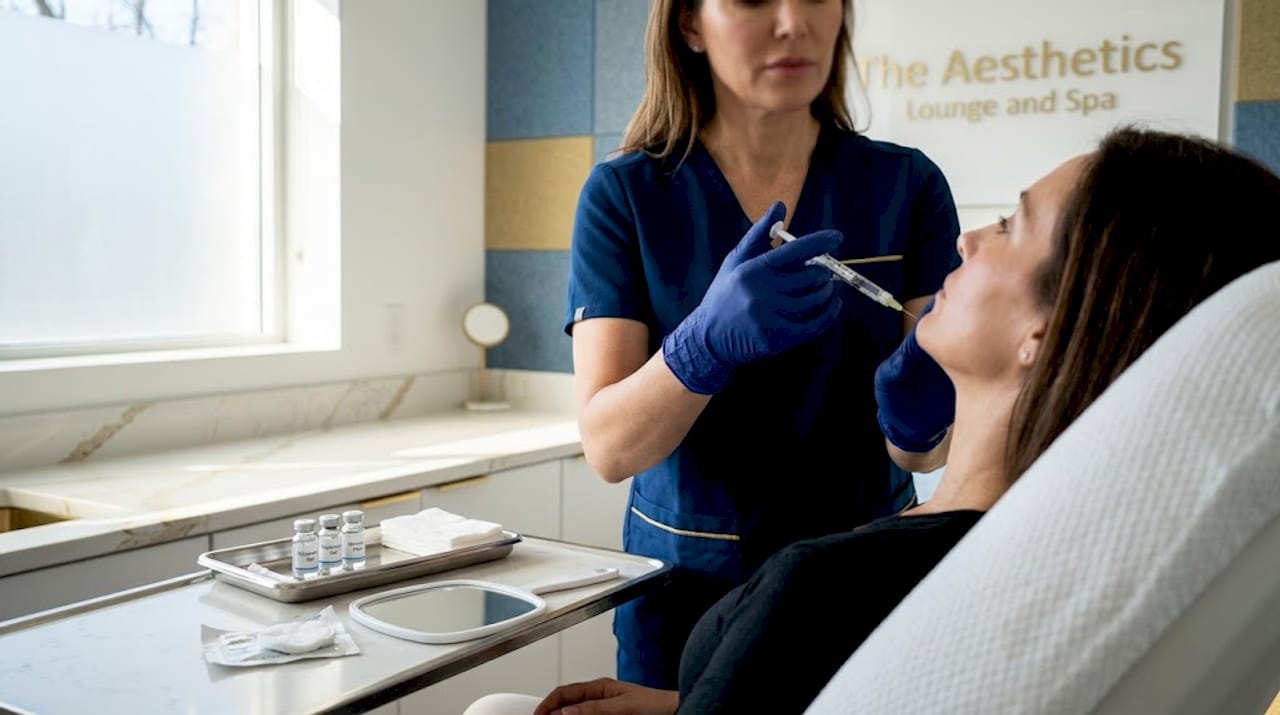
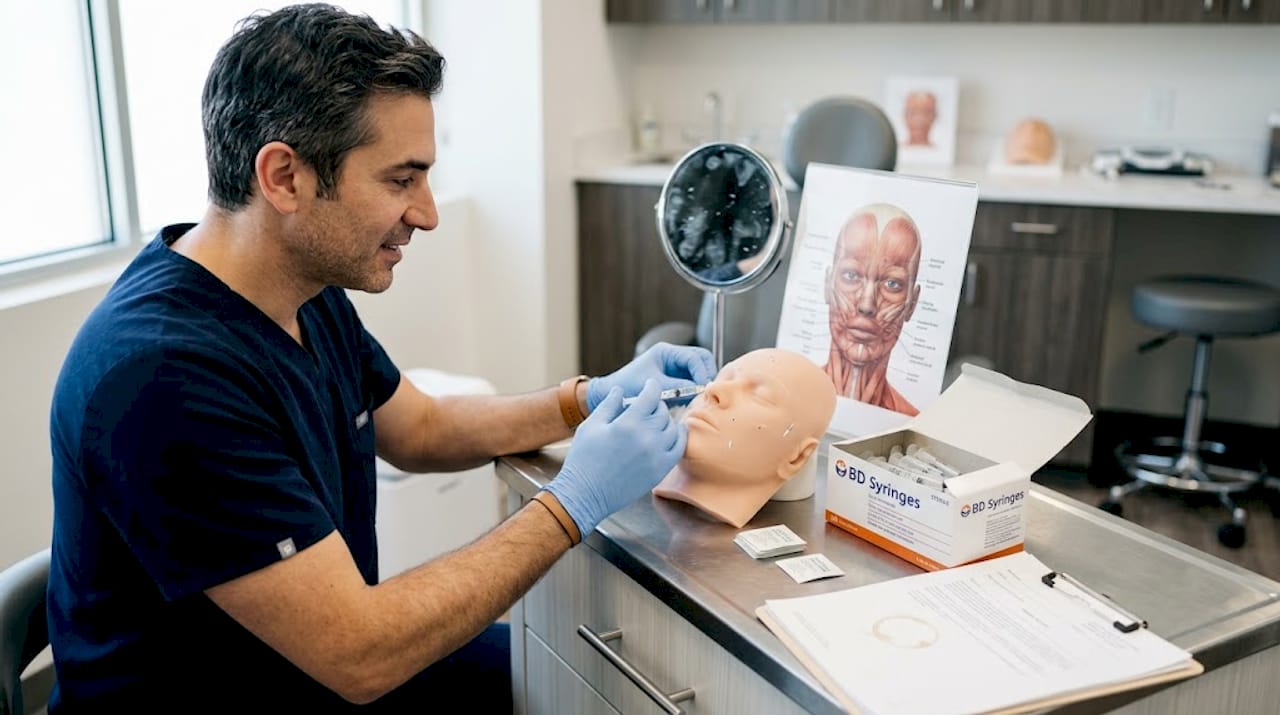
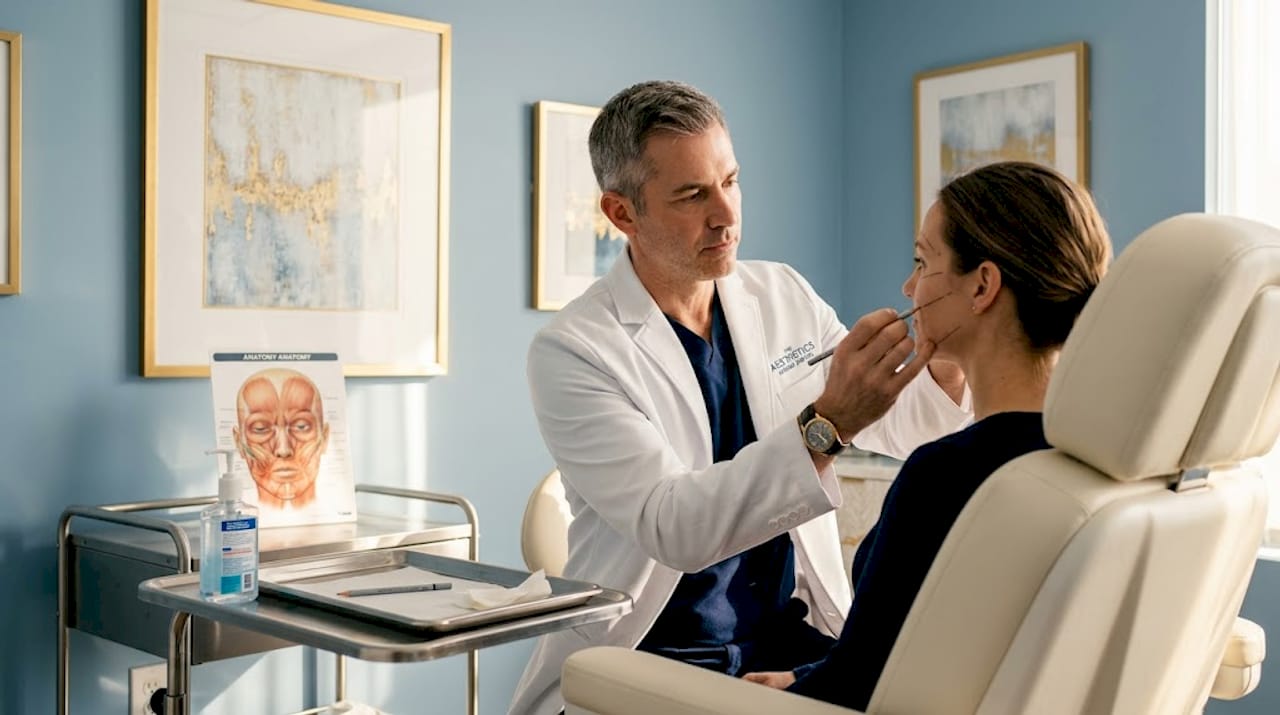
Specialist marks facial anatomy on patient for assessment

Research on filler-induced injury makes this very clear. In a study of 243 filler-induced ischemia cases, the facial artery angiosome was involved in 58% of cases, and the ophthalmic angiosome in 48%. When the ophthalmic artery was involved, vision loss occurred in 39% of those cases. These are not rare, theoretical outcomes. They are documented in peer-reviewed literature and they cluster around specific high-risk zones.

Facial zone Risk level Common complication
Nose and nasal tip Very high Skin necrosis, vision loss
Glabella and forehead Very high Blindness, tissue death
Nasolabial folds High Vascular occlusion, necrosis
Temples High Artery puncture, ischemia
Cheeks and midface Moderate to high Nerve involvement, nodules
Lips Moderate Bruising, vascular occlusion

The nose, nasolabial folds, glabella, and forehead account for 53% of severe complications in the reviewed literature. This is not a coincidence. These zones are where major arterial supply converges and where the risk of retrograde flow toward the eye is highest.

So what does an unqualified or under-trained injector look like in practice? It is not always obvious. Warning signs include:

  • No individualized assessment: They follow a standard injection map without examining your unique structure.
  • A factory-style approach: Treatments feel rushed, with little time spent on consultation or mapping your face before treatment.
  • Inability to explain anatomy: When asked about vessel location or depth, responses are vague or dismissive.
  • No emergency protocol: They cannot explain what they would do in the event of a vascular event or adverse reaction.

Before booking any injectable treatment, explore our dermal fillers guide to understand what a medically guided approach should include from the first consultation forward.

Pro Tip: Before any injectable appointment, ask your provider directly: “How do you identify and protect blood vessels in this treatment area?” A confident, specific answer grounded in anatomy tells you far more than their credentials alone.

The anatomy-driven approach: how experts plan for safe, natural results

With high risks on the table, it is essential to understand what sets an expert, anatomy-driven practice apart from the rest.

A provider who genuinely respects your anatomy does not walk into a treatment room with a preset plan. They build the plan around you, specifically. Here is how that process looks in a medically guided practice:

  1. Facial mapping at consultation: Before any product is discussed, the provider evaluates your face at rest and in motion. Muscle dynamics, bone prominence, volume distribution, and asymmetries are all noted.
  2. Anatomical risk assessment: High-risk vascular zones relevant to your unique structure are identified. The provider locates the likely path of your facial artery and ophthalmic branches before selecting an injection approach.
  3. Product selection matched to depth: Different fillers behave differently at different tissue depths. A stiffer filler placed superficially in a high-risk zone carries more vascular risk than one selected to sit deep against bone. Product choice is never arbitrary.
  4. Volume planning based on structure: The amount of filler placed reflects what your specific anatomy can absorb naturally, not a predetermined number of syringes.
  5. Treatment pacing: Anatomy-respecting practitioners often stage treatments over multiple appointments to observe how your face responds and refine accordingly.
  6. Post-treatment monitoring: The visit does not end with the last injection. A qualified provider monitors the treated area for early signs of vascular compromise before you leave.

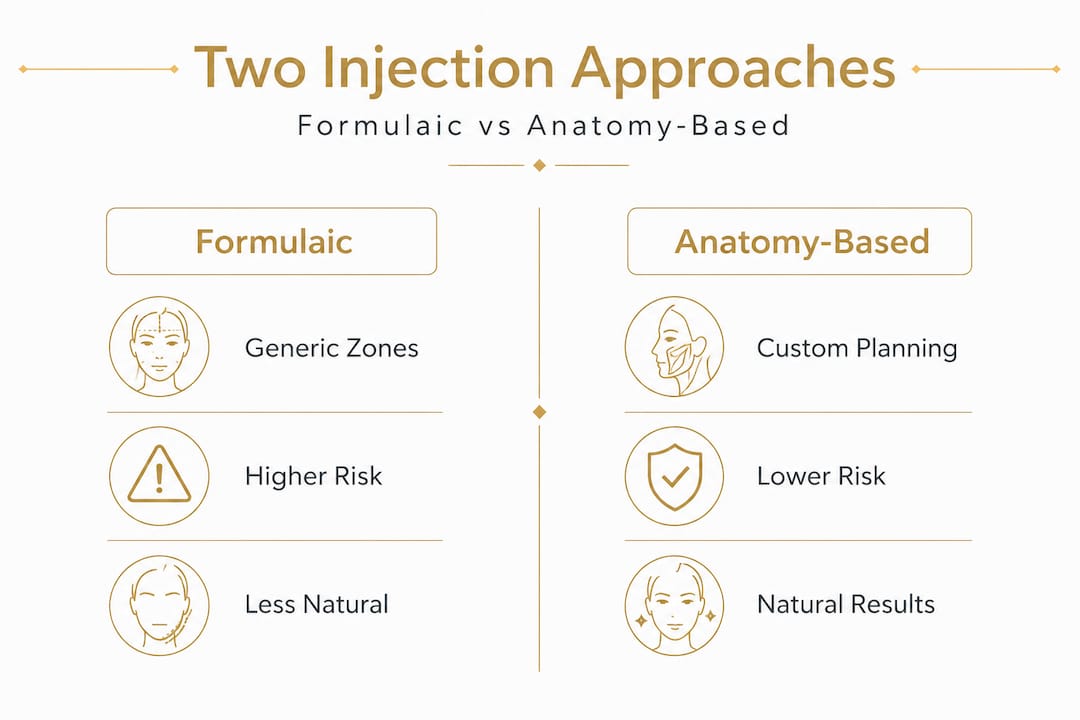
Research is direct on this point. Oversimplifying anatomy in training has been described as leading to a “dumbification” effect, where formulaic safe zones replace genuine anatomical understanding, significantly increasing risk. The solution is not a simpler map. It is deeper, more individualized knowledge applied consistently.

Infographic comparing generic and anatomy-based facial injections

Approach Safety outcome Aesthetic outcome
Formulaic “safe zone” treatment Higher vascular risk due to anatomical variation Generic, often unnatural results
Individualized anatomy-driven plan Significantly reduced complication risk Refined, natural, expression-preserving results
Ongoing advanced anatomical training Proactively adapts to new research and variation Consistent, high-quality, believable outcomes

The difference is real and measurable. Understanding your facial assessment process and learning more about facial structure basics can help you walk into any consultation with greater clarity and confidence.

Real-world outcomes: why anatomy knowledge delivers better, longer-lasting results

So, does all this anatomical planning actually pay off? Here is what the results and the research say.

The short answer is yes, consistently and measurably. When filler treatments are planned around an individual’s anatomy, the outcomes are not just safer. They are noticeably better in terms of how natural they look, how long they last, and how satisfied patients feel about their decision.

What the research shows:

  • Midface filler treatments guided by anatomy achieved a 95 to 98% improvement on the Global Aesthetic Improvement Scale at six months, with naturalness maintained in 95% of patients and skin density improving by 24%.
  • Anatomy-matched approaches allow providers to place smaller volumes in more precise locations, reducing the risk of the “overfilled” appearance that many patients are most concerned about.
  • Fewer side effects, less bruising, and lower rates of nodule formation are consistently associated with technically skilled, anatomically informed placement.

Why subtle results are only possible through anatomical strategy:

The most natural-looking enhancements look natural precisely because they are invisible. No single area looks exaggerated. Expression remains intact. The face moves the way it always has, just with more support where time or volume loss has created change. That kind of restraint is only achievable when the provider understands exactly where your fat pads sit, how your muscles move, and where the vascular risk lies.

On product longevity:

Not all fillers last equally, and anatomy shapes that difference. Hyaluronic acid fillers are noninferior or superior to other types for nasolabial folds at six to nine months, while calcium hydroxylapatite and poly-L-lactic acid show comparable or superior long-term results. The right product for the right area, placed at the right depth, not only looks better. It lasts longer because it integrates properly with the surrounding tissue.

Browse facial enhancement examples to see what anatomy-matched results actually look like, and read more about filler types explained to understand how product selection is informed by more than just the treatment area.

Key statistic: 95 to 98% of patients treated with anatomy-matched midface fillers maintained a natural appearance at six months, with measurable improvements in skin quality alongside volume restoration.

The uncomfortable truth: not all providers truly value your anatomy

Armed with the facts, it is time for a frank discussion about industry reality and what really separates a novice from an expert.

Here is something the aesthetic industry does not say loudly enough: a beautiful waiting room, a polished Instagram feed, and even a certification from a recognized body do not guarantee that your provider has deep, applied knowledge of your facial anatomy. The barrier to entry for injectable treatments in many states is lower than most clients realize, and marketing often fills the gap that clinical rigor should occupy.

What we have seen, both in the research and in clinical practice, is that providers who work from formulaic injection maps are often unaware of how much anatomical variation exists between individual patients. They have been trained to treat a zone, not a person. The result is that the same volume of the same product gets placed in roughly the same location for patients who may have vastly different vascular anatomy. For most, nothing goes wrong. But “most” is not a reassuring standard when the stakes include vision loss or tissue death.

True respect for a patient’s anatomy looks specific. It looks like a provider who takes time at consultation to observe how your face moves, not just how it looks in repose. It looks like someone who can explain, clearly and without defensiveness, why they are choosing a particular needle angle or injection depth for your specific structure. It looks like a provider who follows the developing literature, because facial anatomy research continues to evolve and what was considered standard practice five years ago may now be understood as higher risk than previously recognized.

You have every right to advocate for this standard of care. Ask the difficult questions. If a provider deflects, minimizes your concern, or cannot answer with anatomical specificity, that tells you something important. The right provider will welcome those questions. They will see them as evidence that you are an informed patient, and that is exactly the kind of patient they want to treat carefully and well.

Get expert-guided, natural enhancements in Raleigh

Ready to put knowledge into action? Here is how to take the next confident, well-informed step.

At The Aesthetics Lounge and Spa Raleigh, every treatment begins with understanding your face, not a template. Our medically led team on Six Forks Road brings genuine anatomical expertise to every consultation, so your care is planned around your structure, your movement, and your goals. Explore our full range of aesthetic treatments in Raleigh and learn how we approach each one with precision and restraint. Read more about the role of anatomy in aesthetics or see real enhancement examples from clients who wanted to look like themselves, just more supported.

https://raleigh.theaestheticsloungeandspa.com

Your face deserves care that is measured, informed, and unhurried. We plan first, educate always, and treat with the precision that makes results believable. When you are ready, we are here.

Frequently asked questions

What is the most dangerous area for facial filler complications?

The nose, nasolabial folds, glabella, and forehead carry the highest complication risk. Research shows these zones account for 53% of severe complications including skin necrosis and vision loss from nonpermanent filler treatments.

How can I tell if my provider truly understands facial anatomy?

A qualified provider performs a thorough, individualized assessment and discusses your specific structures, not generic zones. Research warns that oversimplifying anatomy in training leads to a formulaic, higher-risk approach that compromises both safety and aesthetic outcomes.

Do anatomy-based treatments really look more natural?

Yes, and the evidence is strong. Midface fillers matched to individual anatomy maintained natural-looking results in 95% of patients at six months, with improvements in both volume and skin quality.

Are some fillers safer depending on facial area?

Absolutely. Product selection informed by anatomy reduces vascular risk and improves how long results last. Hyaluronic acid fillers perform comparably or better than other types across key zones, particularly when placement technique accounts for tissue depth and individual structure.

Best Practices for Injectables: Natural, Subtle Results


TL;DR:

  • Preparing properly before injection minimizes bruising and ensures natural-looking results.
  • Expert techniques focus on anatomy, slow delivery, and patient communication for safety and refinement.
  • Choosing conservative, well-placed products and allowing results to settle are key to natural outcomes.

You want to look like yourself, just more rested. That is one of the most common things people say before their first injectable appointment, and it captures exactly what good treatment should deliver. But achieving that genuinely natural outcome takes more than a skilled hand. It takes thoughtful preparation, the right product in the right place, and a provider who treats your face as a whole rather than a collection of isolated concerns. This article walks you through expert, evidence-based best practices for injectables so you can feel confident about every step of your care.

Table of Contents

Key Takeaways

Point Details
Consult a medical expert A skilled provider with anatomical knowledge ensures your safety and authentic results.
Preparation prevents issues Simple steps before and after your treatment reduce risks and enhance your experience.
Technique impacts outcome Slow, precise injections and the right tools prevent complications and avoid unnatural looks.
Choose the right product HA and biostimulatory fillers each have best-fit uses—ask your provider for personalized options.
Set realistic expectations Know your recovery timeline and the minor side effects to expect for peace of mind.

How to set yourself up for safe, effective injectables

A good injectable outcome begins well before you sit in the treatment chair. The decisions you make in the days leading up to your appointment shape how your body responds, how quickly you recover, and how natural your final results look. Skipping this preparation phase is one of the most common reasons people experience more bruising or swelling than necessary.

Here is a clear, practical sequence to follow:

  1. Stop blood-thinning medications two weeks before your appointment. This includes aspirin, ibuprofen, and naproxen. These medications reduce your blood’s ability to clot, which increases bruising risk significantly.
  2. Avoid alcohol for at least 48 hours before treatment. Alcohol dilates blood vessels and compounds bruising, making recovery slower and less comfortable.
  3. Arrive with a clean face and no makeup. This reduces infection risk and allows your provider to assess your skin and facial structure without interference.
  4. Share your complete medical history. Autoimmune conditions, history of cold sores, and current medications all influence which products are appropriate for you and how your body will respond.
  5. Plan your post-treatment schedule carefully. As best practices for Botox treatment confirm, you should remain upright for 4 hours after treatment, avoid exercise for 24 hours, apply no pressure to treated areas, and skip waxing or tweezing near injection sites.

Pro Tip: Arnica supplements, taken three to five days before your appointment, may reduce bruising for some patients. Ask your provider whether this is appropriate for you before starting anything new.

“The most successful injectable outcomes start with a conversation, not a syringe. Understanding your health history and your goals is the foundation of results that feel earned, not forced.”

Understanding the role of injectables in a broader aesthetic strategy also shapes how you prepare. Injectables are not a one-time fix. They work best when they fit within a longer plan that accounts for your skin’s current condition, your future needs, and the natural changes your face will continue to make with time. Learning how to prepare for injectables with this mindset makes the entire process feel grounded and intentional.

Foundational techniques: Precision, anatomy, and product safety

Once prepped for your procedure, understanding the expert techniques used during your injectable session helps you know what to look for and expect. Not all injection technique is equal. The difference between a refined, natural result and an overdone one often comes down to how a provider moves through the face.

The most important principle is anatomical awareness. Your face contains a network of arteries, veins, and nerves that vary in location from person to person. Expert injectors understand facial anatomy in three dimensions, not just what is visible on the surface. Slow, methodical injection with constant attention to these structures is what minimizes the risk of serious complications like vascular occlusion, which occurs when filler inadvertently enters a blood vessel.

Key technique principles to understand as a patient:

  • Aspiration before injection. Pulling back the syringe plunger for approximately five seconds before depositing product helps confirm the needle is not inside a blood vessel. This is a critical safety step that not all providers consistently practice.
  • Slow delivery reduces trauma. Product placed quickly increases pressure in the tissue and raises the risk of displacement, bruising, and uneven results.
  • Communication during treatment. You should be able to tell your injector if you feel unusual pressure or discomfort. Experienced providers invite this feedback rather than simply proceeding.
  • Facial expression assessment before and during treatment. Watching how you naturally move, speak, and express emotion informs where and how much product is placed.
Technique element Why it matters Risk if skipped
Aspiration before injection Confirms needle is outside blood vessels Vascular occlusion
Slow product delivery Reduces tissue trauma and displacement Bruising, uneven results
Anatomical landmark mapping Protects nerves and vessels Nerve injury, vascular complication
Patient communication Allows real-time adjustment Overcorrection, discomfort

Pro Tip: Ask your injector whether they use a cannula or needle for your specific treatment area. Blunt-tipped cannulas cause less trauma in many zones and allow for smoother product placement.

Knowing what top natural-looking injectables look and feel like helps you set a realistic benchmark. Browse our full range of injectable treatments to understand the options available before your consultation.

Product choices: HA, biostimulatory fillers, and where they work best

Equipped with safety and technique knowledge, choosing the right injectable product is a critical next step. The product used in your treatment affects not just how it looks but how long it lasts, how it responds to your tissue, and what your recovery looks like.

Hyaluronic acid (HA) fillers are the most widely used category. HA is a sugar molecule that occurs naturally in the body, which makes these fillers well-tolerated and, importantly, reversible with an enzyme called hyaluronidase. Research shows that HA fillers retain 90% volume at two weeks post-treatment and approximately 66% volume across the whole face at twelve weeks, with greater than 70% improvement in periorbital appearance at three months. This kind of objective data helps set realistic expectations rather than relying on before-and-after photos alone.

Biostimulatory fillers work differently. Products like calcium hydroxylapatite (CaHA) and poly-L-lactic acid (PLLA) don’t simply add volume. They stimulate your own collagen production, which means results build gradually and can last longer than traditional HA fillers. They require a different treatment schedule and are better suited to certain areas and patient profiles.

Feature HA fillers Biostimulatory fillers
Mechanism Immediate volume Collagen stimulation
Reversibility Yes, with hyaluronidase No
Longevity 6 to 18 months 18 to 24+ months
Best for Lips, tear troughs, fine lines Cheeks, jawline, skin laxity
Onset of results Immediate Gradual over weeks to months

The key to choosing well is matching the product to the specific area, goal, and your skin’s current condition. A provider who understands the difference between filler types will never recommend a one-size approach. If you want a broader sense of how these products are used clinically, our dermal fillers explained resource offers a clear starting point.

Technique evolution also plays a role here. Cannulas are increasingly preferred over sharp needles in high-risk areas because they navigate around vessels rather than piercing through them. This is not a small distinction. It is part of how modern injectable practice has become meaningfully safer while still delivering refined results.

Precision for problem areas: Special considerations for eyes, forehead, and lips

With your product chosen, focusing on specific facial zones ensures you achieve a look that’s harmonious and authentically youthful. The eyes, forehead, and lips each carry specific risks and require distinct approaches. This is where general injectable knowledge becomes area-specific expertise.

Practitioner prepares syringe for facial injection

Tear troughs (the hollows beneath your eyes) are among the most technically demanding areas to treat. The tissue here is thin, the skin is delicate, and the anatomy includes structures that demand precise, low-volume placement. A supraperiosteal approach, meaning product placed close to the bone, combined with a cannula, is preferred for safety and natural-looking results. Overfilling this area with hydrophilic (water-attracting) products causes puffiness and a bluish discoloration known as the Tyndall effect. The tear trough requires both low volume and careful product selection to avoid visible edema (swelling).

Here is a structured breakdown of area-specific considerations:

  1. Tear trough. Low volume, cannula preferred, supraperiosteal placement. Avoid overfilling. Use only appropriate product formulations for this zone.
  2. Forehead and glabellar lines. This region carries high vascular risk. Product should be placed subdermally (just below the skin surface), and neuromodulators like Botox are often the primary tool here rather than filler.
  3. Lips. The goal is definition and subtle hydration, not volume alone. Balancing the Cupid’s bow, vermilion border, and philtrum columns requires a precise, conservative approach to maintain natural movement and proportion.

“The most common mistake in lip treatment is adding volume without first addressing definition. A well-defined border reads as full even before volume is introduced.”

Pro Tip: If you are considering tear trough treatment, discuss with your provider whether addressing cheek volume first makes sense. Sometimes lifting the mid-face reduces the appearance of under-eye hollowing without any product near the eye at all.

Understanding how injectables work in facial rejuvenation at an anatomical level changes how you think about area-specific treatment. It shifts the focus from a single concern to the face as a whole. Providers who choose injectables for refined results think this way by default.

Injectables in real life: Timeline, recovery, and realistic expectations

Now that you know technical best practices, it’s vital to understand your personal journey from treatment day to results. Recovery from injectables is generally mild, but it is real. Setting honest expectations protects you from unnecessary worry and helps you plan your schedule.

What to expect in the days and weeks after treatment:

  • Day 1 to 3: Mild swelling and bruising are normal and expected. This is not a sign that something went wrong.
  • Day 3 to 7: Swelling reduces. You begin to see a more accurate reflection of your results.
  • Week 2 to 3: Results settle into their final position. This is the appropriate time to assess whether a touch-up is needed.
  • One month mark: Bruising and swelling resolve fully in almost all cases within this window. Vascular occlusion and infection are rare but require immediate attention if they occur.

Results from HA fillers typically last between six and eighteen months, depending on the product, the area treated, and your individual metabolism. Lips tend to metabolize filler faster than cheeks. High-movement areas break down product more quickly than static zones.

Touch-up appointments are normal and expected. They are not a sign that your first treatment failed. In fact, conservative first treatments followed by thoughtful refinement appointments are the hallmark of injectable longevity and benefits done well. Resist the impulse to overtreat at your first session. What looks like too little on day one often looks just right at week two.

The most important rule: if you notice unusual pain, skin color changes, or vision changes after treatment, contact your provider immediately. These are rare but serious signals that need prompt evaluation.

What most providers miss about natural-looking injectables

Here is something most people do not hear enough: the best injectable results often come from what a provider doesn’t do. The field has a long history of equating volume with improvement, and that thinking has produced a generation of overdone outcomes that have made cautious patients hesitant to try treatment at all.

The truth is that less product, placed precisely in the right structural zones, produces far more believable results than generous treatment distributed broadly. Faces lose volume asymmetrically and at different rates across zones. Simply filling everything to equal volume is not restoration. It is renovation, and it shows.

We think the most underused tool in injectable practice is time. Sitting with conservative results for four to six weeks before deciding to add more is not patience for its own sake. It is precision. The face needs time to settle, for the product to integrate with the tissue, and for your own eyes to recalibrate to a change. Rushing a touch-up in week one almost always leads to overcorrection.

There is also the matter of facial change over years. The face you have at 35 is not the face you will have at 45. A personalized approach to aesthetics accounts for this trajectory rather than treating each appointment in isolation. A skilled, medically trained injector maps out not just your current concerns but where your face is likely to change next, building a strategy that protects your natural expression over years, not just months.

The combination of neuromodulators and fillers, when dosed conservatively and placed anatomically, supports the face the way good tailoring supports a suit. You still look like yourself. Just more supported.

Take the next step to confident, natural results

Reading about best practices is a strong start. Choosing the right partner to put them into practice is where outcomes are actually made.

https://raleigh.theaestheticsloungeandspa.com

At The Aesthetics Lounge and Spa Raleigh on Six Forks Road, every injectable appointment begins with a conversation, not a treatment plan pushed at you the moment you walk in. We review your goals, your history, and your facial structure before a single syringe is considered. Our full range of aesthetic treatments in Raleigh is built around this same philosophy: measured, anatomy-led, and always intentional. Whether you are approaching injectables for the first time or refining an ongoing plan, our guides on planning for fewer side effects and medically guided skincare steps are here to support every decision along the way.

Frequently asked questions

How long do injectable results typically last?

HA fillers retain approximately 90% volume at two weeks post-treatment and around 66% at twelve weeks across the whole face, though longevity varies by area and individual metabolism.

What should I avoid after injectable treatments?

You should remain upright for 4 hours, avoid exercise for 24 hours, apply no pressure to treated areas, and skip waxing or tweezing near injection sites until fully healed.

Are complications common with injectables?

Serious complications are rare. Mild bruising and swelling are the most common side effects and typically resolve within a month; vascular occlusion and infection occur infrequently when proper technique is followed.

How do I choose the right injector for natural results?

Prioritize a medically trained provider who uses anatomy-based placement and conservative dosing. Providers who combine neuromodulators and fillers thoughtfully tend to produce the most subtle, authentic anti-aging outcomes.

Facial Mapping Explained: Achieve Youthful, Natural Results


TL;DR:

  • Modern facial mapping is a precise, data-driven clinical process that enhances natural aesthetic outcomes.
  • It uses advanced imaging and structured frameworks to assess facial anatomy, ensuring personalized treatment plans.
  • Individualized mapping improves safety, results, and patient satisfaction by grounding decisions in objective data.

Facial mapping has a reputation problem. Many people still associate it with vague wellness trends or ancient traditions that have little to do with modern medicine. The reality is quite different. Today, facial mapping is a clinically grounded, data-driven process that forms the foundation of safe, natural-looking aesthetic care. It blends anatomical precision with artistic judgment, and when done well, the results are quietly transformative. You still look like yourself. Just more rested, more supported, more like the version of you that feels right.

Table of Contents

Key Takeaways

Point Details
Facial mapping is science-based Modern facial mapping uses data-driven tools and frameworks for reliable, natural, and safe results.
Personalization delivers best outcomes Individual mapping ensures enhancements look natural and align with your facial structure.
Technology boosts accuracy Advanced systems like VISIA and AI skin analysis provide precise, consistent measurements for planning treatments.
Consult specialists for success Getting mapped and treated by trained professionals raises satisfaction and reduces risks.

What is facial mapping? The science behind the trend

Modern facial mapping is not a trend. It is a structured clinical method for evaluating your face before any treatment begins. It considers facial structure, skin health, symmetry, volume distribution, and how your face moves. The goal is to understand what is actually happening beneath the surface before making any decisions about what to address and how.

This is where it separates itself from older, less precise approaches. Traditional beauty analysis often relied on subjective observation, general categories, or surface-level assessments. Modern facial mapping uses calibrated imaging technology, standardized frameworks, and clinical data to make assessments that are accurate and repeatable.

One of the most significant tools in this space is VISIA complexion analysis, a multispectral imaging system that captures detailed data on skin texture, pores, pigmentation, UV damage, and more. The precision here is not incidental. VISIA repeat variation under 2% means that measurements are highly consistent across sessions, and AI-assisted skin age analysis achieves accuracy rates between 85 and 95%. That level of reliability changes how treatment planning works entirely.

Here is what a modern facial mapping assessment typically evaluates:

  • Facial symmetry and proportions, including the golden ratio and how your features relate to one another
  • Volume distribution, identifying areas of loss or excess that affect how light falls on your face
  • Skin quality markers, such as texture, hydration, pigmentation, and structural integrity
  • Dynamic movement, meaning how your face changes when you smile, speak, or express emotion
  • Bone structure and soft tissue relationships, which determine how treatments will interact with your anatomy
Assessment method Technology used What it measures
VISIA complexion analysis Multispectral imaging Skin texture, UV damage, pores, pigmentation
3D stereophotogrammetry High-resolution 3D camera Volume, symmetry, contour changes over time
AI skin analysis Machine learning algorithms Estimated skin age, condition scoring
Clinical visual assessment Trained provider observation Movement, expression, structural balance

“The most natural-looking outcomes come not from treating what you see, but from understanding what you cannot see with the naked eye. Precision begins before the first treatment.”

3D stereophotogrammetry, another advanced imaging method, achieves an intraclass correlation coefficient above 0.95, which in clinical terms means near-perfect reliability. These are not soft estimates. They are measurable, reproducible findings that make personalized treatment planning genuinely possible.

Key facial mapping frameworks: ART CODES, 10-7 analysis, and more

Now that we understand the basics, it is important to explore the structures and systems that shape facial mapping in aesthetic medicine. Practitioners do not simply look at your face and make intuitive calls. They apply structured frameworks that have been refined through clinical research and real-world application.

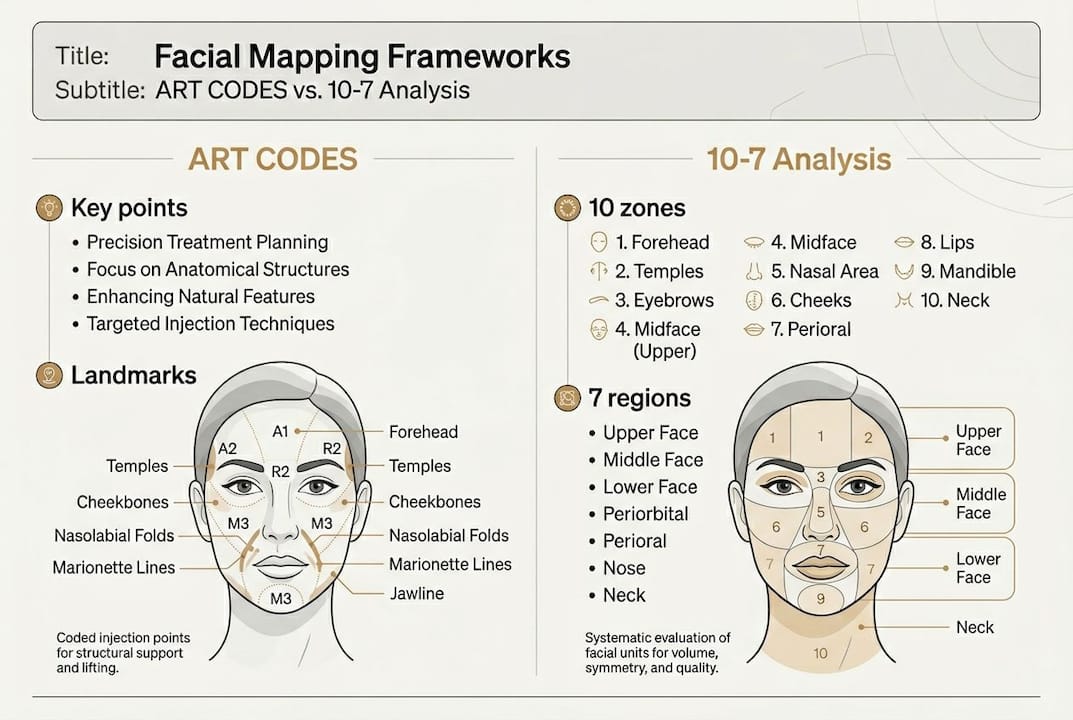
Two of the most widely used systems today are the ART CODES framework and the 10-7 analysis method. Understanding what these involve helps you appreciate why a well-planned consultation looks and feels different from a rushed one.

The ART CODES framework organizes the face into points, lines, and planes. It evaluates specific anatomical landmarks and how they relate to one another in three dimensions. This approach supports a holistic view of facial balance rather than treating isolated features in isolation. When a provider uses this framework, they are considering how a change in one area will affect the visual harmony of the whole face.

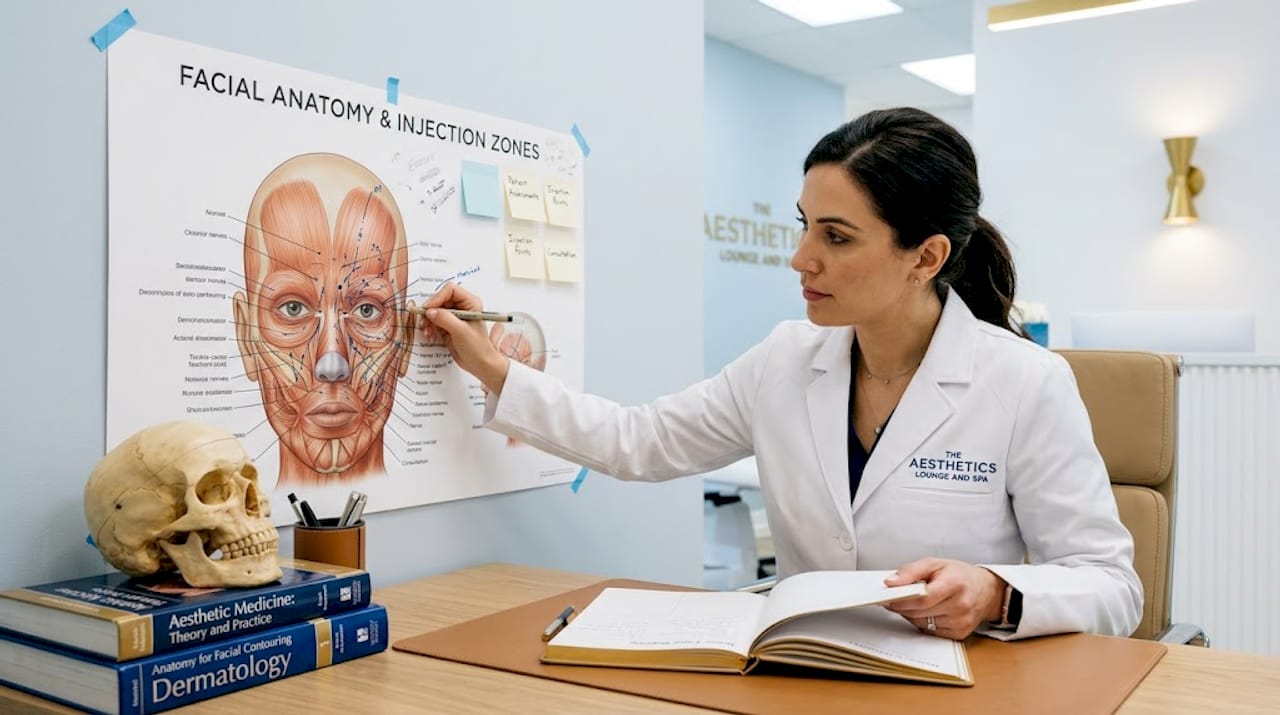
Practitioner marking points on facial anatomy poster

The 10-7 analysis method divides the face into 10 frontal and 7 lateral regions, giving practitioners a systematic way to evaluate the face from multiple angles. This is particularly useful for planning procedures that address volume loss, skin laxity, or structural asymmetry. Each region is assessed independently and in relation to adjacent zones, which prevents the kind of piecemeal thinking that leads to unnatural outcomes.

Infographic comparing ART CODES and 10-7 Analysis

Dynamic assessment adds another layer of sophistication. Some practitioners use what researchers call “smiling cadaver” studies to understand how fat compartments shift with facial movement. This matters because a face at rest and a face in motion are genuinely different structures. Treatments that only account for static anatomy can look stiff or unnatural when a person laughs or speaks.

Here is how these frameworks compare in practical application:

Framework Primary focus Best used for Key advantage
ART CODES Points, lines, planes Overall facial balance Holistic, 3D perspective
10-7 analysis Regional zone mapping Lifting, volume planning Systematic, angle-specific
Dynamic assessment Movement and fat compartments Expression-related concerns Accounts for motion
Golden ratio analysis Proportional relationships Symmetry correction Mathematically grounded

Understanding facial structure basics is the starting point for applying any of these frameworks meaningfully. And because each person’s anatomy is genuinely different, a provider trained in facial anatomy in aesthetics will use these frameworks as guides, not rigid scripts.

Pro Tip: Ask your provider which framework they use during your consultation. A practitioner who can explain their approach clearly is one who has invested in the depth of training that produces natural, lasting results.

It is also worth noting what these frameworks are not. Ancient Chinese facial reading, which maps organs to facial zones, is a separate tradition with no role in modern aesthetic medicine. Contemporary facial mapping is anatomical and evidence-based, not interpretive.

A detailed step-by-step facial assessment brings all of these frameworks together into a coherent consultation process that informs every treatment decision.

How facial mapping is used in non-surgical aesthetic treatments

Armed with an understanding of frameworks, let us see how practitioners put facial mapping into action for non-surgical enhancement. The connection between mapping and treatment is direct. What you learn in the assessment phase shapes every decision that follows, from which product to use to exactly where and how much to place it.

Injectables become more precise. When a provider maps your facial anatomy before administering neuromodulators or dermal fillers, they know where your blood vessels and nerves run. This is not a minor detail. Vascular occlusion, a rare but serious complication from filler, is significantly less likely when the injector has a clear, individualized picture of your anatomy. Mapping does not just improve aesthetics. It improves safety.

Results look natural, not constructed. One of the most common concerns people bring to consultations is the fear of looking “done.” That outcome is almost always the result of treating features in isolation without considering the whole face. Facial mapping prevents this by anchoring every decision in the context of your overall facial structure. The goal is enhancement that reads as rested, not altered.

Key ways facial mapping improves non-surgical outcomes:

  • Volume placement is guided by where natural fat compartments have shifted, not just where hollowness is visible
  • Neuromodulator dosing is calibrated to your specific muscle mass and movement patterns
  • Skin treatments are selected based on imaging data, not general skin type categories
  • Treatment sequencing is planned so that each step supports the next, rather than addressing concerns randomly
  • Maintenance intervals are personalized to how your skin and structure respond over time

The clinical evidence supports this approach. A proof-of-concept study of 130 patients found that 95% of patients and 98% of practitioners rated midface rejuvenation outcomes as improved when treatments were guided by structured facial mapping. Those are not marginal gains. They reflect a meaningful difference in how people experience their results.

Understanding the facial rejuvenation benefits of a mapped approach helps clarify why this method consistently outperforms generalized treatment protocols. For practical guidance on maintaining those results, rejuvenation tips and a clear understanding of the rejuvenation process are valuable companions to your initial consultation.

Pro Tip: If a provider moves straight to treatment recommendations without first assessing your facial structure, that is a signal to slow down. A thorough mapping session is not overhead. It is the work that makes everything else more effective.

What to expect from a facial mapping assessment in Raleigh, NC

Understanding the value of mapping in treatments, you might wonder what is actually involved in a real-world assessment. Here is what to expect when you arrive for a facial mapping consultation at a medically led practice.

1. Advanced imaging comes first. Before any conversation about treatment, your skin and facial structure are documented using clinical imaging tools. This might include VISIA complexion analysis, 3D photography, or both. These images become your baseline. They capture details that are invisible to the naked eye and provide an objective record of your starting point.

2. The data is reviewed together. Your provider walks you through what the imaging reveals. This is not a sales presentation. It is an educational conversation. You see your skin’s UV damage, texture patterns, and structural asymmetries in detail. Many clients find this part genuinely eye-opening. The AI skin age accuracy of 85 to 95% means the analysis reflects your actual skin biology, not a generalized estimate.

3. Lifestyle and health context is gathered. Skin and structure do not exist in isolation. Your provider will ask about sun exposure habits, skincare routine, stress levels, sleep quality, hydration, and any previous treatments. This context shapes how your face has aged and how it will respond to treatment.

4. A treatment plan is built collaboratively. Based on imaging data, clinical observation, and your personal goals, a treatment strategy is proposed. This is not a menu of services. It is a sequenced plan that considers what to address first, what to defer, and what to monitor over time.

5. You leave with clarity, not pressure. A well-run consultation ends with you understanding your options, the reasoning behind each recommendation, and the expected timeline. Decisions are yours to make, at your pace.

Reviewing the facial assessment steps in detail before your appointment helps you arrive prepared and confident. For a broader view of what is available, exploring aesthetics and skincare resources gives you a clear picture of the full range of support available.

Why individualized facial mapping is the future of natural aesthetics

Here is an honest observation from years of working in this field. The most common regrets in aesthetic medicine do not come from people who did too little. They come from people who were treated without a plan.

Generic approaches, where a provider looks at a concern and addresses it directly without contextualizing it within the whole face, produce results that can feel off even when they are technically correct. A perfectly placed filler in the wrong location relative to your overall structure creates imbalance. A neuromodulator dose calibrated to a population average, rather than your specific muscle mass, produces results that look borrowed from someone else’s face.

Individualized facial mapping solves this. When every decision is anchored in your specific anatomy, your skin’s actual condition, and your natural movement patterns, the results do not announce themselves. They simply make you look like a more rested, more supported version of yourself. That is the standard worth holding.

The most skilled practitioners we know do not separate artistry from clinical data. They use data to inform artistry. The imaging tells them what is objectively present. The frameworks give them a language for understanding relationships between facial zones. And their clinical judgment translates all of that into a treatment approach that fits you specifically.

Thinking carefully about choosing treatments naturally is not about being conservative for its own sake. It is about being accurate. The future of aesthetics is not more product or more procedures. It is better information, applied with more precision, in service of outcomes that genuinely last.

Discover advanced facial mapping in Raleigh, NC

If this article has clarified what facial mapping actually involves, the natural next question is where to experience it done well.

https://raleigh.theaestheticsloungeandspa.com

At The Aesthetics Lounge and Spa Raleigh on Six Forks Road, every consultation begins with a structured facial assessment before any treatment is discussed. Our medically led team uses advanced imaging, established anatomical frameworks, and a genuinely unhurried approach to build a plan that fits your face and your goals. Explore our full range of aesthetic treatments in Raleigh or learn more about top non-surgical aesthetic treatments that deliver natural results. You can also read about the medically led spa benefits that set this kind of practice apart. When you are ready, we are here to plan carefully and treat with precision.

Frequently asked questions

Is facial mapping the same as traditional Chinese facial reading?

No. Modern facial mapping in aesthetics is based on anatomy and clinical science. Ancient Chinese organ mapping is a separate tradition and plays no role in contemporary aesthetic medicine.

How accurate are facial mapping methods?

Clinical imaging systems like VISIA show less than 2% repeat variation, and AI-assisted skin analysis achieves accuracy between 85 and 95%, making modern mapping highly reliable.

Can facial mapping help prevent unnatural results?

Yes. Individualized mapping ensures that every treatment decision is grounded in your specific anatomy. A 130-patient proof-of-concept study showed 95% of patients rated their mapped midface rejuvenation outcomes as improved.

Is facial mapping safe for all skin types and ages?

When performed by qualified professionals, facial mapping is non-invasive, safe, and adaptable to all skin types and age groups. It is an assessment process, not a treatment itself.

How long does a facial mapping consultation take?

A thorough facial mapping session typically lasts between 30 and 60 minutes, depending on the depth of imaging analysis and how much time is spent on collaborative treatment planning.

Why precision matters in aesthetics: safer, natural results


TL;DR:

  • Precision in aesthetics tailors treatment to individual facial anatomy, ensuring natural, lasting results.
  • It significantly reduces serious complications like vascular occlusion, necrosis, and blindness.
  • Advanced assessment tools and techniques are essential for personalized, safe aesthetic treatments.

When it comes to non-surgical aesthetic treatments, a common assumption is that more product or a stronger approach automatically delivers better outcomes. It doesn’t. What separates a result that looks quietly natural from one that reads as overdone is rarely the volume of filler used or the number of sessions booked. It’s precision. Skilled technique, anatomical knowledge, and individualized planning are the real drivers of safety and subtlety. This article breaks down exactly what precision means in aesthetics, how it protects you from serious complications, and why it’s the foundation of results that genuinely last.

Table of Contents

Key Takeaways

Point Details
Precision prevents risks Accurate technique lowers complications like vascular occlusion and uneven results.
Technology enables personalization Tools like AI and 3D imaging let providers craft treatments unique to your skin.
Natural results require expertise True aesthetics depends on both advanced science and skilled artistry for outcomes that look real.
Everyone benefits from customization Precision becomes vital for those with thinner skin, prior treatments, or unique features.

Precision in aesthetics: more than a buzzword

Precision in aesthetics is not about being careful in a general sense. It means tailoring technique, injection depth, and product dosing to your specific facial anatomy, not a template. Two people requesting the same treatment may need entirely different approaches based on skin thickness, tissue quality, and bone structure. Understanding facial anatomy basics is foundational to why this matters so deeply.

When precision is absent, even small errors carry serious consequences. Overcorrecting volume in the wrong layer creates irregularities that are visible under movement. Misplacing product near vascular structures can cause ischemia risks with fillers, where blood supply is compromised. In the most severe cases, this leads to tissue necrosis or, in certain locations, vision loss. These are not rare horror stories. They are documented, preventable outcomes tied directly to imprecise technique.

Certain areas of the face carry heightened risk and require specialized skill:

  • Glabella (the space between the brows): highest documented risk for blindness due to proximity to ophthalmic arteries
  • Nasolabial folds: a frequent site for necrosis due to regional vascular anatomy
  • Periocular zone: thin skin and delicate vessels demand careful depth control
  • Temporal region: dense vascularity with limited room for error
  • Lip borders: precise layering is essential to avoid unnatural fullness

One of the most persistent misconceptions in aesthetics is that more product equals more improvement. It rarely does. Volume beyond what the anatomy can support creates distortion, not enhancement. Precision in non-surgical treatments prevents vascular occlusions and necrosis by mapping these danger zones before treatment begins.

“The goal of precision is not perfection. It is respect for the face in front of you, treating what is there, not what you imagine should be there.”

Pro Tip: When consulting with a provider, notice whether they discuss your anatomy specifically. If the conversation stays generic, centered only on what you want rather than what your face can safely support, that’s worth paying attention to.

How precision prevents complications and enhances safety

Understanding what precision means is only the first step. Seeing how it actively protects you shifts this from theory to practice. The primary complications tied to imprecise injectable technique include vascular occlusion, skin necrosis, blindness, and volume irregularities. Each one is serious. Each one is largely avoidable.

Volume irregularities are the most common early complication, managed through skilled anatomy knowledge and layered placement. But the higher-stakes risks demand more attention. Nasolabial fold accounts for 32.4% of necrosis cases, while the glabella carries the highest documented risk for blindness due to its direct vascular connection to retinal circulation.

Safe injection practice on facial model

Complication Primary cause Precision-based prevention
Vascular occlusion Intravascular injection Aspiration, slow delivery, danger zone mapping
Skin necrosis Tissue ischemia from compression Correct depth, low volume per pass
Blindness Retrograde embolism Avoiding high-risk zones, blunt cannulas
Volume irregularity Improper product layering Anatomical assessment, incremental dosing

A safety-first approach follows a clear sequence:

  1. Pre-treatment facial mapping: Identify individual vascular anatomy and flag high-risk zones before any product is drawn.
  2. Product and tool selection: Match filler viscosity and cannula versus needle choice to the treatment area and tissue depth.
  3. Incremental, low-volume injection: Place small amounts at a time, assessing tissue response between passes.
  4. Immediate complication monitoring: Watch for blanching or mottled skin, which signals compromised blood flow, and act within minutes if needed.
  5. Post-treatment review: Confirm symmetry and absence of early ischemia signs before the client leaves.

The timing of intervention matters enormously. Early ischemia intervention by a skilled practitioner reverses approximately 80% of cases. That window is narrow. This is why the role of anatomy in safe treatments and having a provider trained to recognize and respond to complications is non-negotiable.

Pro Tip: Before any injectable appointment, ask your provider specifically about their training in complication recognition and reversal. A confident, clear answer is a strong signal of genuine expertise. You can also explore reducing side effects in aesthetics for a broader look at how planning shapes outcomes.

Personalized skin assessment: foundation of precision in aesthetics

Once you understand the risks that precision prevents, the next question is how providers actually build that precision into every appointment. The answer starts well before any needle is involved. It starts with assessment.

Modern aesthetic care uses objective tools to evaluate your skin far beyond what the eye alone can detect. Skin biotyping, barrier integrity analysis, and standardized measurement frameworks give providers a structured baseline. The Skin Quality Index standardizes 15 terms across four dimensions, including texture, tone, firmness, and radiance, creating a shared language for what good skin health actually means.

Standardized protocols and AI imaging enable personalized treatments by evaluating biotypes and barrier integrity objectively. This removes the guesswork. When a provider knows your collagen density, hydration level, and how your skin responds to pressure, the treatment plan reflects your biology, not a generalized protocol.

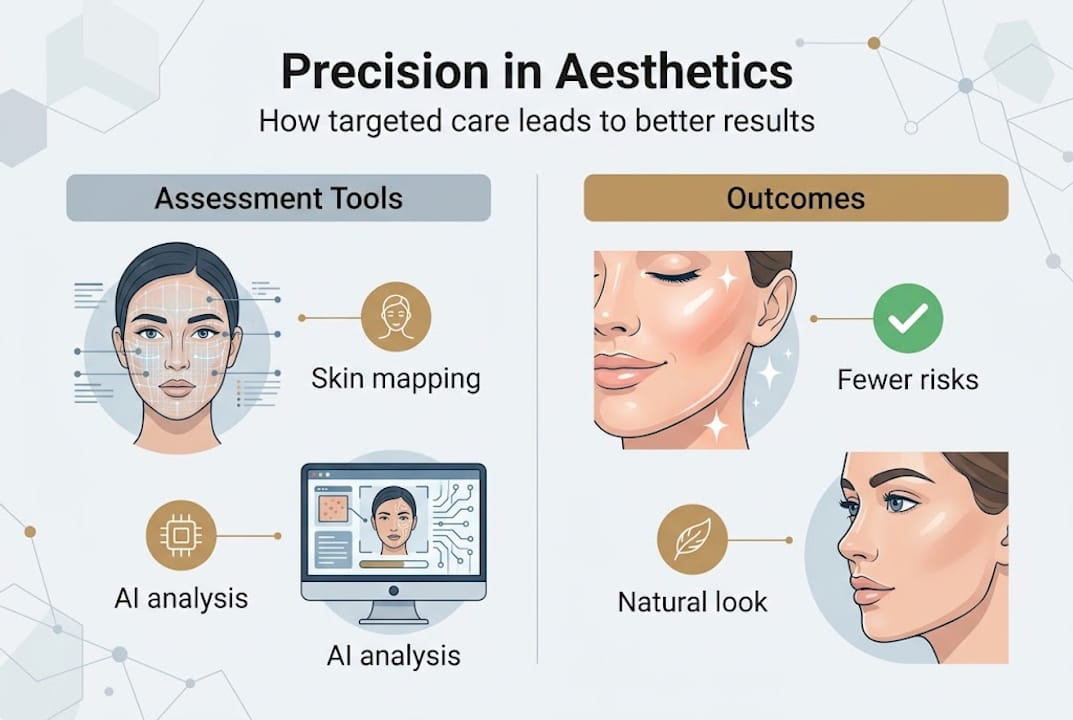
Infographic showing tools and outcomes of precision aesthetics

Assessment method What it measures Key advantage
Traditional visual exam Surface texture, tone, visible lines Fast, accessible
AI skin analysis Pore size, pigmentation, barrier function Objective, data-driven
3D imaging Volume, symmetry, structural depth Precision planning over time
Barrier integrity testing Hydration, TEWL, sensitivity markers Guides product compatibility

3D and photonic imaging adds another layer by mapping facial volume and structural asymmetry so that treatment plans can be built with spatial accuracy. This is especially useful for tracking subtle changes over multiple sessions, confirming that progress is measured and intentional.

The most impactful assessment tools and what they capture:

  • AI skin cameras: texture irregularities, subsurface pigmentation, pore distribution
  • 3D volumetric imaging: structural asymmetry, depth of folds, volume deficit mapping
  • Transepidermal water loss (TEWL) meters: barrier health and sensitivity risk
  • Elasticity probes: collagen and elastin integrity to guide product viscosity selection

You can explore advances in aesthetics technology to understand how these tools are integrated into personalized care planning. The point is simple: objective data makes the subjective goal of natural results more achievable.

Precision for unique faces: edge cases and advanced tools

Standardized assessment tools set a strong foundation, but some faces and situations call for an even more individualized approach. This is where precision becomes non-negotiable rather than just advisable.

Thinner skin around the eyes and lips is structurally different from mid-face tissue. It holds product differently, shows irregularities more readily, and responds to inflammation more visibly. Prior treatments add another layer of complexity because scar tissue, residual product, or changed tissue planes alter how new injections behave. These are not rare scenarios. They are the everyday reality of real clients with real histories.

Ultrasound guidance reduces hyaluronidase dose for occlusion by 10x, making it one of the most significant tools available for high-complexity cases. By visualizing tissue in real time, providers can confirm product placement, identify prior filler deposits, and navigate safely around vessels that standard surface mapping cannot detect. AI for advanced personalization further refines this by predicting how different skin types respond to specific treatments before the first session begins.

Signs that your situation calls for advanced assessment:

  • Previous filler treatments in the same area, especially if results were uneven or unexpected
  • Visible scarring from prior procedures, injury, or surgery near the planned treatment zone
  • Known sensitivities or history of inflammatory responses to injectables
  • Revision goals, where an existing result needs correction rather than a fresh start
  • Structural asymmetry that requires careful, graduated correction to avoid overcorrection

For clients with facial feature variations that fall outside average anatomical norms, a bespoke approach is not a luxury. It is the standard of care. Precision scales up with complexity.

Pro Tip: If you have had prior treatments elsewhere, or if your anatomy includes features your provider hasn’t commented on, ask directly whether imaging-guided therapy would be appropriate for your case. A provider committed to precision will welcome the question.

Why precision is the true art of natural aesthetics

Here is something worth saying plainly: the most impressive aesthetic results are the ones nobody notices. Not because nothing changed, but because the change fits so seamlessly that it reads as you, only more rested, more supported, more yourself.

Precision is what makes that possible. It is not just a safety protocol. It is the difference between enhancement and alteration, between a result that belongs to your face and one that doesn’t. The trend toward heavier volume and maximalist aesthetics misses something important: real beauty is quiet. It doesn’t announce itself.

What we see in Raleigh clients is consistent. People don’t come in wanting to look different. They come in wanting to look better, and those are not the same request. The goal is confidence, not change for its own sake.

Precision requires both a trained eye and a steady hand, but more than either of those, it requires restraint. The discipline to stop when a result is right, rather than continuing because more product remains in the syringe, is a skill. It’s the mark of someone who understands that the face in front of them is not a canvas to fill but a structure to support. That perspective is what drives medically-led spa benefits and why it produces outcomes that hold up over time.

Experience precision-driven aesthetics in Raleigh, NC

If this way of thinking about aesthetic care resonates with you, the next step is finding a team that puts it into practice, every appointment, every time.

https://raleigh.theaestheticsloungeandspa.com

At The Aesthetics Lounge and Spa Raleigh, precision is built into every consultation. Your appointment begins with a thorough assessment of your skin and facial structure, not a menu of options. Treatment plans are individualized using advanced tools, and every decision is explained before anything moves forward. Explore our Raleigh aesthetic treatments or take a closer look at our injectables to understand what’s possible. You can also review how we approach planning for fewer side effects as part of every client’s care strategy.

Frequently asked questions

What are facial danger zones and why are they important?

Facial danger zones are specific anatomical areas where blood vessels sit close to the surface, making them higher-risk sites for complications like vascular occlusion or blindness. The glabella carries the highest blindness risk, while the nasolabial fold accounts for 32.4% of documented necrosis cases. Providers trained in these zones use precision techniques to treat safely.

How does technology improve precision in aesthetics?

AI and 3D imaging create an objective picture of your skin’s structure, hydration, and volume so providers can build a treatment plan tailored to your biology rather than a generalized estimate. AI accuracy reaches 85 to 95% in aesthetic skin analysis, and the Skin Quality Index standardizes 15 assessment terms to ensure consistent evaluation across appointments.

Can precision reduce the risk of complications with injectables?

Yes. Precise placement, appropriate product selection, and danger zone mapping significantly lower the likelihood of necrosis, vascular occlusion, and unnatural results. Precision in non-surgical treatments prevents vascular occlusions by keeping injections within safe anatomical boundaries.

What should I look for in a provider to ensure precision?

Look for providers who conduct a thorough skin and structural assessment before recommending any treatment, discuss your specific anatomy rather than offering a standard menu, and can clearly explain their approach to complication recognition and reversal.

Is precision equally important for every skin type or age?

Precision matters for everyone, but it becomes especially critical for clients with thinner skin, prior treatments, or anatomical features outside average norms. Thinner periocular and lip skin, along with prior filler history, alter tissue behavior and require even more careful depth control and product selection.

Conservative aesthetics: The path to natural, subtle results


TL;DR:

  • Conservative aesthetics emphasize natural-looking results with minimal intervention and long-term skin health.
  • This approach is popular among adults seeking subtle enhancements, prevention, and avoiding over-treatment.
  • Choosing restraint and medical guidance ensures safer, more harmonious, and lasting aesthetic outcomes.

Many people assume that looking refreshed means going bigger, bolder, or more dramatic. That assumption drives a lot of regret. The truth is that the most admired aesthetic results in 2026 are often the ones nobody can quite put their finger on. You look rested. Your skin looks healthy. Something is different, but no one knows what. That is the quiet power of conservative aesthetics, a medically guided philosophy built on precision, restraint, and long-term skin health. This article explains what conservative aesthetics really means, why more adults in North Raleigh are choosing it, and how it can work for you.

Table of Contents

Key Takeaways

Point Details
Natural-looking focus Conservative aesthetics emphasize subtle results and long-term skin health.
Medically guided care All enhancements are personalized and supported by expert medical guidance.
Prevention over correction Starting early with gentle treatments reduces future need for major interventions.
Less is often more Restraint in cosmetic choices delivers lasting beauty and avoids trendy pitfalls.

What is conservative aesthetics?

The word “conservative” sometimes makes people nervous. It sounds like doing nothing. It is not. Conservative aesthetic treatments represent a deliberate, medically grounded approach to enhancement, one that prioritizes outcomes that look natural, feel believable, and support your skin’s health over time.

As Dr. Kim explains, conservative aesthetics refers to a restrained, subtle approach emphasizing natural-looking results, minimal intervention, and long-term skin health over trend-driven changes. That definition matters because it draws a clear line between aesthetics designed to serve you and aesthetics designed to follow a moment.

“The goal is not to erase who you are. It is to support how you look and feel so that your features remain authentically yours, just more rested and refined.”

This philosophy rests on a few core principles:

  • Natural-looking results: Enhancements should fit your face, not fight it.
  • Minimal intervention: Use what is needed, nothing more.
  • Long-term health: Skin quality and structural integrity come before short-term trends.
  • Thoughtful planning: Every treatment starts with education and a clear strategy.

The contrast with trend-driven aesthetics is significant. Trend-driven approaches often chase whatever is popular on social media, volume in places that alter facial proportion, or dramatic corrections that may not age gracefully. Conservative aesthetics does the opposite. It works with your anatomy, not against it.

A common misconception is that conservative equals invisible. Not true. The subtle enhancements guide shows that visible, meaningful improvements are completely achievable within a conservative framework. The difference is in how they are delivered: measured, paced, and rooted in medical expertise.

This approach is growing in popularity for a reason. Patients are more informed. They have seen what over-treatment looks like, and they want something different. They want results that read as rested, not done. The natural treatment examples available today make that goal more achievable than ever.

Why more adults are choosing subtle, natural enhancements

Understanding the philosophy is one thing. Seeing why it resonates locally reveals even more. Adults in North Raleigh between 25 and 55 are not chasing dramatic transformations. They are busy professionals, parents, and community members who want to look like themselves, just well-rested and healthy.

The reasons they choose conservative aesthetics are consistent:

  • No visible signs of work: They want colleagues and friends to notice they look good, not that they had something done.
  • Concern about trends aging poorly: The filler-heavy looks of 10 years ago serve as a cautionary tale for today’s patients.
  • Minimal downtime: Conservative treatments tend to have shorter recovery windows, which fits real life.
  • Long-term skin investment: Many adults in this range are thinking about prevention, not just correction.
  • Confidence without change: The goal is to feel supported, not transformed beyond recognition.

This shift reflects a broader cultural movement. Beauty standards are evolving toward natural, timeless aesthetics over heavy glam, and local preferences in North Raleigh mirror exactly that pattern.

The benefits of working with a medically guided spa are especially important in this context. Medical oversight means every decision is grounded in anatomy and skin science, not trends or sales targets. You get a plan that fits your face, your timeline, and your goals.

Pro Tip: If you are considering your first aesthetic treatment, ask the provider what they would not recommend for your face. A good clinician’s ability to decline a treatment tells you more about their philosophy than anything they offer.

The natural look spa benefits of this measured approach extend well beyond the appointment. When skin quality improves and facial structure is respected, the results compound quietly over months and years. That is the kind of investment worth making.

Woman applies skincare at bathroom mirror

How conservative aesthetics works: Principles and real-world treatments

Let’s connect these motivations to the treatments and processes that define today’s conservative aesthetic pathways. The approach is practical and stepwise, designed to build on itself rather than overwhelm the skin or the patient.

The guiding principles in practice:

  1. Start small: Use the minimum effective dose and assess the result before adding more.
  2. Focus on skin quality first: Healthy, well-supported skin responds better to everything else.
  3. Prioritize maintenance over correction: It is easier to maintain good results than to reverse poor ones.
  4. Plan before you treat: Every consultation begins with a full assessment, not a menu of options.

Popular treatments within a conservative framework include biostimulators (which stimulate the skin’s own collagen rather than adding volume), conservative injectables for softening expression lines without freezing movement, and combination skin therapies that address texture, tone, and hydration together.

Goal Preventative approach Restorative approach
Skin texture Medical-grade skincare, chemical peels Laser resurfacing, microneedling
Volume loss Biostimulators, early filler Conservative dermal filler
Expression lines Neuromodulators, prevention Neuromodulators, skin support
Skin tone Antioxidant serums, SPF IPL, targeted laser

Evidence-based practice supports combination and preventative treatments starting in the 20s and 30s to avoid the need for more aggressive measures later. That is a meaningful insight: conservative aesthetics is not just for people who are already seeing significant changes. It is a smarter strategy at every stage.

The non-surgical options available today make it possible to support skin health consistently without downtime or risk. When paired with injectable benefits used conservatively, the cumulative result over years is skin that ages gracefully and a face that still looks like yours.

Infographic comparing aesthetics approaches

Pro Tip: Think of conservative aesthetics like a long-term fitness plan. Consistency with small, intentional steps produces far better results than one dramatic intervention followed by nothing.

Conservative vs. aggressive aesthetics: What’s the real difference?

Knowing the approach is only half the story. Understanding what sets it apart from more aggressive routes makes your choice clearer and more confident.

Factor Conservative aesthetics Aggressive aesthetics
Intent Enhance natural features Dramatic transformation
Techniques Minimal, targeted High-volume, trend-driven
Outcomes Subtle, long-lasting Obvious, may age poorly
Risks Low, manageable Higher risk of over-correction
Recovery Minimal downtime Variable, sometimes significant

The cultural conversation around this distinction is growing louder. Vogue Business notes the contrast between natural, timeless results and the “Mar-a-Lago face” effect, which describes the look produced by excessive filler and dramatic alterations that read as artificial rather than refreshed.

Signs you may have crossed from conservative into aggressive territory:

  • Features that look swollen, uneven, or disproportionate
  • Loss of natural facial movement or expression
  • Results that prompt comments about looking “done” rather than well-rested
  • The need for correction procedures after a treatment
  • A provider who never says no or slows things down

Conservative course correction is possible. The path back is slower and more careful, but the natural rejuvenation insights available through medically guided care make it navigable. The key is choosing a provider whose instinct is restraint, not volume.

The risks of chasing aggressive trends extend beyond aesthetics. Over-treated skin can become compromised in ways that require significant time, care, and sometimes intervention to address. Starting conservative protects both your appearance and your skin’s long-term integrity.

Why the best results come from saying ‘no’ more often

Here is a perspective most aesthetic content will not offer: the most skilled providers are the ones who turn down treatments. Not because they lack confidence in their ability, but because they understand that the best outcome sometimes means doing less.

In a medically guided workflow, restraint is a skill. It takes clinical judgment to look at a patient’s face and recognize what it does not need. That kind of judgment is rare, and it is exactly what separates providers who prioritize your long-term results from those who prioritize filling an appointment book.

The most beautiful results we see are the ones that go unnoticed by everyone except the person in the mirror. No one at the office says anything specific. You just look well. That quiet quality is not accidental. It is the result of planning, pacing, and the willingness to say “not yet” or “not this” when a trend or a request does not serve your actual face. That is the standard we hold ourselves to on Six Forks Road, and it is the one worth seeking out wherever you go.

Explore conservative aesthetics options at The Aesthetics Lounge & Spa Raleigh

If you are ready to explore how this philosophy can work for you, here is where to start. At The Aesthetics Lounge and Spa Raleigh, every appointment begins with a thorough consultation, not a treatment menu. We take time to understand your goals, your skin, and what your face genuinely needs before anything else happens.

https://raleigh.theaestheticsloungeandspa.com

Our aesthetic treatments in Raleigh are built around the conservative principles this article describes: start measured, prioritize skin health, and build a strategy that serves you for years. Explore treatment examples for natural results or learn more about choosing your natural treatment plan. We are here when you are ready to make a thoughtful, informed decision, on your timeline.

Frequently asked questions

Does conservative aesthetics mean I won’t see results?

No. Conservative approaches deliver restrained, natural-looking but noticeable results, focused on long-term harmony rather than dramatic overnight changes.

Is conservative aesthetics only for people who are older?

Not at all. Preventative treatments starting in your 20s or 30s can reduce the need for aggressive correction later, making conservative care a smart strategy at any adult age.

How do I know if a treatment is truly conservative?

A truly conservative treatment is medically guided, avoids trend-driven requests, and focuses on subtle changes that support natural results and long-term skin health above all else.

Are conservative treatments safer than aggressive options?

Generally yes. Minimal intervention lowers the risk of over-correction and side effects, making conservative approaches the lower-risk path for most adults seeking aesthetic care.

Medically Guided Anti-Aging Skincare Routine for Natural Results


TL;DR:

  • Medically guided routines use evidence-based ingredients like retinoids, sirtuins, and antioxidants for real results.
  • Consistency, proper sequencing, and professional support are key to natural, lasting anti-aging benefits.
  • Over-the-counter products often lack effective concentrations; medical-grade formulations provide deeper, measurable improvements.

You want to look like yourself, just more rested. Not frozen, not overdone, and certainly not like you’ve handed your face over to a trend. That instinct is right. The challenge is finding a routine that actually delivers subtle, visible improvement without guesswork or risk. Most people cycle through products that promise everything and change very little, or they go too aggressive and end up with irritation instead of results. This guide walks you through a medically informed, evidence-based workflow built for adults in Raleigh who want real improvement, measured carefully, and guided by science rather than marketing.

Table of Contents

Key Takeaways

Point Details
Clinically guided routines work Evidence-based ingredients like sirtuins and retinoids measurably reduce wrinkles and visible age.
Medical guidance ensures safety Medically supervised routines reduce risks of irritation and maximize results naturally.
Consistency is essential Daily use and proper product sequencing are crucial for seeing and keeping real anti-aging improvements.
Subtlety yields best results Natural-looking improvements prevent an ‘overdone’ look and boost confidence.

Understanding the science behind anti-aging skincare

Skin ages through a combination of internal biology and external exposure. Over time, your body produces less collagen, the structural protein that keeps skin firm and resilient. Elastin fibers, which allow skin to bounce back, become less efficient. Cell turnover slows, which means older, duller cells stay on the surface longer. Pigment distribution becomes uneven as melanin production shifts with sun exposure and hormonal changes. These processes don’t happen all at once, but they compound quietly over years.

The good news is that the biology of aging is increasingly well understood, and so are the ingredients that slow or partially reverse these changes. Three categories stand out in clinical research.

Sirtuins (pronounced SIR-too-ins) are proteins inside your cells that regulate aging at the molecular level. When activated, they support DNA repair, reduce oxidative stress, and help maintain skin structure. Topical formulations that target sirtuins represent one of the more recent and promising advances in clinical skincare.

Pterostilbene (teh-ROH-STIL-been) is a natural compound derived from blueberries that activates sirtuin pathways. It functions as an antioxidant and anti-inflammatory agent at the cellular level, supporting skin renewal from within.

Retinoids are vitamin A derivatives that remain among the most studied and proven ingredients in anti-aging skincare. They accelerate epidermal cell turnover, stimulate collagen production, and reduce the appearance of fine lines and uneven tone over consistent use.

Clinical data backs this combination meaningfully. A sirtuin-based regimen reduced perceived age by 4 years and improved firmness and wrinkle depth across a multiethnic population in controlled trials. That kind of outcome is not possible with most off-the-shelf products.

Ingredient Primary mechanism Clinical result
Retinoids Collagen synthesis, cell turnover Wrinkle reduction, improved tone
Sirtuins DNA repair, oxidative stress reduction Reduced perceived age by ~4 years
Pterostilbene Antioxidant, sirtuin activation Improved firmness, wrinkle improvement
Peptides Signal collagen production Structural support, hydration
SPF UV damage prevention Prevents further collagen loss

The mechanisms working together include:

  • Collagen synthesis stimulation through retinoid use and peptide signaling
  • Epidermal renewal via accelerated cell turnover with active ingredients
  • Oxidative stress reduction through antioxidants like pterostilbene and vitamin C
  • DNA repair support via sirtuin activation
  • Barrier restoration through targeted moisturizers and ceramides

The most important distinction in anti-aging skincare is not which products sound impressive, but which ingredients have peer-reviewed clinical evidence behind them. Anecdotal before-and-after photos do not replace controlled trials. Building your routine around evidence-backed actives is the foundation of sustainable, believable results.

Supporting youthful skin health practices begins with understanding what your skin is actually doing at a biological level, and choosing ingredients that match those mechanisms. That’s where medical-grade skincare benefits become most apparent, since these formulations are designed to penetrate effectively and deliver results that drugstore alternatives often cannot match.

Essential products and tools for your anti-aging routine

Knowing the science is only useful when you can translate it into what actually sits on your bathroom shelf. A well-built anti-aging routine doesn’t require twenty products. It requires the right ones, used correctly, in the right order.

Here are the core categories to prioritize:

  • Gentle cleanser: Removes surface debris without stripping the skin barrier. Avoid anything that leaves your skin feeling tight afterward.
  • Antioxidant serum: Vitamin C (L-ascorbic acid) applied in the morning neutralizes free radicals before they can accelerate collagen breakdown.
  • Retinoid treatment: Used at night, this remains the most clinically supported anti-aging ingredient available. Start low and build gradually.
  • Broad-spectrum SPF 30 or higher: Non-negotiable, every morning. UV damage is the single largest external driver of visible aging.
  • Peptide or repair moisturizer: Supports barrier function and signals collagen production overnight.
  • Specialty treatments: Sirtuin-targeting serums, pterostilbene-based formulations, or red light therapy devices for those ready to build on a solid foundation.

One area worth addressing honestly is the over-the-counter versus medical-grade distinction. It matters more than most people realize.

Feature OTC products Medical-grade products
Ingredient concentration Often below therapeutic threshold Clinically effective concentrations
Penetration depth Surface-level in many cases Formulated for dermal absorption
Evidence backing Variable, marketing-driven Peer-reviewed in many cases
Professional support None Guided by trained providers
Access Retail shelves Through licensed professionals

Clinically, retinoids and red light therapy provide significant wrinkle and pigmentation improvement when used at appropriate concentrations. The retail versions of retinol, for example, are often formulated at concentrations too low to generate the same results seen in clinical studies.

Man using red light therapy mask at home

Devices like LED masks (which use specific light wavelengths to stimulate cellular repair) and facial rollers (which support lymphatic movement and product absorption) can be useful additions. They work best as supportive tools layered on top of a solid topical foundation, not as replacements for active ingredients.

Pro Tip: Most people over-invest in moisturizers and under-invest in actives. A high-end moisturizer won’t move the needle on aging the way a well-chosen retinoid or antioxidant serum will. Spend your budget on ingredients that have a biological mechanism of action.

When reviewing medical-grade skincare products, look for formulations that list active concentrations and cite clinical support. Understanding what makes skincare medical-grade helps you make confident decisions rather than guessing at labels. For broader context, exploring non-surgical skin health tools gives you a fuller picture of what’s available beyond topical care.

Step-by-step anti-aging skincare routine workflow

With the right products selected, the next step is sequencing them correctly. Application order affects how ingredients absorb and interact. Done right, each product amplifies the next. Done wrong, you may reduce effectiveness or cause irritation.

Morning routine:

  1. Gentle cleanser — Use lukewarm water. Spend 60 seconds working it in. Pat dry, don’t rub.
  2. Antioxidant serum (vitamin C) — Apply 3-4 drops to clean, slightly damp skin. Allow 60-90 seconds to absorb before the next step.
  3. Targeted treatment serum — If using a sirtuin-activating or peptide serum, layer it after vitamin C.
  4. Moisturizer — Lock in the layers with a lightweight, hydrating moisturizer.
  5. Broad-spectrum SPF 30 or higher — Applied as the final step, every morning, rain or shine.

Evening routine:

  1. Double cleanse if wearing SPF or makeup — An oil-based cleanser first, followed by your regular cleanser.
  2. Retinoid treatment — Apply a pea-sized amount to dry skin. More product doesn’t mean more results; it means more irritation.
  3. Peptide or repair moisturizer — Wait 20 minutes after retinoid before applying, especially during the first few weeks.
  4. Optional: facial oil or occlusive layer — Supports barrier recovery overnight for drier skin types.

Two to three times per week:

  • Chemical exfoliant (AHA or BHA, depending on skin type)
  • Red light therapy device (10-15 minutes)
  • Hydrating mask on non-exfoliant nights
Step Timing Frequency Expected timeline
Vitamin C serum Morning Daily 4-8 weeks for glow improvement
Retinoid Evening 2-3x/week, build to nightly 8-12 weeks for wrinkle reduction
SPF Morning Daily Immediate protection
Peptide moisturizer Evening Daily 6-8 weeks for firmness
Chemical exfoliant Evening 2-3x/week 4-6 weeks for texture

Research confirms that epidermal thickness and collagen increased meaningfully after just 4 weeks of consistent sirtuin and pterostilbene-based regimen use. Consistency is the variable that most directly determines your results.

Pro Tip: Introduce one new active at a time, spaced two weeks apart. This makes it easy to identify what’s working and what’s causing a reaction, rather than overhauling your entire routine at once and losing track of the cause.

For a visual breakdown, a step-by-step rejuvenation process helps contextualize the workflow. A full medically guided skin workflow provides even deeper guidance on sequencing and personalization. And if you want a focused reference for daily use, medically guided routine steps offers a practical, organized walkthrough.

Infographic with morning and evening skincare steps

Common mistakes and how to troubleshoot your routine

Even well-intentioned routines stall or backfire when a few key errors go unchecked. Understanding these pitfalls in advance puts you ahead of most people who try and quit too soon.

The most common mistakes in anti-aging routines:

  • Ingredient overload: Layering too many actives at once, for example retinoids, AHAs, vitamin C, and benzoyl peroxide in the same routine, causes irritation and can actually compromise your skin barrier rather than repair it.
  • Skipping SPF: This is the most consequential mistake. UV damage degrades the very collagen your other products are working to rebuild. No active ingredient can outrun daily unprotected sun exposure.
  • Inconsistent use: Retinoids and sirtuin-based formulations require weeks of steady use to work. Using them sporadically produces little to no visible change.
  • Expecting overnight results: Clinical studies measure outcomes in weeks and months, not days. Impatience is the primary reason people abandon routines that would have worked.
  • Assuming natural means safe: Some natural ingredients (like high-concentration essential oils or citrus extracts) are among the most irritating ingredients in skincare. Evidence-backed matters more than ingredient origin.

Clinically, retinoids improve wrinkles, pigmentation, and texture, but misuse leads directly to irritation or no perceptible effect. The application method and frequency matter as much as the ingredient itself.

If you experience irritation, dryness, or breakout:

  1. Pause the most recently introduced active for 5-7 days.
  2. Switch to a gentle cleanser and a simple, fragrance-free moisturizer only.
  3. Allow the barrier to recover fully before reintroducing any actives.
  4. Reintroduce the active at a lower frequency, every third night instead of nightly.
  5. If irritation continues or worsens, consult a medical skincare professional before proceeding.

Real results in anti-aging skincare are measured in quarters, not days. If you’ve been consistent for at least 8-12 weeks and see no change, that’s the right time to reassess your products or seek medical guidance. Stopping at week three because you’re not glowing yet means the science never had time to work.

Tracking your progress matters. Photographs taken in the same lighting, from the same angle, every four weeks give you an objective reference point. A simple skin journal, noting product changes, reactions, and observations, turns a routine into a data set you can actually use.

For proactive strategies, a facial aging prevention guide provides useful context on long-term planning. And when you’re ready to expand beyond topicals, understanding how to support youthful skin opens up additional, complementary approaches.

Why medical guidance and subtlety matter most in anti-aging routines

Here is what experience consistently teaches: the clients who achieve the most natural-looking, lasting improvements are almost never the ones who went fastest or spent the most. They’re the ones who built slowly, checked in regularly, and resisted the pull of whatever was trending that month.

Subtlety isn’t a limitation. It’s a strategy. An approach that respects your skin’s pace produces results that look like you, not like a procedure. That distinction matters enormously to self-confidence and to the longevity of your results.

Medical guidance adds a layer of personalization that no general article or product label can replicate. A trained provider evaluates your actual skin condition, identifies what’s driving your specific aging concerns, and builds a regimen that addresses root causes rather than surface symptoms. They also help you avoid the costly detours of over-treatment and reactive product cycling.

Fast trends rarely hold up over time. They’re designed to generate excitement, not to solve a complex biological process. The benefits of medically led spas include precisely this kind of steady, science-grounded approach that prevents the overdone look and supports genuine, quiet renewal over years, not weeks.

Take the next step: Professional support for your anti-aging goals

Building a routine on your own is a strong start. But when you’re ready for personalized guidance, a medically trained perspective, or access to clinical-grade formulations, having the right support changes everything.

https://raleigh.theaestheticsloungeandspa.com

At The Aesthetics Lounge and Spa Raleigh, we help adults in North Raleigh build anti-aging routines that are precise, evidence-backed, and designed for how you actually live. From selecting the right medical-grade skincare products to mapping out a longer-term strategy with custom aesthetics treatments, every recommendation comes from clinical knowledge and a commitment to results that look natural, not done. If you’re ready to move beyond guesswork and into a routine that’s built for you, we’d be glad to be part of that process.

Frequently asked questions

How long before I see visible results with an evidence-based anti-aging routine?

Most evidence-based routines show visible improvement within 4-12 weeks. A sirtuin-based clinical regimen reduced perceived age by 4 years at the 12-week mark, with wrinkle improvement beginning as early as 4 weeks.

Are medical-grade skincare products really more effective than over-the-counter options?

Yes, in most cases. Medical-grade regimens significantly improved skin quality and perceived age compared to OTC alternatives, largely because active ingredients are formulated at concentrations that actually reach the dermis.

Can a non-surgical skincare routine deliver meaningful anti-aging results?

Absolutely. Sirtuin and pterostilbene regimens reduced visible signs of aging without any surgical intervention, demonstrating that consistent, medically guided topical care can produce real, measurable change.

What should I do if I experience irritation from a new anti-aging product?

Pause the new product immediately, return to a simple cleanser and moisturizer only, and allow your skin barrier to recover for at least five to seven days before reintroducing it at a lower frequency. If irritation persists, consult a medical skincare professional.

Is a medically guided skincare routine expensive?

The upfront investment can be higher than drugstore options, but a targeted, well-planned routine often costs less over time than repeatedly replacing products that don’t deliver. Strategic spending on evidence-backed actives reduces waste considerably.

Support skin health for natural, youthful results


TL;DR:

  • Most visible skin aging results from photoaging caused by UV exposure rather than genetics.
  • Proactive skin care, including daily SPF and non-invasive treatments, can significantly slow aging signs.
  • Combining professional treatments with consistent topical routines yields the best, natural long-term results.

Most visible signs of skin aging are not written in your DNA. They develop gradually, quietly, over years of cumulative sun exposure, overlooked skincare habits, and a reactive mindset that only kicks in once lines and pigmentation have already settled in. The good news? Photoaging accounts for 80-90% of visible facial aging signs, which means the majority of what you see in the mirror is addressable, not inevitable. Modern non-invasive treatments, paired with intentional daily care, give you real tools to support your skin health over the long term and preserve results that feel genuinely like you.

Table of Contents

Key Takeaways

Point Details
Prevention is powerful Starting skin health support early can prevent up to 80% of visible aging signs.
Modern treatments are safe Non-invasive options like microneedling and chemical peels fit all skin types with minimal risks and high satisfaction rates.
Combination approach wins Blending professional treatments with proven topicals leads to optimal, naturally youthful results.
Start now for lifelong benefits The earlier consistent care begins, the greater the return on investment for healthy, radiant skin.

The science behind skin aging and photoaging

Many people assume aging is predetermined, a slow countdown set at birth. But the science tells a more empowering story. Skin aging actually happens through two distinct processes, and understanding both changes how you approach your care.

Intrinsic aging is the internal, time-driven process. Collagen production naturally slows by about 1% per year after your mid-20s, and cellular turnover follows a similar gradual decline. Skin becomes thinner, drier, and less elastic over time. This is real, but it is modest compared to what accumulates from the outside world.

Extrinsic aging, most notably photoaging, is where the larger share of visible change originates. UV radiation drives up to 80% of facial aging, triggering the breakdown of collagen and elastin fibers, generating free radicals, and causing the uneven pigmentation many clients in their 30s and 40s first notice and want to address.

Infographic demonstrates skin aging factors split

Here is a quick look at how photoaging tends to progress:

Age range Common visible changes
Late 20s Subtle texture changes, early fine lines
30s Pigmentation spots, loss of firmness begins
40s Deeper lines, skin laxity, uneven tone
50s+ Volume loss, pronounced wrinkles, dullness

The main signs of photoaging to watch for include:

  • Fine lines and deeper wrinkles, particularly around the eyes and mouth
  • Uneven skin tone and brown spots (solar lentigines)
  • Rough or thickened skin texture
  • Loss of natural radiance and overall skin firmness

As one widely cited summary of skin biology notes: “Chronic UV exposure degrades dermal architecture faster than any intrinsic biological process, making photoprotection the single highest-leverage intervention available.”

This is why early support matters so much. Waiting until signs are pronounced means working against compounded, layered damage rather than maintaining a healthier baseline from the start. Our facial aging prevention guide walks through this in more practical detail for anyone wanting a clear starting point.

Benefits of supporting skin health for natural results

With the science clear, what specific benefits can you expect from caring for your skin proactively? The honest answer is: more than most people realize, and far earlier than most people start.

Preventing photoaging and supporting collagen slows visible signs of aging in a measurable, meaningful way. The difference between someone who started SPF and consistent care at 28 versus someone who began addressing concerns at 45 is striking, and it is not primarily about genetics.

Man reads skincare tube at breakfast table

Here is a straightforward comparison between reactive and proactive approaches:

Approach Focus Typical outcomes Cost over time
Reactive Correcting visible damage after the fact More treatments needed, harder to reverse Higher, more intensive
Proactive Preventing and maintaining skin health Sustained natural results, fewer interventions Lower, more efficient

The functional and aesthetic benefits of consistent proactive care include:

  1. Strengthened skin barrier that retains moisture and resists environmental stressors
  2. Minimized pigmentation through SPF protection and targeted topical ingredients
  3. Increased resilience as collagen production is supported rather than simply replaced
  4. Reduced wrinkle depth over time compared to skin that has gone unprotected
  5. More even, luminous tone that reads as naturally rested rather than treated

For practical guidance on building good habits, these natural facial rejuvenation tips offer a grounded, realistic starting framework. And if you are curious about what the actual facial rejuvenation process looks like from a clinical perspective, that is worth reading before your first consultation.

Pro Tip: The ROI on daily SPF 30 or higher, used consistently, rivals nearly every in-clinic treatment available. It is the least glamorous step and the most impactful one.

Non-invasive treatments that support skin health

Once you understand the benefits, the next natural question is: what safe, evidence-based options are available in Raleigh today? The landscape has shifted significantly, and the best current treatments support skin health rather than simply masking it.

Non-invasive treatments like chemical peels, microneedling, radiofrequency, and EMFACE stimulate collagen and elastin production, address surface damage, and improve overall skin quality with minimal downtime. Here is a brief breakdown of each:

  • Chemical peels: Remove damaged outer skin layers, improve texture and pigmentation, and accelerate cellular renewal
  • Microneedling: Creates controlled micro-injuries that trigger the skin’s natural repair response, boosting collagen production deep in the dermis. Learn more about how microneedling works before deciding if it is right for your skin.
  • Radiofrequency (RF): Delivers heat energy to deeper skin layers to firm and tighten without affecting the surface
  • EMFACE: A newer modality that simultaneously targets muscle tone and skin texture, addressing both structure and surface

A useful point of reference: device safety benchmarks across these treatment categories consistently show low adverse event rates, making them appropriate for a wide range of skin types including sensitive and diverse complexions.

For those weighing their options, a skin rejuvenation treatments comparison is a useful tool for understanding which modality addresses your specific concerns most directly. An overview of top non-surgical treatments can also help orient your thinking before a consultation.

Pro Tip: Combining treatments, such as a chemical peel series with periodic RF sessions, is often more effective than relying on a single modality. A medically guided plan lets you layer approaches that build on each other rather than compete.

Topical skincare and professional treatments: A winning combination

With so many choices on the market, it is important to understand how at-home and professional approaches can work together for your best results. Neither alone gets you as far as both together.

Proven topicals form the daily foundation. The ones with the strongest clinical track records include:

  • Retinoids: Vitamin A derivatives that increase cell turnover and stimulate collagen. Retinoids can reduce wrinkles by 20 to 30% with consistent use, making them one of the most validated ingredients in skincare.
  • Antioxidants (Vitamin C, niacinamide): Neutralize free radical damage from UV and pollution, protecting existing collagen
  • Broad-spectrum SPF: Non-negotiable daily step, regardless of season or skin tone
  • Peptides and growth factors: Support collagen synthesis and barrier function over time

But topicals have limits. They cannot reach the deeper dermal layers where collagen is produced and where structural change actually happens. Professional treatments close that gap. They stimulate at the tissue level, addressing laxity, deeper lines, and loss of firmness in ways that no serum or cream can match.

The distinction matters. Think of your daily skincare as maintenance between sessions, and professional treatments as the deeper work that sets a new structural baseline. As your medical-led skincare guide explains, the most effective regimens are built with both in mind from the start.

“A well-designed regimen pairs at-home consistency with periodic professional intervention, delivering results that are sustained, layered, and believable.”

When you are ready to structure this kind of approach, working through guided skincare steps with a provider ensures you are not doubling up on products or missing key steps.

Our perspective: Why prevention beats panic and what most miss about skin health

There is a pattern we see often. Someone comes in at 45 or 50, frustrated by changes that have accumulated over years, wanting to know what can be done quickly. The care is entirely possible, and we approach it with the same measured precision we bring to everything. But the conversation we wish we had started earlier is always the one about prevention.

Culturally, we are wired for crisis management. You notice a problem, then you address it. That instinct makes sense in many contexts. Skin health is one place where it quietly costs you more, in time, in investment, and in the degree of change possible.

Early prevention delivers better outcomes than corrective treatments applied after significant damage has occurred. The structural advantage of skin that has been consistently supported is real and measurable. It is not about perfection or starting at 22. It is about deciding, at whatever age you are now, to stop waiting for a reason to start.

The other thing most people miss: a proactive plan does not have to be complicated. A conversation with a medically led spa provider about where your skin is today and what would serve it best over the next three to five years is a more valuable investment than any single treatment purchased in urgency.

Ready to support your skin health for natural, lasting beauty?

Taking care of your skin does not have to feel overwhelming or clinical. It should feel clear, supported, and tailored to you.

https://raleigh.theaestheticsloungeandspa.com

At The Aesthetics Lounge and Spa Raleigh, we offer a full range of aesthetic treatments in Raleigh designed around your skin’s actual structure and long-term health. Every plan starts with an honest conversation, not a product list. Whether you are curious about what medical-led skincare looks like in practice or want to see aesthetic treatment examples before deciding, we are here to guide you without pressure. Book a consultation and let’s build something that works for your skin, your timeline, and your goals.

Frequently asked questions

How does supporting skin health slow visible aging?

Supporting skin health addresses the two primary drivers of visible change: UV damage and collagen loss. Since photoaging drives 80-90% of facial aging signs like wrinkles and pigmentation, consistent protective and restorative care slows that process in a direct and meaningful way.

Are non-invasive skin treatments safe for all skin types?

Yes. Most non-invasive treatments are proven safe across skin types with low adverse event rates, including for sensitive skin and diverse complexions when administered by experienced, medically trained providers.

What is the best age to start supporting skin health?

Your 20s offer the greatest prevention advantage, but improvements are achievable at any age with the right combination of consistent daily care and appropriately timed professional treatments.

Is topical skincare alone enough to stay youthful?

Topical care builds an important daily foundation, but combining topicals with energy-based devices and non-invasive treatments leads to far greater improvements in elasticity, firmness, and wrinkle reduction over time.

Best skincare practices for lasting youthfulness and natural skin health


TL;DR:

  • A simple routine of cleansing, moisturizing, and SPF effectively protects skin long-term.
  • Incorporating antioxidants and retinoids gradually enhances anti-aging results safely.
  • Personalization based on Raleigh’s climate and skin type ensures optimal, lasting skin health.

The skincare aisle can feel like a maze. New serums, trending actives, and conflicting advice arrive faster than most people can sort through them. And if you live in Raleigh, you have the added layer of navigating a humid, UV-active climate that genuinely changes what your skin needs. Gentle, consistent routines are recommended over complex regimens for a reason: they work. This guide cuts through the noise with evidence-backed practices organized around what actually moves the needle: core basics, proven actives, barrier protection, personalization, and the lifestyle factors that hold it all together.

Table of Contents

Key Takeaways

Point Details
Stick to the basics A cleanser, moisturizer, and SPF 30+ shield your skin and slow visible aging.
Actives need strategy Add proven ingredients like retinoids and vitamin C gradually for best results.
Prevention is powerful Daily sun protection can prevent up to 80% of UV-related aging and reduce skin cancer risk.
Personalize for lifestyle Adjust your routine for skin type, Raleigh weather, and habits for lasting youthfulness.

Build your core routine: cleansing, moisturizing, and SPF

With confusion addressed, it’s time to ground your skincare in consistent, proven basics. A well-built daily routine does not need to be elaborate. It needs to be right for your skin and applied without fail.

Dermatologists recommend gentle cleansing, fragrance-free moisturizers, and daily SPF 30+ as the foundation of any effective skincare regimen. That three-step structure covers the essential functions: remove the day’s buildup, restore moisture balance, and shield your skin from UV damage that compounds quietly over years.

Here is what each step actually does for you:

  • Cleanser: Removes pollutants, sunscreen residue, and excess oil without stripping the skin’s natural moisture barrier. Gel cleansers suit oily skin; cream or milk formulas work better for dry or sensitive types.
  • Moisturizer: Seals hydration, smooths surface texture, and supports the lipid barrier that keeps irritants out. Look for fragrance-free formulas with ingredients like hyaluronic acid, glycerin, or ceramides.
  • SPF 30+: Prevents UV-related collagen breakdown and pigmentation. Apply every morning, rain or shine. This is not optional.

In Raleigh’s climate, humidity can make heavier moisturizers feel overwhelming, especially from late spring through summer. A lighter, gel-based moisturizer worn under a broad-spectrum SPF tends to feel more comfortable without sacrificing protection. Pollution from urban traffic adds oxidative stress to skin, which is another reason cleansing at night matters.

Over-cleansing is one of the most common mistakes adults make. Washing more than twice daily can strip your barrier and trigger oil overproduction or dryness. Fragrance in skincare products is a leading cause of contact dermatitis, so eliminating it reduces risk considerably. Following medically guided skincare steps helps you build this foundation without guesswork.

Man washing face at bathroom sink

Pro Tip: If you are unsure where to start, build the three-step routine first and use it without interruption for four to six weeks before adding anything else. Consistency reveals what your skin actually needs.

For a structured approach to what comes next, the natural skin health workflow outlines how basics translate into long-term results. You can also explore non-surgical skin maintenance options if you want clinical support alongside your home routine.

Introduce evidence-based actives for anti-aging and protection

Once your daily basics are in place, you can safely incorporate actives for enhanced results. This is where most people rush, and where most irritation problems begin.

The strongest evidence for anti-aging points to two categories: antioxidants and retinoids. Vitamin C protects from oxidative damage; retinoids build collagen overnight, making them complementary tools when applied at the right times.

Here is how to introduce them without overwhelming your skin:

  1. Begin with a stable vitamin C serum in the morning, applied after cleansing and before SPF.
  2. After two to three weeks with no irritation, introduce a low-strength retinol or bakuchiol at night, two to three times per week.
  3. Increase retinol frequency gradually over eight to twelve weeks as your skin adjusts.
  4. Never layer vitamin C and retinol in the same application. They are most effective and least irritating when kept to their respective times.
Active Best time Primary benefit Beginner strength
Vitamin C (L-ascorbic acid) Morning Antioxidant, brightening 10% concentration
Retinol Night Collagen support, cell turnover 0.025% to 0.05%
Bakuchiol Night Gentle retinol alternative 0.5% to 1%
Niacinamide Morning or night Pore size, tone, barrier support 5% to 10%

Peptides also earn a place here. 23% improvement in fine lines with the AP31 peptide was observed in adults aged 25 to 55 over 12 weeks, which reflects the meaningful progress topical actives can deliver with consistency.

For a deeper look at how clinical-grade formulas differ from over-the-counter options, medical-grade actives explained offers useful context. If you want to understand how these products fit into a broader safe skin treatments plan, that resource walks through the decision process clearly.

Pro Tip: If your skin feels tight, red, or flaky after starting a new active, dial back frequency rather than stopping entirely. Your skin is adjusting, not rejecting. Slowing down is always the right call.

For broader guidance on healthy aging and how lifestyle intersects with active ingredients, the science supports a measured, patient approach over aggressive layering.

Protect and repair: barrier support, SPF, and real-world risks

With actives layered in, daily prevention and repair steps amplify long-term benefits. Protection is not passive. It is an active investment in how your skin ages.

Daily SPF 30+ prevents 80% of UV-related visible aging, and 1 in 3 Americans will develop skin cancer in their lifetime. Those two facts alone make sunscreen the single highest-impact step in any skincare routine.

Choosing the right SPF format matters more than most people realize:

Type Best for Key consideration
Mineral (zinc oxide, titanium dioxide) Sensitive or reactive skin Sits on skin surface; less irritating
Chemical (avobenzone, octinoxate) Daily wear under makeup Absorbs UV; lightweight feel
Hybrid Most skin types Combines both; balances protection and wearability

In Raleigh, UV exposure remains meaningful year-round, not only in summer. Reapplying SPF every two hours during outdoor exposure is the standard dermatology recommendation, and AAD advice on SPF reinforces that indoor UV exposure through windows also contributes to cumulative skin damage over time.

Barrier support works alongside SPF to defend and repair:

  • Ceramides restore the lipid layer that holds moisture in and irritants out.
  • Humectants like hyaluronic acid and glycerin draw water into the skin from the environment.
  • Fragrance-free formulas reduce the risk of sensitization that can compound with pollution exposure.

Raleigh’s humidity is a mixed asset. It helps skin stay hydrated naturally, but it also means heavier occlusive creams can trap heat and lead to breakouts. Lightweight, ceramide-rich formulas strike the balance well here. Exploring skin health maintenance steps can help you identify which barrier products belong in your routine. For professional-grade options, medical-grade skin products available through medspa channels offer formulations with higher active concentrations than most retail lines.

Adapt for your skin, Raleigh’s climate, and long-term results

Personalization ensures your routine continues to work long-term in Raleigh’s changing environment. What works in January may need adjusting by July, and what works for oily skin will not serve dry or sensitive skin the same way.

“Fewer products reduce irritation in sensitive skin. Patch test any new product on a small area before full application.” This guidance from the AAD on travel skincare applies equally to daily routines at home.

Skin-type adjustments to consider:

  • Dry skin: Prioritize a cream cleanser, a richer ceramide moisturizer, and limit retinol to once or twice per week.
  • Oily skin: Use a gentle gel cleanser twice daily, a lightweight SPF moisturizer, and niacinamide to help manage sebum production.
  • Sensitive or reactive skin: Keep the routine minimal. Two to three products maximum, all fragrance-free. Introduce anything new one product at a time.
  • Combination skin: Use a balancing gel cleanser and apply richer moisturizer only to dry zones.

Beyond products, your skin reflects your lifestyle. Sleep quality directly affects cortisol levels, and elevated cortisol breaks down collagen. A diet rich in antioxidants, including leafy greens, berries, and omega-3 sources, supports the skin’s natural repair cycle. Chronic stress accelerates visible aging in measurable ways. Consulting Raleigh dermatologist recommendations helps you stay grounded in what local environmental conditions actually require.

For areas that often get overlooked, hydrating lip care keeps delicate lip skin protected year-round. A full skin rejuvenation approach or a professional HydroFacial in Raleigh can refresh the skin’s surface and complement your home routine without disrupting it.

Our take: Consistency beats complexity for youthful, resilient skin

Here is what most skincare articles quietly skip: the people with the best long-term results are rarely doing the most. They are doing the right things, reliably, over years.

Trends cycle constantly. New peptides, devices, and formulas earn attention every season. But SPF and a well-matched moisturizer have remained foundational for decades because the skin’s needs have not changed. What changes is our collective patience for letting simple things work.

The adults who age most gracefully are not the ones who overhaul their routines each year. They are the ones who built a routine that fit their life, adjusted it thoughtfully for seasonal shifts, and supplemented it with expert input when something changed. That is not boring. That is strategic.

Raleigh’s climate makes local context real. What works for someone in Arizona will not map directly onto humid North Carolina summers. That is why long-term skincare results are best built with professionals who understand your specific environment, not just your skin type.

True youthfulness is not one dramatic treatment. It shows in the quiet consistency of skin that has been cared for honestly, over time.

Discover expert-guided skincare and rejuvenation in Raleigh

Ready to put this advice into personalized, expert-guided action? At The Aesthetics Lounge and Spa Raleigh, we build skincare strategies that respect your natural structure and work with your lifestyle, not against it. Every recommendation starts with a conversation, not a product push.

https://raleigh.theaestheticsloungeandspa.com

From clinical skincare guidance to refined Raleigh medspa treatments, our approach is measured, transparent, and designed for longevity. Explore our medically guided workflow to see how we plan and pace care for lasting results. When you are ready to take the next step, our facial rejuvenation tips offer a clear picture of what thoughtful, natural-looking care looks like in practice.

Frequently asked questions

What is the simplest skincare routine that actually works?

A gentle cleanser, fragrance-free moisturizer, and daily broad-spectrum SPF 30+ provide a powerful, effective routine for most adults. These three steps address the core functions your skin needs without unnecessary complexity.

Which anti-aging ingredients should I add and when?

Start with vitamin C in the morning and a mild retinol or bakuchiol at night, after your basics are established. Vitamin C and retinoids target signs of aging and improve skin health when added one at a time.

How does Raleigh’s climate affect my skincare needs?

Raleigh’s humidity and moderate UV levels make barrier support and daily SPF especially important for local adults. Local environmental stressors reinforce why a climate-aware routine outperforms a generic one.

What’s the best way to prevent skin irritation from new products?

Always patch test one new product at a time and avoid fragrances to minimize irritation risk. Patch testing and minimal products reduce the likelihood of a sensitization reaction considerably.

Benefits of injectables for natural, long-lasting results


TL;DR:

  • Modern injectables enable subtle, natural facial rejuvenation with minimal downtime.
  • Choosing a qualified, aesthetic-focused practitioner ensures personalized, age-appropriate, and safe results.
  • Regular maintenance and restraint in treatment achieve lasting, believable improvements over time.

Finding the balance between looking refreshed and still looking like yourself is one of the most common concerns among adults seeking aesthetic care in Raleigh. The good news: modern injectables have made that balance far more achievable than most people expect. HA fillers improve skin quality metrics including density, thickness, firmness, and extensibility for up to 12 months, making them a clinically supported option for subtle, sustained rejuvenation. This article covers how injectables work, what benefits they offer, how key types compare, and how to choose the right provider for natural results right here in Raleigh.

Table of Contents

Key Takeaways

Point Details
Lasting skin improvements Injectables boost skin density and firmness for natural results that last.
Minimal downtime Most treatments require little to no recovery, making them easy to fit into busy schedules.
Safe, subtle enhancements When performed by skilled professionals, injectables offer safe, age-appropriate results.
Customized to you Treatments can be tailored to your individual goals and facial structure for authenticity.
Board-certified providers Choosing qualified medical experts is essential for optimal outcomes in Raleigh.

What are injectables and how do they work?

Injectables are non-surgical treatments delivered directly into targeted facial tissues to address specific aesthetic concerns. They fall into two broad categories: dermal fillers and neuromodulators. Understanding how each works helps you make an informed, confident decision about your care.

Dermal fillers, most commonly made from hyaluronic acid (HA), are gel-like substances injected beneath the skin to restore volume, smooth lines, or improve contour. HA is a naturally occurring substance in the body, which makes these fillers well-tolerated and reversible. Neuromodulators, like botulinum toxin type A (BoNT-A), work differently. They temporarily relax the muscles responsible for repetitive facial movements, softening dynamic wrinkles like crow’s feet, forehead lines, and the “11s” between your brows.

The role of injectables in modern aesthetics has grown significantly because they can be precisely calibrated. A skilled injector does not just treat a line or a hollow. They assess facial structure, symmetry, and movement to determine where and how much product belongs. The result, when done well, is a face that looks supported rather than altered.

Here is what injectables can address:

  • Fine lines and deeper wrinkles
  • Volume loss in the cheeks, temples, or under-eye area
  • Lip definition and subtle enhancement
  • Jawline and chin contouring
  • Skin texture and early laxity
  • Neck lines and bands

BoNT-A in lower facial rejuvenation leads to measurable, progressive improvement with cumulative effects over multiple treatment sessions. This means the benefit is not just in the moment. It builds.

Pro Tip: First-time injectable clients often benefit most from a conservative starting point. A small amount placed precisely will always look more natural than a larger volume placed without a clear structural plan.

For those curious about what facial rejuvenation with injectables looks like in practice, the key takeaway is this: minimal downtime, no general anesthesia, and results that can be adjusted over time make injectables one of the most flexible tools in non-surgical care.

Top benefits of injectables for natural and lasting results

Now that you understand how injectables work, let’s look at the specific benefits you can expect when treatment is planned and administered with care.

Immediate, believable results. Most clients see visible improvements within days of treatment. Fillers restore volume right away, while neuromodulators take effect within five to fourteen days. The key word here is believable. When properly dosed, you look refreshed, not treated.

Client relaxing post-injectable treatment

Measurable skin quality improvements. Research shows that HA fillers increase skin density by up to 13.5% and firmness by 8 to 12%, with effects lasting nearly a year. These are not surface-level changes. The structural integrity of your skin improves at a tissue level.

Long-term effects with proper maintenance. Some HA filler placements, particularly in lower-movement areas, hold their benefit for well over a year. With a consistent treatment schedule, the improvements compound. You are not starting over at each appointment; you are building on prior results.

Flexibility and personalization. No two faces are the same. The best outcomes come from treatment plans that reflect your anatomy, your goals, and your timeline, not a preset menu. Choosing injectables naturally means working with a provider who listens first.

Core benefits at a glance:

  • Little to no recovery time
  • Results that progress and improve with repeat sessions
  • Reversible options (HA fillers can be dissolved if needed)
  • Scalable from subtle to more defined, based on your comfort
  • Safe when performed by medically trained providers

“The goal is never to change you. It’s to help you look like the most rested, supported version of yourself.”

Pro Tip: Before your first appointment, spend time identifying one or two specific concerns you want to address. Providers who ask thoughtful questions and focus on proportion, not just volume, are the ones to trust.

Being well-prepared also matters. Knowing how to prepare for injectables before your visit sets the foundation for a smoother experience and better-looking results.

You have seen the main benefits. Now let’s compare the two most common injectable categories so you can think clearly about which direction fits your goals.

Feature HA Dermal Fillers Neuromodulators (BoNT-A)
Primary action Restores volume, smooths contours Relaxes muscles, softens dynamic lines
Onset of results Immediate 5 to 14 days
Duration 12 months to 2+ years 3 to 6 months, with cumulative gains
Reversibility Yes, with hyaluronidase No, fades naturally
Best for Hollows, lips, cheeks, scars Forehead, crow’s feet, brow, lower face
Downtime Minimal (mild swelling possible) Minimal to none

Fillers and neuromodulators are often used together. The combination addresses both the static features of a face (volume and structure) and its dynamic movement patterns. That pairing is frequently where the most natural outcomes live.

HA filler persistence has been documented in long-term studies: up to one year for neck lines, 12 months in the midface, two years for scar correction, and in rare imaging cases, filler has been detected even longer. This does not mean more filler is better. It means product placed with intention continues to serve you.

Key use cases for each type:

  • Fillers: Cheek volume, under-eye hollowing, lip shape, jawline definition, hand rejuvenation
  • Neuromodulators: Forehead lines, brow lift, gummy smile correction, neck bands, chin dimpling

BoNT-A improvements in the lower face are cumulative and outlast the pharmacological activity of the product. In plain terms: even after the toxin clears, the facial muscles that were repeatedly relaxed tend to move less aggressively. The anti-aging benefit continues between sessions.

Browsing facial enhancement examples can help you visualize how these treatments look in real people, which is often the most clarifying step in the decision process.

Choosing the right injectable and practitioner in Raleigh

Understanding the differences helps, but choosing the right product and expert is just as essential for exceptional results in Raleigh. The market is wide, and not all providers approach injectables with the same level of medical rigor or aesthetic philosophy.

Here is a practical guide to evaluating your options:

  1. Verify credentials. Look for board-certified nurse practitioners, physician assistants, or physicians with formal training in aesthetic medicine. Board-certified medical providers are prioritized for age-appropriate, natural outcomes in Raleigh.
  2. Assess their aesthetic philosophy. A good injector talks about proportion, facial thirds, and structural support. If the conversation focuses only on product units or price, look elsewhere.
  3. Review their portfolio. Before and after photos should show variety across ages, skin tones, and concerns. Look for results that read as natural, not treated.
  4. Ask about the consultation process. A thorough consultation should cover your goals, medical history, realistic expectations, aftercare, and follow-up planning.
  5. Be cautious of low-cost settings. Injectable pricing varies, but deeply discounted treatments in non-clinical settings carry elevated risk. Medical-grade products and trained injectors are not a luxury; they are a standard.
  6. Discuss your long-term plan. The best providers think beyond today’s appointment. They help you build a treatment strategy over time.
What to look for Green flag Red flag
Provider credentials Board-certified NP, PA, or MD No medical background listed
Consultation depth Personalized, anatomy-focused Quick, product-first conversation
Pricing transparency Clear, itemized pricing Vague or pressure-based offers
Portfolio quality Natural, varied, consistent Over-filled or trend-chasing results

Pro Tip: Do not skip the consultation. Even if you have had injectables before, each provider has a different eye and technique. A fresh consultation ensures your goals and anatomy are fully understood before anything is injected.

Exploring the best dermal fillers available in 2026 and reviewing examples of natural treatments can help you walk into your consultation with a clear, grounded vision of what you want.

Why less is more: Insider truths about injectables in 2026

Having explored how to select your best options, it is time for a candid look at what really works and what does not.

The most persistent myth in aesthetic medicine is that visible results equal successful results. It does not. Clients who leave an appointment and hear, “You look amazing, did you do something?” have received better care than those who leave looking noticeably treated. That is not an opinion. It is a clinical philosophy backed by outcomes data and long-term client satisfaction.

At The Aesthetics Lounge and Spa Raleigh, we see clients who have come from practices where volume was the default answer to every concern. Restoring proportion after overfilling takes time and precision. Avoiding that outcome in the first place is always easier.

The best providers working with injectables for age-appropriate enhancements understand that restraint is a skill. Knowing what not to inject, and where to hold back, separates excellent outcomes from regrettable ones. Raleigh clients increasingly want practitioners who prioritize their skin health and facial integrity over trends or visible volume. That is exactly the direction the field is moving, and it is where we have always stood.

Discover natural, lasting results with expert injectables in Raleigh

If you are considering the next step toward subtle, healthy rejuvenation, expert help is right here in Raleigh. At The Aesthetics Lounge and Spa Raleigh, every injectable consultation is medically led, anatomy-focused, and entirely unhurried. We do not chase trends or recommend what is fashionable. We recommend what is right for your face, your skin, and your long-term goals.

https://raleigh.theaestheticsloungeandspa.com

Our commitment to safer, natural results means you will never feel pressured into more than you need. Explore our top non-surgical treatments or learn how to choose aesthetic treatments that align with your values and your anatomy. Book a consultation and experience care that is measured, precise, and genuinely personal.

Frequently asked questions

How long do injectables last?

HA filler persistence ranges from 12 months in the midface to over two years in lower-movement areas, with imaging studies showing traces even longer. Most clients plan maintenance appointments annually to preserve their results.

Are injectables safe for all skin types?

When administered by qualified professionals, injectables are safe for most skin types and tones. Adverse effects remain low, reported in fewer than 12% of cases, and are typically mild and temporary when medical-grade products are used.

What areas can be treated with injectables?

Injectables address a wide range of concerns including forehead lines, crow’s feet, cheek volume, lips, under-eye hollowing, scars, and neck bands. HA fillers and BoNT-A can be combined to treat multiple facial zones in a single appointment for comprehensive, balanced results.

How do I choose a qualified injector in Raleigh?

Look for board-certified medical providers with documented aesthetic training and a portfolio of natural-looking results. A quality consultation focused on your anatomy and goals is a strong early indicator of the care you will receive.

Is there downtime after injectable treatments?

Most injectable treatments involve little to no downtime. Mild swelling or bruising can occur but typically resolves within a few days, allowing most clients to return to normal activities the same day or the next.