
Many adults assume all dermal fillers deliver the same results, leading to confusion when selecting treatments for subtle facial enhancement. The truth is each filler type has distinct properties, longevities, and ideal uses that directly impact how natural your results appear. Understanding these differences empowers you to make informed decisions aligned with your aesthetic goals. This guide clarifies the main filler categories, their unique characteristics, and how to choose the right option for achieving refined, authentic outcomes that enhance rather than alter your natural features.
Table of Contents
- Key takeaways
- Overview of common non-surgical filler types
- Comparing filler types by longevity, texture, and best uses
- How to choose the right filler type for natural and subtle enhancement
- Discover expert aesthetic treatments in Raleigh, NC
- Frequently asked questions about filler types
Key Takeaways
| Point | Details |
|---|---|
| Filler types vary | Fillers differ in composition, longevity, and best use, shaping how natural your results appear. |
| Hyaluronic acid natural feel | Hyaluronic acid fillers blend with surrounding tissue to provide soft, movable volume and typically last six to eighteen months. |
| Calcium hydroxylapatite effects | Calcium hydroxylapatite fillers deliver firmer immediate volume and stimulate collagen for longer term skin support. |
| Progressive collagen building | Poly L lactic acid fillers stimulate collagen over months, offering gradual improvement that can last two years or longer. |
Overview of common non-surgical filler types
Understanding the fundamental categories of cosmetic fillers helps you navigate treatment options with confidence. Each type functions differently within facial tissue, offering distinct advantages depending on your enhancement goals.
Hyaluronic acid fillers are the most popular choice for subtle, natural volume enhancement. This sugar molecule occurs naturally in your skin, attracting and retaining moisture to create smooth, hydrated volume. Because your body recognizes hyaluronic acid, these fillers integrate seamlessly with surrounding tissue. They feel soft to the touch and move naturally with facial expressions, making them excellent for lips, under eye hollows, and fine lines. Their effects typically last six to eighteen months, and they can be dissolved if needed, providing flexibility during your aesthetic journey.
Calcium hydroxylapatite fillers consist of microscopic calcium particles suspended in a gel carrier. This mineral based composition creates firmer volume compared to hyaluronic acid products. Beyond immediate filling effects, these injectables stimulate your own collagen production over several months. The dual action provides both instant correction and gradual improvement in skin quality. These fillers work well for deeper facial folds, cheek augmentation, and jawline definition where structural support matters most.
Poly L lactic acid fillers take a different approach by stimulating collagen rather than providing immediate volume. Your body gradually builds new collagen around the injected particles over several months, creating subtle, progressive enhancement. Results develop slowly but can last two years or longer. This gradual timeline makes them ideal for clients seeking improvements that appear naturally evolved rather than suddenly changed.
Polymethylmethacrylate fillers contain tiny synthetic beads that remain in tissue permanently, creating a scaffold around which your collagen grows. While semi permanent results appeal to some clients, the irreversible nature makes them less common for subtle aesthetic goals. Most practitioners reserve these for very specific applications requiring long term structural support.
Pro Tip: Schedule a consultation with an experienced injector to evaluate your facial anatomy, discuss your aesthetic priorities, and determine which filler type aligns best with your treatment area and desired subtlety level.
Key characteristics to consider when comparing filler types:
- Molecular composition determines how the product integrates with facial tissue
- Texture and firmness affect how natural the filler feels during facial movement
- Longevity ranges from several months to permanent, impacting maintenance schedules
- Reversibility provides safety and flexibility, especially for first treatments
- Collagen stimulation offers progressive improvement beyond initial filling effect
Comparing filler types by longevity, texture, and best uses
Examining fillers side by side reveals practical differences that influence treatment outcomes and patient satisfaction. This comparison helps you match product characteristics to your specific enhancement goals.
| Filler type | Composition | Average duration | Typical texture | Best treatment areas |
|---|---|---|---|---|
| Hyaluronic acid | Natural sugar molecule | 6 to 18 months | Soft, gel like | Lips, under eyes, fine lines, cheeks |
| Calcium hydroxylapatite | Mineral microspheres in gel | 12 to 18 months | Firmer, structured | Deep folds, cheeks, jawline, hands |
| Poly L lactic acid | Synthetic collagen stimulator | 2+ years | Gradual, subtle | Mid face volume, temples, overall facial rejuvenation |
| Polymethylmethacrylate | Permanent synthetic beads | Long term to permanent | Very firm | Deep wrinkles, acne scars (less common for subtle enhancement) |
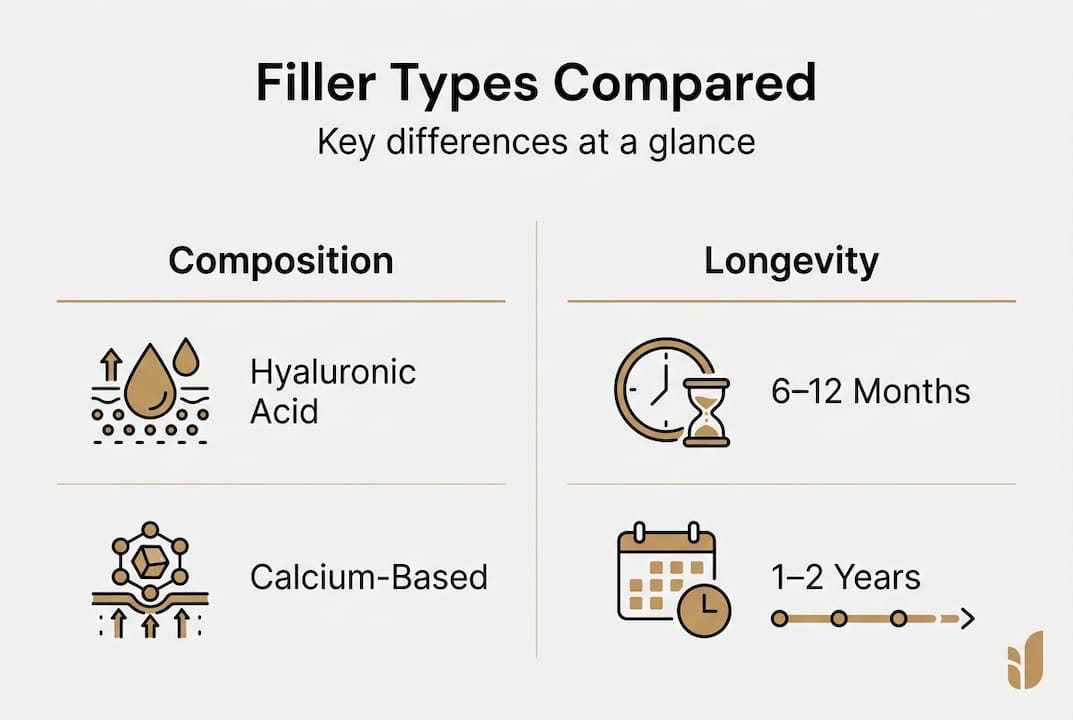
Hyaluronic acid fillers feel exceptionally soft because the gel mimics your skin’s natural moisture content. When injected skillfully, they move with your expressions rather than creating stiff, unnatural contours. Different fillers vary in lasting time from 6 months to over 2 years depending on type and area treated. Areas with more movement, like lips, metabolize the product faster than relatively static zones like cheeks. The reversibility of hyaluronic acid provides peace of mind during your first treatments or when trying a new enhancement area.

Calcium hydroxylapatite fillers offer firmer support, making them excellent for areas requiring structural lift or definition. The mineral particles create immediate volume while triggering your body’s collagen response over subsequent months. This dual mechanism means results actually improve during the weeks following treatment as new collagen forms. The firmer texture works beautifully for cheek augmentation, jawline contouring, and correcting deeper nasolabial folds where you need lasting architectural support.
Poly L lactic acid takes patience but rewards you with gradual, natural looking improvement. Rather than immediate correction, you see progressive enhancement as collagen builds over three to six months. Multiple treatment sessions spaced weeks apart optimize results. The slow timeline ensures changes appear evolved rather than sudden, which many clients prefer for maintaining discretion about their aesthetic treatments.
Pro Tip: Consider how much the treatment area moves during daily expressions and choose a filler texture that maintains natural motion; softer products work better in mobile zones while firmer options suit areas needing structural definition.
Factors affecting filler choice by facial region:
- Skin thickness influences which product integrates most naturally
- Underlying bone structure determines whether you need soft volume or firm support
- Muscle movement patterns require products that flex appropriately
- Proximity to delicate structures like eyes demands gentler formulations
- Your aesthetic goals, whether subtle refinement or noticeable enhancement
Understanding these distinctions lets you have informed conversations with your injector about which lip filler options or other treatments best serve your enhancement vision.
How to choose the right filler type for natural and subtle enhancement
Selecting the optimal filler requires evaluating multiple factors specific to your facial anatomy and aesthetic priorities. A systematic approach ensures your treatment delivers the refined, authentic results you seek.
Customizing filler choice by facial anatomy and desired outcome leads to more natural aesthetic results. Your facial structure, skin characteristics, and enhancement goals should drive product selection rather than trends or one size fits all recommendations.
Five steps to choose filler type effectively:
- Identify your primary concern area and understand its anatomical characteristics, including skin thickness, underlying support structures, and typical movement patterns during expressions.
- Define your enhancement goal with specificity, whether adding subtle volume, smoothing lines, lifting sagging tissue, or improving overall facial balance and proportion.
- Consider your lifestyle and maintenance preferences, including how often you’re willing to return for touch ups and whether you prefer gradual or immediate results.
- Evaluate your medical history for any sensitivities, allergies, or conditions that might influence product safety or effectiveness in your specific case.
- Consult with a medically trained injector who can assess your facial anatomy, discuss realistic outcomes, and recommend products aligned with your goals and tissue characteristics.
Common facial areas and recommended filler approaches for natural enhancement:
- Lips benefit from soft hyaluronic acid fillers that maintain natural movement and can be adjusted gradually across multiple sessions to avoid overfilling
- Cheeks often respond well to firmer products like calcium hydroxylapatite that provide lift and stimulate collagen for lasting structural improvement
- Under eye hollows require specialized hyaluronic acid formulations designed for delicate tissue with minimal swelling and smooth integration
- Nasolabial folds may need firmer fillers for deeper creases or softer products for fine lines, depending on severity and surrounding tissue
- Jawline definition typically uses structured fillers that create architectural support and maintain shape over time
Medically led consultations provide crucial value beyond product selection. An experienced practitioner evaluates your facial proportions, identifies asymmetries, and develops a comprehensive treatment plan that may involve multiple product types across different areas. This holistic approach prevents the overfilled, unnatural appearance that results from treating isolated concerns without considering overall facial harmony.
Key considerations when finalizing your filler choice:
- Longevity preference balances maintenance commitment against how long you want results to last before reassessing your aesthetic goals
- Recovery time varies slightly between products, with some causing more initial swelling that requires social downtime
- Sensitivity or allergy history may rule out certain formulations, making thorough medical screening essential
- Budget considerations should account for both initial treatment and maintenance sessions needed to sustain results
- Reversibility provides safety and flexibility, especially valuable when trying aesthetic treatments for the first time
Avoiding overfilling requires restraint and staged treatment. Starting conservatively lets you assess results, adjust to changes, and add more volume gradually if desired. This measured approach prevents the overdone appearance that occurs when too much product is placed too quickly. Natural enhancement means others notice you look refreshed and rested, not that you’ve obviously had work done.
Gradual enhancement also allows your facial tissues to adapt to changes. Sudden, dramatic volume shifts can look artificial because surrounding structures haven’t adjusted proportionally. Spacing treatments over several months creates harmony as each area settles and integrates naturally.
Your dermal filler choice should reflect your unique facial anatomy, aesthetic vision, and lifestyle rather than generic recommendations. The right product in skilled hands delivers subtle refinement that enhances your natural beauty without announcing itself.
Discover expert aesthetic treatments in Raleigh, NC
Now that you understand how different filler types create natural enhancement, partnering with experienced professionals ensures safe, beautiful results tailored to your facial anatomy. The Aesthetics Lounge & Spa in North Raleigh offers medically led expertise that prioritizes your safety, comfort, and aesthetic goals above all else.

Our team takes time during consultations to understand your enhancement vision, evaluate your facial structure, and recommend aesthetic treatments that deliver refined results without overdoing it. We believe in educating clients thoroughly so treatment decisions feel clear and confident rather than rushed or pressured. Our conservative, anatomically informed approach means you’ll still look like yourself, just more supported and refreshed. Whether you’re considering your first filler treatment or refining existing results, we’ll help you choose aesthetic treatments naturally suited to your unique features. Beyond injectables, we offer complementary skin health treatments that enhance and extend your dermal filler results for comprehensive facial rejuvenation.
Frequently asked questions about filler types
What are the main differences between hyaluronic acid and calcium hydroxylapatite fillers?
Hyaluronic acid fillers feel softer and more gel like, making them ideal for areas requiring natural movement like lips and under eyes. Calcium hydroxylapatite fillers provide firmer structural support and stimulate collagen production, working better for cheek augmentation and deeper folds. Hyaluronic acid can be dissolved if needed, while calcium hydroxylapatite cannot be reversed but metabolizes naturally over time.
How long do effects from different filler types typically last?
Hyaluronic acid fillers generally last six to eighteen months depending on the treatment area and product formulation. Calcium hydroxylapatite fillers typically maintain results for twelve to eighteen months. Poly L lactic acid stimulates collagen that can last two years or longer. Treatment area, metabolism, and lifestyle factors influence individual longevity, so maintenance schedules vary between clients.
Are some fillers safer for sensitive facial areas like under the eyes?
Yes, specialized hyaluronic acid formulations designed for delicate tissue work best under eyes because they integrate smoothly with minimal swelling and feel soft to avoid visible lumps. These products have smaller particle sizes and specific viscosity that suits thin, mobile skin. Medically led clinics reduce side effects and improve natural looking outcomes through proper product selection and precise injection technique.
Can fillers be reversed if I’m unhappy with the results?
Hyaluronic acid fillers can be dissolved quickly using an enzyme called hyaluronidase, which breaks down the product within hours to days. This reversibility provides safety and flexibility, especially for first time treatments or experimental areas. Other filler types like calcium hydroxylapatite and poly L lactic acid cannot be reversed but will metabolize naturally over their typical duration.
What should I expect during a consultation for filler treatments?
A thorough consultation includes discussing your aesthetic goals, reviewing your medical history, and examining your facial anatomy to identify areas that would benefit from enhancement. Your injector should explain which filler types suit your needs, show before and after examples, discuss realistic outcomes, and answer all questions. Medically led spas prioritize education and transparent expectations so you feel confident and informed before proceeding with treatment.