
Finding a trustworthy way to refresh your skin without looking unnatural can feel complicated for Raleigh residents in their thirties and forties. As the years pass, many notice more fine lines, uneven tone, or mild scarring, and wonder about options that gently restore instead of radically change. This guide explains how microneedling is a minimally invasive procedure that stimulates your skin’s own collagen and repair systems, offering results that stay true to your natural appearance.
Table of Contents
- What Is Microneedling and How It Works
- Microneedling Device Types and Approaches
- Collagen Induction and Skin Changes
- Safety, Risks, and Common Misconceptions
- Comparing At-Home Versus Professional Treatments
Key Takeaways
| Point | Details |
|---|---|
| Microneedling Stimulates Collagen Production | The procedure creates micro-injuries that trigger the skin’s healing response, significantly boosting collagen and elastin production. |
| Multiple Sessions Enhance Results | Achieving optimal skin transformation often requires 3 to 5 sessions spaced 4-6 weeks apart for cumulative effects. |
| Professional Treatment is Superior | Professional microneedling offers deeper penetration and controlled depth, providing genuine collagen synthesis compared to at-home devices. |
| Know Your Provider | Ensure treatment is performed by trained professionals in a sterile environment to minimize risks and maximize results. |
What Is Microneedling and How It Works
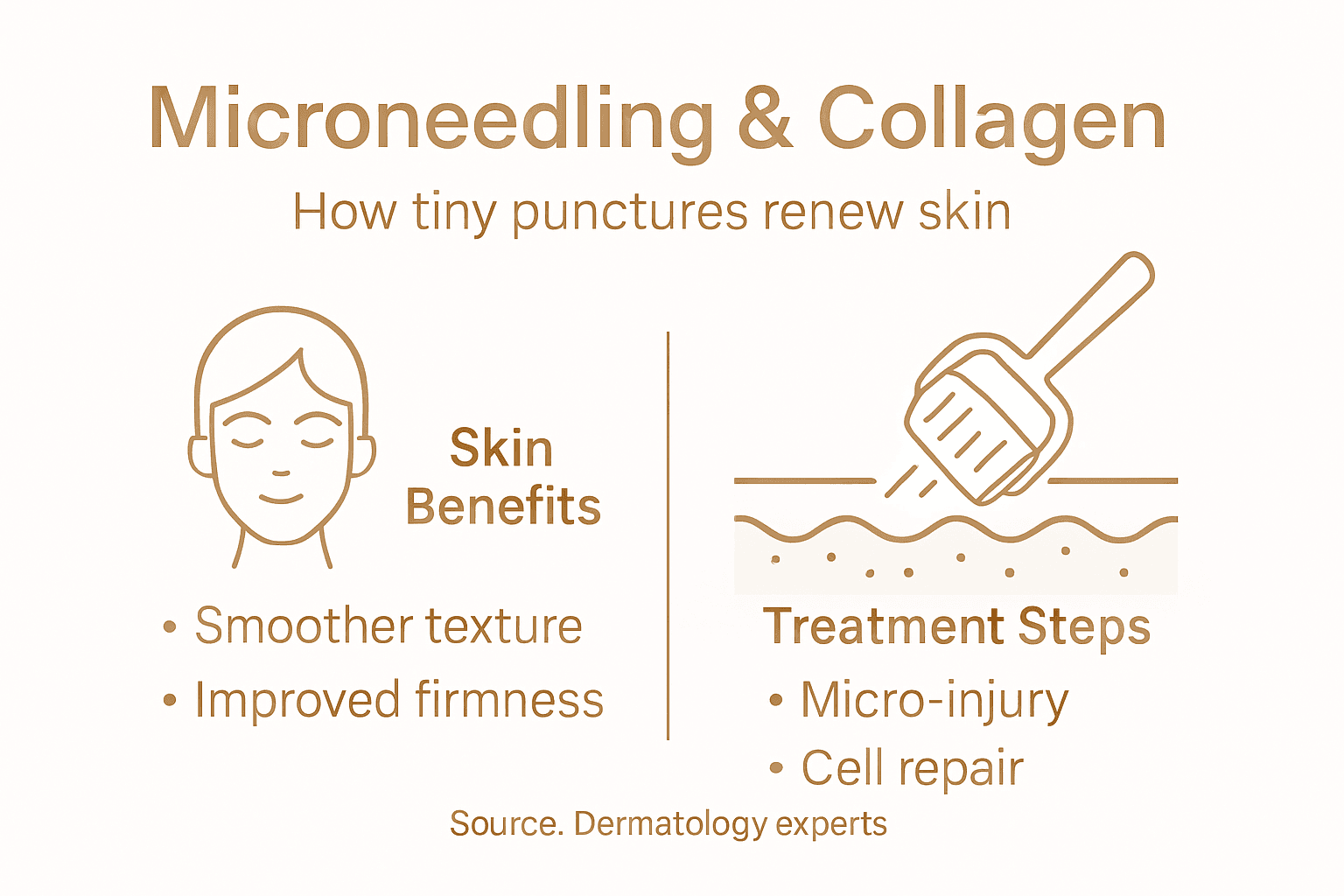
Microneedling is a minimally invasive procedure that uses controlled needles to stimulate your skin’s natural repair response. The device creates tiny controlled punctures in the skin’s outer layer, triggering a healing cascade that ramps up collagen production.
This is where the magic happens. Your skin interprets these micro-injuries as damage that needs fixing, so it launches its repair mechanisms. Inflammation increases, fibroblasts activate, and collagen synthesis accelerates. You’re essentially telling your skin to rebuild itself from within.
The Basic Mechanism
Here’s what actually occurs during treatment:
- Sterile needles penetrate the epidermis at precise depths
- Microscopic wounds activate your body’s natural healing response
- Growth factors and inflammatory markers flood the area
- Collagen and elastin production ramps up significantly
- Skin texture, firmness, and tone gradually improve
Unlike surface treatments that address only the top layer, microneedling works deeper—addressing structural changes beneath the skin where real aging happens. Collagen declines naturally with age, but this treatment jumpstarts production at the source.
Why Multiple Sessions Matter
One session creates initial stimulus, but real transformation requires consistency. Most people see meaningful results after three to five treatments spaced 4-6 weeks apart. Each session builds on the last, gradually thickening your epidermis and creating lasting improvement.
Think of it like training—one workout doesn’t reshape your body, but a consistent program absolutely does.
Microneedling works with your skin’s own biology rather than against it, creating sustainable results that read as naturally rested.
What Improves
Microneedling effectively addresses:
- Fine lines and wrinkles
- Enlarged pores
- Mild to moderate scarring (acne or surgical)
- Skin texture irregularities
- Subtle skin discoloration
- Loss of firmness
Results feel genuine because they come from your own collagen renewal, not from filling, freezing, or forceful intervention.
Pro tip: Schedule treatments in fall or winter when sun exposure is lower, allowing your skin to fully heal and collagen to rebuild without competing demands from UV damage.
Microneedling Device Types and Approaches
Not all microneedling devices work the same way. The technology varies significantly depending on the mechanism, needle configuration, and whether a practitioner controls the depth and speed. Understanding these differences helps you know what to expect during treatment.
Microneedling devices fall into two main categories: manual and motorized. Manual devices have needles that stay extended, penetrating the skin as you roll or stamp them across the face. Motorized devices use needles that move in and out automatically, which gives practitioners much greater control over depth and treatment intensity.
Device Variations
Microneedling devices use needles arranged on cylinders, flat surfaces, or pen-shaped tips—each configuration delivers slightly different results. The needles themselves are made from materials like stainless steel, titanium, or specialized polymers, chosen for durability and biocompatibility.
Here’s what separates one device from another:
- Needle depth: Ranges from shallow (0.25mm) to deeper penetration (up to 2mm for professional use)
- Speed control: Motorized devices adjust how quickly needles puncture the skin
- Needle count: More needles in the array means broader coverage per pass
- Customization: Advanced devices let practitioners adjust settings per facial zone
Manual vs. Motorized
Manual roller devices offer simplicity but less precision. You control the pressure and direction, but needle depth stays fixed. These work well for maintenance treatments at home, though professional manual treatments exist.
Motorized pen devices dominate professional settings. Practitioners adjust needle depth based on your skin condition and target area. The forehead may need different settings than delicate under-eye skin. This precision reduces risk and maximizes results.
The most effective treatments use motorized devices with adjustable settings, allowing practitioners to customize depth and speed for your unique facial structure.
Raleigh residents seeking refined results benefit from motorized microneedling approaches that balance aggressive collagen stimulation with natural-looking outcomes—never overdone.
To better understand your options, here is a concise comparison of microneedling device types and their unique advantages:
| Device Type | Depth Control | Treatment Precision | Suitability |
|---|---|---|---|
| Manual Roller | Fixed depth | Lower, user dependent | Home or basic maintenance |
| Motorized Pen | Adjustable during session | Higher, practitioner driven | Professional, customized care |
| Stamp-Type | Fixed or limited control | Moderate, covers small area | Scar-focused or targeted use |
| Cylinder Array | Limited to pre-set depth | Broad, covers wide surface | Body treatments, fast coverage |
FDA Authorization and Safety
The FDA has authorized certain devices for specific uses, primarily facial acne scars, wrinkles, and abdominal scars in patients 22 and older. Some devices reach deeper structures like nerves and blood vessels, which is why training matters. Only qualified healthcare providers should operate these systems.
Not every product marketed as microneedling is actually a regulated medical device. Products that only exfoliate or don’t penetrate living skin layers fall outside FDA oversight.
Pro tip: Ask your provider which device they use and whether they adjust needle depth and speed during your session—customization indicates a more sophisticated, conservative approach.
Collagen Induction and Skin Changes
The real transformation happens at the cellular level. When microneedling creates those micro-injuries, your skin doesn’t just patch the holes—it launches a sophisticated repair sequence that rebuilds your skin from within.
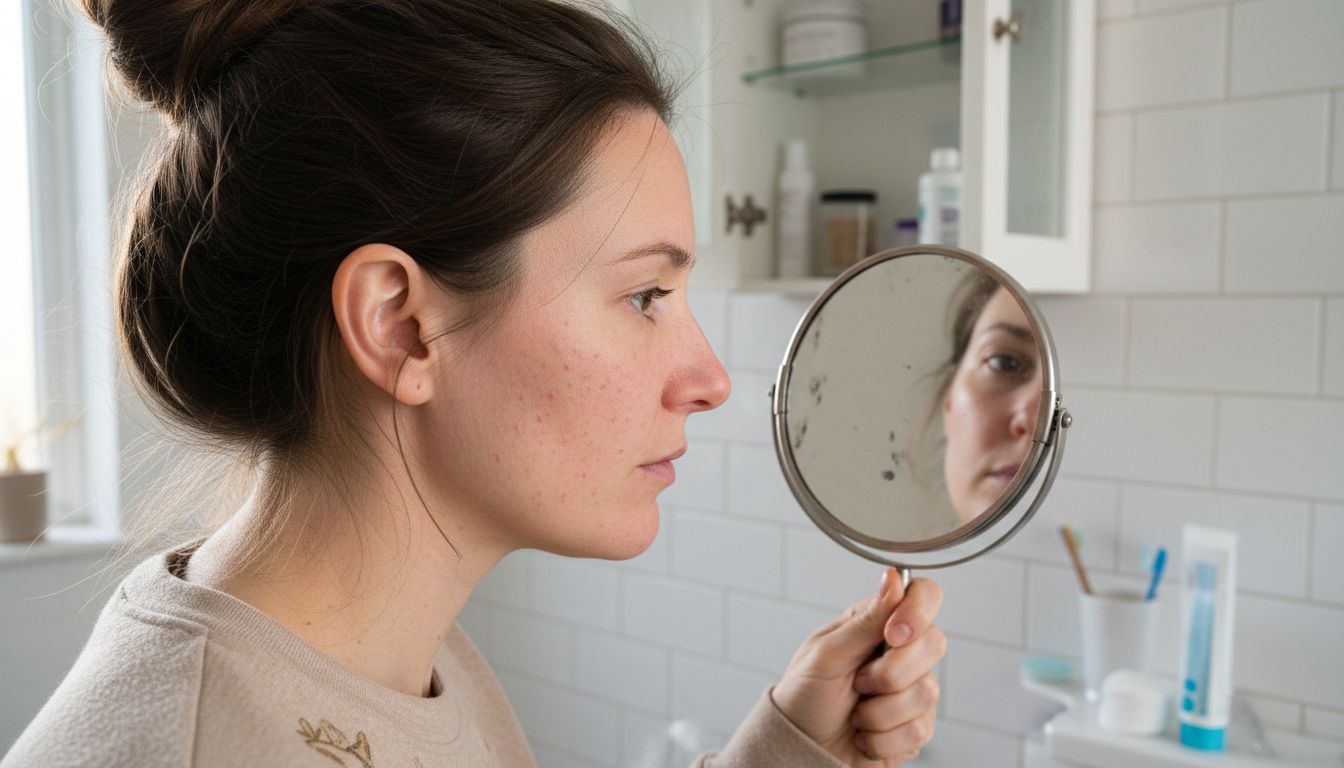
Your body treats microneedling punctures as controlled wounds. This triggers inflammation, which sounds negative but is actually your skin’s healing signal. Growth factors flood the area, immune cells activate, and most importantly, fibroblasts wake up and start producing fresh collagen and elastin fibers.
The Healing Timeline
Microneedling induces morphological changes that unfold over weeks and months, not days. Your skin shows almost complete epidermal recovery within five days, but the deeper remodeling continues much longer.
Here’s what happens at each stage:
- Days 1-3: Acute inflammation peaks; growth factors activate
- Days 4-7: Epidermal cells regenerate and repair surface damage
- Weeks 2-4: Fibroblasts produce new collagen fibers
- Weeks 4-12: Collagen cross-links strengthen; skin thickens and firms
- Months 3-6: Full structural remodeling completes
This is why patience matters. One treatment creates the signal, but the body needs time to build new tissue.
Here’s a quick reference for post-microneedling healing milestones to help set realistic expectations:
| Timeline | Skin Response | Care Focus | Visible Changes |
|---|---|---|---|
| Days 1-3 | Swelling, redness | Rest, gentle cleansing | Minor texture change |
| Days 4-7 | Surface repair | Hydration, sunscreen | Reduced dryness |
| Weeks 2-4 | Collagen boost starts | Avoid harsh actives | Smoother texture emerges |
| Weeks 4-12 | Collagen matures | Maintain treatment schedule | Firmness, improved tone |
| Months 3-6 | Remodeling completes | Long-term skin care | Lasting scar, wrinkle reduction |
Epidermal Thickening and Elasticity
As collagen accumulates, your epidermis thickens. Thicker skin means fewer visible pores, smoother texture, and better structural support for fine lines. The new collagen fibers also improve elasticity—your skin bounces back rather than staying creased.
You’re not adding filler or freezing muscles. You’re literally rebuilding your skin’s architecture with your own biology.
Microneedling works because it harnesses your body’s natural repair mechanisms, creating results that feel rested and supported, never artificial.
Gene Expression Changes
At the molecular level, specific genes activate during healing. Tissue remodeling, wound healing, and epithelial proliferation genes upregulate, while pro-inflammatory markers downregulate once the acute phase passes. This means your skin gets the growth stimulus without chronic inflammation.
This is fundamentally different from aggressive treatments that cause sustained irritation. Microneedling creates controlled stimulus followed by resolution.
What Actually Improves
As collagen rebuilds, you notice:
- Smoother, more refined texture
- Tighter, firmer skin tone
- Reduced fine lines and mild wrinkles
- Softer appearance of acne or surgical scars
- More even skin color and reduced discoloration
- Smaller pore appearance
For Raleigh residents over 30, these changes feel believable because they come from your own skin biology, not overzealous intervention.
Pro tip: Collagen production peaks around week 8 after treatment, so schedule follow-up sessions 4-6 weeks apart to maintain momentum—consistent timing builds better results than sporadic sessions.
Safety, Risks, and Common Misconceptions
Microneedling carries a favorable safety profile when performed correctly by trained professionals. But like any procedure, understanding real risks versus exaggerated concerns helps you make informed decisions.
Microneedling is generally a safe, minimally invasive treatment with most side effects being temporary and mild. The procedure doesn’t involve heat, chemicals, or aggressive trauma—it’s controlled micro-injury designed to stimulate healing.
Expected Temporary Side Effects
Most people experience predictable, short-lived reactions after treatment:
- Redness and flushing: Usually resolves within 24-48 hours
- Mild swelling: Peaks at day 2-3, subsides by day 5
- Sensitivity to products: Temporary dryness or mild irritation
- Slight discomfort: Managed with topical numbing during treatment
These aren’t complications—they’re evidence your skin is responding and healing. Plan treatments when you don’t have major social events the next 2-3 days.
Rare but Possible Complications
Serious side effects remain uncommon when professionals handle treatment correctly. Potential risks include:
- Postinflammatory hyperpigmentation: Dark spots, especially in darker skin tones
- Infection: Extremely rare with proper sterilization
- Scarring: Only occurs with improper technique or aftercare
- Irritant dermatitis: Sensitivity reaction to products applied post-treatment
Risk factors increase when treatment occurs in non-medical settings or with untrained providers.
Misconception: “Microneedling Creates Permanent Damage”
False. The punctures are intentionally shallow and controlled. Your skin heals completely within days. The goal is healing response, not actual injury.
Misconception: “Results Are Instant”
False. Real collagen rebuilding takes 8-12 weeks. Early results appear around week 3-4, but full transformation requires patience and multiple sessions.
Temporary side effects are normal and expected, but serious complications are uncommon when trained healthcare providers perform treatment with proper sterilization.
Who Should Avoid Microneedling
Certain situations make microneedling inappropriate:
- Active skin infections (cold sores, herpes, staph)
- Severe cystic acne requiring medical treatment
- Uncontrolled bleeding disorders
- Keloid history or severe scarring tendency
- Metal allergies (relevant for some device types)
- Pregnancy (conservative approach)
These aren’t permanent contraindications—many resolve with time or treatment.
The Provider Question
Your biggest safety factor is who performs treatment. Medical spas with licensed aestheticians supervised by physicians offer different oversight than unsupervised providers. Ask about training, sterilization protocols, and whether your provider adjusts treatment based on your skin’s response.
Raleigh residents deserve transparent conversations about realistic risks before committing to treatment.
Pro tip: Avoid vitamin A products, vitamin C serums, and direct sun for 5-7 days post-treatment—let your skin focus on healing rather than managing irritating ingredients.
Comparing At-Home Versus Professional Treatments
At-home microneedling devices are everywhere online. They’re affordable, convenient, and promise visible results. But there’s a fundamental difference between what you can safely do at home and what trained professionals accomplish in medical settings.
Understanding this gap matters before investing time and money in either approach.
The At-Home Reality
At-home microneedling devices have shorter needles designed primarily for exfoliation rather than true collagen induction. These shallow needles never reach the living layers of skin where real transformation happens.
Here’s what at-home devices actually do:
- Create superficial micro-abrasion on the outermost skin layer
- Provide mild exfoliation similar to physical scrubs
- Deliver serums slightly deeper than topical application
- Generate minimal collagen stimulation
- Cost $20-150 per device
They feel productive. Your skin looks temporarily plumped from irritation and increased blood flow. But this isn’t collagen renewal—it’s surface-level response that fades within hours.
Real Risks of At-Home Use
Despite the appeal, at-home microneedling carries genuine risks:
- Infection: Non-sterile needles or improper hygiene easily introduce bacteria
- Scarring: Uneven pressure or repeated passes damage deeper skin layers
- Viral spread: If you have dormant herpes, you can activate and spread it across your face
- Skin irritation: Wrong pressure, wrong products, wrong timing compounds problems
- Pigmentation issues: Damage triggers postinflammatory hyperpigmentation
These aren’t theoretical—dermatologists regularly treat complications from at-home attempts.
What Professional Treatment Delivers
Professional microneedling operates in a completely different category. Professional devices use adjustable needle depths that reach living skin layers, triggering genuine collagen synthesis.
Key professional advantages:
- Medical evaluation: Assessment of your skin type, condition, and suitability
- Controlled depth: Needles penetrate 0.5-2mm based on your specific needs
- Sterile environment: Clinical-grade sterilization eliminates infection risk
- Expert technique: Trained providers adjust pressure, speed, and coverage
- Real results: Measurable collagen rebuilding within 8-12 weeks
- Safety oversight: Medical supervision reduces complications
Yes, professional treatment costs $200-400 per session. But you’re paying for efficacy, safety, and expertise.
At-home devices create temporary cosmetic effects; professional microneedling creates structural skin changes that last.
The Right Choice for Raleigh Residents
If you’re 30-50 seeking subtle, believable results, medically led approaches offer controlled outcomes that respect your natural appearance. Professional treatment paired with proper aftercare delivers sustainable improvement without the risks of DIY experimentation.
At-home devices work for maintenance between professional sessions—gentle, consistent use. But for actual skin transformation, professional treatment is the only evidence-backed option.
Pro tip: If you’ve already invested in an at-home roller, use it sparingly between professional treatments with approved serums to extend results—but don’t expect it alone to replace professional sessions.
Discover Lasting Skin Renewal with Professional Microneedling
If you are seeking to naturally boost your skin’s collagen and address signs of aging without overdone results then professional microneedling at The Aesthetics Lounge and Spa Raleigh is designed for you. This treatment works with your skin’s biology to gently stimulate collagen production through controlled micro-injuries and measured healing responses. Our medically led approach uses precise motorized devices tailored to your unique skin structure for safer, deeper, and more effective treatments.
Ready to transform your skin with expert care and clarity on every step Our team focuses on planning, education, and thoughtful pacing so you see real, sustainable improvements that support your natural beauty. Learn more about skin care strategies aligned with your goals in our Skin Care Archives or explore what makes us a trusted destination on our main page. Start your skin transformation journey with us today and experience the confidence that comes with well-supported, lasting results.
Frequently Asked Questions
What is microneedling and how does it work?
Microneedling is a minimally invasive procedure that uses controlled needles to create tiny punctures in the skin. This stimulates the skin’s natural healing response, boosting collagen and elastin production, which improves skin texture and reduces signs of aging.
How many microneedling sessions are needed for optimal results?
Typically, most individuals see significant results after three to five sessions spaced 4-6 weeks apart. Each session builds upon the last, helping to enhance skin thickness and improve overall appearance over time.
What skin concerns can microneedling address?
Microneedling is effective for various skin issues, including fine lines and wrinkles, enlarged pores, mild to moderate scarring (like acne scars), skin texture irregularities, and loss of firmness. Because it promotes collagen renewal, the results appear authentic and natural.
Is microneedling safe, and what are its potential side effects?
Microneedling is generally safe when performed by trained professionals. Common temporary side effects include redness, slight swelling, and sensitivity for a few days post-treatment. Serious complications are rare but can include infection or hyperpigmentation, especially in darker skin tones.