
TL;DR:
- Medically guided routines use evidence-based ingredients like retinoids, sirtuins, and antioxidants for real results.
- Consistency, proper sequencing, and professional support are key to natural, lasting anti-aging benefits.
- Over-the-counter products often lack effective concentrations; medical-grade formulations provide deeper, measurable improvements.
Medically Guided Anti-Aging Skincare Routine for Natural Results
You want to look like yourself, just more rested. Not frozen, not overdone, and certainly not like you’ve handed your face over to a trend. That instinct is right. The challenge is finding a routine that actually delivers subtle, visible improvement without guesswork or risk. Most people cycle through products that promise everything and change very little, or they go too aggressive and end up with irritation instead of results. This guide walks you through a medically informed, evidence-based workflow built for adults in Raleigh who want real improvement, measured carefully, and guided by science rather than marketing.
Table of Contents
- Understanding the science behind anti-aging skincare
- Essential products and tools for your anti-aging routine
- Step-by-step anti-aging skincare routine workflow
- Common mistakes and how to troubleshoot your routine
- Why medical guidance and subtlety matter most in anti-aging routines
- Take the next step: Professional support for your anti-aging goals
- Frequently asked questions
Key Takeaways
| Point | Details |
|---|---|
| Clinically guided routines work | Evidence-based ingredients like sirtuins and retinoids measurably reduce wrinkles and visible age. |
| Medical guidance ensures safety | Medically supervised routines reduce risks of irritation and maximize results naturally. |
| Consistency is essential | Daily use and proper product sequencing are crucial for seeing and keeping real anti-aging improvements. |
| Subtlety yields best results | Natural-looking improvements prevent an ‘overdone’ look and boost confidence. |
Understanding the science behind anti-aging skincare
Skin ages through a combination of internal biology and external exposure. Over time, your body produces less collagen, the structural protein that keeps skin firm and resilient. Elastin fibers, which allow skin to bounce back, become less efficient. Cell turnover slows, which means older, duller cells stay on the surface longer. Pigment distribution becomes uneven as melanin production shifts with sun exposure and hormonal changes. These processes don’t happen all at once, but they compound quietly over years.
The good news is that the biology of aging is increasingly well understood, and so are the ingredients that slow or partially reverse these changes. Three categories stand out in clinical research.
Sirtuins (pronounced SIR-too-ins) are proteins inside your cells that regulate aging at the molecular level. When activated, they support DNA repair, reduce oxidative stress, and help maintain skin structure. Topical formulations that target sirtuins represent one of the more recent and promising advances in clinical skincare.
Pterostilbene (teh-ROH-STIL-been) is a natural compound derived from blueberries that activates sirtuin pathways. It functions as an antioxidant and anti-inflammatory agent at the cellular level, supporting skin renewal from within.
Retinoids are vitamin A derivatives that remain among the most studied and proven ingredients in anti-aging skincare. They accelerate epidermal cell turnover, stimulate collagen production, and reduce the appearance of fine lines and uneven tone over consistent use.
Clinical data backs this combination meaningfully. A sirtuin-based regimen reduced perceived age by 4 years and improved firmness and wrinkle depth across a multiethnic population in controlled trials. That kind of outcome is not possible with most off-the-shelf products.
| Ingredient | Primary mechanism | Clinical result |
|---|---|---|
| Retinoids | Collagen synthesis, cell turnover | Wrinkle reduction, improved tone |
| Sirtuins | DNA repair, oxidative stress reduction | Reduced perceived age by ~4 years |
| Pterostilbene | Antioxidant, sirtuin activation | Improved firmness, wrinkle improvement |
| Peptides | Signal collagen production | Structural support, hydration |
| SPF | UV damage prevention | Prevents further collagen loss |
The mechanisms working together include:
- Collagen synthesis stimulation through retinoid use and peptide signaling
- Epidermal renewal via accelerated cell turnover with active ingredients
- Oxidative stress reduction through antioxidants like pterostilbene and vitamin C
- DNA repair support via sirtuin activation
- Barrier restoration through targeted moisturizers and ceramides
The most important distinction in anti-aging skincare is not which products sound impressive, but which ingredients have peer-reviewed clinical evidence behind them. Anecdotal before-and-after photos do not replace controlled trials. Building your routine around evidence-backed actives is the foundation of sustainable, believable results.
Supporting youthful skin health practices begins with understanding what your skin is actually doing at a biological level, and choosing ingredients that match those mechanisms. That’s where medical-grade skincare benefits become most apparent, since these formulations are designed to penetrate effectively and deliver results that drugstore alternatives often cannot match.
Essential products and tools for your anti-aging routine
Knowing the science is only useful when you can translate it into what actually sits on your bathroom shelf. A well-built anti-aging routine doesn’t require twenty products. It requires the right ones, used correctly, in the right order.
Here are the core categories to prioritize:
- Gentle cleanser: Removes surface debris without stripping the skin barrier. Avoid anything that leaves your skin feeling tight afterward.
- Antioxidant serum: Vitamin C (L-ascorbic acid) applied in the morning neutralizes free radicals before they can accelerate collagen breakdown.
- Retinoid treatment: Used at night, this remains the most clinically supported anti-aging ingredient available. Start low and build gradually.
- Broad-spectrum SPF 30 or higher: Non-negotiable, every morning. UV damage is the single largest external driver of visible aging.
- Peptide or repair moisturizer: Supports barrier function and signals collagen production overnight.
- Specialty treatments: Sirtuin-targeting serums, pterostilbene-based formulations, or red light therapy devices for those ready to build on a solid foundation.
One area worth addressing honestly is the over-the-counter versus medical-grade distinction. It matters more than most people realize.
| Feature | OTC products | Medical-grade products |
|---|---|---|
| Ingredient concentration | Often below therapeutic threshold | Clinically effective concentrations |
| Penetration depth | Surface-level in many cases | Formulated for dermal absorption |
| Evidence backing | Variable, marketing-driven | Peer-reviewed in many cases |
| Professional support | None | Guided by trained providers |
| Access | Retail shelves | Through licensed professionals |
Clinically, retinoids and red light therapy provide significant wrinkle and pigmentation improvement when used at appropriate concentrations. The retail versions of retinol, for example, are often formulated at concentrations too low to generate the same results seen in clinical studies.
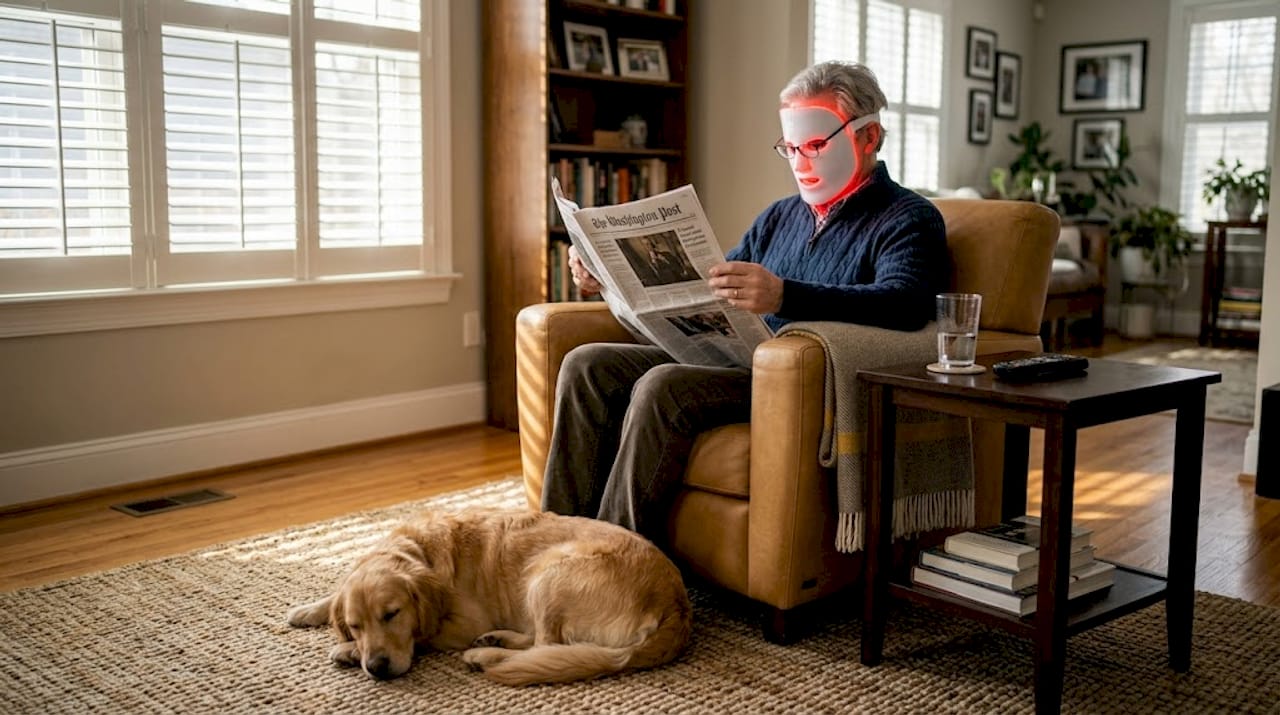
Devices like LED masks (which use specific light wavelengths to stimulate cellular repair) and facial rollers (which support lymphatic movement and product absorption) can be useful additions. They work best as supportive tools layered on top of a solid topical foundation, not as replacements for active ingredients.
Pro Tip: Most people over-invest in moisturizers and under-invest in actives. A high-end moisturizer won’t move the needle on aging the way a well-chosen retinoid or antioxidant serum will. Spend your budget on ingredients that have a biological mechanism of action.
When reviewing medical-grade skincare products, look for formulations that list active concentrations and cite clinical support. Understanding what makes skincare medical-grade helps you make confident decisions rather than guessing at labels. For broader context, exploring non-surgical skin health tools gives you a fuller picture of what’s available beyond topical care.
Step-by-step anti-aging skincare routine workflow
With the right products selected, the next step is sequencing them correctly. Application order affects how ingredients absorb and interact. Done right, each product amplifies the next. Done wrong, you may reduce effectiveness or cause irritation.
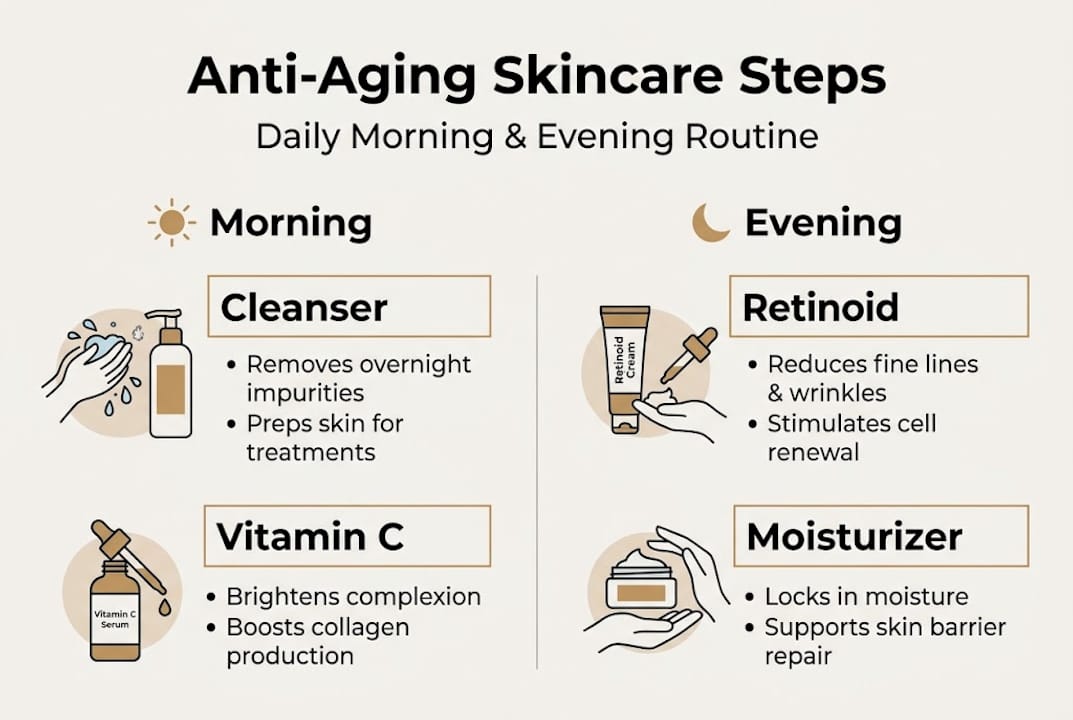
Morning routine:
- Gentle cleanser — Use lukewarm water. Spend 60 seconds working it in. Pat dry, don’t rub.
- Antioxidant serum (vitamin C) — Apply 3-4 drops to clean, slightly damp skin. Allow 60-90 seconds to absorb before the next step.
- Targeted treatment serum — If using a sirtuin-activating or peptide serum, layer it after vitamin C.
- Moisturizer — Lock in the layers with a lightweight, hydrating moisturizer.
- Broad-spectrum SPF 30 or higher — Applied as the final step, every morning, rain or shine.
Evening routine:
- Double cleanse if wearing SPF or makeup — An oil-based cleanser first, followed by your regular cleanser.
- Retinoid treatment — Apply a pea-sized amount to dry skin. More product doesn’t mean more results; it means more irritation.
- Peptide or repair moisturizer — Wait 20 minutes after retinoid before applying, especially during the first few weeks.
- Optional: facial oil or occlusive layer — Supports barrier recovery overnight for drier skin types.
Two to three times per week:
- Chemical exfoliant (AHA or BHA, depending on skin type)
- Red light therapy device (10-15 minutes)
- Hydrating mask on non-exfoliant nights
| Step | Timing | Frequency | Expected timeline |
|---|---|---|---|
| Vitamin C serum | Morning | Daily | 4-8 weeks for glow improvement |
| Retinoid | Evening | 2-3x/week, build to nightly | 8-12 weeks for wrinkle reduction |
| SPF | Morning | Daily | Immediate protection |
| Peptide moisturizer | Evening | Daily | 6-8 weeks for firmness |
| Chemical exfoliant | Evening | 2-3x/week | 4-6 weeks for texture |
Research confirms that epidermal thickness and collagen increased meaningfully after just 4 weeks of consistent sirtuin and pterostilbene-based regimen use. Consistency is the variable that most directly determines your results.
Pro Tip: Introduce one new active at a time, spaced two weeks apart. This makes it easy to identify what’s working and what’s causing a reaction, rather than overhauling your entire routine at once and losing track of the cause.
For a visual breakdown, a step-by-step rejuvenation process helps contextualize the workflow. A full medically guided skin workflow provides even deeper guidance on sequencing and personalization. And if you want a focused reference for daily use, medically guided routine steps offers a practical, organized walkthrough.
Common mistakes and how to troubleshoot your routine
Even well-intentioned routines stall or backfire when a few key errors go unchecked. Understanding these pitfalls in advance puts you ahead of most people who try and quit too soon.
The most common mistakes in anti-aging routines:
- Ingredient overload: Layering too many actives at once, for example retinoids, AHAs, vitamin C, and benzoyl peroxide in the same routine, causes irritation and can actually compromise your skin barrier rather than repair it.
- Skipping SPF: This is the most consequential mistake. UV damage degrades the very collagen your other products are working to rebuild. No active ingredient can outrun daily unprotected sun exposure.
- Inconsistent use: Retinoids and sirtuin-based formulations require weeks of steady use to work. Using them sporadically produces little to no visible change.
- Expecting overnight results: Clinical studies measure outcomes in weeks and months, not days. Impatience is the primary reason people abandon routines that would have worked.
- Assuming natural means safe: Some natural ingredients (like high-concentration essential oils or citrus extracts) are among the most irritating ingredients in skincare. Evidence-backed matters more than ingredient origin.
Clinically, retinoids improve wrinkles, pigmentation, and texture, but misuse leads directly to irritation or no perceptible effect. The application method and frequency matter as much as the ingredient itself.
If you experience irritation, dryness, or breakout:
- Pause the most recently introduced active for 5-7 days.
- Switch to a gentle cleanser and a simple, fragrance-free moisturizer only.
- Allow the barrier to recover fully before reintroducing any actives.
- Reintroduce the active at a lower frequency, every third night instead of nightly.
- If irritation continues or worsens, consult a medical skincare professional before proceeding.
Real results in anti-aging skincare are measured in quarters, not days. If you’ve been consistent for at least 8-12 weeks and see no change, that’s the right time to reassess your products or seek medical guidance. Stopping at week three because you’re not glowing yet means the science never had time to work.
Tracking your progress matters. Photographs taken in the same lighting, from the same angle, every four weeks give you an objective reference point. A simple skin journal, noting product changes, reactions, and observations, turns a routine into a data set you can actually use.
For proactive strategies, a facial aging prevention guide provides useful context on long-term planning. And when you’re ready to expand beyond topicals, understanding how to support youthful skin opens up additional, complementary approaches.
Why medical guidance and subtlety matter most in anti-aging routines
Here is what experience consistently teaches: the clients who achieve the most natural-looking, lasting improvements are almost never the ones who went fastest or spent the most. They’re the ones who built slowly, checked in regularly, and resisted the pull of whatever was trending that month.
Subtlety isn’t a limitation. It’s a strategy. An approach that respects your skin’s pace produces results that look like you, not like a procedure. That distinction matters enormously to self-confidence and to the longevity of your results.
Medical guidance adds a layer of personalization that no general article or product label can replicate. A trained provider evaluates your actual skin condition, identifies what’s driving your specific aging concerns, and builds a regimen that addresses root causes rather than surface symptoms. They also help you avoid the costly detours of over-treatment and reactive product cycling.
Fast trends rarely hold up over time. They’re designed to generate excitement, not to solve a complex biological process. The benefits of medically led spas include precisely this kind of steady, science-grounded approach that prevents the overdone look and supports genuine, quiet renewal over years, not weeks.
Take the next step: Professional support for your anti-aging goals
Building a routine on your own is a strong start. But when you’re ready for personalized guidance, a medically trained perspective, or access to clinical-grade formulations, having the right support changes everything.
At The Aesthetics Lounge and Spa Raleigh, we help adults in North Raleigh build anti-aging routines that are precise, evidence-backed, and designed for how you actually live. From selecting the right medical-grade skincare products to mapping out a longer-term strategy with custom aesthetics treatments, every recommendation comes from clinical knowledge and a commitment to results that look natural, not done. If you’re ready to move beyond guesswork and into a routine that’s built for you, we’d be glad to be part of that process.
Frequently asked questions
How long before I see visible results with an evidence-based anti-aging routine?
Most evidence-based routines show visible improvement within 4-12 weeks. A sirtuin-based clinical regimen reduced perceived age by 4 years at the 12-week mark, with wrinkle improvement beginning as early as 4 weeks.
Are medical-grade skincare products really more effective than over-the-counter options?
Yes, in most cases. Medical-grade regimens significantly improved skin quality and perceived age compared to OTC alternatives, largely because active ingredients are formulated at concentrations that actually reach the dermis.
Can a non-surgical skincare routine deliver meaningful anti-aging results?
Absolutely. Sirtuin and pterostilbene regimens reduced visible signs of aging without any surgical intervention, demonstrating that consistent, medically guided topical care can produce real, measurable change.
What should I do if I experience irritation from a new anti-aging product?
Pause the new product immediately, return to a simple cleanser and moisturizer only, and allow your skin barrier to recover for at least five to seven days before reintroducing it at a lower frequency. If irritation persists, consult a medical skincare professional.
Is a medically guided skincare routine expensive?
The upfront investment can be higher than drugstore options, but a targeted, well-planned routine often costs less over time than repeatedly replacing products that don’t deliver. Strategic spending on evidence-backed actives reduces waste considerably.