
TL;DR:
- Proper understanding of facial anatomy is crucial for safe and natural cosmetic results.
- Ignoring individual anatomical variation increases the risk of severe complications like tissue necrosis and vision loss.
- A personalized, anatomy-driven approach results in safer, more natural, and longer-lasting outcomes.
The assumption that any non-surgical treatment performed by a professional is automatically safe and natural-looking is one of the most consequential misconceptions in aesthetic medicine today. The reality is that technique alone is not enough. What separates a genuinely refined outcome from a risky or overdone result is deep, applied knowledge of facial anatomy. In fact, 37% of filler complications reviewed in one major study were classified as severe, including cases of skin necrosis and vision loss. This article walks you through exactly why facial anatomy knowledge is not optional. It is the foundation of every safe, believable result.
Table of Contents
- What is facial anatomy and why does it matter?
- Risks of ignoring facial anatomy in cosmetic procedures
- The anatomy-driven approach: how experts plan for safe, natural results
- Real-world outcomes: why anatomy knowledge delivers better, longer-lasting results
- The uncomfortable truth: not all providers truly value your anatomy
- Get expert-guided, natural enhancements in Raleigh
- Frequently asked questions
Key Takeaways
| Point | Details |
|---|---|
| Anatomy knowledge prevents complications | Expert understanding of facial structures is key to avoiding serious risks like vision loss or tissue damage during treatments. |
| Individualized plans deliver natural results | Personalized assessments based on your unique anatomy create more subtle, realistic outcomes. |
| Not all providers use anatomy-driven care | Choosing a medically guided expert ensures your treatments respect and enhance your facial features safely. |
| Better results and longevity with expertise | Treatments tailored to anatomy not only look better but can last longer and have higher satisfaction rates. |
What is facial anatomy and why does it matter?
Now that we have seen why taking an anatomy-based approach is vital, let us define what facial anatomy really means and why it sits at the core of safe, beautiful outcomes.
Facial anatomy is not just a medical textbook concept. It is the practical map that guides every needle placement, every product choice, and every treatment decision. Your face is not a blank canvas. It is a precisely organized structure where arteries, veins, nerves, muscles, bones, and fat pads all coexist in layers that shift as you age, move, and express emotion.
Here is what each key structure means for your treatment:
- Arteries and veins: These carry blood to and from the face. Injecting into or compressing an artery can block blood flow to skin or even the eye, with serious consequences.
- Nerves: Branches of the facial and trigeminal nerves run close to the surface in several areas. Disrupting them can cause temporary or, in rare cases, lasting numbness or weakness.
- Muscles: The muscles of facial expression move differently in each individual. Understanding how they interact with fat pads determines where volume can be safely added and where it would cause distortion.
- Bone: Bone structure changes with age, particularly along the jaw, orbital rim, and cheeks. Knowing the underlying bone architecture helps position product at the correct depth.
- Fat pads: These compartments give the face its youthful shape. They deflate and shift with time, and replacing volume without understanding their individual boundaries often creates an unnatural result.
Understanding how these structures intersect is what separates a measured, informed approach from one that relies on guesswork. The depth, angulation, and volume of product all depend on reading these layers correctly in each individual patient.
“Anatomy is not something we reference occasionally. It informs every single decision we make at consultation and at the point of treatment. Two patients can present with the same concern and require an entirely different approach based on the unique relationship between their underlying structures.”
The “one-size-fits-all” treatment zone is a myth that persists in the industry. Some training programs teach injectors to follow general diagrams as if all faces are proportioned identically. They are not. The location of the facial artery, for example, varies significantly between individuals. When research on midface filler outcomes shows naturalness maintained in 95% of patients, it is because those treatments were matched precisely to each patient’s structure, not applied from a generic map. Exploring facial anatomy in aesthetics further reveals just how much individual variation matters in clinical practice.
Risks of ignoring facial anatomy in cosmetic procedures
Understanding the basics of anatomy is one side. Knowing the dangers of cutting corners is the urgent other half.
When a provider does not account for your unique facial anatomy, the consequences can extend far beyond a result that simply looks off. Filler misplaced into or adjacent to a blood vessel can compress or block that vessel, causing tissue ischemia. Ischemia means the tissue is starved of blood and oxygen. Without prompt intervention, this can progress to skin necrosis, meaning permanent tissue death, or in the most serious cases, vision loss.
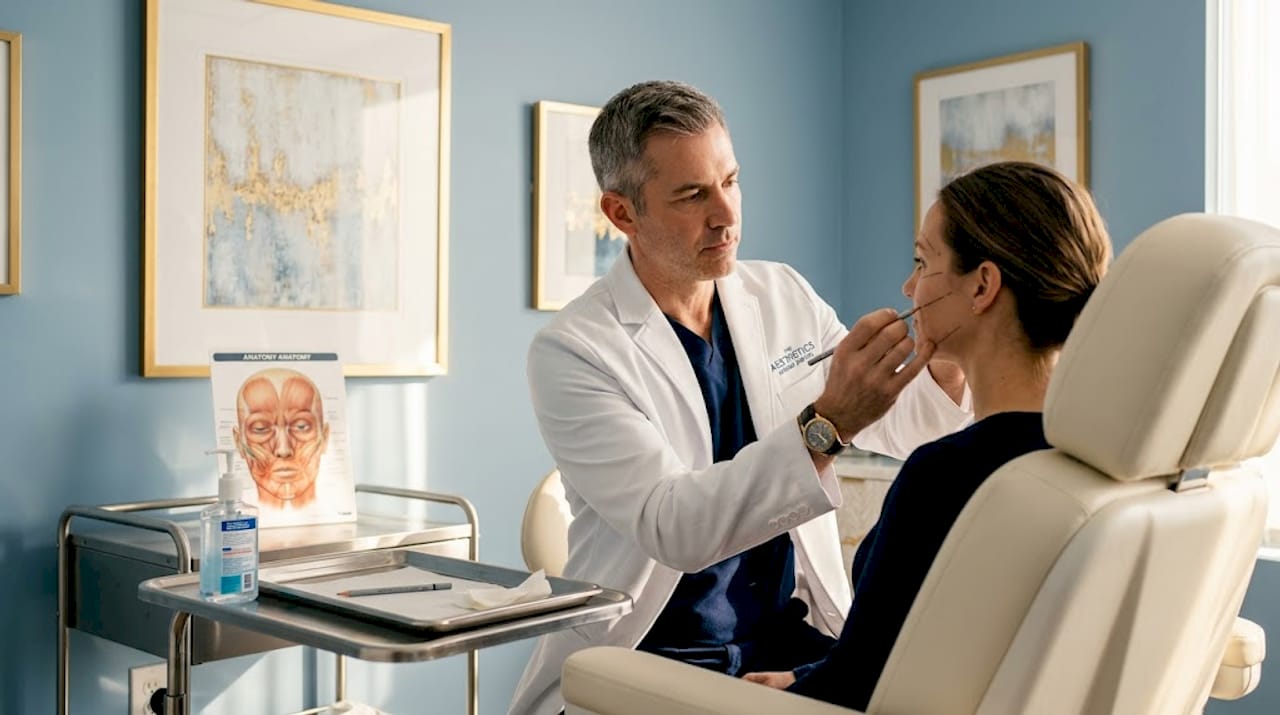
Research on filler-induced injury makes this very clear. In a study of 243 filler-induced ischemia cases, the facial artery angiosome was involved in 58% of cases, and the ophthalmic angiosome in 48%. When the ophthalmic artery was involved, vision loss occurred in 39% of those cases. These are not rare, theoretical outcomes. They are documented in peer-reviewed literature and they cluster around specific high-risk zones.
| Facial zone | Risk level | Common complication |
|---|---|---|
| Nose and nasal tip | Very high | Skin necrosis, vision loss |
| Glabella and forehead | Very high | Blindness, tissue death |
| Nasolabial folds | High | Vascular occlusion, necrosis |
| Temples | High | Artery puncture, ischemia |
| Cheeks and midface | Moderate to high | Nerve involvement, nodules |
| Lips | Moderate | Bruising, vascular occlusion |
The nose, nasolabial folds, glabella, and forehead account for 53% of severe complications in the reviewed literature. This is not a coincidence. These zones are where major arterial supply converges and where the risk of retrograde flow toward the eye is highest.
So what does an unqualified or under-trained injector look like in practice? It is not always obvious. Warning signs include:
- No individualized assessment: They follow a standard injection map without examining your unique structure.
- A factory-style approach: Treatments feel rushed, with little time spent on consultation or mapping your face before treatment.
- Inability to explain anatomy: When asked about vessel location or depth, responses are vague or dismissive.
- No emergency protocol: They cannot explain what they would do in the event of a vascular event or adverse reaction.
Before booking any injectable treatment, explore our dermal fillers guide to understand what a medically guided approach should include from the first consultation forward.
Pro Tip: Before any injectable appointment, ask your provider directly: “How do you identify and protect blood vessels in this treatment area?” A confident, specific answer grounded in anatomy tells you far more than their credentials alone.
The anatomy-driven approach: how experts plan for safe, natural results
With high risks on the table, it is essential to understand what sets an expert, anatomy-driven practice apart from the rest.
A provider who genuinely respects your anatomy does not walk into a treatment room with a preset plan. They build the plan around you, specifically. Here is how that process looks in a medically guided practice:
- Facial mapping at consultation: Before any product is discussed, the provider evaluates your face at rest and in motion. Muscle dynamics, bone prominence, volume distribution, and asymmetries are all noted.
- Anatomical risk assessment: High-risk vascular zones relevant to your unique structure are identified. The provider locates the likely path of your facial artery and ophthalmic branches before selecting an injection approach.
- Product selection matched to depth: Different fillers behave differently at different tissue depths. A stiffer filler placed superficially in a high-risk zone carries more vascular risk than one selected to sit deep against bone. Product choice is never arbitrary.
- Volume planning based on structure: The amount of filler placed reflects what your specific anatomy can absorb naturally, not a predetermined number of syringes.
- Treatment pacing: Anatomy-respecting practitioners often stage treatments over multiple appointments to observe how your face responds and refine accordingly.
- Post-treatment monitoring: The visit does not end with the last injection. A qualified provider monitors the treated area for early signs of vascular compromise before you leave.
Research is direct on this point. Oversimplifying anatomy in training has been described as leading to a “dumbification” effect, where formulaic safe zones replace genuine anatomical understanding, significantly increasing risk. The solution is not a simpler map. It is deeper, more individualized knowledge applied consistently.
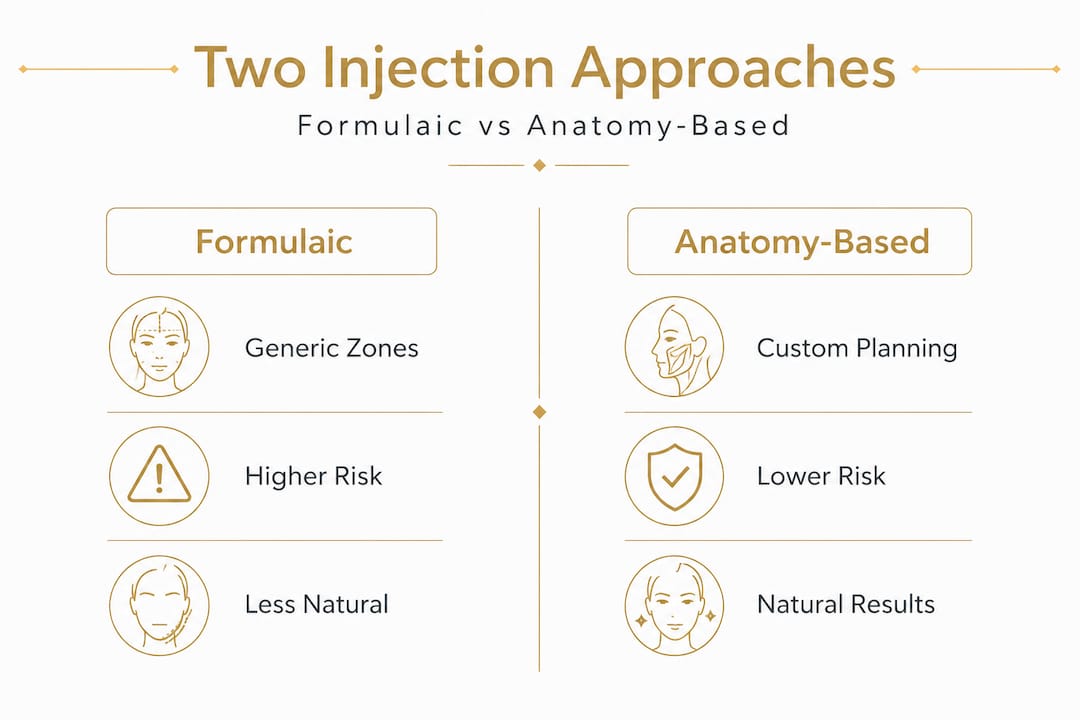
| Approach | Safety outcome | Aesthetic outcome |
|---|---|---|
| Formulaic “safe zone” treatment | Higher vascular risk due to anatomical variation | Generic, often unnatural results |
| Individualized anatomy-driven plan | Significantly reduced complication risk | Refined, natural, expression-preserving results |
| Ongoing advanced anatomical training | Proactively adapts to new research and variation | Consistent, high-quality, believable outcomes |
The difference is real and measurable. Understanding your facial assessment process and learning more about facial structure basics can help you walk into any consultation with greater clarity and confidence.
Real-world outcomes: why anatomy knowledge delivers better, longer-lasting results
So, does all this anatomical planning actually pay off? Here is what the results and the research say.
The short answer is yes, consistently and measurably. When filler treatments are planned around an individual’s anatomy, the outcomes are not just safer. They are noticeably better in terms of how natural they look, how long they last, and how satisfied patients feel about their decision.
What the research shows:
- Midface filler treatments guided by anatomy achieved a 95 to 98% improvement on the Global Aesthetic Improvement Scale at six months, with naturalness maintained in 95% of patients and skin density improving by 24%.
- Anatomy-matched approaches allow providers to place smaller volumes in more precise locations, reducing the risk of the “overfilled” appearance that many patients are most concerned about.
- Fewer side effects, less bruising, and lower rates of nodule formation are consistently associated with technically skilled, anatomically informed placement.
Why subtle results are only possible through anatomical strategy:
The most natural-looking enhancements look natural precisely because they are invisible. No single area looks exaggerated. Expression remains intact. The face moves the way it always has, just with more support where time or volume loss has created change. That kind of restraint is only achievable when the provider understands exactly where your fat pads sit, how your muscles move, and where the vascular risk lies.
On product longevity:
Not all fillers last equally, and anatomy shapes that difference. Hyaluronic acid fillers are noninferior or superior to other types for nasolabial folds at six to nine months, while calcium hydroxylapatite and poly-L-lactic acid show comparable or superior long-term results. The right product for the right area, placed at the right depth, not only looks better. It lasts longer because it integrates properly with the surrounding tissue.
Browse facial enhancement examples to see what anatomy-matched results actually look like, and read more about filler types explained to understand how product selection is informed by more than just the treatment area.
Key statistic: 95 to 98% of patients treated with anatomy-matched midface fillers maintained a natural appearance at six months, with measurable improvements in skin quality alongside volume restoration.
The uncomfortable truth: not all providers truly value your anatomy
Armed with the facts, it is time for a frank discussion about industry reality and what really separates a novice from an expert.
Here is something the aesthetic industry does not say loudly enough: a beautiful waiting room, a polished Instagram feed, and even a certification from a recognized body do not guarantee that your provider has deep, applied knowledge of your facial anatomy. The barrier to entry for injectable treatments in many states is lower than most clients realize, and marketing often fills the gap that clinical rigor should occupy.
What we have seen, both in the research and in clinical practice, is that providers who work from formulaic injection maps are often unaware of how much anatomical variation exists between individual patients. They have been trained to treat a zone, not a person. The result is that the same volume of the same product gets placed in roughly the same location for patients who may have vastly different vascular anatomy. For most, nothing goes wrong. But “most” is not a reassuring standard when the stakes include vision loss or tissue death.
True respect for a patient’s anatomy looks specific. It looks like a provider who takes time at consultation to observe how your face moves, not just how it looks in repose. It looks like someone who can explain, clearly and without defensiveness, why they are choosing a particular needle angle or injection depth for your specific structure. It looks like a provider who follows the developing literature, because facial anatomy research continues to evolve and what was considered standard practice five years ago may now be understood as higher risk than previously recognized.
You have every right to advocate for this standard of care. Ask the difficult questions. If a provider deflects, minimizes your concern, or cannot answer with anatomical specificity, that tells you something important. The right provider will welcome those questions. They will see them as evidence that you are an informed patient, and that is exactly the kind of patient they want to treat carefully and well.
Get expert-guided, natural enhancements in Raleigh
Ready to put knowledge into action? Here is how to take the next confident, well-informed step.
At The Aesthetics Lounge and Spa Raleigh, every treatment begins with understanding your face, not a template. Our medically led team on Six Forks Road brings genuine anatomical expertise to every consultation, so your care is planned around your structure, your movement, and your goals. Explore our full range of aesthetic treatments in Raleigh and learn how we approach each one with precision and restraint. Read more about the role of anatomy in aesthetics or see real enhancement examples from clients who wanted to look like themselves, just more supported.

Your face deserves care that is measured, informed, and unhurried. We plan first, educate always, and treat with the precision that makes results believable. When you are ready, we are here.
Frequently asked questions
What is the most dangerous area for facial filler complications?
The nose, nasolabial folds, glabella, and forehead carry the highest complication risk. Research shows these zones account for 53% of severe complications including skin necrosis and vision loss from nonpermanent filler treatments.
How can I tell if my provider truly understands facial anatomy?
A qualified provider performs a thorough, individualized assessment and discusses your specific structures, not generic zones. Research warns that oversimplifying anatomy in training leads to a formulaic, higher-risk approach that compromises both safety and aesthetic outcomes.
Do anatomy-based treatments really look more natural?
Yes, and the evidence is strong. Midface fillers matched to individual anatomy maintained natural-looking results in 95% of patients at six months, with improvements in both volume and skin quality.
Are some fillers safer depending on facial area?
Absolutely. Product selection informed by anatomy reduces vascular risk and improves how long results last. Hyaluronic acid fillers perform comparably or better than other types across key zones, particularly when placement technique accounts for tissue depth and individual structure.