
Finding a natural balance between looking refreshed and staying true to yourself can feel challenging as you notice subtle shifts in your skin and features. For so many adults in North Raleigh, the goal is not drastic change but thoughtful improvement that highlights your individuality. Medically guided rejuvenation now means personalized plans, consistent follow-up, and long-lasting, natural results rather than one-size-fits-all fixes or dramatic makeovers.
Table of Contents
- Step 1: Assess Your Facial Structure And Skin Health
- Step 2: Develop A Customized Rejuvenation Plan
- Step 3: Choose Medically Guided Treatment Options
- Step 4: Monitor Progress And Refine Your Strategy
Quick Summary
| Key Point | Explanation |
|---|---|
| 1. Assess facial structure and skin health | Understand your unique facial proportions and skin condition to inform personalized treatment recommendations. |
| 2. Develop a customized rejuvenation plan | Create a treatment strategy tailored to your unique concerns, age, and lifestyle for optimal results. |
| 3. Choose medically guided treatment options | Select appropriate treatments with professional guidance to ensure safety and effectiveness for your individual needs. |
| 4. Monitor progress systematically | Track visible changes through consistent documentation to recognize improvements and adjust your treatment plan as necessary. |
| 5. Refine strategy based on feedback | Regularly review your treatment outcomes with your provider to make necessary adjustments and maintain desired results over time. |
Step 1: Assess your facial structure and skin health
Before any treatment plan takes shape, you need a clear picture of what you’re actually working with. This isn’t about comparing yourself to anyone else—it’s about understanding your unique facial proportions, bone structure, and skin condition so any recommendations feel believable and personalized to you.
Start by examining your face in natural, indirect light. Avoid harsh overhead lighting or phone flashlights, which distort shadows and create false impressions. Position yourself at arm’s length from a mirror and look straight ahead. Notice the overall shape of your face: are your features balanced side to side? Does your jawline feel defined, or has it softened over time? Look at the relationship between your cheekbones, nose, and chin—these structural anchors matter far more than minor flaws.
Next, assess skin texture and tone across different areas. Your forehead, cheeks, and jawline likely age differently. Pay attention to these zones:
- Periorbital region: The skin around your eyes shows age earliest and deserves specific attention. Research on periorbital skin aging reveals that wrinkles, fine lines, and pigmentation in this delicate area are reliable indicators of both skin age and overall biological health—not just cosmetic concerns.
- Cheek and temple areas: Notice whether volume has shifted downward or if pigmentation is uneven.
- Jawline and neck: Skin quality here often differs from the face and signals cumulative sun exposure.
Look for specific changes: fine lines versus deeper creases, skin texture (smooth, rough, or bumpy), redness or hyperpigmentation, and overall radiance or dullness. Understanding facial anatomy principles helps you recognize which changes relate to loss of support versus sun damage or dehydration.
Consider scheduling a professional assessment if self-evaluation feels unclear. Clinical tools like skin imaging provide objective baseline data and guide treatment planning with precision.
Your facial structure is your foundation. Treatments should enhance it, never fight against it.
Pro tip: Take consistent baseline photos in neutral lighting and the same angle—this removes guesswork and helps you track actual changes over months, making subtle improvements visible when they’re easy to miss in the mirror.
Step 2: Develop a customized rejuvenation plan
Now that you understand your facial structure and skin condition, it’s time to create a plan that feels authentic to you. A customized approach means your treatment strategy reflects your age, genetics, lifestyle, and specific concerns—not a template applied to everyone.
Start by listing your primary concerns in order of importance. Are you most bothered by fine lines around the eyes? Loss of cheek volume? Uneven skin tone? Pigmentation from sun exposure? Texture irregularities? Be honest about what matters to you, not what you think should matter. This clarity prevents expensive treatments that address the wrong problems.
Next, consider your timeline and commitment level. Some results develop gradually over months, while others appear within days. Think about whether you prefer one comprehensive plan or a phased approach that spreads treatments over time. Personalized treatment plans now emphasize tailoring interventions to your specific age, genetics, ethnicity, and lifestyle factors for safe, precise outcomes.
Your plan should prioritize these elements:
- Medical-grade skincare foundation: Before any professional treatments, your skin needs proper support with clinical products that address your specific concerns.
- Structural support first: Volume loss and skin laxity often matter more than wrinkles alone. Restoring support creates a foundation for subtle, believable results.
- Skin quality optimization: Treatments targeting texture, tone, and pigmentation often deliver the most noticeable natural improvement.
- Conservative pacing: Starting with less and adding more later feels better than over-treating and backing down.
A strong plan includes realistic expectations about timing. Most injectables settle over 2 weeks. Laser treatments show gradual improvement over 6 to 12 weeks. Skincare results compound over months. Understanding these timelines prevents frustration and helps you recognize actual progress.
Schedule a consultation with a medical professional who listens more than they sell. Your plan should address your concerns, respect your preferences, and feel sustainable long-term—not flashy or overdone.
Your plan is a roadmap, not a prescription. It should evolve as your skin changes and your comfort grows.
Pro tip: Write down your treatment plan and expected timeline, then review it monthly—this creates accountability and helps you spot subtle improvements you’d otherwise miss in daily life.
Step 3: Choose medically guided treatment options
Now comes the practical part: selecting treatments that align with your plan and concerns. The key is understanding your options before committing, so you feel confident in each decision. Medical guidance matters more here than anywhere else in your journey.
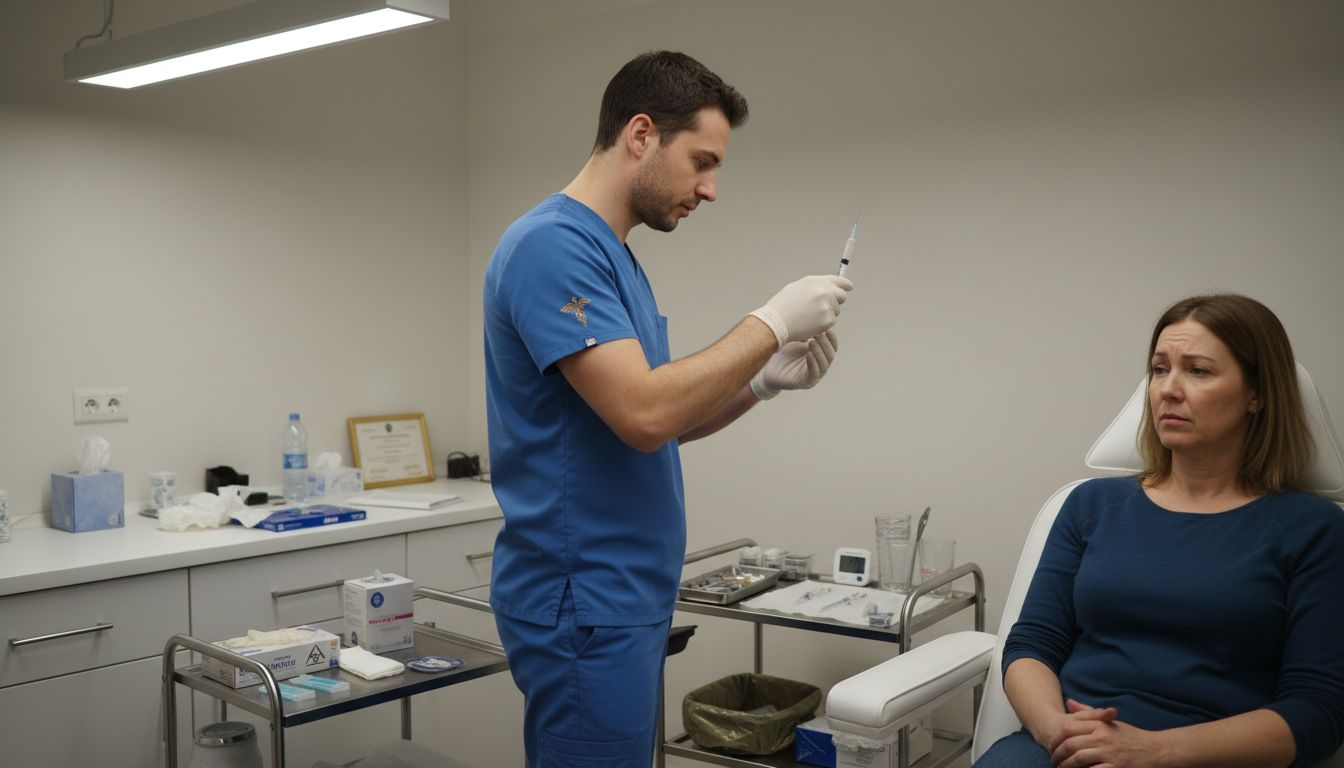
Start by familiarizing yourself with the main treatment categories. Minimally invasive techniques such as botulinum toxin injections, dermal fillers, PRP, and thread lifting each address different concerns—from wrinkle reduction to skin tone improvement to volumetric support. No single treatment solves every problem, which is why your plan prioritizes what matters most to you first.
Understand that treatments work better together than alone. Medical supervision ensures appropriate selections based on your needs, expected outcomes, and realistic satisfaction levels. A professional assessment determines whether your primary concern benefits most from structural support, skin quality work, or a combination approach.
Consider these treatment categories as you review options:
Here’s how common minimally invasive treatments compare in approach and outcomes:
| Treatment Type | Primary Goal | Typical Result Timing | Notable Benefit |
|---|---|---|---|
| Botulinum Toxin | Smooth dynamic wrinkles | 5–14 days | Refreshed, rested look |
| Dermal Fillers | Restore facial volume | Immediate to 2 weeks | Subtle lift and definition |
| Laser/Radiofrequency | Improve tone and texture | 6–12 weeks | Brighter, more even skin |
| PRP/Biostimulators | Gradual tissue regeneration | 1–3 months | Long-lasting collagen boost |
- Injectables: Botulinum toxin relaxes dynamic wrinkles; fillers restore volume and support sagging skin.
- Energy-based devices: Lasers, radiofrequency, and microneedling stimulate collagen and improve texture, tone, and pigmentation.
- Topical and clinical skincare: Medical-grade products address aging at a cellular level and support all other treatments.
- Biostimulators and regenerative treatments: Emerging options that activate your skin’s natural healing response for gradual, lasting improvement.
A systematic approach integrating these modalities ensures safe application, optimal efficacy, and treatments tailored to your individual aging patterns and skin biology. This means your provider customizes the strategy to you, not fitting you into a preset package.
During consultation, ask how each treatment works, what results look like, when you’ll see them, and potential side effects. A provider who educates thoroughly builds confidence. Trust your instincts if something feels rushed or oversold.
The best treatment is one you understand completely and feel genuinely comfortable pursuing.
Pro tip: Request before-and-after photos of patients with similar concerns and skin tone, then ask specific questions about their timeline and satisfaction—this realistic preview prevents unrealistic expectations.
Step 4: Monitor progress and refine your strategy
Treatment doesn’t end when you leave the appointment. Real results develop over weeks and months as your skin heals, regenerates, and settles into its new baseline. This step is about paying attention, documenting change, and adjusting your approach when needed.
Start tracking visible changes systematically. Take photos at consistent intervals—two weeks, one month, three months, and six months after treatments. Use the same lighting, angle, and time of day each time. This removes the bias of daily mirror checks and lets you spot improvements you’d otherwise miss. Small changes compound into noticeable transformation over time.
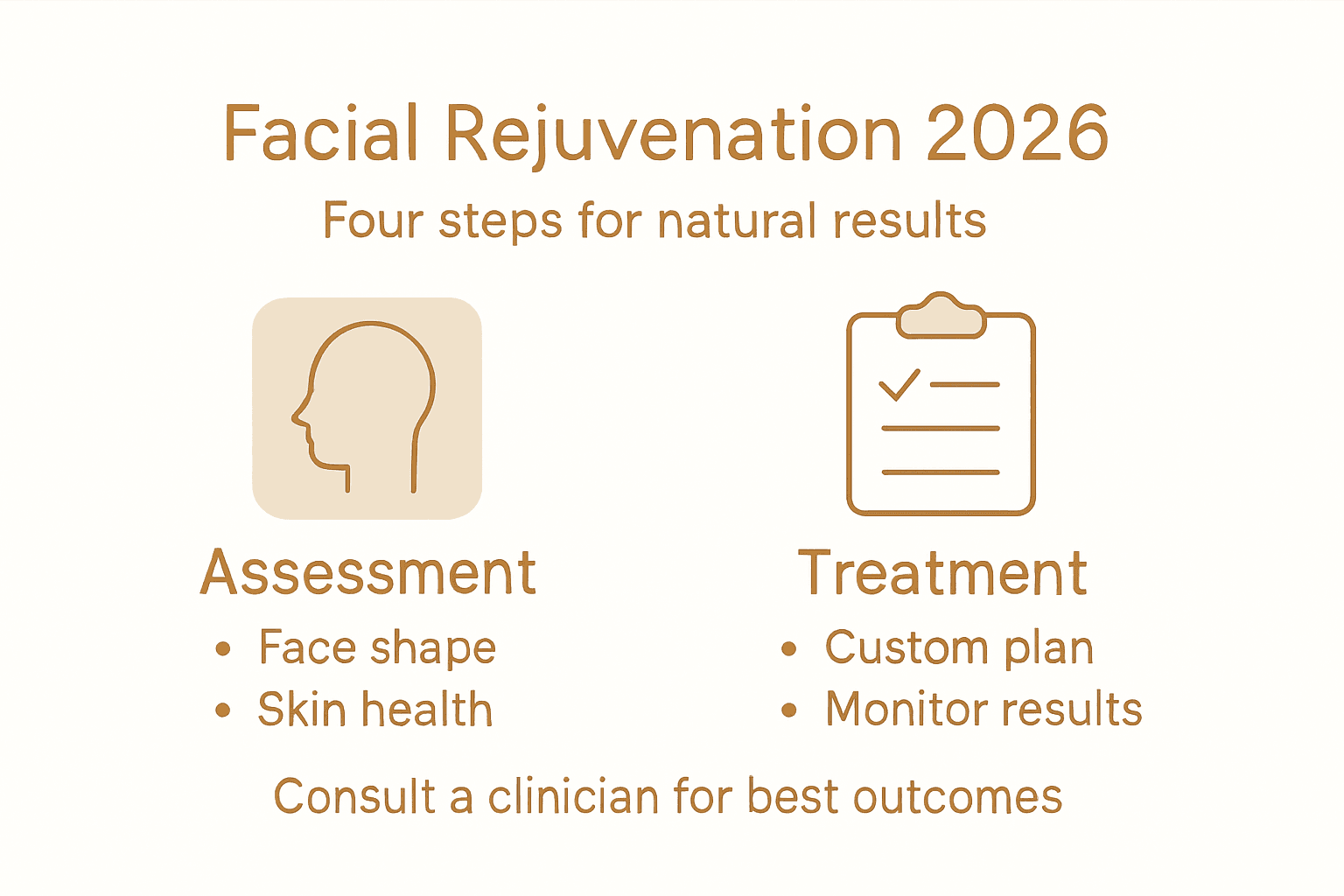
This summary helps you track and refine your rejuvenation journey over time:
| Time Point | Photo and Journal Goal | Potential Adjustments |
|---|---|---|
| 2 Weeks | Initial healing and early changes | Address any reactions |
| 1 Month | Visible treatment effect emerging | Consider pacing changes |
| 3 Months | Full results from most treatments | Add or adjust modalities |
| 6 Months | Long-term progress, subtle shifts | Plan maintenance strategy |
Notice how your skin responds to treatments and products. Does your skin feel firmer after a certain treatment? Did your tone even out faster than expected? Are new concerns emerging? Long-term patient follow-up is integral to the 360-degree rejuvenation model, allowing adjustments to your plan and ensuring sustained outcomes as your skin evolves.
Schedule regular check-ins with your provider. Bring your photos and notes. Discuss what’s working and what isn’t. This partnership approach means your treatment plan stays dynamic, not static. Systematic facial assessment involves evaluating outcomes and your feedback to guide subsequent interventions and optimize results through adjusted treatment parameters.
Refinement might mean:
- Extending intervals between treatments if results are lasting longer than expected.
- Adding complementary work if one area needs additional support.
- Adjusting technique based on how your skin healed from the first treatment.
- Addressing new concerns that emerge as skin quality improves elsewhere.
- Modifying skincare to support and extend treatment results.
Remember that facial aging continues, so maintenance becomes part of your long-term strategy. Strategic touch-ups prevent regression and keep results looking current and natural. Your provider should guide timing based on your individual healing and results.
Progress isn’t always dramatic. Sometimes it’s subtle. That’s actually the goal.
Pro tip: Keep a simple treatment journal noting dates, what was done, how your skin felt during healing, and when you noticed visible changes—this personal data helps your provider make smarter decisions for future appointments.
Elevate Your Facial Rejuvenation Journey with Expert Care
Understanding your unique facial structure and skin health is the key to achieving natural and lasting rejuvenation results. If you are looking for a clear, medically guided roadmap that respects your anatomy and personal goals you deserve a treatment plan focused on subtle enhancement and real improvement. The challenges of balancing volume restoration with skin texture and tone optimization can feel overwhelming. That is why a thoughtful, conservative approach combined with ongoing assessment can make all the difference.
At The Aesthetics Lounge and Spa Raleigh we specialize in customized facial rejuvenation strategies built on foundational principles like volume support, skin quality improvement, and realistic pacing. Explore our Skin Care Archives to discover medical-grade solutions that prepare your skin for professional treatments and maintain healthy radiance long term.
Ready to transform your reflection with natural, anatomically precise care? Visit our main site to schedule a consultation and start your personalized plan today so you can enjoy confident results that evolve beautifully over time. Your journey to subtle, supported rejuvenation begins at The Aesthetics Lounge and Spa Raleigh.
Frequently Asked Questions
What should I assess before starting my facial rejuvenation process in 2026?
To start your facial rejuvenation journey, assess your facial structure and skin health. Examine your face in natural light to understand your features, skin texture, and any aging signs, and consider documenting what you observe.
How can I develop a customized rejuvenation plan for my specific needs?
Begin by listing your primary concerns, such as fine lines or uneven skin tone, and prioritize them based on what bothers you most. Work with a medical professional to create a tailored plan that reflects your age, lifestyle, and treatment preferences.
What types of medical treatments are available for facial rejuvenation in 2026?
Facial rejuvenation treatments include minimally invasive techniques like botulinum toxin injections, dermal fillers, and laser treatments. Research and ask your provider about these options to determine which align best with your rejuvenation goals.
How can I monitor my progress after undergoing facial rejuvenation treatments?
Track your progress by taking photos of your face at consistent intervals, such as every month, and note any visible changes. This can help you and your provider assess the effectiveness of treatments and make necessary adjustments over time.
What steps should I take to maintain my facial rejuvenation results long-term?
To maintain your results, continue with a regular skin care routine and schedule touch-up treatments based on your individual healing and results. Discuss a maintenance strategy with your provider to ensure your skin stays vibrant and youthful over time.
How quickly can I expect to see results from facial rejuvenation treatments?
Results can vary: for injectables, you might see effects in 5–14 days, while skin treatments typically show improvements over 6–12 weeks. Be patient and follow your provider’s advice on treatment timelines to track your progress effectively.