
Planning an aesthetic consultation without clear medical guidance often leads to dissatisfaction and unnatural outcomes. This guide walks you through anatomy assessment, communication strategies, treatment pacing, and safety protocols. You’ll learn to create consultations that prioritize subtle enhancements, skin health, and long-term satisfaction while avoiding common pitfalls.
Table of Contents
- Prerequisites: What You Need Before Your Aesthetic Consultation
- Medical Facial Anatomy Assessment: The Foundation Of Planning
- Consultation Communication And Managing Expectations
- Treatment Planning And Pacing For Subtle, Natural Enhancements
- Common Pitfalls And Troubleshooting In Aesthetic Consultations
- Expected Results, Timelines, And Measurable Outcomes
- Safety Considerations, Warnings, And Alternative Approaches
- Discover Expert Aesthetic Consultations In Raleigh, NC
Key takeaways
| Point | Details |
|---|---|
| Detailed assessment matters | Thorough facial anatomy and skin health evaluation ensures safe, natural treatment planning. |
| Communication reduces dissatisfaction | Clear goal-setting and realistic expectations cut post-treatment regret by over 20%. |
| Conservative pacing wins | Gradual, phased treatments achieve 85% success in natural-looking results. |
| Avoid common mistakes | Overpromising and skipping anatomy checks cause up to 30% of patient complaints. |
Prerequisites: what you need before your aesthetic consultation
Before stepping into your consultation, preparation sets the stage for a productive discussion and safer outcomes. Knowing your skin type and basic facial structure helps you communicate effectively with your provider.
Gather your complete medical history, including any chronic conditions, medications, and allergies. Document your current skincare regimen, from cleansers to prescription treatments. This information allows your provider to identify contraindications and tailor safe treatment options.
Set clear, realistic personal goals focused on subtle, natural enhancement rather than dramatic transformation. Think about which facial features you want to support, not completely alter. This mindset aligns with conservative treatment philosophy and prevents disappointment.
Understand the critical difference between medical and non-medical aesthetic providers. Medical providers bring anatomical expertise, risk management skills, and the ability to handle complications. Non-medical providers lack this training and cannot offer the same level of safety.
Pro Tip: Review your pretreatment guide at least a week before your appointment. This gives you time to adjust medications or skincare if needed, ensuring optimal treatment conditions.
Bring photos showing your concerns from multiple angles. Visual references help providers understand exactly what you want to address. Write down questions ahead of time so you don’t forget to ask during the appointment.
Medical facial anatomy assessment: the foundation of planning
Your facial structure is unique, and a one-size-fits-all approach fails to deliver natural results. Comprehensive anatomical assessment including bone structure, muscle function, and skin condition forms the cornerstone of safe, personalized treatment planning.
Providers evaluate bone prominence, symmetry, and volume distribution across your face. They assess muscle movement patterns to avoid disrupting natural expressions. Skin quality analysis covers texture, elasticity, hydration levels, and existing damage. This multi-layered evaluation reveals which areas need structural support versus surface improvement.
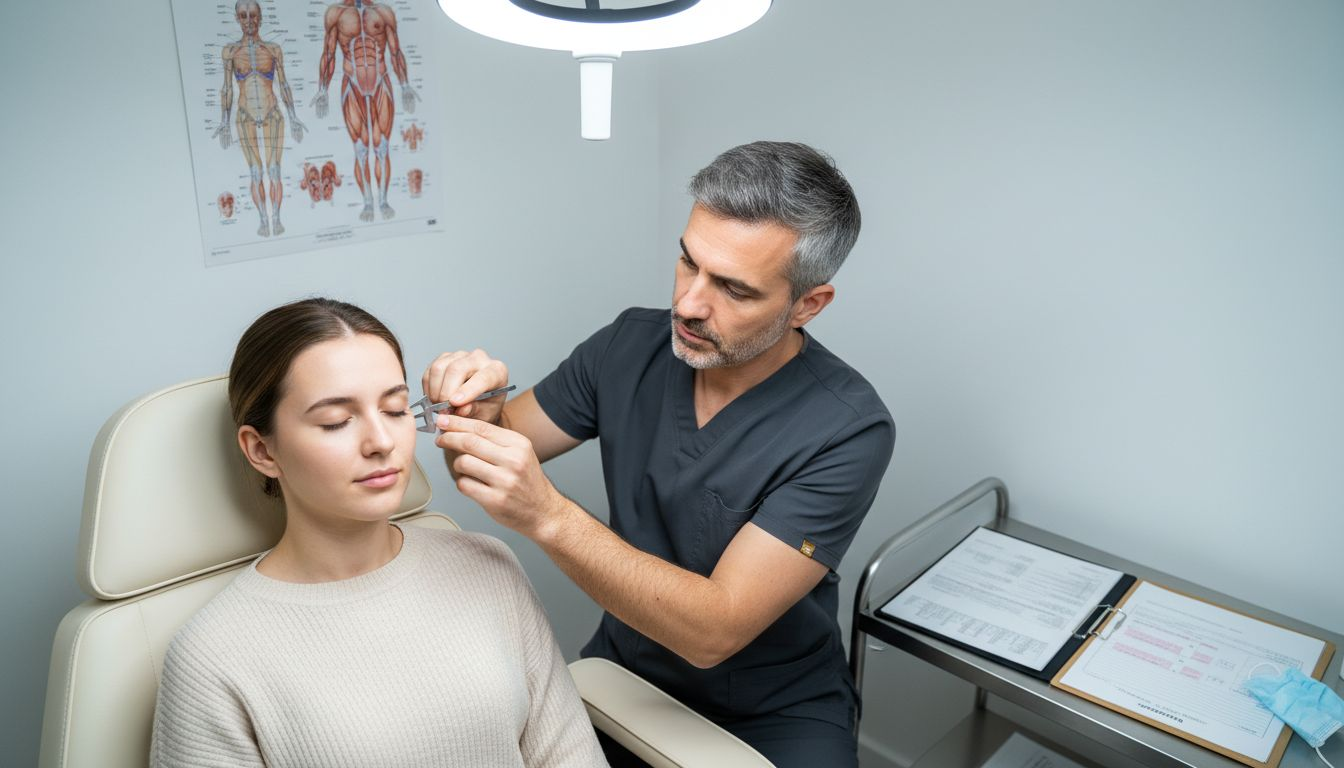
Identifying areas requiring support differs fundamentally from those needing volume reduction. For example, midface volume loss creates hollows that benefit from strategic filler placement. Conversely, jawline heaviness might respond better to skin tightening rather than adding volume.
Physical examination combined with imaging tools guides subtle outcomes. Providers mark injection points based on your unique anatomy, not generic templates. This precision prevents overfilled, unnatural appearances common when anatomy is ignored.
Pro Tip: Ask your provider to explain their anatomical approach to facial aesthetics during your consultation. Understanding their methodology builds confidence in their expertise.
Anatomical knowledge directly impacts both safety and aesthetic outcomes. Providers who understand facial rejuvenation’s anatomical principles avoid dangerous injection zones near nerves and blood vessels. They also create balanced enhancements that work with your natural proportions.
The benefits of medical aesthetics for natural results stem largely from this anatomical foundation. Medical training equips providers to see beneath the surface, planning treatments that respect your facial architecture. This expertise separates medically guided consultations from superficial cosmetic approaches.
Consultation communication and managing expectations
Clear dialogue between you and your provider transforms consultation quality and outcome satisfaction. Post-treatment dissatisfaction drops by over 20% when providers communicate goals and limitations transparently.
Discuss achievable, realistic results openly from the start. If you bring a celebrity photo, understand that replicating someone else’s features ignores your unique anatomy. Instead, focus on enhancing your natural features to their best version.
Be transparent about treatment risks and limitations during your consultation. No procedure is risk-free, and understanding potential side effects helps you make informed decisions. Providers should explain common reactions like bruising, swelling, and temporary asymmetry.
Visual aids and simulation tools clarify expected outcomes better than words alone. Some practices use imaging software to preview subtle changes. While these tools aren’t perfect, they bridge the gap between your vision and clinical reality.
Structured decision aids improve patient confidence and reduce regret by 18%, enhancing informed consent quality. These aids present treatment options, pros and cons, and success rates in clear formats. They support your autonomy by ensuring you understand choices fully before committing.
Ask questions about every aspect of your proposed treatment plan. Inquire about alternative approaches, recovery timelines, and what happens if results don’t meet expectations. Providers who welcome questions demonstrate respect for your involvement in decision-making.
Choosing aesthetic treatments naturally requires partnership between you and your provider. When communication flows freely, both parties work toward the same goal: subtle enhancements that honor your natural beauty.
Treatment planning and pacing for subtle, natural enhancements
Conservative, phased treatment approaches prioritize gradual improvement over immediate transformation. Conservative, gradual treatment plans achieve 85% success in delivering natural, satisfying results.
Begin with minimal interventions and monitor how your skin responds before advancing. Starting small allows adjustments based on actual outcomes rather than predictions. This cautious approach prevents overcorrection, which is harder to reverse than adding more treatment later.
Treatment Pacing Framework
| Session | Timeline | Focus | Adjustments |
|---|---|---|---|
| Initial | Week 0 | Conservative baseline treatment | None, establish response |
| Follow-up | Week 4-6 | Assess results, minor refinements | Based on initial response |
| Maintenance | 3-6 months | Preserve results, address new concerns | Personalized to outcomes |
Plan multiple sessions spaced appropriately for safety and natural effect. Rushing treatments by cramming everything into one visit increases complication risks. Spacing allows swelling to resolve and true results to emerge before making further decisions.
Prioritize preserving facial movement and skin health above achieving maximum correction. Treatments that freeze expressions or compromise skin function create unnatural appearances. Choosing aesthetic treatments that maintain natural movement ensures you still look like yourself.
Pro Tip: Document your progress with photos at each session. This visual timeline helps you and your provider track subtle changes that might be hard to notice day-to-day.
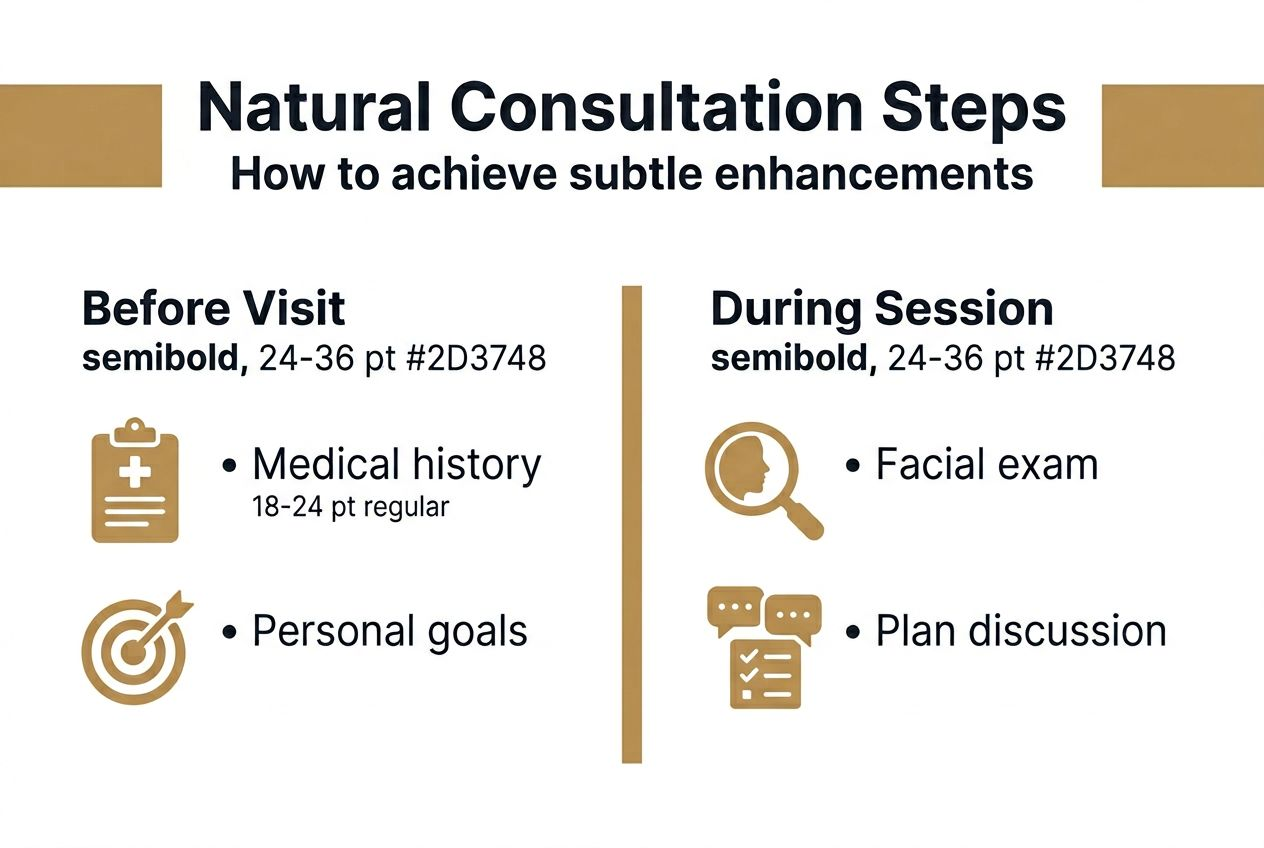
Adjust plans based on ongoing feedback and treatment results. Your initial consultation creates a roadmap, but flexibility ensures the path adapts to your actual response. Some people need more or less product than initially estimated.
Recommended Treatment Sequencing:
- Address skin health foundation with medical-grade skincare
- Treat structural volume loss with strategic filler placement
- Refine surface concerns like texture and fine lines
- Maintain results with periodic touch-ups
This sequence builds a stable foundation before adding refinements. Natural aesthetics through subtle enhancements follows this layered approach, respecting your facial architecture at every stage.
Choosing a medical spa ensures access to providers trained in conservative treatment philosophies. Medical oversight means plans incorporate safety intervals and dosage limits that protect your health while delivering results.
The medical-led approach to aesthetics in 2026 emphasizes this measured pacing. It acknowledges that lasting satisfaction comes from gradual enhancement, not instant transformation.
Common pitfalls and troubleshooting in aesthetic consultations
Frequent consultation errors undermine safety and satisfaction, but awareness helps you avoid them. Common mistakes including overpromising results, neglecting skin health, and insufficient analysis cause up to 30% of complaints.
Avoid providers who overpromise dramatic or immediate results. Legitimate aesthetic improvements take time and multiple sessions. If a provider guarantees perfection or shows only best-case outcomes, they’re setting unrealistic expectations.
Never accept consultations that skip thorough anatomical and skin health assessments. Providers who rush through evaluations or use generic treatment templates ignore your unique needs. This shortcuts safety and personalization.
Insist on comprehensive patient education to reduce post-treatment dissatisfaction. You should leave your consultation understanding exactly what will happen, when results appear, and how to care for treated areas. Confusion indicates inadequate education.
“The most successful aesthetic outcomes stem from consultations where providers spend adequate time on education, anatomy assessment, and realistic goal-setting. Rushing any of these steps compromises results.”
Promptly address unexpected concerns with transparency if they arise. Even well-planned treatments occasionally produce surprising results. Providers should respond quickly to your concerns, not dismiss them.
Red flags during consultations:
- Pressure to book treatments immediately without time to consider
- Dismissal of your medical history or current medications
- Unwillingness to discuss risks or alternative approaches
- Claims that treatments are completely risk-free
- Providers without medical credentials performing injectables
Recognize that perfect symmetry is unrealistic and often unnatural. Human faces have inherent asymmetries that contribute to character. Chasing perfect symmetry can lead to overcorrection and artificial appearances.
If a provider suggests treatments you didn’t discuss or need, ask detailed questions about their reasoning. Upselling unnecessary procedures is a warning sign. Ethical providers recommend only treatments that serve your stated goals.
Expected results, timelines, and measurable outcomes
Understanding realistic timelines prevents anxiety and helps you track progress appropriately. Initial results from injectable treatments typically become visible within 7 to 14 days as swelling subsides.
Full effects emerge by 4 weeks after treatment completion, once products settle and integrate with tissues. This delay is normal and necessary. Judging results immediately after treatment leads to premature concerns.
Typical Result Timeline:
- Days 1-3: Swelling, redness, possible bruising at injection sites
- Days 4-7: Initial changes become noticeable as swelling decreases
- Days 7-14: Continued improvement, most swelling resolved
- Weeks 2-4: Final results visible, products fully integrated
Patient-reported satisfaction runs higher with conservative, phased treatment plans compared to aggressive single-session approaches. Gradual enhancement allows you to adjust to changes and provides natural-looking progression.
Use visual documentation to track changes over time. Take photos in consistent lighting and angles before treatment, at 2 weeks, and at 4 weeks. Side-by-side comparisons reveal subtle improvements you might miss otherwise.
Satisfaction Benchmarks:
| Approach | Satisfaction Rate | Natural Appearance | Complication Rate |
|---|---|---|---|
| Conservative phased | 85% | Excellent | Low (under 5%) |
| Aggressive single-session | 60% | Variable | Higher (10-15%) |
Costs align with multi-session planning and treatment pacing. While phased approaches require more appointments, they often use less product per visit and reduce waste from overcorrection. Total investment may be similar to single-session approaches but with better outcomes.
Manage expectations around maintenance requirements. Most injectable results last 6 to 18 months depending on product type and your metabolism. Plan for periodic touch-ups to preserve results rather than starting from scratch.
Measure success by how natural you look and feel, not by dramatic before-and-after differences. Subtle enhancements that make you look refreshed and supported indicate successful treatment. Obvious changes that draw attention to themselves suggest overcorrection.
Safety considerations, warnings, and alternative approaches
Medical safety limits protect you from serious complications and should never be compromised for faster results. Avoid injecting over 3 ml filler in single sessions to reduce adverse events like vascular occlusion.
Rushed or aggressive treatments increase risks of bruising, asymmetry, and unnatural results. Your body needs time to integrate products and respond to interventions. Forcing multiple treatments into compressed timelines overwhelms tissue capacity.
Conservative vs. Aggressive Approaches:
- Conservative: Gradual layering, longer intervals, fewer adverse events, more natural outcomes
- Aggressive: High volumes, compressed timelines, higher complication rates, potential for overcorrection
Multi-session plans offer significant advantages including fewer side effects and better customization. Breaking treatments into phases allows course correction based on actual response. You can stop or adjust if early results don’t align with goals.
Medical expertise remains essential to manage complications and ensure safety throughout your treatment journey. Rare but serious events like vascular compromise require immediate medical intervention. Non-medical providers cannot offer this level of emergency response.
“Safety in aesthetic treatments isn’t just about avoiding complications. It’s about having medical expertise available to recognize, prevent, and manage issues when they arise. This expertise cannot be replaced by training courses or protocols alone.”
Critical safety protocols:
- Pre-treatment assessment of vascular anatomy
- Aspiration techniques to avoid intravascular injection
- Immediate access to hyaluronidase for filler complications
- Medical supervision throughout treatment and recovery
- Clear emergency protocols and provider availability
Alternative approaches to injectable treatments include medical-grade skincare, laser therapies, and microneedling. These options address concerns like texture and tone without adding volume. Discuss alternatives with your provider to find the best fit for your goals.
Some concerns resolve with conservative skin health interventions alone. Before adding injectables, optimize your skincare foundation. This approach often reduces the need for more invasive treatments.
Always verify your provider’s credentials and training. Medical licenses, board certifications, and ongoing education indicate commitment to safety standards. Don’t hesitate to ask about qualifications during your consultation.
Discover expert aesthetic consultations in Raleigh, NC
You deserve a consultation experience that prioritizes your safety, respects your anatomy, and delivers natural enhancements tailored to your unique features.
Explore aesthetic treatments in Raleigh guided by medical expertise and conservative treatment philosophy. Access comprehensive facial assessments that map your unique structure and skin health. Benefit from transparent communication that sets realistic expectations from the start.
Discover how to choose aesthetic treatments naturally with providers who prioritize subtle results over dramatic transformations. Every treatment plan is personalized, phased for safety, and designed to make you look like yourself but more supported.
Learn why trusting medically led spas matters for achieving outcomes that honor your facial structure and long-term skin health. Medical oversight ensures access to expert guidance, emergency preparedness, and evidence-based treatment approaches.
FAQ
How should I prepare for my first aesthetic consultation?
Gather your complete medical history, current medications, and skincare products before your appointment. Write down specific concerns and goals you want to address. Bring photos showing different angles of the areas you want to improve, and prepare questions about treatments, risks, and expected outcomes.
What makes a consultation medically guided and why does it matter?
Medically guided consultations include thorough facial anatomy assessment, comprehensive risk evaluation, and informed consent processes led by licensed medical professionals. This approach reduces complication rates, ensures safe dosing limits, and provides access to emergency interventions if needed. Medical training enables providers to recognize contraindications and personalize treatments based on your unique anatomy.
How long does it take to see final results from subtle aesthetic treatments?
Initial changes typically appear within 7 to 14 days as swelling subsides and products begin integrating with your tissues. Full results emerge by 4 weeks after treatment completion. Patience during this period is essential because judging outcomes too early can lead to unnecessary concern or premature touch-ups.
What are common mistakes to avoid during aesthetic consultations?
Avoid providers who overpromise immediate, dramatic results or skip thorough anatomical assessments. Don’t accept consultations that rush through your medical history or dismiss your questions. Verify that providers have appropriate medical credentials and don’t let pressure tactics force you into booking treatments before you’re ready.
Why is gradual, multi-session treatment preferred over single aggressive sessions?
Gradual treatment minimizes side effects, allows for personalized adjustments based on your actual response, and produces more natural-looking outcomes. Multi-session approaches achieve 85% satisfaction rates compared to 60% for aggressive single sessions. Spacing treatments also reduces complication risks and prevents overcorrection that’s difficult to reverse.