
TL;DR:
- Most adults in their 30s and 40s prefer subtle, regenerative aesthetic treatments that support long-term skin health. Trend-based procedures often offer temporary, dramatic results, whereas natural approaches build lasting, believable improvements by working with the body’s biology. Personalized planning and early prevention optimize outcomes, emphasizing medical expertise and restraint over fleeting social media trends.
Most adults in their 30s and 40s have felt it at some point: a quiet pressure to stay current with whatever aesthetic treatment is trending on social media this season. The problem is that trends cycle faster than collagen rebuilds. What looks fresh today can read as overdone within a year, and more importantly, chasing dramatic changes rarely supports your long-term skin health. A calmer, more medically grounded approach, one that favors subtle enhancement and regenerative science, consistently outperforms whatever’s viral. This guide explains why, and what it means for how you plan your care.
Table of Contents
- What’s driving current aesthetic trends?
- Aesthetic trends vs. timeless results: what’s the real difference?
- How regenerative treatments support healthy, lasting beauty
- Planning for timeless results: sequence, strategy, and starting age
- The truth about what really lasts in aesthetic results
- Take your next step towards timeless, natural results
- Frequently asked questions
Key Takeaways
| Point | Details |
|---|---|
| Natural beats trendy | Evidence shows that subtle, regenerative treatments yield healthier, longer-lasting skin results than quick-fix trends. |
| Timing matters | Starting preventative, non-surgical treatments in your late 20s or 30s leads to better outcomes and lower risk. |
| Personalization is key | The most successful aesthetic results are always tailored to your goals and skin biology by medical professionals. |
| Prevention and sequence win | Gradually layered treatments and ongoing skin care outlast even the most popular beauty trends. |
| Medically led guidance | Choosing a skilled, medically qualified provider ensures safe strategies and results that stand the test of time. |
What’s driving current aesthetic trends?
Beauty culture has always been influenced by media, but the speed of that influence has accelerated sharply. Social platforms now push beauty ideals that shift seasonally, and many adults feel genuine pressure to keep up. That pressure leads to decisions made quickly, without the kind of measured evaluation that produces lasting results.
The good news is that a meaningful shift is underway. Current aesthetic trends now emphasize natural, subtle enhancements using regenerative therapies like PRP (platelet-rich plasma), PRF (platelet-rich fibrin), biostimulators, and stem cells, prioritizing skin health over dramatic changes. This directly contrasts the overfilled lips and cheeks that defined an earlier era of popular aesthetics.
The reason this shift is happening matters. Clients are better educated. They’ve seen the longer-term results of trend-chasing on others, and many have experienced the disappointment themselves. What they want now is different: faces that look like themselves, just rested, supported, and well cared for. That’s a much more attainable and satisfying outcome.
“The most lasting results in aesthetics come not from following trends, but from understanding your own anatomy and working with it rather than against it.”
Understanding natural aesthetics and subtle enhancements means knowing what distinguishes a thoughtful approach from one driven by social media cycles. Here’s what separates the two philosophies:
- Trend-driven care prioritizes volume, dramatic change, and visible transformation, often with little regard for facial structure.
- Regenerative and natural care stimulates the skin’s own repair processes, working with your existing anatomy for gradual, believable improvement.
- Skin health comes first in modern, medically led approaches. This means addressing hydration, collagen density, texture, and tone before considering any cosmetic additions.
- Longevity matters. Treatments that support cellular health and collagen scaffolding deliver results that persist and improve over time, unlike filler-heavy procedures that may require correction.
Exploring examples of aesthetic treatments with a medically qualified provider helps clarify which options align with your structure and goals. The benefits of medical aesthetics extend well beyond surface appearance when the approach is grounded in science and restraint.
Aesthetic trends vs. timeless results: what’s the real difference?
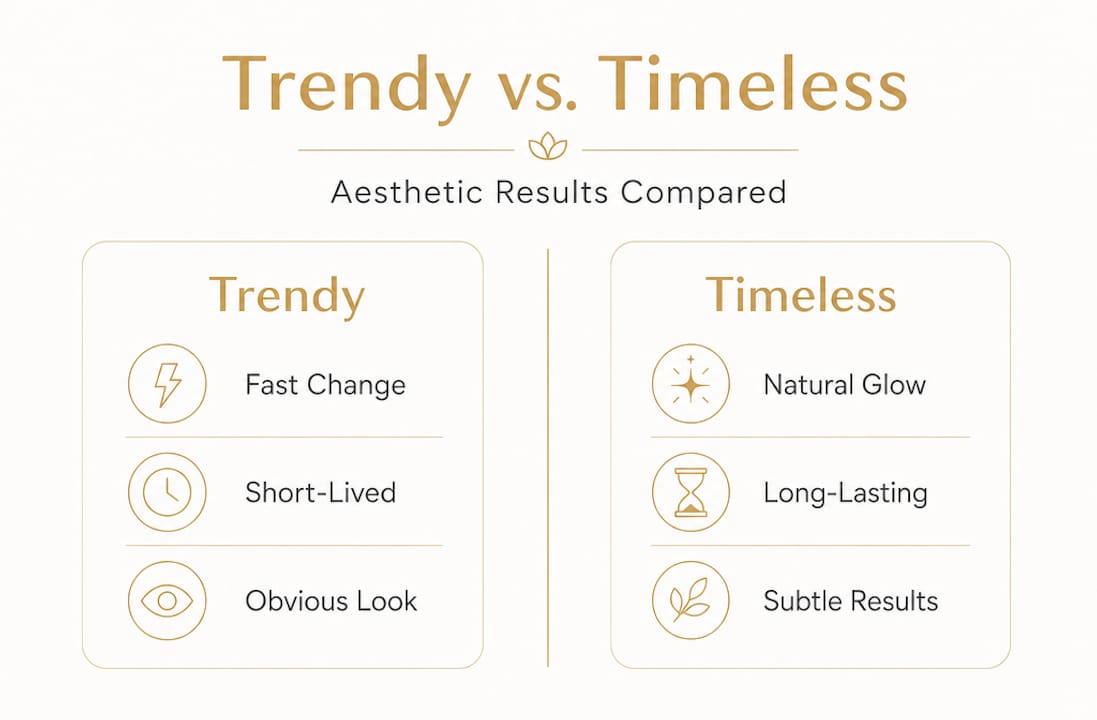
With current trends in mind, let’s see how today’s treatments actually compare to fad-driven approaches side by side.
The clearest way to understand the difference is to measure both approaches across the outcomes that actually matter to your long-term appearance and wellbeing. The evidence behind subtle enhancements is growing steadily, and the results are consistent.
| Feature | Trend-driven treatments | Timeless, natural approach |
|---|---|---|
| Primary goal | Dramatic visible change | Subtle, believable improvement |
| Duration of results | Short-term, may require correction | Cumulative, builds over time |
| Downtime | Often 5-10+ days | Typically 1-5 days |
| Risk profile | Higher risk of overcorrection | Lower risk, gradual change |
| Skin health impact | Neutral to negative long term | Actively improves skin quality |
| Cost over time | Repeat corrections add up | Prevention reduces cost |
| Patient satisfaction | High initially, declines over time | Builds steadily with results |
Regenerative treatments, including PRP, PRF, radiofrequency (RF), and biostimulants, work by signaling the skin’s fibroblasts to produce more collagen and elastin through targeted mechanisms including A2A receptor activation and controlled micro-injuries. According to mechanics of regenerative aesthetics, ultrasound and RF energy heat dermal layers to trigger repair, with particularly strong efficacy in photoaged skin (Glogau classification II-III), minimal downtime of one to five days, and lower risk of post-inflammatory hyperpigmentation compared to ablative lasers.
Here’s what a natural, sequenced approach typically looks like in practice:
- Start with a skin health assessment. Understand your current collagen density, hydration levels, and any early signs of aging before selecting treatments.
- Prioritize regenerative therapies first. PRP, PRF, and biostimulators build your foundational skin quality without adding foreign volume.
- Layer in structural support if needed. Once skin health is established, targeted, minimal injectables can be considered for specific concerns.
- Evaluate and adjust. Allow time between sessions to observe cumulative results before adding more.
Reviewing non-surgical treatment comparisons with a qualified provider gives you clarity on which sequence fits your skin type, your age, and your goals.
Pro Tip: The best aesthetic outcomes almost always come from personalized, gradual plans built around your anatomy. Resist the temptation to replicate someone else’s result. Your face has its own structure, and working with that structure will always outperform working against it.
How regenerative treatments support healthy, lasting beauty
Understanding the science helps, but successful results also depend on planning your approach with expert guidance.
Regenerative therapies do something that trend-based treatments rarely do: they actively improve the biological quality of your skin. Rather than masking changes or adding volume, they prompt your body to produce more of what it naturally contains. Collagen gives skin its firmness. Elastin supports bounce and resilience. Both decline with age, typically beginning in your late 20s, and regenerative treatments are designed specifically to counter that process.
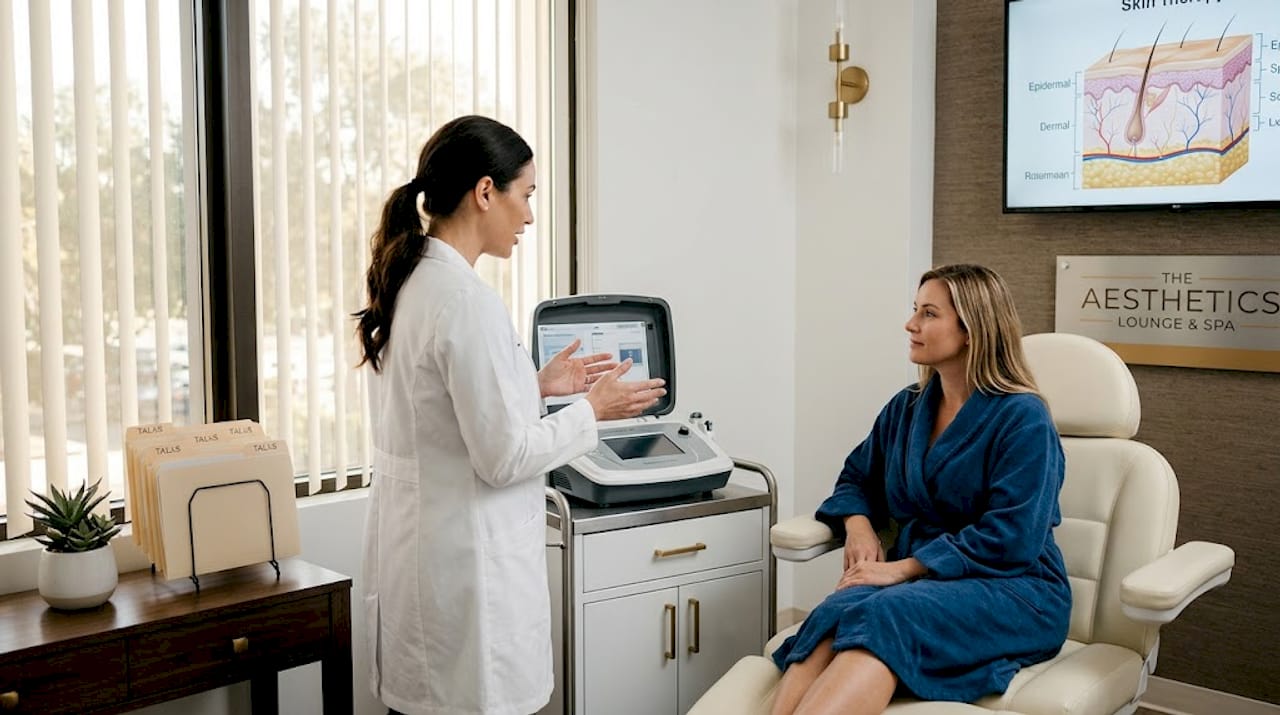
Microneedle RF (radiofrequency combined with microneedling) is one of the most well-studied options in this category. Research confirms that microneedle RF outperforms standard microneedling in reducing senescent fibroblasts (aged, less functional skin cells) while simultaneously boosting the proliferation of healthy, non-senescent fibroblasts, even in older skin. This has important implications for adults in the 25-55 range who are focused on prevention: the earlier you start supporting cellular health, the less correction you’ll need later.
| Treatment | Mechanism | Downtime | Ideal for |
|---|---|---|---|
| PRP/PRF | Growth factors stimulate repair | 1-3 days | Tone, texture, early volume loss |
| Microneedle RF | Heat + micro-injury triggers collagen | 2-5 days | Firmness, fine lines, pore size |
| Biostimulators | Stimulate collagen scaffold formation | 1-7 days | Structure, subtle lift |
| RF ultrasound | Deep dermal heating | Minimal | Tightening, contouring |
Here’s what makes regenerative treatments particularly well-suited for adults who prioritize long-term skin health:
- Results build cumulatively. Each session adds to the last. This is very different from temporary filler, which metabolizes and requires repeat treatment to maintain.
- The treatments support prevention. Starting in your late 20s or early 30s means you’re maintaining collagen density rather than trying to restore it later.
- Risk profiles are favorable. Lower rates of complications, shorter downtime, and minimal post-treatment visibility make these options practical for working adults.
- No foreign materials added. PRP and PRF use your own biology. There’s nothing to dissolve, migrate, or correct later.
Exploring skin tightening options gives you a practical view of which technologies are appropriate for your current skin concerns. And if you want a broader understanding of how to support skin health across your 30s, 40s, and beyond, that context makes every treatment decision clearer and more confident.
Planning for timeless results: sequence, strategy, and starting age
With a clear strategy, you can achieve healthy, confidence-boosting results that genuinely outlast passing fads.
One of the most consistent findings in modern aesthetic medicine is that gradual improvement is not just more natural-looking. It’s more satisfying. Gradual results align with patient psychology in a documented way: clients who see measured, incremental improvement over time report higher satisfaction and lower rates of regret than those who pursue dramatic changes in a single session. Starting in your late 20s or early 30s for prevention, and sequencing regenerative treatments first, supports sustainable aging rather than reactive correction.
Here’s how to approach your aesthetic journey with a strategy that holds up over time:
- Begin earlier than you think you need to. The most effective time to start regenerative care is before you notice significant aging, typically in your late 20s or early 30s. Prevention requires far less intervention than restoration.
- Establish your baseline first. Before any treatment, work with a medically qualified provider to map your facial structure, skin quality, and specific concerns. This prevents unnecessary procedures.
- Start with regenerative therapies. PRP, PRF, and biostimulators set the foundation. They improve the actual biological condition of your skin before anything else is layered on top.
- Add structure only where needed. After skin quality is established, minimal targeted injectables or tightening treatments can be introduced if specific concerns remain.
- Build in maintenance intervals. Most regenerative treatments benefit from a series of initial sessions followed by maintenance every six to twelve months, depending on your skin’s response.
- Track your results. Photography at baseline and after each treatment helps you and your provider evaluate what’s working and adjust accordingly.
Maintenance habits outside of treatment sessions matter just as much as what happens in the clinic. Supporting your skin daily with medical-grade SPF, consistent hydration, retinoids where appropriate, and a simplified but active skincare routine extends the life of every in-clinic result significantly.
For guidance on conservative aesthetic treatment advice, particularly if you’re weighing your options for the first time, the most important step is finding a provider who plans before treating and educates before suggesting.
Pro Tip: Before committing to any treatment, ask your provider to explain what they see in your anatomy and why they’re recommending that specific option. A strong provider welcomes that question. A plan built on your structure will always serve you better than one built on what’s popular.
The truth about what really lasts in aesthetic results
There’s a belief the beauty industry quietly encourages: that newer is better, that this season’s technique will outperform everything that came before, and that visible, obvious change is the goal. Most experienced aesthetic providers know this isn’t true. The results that age well are almost always the ones done quietly.
Refined, lasting results don’t come from chasing what’s popular. They come from understanding your face well enough to leave most of it exactly as it is, while supporting what’s beginning to soften. That requires restraint. And restraint requires a provider who is genuinely invested in your long-term appearance, not just today’s appointment.
Just as timelessness in other art forms outlasts trend-driven work because it’s rooted in something deeper than the moment, the same principle holds in aesthetics. Treatments grounded in biology and prevention outlast those designed to make an impression in the short term.
Patient education is the most underrated element in this field. When you genuinely understand what a treatment does, how long it takes to see results, and what realistic expectations look like, you make better decisions. You ask better questions. You build a relationship with your provider rather than chasing a result. That relationship is what protects you from the cycle of overcorrection that so many trend-followers experience.
The most confident aesthetic clients we work with are not the ones who’ve done the most. They’re the ones who started early, moved slowly, and stayed consistent.
Take your next step towards timeless, natural results
If this perspective resonates with you, you’re already thinking about aesthetics the right way. The next step is finding the care that matches that thinking.
At The Aesthetics Lounge and Spa Raleigh, our approach is built on exactly what this article describes: medical expertise, conservative planning, and a genuine commitment to results that look like you. We don’t chase trends, and we don’t push treatments that aren’t right for your anatomy. We plan first, educate always, and treat with precision. Explore our full range of aesthetic treatments in Raleigh to understand what’s available, or read our skin health maintenance guide to build the foundation for lasting results. When you’re ready to take the first step, our facial rejuvenation tips offer a clear starting point. We’re here when you are, calm, unrushed, and ready to build a plan that truly fits you.
Frequently asked questions
What are regenerative aesthetic treatments?
Regenerative treatments use your body’s own healing mechanisms, including PRP, PRF, and RF energy, to naturally stimulate collagen and elastin, with current evidence confirming their role as the leading edge of natural, health-focused aesthetics. Results develop gradually and read as authentic rather than artificial.
Are natural results really better for long-term skin health?
Yes. Research shows that regenerative mechanisms actively improve collagen and elastin production with minimal downtime and lower complication risk compared to more aggressive trending procedures. The biological improvement is real and cumulative.
When should I consider starting non-surgical treatments?
Expert guidance consistently recommends beginning in your late 20s to early 30s, when prevention is far more effective and requires significantly less intervention than trying to restore what’s already been lost.
How does microneedle RF compare to other skin rejuvenation options?
Studies confirm that microneedle RF is superior to standard microneedling in reducing aged, less functional skin cells while boosting healthy cellular activity, making it one of the most effective options for adults focused on prevention and long-term firmness.
Can natural results be customized for my skin type?
Absolutely. The most satisfying outcomes come from personalized plans developed by medically qualified providers who assess your unique facial structure, skin condition, and goals before recommending any treatment sequence.