
TL;DR:
- A structured safety workflow is essential for natural and safe injectable outcomes.
- Proper preparation, expert technique, and post-treatment monitoring significantly reduce risks.
- Informed patient engagement and choosing medically led clinics enhance safety and results.
The idea of injectable treatments can stir real hesitation. Not because results aren’t possible, but because the concern of looking “off” or experiencing something unexpected feels very real. Those worries are valid, and they deserve a clear, honest answer. A structured injectable safety workflow is exactly what separates a refined, natural outcome from one that misses the mark. This guide walks you through every stage of that workflow: from what happens before a single syringe is opened, to how your provider monitors you after treatment, and what you should know to feel genuinely confident in your care.
Table of Contents
- Why an injectable safety workflow matters
- Tools and preparation: What you need for safe injectable treatment
- Step-by-step injectable safety workflow
- Common side effects and safety checks
- A clinician’s honesty: What most injectable guides don’t tell you
- Start your safe injectable journey in Raleigh
- Frequently asked questions
Key Takeaways
| Point | Details |
|---|---|
| Safety-first workflow | A structured safety workflow reduces injectable risks and supports natural results. |
| Know what to expect | Recognize each step—consultation, prep, injection, monitoring, and documentation—for a safer experience. |
| Practical preparation | Expect handwashing, sterile setup, and provider explanation before every injectable. |
| Side effects awareness | Mild swelling or bruising is normal; sudden pain or color change requires urgent attention. |
| Choose expertise | Clinics with medical supervision and full safety protocols offer the safest path to natural enhancements. |
Why an injectable safety workflow matters
Cosmetic injectables occupy a unique space in medicine. Unlike a routine blood draw or vaccination, aesthetic injections are placed with artistic intent inside facial anatomy that varies significantly from person to person. That distinction matters. The risks aren’t just about infection. Vascular anatomy, tissue depth, and individual response all influence how a treatment unfolds.
The good news: most complications are entirely preventable with the right process in place. As an injectable safety workflow in aesthetic medicine typically follows a structured process, clinics that skip or compress steps are the ones where problems tend to arise. Structure is protection.
Here’s what a safety-focused workflow addresses at the outset:
- Identifying contraindications before treatment begins
- Mapping individual facial anatomy to guide injection placement
- Selecting appropriate product type and volume for your goals
- Setting realistic expectations through honest, informed conversation
- Establishing clear communication channels for post-treatment questions
When you look at real-world data, bruising and swelling are most common and generally self-limiting, while events like vascular occlusion are rare but serious enough to justify strict protocols every single time. That’s not a reason to avoid injectables. It’s a reason to be thoughtful about where and with whom you receive them.
“The difference between a safe outcome and a problematic one often comes down not to the product, but to the process.”
Expert clinics monitor for both what’s visible, such as mild swelling or redness at the injection site, and what’s less obvious, including signs of vascular involvement that require immediate attention. Understanding injectable best practices helps you ask the right questions before you even sit in the treatment chair. And knowing the role of injectables in a broader facial strategy means you’re not making isolated decisions without context.
Clinics that follow established injectable safety standards treat every appointment, regardless of how routine it may seem, with the same level of attention. That consistency is what builds trust over time.
Tools and preparation: What you need for safe injectable treatment
Safe injectable treatment begins well before the first injection. The foundation is a thorough consultation and a detailed review of your medical history. Allergies, medications like blood thinners, previous treatments, and any autoimmune conditions are all part of that conversation. Skipping this step, even partially, creates risk.
Aseptic preparation, precise technique, and detailed documentation are non-negotiable parts of any credible safety workflow. In practice, this means you should observe your provider washing their hands, setting up a sterile field, and explaining what they’re doing and why. These aren’t formalities. They’re safeguards.
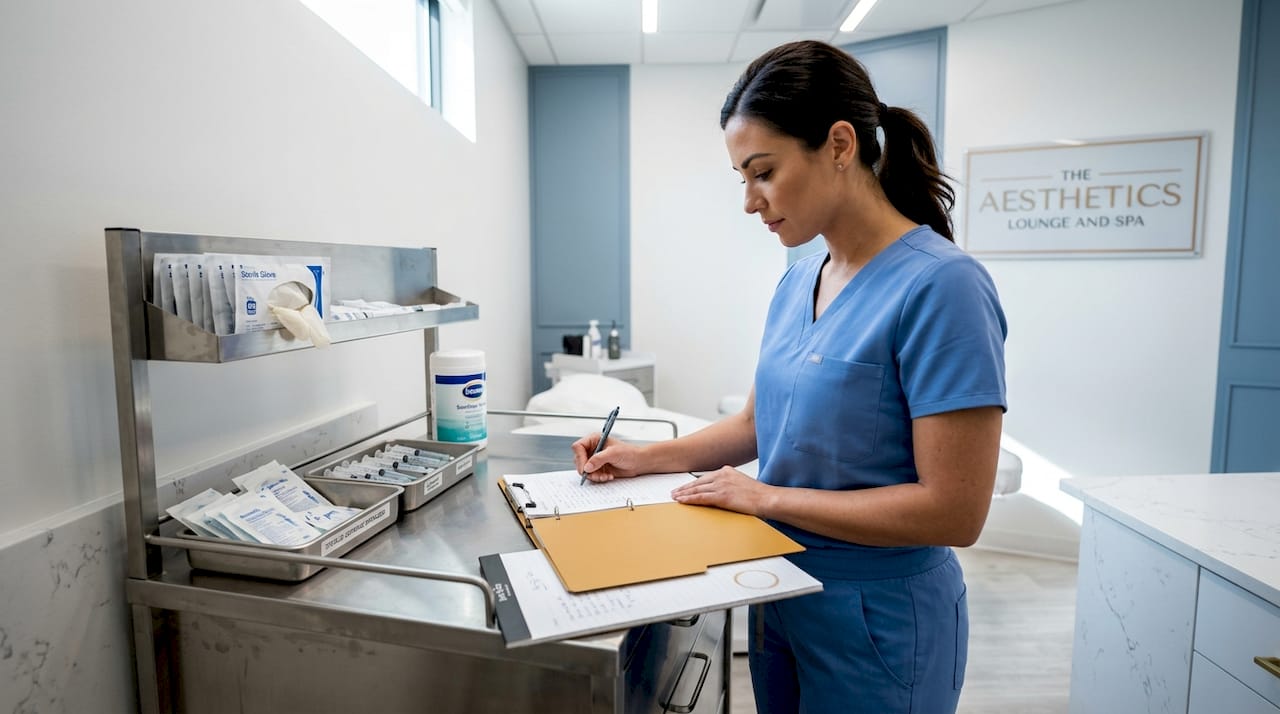
Here’s a comparison of what preparation looks like in a medically led setting versus a less structured environment:
| Preparation element | Medically led clinic | Less structured setting |
|---|---|---|
| Medical history review | Thorough and documented | Minimal or skipped |
| Informed consent | Detailed discussion with written sign-off | Verbal only or absent |
| Sterile field setup | Visible and standard | Inconsistent |
| Product traceability | Lot numbers recorded | Not tracked |
| Provider credentials | Licensed medical professional | Varies widely |
Modern clinics often use prefilled syringes to reduce preparation errors by up to 50%. This matters because manual preparation introduces variables: air, contamination, and dosing inconsistency. A prefilled, single-use syringe removes most of those variables before the treatment even starts.
What you should look for when preparing for injectables includes clear pre-treatment instructions, a calm and unhurried consultation, and a provider who listens as much as they speak. That balance of medical expertise for safety and genuine attentiveness is what supports results that feel natural and intentional.
Essential preparation items for a safe appointment:
- Avoid blood-thinning supplements (such as fish oil, vitamin E, and aspirin) for at least one week prior, unless medically necessary
- Come to your appointment with a clean face, free of makeup
- Be honest about your full medication list, including supplements
- Arrive hydrated and well-rested
- Bring photos of your aesthetic goals if they help communicate your vision
Pro Tip: If a clinic feels rushed during your consultation, that’s meaningful information. A provider who takes time to understand your goals and concerns before picking up a syringe is demonstrating the very standard of care that leads to safe, natural outcomes.
Step-by-step injectable safety workflow
A properly executed injectable appointment follows a clear sequence. Knowing each step helps you recognize when your provider is doing things right, and gives you the confidence to ask questions if anything feels unclear.
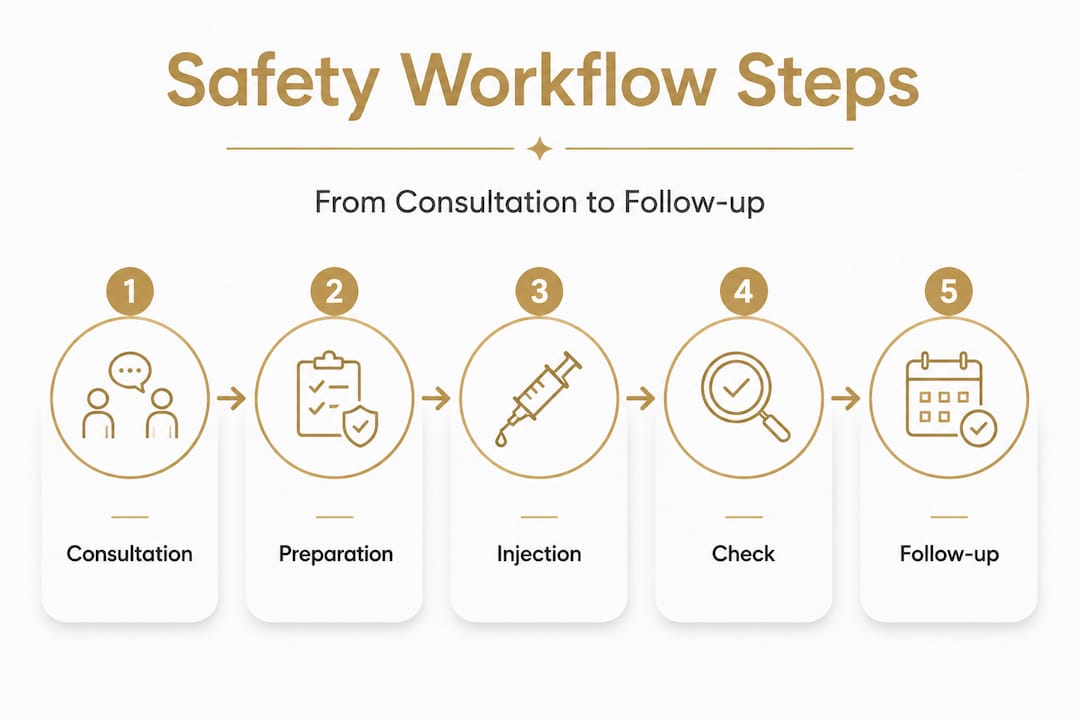
The complete injectable safety workflow includes review, consent, sterile prep, technique, monitoring, and documentation. Here’s how each of those stages unfolds in practice:
-
Consultation and medical review. Your provider reviews your goals, medical history, contraindications, and facial anatomy. This is a two-way conversation, not a sales pitch. Questions are expected and welcomed.
-
Informed consent. You receive a clear explanation of the treatment: what product will be used, where it will be placed, expected results, potential risks, and alternatives. Written consent is then obtained. This step is not a checkbox. It’s your opportunity to make a genuinely informed decision.
-
Aseptic site preparation. The treatment area is cleansed with an appropriate antiseptic. Your provider is gloved, and all materials are single-use or properly sterilized. The setup should feel clinical and organized.
-
Anatomy-guided injection by a qualified provider. Product is placed with intention, based on your specific facial structure. This is where choosing injectables correctly matters: the wrong product in the wrong plane can produce unnatural results even with perfect sterile technique. Expertise here is everything.
-
Immediate post-treatment observation. You are monitored for at least 15 to 20 minutes after treatment. Your provider assesses for any early signs of adverse response, including unusual blanching (skin turning pale), pain beyond expected discomfort, or changes in sensation.
-
Documentation, photography, and patient education. Your provider takes standardized before-and-after photos, logs product lot numbers, records the volume and placement of injections, and reviews aftercare with you. You leave knowing what’s normal and what to watch for.
Here’s a comparison of what informed patients experience versus those who arrive without knowledge:
| Experience factor | Informed patient | Uninformed patient |
|---|---|---|
| Comfort during consent | High; questions are answered | Low; may feel pressured |
| Ability to spot red flags | Strong | Limited |
| Confidence in aftercare | Clear and calm | Uncertain and anxious |
| Satisfaction with results | Generally higher | More variable |
Achieving natural-looking injectables depends on every one of these steps being executed with care. None of them are optional.
Pro Tip: Ask your provider to show you the product packaging, confirm the lot number, and take before photos at every appointment. These are signs of a thorough, safety-first practice. Any hesitation to provide this information is worth noting.
Common side effects and safety checks
After your treatment, some response is expected. The tissue has been touched, and your body reacts accordingly. Understanding what’s normal, and what isn’t, helps you stay calm and also stay appropriately alert.
Bruising and swelling are common and are generally self-limiting, resolving within two weeks in most cases. Mild tenderness at injection sites, slight asymmetry during the initial swelling phase, and some redness are all within the expected range.
What to watch for after your appointment:
- Normal: Mild to moderate bruising, soft swelling, tenderness at injection sites, slight firmness under the skin in filler areas
- Contact your provider: Significant or spreading pain, skin that appears unusually pale or purple, persistent or worsening swelling beyond 72 hours, vision changes, or any feeling that something is “wrong”
- Seek immediate care: Blanching skin that does not return to normal color, severe pain, or any neurological symptoms
“Vascular occlusion is rare, but the window for intervention is short. Knowing the signs and having your provider’s direct contact information is part of a complete safety plan.”
Patients who understand the benefits of injectables alongside the realistic recovery experience tend to feel more satisfied with outcomes. The temporary nature of swelling doesn’t diminish results. It’s simply part of the healing process. Similarly, understanding how injectables support facial rejuvenation means you’re evaluating results in proper context: the final outcome emerges gradually, not immediately.
Patient follow-up, whether by a scheduled check-in call or a two-week review appointment, is the final ring in the safety circle. A provider who stays engaged after your treatment is one you can trust.
A clinician’s honesty: What most injectable guides don’t tell you
Most guides present injectable safety as a clean, linear checklist. Follow the steps and everything works out. The reality is more nuanced, and understanding that nuance is what actually keeps you safe.
Here’s something worth saying plainly: artistic goals should never override clinical process. There is a version of injectable treatment where a provider is so focused on achieving a particular look that they compromise aseptic technique, inject more volume than anatomy supports, or skip documentation because the appointment is running behind. Those compromises, even small ones, are where outcomes shift from refined to risky.
The value of medical expertise in aesthetic medicine isn’t just about knowing where to inject. It’s about knowing when not to. A confident, experienced provider will tell you if a treatment isn’t right for you at a given appointment, or if your current goals aren’t achievable with a particular product. That kind of honesty is a feature, not a limitation.
Your questions are also part of the safety system. When you ask about lot numbers, express a concern, or say “that doesn’t feel right,” you are actively participating in your own care. Providers who welcome that kind of open dialogue are practicing the way aesthetic medicine should be practiced.
Truly natural, safe results don’t come from speed or volume. They come from meticulous planning, anatomical respect, and a willingness to do less when less is the right answer. No shortcut leads to a result you’ll love for years.
Start your safe injectable journey in Raleigh
With everything you now understand about injectable safety, your next step is choosing a provider who brings every one of these principles into their practice, consistently and without compromise.
At The Aesthetics Lounge and Spa Raleigh, every treatment follows the evidence-based workflow described in this guide. All injections are performed by medical professionals who prioritize your anatomy, your health history, and your natural appearance above all else. We explore aesthetic treatments with you, not for you, because informed patients experience better outcomes.
There are real reasons to trust medically led spas for injectable care. The medically led spa benefits extend beyond the appointment itself: they include clear communication, thorough follow-up, and results that still look like you. If you’re ready to take that step with a team that plans carefully and treats with precision, we’re here and unhurried. Book your personalized consultation today.
Frequently asked questions
How long does swelling from injectables usually last?
Bruising and swelling are common after injectable treatments and typically resolve on their own within about two weeks. Most clients notice the most significant swelling in the first 48 to 72 hours, with gradual improvement after that.
What should my provider document during my injectable appointment?
Your provider should record treatment details including lot numbers and photos, along with the product type, placement, volume, and any immediate reactions you experienced. This documentation protects you and supports continuity of care.
Is there a way to reduce injectable risks further?
Choosing a medically led clinic that uses prefilled syringes and strict protocols significantly lowers your risk of complications. Honest pre-treatment disclosure of your full medical history is equally important.
What are rare but serious injectable complications?
Vascular occlusion occurs in an estimated 0.001 to 0.05% of injectable procedures, making it rare but genuinely serious. Proper anatomical technique, careful product placement, and provider vigilance during the appointment are the most effective preventive measures.