
TL;DR:
- Medically guided aesthetic treatments promote lasting skin health through gradual, tissue-friendly methods.
- Quick fixes carry risks such as hyperpigmentation, scarring, and higher complication rates, especially in darker skin.
- Choosing licensed professionals and staged protocols ensures safer, more natural, and sustainable facial rejuvenation.
Most people assume faster means better when it comes to looking refreshed. That assumption makes sense on the surface, but regenerative treatments like biostimulators, exosomes, and energy-based devices consistently outperform quick fixes by promoting real collagen production, improved skin thickness, and resilience that holds over time. The appeal of an instant transformation is real. But so are the complications that often follow. This guide walks you through what quick fixes actually are, what the risks look like in clinical terms, and why a measured, medically guided approach is the smarter long-term investment for your skin.
Table of Contents
- What are quick fixes in aesthetics and why are they popular?
- Hidden risks: Complications from quick fixes
- Why medically guided treatments deliver safer, natural results
- How to choose the right path for long-term skin health
- The uncomfortable truth: Why slow and steady is worth it in aesthetics
- Explore safer, natural alternatives with expert guidance
- Frequently asked questions
Key Takeaways
| Point | Details |
|---|---|
| Quick fixes carry risks | Rapid results increase chances of complications like scarring, infections, and uneven skin. |
| Medical guidance matters | Qualified providers tailor treatments for your safety and skin health, reducing adverse outcomes. |
| Regenerative methods last | Treatments like exosomes and biostimulators stimulate your body for gradual, natural improvement. |
| Patience rewards beauty | A slower, expert-guided approach leads to healthier, more natural results that truly last. |
| Choose certified experts | Partner with board-certified, medically supervised specialists in Raleigh for the safest outcomes. |
What are quick fixes in aesthetics and why are they popular?
The phrase “quick fix” gets used loosely in aesthetics, so it’s worth being precise. In clinical terms, quick fixes refer to treatments prioritized for immediate visual impact rather than gradual, tissue-level improvement. They include aggressive chemical peels applied at high concentrations, heavy-volume filler placements designed to produce dramatic changes in a single visit, intense resurfacing treatments without staged protocols, and off-label injectables used without a full skin health assessment.
Their popularity is easy to understand. Social media shows before-and-after images in seconds. Certain medspa promotions advertise same-day transformation. And when you’re tired of looking tired, the promise of instant change is genuinely hard to resist. The emotional pull is real, and it’s not a weakness. It’s a very human response to wanting to feel like yourself again.
The problem is that instant results and sustainable results are not the same thing. Evidence shows that quick fixes often create dependency cycles, where more product or more aggressive treatment becomes necessary to maintain what was achieved, while the underlying skin health continues to decline. That’s not a path toward confidence. That’s a treadmill.
Common quick-fix approaches include:
- High-concentration chemical peels without a proper skin prep phase
- Aggressive laser resurfacing in a single session
- Overcorrection with dermal fillers for immediate volume
- Microneedling at unsafe depths without medical oversight
- Unguided botulinum toxin treatments that ignore facial anatomy
For a deeper look at how non-surgical natural options compare to these approaches, the contrast is striking once you see it laid out clearly.
“Sustained results in aesthetic medicine require building skin health from within, not overriding its natural processes with aggressive interventions that prioritize optics over biology.” The clinical consensus is clear: patience, not pressure, produces beauty that lasts.
Hidden risks: Complications from quick fixes
Once you see why instant results are tempting, it’s important to understand the downsides that often go unspoken during a consultation or social media scroll.
Quick cosmetic fixes can lead to a range of complications, some temporary and some permanent. Research confirms that risks include post-inflammatory hyperpigmentation (PIH), which is a darkening of the skin that can persist for months or years, as well as scarring, infections, prolonged redness, allergic reactions, and uneven skin texture. These aren’t rare outcomes reserved for outliers. They’re documented, measurable risks that increase when treatments are applied without proper assessment.
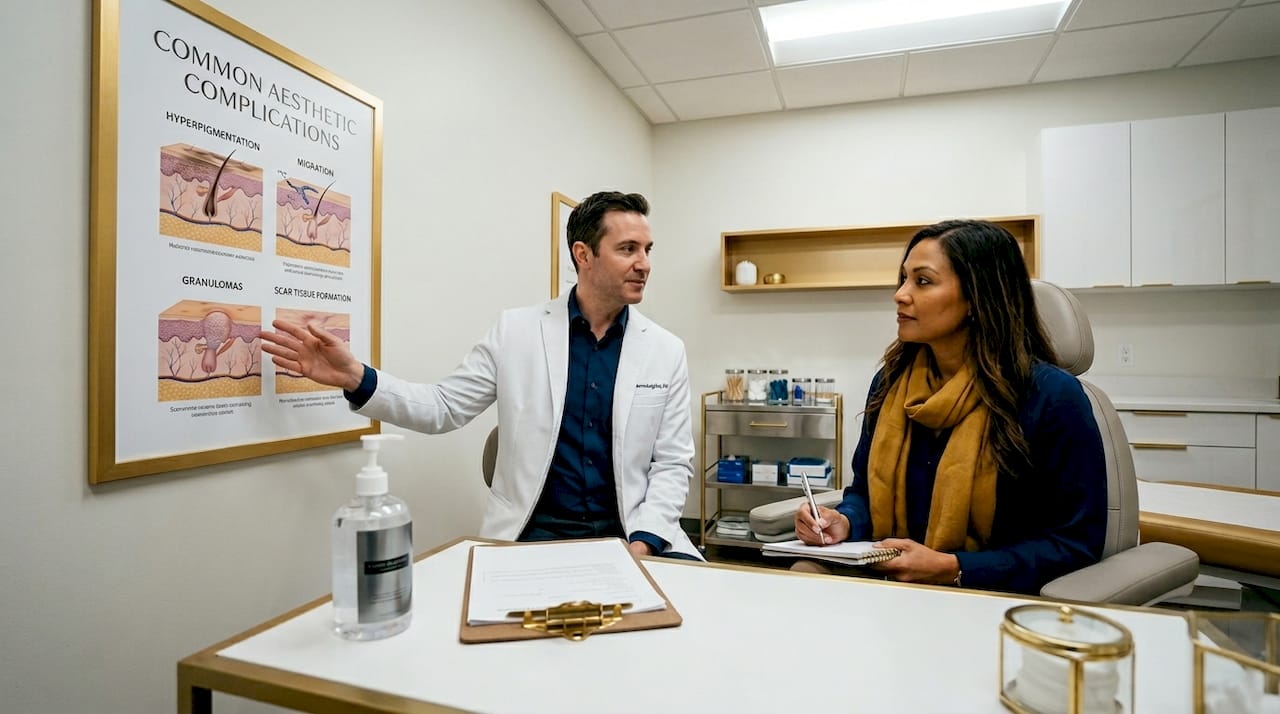
The risk picture gets more specific when you factor in skin type. Individuals with Fitzpatrick skin types IV through VI (darker skin tones) face a significantly elevated risk of PIH and scarring following aggressive resurfacing procedures. A treatment protocol that’s appropriate for someone with fair skin may produce lasting discoloration in someone with deeper pigmentation. This is not a minor consideration. It’s a clinical reality that demands individualized care.
Complication data across facial aesthetic procedures shows meaningful rates: major complications occur in approximately 1.44% of facial aesthetic surgeries, blepharoplasty (eyelid surgery) carries up to a 4.68% complication rate when combined with other procedures, and risk increases substantially with multiple simultaneous procedures, a BMI at or above 25, or smoking history.
| Procedure type | Common complications | Elevated risk factors |
|---|---|---|
| Aggressive chemical peel | PIH, scarring, infection | Darker skin types, no prep phase |
| High-intensity laser resurfacing | Burns, hypopigmentation, redness | Fitzpatrick IV-VI, sun exposure |
| Heavy-volume filler in one session | Vascular occlusion, lumpiness, migration | Anatomical inexperience |
| Microneedling at unsafe depth | Infection, scarring, bruising | No medical oversight |
| Combined multi-procedure sessions | Higher systemic and local complication rates | BMI above 25, smoking |
The risks above are not meant to alarm you. They exist to help you ask better questions before agreeing to any treatment.
Pro Tip: Before any aesthetic procedure, ask your provider directly: “What are the top three risks for my specific skin type, and how do you mitigate them?” A medically trained provider will answer this clearly and without hesitation. Vague or deflecting answers are a signal to pause.
Choosing lasting slow-paced results over aggressive intervention isn’t about being timid. It’s about protecting the skin you’re investing in.
Why medically guided treatments deliver safer, natural results
With risks clearly mapped out, the better question becomes: what are the medically validated alternatives, and why do they outperform quick fixes in the long run?
The answer starts with assessment. Medically guided aesthetic care begins before a single treatment is chosen. A comprehensive health history, a review of your skin type, a conversation about your goals, and an evaluation of your facial anatomy all inform the plan. Nothing is applied in a vacuum. Nothing is rushed to produce optics at the expense of biology.
Regenerative treatments work with your body rather than forcing rapid visual change. Biostimulators such as Sculptra and Radiesse stimulate your own collagen production gradually. Energy-based devices like radiofrequency and focused ultrasound tighten tissue by triggering natural healing responses over weeks. Exosome therapy, one of the more exciting emerging options, delivers growth factors that support cellular renewal at a fundamental level. These are not instant. But they are real, and they hold.
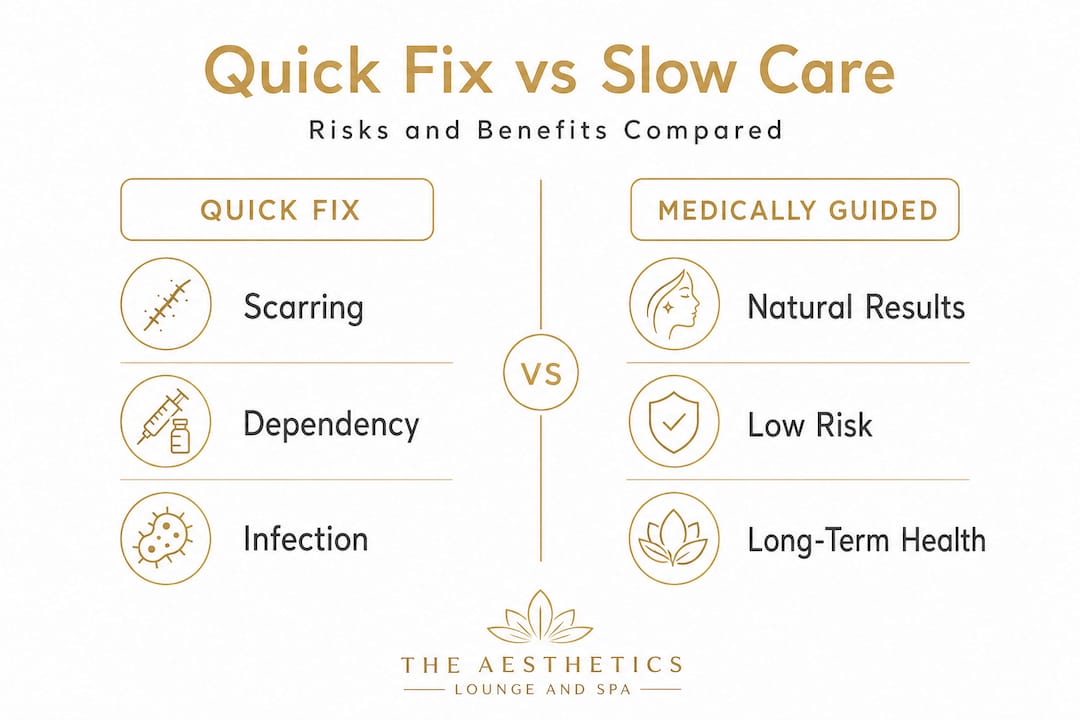
Here’s how medically guided care compares to common quick-fix approaches:
| Quick-fix approach | Medically guided alternative | Key difference |
|---|---|---|
| High-peel in one session | Staged peel protocol with skin prep | Reduces PIH risk, improves outcome |
| Heavy filler volume at once | Incremental filler with anatomy mapping | Avoids migration and overcorrection |
| Single aggressive laser | Multi-session energy-based treatment | Safer for all skin types |
| Unguided microneedling | Medical microneedling with growth factors | Controlled depth, enhanced healing |
| Off-label injectables | FDA-cleared products with clinical protocols | Predictable, trackable outcomes |
In Raleigh, medical-led aesthetics are becoming the standard rather than the exception among patients who have experienced the difference firsthand. Local expertise in regenerative approaches is growing, with practitioners who understand that a beautiful result should look like you on a good day, not a version of you that someone else designed quickly.
Pro Tip: When evaluating a provider, ask these three questions before booking: Do you customize protocols based on my Fitzpatrick skin type? Do you offer staged treatment plans rather than single-session fixes? Can you show me what a six-month treatment roadmap looks like? If the answers are specific and confident, you’re in the right hands.
For a broader understanding of how non-surgical rejuvenation fits into a long-term plan, the framework is consistent: medical oversight, realistic timelines, and treatments that respect your anatomy.
Here’s a simple checklist for identifying a medically guided practice:
- A licensed medical professional oversees all treatment planning.
- Consultations include a full health and skin history review.
- Treatment plans are staged and adjusted over time.
- Providers discuss risks openly and document informed consent.
- Results are tracked, not assumed.
How to choose the right path for long-term skin health
Now that you understand the advantages of the medical model, here’s how to actually apply that knowledge in Raleigh and make decisions that protect your results.
Choosing wisely starts well before you walk into any provider’s office. Here’s a step-by-step approach:
-
Research your provider’s credentials. Verify that the practice is overseen by a licensed medical professional, ideally a physician, nurse practitioner, or registered nurse with specialized aesthetic training. Unqualified providers increase risk and are less equipped to personalize care based on your full health history.
-
Prioritize the consultation. A thorough consultation should feel more like a conversation than a sales pitch. If a provider recommends a full treatment plan in the first five minutes without asking about your health history, skin concerns, or goals, that’s a concern.
-
Ask specifically about diverse skin type experience. Not every provider has deep experience treating Fitzpatrick IV-VI skin. This matters. If you have a deeper skin tone and a provider can’t speak specifically to PIH risk and mitigation, look elsewhere.
-
Evaluate the pace of the proposed plan. A thoughtful provider will propose a staged protocol, not a same-day overhaul. Gradual improvements are not a sign of timidity. They’re a sign of medical intelligence.
-
Check for regenerative options. Practices that offer choosing natural treatments alongside traditional approaches tend to reflect a more complete understanding of skin health.
-
Verify follow-up protocols. Safe aesthetic care doesn’t end when you leave the chair. Ask what the post-treatment monitoring plan looks like, and how side effects are handled if they occur.
-
Trust your instincts during the consultation. If the environment feels pressured, rushed, or unclear, those feelings are data. Excellent aesthetic providers specialize in making you feel informed, never pressured.
Pro Tip: Between treatments, protect your investment with consistent SPF 30 or higher daily, a gentle retinoid introduced slowly if your provider recommends it, and a stable hydration routine. Skin that is well maintained between appointments responds better to regenerative treatments and holds results longer.
For a full guide on medical expertise for safety and how to evaluate providers by those standards, the criteria are consistent across every reputable source: training, individualization, and transparency.
The uncomfortable truth: Why slow and steady is worth it in aesthetics
Here’s what most articles on this topic won’t say directly: the real cost of quick fixes isn’t just medical complications. It’s the emotional fatigue of constantly chasing a result that never quite holds.
When you rush your aesthetic outcomes, you often step onto a cycle that demands more. The filler migrates slightly, so you need a correction. The aggressive peel leaves texture unevenness, so you need another treatment to smooth it. The dramatic change fades faster than expected, so you come back sooner. Each intervention creates a new baseline, and that baseline often requires maintenance at a frequency and volume that no one mentioned at the first appointment.
Evidence consistently shows that quick fixes produce higher long-term dependency compared to regenerative approaches that build real tissue quality over time. The data supports what many experienced patients have already learned the hard way: slow is sustainable.
The deeper truth is that most people don’t actually want a dramatic transformation. They want to look like themselves, just more rested, more supported, more quietly renewed. That result doesn’t come from urgency. It comes from a provider who sees your face as a whole, understands your anatomy, and builds a plan that respects both.
In Raleigh, the benefits of medical spa care done correctly are visible in results that don’t announce themselves. Colleagues who wonder if you’ve been on vacation. A version of yourself that feels supported without being altered. That’s the real goal, and it’s worth the patience it requires.
Impatience is understandable. Life moves fast, and wanting to feel your best now is completely reasonable. But the most sophisticated aesthetic result is one that builds over months, reflects your natural structure, and stays believable for years. That’s not a compromise. That’s the standard.
Explore safer, natural alternatives with expert guidance
Understanding the difference between quick fixes and medically guided care is the first step. The next is working with a team that applies these principles with every appointment.
At The Aesthetics Lounge and Spa Raleigh, every treatment plan starts with a thorough consultation, never a pressure-driven recommendation. We specialize in aesthetic treatments in Raleigh that are staged, anatomy-informed, and built for longevity. Whether you’re exploring regenerative options for the first time or reconsidering a quick-fix path that hasn’t delivered what you hoped, we’re here to offer clarity and a plan that actually fits your skin, your goals, and your timeline. You can also explore how to choose natural treatments or review our approach to medical-led results before booking. We’re on Six Forks Road, and we’d be glad to help you take the next step with confidence.
Frequently asked questions
What are the most common complications of quick-fix cosmetic treatments?
The most common risks are scarring, PIH (hyperpigmentation), infections, allergic reactions, and uneven skin texture, particularly after aggressive resurfacing procedures.
Why is medical supervision important for aesthetic treatments?
Medically supervised care lowers risk and ensures treatments are matched to your full health profile, skin type, and long-term goals, which unqualified providers are far less equipped to deliver safely.
Can regenerative aesthetics truly replace quick fixes for natural results?
Yes, regenerative treatments like biostimulators and exosomes have demonstrated real improvements in collagen production, skin elasticity, and texture through gradual, biology-respecting mechanisms.
Are quick-fix risks higher for people with darker skin?
Yes, darker skin types (Fitzpatrick IV through VI) face a significantly elevated risk of PIH and scarring, especially following aggressive resurfacing treatments applied without appropriate skin-type protocols.