
TL;DR:
- Minimally invasive skincare uses targeted, controlled energy or mechanical interventions beneath the skin to promote natural collagen production. These procedures are safer, require medical oversight, and produce gradual, authentic results without substantial downtime or surgery. Choosing qualified providers and setting realistic expectations are essential for safe, effective rejuvenation tailored to individual goals.
Most people assume they face a binary choice with aging skin: accept it or overhaul it. That assumption quietly keeps a lot of adults in Raleigh from exploring what’s actually available to them. The truth is more nuanced, and more encouraging. Minimally invasive skincare sits in a genuinely different category, one that relies on medical science, controlled technique, and your skin’s own biology to create results that look rested rather than redone. This guide walks you through what the term really means clinically, how these treatments work, what safety looks like in practice, and how to find the approach that fits your goals without sacrificing what makes your face yours.
Table of Contents
- Defining minimally invasive skincare: more than just less downtime
- How minimally invasive treatments rejuvenate skin naturally
- Safety, risks, and choosing the right provider
- Personalized approaches: comparing popular minimally invasive options
- A realistic perspective: what most people miss about minimally invasive skincare
- Ready for subtle, natural transformation? Explore your options in Raleigh
- Frequently asked questions
Key Takeaways
| Point | Details |
|---|---|
| Science-backed definition | Minimally invasive skincare means medically guided procedures targeting deeper skin changes, not just quicker recovery. |
| Gradual, natural results | Treatments like microneedling naturally boost collagen over time for subtle rejuvenation. |
| Safety matters most | Choose trained providers to minimize risks and ensure clean, effective treatments. |
| Options can be tailored | There are several minimally invasive methods and combinations to match your skin’s needs and goals. |
| Personalized guidance helps | A consultation ensures you get a custom, medically guided plan for best results in Raleigh. |
Defining minimally invasive skincare: more than just less downtime
The phrase “minimally invasive” gets applied to everything from a gentle enzyme mask to a laser resurfacing session. That broad usage creates real confusion, especially when you’re trying to make informed decisions about your skin. So let’s establish a grounded starting point.
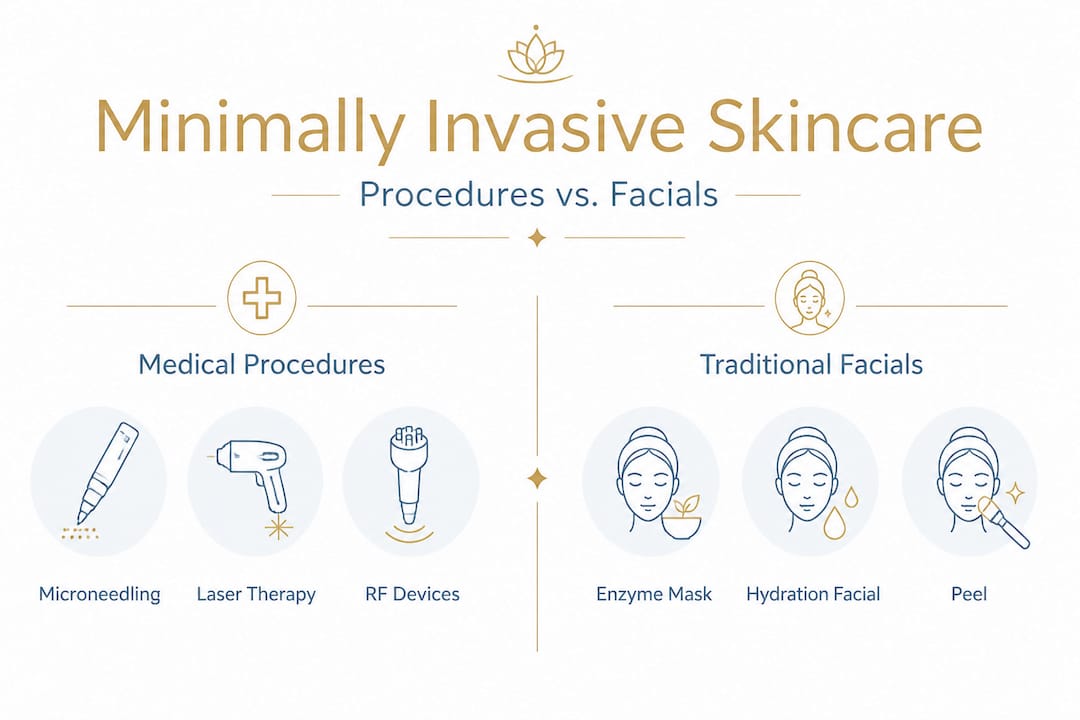
From a medical standpoint, minimally invasive skincare refers to procedures that deliver targeted mechanical or energy-based interventions beneath the skin’s surface to produce specific biological effects. These are not topical products. They are not traditional facials. But they are also not surgery. They occupy a precise middle ground, and that distinction matters enormously.
The most defensible clinical definition in dermatology centers on method and mechanism, not marketing language. A treatment qualifies when it creates a controlled response at the tissue level, such as collagen remodeling, elastin stimulation, or pigment correction, using precisely delivered micro-injury or energy. “Less downtime” is a benefit, not the defining feature.
Here’s what separates minimally invasive procedures from ordinary skincare:
- Depth of effect: They act at the dermal level (the layer beneath the surface), not just on the epidermis (the top layer).
- Biological trigger: They prompt your body’s own repair systems to activate, producing new collagen and elastin.
- Medical oversight: They require trained providers, proper device handling, and clinical assessment before treatment.
- Measurable outcomes: Results are tracked and documented, not assumed.
You can explore the range of types of skin rejuvenation available today, and it quickly becomes clear how much variety exists within this category. Understanding the industry terms for facial rejuvenation also helps you ask better questions when you’re evaluating providers and treatment plans.
| Feature | Topical skincare | Minimally invasive | Surgical |
|---|---|---|---|
| Depth of action | Surface (epidermis) | Dermis and deeper | Full tissue layers |
| Collagen stimulation | Indirect, gradual | Direct, controlled | Significant but structural |
| Downtime | None | Minimal to moderate | Days to weeks |
| Medical supervision required | No | Yes | Yes |
| Results timeline | Weeks to months | Weeks to months | Immediate but recovery needed |
“The most meaningful distinction isn’t how dramatic the procedure looks—it’s whether the mechanism produces a true biological response at the tissue level.” That principle shapes every treatment decision made well.
How minimally invasive treatments rejuvenate skin naturally
Understanding the definition sets the stage. So how do these procedures actually work, and what should you expect along the way?
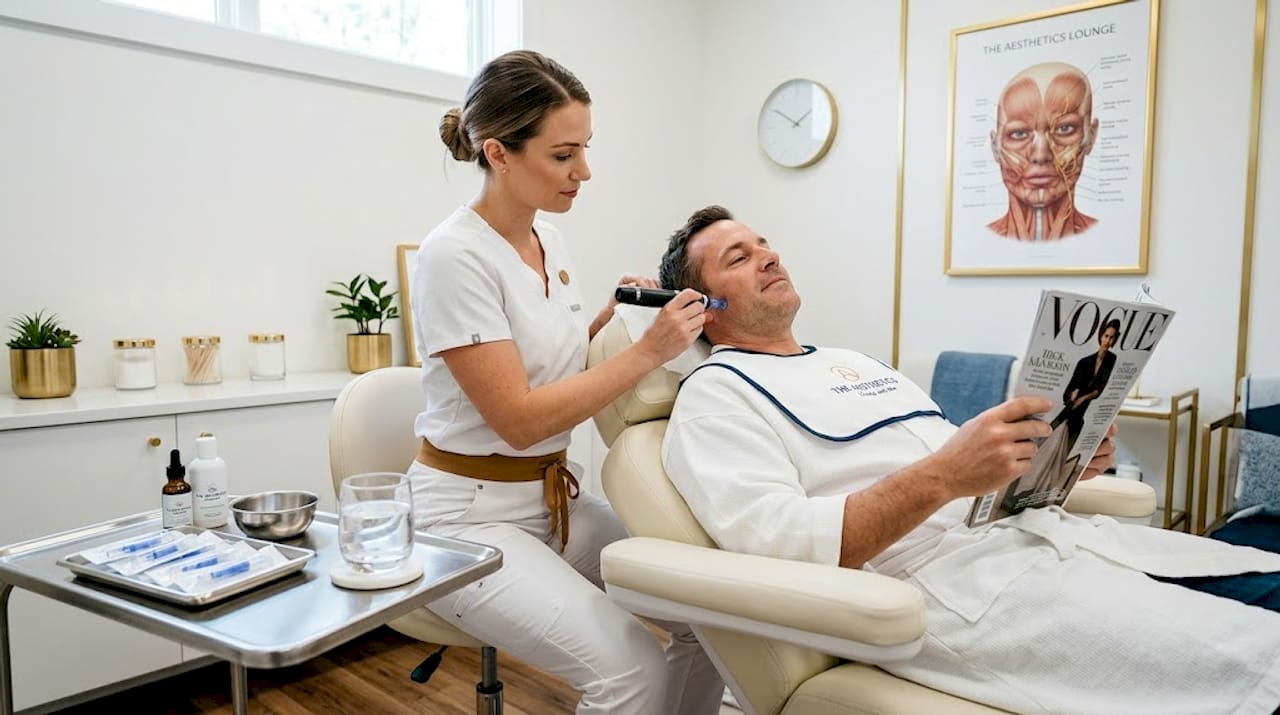
The most widely studied option is microneedling. Microneedling creates controlled micro-injuries using fine needles that penetrate the skin at precise depths. Those micro-injuries activate your skin’s wound-healing cascade: growth factors release, fibroblasts (the cells that build structural proteins) activate, and new collagen and elastin begin forming over the following weeks. The surface of the skin stays largely intact. The repair happens below, quietly and steadily.
What makes this compelling for natural rejuvenation is the pacing. Because your skin is generating new support structures organically, results emerge gradually. You don’t look different overnight. You look like yourself, but progressively more supported, more even, more rested. That gradual arc is not a limitation. For most people seeking believable results, it’s exactly the point.
Research also shows that combining microneedling with topical antioxidant serums produces significantly greater rejuvenation improvements than microneedling alone, with the majority of patients reporting marked improvement and only transient side effects. This combination approach, where a clinically validated serum is applied immediately after treatment when absorption is highest, represents current best practice for anti-aging outcomes.
What to expect from procedure to results:
- Consultation and assessment: Your provider evaluates your skin type, concerns, and medical history to determine suitability and depth of treatment.
- Preparation: A topical numbing cream is applied 30 to 45 minutes before the procedure for comfort.
- Treatment: The microneedling device moves across the skin in measured passes, typically over 20 to 30 minutes.
- Immediate post-care: Medical-grade serums or growth factors are applied while skin is most receptive.
- Initial recovery: Redness and mild sensitivity last 24 to 48 hours in most cases.
- Weeks two through four: Collagen synthesis accelerates beneath the surface. Skin texture begins to refine.
- Months one through three: Cumulative improvement in tone, firmness, and fine line appearance becomes visible.
- Maintenance planning: A series of two to four sessions spaced four to six weeks apart is typical for meaningful results.
You can learn more about how microneedling works at the tissue level, and find practical facial rejuvenation tips to support your results between sessions.
Pro Tip: Ask your provider specifically which device they use and whether it’s FDA-cleared. Validated technology and clinical protocols make a meaningful difference in both safety and the quality of your results.
Safety, risks, and choosing the right provider
Now that you understand how these treatments achieve their effects, let’s examine what you need to know to stay safe and set yourself up for the best possible outcome.
Minimally invasive does not mean risk-free. It means the risk profile is well-defined and manageable when the procedure is performed correctly. That distinction is worth holding onto.
Microneedle-based devices are not appropriate for everyone, and the FDA recommends that individuals seek out specially trained healthcare providers who understand proper device handling, candidacy screening, and sterile technique. The FDA also notes that microneedling devices are cleared for adults ages 22 and older, and certain conditions including active infections, open wounds, or specific skin disorders may disqualify a candidate regardless of age.
Common side effects that are expected and temporary:
- Redness and warmth in the treated area (typically 24 to 48 hours)
- Minor swelling or tightness
- Skin sensitivity to sunlight for several days
- Occasional mild bruising depending on treatment depth
Risks that require proper provider screening to minimize:
- Post-inflammatory hyperpigmentation (darkening), particularly in deeper skin tones if incorrect depths are used
- Infection from improper device sterilization or post-care negligence
- Scarring from excessive depth or inappropriate patient selection
- Hypopigmentation (lightening) in rare cases
Choosing a provider is genuinely consequential. The benefits of medically supervised spa care extend well beyond comfort. Medical oversight means your treatment plan is built on assessment, not assumption. When evaluating a provider, ask directly about their credentials, the cleaning and sterilization protocols for devices, and how they screen patients for contraindications.
You can also review guidance on choosing qualified med spa providers to understand what benchmarks matter most.
Pro Tip: If a provider does not ask about your medical history or skin conditions before treatment, that’s a signal to pause. A thorough intake process is not a bureaucratic formality. It’s the foundation of safe, effective care.
Personalized approaches: comparing popular minimally invasive options
With safety in mind, it’s worth comparing the leading options so you can find what best fits your goals, your skin type, and where you are in your rejuvenation journey.
Standard microneedling and RF (radiofrequency) microneedling are both well-established, but they work differently and suit different needs. RF microneedling delivers radiofrequency energy through the needles into the dermis simultaneously with the micro-injury. That dual mechanism adds a thermal (heat-based) component that tightens existing collagen while also stimulating new production. A split-face study in mature women found that RF microneedling showed greater clinical and histological (tissue-level) improvements compared to standard microneedling alone, particularly for skin laxity and textural change.
| Treatment | Mechanism | Best suited for | Typical downtime |
|---|---|---|---|
| Standard microneedling | Micro-injury only | Texture, fine lines, mild laxity | 24 to 48 hours |
| RF microneedling | Micro-injury plus heat energy | Moderate laxity, firming, deeper lines | 48 to 72 hours |
| Microneedling plus serum | Micro-injury with enhanced absorption | Anti-aging, brightness, tone | 24 to 48 hours |
| Combined series | Multiple modalities over time | Comprehensive rejuvenation | Varies by protocol |
You can explore specific skin tightening treatments and review details on Exceed microneedling to compare clinical device options available in Raleigh.
How to match treatment to your goals:
- Define your primary concern. Is it fine lines, skin laxity, uneven tone, enlarged pores, or a combination? Naming your priority shapes the protocol.
- Consider your skin type and history. Deeper skin tones require careful depth calibration. Previous skin conditions factor into candidacy.
- Assess your tolerance for downtime. Both options involve minimal recovery, but RF microneedling may extend sensitivity slightly.
- Think in series, not single sessions. Most meaningful results come from a planned course of treatment, not one appointment.
- Ask your provider what they recommend and why. A thoughtful answer that references your specific anatomy is a good sign.
The right approach is rarely the most aggressive one. It’s the one that aligns with your skin’s biology, your goals, and a realistic timeline.
A realistic perspective: what most people miss about minimally invasive skincare
Here is something that experienced practitioners observe repeatedly: the clients who are most satisfied with their results are almost never the ones who expected the most dramatic change. They’re the ones who came in with realistic expectations, trusted the plan, and let their skin respond on its own timeline.
There’s a real temptation when exploring these treatments to want fast, visible proof that something worked. That instinct is understandable. But the visible, almost overnight changes that circulate on social media are rarely from minimally invasive procedures. They’re from more aggressive interventions, heavy post-procedure swelling that temporarily masks texture, or strategic lighting. Gradual improvement, the kind that takes eight to twelve weeks to fully reveal itself, is biologically more authentic. It’s also more sustainable.
The most natural-looking result is one that no one can quite place. Not “she had something done.” Just: she looks well. She looks like herself, but more so.
The second thing most people miss is this: the procedure itself is only one part of the outcome. Who performs it, how they assess your skin beforehand, what protocols they follow post-treatment, and whether they build a long-term plan around your goals all contribute just as much. A technically well-executed procedure with poor aftercare guidance can underperform. A modest procedure within a well-designed treatment strategy can exceed expectations.
Exploring top non-surgical options and understanding how to go about choosing treatments naturally are worthwhile steps before any consultation. Coming in informed puts you in a far better position to collaborate with your provider rather than simply defer to them.
The most honest advice we can offer: choose a provider whose first instinct is to slow down and listen, not to fill a treatment slot. The restraint to recommend less when less is right is a mark of genuine clinical integrity.
Ready for subtle, natural transformation? Explore your options in Raleigh
You’ve walked through the science, the safety, the comparisons, and the honest perspective. Now the question is simply: where do you go from here?
At The Aesthetics Lounge and Spa Raleigh, every conversation starts with your goals, your skin’s current condition, and a clear, unpressured explanation of what’s realistic for you. Our aesthetic treatments menu covers the full range of medically guided minimally invasive options, and our approach is always to build a plan that fits your anatomy and your timeline. You can review the rejuvenation process explained to understand what a thoughtful treatment journey looks like from start to finish. For deeper reading, our skincare resources library covers a wide range of topics to support informed decisions. We’re on Six Forks Road in North Raleigh, and we’re here when you’re ready.
Frequently asked questions
How is minimally invasive skincare different from traditional facials or topical products?
Minimally invasive skincare uses medical procedures like microneedling to trigger deeper skin changes at the dermal level, while traditional facials and topicals act mainly on the skin’s surface without stimulating the wound-healing cascade that builds new collagen.
Is microneedling safe for all skin types and ages?
Microneedling is generally cleared for adults ages 22 and older, but safety depends on skin type, medical history, and provider expertise, which is why candidacy screening before treatment is essential.
How long do results from minimally invasive treatments typically last?
Results vary by individual and treatment, but most people see gradual improvements that develop over eight to twelve weeks and can last several months or longer with a proper maintenance plan.
What are common side effects after a minimally invasive procedure?
Temporary side effects including redness, swelling, tightness, itching, peeling, and occasional minor bruising are common and typically resolve within a few days.
Can minimally invasive treatments be combined for better results?
Yes. Combining microneedling with antioxidant serums has been shown in clinical trials to produce significantly greater rejuvenation improvements than microneedling alone, making combination protocols a well-supported strategy for anti-aging outcomes.