
Choosing the right skin rejuvenation treatment feels overwhelming when the options seem to multiply every year. Lasers, injectables, microneedling, radiofrequency — each promises a fresher, more rested version of you. But not every method suits every face, concern, or lifestyle. The good news is that with the right framework and a medically guided approach, the decision becomes much clearer. This article walks you through the most effective types of skin rejuvenation available today, what makes each one distinct, and how to match the right option to your specific goals.
Table of Contents
- How to choose the right skin rejuvenation option
- Injectables: Fillers and neuromodulators
- Microneedling: Collagen induction therapy
- Laser and light-based therapies
- Which skin rejuvenation treatment is right for you?
- Medically guided skin rejuvenation for natural results in Raleigh
- Frequently asked questions
Key Takeaways
| Point | Details |
|---|---|
| Choose by your goals | Prioritize your unique concerns and desired downtime when selecting a skin rejuvenation treatment. |
| Medical guidance matters | A licensed provider ensures both safety and natural-looking, subtle results. |
| Combination approaches work | Pairing treatments often yields longer-lasting and more natural enhancements. |
| Expect different timelines | Injectables give immediate change, while lasers and microneedling build results over weeks to months. |
| Maintenance is key | Almost all treatments require follow-up sessions for optimal and lasting results. |
How to choose the right skin rejuvenation option
Before you commit to any treatment, a few foundational questions will save you time, money, and disappointment. The first is always safety. Your provider’s credentials matter as much as the technology they use. A medically supervised setting ensures that your skin type, health history, and realistic expectations are all factored in before anything begins.
Downtime is another practical consideration. Some treatments ask for a few days of redness and peeling. Others let you return to your routine the same afternoon. Knowing what your schedule allows helps narrow the field quickly.
Here are the core criteria to evaluate any rejuvenation option:
- Provider credentials: Is the treatment administered or supervised by a licensed medical professional?
- Recovery time: How many days will your skin need to settle?
- Target concern: Are you addressing wrinkles, volume loss, pigment, texture, or firmness?
- Longevity: How long do results last, and what maintenance is required?
- Skin type compatibility: Is the treatment safe and effective for your specific skin tone and condition?
Understanding industry terms for facial rejuvenation before your consultation helps you ask better questions and feel more confident in the process. It also helps you recognize when a provider is being thorough versus rushing to a recommendation.
Combination approaches are worth considering too. Lasers, RF, injectables, and microneedling all promote new collagen and elastin through unique processes, which means layering them strategically can address multiple concerns at once.
Pro Tip: Always schedule a consultation with a licensed medical provider before starting any treatment. A good provider will assess your skin, explain realistic outcomes, and build a plan that fits your pace, not a sales quota.
Injectables: Fillers and neuromodulators
Injectables remain one of the most requested options in aesthetic medicine, and for good reason. They work quickly, require minimal recovery, and when done with restraint, produce results that simply look like a well-rested version of you.
There are two main categories. Dermal fillers restore volume that naturally diminishes with age. They smooth lines, lift hollows, and refine contours without altering your expression. Neuromodulators like Botox work differently — they gently relax the muscle activity responsible for dynamic wrinkles, the kind that form from repeated facial movement.
Key features of injectable treatments:
- Results appear immediately or within a few days
- Effects last 3 to 18 months depending on the product and area treated
- Minimal downtime, typically just minor swelling or bruising
- Fully reversible options exist for certain fillers
- Maintenance appointments keep results consistent over time
Understanding the role of injectables in a broader treatment plan helps you see them as one tool among many rather than a standalone fix. If you are new to the process, learning about choosing injectables naturally can help you set realistic expectations from the start.
Pro Tip: Start conservatively. A small amount placed precisely does far more than a large amount placed quickly. Build gradually, and let each session inform the next.
Microneedling: Collagen induction therapy
Microneedling takes a different approach entirely. Instead of adding volume or relaxing muscles, it asks your skin to heal itself. Tiny, controlled needles create micro-injuries in the skin’s surface, triggering the body’s natural repair response. That response produces new collagen and elastin, the structural proteins responsible for firmness and smooth texture.
The results are gradual and cumulative. Most people notice meaningful improvement after a series of three to four sessions spaced a few weeks apart. The skin looks more even, feels firmer, and has a quiet luminosity that reads as healthy rather than treated.
“83% of patients reported satisfaction with microneedling treatments based on clinical studies.”
Microneedling is particularly well suited for:
- Fine lines and early wrinkles
- Acne scars and uneven texture
- Dullness and mild laxity
- Skin that needs renewal without added volume
Recovery is typically mild. Most people experience redness for 24 to 48 hours, similar to a light sunburn. Understanding how microneedling works at a cellular level helps you appreciate why patience with the process pays off. It is also one of the top non-surgical treatments for people who want real improvement without significant downtime.
Laser and light-based therapies
Laser and light-based treatments bring technology-driven precision to skin rejuvenation. They work by delivering controlled energy into the skin, triggering collagen remodeling, reducing pigment, and improving overall tone and texture. The category includes several distinct modalities, each with its own strengths.
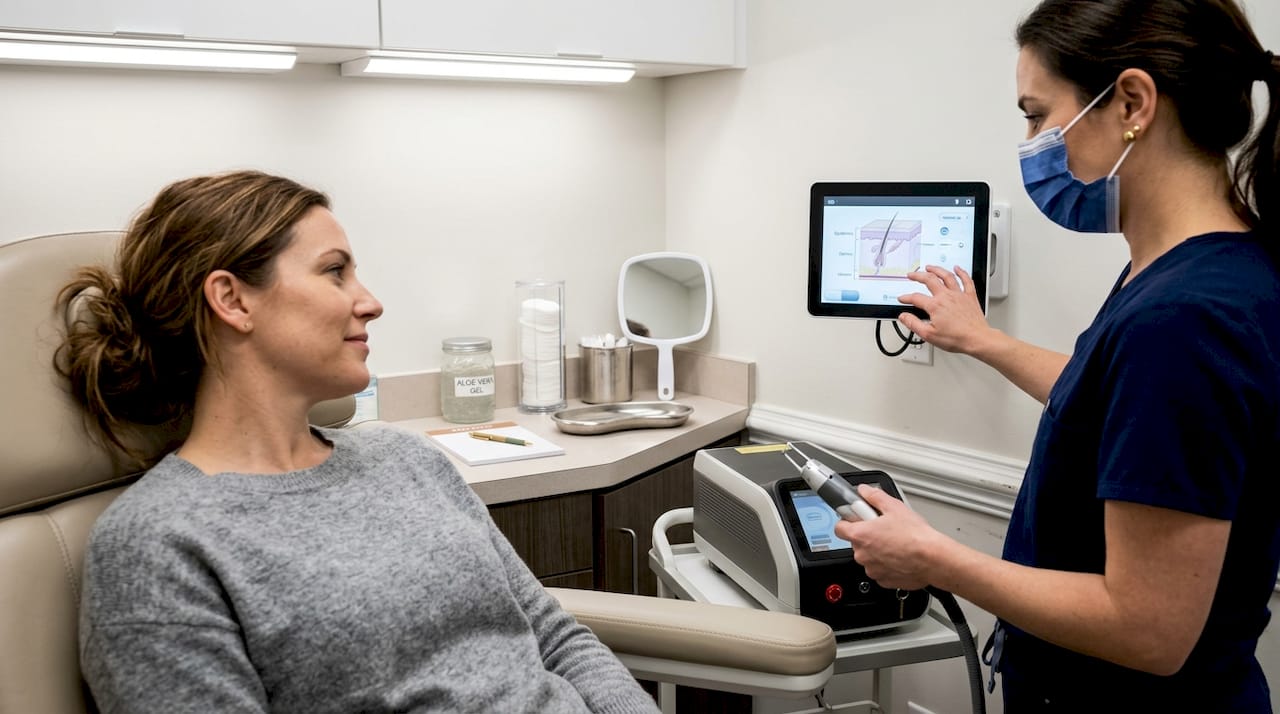
Fractional and ablative lasers resurface the skin at a deeper level, making them effective for more significant texture concerns, deeper lines, and sun damage. Lasers provide superior elasticity gains through collagen remodeling, though they typically require more recovery time.
Radiofrequency (RF) works beneath the skin’s surface to heat tissue and stimulate tightening. It is particularly valued for its safety across a range of skin tones. RF offers up to 30% tightening with a high safety profile, making it a strong option for those who want firming results with minimal risk.
Intense Pulsed Light (IPL) targets pigment and redness specifically. It is gentler than ablative lasers and works well for sun spots, rosacea, and uneven skin tone.
| Treatment | Mechanism | Downtime | Best for | Duration of results |
|---|---|---|---|---|
| Fractional laser | Resurfaces skin layers | 5 to 7 days | Deep lines, texture, scars | 1 to 3 years |
| Radiofrequency | Heats tissue to tighten | Minimal | Laxity, firmness, all skin tones | 1 to 2 years |
| IPL | Targets pigment and vessels | 2 to 5 days | Sun spots, redness, tone | 6 to 12 months |
Exploring laser and light therapies in more detail can help you understand which energy-based option aligns with your skin’s specific needs. Pairing these with other types of facial treatments often produces the most balanced, lasting outcomes.
Pro Tip: Ask your provider about combination protocols. Pairing RF with a laser, for example, can address both surface texture and deeper laxity in a single treatment plan, reducing overall sessions and cost.
Which skin rejuvenation treatment is right for you?
Now that you have a clear picture of each option, the next step is matching them to your specific goals. Combining methods can improve outcomes, and each method suits different needs and expectations. The table below offers a quick reference.
| Treatment | Ideal candidate | Recovery | Standout benefit |
|---|---|---|---|
| Injectables | Volume loss, dynamic wrinkles | Minimal | Immediate, reversible results |
| Microneedling | Texture, scars, early laxity | 1 to 2 days | Natural collagen stimulation |
| Laser | Sun damage, deep lines, elasticity | Moderate to high | Significant remodeling |
| RF | Skin laxity, all skin tones | Minimal | Safe tightening across skin types |
| IPL | Pigment, redness, uneven tone | Low to moderate | Targeted color correction |
Here is a simple process to guide your decision:
- Identify your primary concern. Is it volume, texture, pigment, firmness, or a combination?
- Assess your downtime tolerance. Be honest about what your schedule and lifestyle allow.
- Consider your skin tone. Some treatments carry higher risk for certain tones and require a more experienced hand.
- Set a realistic timeline. Some results build over months. Others appear within days.
- Consult a medical provider. A personalized assessment is the only way to confirm what is safe and appropriate for your skin.
Reviewing the rejuvenation process for natural results before your appointment gives you a strong foundation for that conversation. The goal is always a plan that fits your face, your pace, and your life.
Medically guided skin rejuvenation for natural results in Raleigh
At The Aesthetics Lounge and Spa Raleigh, every treatment decision starts with a conversation. We believe that medical aesthetics for natural results begins with understanding your skin, your goals, and your comfort level before recommending anything.
Our medically led team on Six Forks Road in North Raleigh takes a measured, anatomy-first approach. Whether you are exploring non-surgical aesthetic treatments for the first time or refining an existing plan, we build strategies that respect your natural structure. You can also browse our facial rejuvenation tips to prepare for your consultation. When you are ready, we are here — calm, unhurried, and focused entirely on results that look like you.
Frequently asked questions
What skin rejuvenation treatment has the least downtime?
Injectables and microneedling typically require the least recovery, with most people resuming normal activity within one to two days. Lasers can require more downtime depending on the depth and type of treatment used.
How long do results from skin rejuvenation treatments last?
Injectables last 3 to 18 months, while laser and RF treatments can deliver prolonged improvements due to ongoing collagen remodeling that continues for months after the session.
Can different skin rejuvenation treatments be combined?
Yes. Combination approaches often yield the most natural and complete results, allowing providers to address volume, texture, and tone in a single coordinated plan.
Which treatment is best for improving skin elasticity?
Lasers provide superior gains in skin elasticity through deep collagen remodeling, making them a strong choice when firmness and structural renewal are the primary goals.
Is skin rejuvenation safe for darker skin types?
Radiofrequency is considered one of the safest options across all skin tones. RF treatments have a high safety profile for all skin types, while certain lasers require more careful selection and provider expertise to minimize pigment risk.