
Generic skincare products promise results, but your skin is as unique as your fingerprint. Customized skincare is personalized regimens and formulations designed for an individual’s unique skin profile, including skin type, concerns, environment, lifestyle, genetics, and microbiome. Unlike off-the-shelf solutions, medically guided customized skincare uses dermatologist assessments, AI analysis, and biophysical measurements to create targeted treatments that enhance your natural beauty safely and effectively. This guide explains what customized skincare means, how it works, and why it matters for achieving the refined, natural-looking results you want.
Table of Contents
- Key takeaways
- Understanding customized skincare: personalizing for your skin’s uniqueness
- Mechanics and science behind customized skincare formulations and protocols
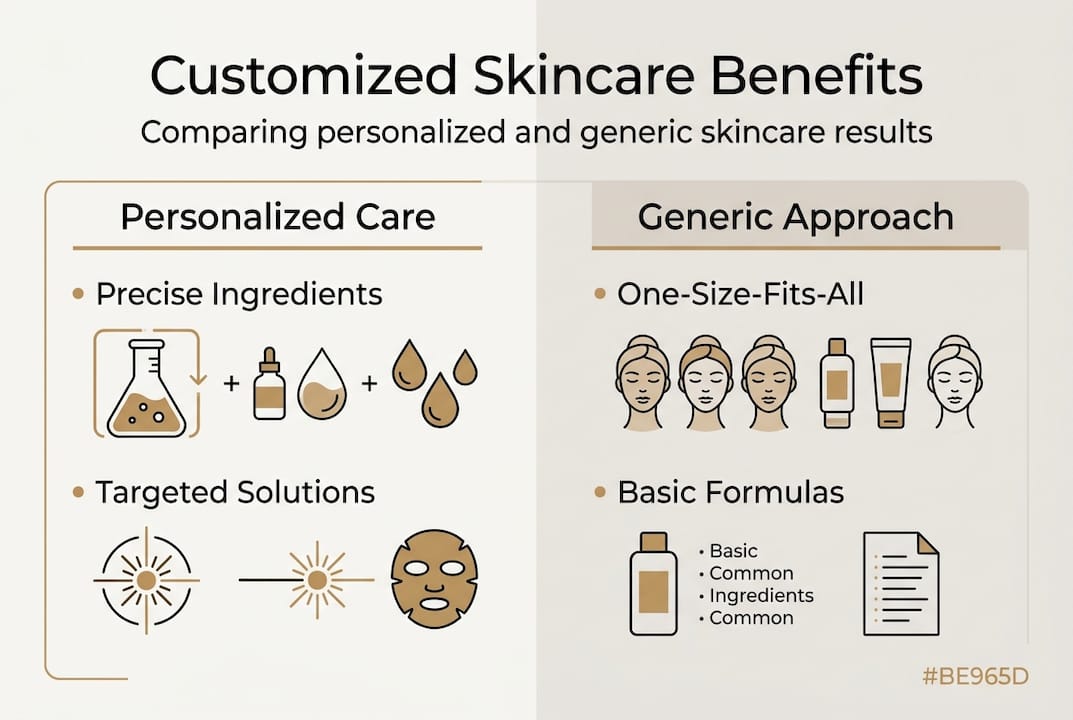
- Proven benefits and important nuances of customized skincare versus generic options
- Applying customized skincare: practical guidance for adults in North Raleigh
- Discover customized skincare and aesthetic treatments in Raleigh
- Frequently asked questions about customized skincare
Key Takeaways
| Point | Details |
|---|---|
| Personalization factors | Customized skincare analyzes your unique skin profile including skin type environment lifestyle genetics and microbiome to tailor regimens. |
| Dermal assessment and AI | Dermatologists perform thorough examinations while AI imaging and biophysical measurements like corneometer hydration and TEWL inform exact ingredient choices. |
| Benefits over off shelf | Medically guided regimens offer safety, efficacy and targeted actives that address specific concerns better than generic products. |
| Track progress plan | Request detailed baseline measurements and photos during the initial assessment to create an objective record for tracking improvements over time. |
Understanding customized skincare: personalizing for your skin’s uniqueness
Customized skincare represents a fundamental shift from mass-market formulations to individualized treatment plans. Rather than selecting products based on broad categories like “oily” or “dry,” this approach analyzes your specific skin profile through multiple lenses. Your skin type, genetic predispositions, environmental exposures, lifestyle habits, and even your unique microbiome all influence how your skin responds to different ingredients and protocols.
The assessment process begins with professional evaluation. Dermatologists conduct thorough examinations to identify concerns like hyperpigmentation, fine lines, acne, or rosacea. Technology-driven skin analysis methods have advanced significantly, incorporating AI imaging systems that map skin texture, tone variations, and underlying damage invisible to the naked eye. Biophysical tools measure objective parameters like hydration levels using corneometers and transepidermal water loss (TEWL) using evaporimeters, providing quantifiable data about your skin barrier function.
These assessments inform every aspect of your customized regimen. If TEWL measurements reveal compromised barrier function, your formula might emphasize ceramides and cholesterol. If AI imaging detects early photoaging, specific peptides and antioxidants get prioritized at therapeutic concentrations. The role of dermatologist expertise cannot be overstated. While personalized skincare research shows promise for algorithm-based approaches, medical oversight ensures safety and efficacy, particularly when combining actives or addressing complex conditions.
Your genetic makeup influences how your skin ages, produces collagen, and responds to sun exposure. Some people metabolize retinoids faster, requiring adjusted dosages. Others have genetic variations affecting inflammation pathways, necessitating specific anti-inflammatory ingredients. Your microbiome, the ecosystem of bacteria living on your skin, also plays a crucial role. Disrupted microbiomes can trigger acne, eczema, or sensitivity, and customized formulations can include prebiotics or postbiotics to restore balance.
Environmental factors matter enormously. North Raleigh’s humid subtropical climate creates different skincare needs than arid regions. Seasonal variations, indoor heating or cooling, pollution exposure, and water quality all impact your skin’s requirements. Lifestyle considerations include stress levels, sleep patterns, diet, exercise habits, and medication use. A comprehensive customized skincare plan accounts for all these variables, creating a truly personalized approach.
Pro Tip: Request detailed documentation of your baseline skin measurements and photos during your initial assessment. This creates an objective record for tracking improvements and adjusting your regimen over time.
Mechanics and science behind customized skincare formulations and protocols
Creating customized skincare involves a sophisticated, stepwise process that transforms assessment data into effective formulations. The journey from skin analysis to finished product demonstrates how precision medicine principles apply to aesthetic care. Mechanics include skin assessments, ingredient selection with peptides and retinoids at precise dosages, formulation by compounding pharmacies or AI algorithms analyzing 80 to 150 factors, and timed protocols optimized for absorption and efficacy.
Ingredient selection represents the heart of customization. Consider peptides, which are short chains of amino acids that signal skin cells to produce collagen or reduce inflammation. Generic products might contain peptide concentrations of 2 to 5 percent, while customized formulations can reach 10 to 15 percent based on your specific collagen production needs and tolerance. Hyaluronic acid, a humectant that attracts moisture, comes in different molecular weights. Low molecular weight penetrates deeper for plumping effects, while high molecular weight stays on the surface for barrier protection. Your customized formula uses the optimal molecular weight blend for your hydration profile.
Retinoids exemplify the importance of dosage precision. Over-the-counter retinol products typically contain 0.25 to 1 percent concentrations, while prescription tretinoin ranges from 0.025 to 0.1 percent. Customized formulations can start at lower concentrations for sensitive skin or ramp up gradually based on your tolerance and response. Some formulations combine retinoids with buffering ingredients like niacinamide or ceramides to minimize irritation while maintaining efficacy.
Medically guided skincare steps follow timed application protocols that maximize results. The cleanse-treat-veil approach structures product layering for optimal absorption. Active ingredients apply to freshly cleansed skin when penetration is highest. Serums with smaller molecules go first, followed by treatments with larger molecules, and finally occlusives that seal everything in. Timing matters too. Some actives work better at night when skin enters repair mode, while antioxidants provide daytime protection against environmental stressors.

Advanced personalized skin science now incorporates machine learning algorithms that analyze hundreds of data points to predict ingredient efficacy. These systems consider interactions between actives, pH requirements, stability concerns, and delivery mechanisms. Compounding pharmacies can create formulations unavailable in commercial products, adjusting concentrations, combining incompatible ingredients through specialized techniques, and adding penetration enhancers for deeper delivery.
Ongoing regimen adjustments distinguish customized skincare from static generic products. Your skin changes with seasons, stress, hormones, and age. Regular follow-up assessments using the same biophysical tools track objective improvements in hydration, elasticity, pigmentation, and barrier function. If progress plateaus, formulations get modified. New concerns get addressed promptly. This dynamic approach ensures your skincare evolves with your skin’s changing needs.
| Formulation Component | Generic Product | Customized Product |
|---|---|---|
| Peptide concentration | 2 to 5% | 10 to 15% (based on need) |
| Retinoid strength | 0.25 to 1% retinol | 0.025 to 0.1% tretinoin (titrated) |
| Hyaluronic acid | Single molecular weight | Blended molecular weights |
| pH optimization | Fixed at 5.5 to 6.5 | Adjusted per ingredient stability |
| Active combinations | Limited by shelf stability | Compounded for compatibility |
Pro Tip: Always patch test new customized formulations on your inner forearm for 48 hours before facial application. Introduce actives gradually, starting every third night and increasing frequency as tolerance builds to minimize irritation.
Proven benefits and important nuances of customized skincare versus generic options
Empirical evidence supports customized skincare’s superiority for achieving measurable skin improvements. Empirical data shows significant improvements in sebum, elasticity, hyperpigmentation, hydration, and dryness within weeks of using bespoke formulas. Studies document sebum reduction of 18 to 25 percent in acne-prone skin, elasticity improvements of 15 to 22 percent in aging skin, and hyperpigmentation fading of 30 to 40 percent with targeted brightening protocols. Hydration levels increase by 35 to 50 percent when formulations address specific barrier deficiencies.
These results stem from customized skincare’s precision targeting. Generic products contain lower active concentrations to minimize adverse reactions across diverse users. Customized formulations optimize concentrations for your tolerance level, maximizing benefits while minimizing risks. The continuous adjustment process means your regimen adapts as your skin improves, preventing the plateau effect common with generic products.
Sensitive skin and special conditions require particularly nuanced approaches. People with rosacea, eczema, or contact dermatitis benefit from hypoallergenic minimalist formulas that eliminate common irritants while including specific calming ingredients like azelaic acid, colloidal oatmeal, or centella asiatica. Pregnancy and breastfeeding necessitate avoiding certain actives like retinoids, hydroquinone, and high-dose salicylic acid. Customized protocols for expectant mothers emphasize safe alternatives like bakuchiol, vitamin C, and gentle AHAs at appropriate concentrations.
Cancer treatment affects skin profoundly through chemotherapy, radiation, and targeted therapies. These patients need fragrance-free, preservative-minimized formulations that support compromised barrier function without interfering with treatment. Medically led spa benefits include professional oversight that ensures safety during vulnerable periods.
Comparing customized skincare to off-the-shelf products reveals distinct advantages and considerations:
| Factor | Customized Skincare | Off-the-Shelf Products |
|---|---|---|
| Effectiveness | High active concentrations targeting specific concerns | Lower concentrations for broad appeal |
| Personalization | Formulated for your unique skin profile | One-size-fits-all approach |
| Adaptability | Continuous adjustment based on response | Static formulation |
| Safety for sensitive skin | Hypoallergenic options, irritant elimination | May contain common allergens |
| Cost | Higher upfront investment | Lower per-product cost |
| Professional oversight | Dermatologist-guided protocols | Self-directed selection |
| Results timeline | Faster improvements from optimized dosing | Slower, less predictable results |
The cost consideration deserves attention. Customized skincare requires higher initial investment for assessments and specialized formulations. However, the targeted approach often reduces overall spending by eliminating trial-and-error purchases of ineffective generic products. You invest in what works rather than accumulating bathroom cabinets full of abandoned bottles.
Personalized skincare nuances include understanding when customization matters most. Mild concerns like occasional dryness might respond adequately to quality generic products. Complex conditions involving multiple concerns, sensitive skin, or previous treatment failures benefit significantly from customization. The decision depends on your specific situation, goals, and resources.
Pro Tip: Seek professional consultation for special conditions like pregnancy, active acne, rosacea, or post-procedure care rather than relying on online quizzes or unverified direct-to-consumer services. Medical oversight ensures safety and efficacy.
Applying customized skincare: practical guidance for adults in North Raleigh
Translating customized skincare concepts into actionable steps requires understanding how to identify credible guidance and integrate treatments effectively. The proliferation of direct-to-consumer skincare quizzes creates confusion about what constitutes genuine customization. True personalization requires professional evaluation, not algorithm-based questionnaires that lack medical oversight.
Identifying credible medical guidance starts with seeking dermatologists, physician assistants, or nurse practitioners with aesthetic training. These professionals conduct in-person assessments using diagnostic tools, interpret results within the context of your medical history, and create evidence-based treatment plans. They monitor your progress through objective measurements rather than subjective self-reporting. Beware of services that prescribe products based solely on selfies or brief questionnaires without professional review.
For North Raleigh adults seeking natural enhancements, prioritize dermatologist-led plans combined with local medspa treatments to rapidly improve hydration and skin barrier function. Combining customized skincare with complementary aesthetic treatments in Raleigh creates synergistic results. Laser treatments, chemical peels, microneedling, and injectable peptides address concerns at different skin depths than topical products. Your customized skincare regimen supports and extends results from these procedures.
Starting your customized skincare journey involves several practical steps:
- Schedule a comprehensive skin assessment with a qualified professional who uses diagnostic tools like skin analyzers, moisture meters, and photography
- Keep a skin diary for two weeks before your appointment, noting concerns, current products, reactions, and environmental factors
- Discuss your goals, lifestyle constraints, budget, and any medical conditions or medications that might affect treatment
- Request a detailed written protocol explaining each product’s purpose, application timing, and expected timeline for results
- Start with core products (cleanser, treatment serum, moisturizer, sunscreen) before adding specialized items
- Introduce new actives one at a time, spacing introductions by one to two weeks to identify any reactions
- Schedule follow-up assessments every four to six weeks initially, then quarterly once your regimen stabilizes
Patch testing deserves emphasis for customized formulations with higher active concentrations. Apply a small amount to your inner forearm, cover with a bandage, and observe for 48 hours. Redness, itching, or burning indicates sensitivity requiring formula adjustment. Even if patch testing succeeds, introduce facial application gradually. Start with every third night for actives like retinoids or acids, increasing frequency as tolerance builds.
Medical-grade skincare products available through professional channels offer pharmaceutical-grade ingredients at therapeutic concentrations unavailable in retail products. These formulations undergo stability testing, use superior delivery systems, and maintain precise pH ranges for optimal efficacy. Combining these products with medically guided skincare maintenance ensures long-term success.
Seasonal adjustments matter in North Raleigh’s climate. Summer’s heat and humidity might require lighter moisturizers and more frequent antioxidant application. Winter’s lower humidity and indoor heating increase needs for occlusive moisturizers and barrier repair ingredients. Your customized regimen should flex with these changes while maintaining core active ingredients that address your primary concerns.
Pro Tip: Choose medspas with dermatologist oversight for best natural results. Medical supervision ensures treatments and products work synergistically, safety protocols are followed, and complications get addressed promptly by qualified professionals.
Discover customized skincare and aesthetic treatments in Raleigh
Applying these customized skincare principles locally means partnering with professionals who understand both the science and artistry of natural enhancement. The Aesthetics Lounge & Spa in North Raleigh offers medically guided skincare consultations that assess your unique skin profile and create personalized treatment plans. Our approach combines thorough evaluation with conservative, anatomically informed recommendations that enhance rather than alter your natural appearance.
Our team designs customized skincare protocols that integrate seamlessly with complementary aesthetic treatments in Raleigh like laser therapy, microneedling, and peptide treatments. We prioritize education and transparent expectations, ensuring you understand how each product and procedure supports your goals. Choosing aesthetic treatments naturally means working with professionals who respect your facial structure and skin health while delivering measurable improvements. Explore our medical-grade skincare products and schedule a consultation to discover how customized skincare can enhance your natural beauty with precision and care.
Frequently asked questions about customized skincare
What factors determine the customization of skincare?
Skin type, genetic predispositions, environmental exposures, lifestyle habits, and microbiome composition all influence customized skincare formulation. Professional assessments include dermatologist examinations, AI imaging that maps texture and tone variations, and biophysical measurements of hydration levels using corneometers and transepidermal water loss using evaporimeters. These objective data points inform ingredient selection, concentration levels, and application protocols tailored specifically to your skin’s needs rather than broad demographic categories.
How is customized skincare different from generic products?
Customized skincare contains higher concentrations of active ingredients precisely calibrated to your tolerance and concerns, while generic products use lower concentrations to minimize adverse reactions across diverse users. Customized protocols include timed application sequences optimized for absorption and continuous adjustments based on your skin’s response measured through follow-up assessments. Generic products remain static with one-size-fits-all formulations that cannot adapt to your changing skin needs or address multiple complex concerns simultaneously.
Can people with sensitive skin or special conditions benefit from customized skincare?
Sensitive skin benefits significantly from customized hypoallergenic minimalist formulas that eliminate common irritants while including specific calming ingredients like azelaic acid or centella asiatica at appropriate concentrations. Special conditions like pregnancy require professional oversight to avoid contraindicated actives like retinoids and hydroquinone while emphasizing safe alternatives like bakuchiol and vitamin C. Cancer treatment, rosacea, and eczema all necessitate specialized formulations that support compromised barrier function without triggering inflammation, making customization essential rather than optional for these populations.
How often should customized skincare regimens be updated?
Regimen updates typically occur every four to six weeks initially based on objective skin measurements and your subjective response to treatment. Once your protocol stabilizes and achieves desired improvements, quarterly assessments maintain results and address seasonal variations or new concerns. Ongoing professional monitoring ensures your formulations evolve with hormonal changes, aging, environmental shifts, and lifestyle modifications that affect your skin’s requirements over time.
Is professional consultation necessary for customized skincare?
Professional evaluation by dermatologists or trained aesthetic practitioners ensures accurate skin profiling through diagnostic tools and medical expertise that online quizzes cannot replicate. Medical oversight provides safety when combining active ingredients, adjusting concentrations, or addressing complex conditions that require prescription-strength formulations. Avoid relying solely on direct-to-consumer services without professional review, as improper ingredient selection or dosing can cause irritation, barrier damage, or adverse reactions that delay rather than accelerate your skincare goals.