Safe skin treatments explained: what works for natural results


TL;DR:

  • Safe skin treatments are provided by board-certified practitioners with personalized assessments and evidence-based protocols.
  • Top evidence-based non-surgical options include RF microneedling, IPL, fractional lasers, and photobiomodulation.
  • Medical oversight and individualized planning are essential for safety and optimal results in aesthetic procedures.

Non-surgical skin treatments have grown dramatically in popularity, with non-invasive procedures rising year over year as adults seek healthier, more natural-looking skin without surgery. But with that growth comes real confusion. Not every treatment marketed as “non-invasive” is automatically safe, and not every provider offering these services is equally qualified. If you’re in Raleigh and exploring options, you deserve a clear, honest picture of what safe skin care actually looks like. This guide walks you through the clinical criteria that matter, the treatments backed by real evidence, and why medical oversight isn’t optional. It’s the foundation everything else is built on.

Table of Contents

Key Takeaways

Point Details
Medical guidance is crucial Board-certified oversight is the foundation for safe, natural-looking results.
Not all treatments are equal Choose evidence-backed procedures tailored to your unique skin needs.
Multimodal strategies work better Layered approaches enhance both safety and the quality of your skin results.
Ask questions Your safety improves when you seek providers who personalize and clearly explain every treatment step.

What makes a skin treatment safe?

The word “safe” gets used loosely in aesthetic marketing. A treatment being non-surgical doesn’t automatically make it safe, and a device being FDA-cleared doesn’t mean it’s right for your skin. True safety is built on a specific set of conditions, and understanding them helps you ask better questions before you commit to anything.

At its core, safe aesthetic care means the treatment is delivered by a board-certified practitioner who has assessed your skin type, reviewed your health history, and selected a protocol grounded in clinical evidence. It also means you have access to proper aftercare guidance and follow-up support. The American Academy of Dermatology recognizes that medical oversight is essential for patient safety, particularly as innovative technologies like RF, lasers, and exosomes become more widely available.

Here are the core pillars of a safe treatment experience:

  • Medical assessment first: Your skin type, tone, and any contraindications are evaluated before any device is used.
  • Evidence-based protocols: Treatments follow dosing and technique guidelines supported by clinical data.
  • Sun protection and avoidance of triggers: Pre and post-treatment care is clearly communicated and followed.
  • Qualified practitioners: The person operating the device has formal training, not just a certification course.
  • Realistic expectations: You’re told what the treatment can and cannot do for your specific concerns.

Good medical spa care doesn’t rush this process. The consultation is where safety is either established or compromised.

Pro Tip: If a provider offers a treatment without first asking about your skin history, medications, or sun exposure habits, that’s a signal to pause. Customization isn’t a luxury. It’s a safety requirement.

Top evidence-based non-surgical skin treatments

With a clear safety framework in place, it’s worth examining which treatments are actually supported by clinical evidence for adults aged 25 to 55. The options below are among the most studied and widely used in medically guided settings.

  1. RF microneedling: Radiofrequency energy delivered through fine needles stimulates collagen remodeling at a deeper level than surface treatments. It’s effective for skin firmness, texture, and mild scarring. RF microneedling has a strong safety profile across most skin types, with collagen remodeling and low adverse effects consistently documented in clinical reviews.

  2. Intense pulsed light (IPL): IPL targets pigmentation, redness, and sun damage using broad-spectrum light. It’s highly effective, but patient selection matters. IPL improves pigment and redness up to 50% in appropriate candidates, and it works best for Fitzpatrick skin types I through III.

  3. Fractional lasers: Both ablative and non-ablative options exist. Non-ablative fractional lasers offer moderate results with less downtime, while ablative versions deliver more significant improvement for wrinkles and photodamage but require more recovery time.

  4. Photobiomodulation (PBM): This light-based therapy uses specific wavelengths to support cellular repair. It carries minimal risk and reduces wrinkle volume by over 30% in randomized controlled trials, making it a strong option for those seeking gentle, consistent improvement.

Treatment Downtime Best candidates Key benefit
RF microneedling 1 to 2 days Most skin types Firmness, texture
IPL Minimal Fitzpatrick I to III Pigment, redness
Fractional laser 2 to 7 days Photodamage, wrinkles Resurfacing
Photobiomodulation None Sensitive skin, all types Cellular repair

Exploring non-surgical treatments with a qualified provider helps you match the right option to your skin goals. For concerns around laxity and firmness, skin tightening options offer targeted support without surgical intervention.

Why medical guidance is essential for safety

Knowing which treatments exist is only part of the picture. How they’re applied, and by whom, is what determines whether your experience is safe or not. This is where medical oversight becomes non-negotiable.

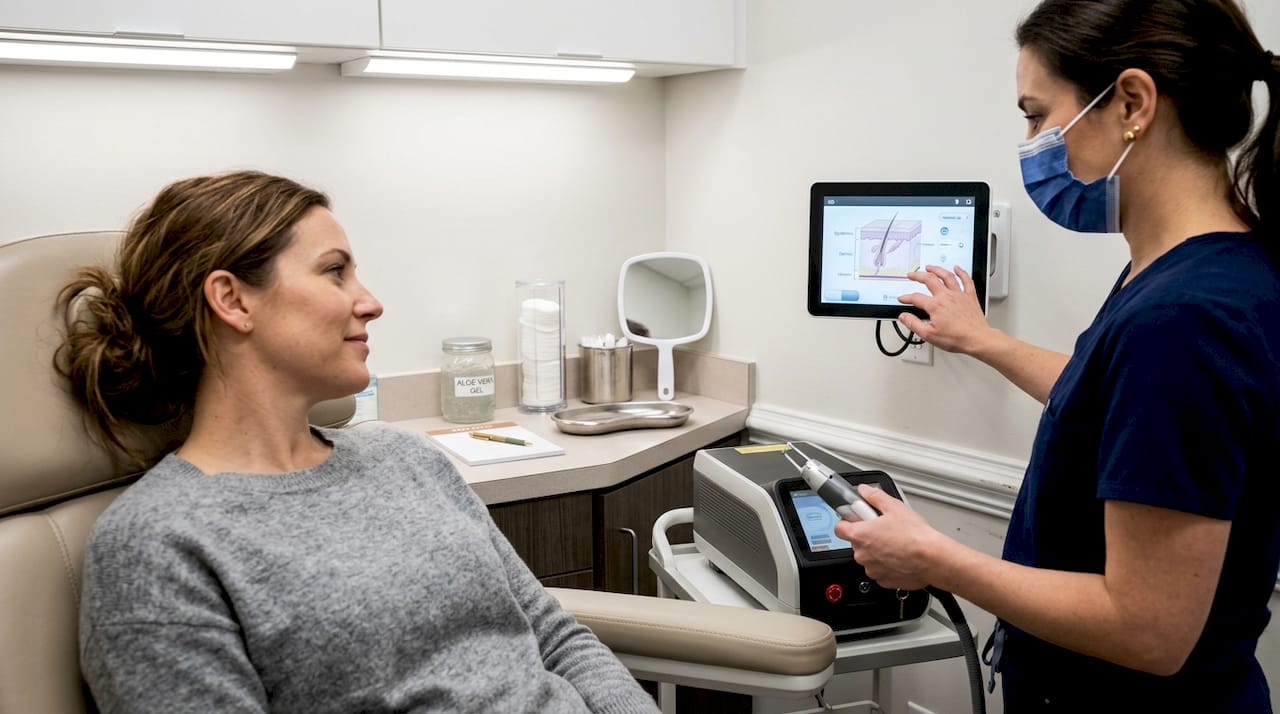
Spa provider discusses safety guidelines with client

Board-certified physicians and dermatologists bring something that device training alone cannot replicate: clinical judgment. They recognize contraindications, adjust protocols based on your skin’s real-time response, and understand when not to treat. That last point matters more than most people realize.

Common safety failures in aesthetic settings include:

  • Using devices on skin types outside the recommended Fitzpatrick range
  • Skipping pre-treatment screening for medications that increase photosensitivity
  • Applying high-energy settings without assessing skin tolerance
  • Lacking a clear protocol for adverse reactions

“As minimal downtime options advance the field, the AAD continues to emphasize that medical oversight remains the standard for ensuring patient safety with RF, lasers, and emerging technologies.”

The benefits of medically led spas go beyond credential displays on a wall. They show up in how your consultation is conducted, how your treatment is paced, and how your provider responds if something unexpected happens. Understanding why trust medically led spas matters helps you make more confident decisions about where to seek care.

Pro Tip: Before booking any energy-based treatment, ask two direct questions: Who is medically responsible for my care today? And what is your protocol if I have an adverse reaction? The answers will tell you a great deal about the practice’s safety culture.

Combination therapies: How multimodal strategies enhance both safety and results

Safety isn’t only about what a single treatment does in isolation. It’s also about how treatments interact when used together. Multimodal strategies, meaning layered combinations of devices and injectables, are increasingly the standard in medically guided aesthetic care.

The reasoning is sound. Different treatments work at different depths and on different tissue targets. RF microneedling addresses dermal collagen. Biostimulators like Sculptra work at a deeper structural level. IPL addresses surface pigmentation. When these are properly sequenced, multimodal approaches are synergistic for layered rejuvenation, producing results that are more natural-looking and longer-lasting than any single treatment alone.

Here’s what makes combination therapy work safely:

  • Medical sequencing: Treatments are planned in a specific order to avoid overlapping inflammatory responses.
  • Appropriate spacing: Recovery time between sessions is factored into the plan, not rushed.
  • Unified oversight: One medical provider coordinates the full strategy rather than multiple unconnected practitioners.
  • Adjusted dosing: Energy settings and injection volumes are calibrated to account for prior treatments.
Combination Target concern Clinical advantage
RF microneedling + Sculptra Volume loss, laxity Deeper structural support
IPL + biostimulators Pigment, tone, texture Surface and mid-layer correction
Fractional laser + PBM Resurfacing, healing Faster recovery, reduced inflammation

Exploring types of skin rejuvenation helps clarify which combinations align with your specific concerns. Reviewing treatment examples from medically guided practices gives you a realistic sense of what outcomes look like when strategies are thoughtfully built.
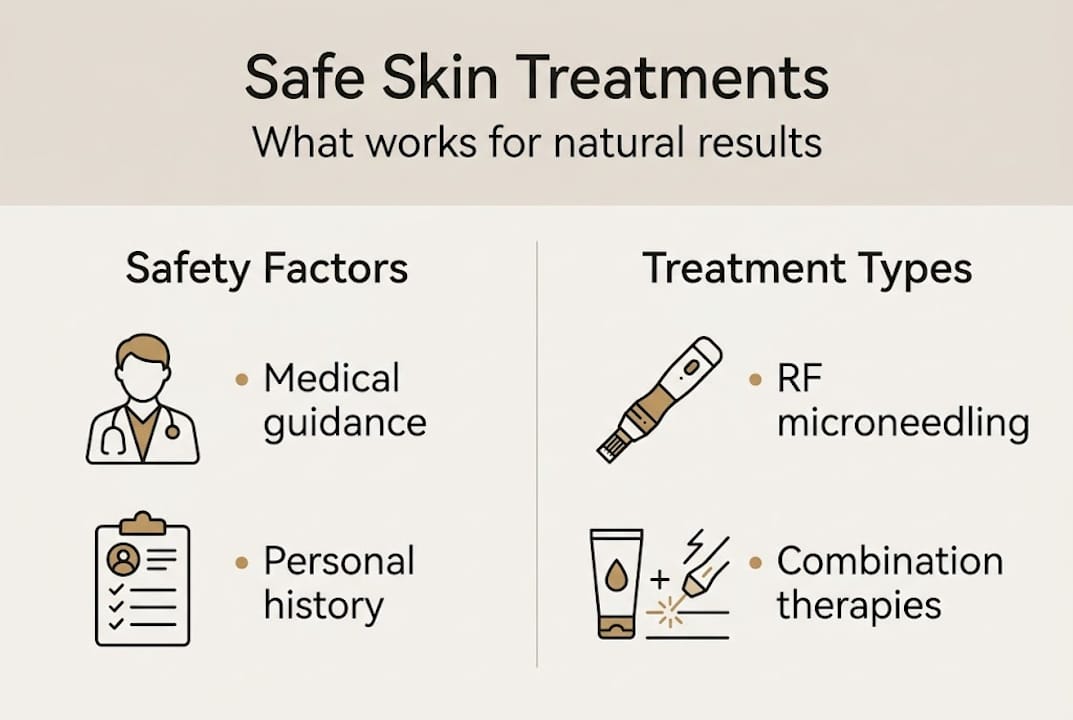
Infographic about safe skin treatments and factors

A fresh perspective on safety: Beyond devices, it’s about personalized planning

Here’s something most aesthetic marketing won’t tell you: the device itself is rarely the variable that determines your outcome. Two people can receive the same treatment on the same machine and have completely different results, because their skin, their history, and their provider’s judgment are all different.

The conversation in aesthetic care tends to center on technology. New devices, upgraded platforms, and branded treatment names dominate the conversation. But the evidence consistently points to something quieter and less marketable: individualized planning and an ongoing medical relationship are what actually keep you safe and deliver results that hold.

Your skin changes. What was appropriate at 35 may not be the right approach at 45. A provider who knows your history, tracks your progress, and adjusts your plan over time is offering something no single device can replicate. As one of the most thoughtful facial enhancement examples demonstrate, the most believable results come from strategy, not intensity.

Real safety in aesthetics is medical customization. No one-size-fits-all protocol, no matter how advanced the device, can substitute for a provider who genuinely knows your skin.

Next steps: Finding your safest skin treatment in Raleigh

If this guide has clarified anything, it’s that safe aesthetic care starts well before the treatment room. It starts with the right questions, the right provider, and a plan built around your skin, not a menu of services.
https://raleigh.theaestheticsloungeandspa.com

At The Aesthetics Lounge and Spa Raleigh, every consultation is medically guided and unhurried. We review your skin history, discuss your goals honestly, and recommend only what makes clinical sense for you. Explore our full range of aesthetic treatments in Raleigh or learn more about why trust medically led spas before your first visit. For practical guidance on maintaining your results, our facial rejuvenation tips are a helpful starting point. You deserve care that’s refined, measured, and genuinely yours.

Frequently asked questions

Which skin treatments are safest for sensitive or darker skin types?

RF microneedling and photobiomodulation are generally safer across a wider range of skin types, while IPL is best suited for lighter Fitzpatrick skin types I through III and requires careful patient selection.

How do I know if my provider is following safety protocols?

Ask whether a board-certified physician oversees your treatment, confirm that a medical screening is completed before any procedure, and verify that aftercare and emergency response protocols are clearly in place. Medical oversight is the standard, not a bonus.

What does ‘minimal downtime’ really mean?

For most modern non-surgical treatments, minimal downtime options typically mean redness or mild swelling lasting a few hours to two days, with most people resuming normal activities quickly.

Are combination treatments safe, or do they increase risk?

When medically guided and properly sequenced, multimodal approaches can actually reduce overall risk by using lower individual treatment intensities while still achieving more complete, natural-looking results.

What is movement-friendly filler? Natural, lasting results


TL;DR:

  • Movement-friendly fillers are softer, more elastic products designed for natural facial movement.
  • Proper placement techniques and anatomical understanding are essential for natural, expressive results.
  • Matching filler type and technique to facial regions ensures support without restricting movement.

You’ve seen it before. Someone smiles and something looks slightly off. Not dramatic, not frozen exactly, but stiff. Like their face and their filler aren’t quite moving together. That disconnect is one of the most common concerns we hear from clients who are curious about injectables but cautious about looking overdone. The good news is that the field has evolved significantly. Movement-friendly filler techniques now make it possible to add subtle volume and support without sacrificing the expressiveness that makes your face distinctly yours. This article walks you through what that means, why it matters, and how to make informed choices.

Table of Contents

Key Takeaways

Point Details
Natural movement matters Movement-friendly fillers are designed to shift and flex with your expressions for subtle, believable results.
Technique is crucial Proper layering and placement are key for maximizing the benefits and longevity of movement-friendly fillers.
Choose the right filler Not all fillers are created equal—select a product and approach matched to expressive areas and your unique goals.
Medical guidance helps Expert consultation ensures your results look natural in motion and respect your facial structure.

Why traditional fillers can look unnatural in motion

Most dermal fillers are made from hyaluronic acid, a substance your body already produces naturally. HA fillers work by attracting water molecules and adding volume beneath the skin. They were originally designed to restore static volume loss, things like hollowed cheeks or thinning lips at rest. And for those goals, they work well.

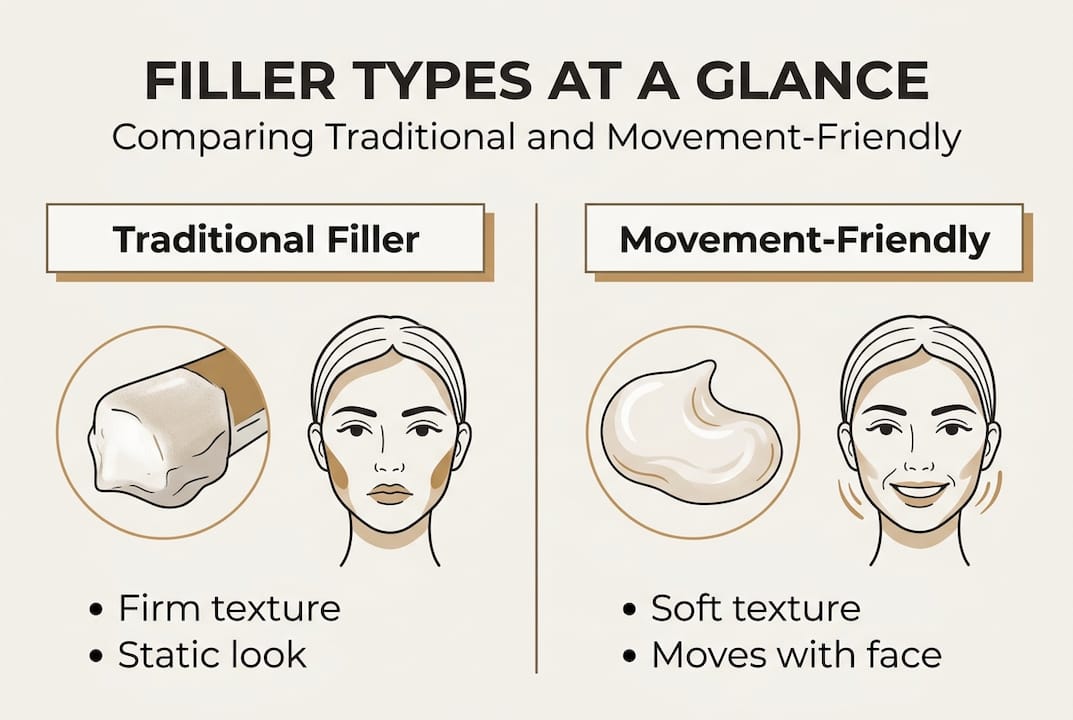
The challenge arises in motion. Traditional HA fillers like Juvederm are formulated with firmer gels that hold their shape well for static volume but can feel or appear stiffer when your face is actively moving. When you smile, laugh, or speak, your face moves in complex, layered ways. If a filler doesn’t flex with that movement, it can create a subtle but noticeable resistance.

“The goal of any filler treatment should be to support the face as it moves, not to hold it in place.”

Some of the areas most affected by this include:

  • Smile lines (nasolabial folds): Filler placed too superficially or in too firm a product can bunch or look uneven when smiling.
  • Lips: Overly firm product in the lip body can restrict natural movement during speech and expression.
  • Cheeks in motion: Volume placed without accounting for how the cheek lifts and shifts during a smile can look displaced or heavy.
  • Perioral area: The skin around the mouth is highly dynamic and unforgiving of stiff product.

Growing patient demand is also reshaping what providers prioritize. More people seeking injectables for natural results are asking specifically about how their face will look in conversation, not just in a still photo. That shift in expectation is driving more nuanced approaches to both product selection and technique. You can also explore subtle enhancement examples to understand what thoughtful, expressive results actually look like in practice.

The result is a growing category of approaches collectively called movement-friendly filler, which we’ll break down next.

What makes a filler movement-friendly?

Not every filler is built the same. Movement-friendly filler refers to products and techniques specifically chosen for their ability to integrate with tissue and remain flexible during facial expression. It’s less a brand name and more a philosophy of matching product properties to the demands of dynamic facial areas.

Several characteristics define a movement-friendly approach:

  • Lower viscosity: Softer, more fluid gels integrate more naturally with surrounding tissue and flex rather than resist.
  • High elasticity: Products with good elastic recoil return to their shape after movement without creating visible distortion.
  • Tissue integration: Fillers that blend well with native tissue feel and move more like your own anatomy.
  • Appropriate placement depth: Even the right product performs poorly if placed at the wrong depth.

Product choice and placement technique work together. As multilayering injection research shows, injecting into superficial dynamic fat layers using fanning, linear threading, or cannula techniques respects the distinction between deep static compartments and superficial dynamic ones. That distinction is what allows the face to move freely while still benefiting from added support.

Filler property Traditional HA Movement-friendly HA
Viscosity Higher (firmer) Lower (softer)
Elasticity Moderate High
Best use Static volume, structure Dynamic areas, expression
Tissue integration Good at depth Excellent in superficial layers

Common products used in movement-friendly approaches include softer HA formulations like Juvederm Volbella, Restylane Silk, and Belotero Balance. These are not the firmest products in their respective lines. They are chosen specifically because their physical properties support flexibility.

Pro Tip: Ask your provider which specific product they plan to use and why. A thoughtful answer about viscosity, elasticity, and placement depth signals that they are treating your face as a dynamic system, not a static canvas.

Understanding filler types compared side by side can help you have a more informed conversation before your appointment. You can also learn more about injectables in aesthetics to understand how these products fit into a broader treatment strategy.

Infographic comparing traditional versus movement-friendly fillers

How movement-friendly fillers are placed for natural results

Product selection is only half the equation. How filler is placed determines whether it supports natural movement or works against it. Advanced injection technique is what separates a result that reads as rested from one that reads as treated.

Three primary techniques are commonly used in movement-friendly approaches:

  1. Linear threading: The needle or cannula is inserted and filler is deposited in a line as it is withdrawn, creating smooth, even distribution along a natural contour.
  2. Fanning: Multiple threads are placed from a single entry point, spreading product across a wider area with minimal trauma and even coverage.
  3. Cannula technique: A blunt-tipped cannula reduces the risk of vascular injury and allows smooth, controlled placement in superficial layers where dynamic movement occurs.

Layering is equally important. Multilayering technique respects the difference between deep static compartments, which provide structural support, and superficial dynamic compartments, which move with expression. Placing product at multiple depths allows the face to retain both lift and mobility.

Anatomical knowledge is non-negotiable here. Providers who understand how fat pads shift during a smile, how the orbicularis muscle moves around the mouth, and how the cheek elevates during expression can plan placement that works with those patterns rather than against them.

Injector reviewing facial anatomy and notes

Technique Best for Key benefit
Linear threading Lips, fine lines Smooth, even distribution
Fanning Cheeks, temples Wide coverage, minimal entry points
Cannula Perioral, under-eye Safety, smooth superficial placement

Pro Tip: Ask whether your provider uses cannulas for dynamic areas. Cannulas allow more precise, atraumatic placement in the superficial layers where movement-friendly results happen.

Exploring Raleigh dermal fillers with a medically led team ensures these techniques are applied with appropriate anatomical understanding. And if you’re still weighing your options, guidance on choosing injectables naturally can help you feel confident before committing.

Choosing the right option for expressive areas

Not every area of the face has the same movement demands. Matching your filler choice to the specific region and your personal goals is where personalized planning becomes essential.

Facial regions that benefit most from movement-friendly approaches include:

  • Around the mouth: Perioral lines and lip borders require soft, flexible product that won’t restrict speech or create visible stiffness.
  • Cheeks: The midface moves significantly during smiling. Product placed here needs to lift without displacing or looking heavy in motion.
  • Under the eyes: The tear trough area is delicate and visible during expression. Softer, well-integrated product avoids the Tyndall effect and looks natural in all lighting.
  • Crow’s feet and eye area: These regions require minimal product with high tissue integration.

When comparing your options, it helps to understand the broader category of fillers available. Biostimulatory options like Radiesse and Sculptra stimulate your own collagen production over time, offering longevity. However, as liquid lift research notes, these options provide less immediate dynamic flexibility compared to soft HA fillers, and diluted techniques, while reducing the risk of lumps, tend to have a shorter duration.

Key factors to weigh when planning your treatment:

  • Longevity vs. flexibility: Firmer, longer-lasting products may suit structural areas. Softer products suit expressive zones.
  • Your treatment goals: Subtle refresh or more noticeable volume restoration will guide product and volume decisions.
  • Budget and maintenance: Softer fillers in dynamic areas may need refreshing sooner, typically every 6 to 12 months.
  • Safety profile: Cannula techniques and anatomically informed placement reduce risk in vascular areas.

Medical guidance is not optional in this process. A provider who reviews your facial anatomy, your movement patterns, and your long-term goals before recommending a product is the kind of partner you want. Explore Xeomin and filler solutions to understand how neuromodulators can complement filler for a balanced, expressive result. You can also browse the full injectables archive to see what thoughtful planning looks like in practice.

Our take: The real secret to natural-looking, lasting results

Here is something that often gets lost in conversations about filler brands and product lines: movement-friendly results are not primarily about which product you choose. They are about how well your provider understands your face as a living, moving structure.

The most common cause of overdone or stiff-looking filler is not over-filling alone. It is ignoring natural motion patterns. A provider who places product without accounting for how your cheek shifts when you smile, or how your lips move when you speak, will produce results that look fine in a mirror but feel wrong in conversation.

True artistry here is anatomical. It requires studying the face in motion, not just at rest. The best outcomes we see come from providers who treat the face like a dynamic canvas, layering product thoughtfully across depths, choosing flexibility over volume when the area demands it, and pacing treatment over time rather than loading product in a single session.

One-size-fits-all approaches simply do not work for expressive faces. Seek out natural aesthetic examples and ask your provider how they plan for movement specifically. That question alone will tell you a great deal about their approach.

Next steps: Explore movement-friendly treatments in Raleigh

If this article has clarified what movement-friendly filler actually means, the next step is experiencing that approach in person. At The Aesthetics Lounge and Spa Raleigh, every injectable consultation begins with a conversation about your anatomy, your goals, and how your face moves. We plan before we treat.

https://raleigh.theaestheticsloungeandspa.com

Our team on Six Forks Road specializes in medically led, conservative Raleigh aesthetics treatments designed to support your face over time, not transform it overnight. Whether you are exploring fillers for the first time or reassessing a previous experience, we offer clear guidance and unhurried appointments. Learn how to choose treatments naturally or go deeper into what dermal fillers can realistically offer. We are here when you are ready.

Frequently asked questions

What is a movement-friendly filler in cosmetic treatments?

Movement-friendly fillers are soft, flexible products placed in superficial dynamic layers using techniques like cannula or fanning, so they integrate with tissue and flex naturally during facial expression rather than creating visible resistance.

Are movement-friendly fillers suitable for all areas of the face?

They are best suited for dynamic regions like the mouth, cheeks, and under-eye area. Firmer areas needing structural support, such as the jawline or chin, may benefit from denser HA formulations that hold shape more reliably at rest.

How long do movement-friendly fillers typically last?

Most last 6 to 12 months depending on product softness, placement depth, and your metabolism. Diluted techniques that reduce lumpiness in dynamic areas tend toward the shorter end of that range.

What is the difference between traditional and movement-friendly fillers?

Traditional HA fillers use firmer gels optimized for static volume and structural lift, while movement-friendly fillers use softer, more elastic formulations placed in superficial dynamic layers to maintain flexibility during expression.

Wrinkle relaxers explained: safe, subtle results in Raleigh


TL;DR:

  • Modern wrinkle relaxers provide subtle, natural-looking results when administered by a trained professional.
  • They work by temporarily relaxing facial muscles, softening dynamic lines while preserving expression.
  • Careful dosing, personalized assessment, and ongoing maintenance ensure natural and satisfying outcomes.

The idea of looking frozen, expressionless, or obviously “done” keeps many people from ever exploring wrinkle relaxers. That fear is understandable, but it’s also outdated. Modern wrinkle relaxers, when guided by a medically trained provider, are designed for subtlety. They soften movement without erasing it. They refresh without announcing themselves. Over 70% of patients in clinical studies responded with meaningful improvement, and side effects were comparable to placebo. If you’ve been curious about wrinkle relaxers in Raleigh but unsure where to start, this guide will walk you through what they are, how they work, and how to get results that simply look like you, rested.

Table of Contents

Key Takeaways

Point Details
Science-backed safety Wrinkle relaxers show high safety and effectiveness in clinical trials when professionally administered.
Natural results possible The right provider and technique ensure a fresh, not ‘frozen,’ appearance for adults 25-70.
Ideal for early prevention Starting treatment early can retrain muscles and help maintain a youthful look over time.
Personalization matters Subtle adjustments and medical expertise allow a natural outcome tailored to you.

What are wrinkle relaxers?

Wrinkle relaxers are a category of injectable treatments that use neuromodulators to temporarily relax specific facial muscles. The most recognized names are Botox, Dysport, and Xeomin. Each contains a purified form of botulinum toxin type A, a protein that interrupts the nerve signal telling a muscle to contract. When that signal is softened, the overlying skin smooths out naturally.

These are not fillers. Fillers add volume. Wrinkle relaxers reduce movement. That distinction matters, because the right tool depends entirely on what you’re trying to address.

The most common treatment areas include:

  • Forehead lines (horizontal creases from raising the brows)
  • Glabellar lines (the “11s” between the brows)
  • Crow’s feet (the lines that fan out from the outer corners of the eyes)
  • Brow lifting and shaping
  • Bunny lines across the nose bridge

All three major brands are FDA approved and backed by extensive clinical research. Clinical trials show high efficacy across treatment areas, with safety profiles comparable to placebo and most adverse events limited to mild injection site discomfort. Many clients also explore preventative Botox as a strategy for slowing the formation of deeper lines over time.

Brand Mechanism FDA approved Duration Formulation
Botox Blocks acetylcholine release Yes 3 to 4 months Complex protein
Dysport Blocks acetylcholine release Yes 3 to 4 months Complex protein
Xeomin Blocks acetylcholine release Yes 3 to 4 months “Naked” toxin, no accessory proteins

Xeomin’s “naked” formulation means it carries no accessory proteins, which some providers prefer for clients who may have developed resistance to other brands. The clinical differences between brands are subtle, and the best choice depends on your anatomy, goals, and provider’s recommendation.

Xeomin vial and clinical workspace details

How wrinkle relaxers work: science made simple

Now that you know what wrinkle relaxers are, let’s look at how they work for results you can actually see. The process is straightforward, and understanding it helps set realistic expectations.

Here’s how it unfolds, step by step:

  1. Injection: A small amount of neuromodulator is placed precisely into the target muscle using a fine needle. The appointment typically takes 15 to 30 minutes.
  2. Signal interruption: The neuromodulator binds to nerve endings at the muscle junction, blocking the release of acetylcholine, the chemical messenger that triggers muscle contraction.
  3. Muscle relaxation: Without that signal, the muscle softens. It doesn’t disappear or become paralyzed permanently. It simply contracts with less force.
  4. Skin smoothing: As the underlying muscle relaxes, the skin above it stops being repeatedly folded, and existing lines gradually soften.
  5. Natural wear-off: Over 3 to 4 months, the nerve endings regenerate, and muscle activity slowly returns. There’s no sudden reversal. The effect fades gradually.

Onset typically begins within 3 to 7 days. Results peak around 2 weeks. The gradual nature of both onset and fade is part of what makes this treatment so believable. You don’t walk out looking dramatically different. You walk out looking like yourself, just more rested.

More than 70% of treated patients in glabellar line studies responded with significant improvement, reflecting the same strong outcomes seen in broader injectables in aesthetics research. Side effects are generally mild and brief, most commonly minor injection site tenderness or slight redness that resolves within hours.

Pro Tip: The key to natural results isn’t just the product. It’s the dose and placement. An experienced provider will assess your muscle strength and movement before treating, then fine-tune the amount to preserve your natural expression while softening the lines that bother you most.

Who benefits from wrinkle relaxers? Key considerations

Understanding how wrinkle relaxers work leads naturally to another question: who are they best for, and when might they not deliver the results you want?

The most important distinction is between dynamic wrinkles and static wrinkles.

Type Definition Best approach Expected results
Dynamic wrinkles Lines that appear during facial movement (smiling, squinting) Wrinkle relaxers Excellent softening with proper dosing
Static wrinkles Lines present even at rest, often deeper and etched in Fillers or skin resurfacing Wrinkle relaxers alone have limited effect

Infographic showing wrinkle types and treatments

If your lines are primarily dynamic, wrinkle relaxers are likely a strong fit. If they’re mostly static, a different or combined approach may serve you better. This is exactly why a thorough consultation matters before any treatment.

Factors that influence your results include:

  • Age: Clients between 25 and 70 tend to see the most consistent outcomes, whether using relaxers for prevention or maintenance
  • Anatomy: Muscle mass, facial structure, and skin thickness all affect how the product distributes and how long it lasts
  • Dose: Too little and results underwhelm. Too much and expression is lost. The right amount is individual
  • Lifestyle: Sun exposure, smoking, and hydration all influence how your skin responds and how long results hold

Some people are not ideal candidates. Those with certain neuromuscular conditions, known allergies to botulinum toxin, or unrealistic expectations about what relaxers can achieve may be better served by other options. Resistance to treatment is rare but more possible with Xeomin’s naked formulation in some individuals, and high doses near the neck carry specific risks that a qualified provider will assess carefully.

Reading about Xeomin and filler combinations or exploring a guide on choosing injectables can help you walk into your consultation with better questions and clearer goals.

Expert advice: how to achieve subtle, natural results

Now that you know who benefits most, let’s focus on how you and your provider can achieve those touchable, real-looking results.

It starts before you ever sit in the treatment chair. A thorough consultation with a medically trained provider isn’t optional. It’s the foundation. Your provider should ask about your goals, assess your facial movement and anatomy, review your health history, and discuss realistic outcomes. That conversation shapes everything that follows.

“Cumulative benefits from repeat treatments support gradual muscle retraining, making wrinkle relaxers particularly effective for adults aged 25 to 70 focused on prevention and long-term maintenance.” — Expert clinical guidance

Before your appointment, keep these pre-care steps in mind:

  • Avoid alcohol for at least 24 hours before treatment
  • Pause blood thinners and certain supplements (fish oil, vitamin E, aspirin) several days prior, unless medically necessary
  • Stay well hydrated and arrive with a clean face
  • Be honest about any medications or health conditions during your consultation

One of the most effective strategies for natural results is micro-dosing. Rather than applying a standard amount across an area, a skilled provider places smaller, more precise doses to soften movement while preserving expression. The goal is never to eliminate all muscle activity. It’s to quiet the muscles just enough.

Pro Tip: Ask your provider about starting conservatively. You can always add a small amount at a follow-up visit two weeks later. It’s far easier to build on subtle results than to wait out an overdone treatment.

Maintenance also matters. Repeat treatments over time support gradual muscle retraining, which means the muscles responsible for deep lines begin to contract less forcefully even between sessions. This is why consistent clients often find they need slightly less product over time, not more. Reviewing a spa visit preparation guide before your first appointment can make the experience feel even more comfortable and clear.

Our take: why less is more with wrinkle relaxers

We’ve guided a lot of clients through their first wrinkle relaxer experience here in Raleigh. And the most consistent thing we hear afterward isn’t “I look younger.” It’s “I look like myself again.”

Conventional thinking often assumes that more product equals better results. It doesn’t. It equals a more obvious treatment. The clients who feel most satisfied are the ones who received just enough. Micro-adjustments. Measured doses. A provider who understood their face before picking up a syringe.

What we’ve come to believe, and what the evidence supports, is that restraint is a skill. It takes more precision to achieve a natural result than to simply treat an area to full effect. Anyone can eliminate movement. It takes real expertise to soften it.

Working with a medically led spa means your provider understands anatomy, not just technique. That distinction changes outcomes. It’s the difference between looking rested and looking treated. We will always choose rested.

True confidence in your appearance comes from a refreshed self-image, not from a face that no longer moves. That’s the standard we hold ourselves to, and it’s what we want for every person who walks through our door.

Discover subtle, medically guided wrinkle relaxers in Raleigh

You now have a clear picture of what wrinkle relaxers are, how they work, and what it takes to get results that feel genuinely like you. The next step is connecting with a team that shares your commitment to natural, medically guided outcomes.

https://raleigh.theaestheticsloungeandspa.com

At The Aesthetics Lounge and Spa Raleigh, every injectable appointment begins with an honest conversation and a careful plan. We offer a full range of aesthetic treatments in Raleigh designed around your structure, your goals, and your pace. If you’re ready to explore your options, our guide on choosing aesthetic treatments is a helpful place to start. Or browse our injectables at our Raleigh med spa to see what’s possible. When you’re ready, we’re here.

Frequently asked questions

Are wrinkle relaxers safe for long-term use?

Yes. Clinical evidence confirms a strong safety profile for most adults, with the majority of side effects being mild and temporary when treatments are managed by qualified medical professionals.

How soon will I see results from wrinkle relaxers?

Results typically begin appearing within 3 to 7 days and continue to improve, with the full effect visible around 2 weeks after your appointment.

Does treatment hurt or require downtime?

Injection site discomfort is the most commonly reported side effect and is generally brief and mild. Most clients return to their normal routine immediately after treatment.

Can wrinkle relaxers make me look frozen or expressionless?

Not when dosed with care. Micro-dosing and personalized assessment are the standard approach for preserving natural movement and avoiding the overdone look.

What should I avoid before getting wrinkle relaxers?

Avoid blood thinners and alcohol several days before your appointment, and follow all pre-care guidance from your provider to support the best possible outcome.

Medical grade skincare explained: natural rejuvenation


TL;DR:

  • Medical grade skincare involves higher concentrations, purity, and advanced delivery systems for effective results.
  • Clinical evidence shows significant, natural improvements in wrinkles, hydration, and elasticity within 12 weeks.
  • Professional oversight is essential to ensure safe use, prevent irritation, and customize treatments for optimal outcomes.

You’ve probably stood in a skincare aisle comparing ingredient labels and wondered whether the $30 retinol serum is really any different from the one your dermatologist recommends. It’s a fair question. Many products share similar active ingredient names, which makes the distinction feel like marketing. But medical grade skincare is defined by measurable standards: higher active concentrations, superior ingredient purity, advanced delivery systems, and professional oversight backed by clinical research. Understanding those differences matters, especially when your goal is subtle, lasting rejuvenation rather than a dramatic change that doesn’t look like you.

Table of Contents

Key Takeaways

Point Details
Higher ingredient standards Medical grade skincare uses purer, more potent actives than typical drugstore products.
Backed by science Clinical trials demonstrate clear benefits for wrinkles, hydration, and elasticity within weeks.
Professional guidance required Safe and effective results depend on oversight from licensed skincare experts.
Not for everyone Some ingredients carry risks for sensitive skin or certain life stages, so customized advice is vital.
Natural results prioritized When used correctly, medical grade skincare can help you achieve subtle, age-defying improvements without looking ‘worked on.’

What is medical grade skincare?

Medical grade skincare is not simply a premium label. It represents a category of products formulated to stricter standards than what you find at a drugstore or beauty retailer. The distinction starts at the ingredient level and extends through how the product is accessed and supervised.

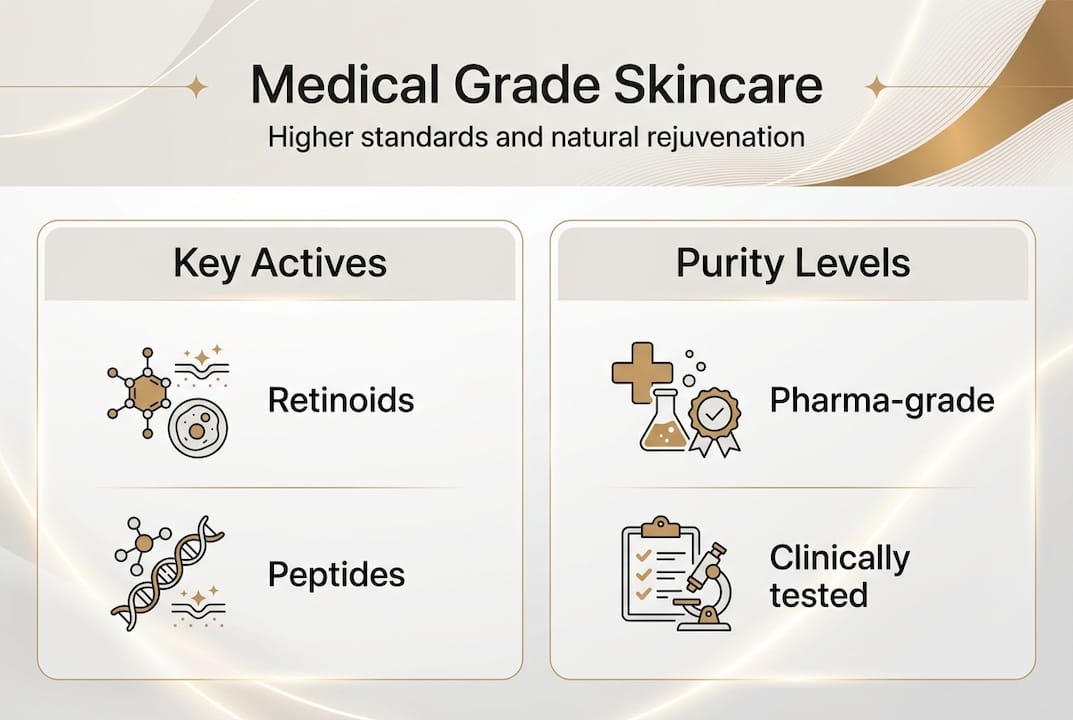
At its core, medical grade skincare features higher concentrations of active ingredients, superior purity levels often reaching 99% or USP-grade quality, and delivery systems engineered to carry actives deeper into the skin rather than sitting on the surface. These are not cosmetic differences. They affect whether an ingredient actually reaches the layer of skin where change happens.

Infographic showing ingredients and purity

Over-the-counter products are regulated as cosmetics by the FDA, meaning they must be safe but are not required to prove efficacy. Medical grade products, by contrast, are typically dispensed only through licensed professionals, which creates a layer of oversight that OTC products simply don’t have. A provider can assess your skin, match the right formulation to your specific concerns, and adjust the regimen as your skin responds.

Here’s a clear comparison:

Feature Medical grade OTC
Active concentration High, clinically dosed Lower, often minimal
Ingredient purity Up to 99%, USP-grade Variable
Delivery system Advanced, penetrates deeper Surface-level
Access Licensed professionals only Open retail
Clinical backing Required for efficacy claims Not required
Oversight Supervised and customized Self-directed

Key distinctions that matter for your skin:

  • Concentration: Medical grade retinoids, vitamin C, and peptides are dosed to produce measurable change, not just maintain appearance.
  • Purity: Fewer fillers and stabilizers mean less risk of irritation from inactive ingredients.
  • Delivery: Encapsulation and liposomal technology help actives reach the dermis, where collagen and elastin live.
  • Oversight: A licensed provider monitors your skin’s response and adjusts the plan, which is critical for safety and results.

As explained in medical-led skincare, the goal is never transformation for its own sake. It’s supporting your skin’s natural biology with precision and care.

“Medical grade skincare products have higher concentrations of actives, superior purity, advanced delivery systems, require professional oversight, and are supported by clinical research.”

Key ingredients for natural skin rejuvenation

Now that you understand how medical grade skincare differs from OTC products, let’s drill down into the specific ingredients powering its results.

Not all actives are created equal, and the ones with the strongest clinical track record are also the most frequently supervised for good reason. These are the ingredients that appear consistently in medically guided regimens for natural anti-aging:

  • Retinoids (tretinoin and retinol): The most studied anti-aging actives available. Dermatologists recommend retinoids at a 96.8% consensus rate for improving wrinkles, skin texture, and elasticity. Tretinoin, the prescription-strength form, works faster and more reliably than OTC retinol.
  • Vitamin C: A potent antioxidant that targets uneven pigmentation, sun damage, and collagen degradation. It works best in stable, well-formulated serums at concentrations above 10%.
  • Niacinamide: A form of vitamin B3 that strengthens the skin barrier, calms redness, and reduces hyperpigmentation without the irritation risk of stronger actives. It pairs well with most other ingredients.
  • Broad-spectrum sunscreen: Non-negotiable. Without daily sun protection, every active ingredient you apply is working against a tide of ongoing UV damage. Sunscreen also prevents post-inflammatory hyperpigmentation when you’re using stronger actives.

The clinical evidence for retinoids is particularly striking. Studies show 32% wrinkle reduction and a 72% increase in hydration after 12 weeks of consistent use. That kind of improvement is measurable and visible, yet still reads as natural rather than altered.

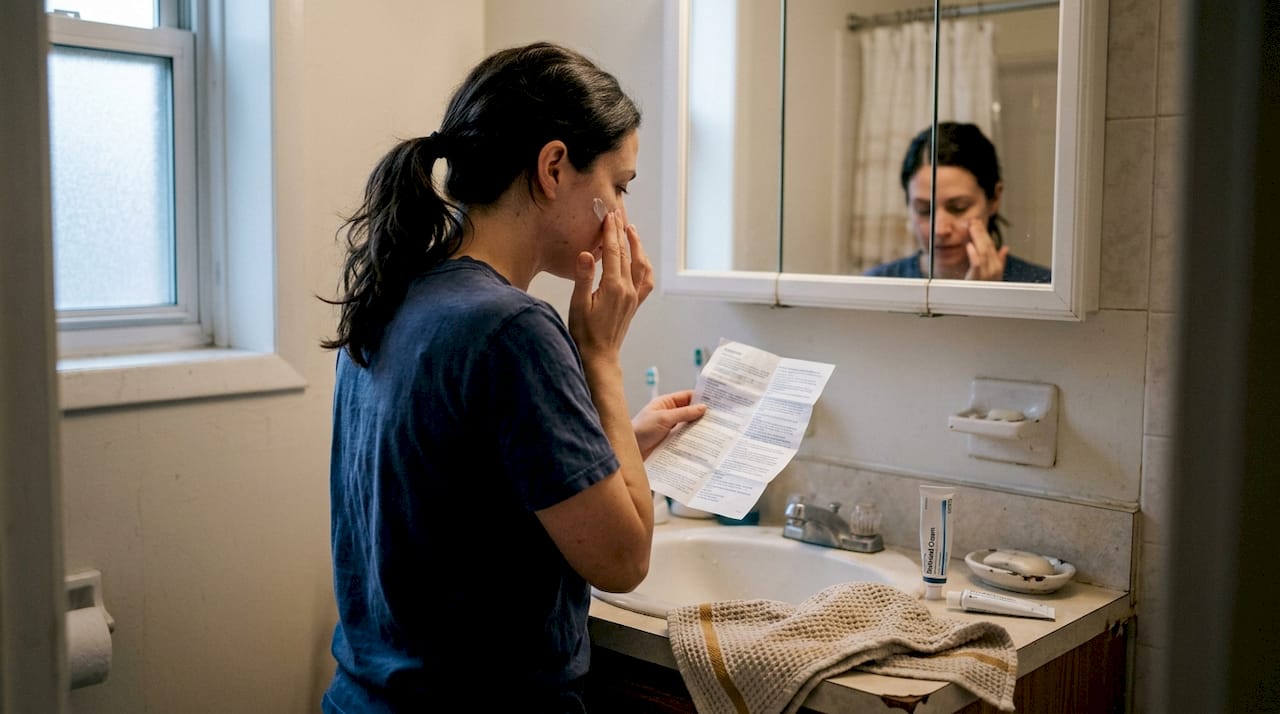
Woman applying retinoid cream in bathroom

You can explore how these ingredients work within a full routine in our guide to skincare steps for natural results, or browse advanced skincare ingredients available through our clinic. For those interested in supporting skin health from the inside out, a wellness bundle for skin health can complement a topical regimen.

Pro Tip: Start with the lowest effective strength of any new active and increase gradually under professional supervision. Jumping to high concentrations too quickly is the most common reason people abandon retinoids before seeing results.

What does the clinical evidence show?

Understanding the science behind these ingredients can help set realistic expectations for what medical grade skincare can deliver.

Clinical research consistently supports the efficacy of medical grade actives, particularly retinoids, when used correctly and consistently. The data is not anecdotal. Network meta-analyses of anti-aging skincare show 20 to 30% wrinkle reduction and significant improvements in elasticity and hydration within 4 to 12 weeks of use.

Here’s what the data looks like across key outcomes:

Outcome Improvement Timeframe Ingredient
Wrinkle depth Up to 32% reduction 12 weeks Tretinoin/retinoids
Skin hydration Up to 72% increase 12 weeks Retinoids + niacinamide
Elasticity Significant improvement 8-12 weeks Retinoids
Pigmentation Moderate to marked reduction 8-16 weeks Vitamin C, niacinamide

What to expect week by week:

  1. Weeks 1 to 2: Initial adjustment. Some dryness or mild flaking is normal as skin cell turnover accelerates. Hydration and barrier support are priorities here.
  2. Weeks 3 to 4: Skin begins to feel smoother. Texture improvements become noticeable. Redness from adjustment typically settles.
  3. Weeks 5 to 8: Tone becomes more even. Fine lines soften. Hydration levels stabilize.
  4. Weeks 9 to 12: The most significant visible changes emerge. Wrinkle depth decreases, elasticity improves, and the overall complexion looks more rested and supported.

“Up to 32% reduction in wrinkle depth and a 72% increase in hydration have been documented after 12 weeks of consistent medical grade retinoid use.”

The results patients see in real-world settings mirror this data closely. Improvements are gradual, believable, and proportional. You look like yourself, just more quietly renewed. Browse medical-grade products in Raleigh or read more about the benefits of medically led skincare to understand how these outcomes translate into a real treatment plan.

Risks, limitations, and who should avoid certain products

While results are impressive, not everyone is a candidate for high-powered actives, and prudence leads to better outcomes.

The same properties that make medical grade skincare effective also raise the stakes for misuse. Higher concentrations mean a higher margin for irritation, especially during the first weeks of use. Peeling, redness, and a burning sensation are the most common side effects, and they are largely avoidable with proper guidance.

Retinoids and strong actives carry a higher irritation risk and are not appropriate for everyone. Specific groups who should avoid unsupervised use include:

  • Women who are pregnant or breastfeeding
  • Patients who have recently undergone energy-based facial procedures such as laser resurfacing
  • Those with active rosacea or highly reactive, sensitive skin
  • Individuals with darker skin tones who are at increased risk for post-inflammatory hyperpigmentation (PIH)
  • Anyone currently using multiple actives without professional coordination

Post-inflammatory hyperpigmentation deserves particular attention. For medium to deeper skin tones, aggressive actives can trigger darkening in areas of irritation, which is the opposite of the intended result. This is not a reason to avoid medical grade skincare entirely. It is a reason to work with someone who understands your skin’s specific biology.

Pro Tip: Always apply broad-spectrum SPF 30 or higher every morning when using any medical grade active. Sunscreen is not optional in these regimens. It prevents sensitivity reactions and significantly reduces PIH risk.

For more on how professional expertise keeps results safe and natural, read our article on medical expertise for natural cosmetic results. You can also explore a medically guided skin health workflow that accounts for these variables from the start.

Our take: The real difference goes beyond ingredients

Here is something worth sitting with: the gap between medical grade and OTC skincare is not always about concentration alone. OTC and medical grade products can sometimes overlap in ingredient strength. What they rarely overlap in is the quality of guidance surrounding their use.

We see this regularly. A client arrives having used a high-strength OTC retinol for months with minimal results and significant irritation. The product wasn’t wrong. The regimen was. No one had assessed their barrier health, sequenced the actives correctly, or adjusted the approach as their skin responded.

Medical grade skincare earns its value not just from what’s in the bottle, but from the clinical thinking applied around it. OTC products are entirely appropriate for maintenance and general skin health. But when goals become more specific, whether that’s persistent pigmentation, textural changes, or visible volume loss, a supervised protocol makes a measurable difference.

The most effective regimens we build combine both. Prescription-strength actives where they’re warranted, thoughtful OTC support where appropriate, and a plan that respects your skin’s pace rather than pushing it to its limit. True skin wellness isn’t about using the strongest thing available. It’s about using the right thing, at the right time, for your skin specifically. Learn more about the benefits of medical aesthetics and why that distinction matters for long-term results.

Discover your pathway to natural, medically guided rejuvenation

If you’re ready to move beyond information and toward lasting skin health, here’s how we can help.

At The Aesthetics Lounge and Spa Raleigh, every skincare plan begins with a thorough assessment of your skin’s current condition, your goals, and your lifestyle. We don’t hand you a product and send you home. We build a regimen around you, with the medical oversight that makes the difference between products that sit on your skin and ones that actually change it.

https://raleigh.theaestheticsloungeandspa.com

We carry Neocutis medical-grade skincare, one of the most clinically respected lines available, alongside other carefully selected formulations for North Raleigh patients. Our approach to safer natural results with medical leadership means you’re never guessing. And when it’s time to consider combining skincare with in-office treatments, we help you plan treatments for fewer side effects so every step supports the next. Book a consultation and let’s build something measured, precise, and genuinely yours.

Frequently asked questions

Can I get medical grade skincare without a prescription?

Many medical grade products are dispensed only through licensed professionals, and some, particularly tretinoin, require a prescription depending on the active ingredient concentration and your state’s regulations.

Is medical grade skincare always stronger than drugstore products?

OTC and medical grade products can sometimes overlap in active concentration, but medical grade options offer higher ingredient purity and more advanced absorption technology, along with the professional oversight that maximizes results.

Who should avoid medical grade actives like retinoids?

Women who are pregnant or breastfeeding, patients who recently had energy-based facial procedures, and those with highly sensitive or rosacea-prone skin should avoid unsupervised use, as should individuals with darker skin tones at elevated PIH risk.

How long does it take to see results from medical grade skincare?

Most people notice texture improvements within 4 to 8 weeks, with significant wrinkle and hydration changes becoming visible after 12 weeks of consistent use in clinical trials.

Is professional guidance necessary for using medical grade skincare?

Yes. Professional oversight ensures the regimen is matched to your skin’s specific biology, minimizes risks like irritation and pigment changes, and allows for timely adjustments as your skin evolves.

Why medical expertise matters for safe, natural cosmetic results


TL;DR:

  • Medical expertise from board-certified dermatologists or plastic surgeons is crucial for safe, natural cosmetic results.
  • Procedures by untrained providers have higher complication rates, including burns, disfigurement, and injury.
  • Choosing a qualified, physician-led practice ensures personalized evaluation, proper technique, and long-term skin health.

Not all cosmetic procedures carry the same risk, and not all providers carry the same skill. Many adults in Raleigh assume that a clean lobby and a menu of familiar treatments signal safety. They don’t. Medical expertise, particularly from board-certified dermatologists or plastic surgeons, is what actually separates a refined, natural outcome from a preventable complication. The provider behind the needle or laser matters far more than the brand of product being used. This article walks you through what real clinical expertise looks like, what happens without it, and how to make a confident, informed choice right here in Raleigh.

Table of Contents

Key Takeaways

Point Details
Credentials matter most Board-certified medical experts dramatically reduce risks and improve results in cosmetic procedures.
Medspas vs. physicians Physician-led clinics in Raleigh offer safer, more natural outcomes compared to typical medspas.
Personalized assessment Medical professionals tailor procedures to your skin and history, ensuring lasting beauty and health.
Ask the right questions Request credentials and details from providers to ensure your safety and natural enhancement.

Why medical expertise is critical in non-surgical cosmetic treatments

The term “medical expertise” gets used loosely in the aesthetics industry. For our purposes, it means something specific: formal medical training, board certification, and hands-on clinical experience with the procedures being offered.

Board certification in plastic surgery or dermatology requires six or more years of post-medical school training. That’s six years of supervised clinical work, examinations, and peer review before a physician is credentialed to practice independently. That depth of training shapes how a provider reads a face, selects a technique, and responds when something unexpected happens.

Infographic comparing cosmetic provider credentials

The difference between a physician-led practice and a non-medical medspa is not always obvious from the outside. Both may offer Botox, fillers, and laser treatments. But the person performing your treatment, and the oversight structure behind them, can vary dramatically.

Here is what medical expertise actually influences:

  • Patient selection: A trained physician identifies contraindications before treatment begins, not after.
  • Technique precision: Anatomical knowledge guides injection depth, product placement, and energy settings on laser devices.
  • Complication management: If something goes sideways, a board-certified provider knows how to respond immediately and safely.
  • Long-term planning: Expertise supports a treatment strategy built around your face over time, not a single appointment.

For those exploring medical-led aesthetics safety, the distinction between credential levels is one of the most important factors to understand before booking anything.

Pro Tip: Before your consultation, ask the provider directly: Are you board-certified? In what specialty? How many years have you been performing this specific procedure? The answers tell you more than any website bio.

There is also a meaningful difference in how medically led spas structure their care. Physician oversight means protocols are reviewed, staff are trained to a clinical standard, and your safety is embedded in the process, not just promised in the marketing.

Risks of cosmetic procedures with non-medical providers

The risks are real, documented, and more common than most people realize. Procedures performed by untrained or out-of-scope providers lead to higher complication rates, including burns, discoloration, product misplacement, and permanent injury or disfigurement.

Clinic staff discussing patient paperwork

The data is striking. 55.7% of non-plastic surgeon cosmetic malpractice cases involve out-of-scope practice. Medspa complication rates range from 61 to 100 percent depending on the procedure. These are not rare edge cases. They are patterns.

Procedure Physician-led complication rate Medspa complication rate
Neurotoxin (Botox) Low Moderate to high
Dermal fillers Low High
Laser resurfacing Low to moderate Very high
Chemical peels Low Moderate to high

The gap exists because technique, anatomy knowledge, and clinical judgment cannot be replaced by a weekend certification course.

Watch for these signs that a provider may lack adequate experience:

  • No clear information about the treating provider’s medical credentials
  • Pressure to book quickly or take advantage of a limited-time discount
  • No medical intake form or health history review before treatment
  • Vague answers when you ask who performs the procedure and what their training is
  • No emergency protocol or physician oversight on site

For anyone researching medical spa skin health or evaluating alternatives to lower-tier providers, this context matters. The goal is not to create fear. It is to give you the information you need to protect your skin and your investment.

“The safest cosmetic outcomes are built on clinical training, anatomical understanding, and the ability to recognize and manage complications before they escalate.” — Aesthetic medicine research consensus

Expert assessment: The difference maker for natural results and skin health

A skilled provider does not just perform a treatment. They evaluate you first. That evaluation is where natural, lasting results are actually built.

Proper assessment of skin type, medical history, and psychological readiness prevents adverse reactions, particularly for patients with darker or more sensitive skin tones. Expert techniques applied after thorough evaluation support natural outcomes and long-term skin health.

Here is what a thorough medical consultation includes:

  1. Full health history review: Medications, allergies, autoimmune conditions, and prior treatments are all relevant.
  2. Skin type assessment: Fitzpatrick scale classification guides laser settings, peel depth, and product selection.
  3. Facial anatomy mapping: A trained eye identifies where volume loss, muscle activity, and structural asymmetry intersect.
  4. Goal alignment: A good provider listens carefully and helps you understand what is realistic versus what might compromise your natural expression.
  5. Contraindication screening: Some conditions or medications make certain procedures unsafe. This step protects you.
Factor Expert provider Non-expert provider
Skin type evaluation Always included Often skipped
Medical history review Thorough Minimal or absent
Anatomy-guided technique Standard practice Inconsistent
Complication response Immediate, trained Delayed or absent
Long-term planning Built into every visit Rarely considered

Pro Tip: When you meet with a provider, ask how they would approach your specific skin tone and history. A confident, detailed answer signals genuine expertise. A vague or rushed response is worth noting.

For those considering injectables in aesthetics or exploring preventative Botox, the consultation is not a formality. It is the foundation of everything that follows.

How to choose the right cosmetic provider in Raleigh, NC

Knowing the risks is one thing. Knowing how to act on that knowledge is another. Here is a clear, practical process for finding a qualified provider in Raleigh.

  1. Verify board certification: Use the American Board of Medical Specialties (ABMS) website to confirm credentials. Look for dermatology or plastic surgery certification specifically.
  2. Ask about physician oversight: Who is the medical director? Are they present during treatments or simply listed on paper?
  3. Review before-and-after photos critically: Look for natural results that still reflect the patient’s own features, not a uniform look.
  4. Request a consultation before committing: Any reputable provider welcomes questions. If you feel rushed or pressured, that is a signal.
  5. Ask about emergency protocols: What happens if a complication occurs? A prepared provider has a clear answer.

Empirical benchmarks consistently show physician-led clinics outperform medspas on safety and outcomes for injectables and laser treatments. This is not opinion. It is documented in clinical literature.

Key decision factors to carry with you:

  • Board certification in dermatology or plastic surgery
  • Transparent medical oversight structure
  • Individualized consultation, not a one-size treatment menu
  • Honest, measured communication about what results are realistic
  • A calm environment that prioritizes your comfort and long-term skin health

For a curated look at what strong providers offer, explore best med spa services for facial rejuvenation and best facial treatments in Raleigh to understand the range of options available under proper medical guidance.

The uncomfortable truth: Why medical expertise is the real beauty secret

The aesthetics industry spends enormous energy marketing the experience of a treatment. The ambient lighting, the branded packaging, the curated social media feed. What it markets far less is the clinical depth behind the person holding the syringe.

We have seen this pattern repeatedly. Patients arrive after a disappointing or harmful experience elsewhere, not because they chose poorly on purpose, but because they had no reliable framework for evaluating what “qualified” actually means. The medspa looked beautiful. The price seemed reasonable. No one asked about their medical history.

The real secret to lasting, natural results is not a trending product or a new device. It is the measured judgment of a provider who understands your face as a structure, not a canvas. That kind of expertise does not shout. It shows up in results that read as quietly renewed, not noticeably altered.

Don’t judge a provider by their aesthetic. Judge them by their credentials, their process, and their willingness to say no when a treatment is not right for you. Explore the benefits of medical spa care to understand what genuine clinical oversight looks like in practice.

Discover physician-led aesthetics for safer, natural results in Raleigh

At The Aesthetics Lounge and Spa Raleigh, every treatment begins with a conversation, not a sales pitch. Our approach is medically led, anatomically informed, and built around your long-term skin health. We plan before we treat, and we educate before we proceed.

https://raleigh.theaestheticsloungeandspa.com

Whether you are exploring aesthetic treatments in Raleigh for the first time or refining an existing routine, our team brings board-certified medical oversight to every appointment. From dermal fillers to neurotoxins, each service is guided by clinical precision and genuine care. Learn more about our step-by-step Botox process and what natural results actually look like when expertise leads the way. Book your consultation today.

Frequently asked questions

What qualifications should I look for in a cosmetic provider in Raleigh, NC?

Look for ABMS board-certified dermatologists or plastic surgeons with specialized training and proven clinical experience in the specific procedures you are considering.

Are medspa cosmetic procedures riskier than physician-led treatments?

Yes. Medspa complication rates range from 61 to 100 percent depending on the procedure, significantly higher than those seen in physician-led clinics with proper oversight and clinical training.

How does medical expertise ensure natural results from injectables or peels?

Expert providers tailor every method to your skin type, medical history, and personal goals, which reduces complications and supports outcomes that look natural and last longer.

What steps should I take if I want safe, natural enhancement in Raleigh?

Start with a consultation from a board-certified provider, review their credentials, discuss your full skin history, and confirm that physician-led oversight is embedded in every step of your care.

Step-by-step skin rejuvenation for lasting, natural results

You want to look like yourself, just more rested. Not frozen, not filled beyond recognition. Just quietly renewed. Yet with so many devices, serums, and social media protocols competing for your attention, knowing where to start feels overwhelming. This guide cuts through that noise with a medically grounded, step-by-step approach designed specifically for adults in their 30s through 50s who want real, lasting improvements without sacrificing their natural appearance. You will learn the science, the preparation, the sequencing, and the aftercare that separates sustainable rejuvenation from short-lived fixes.

Table of Contents

Key Takeaways

Point Details
Science-based process Skin rejuvenation relies on harnessing your body’s natural healing mechanisms for sustainable results.
Sequence matters Properly sequencing deeper and surface treatments is critical for maximizing benefits and minimizing risks.
Preparation is essential Custom assessment and pre-treatment protocols set the stage for natural outcomes and fewer side effects.
Consistency yields results Long-term skin improvements come from repeated, medically guided routines rather than quick fixes.
Expert guidance required Consulting with a medical professional ensures safety and individualized care tailored to your skin’s needs.

Understanding how skin rejuvenation works

Effective rejuvenation is not about erasing your face. It is about supporting the biology that already exists beneath your skin. After age 30, collagen declines roughly 1% yearly, and fibroblast activity slows, meaning your skin loses its ability to repair and rebuild at the pace it once did. Texture becomes uneven, elasticity softens, and fine lines settle in. Understanding this process is the first step toward reversing it thoughtfully.

Most medically guided treatments work by triggering a controlled healing response. Microneedling creates micro-injuries that stimulate fibroblasts to produce new collagen and elastin. Radiofrequency (RF) energy heats deeper tissue layers, causing collagen contraction and new fiber formation. Intense Pulsed Light (IPL) targets pigment and vascular irregularities at the surface. Retinoids accelerate cellular turnover by binding to skin receptors that regulate gene expression. Each method speaks to your skin’s natural repair system in a different language, and multimodal techniques data confirms that combining them produces outcomes far superior to any single approach.

Here is a quick overview of common methods:

Method Primary target Mechanism
RF energy Deep dermis Heat-induced collagen remodeling
Microneedling Mid-dermis Controlled micro-injury response
IPL Surface pigment/vessels Selective light absorption
Retinoids Epidermal turnover Receptor-mediated cell renewal
Chemical peels Outer skin layers Exfoliation and resurfacing

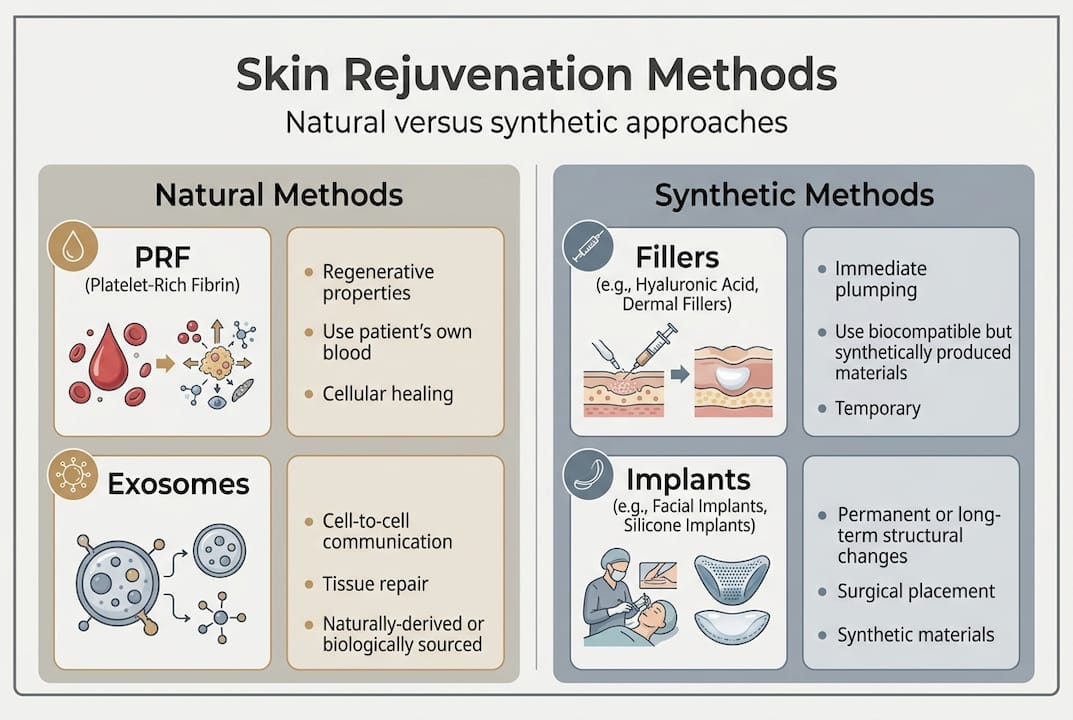
The critical distinction between natural rejuvenation and synthetic quick fixes comes down to biology. Filler placed without a structural plan, or aggressive lasers applied too frequently, bypasses your skin’s own healing intelligence. The results often look artificial precisely because they skip the regenerative process entirely.

Infographic contrasting natural and synthetic skin methods

Pro Tip: Always seek types of skin rejuvenation that are supervised by a medical professional. Protocols designed around your anatomy and biology consistently outperform over-the-counter alternatives in both safety and longevity.

What you need before starting: Assessment and preparation

Armed with knowledge of how rejuvenation works, it is crucial to assess your starting point and prepare your skin correctly. Skipping this step is one of the most common reasons people experience disappointing results or unnecessary irritation.

Begin with an honest skin assessment. Identify your skin type (dry, oily, combination, or sensitive), note any active concerns such as rosacea, melasma, or acne, and document your current product routine. This baseline matters because sequencing and preparation directly influence how well your skin responds to active treatments.

A medically guided pre-treatment checklist typically includes:

  • Discontinue retinoids 5 to 7 days before energy-based treatments
  • Apply broad-spectrum SPF 30 or higher daily for at least 2 weeks prior
  • Avoid prolonged sun exposure and tanning for 4 weeks before treatment
  • Introduce oral collagen peptides 4 to 6 weeks ahead to support tissue repair
  • Confirm no active skin infections, cold sores, or inflammatory flares
  • Discuss all medications and supplements with your provider, especially blood thinners

Research confirms that multimodal approaches yield 39% collagen increase when topical and oral collagen support is integrated alongside energy-based treatments. Preparation is not optional. It is part of the protocol.

Here is a practical tool and purpose reference:

Tool or product Purpose
Medical-grade SPF Protect treated skin and prevent pigment rebound
Oral collagen peptides Pre-load tissue repair capacity
Gentle cleanser Reduce barrier disruption before treatment
Hyaluronic acid serum Maintain hydration during active treatment phases
Retinoid (paused pre-treatment) Accelerate cellular renewal in maintenance phase

Expert note: Sequence deeper treatments like how microneedling works or RF before surface-level treatments. Pair with medical-grade skincare to reinforce results between sessions.

Pro Tip: If your skin is sensitive or reactive, introduce one new product or treatment at a time. A slow, low-dose approach reduces the risk of flares and gives your provider clearer data on what your skin actually needs.

Step-by-step skin rejuvenation protocol

Once you are set up and prepared, here are the specific steps to safely optimize your natural rejuvenation process. The order matters as much as the treatments themselves.

  1. Start deep: RF microneedling or RF energy. Begin with treatments that address the dermis and subdermal layers. RF microneedling stimulates collagen at depth while tightening lax tissue. Schedule this first and allow 4 to 6 weeks of healing before the next layer.
  2. Address the surface: IPL or chemical peels. Once deeper healing is underway, target surface irregularities. IPL photo rejuvenation clears pigment and redness, while peels refine texture. Layering these after RF maximizes results without overwhelming your skin.
  3. Support with topicals and oral supplements. Retinoids, antioxidant serums (vitamin C), and oral collagen peptides work continuously between sessions. They are not optional add-ons. They are the foundation that sustains your in-clinic gains.
  4. Schedule strategically. Most deep treatments are done every 4 to 8 weeks. Surface treatments can be spaced monthly. Seasonal planning (fall and winter for more intensive work, spring for maintenance) aligns with natural UV exposure patterns.

Research on treatment sequence advice confirms that sequencing deep before surface treatments enhances outcomes and reduces irritation risk. Multimodal approaches consistently outperform monotherapy.

Approach Collagen improvement Elastin improvement Longevity
Single treatment Moderate Minimal 3 to 6 months
Multimodal sequenced Up to 39% increase Up to 130% increase 12 to 24 months

Explore the full range of laser light therapy options to understand which combination suits your skin goals.

Pro Tip: Never treat all skin layers in a single session. Stacking deep RF, surface IPL, and a peel on the same day dramatically increases downtime and reduces the precision of each treatment’s effect.

Monitoring, aftercare, and sustainable results

After completing your rejuvenation protocol, here is how to maximize and protect your outcome. Results do not just happen in the treatment room. They are built and preserved in the weeks that follow.

Man tracking skin aftercare in kitchen

Tracking progress is essential. Take standardized photos in consistent lighting every 4 weeks. Note changes in skin hydration, pore size, texture smoothness, and how makeup sits on your skin. These are reliable, practical markers of collagen and elastin improvement. Research shows that exosomes combined with microneedling produced a 41% pore reduction sustained over 21 months, which illustrates how durable well-executed protocols can be.

Signs of healthy progress include:

  • Smoother texture and more even tone within 4 to 8 weeks
  • Reduced pore visibility and improved hydration retention
  • Gradual softening of fine lines over 3 to 6 months
  • Skin that feels firmer and more resilient to touch

Warning signs of over-treatment include persistent redness beyond 72 hours, increased sensitivity to products you previously tolerated, breakouts in areas not previously prone to them, or a tight, uncomfortable feeling that does not resolve.

Important: More treatment is not always better. Skin needs recovery time to rebuild. Pushing too hard, too fast, disrupts the very healing cycle you are trying to activate.

Aftercare steps for sustaining your gains:

  1. Apply SPF 30 or higher every morning without exception
  2. Use a gentle, fragrance-free cleanser for at least 2 weeks post-treatment
  3. Reintroduce retinoids slowly, starting with 2 nights per week after full healing
  4. Maintain oral collagen supplementation daily for ongoing tissue support
  5. Schedule a maintenance session every 3 to 6 months based on your provider’s guidance

For ongoing support between appointments, rejuvenation tips and non-surgical options are worth exploring to keep results feeling fresh without overloading your skin.

Pro Tip: A maintenance schedule of one deep treatment per year and one surface treatment per quarter is a reliable baseline for most adults in their 40s and 50s. Adjust based on how your skin responds, not on trend cycles.

Here is something most clinics will not say directly: aggressive treatment calendars are often driven by revenue, not results. We have seen clients arrive having received three different energy-based treatments in a single month, their skin sensitized, their barrier compromised, and their results paradoxically worse than before they started.

The research is clear. Regenerative options like PRF and exosomes yield more natural, durable outcomes compared to traditional fillers precisely because they work with your biology rather than around it. Gradual improvement is not a limitation. It is the mechanism.

What we have observed in our North Raleigh practice is consistent: clients who follow a medically guided workflow with appropriate spacing between sessions look better at the two-year mark than those who pursued faster timelines. Their results read as rested, not treated.

The hidden cost of ignoring individual anatomy is real. A protocol designed for someone else’s skin type, age, or lifestyle will not serve yours. Personalized assessment is not a luxury. It is the baseline requirement for results that last and look believable.

Pro Tip: Before committing to any treatment, ask your provider to walk you through the full sequence, the expected timeline, and what success looks like at 6 months. If that conversation feels rushed, find a different provider.

Take the next step: Medically led, natural results in Raleigh

If this guide has clarified what thoughtful skin rejuvenation actually looks like, the next step is a conversation with a provider who can apply it to your specific anatomy and goals.

https://raleigh.theaestheticsloungeandspa.com

At The Aesthetics Lounge and Spa Raleigh, our aesthetic treatments in Raleigh are built around the same principles covered here: sequenced, measured, and designed for longevity. We do not rush results. We plan them. Whether you are exploring your first treatment or refining an existing routine, our medically led team is here to guide you clearly and without pressure. Learn more about what medical-led skincare means in practice, and discover the benefits of medically led spas for adults who want results that still look like them.

Frequently asked questions

How soon will I see results from a medically guided skin rejuvenation protocol?

Most patients notice visible improvements within 4 to 12 weeks, with optimal collagen and elastin changes appearing at 3 to 6 months. Daily collagen peptides over 12 weeks show measurable elasticity and wrinkle improvements that compound when paired with in-clinic treatments.

Are there risks to combining multiple skin rejuvenation treatments?

Combination therapies are safe when a medical professional sequences them correctly. Sequencing deep before surface treatments is essential; poor timing or overuse increases irritation and can actually reduce your results.

What’s the difference between natural, regenerative treatments and fillers?

Regenerative options like PRF or exosomes work gradually by supporting your skin’s own healing process, producing durable, natural-looking improvements. Traditional fillers add volume immediately but offer shorter-term results and carry different risk profiles.

How do I know if a treatment is right for my skin type?

A medical professional will evaluate your skin type, concerns, and history before recommending a tailored protocol. Medically guided assessment is especially important for sensitive or reactive skin, where sequencing and pacing make the difference between progress and setback.

Preventative Botox: subtle, medically guided results

Most people assume Botox is a reaction to aging. You see a wrinkle, you treat it. But that framing misses something important. The most effective use of Botox is not corrective. It is preventative. Starting before deep lines form means you are working with your skin, not catching up to it. For adults in North Raleigh between their late 20s and mid-50s, this shift in thinking changes everything. Medically guided preventative Botox is quiet, measured, and designed to keep you looking like yourself. Just more rested. This article walks you through how it works, who benefits, and how to approach it with confidence.

Table of Contents

Key Takeaways

Point Details
Subtle prevention Preventative Botox targets early muscle activity to prevent deep wrinkles before they begin.
Medical oversight matters Dermatologist-led treatments in North Raleigh maximize safety and natural-looking outcomes.
Long-term benefits Consistent, subtle Botox use retrains facial muscles and reduces future filler requirements.
Safe track record Large studies show mild adverse event rates (<12%) for medically guided preventative Botox.

What is preventative Botox and how does it work?

Preventative Botox is not about freezing your face. It is about interrupting a pattern before that pattern becomes permanent. Every time you squint, furrow your brow, or smile, your facial muscles contract. Over years, those repeated contractions fold the skin in the same places, and eventually those folds stop bouncing back. That is how dynamic wrinkles become static ones.

Botox works by blocking acetylcholine release at neuromuscular junctions, temporarily relaxing the muscles responsible for those repetitive contractions. The skin above those muscles gets a break. It stops folding in the same way, and the early crease never deepens into a permanent line.

The key word here is temporary. Each treatment lasts roughly three to four months. But with consistent, medically guided use, the muscles gradually learn to contract less forcefully. The result builds quietly over time.

Here is what preventative Botox typically targets:

  • Forehead lines from raising the brows
  • Glabellar lines (the “11s”) from frowning
  • Crow’s feet from squinting and smiling
  • Bunny lines along the nose bridge
  • Lip lines from repeated pursing

Understanding the Botox process steps helps set realistic expectations before your first appointment. The goal is not to eliminate movement. It is to soften the intensity of it, so your skin has less reason to crease.

“The best aesthetic outcome is one that reads as rest, not treatment. Preventative Botox, done with restraint, supports that goal entirely.”

For anyone serious about long-term skin health, pairing Botox with solid prevention tips creates a more complete strategy.

Who benefits from preventative Botox and when to start

There is no single right age to begin preventative Botox. But there is a window that tends to deliver the most value. Most medical providers see the strongest case for starting somewhere between the late 20s and mid-30s, when early dynamic lines are just beginning to appear but have not yet settled into the skin.

The signs worth paying attention to include:

  • Fine lines that appear during expression but fade quickly at rest
  • Early creasing in the forehead or between the brows after a long day
  • Crow’s feet that linger slightly longer than they used to
  • Skin that feels less resilient than it did a few years ago

These are not emergencies. They are signals. And catching them early gives you options.

Cumulative Botox use may enhance skin quality over time and reduce the need for more intensive treatments later. That is a meaningful long-term benefit, particularly for adults who want to age gradually and naturally rather than making dramatic corrections down the road.

Woman practicing gentle skin care at home

Age alone should not drive the decision. Genetics, sun exposure, skin type, and muscle activity all factor in. Someone with very expressive facial muscles may benefit earlier than someone with naturally softer movement patterns. This is exactly why medical guidance benefits matter so much. A qualified provider reads your face, not a chart.

Understanding the broader injectables role in a long-term skin strategy also helps you see where Botox fits relative to other options.

Pro Tip: If you are unsure whether you are ready, ask your provider to map your muscle movement patterns during a consultation. That single step tells you more than any age guideline.

Long-term benefits and safety data for preventative Botox

One of the most reassuring things about preventative Botox is how well it holds up under scrutiny. This is not a trend. It is a treatment with a substantial body of evidence behind it.

A long-term study of 400 patients found cumulative benefits extending well beyond the standard three to four month treatment window, with findings suggesting genuine muscle retraining over time. Mild adverse events occurred in fewer than 12% of cases, and serious complications were rare when treatment was medically supervised.

Benefit What it means for you
Muscle retraining Muscles contract less forcefully over time
Reduced future filler needs Consistent use may preserve volume and structure
Skin quality improvement Reduced folding supports collagen preservation
Mild adverse event rate Less than 12% in long-term supervised studies
Natural-looking outcomes Conservative dosing keeps expressions believable

The safety profile is strong, but it is not unconditional. Medical supervision is what keeps outcomes predictable. Dosing matters. Placement matters. The anatomy of your face matters. A provider who understands all three delivers results that look like you on a good day, not like someone else entirely.

“Subtle, consistent treatment over time is far more powerful than a single aggressive session. The goal is to support your face, not to override it.”

For a deeper look at how medical-led safety shapes outcomes, the difference between supervised and unsupervised treatment becomes very clear. Pairing Botox with a thoughtful skincare workflow also extends and supports the results between sessions.

Comparison: Preventative Botox versus other aesthetic treatments

Preventative Botox is one tool in a larger set of options. Understanding how it compares helps you make a more informed choice, especially when working with a provider to build a long-term strategy.

Treatment Best timing Invasiveness Primary benefit Duration
Preventative Botox Late 20s onward Minimal Muscle relaxation, wrinkle prevention 3 to 4 months
Dermal fillers When volume loss begins Minimal to moderate Restoring volume and structure 6 to 18 months
Chemical peels Any age Low to moderate Texture, tone, surface renewal Varies
Medical-grade skincare Any age Non-invasive Hydration, collagen support, protection Ongoing

Consistent Botox use may actually reduce how much filler you need later by preserving the structural integrity of the skin over time. That is a meaningful distinction. Fillers restore what has already been lost. Botox, used preventatively, slows the rate of loss.

Here is how to think through your options:

  1. Start with movement. If your lines appear during expression and fade at rest, Botox is likely your best first step.
  2. Address volume separately. If you notice hollowing under the eyes or around the cheeks, that is a filler conversation.
  3. Support with skincare. Medical-grade skincare works alongside injectables, not instead of them.
  4. Sequence thoughtfully. A good provider helps you layer treatments in the right order for your goals.

Exploring other treatment examples gives you a clearer picture of what is available. And when you are ready to narrow it down, guidance on injectable selection makes the decision feel much less overwhelming.

Practical guidance: Getting started with medically guided Botox in North Raleigh

Knowing you want preventative Botox and knowing how to start are two different things. Here is a clear path forward.

  1. Verify credentials. Look for a provider with medical training, specifically in facial anatomy and injectables. Nurse practitioners, physician assistants, and physicians with aesthetic experience are appropriate choices.
  2. Ask about their philosophy. A good provider will talk about restraint before they talk about units. If the conversation starts with volume and ends with a price list, keep looking.
  3. Request a consultation, not just a treatment. Your first appointment should include a facial assessment, a conversation about your goals, and a realistic timeline. Not a needle.
  4. Set gradual goals. Preventative Botox is not a one-session fix. It is a relationship with your skin over time. Expect subtle improvement across multiple treatments.
  5. Discuss your full picture. Share your skincare routine, any other treatments you are doing, and your lifestyle. Sun exposure, stress, and hydration all affect how your skin responds.

Cumulative, medically guided use is what separates a good outcome from a great one. The provider who takes time to understand your face before treating it is the one worth returning to.

For North Raleigh adults, local medical-led results show what is possible when the approach is conservative, anatomically informed, and paced correctly.

Pro Tip: Bring a photo of yourself from five to seven years ago to your consultation. It gives your provider a reference point for your natural facial structure and helps guide a more personalized treatment plan.

Our take: Why medically guided, subtle Botox makes all the difference

Here is something we see consistently: the clients who are happiest with their results are not the ones who started with the most units. They are the ones who started with the right conversation.

North Raleigh adults tend to value understatement. They want to look like themselves, just more supported. That preference aligns perfectly with what expert medical guidance actually delivers when it is done with intention.

The uncomfortable truth about overdone Botox is that it almost always comes from a lack of planning, not a lack of product. Too much, too fast, without a long-term strategy. Preventative Botox done right is the opposite of that. It is measured. It is quiet. And over time, the cumulative benefits compound in a way that makes dramatic correction less necessary, not more.

We believe the best aesthetic care respects your face as it is, supports it as it changes, and never tries to override it. That is the standard we hold ourselves to, and it is the standard you should expect from any provider you trust with your skin.

Ready for subtle, medically guided results?

If this article has shifted how you think about Botox, that is exactly the point. Preventative treatment is not about chasing youth. It is about supporting your skin with intention, before the work becomes harder.

https://raleigh.theaestheticsloungeandspa.com

At The Aesthetics Lounge and Spa Raleigh on Six Forks Road, every Botox consultation starts with a plan, not a needle. We take time to understand your facial structure, your goals, and your timeline before recommending anything. Our approach to medical-led subtle results is built around restraint and precision. If you are ready to explore choosing treatments naturally, we are here to guide that conversation. Visit The Aesthetics Lounge and Spa Raleigh to book your consultation today.

Frequently asked questions

How soon can results be seen after preventative Botox?

You will typically notice subtle relaxation within a week, with full results visible at the two to three week mark. This timeline reflects how acetylcholine blocking gradually takes effect at the neuromuscular junction.

Is preventative Botox safe for adults aged 25 to 55?

Yes. A long-term study of 400 patients found mild adverse events in fewer than 12% of cases, with serious complications rare under medical supervision. Safety improves significantly when treatment is guided by a qualified provider.

Can preventative Botox help delay fillers or other treatments?

Evidence shows that consistent Botox use may reduce future filler needs by retraining muscles and preserving skin quality over time. Starting early gives your skin the best chance of maintaining its structure naturally.

Should Botox always be administered by a medical provider?

Yes. Medical oversight ensures correct dosing, proper placement, and a treatment plan aligned with your facial anatomy. Medically guided treatment is what separates subtle, natural outcomes from the overdone results most people want to avoid.

Facial Support Explained: Natural, Lasting Results

Most people believe wrinkles are the enemy of youthful appearance. But the truth is, facial support matters far more than surface lines when it comes to natural, long-term enhancement. Modern non-surgical options prioritize restoring and maintaining the underlying structures that keep your face lifted, shaped, and recognizably you. This guide clarifies what facial support truly means, how aging affects it, and which medically guided treatments can help you maintain a rested, supported look without ever appearing overdone.

Table of Contents

Key Takeaways

Point Details
Facial support basics True facial renewal means restoring structure, not just smoothing lines.
Non-surgical options Fillers, threads, and collagen boosters effectively support your face without surgery.
Medically guided care Choosing the right treatment and provider means safer, longer-lasting, and more natural results.
Personalized approach Your ideal plan combines anatomy, treatment type, and expert assessment.

What is facial support and why does it matter?

Facial support is the combination of bone, fat, ligaments, and skin that maintains your face’s shape and lift. It’s not about erasing lines. It’s about preserving the architecture that keeps your features in place. When support is strong, your face looks rested and naturally contoured. When it weakens, you see flattening, hollowing, and sagging, even if your skin is smooth.

Aging doesn’t just create wrinkles. It changes the support structures beneath your skin. Bone resorbs. Fat pads shift downward. Ligaments stretch. These changes cause the visible signs we associate with aging: hollow under-eyes, flattened cheeks, a less defined jawline. Addressing these foundational shifts, rather than chasing surface fixes, is what creates believable, lasting results.

Many people focus on smoothing lines with neurotoxins or resurfacing treatments. Those have their place. But without restoring the underlying support, you risk a flat, two-dimensional appearance. True rejuvenation respects facial structure basics and works with your anatomy, not against it.

Common misconceptions about facial support:

  • Thinking volume alone equals support (it doesn’t—placement and technique matter more)
  • Believing all fillers do the same thing (some add volume, others stimulate collagen)
  • Assuming tighter skin solves sagging (without support, tightness looks pulled, not lifted)
  • Expecting instant, permanent results (real support builds gradually and requires maintenance)

“Support isn’t about looking different. It’s about looking like yourself, just more rested and quietly renewed.”

When you understand facial support, you make better decisions. You choose treatments that enhance your natural contours instead of distorting them. You work with providers who plan for longevity, not quick fixes.

How does the face lose support with age?

Aging disrupts facial support in predictable ways. Bone loss in the midface causes cheeks to flatten. Fat pads descend, creating hollows under the eyes and jowls along the jawline. Ligaments that once held everything in place stretch and weaken. Collagen production slows, reducing skin’s ability to bounce back.

Man examining facial changes in living room

These changes accelerate after age 30. Most people lose visible midface volume from their 30s onward, with the rate increasing in the 40s and 50s. The result is a face that looks tired, even when you’re well-rested.

Key signs of lost facial support:

  1. Flattened cheeks that once had natural fullness
  2. Hollow or shadowed under-eye areas
  3. Nasolabial folds that deepen as cheeks descend
  4. Jowls forming along the jawline
  5. Loss of definition in the chin and neck

Research shows that midface volume restoration can add significant projection and fullness when done correctly. One study found that biostimulatory fillers provided an additional 4.88 mL of volume and 1.62 mm of projection at nine months, demonstrating that strategic support can create measurable, lasting change.

Collagen loss compounds these structural shifts. After 30, your body produces less collagen each year. This affects skin elasticity, making it harder for your face to maintain its shape. Collagen’s role in aging extends beyond skin texture to the deeper support structures that keep your face lifted.

Understanding these changes helps you recognize that effective treatment must address multiple layers. Surface treatments alone won’t restore the lift and contour that come from proper support.

Infographic showing support layers and treatments

Non-surgical treatments: Restoring and enhancing facial support

Modern non-surgical treatments offer effective ways to restore facial support without surgery. Each approach works differently, targeting specific aspects of the support system. Choosing the right combination depends on your anatomy, goals, and how your face has changed over time.

Pro Tip: Choosing a strategy that supports, not distorts, your natural uniqueness yields better results over time. Work with providers who understand facial anatomy and prioritize restraint.

Treatment Mechanism Duration Best For
Hyaluronic Acid Fillers Immediate volume restoration 12-18 months Cheeks, under-eyes, jawline definition
Biostimulators (PLLA, CaHA) Gradual collagen production 18-24 months Overall facial volume, skin quality
PDO Threads Mechanical lift and collagen stimulation 12-18 months Midface lift, jawline tightening
Ultherapy Ultrasound-induced collagen tightening 12-18 months Skin laxity, brow lift, neck tightening

Hyaluronic acid fillers provide immediate support by replacing lost volume. They work best when placed strategically to restore natural contours, not simply to fill lines. Proper technique respects your facial proportions and creates lift that looks effortless.

Biostimulators like PLLA and CaHA take a different approach. Instead of adding volume directly, they stimulate your body to produce new collagen over several months. The results are gradual, natural, and long-lasting. These treatments excel at restoring overall facial fullness and improving skin quality.

PDO threads offer mechanical lift while also triggering collagen production. They’re particularly effective for midface sagging and jawline definition. The threads dissolve over time, but the collagen they stimulate remains, providing ongoing support.

Ultherapy uses focused ultrasound to heat deep tissue layers, stimulating collagen production without breaking the skin. It’s ideal for addressing skin laxity and creating subtle lift in the brow, neck, and jawline. In North Raleigh, Ultherapy PRIME offers advanced collagen stimulation for long-term tightening.

Each treatment has its place. The key is understanding which approach, or combination of approaches, addresses your specific support needs. Examples of non-surgical facial support show how these treatments create natural, believable results when applied with precision and restraint.

Comparing top non-surgical options for facial support

Choosing the right treatment requires understanding how different options compare in practical terms. Each modality offers distinct advantages depending on your goals, timeline, and tolerance for downtime.

Feature HA Fillers Biostimulators PDO Threads Ultherapy
Results Timeline Immediate 2-3 months 1-2 weeks 3-6 months
Downtime Minimal (1-2 days) Minimal (1-3 days) Moderate (3-7 days) Minimal (1-2 days)
Primary Benefit Volume restoration Collagen building Mechanical lift Skin tightening
Ideal Candidate Defined volume loss Overall facial thinning Mild to moderate sagging Skin laxity without volume loss
Maintenance Annual touch-ups Every 18-24 months Annual treatments Every 12-18 months

Fillers restore volume and support for 12-18 months, while threads provide mechanical lift for 1-2 years. Ultherapy stimulates collagen for long-term tightening, though none of these options substitute for surgery in cases of advanced laxity.

When evaluating treatments, consider these questions:

  • What specific changes bother you most—volume loss, sagging, or skin laxity?
  • Do you prefer immediate results or gradual improvement?
  • How much downtime can you accommodate?
  • Are you addressing early signs of aging or more advanced changes?
  • What’s your budget for initial treatment and ongoing maintenance?

Understanding differences between filler types helps you make informed choices. Not all fillers are created equal. Some are designed for deep structural support, others for fine lines. Placement matters as much as product selection.

The best outcomes come from combining treatments strategically. For example, biostimulators might rebuild overall volume while targeted filler restores specific contours. Threads could provide lift while Ultherapy tightens skin. Facial enhancement approaches that layer treatments thoughtfully create the most natural, comprehensive results.

Safety, longevity, and the importance of medically guided care

Who performs your treatment matters as much as which treatment you choose. Medically guided care ensures safe technique, personalized planning, and ongoing support that protects your investment and your appearance.

Benefits of medical guidance:

  • Comprehensive facial analysis that identifies true support needs
  • Treatment plans that prioritize structure over surface fixes
  • Safe injection technique that respects vascular anatomy
  • Realistic expectations about results and maintenance
  • Access to medical-grade products and advanced technologies
  • Ongoing monitoring to adjust treatments as your face changes

Research confirms that focusing on structure rather than just smoothing lines leads to better long-term outcomes. Studies show patient satisfaction rates of 94% at 18 months when treatments prioritize structural support for sustainable aging prevention.

Medically led practices approach facial support differently than trend-driven providers. They assess your entire face, not just the area you think needs work. They consider how treatments will age with you. They plan for longevity, not just immediate gratification.

Pro Tip: Don’t chase trends—work with providers skilled in anatomy and long-term aging prevention. The best results come from patience, precision, and a commitment to looking like yourself.

The benefits of medically led spas extend beyond safety. Medical oversight means access to advanced treatments, higher-quality products, and providers who understand the science behind aesthetic enhancement. It means working with someone who can adjust your plan as your needs evolve.

Longevity in aesthetic care isn’t about permanent results. It’s about sustainable enhancement that respects your natural aging process. Facial rejuvenation tips emphasize the importance of consistent, conservative care over dramatic interventions.

Discover your natural look with advanced facial support

You now understand that facial support is the foundation of natural, lasting enhancement. The right treatments, applied with precision and restraint, can restore the lift and contour that time has changed, all while keeping you recognizably yourself.

At The Aesthetics Lounge & Spa in North Raleigh, we specialize in medically guided aesthetic treatments that prioritize facial support over quick fixes. Our approach is calm, anatomical, and intentionally conservative. We plan first, educate always, and treat with precision so you still look like yourself, just more supported.

https://raleigh.theaestheticsloungeandspa.com

Every consultation begins with a comprehensive facial analysis. We assess your bone structure, soft tissue distribution, and skin quality to create a treatment strategy that respects your unique anatomy. Whether you’re exploring choosing natural treatments for the first time or refining an existing plan, we guide you toward decisions that feel clear, not pressured.

Our top non-surgical options include advanced dermal fillers, biostimulators, PDO threads, and Ultherapy PRIME, all delivered with medical expertise and thoughtful pacing. We don’t chase trends. We build treatment plans designed for longevity, supporting your face as it ages naturally.

Frequently asked questions

What is the difference between facial support and simply adding volume?

Facial support means restoring the underlying structure for lift and shape, while adding volume can fill lines but may not improve sagging or natural contours. Support addresses multiple tissue layers, creating three-dimensional enhancement rather than surface-level filling.

How long do facial support treatments like fillers and threads really last?

Most fillers last 12-18 months, while threads and collagen-stimulating options give support for 1-2 years with gradual, natural fading. Longevity depends on product choice, placement technique, and your individual metabolism.

Which treatments are safest for natural facial support in my 30s or 40s?

Medically supervised dermal fillers, PDO threads, and ultrasound-based collagen boosters offer safe, natural support when tailored to your individual anatomy. In North Raleigh, Ultherapy PRIME and PDO threads provide effective options for early to moderate aging concerns.

Is non-surgical facial support better than surgery for lifting results?

Non-surgical treatments can restore and maintain youthful contours in mild to moderate laxity, but surgery may be better for advanced sagging. The right choice depends on the degree of change, your goals, and your tolerance for downtime and recovery.

Types of skin rejuvenation for natural, subtle results

Choosing the right skin rejuvenation treatment feels overwhelming when the options seem to multiply every year. Lasers, injectables, microneedling, radiofrequency — each promises a fresher, more rested version of you. But not every method suits every face, concern, or lifestyle. The good news is that with the right framework and a medically guided approach, the decision becomes much clearer. This article walks you through the most effective types of skin rejuvenation available today, what makes each one distinct, and how to match the right option to your specific goals.

Table of Contents

Key Takeaways

Point Details
Choose by your goals Prioritize your unique concerns and desired downtime when selecting a skin rejuvenation treatment.
Medical guidance matters A licensed provider ensures both safety and natural-looking, subtle results.
Combination approaches work Pairing treatments often yields longer-lasting and more natural enhancements.
Expect different timelines Injectables give immediate change, while lasers and microneedling build results over weeks to months.
Maintenance is key Almost all treatments require follow-up sessions for optimal and lasting results.

How to choose the right skin rejuvenation option

Before you commit to any treatment, a few foundational questions will save you time, money, and disappointment. The first is always safety. Your provider’s credentials matter as much as the technology they use. A medically supervised setting ensures that your skin type, health history, and realistic expectations are all factored in before anything begins.

Downtime is another practical consideration. Some treatments ask for a few days of redness and peeling. Others let you return to your routine the same afternoon. Knowing what your schedule allows helps narrow the field quickly.

Here are the core criteria to evaluate any rejuvenation option:

  • Provider credentials: Is the treatment administered or supervised by a licensed medical professional?
  • Recovery time: How many days will your skin need to settle?
  • Target concern: Are you addressing wrinkles, volume loss, pigment, texture, or firmness?
  • Longevity: How long do results last, and what maintenance is required?
  • Skin type compatibility: Is the treatment safe and effective for your specific skin tone and condition?

Understanding industry terms for facial rejuvenation before your consultation helps you ask better questions and feel more confident in the process. It also helps you recognize when a provider is being thorough versus rushing to a recommendation.

Combination approaches are worth considering too. Lasers, RF, injectables, and microneedling all promote new collagen and elastin through unique processes, which means layering them strategically can address multiple concerns at once.

Pro Tip: Always schedule a consultation with a licensed medical provider before starting any treatment. A good provider will assess your skin, explain realistic outcomes, and build a plan that fits your pace, not a sales quota.

Injectables: Fillers and neuromodulators

Injectables remain one of the most requested options in aesthetic medicine, and for good reason. They work quickly, require minimal recovery, and when done with restraint, produce results that simply look like a well-rested version of you.

There are two main categories. Dermal fillers restore volume that naturally diminishes with age. They smooth lines, lift hollows, and refine contours without altering your expression. Neuromodulators like Botox work differently — they gently relax the muscle activity responsible for dynamic wrinkles, the kind that form from repeated facial movement.

Key features of injectable treatments:

  • Results appear immediately or within a few days
  • Effects last 3 to 18 months depending on the product and area treated
  • Minimal downtime, typically just minor swelling or bruising
  • Fully reversible options exist for certain fillers
  • Maintenance appointments keep results consistent over time

Understanding the role of injectables in a broader treatment plan helps you see them as one tool among many rather than a standalone fix. If you are new to the process, learning about choosing injectables naturally can help you set realistic expectations from the start.

Pro Tip: Start conservatively. A small amount placed precisely does far more than a large amount placed quickly. Build gradually, and let each session inform the next.

Microneedling: Collagen induction therapy

Microneedling takes a different approach entirely. Instead of adding volume or relaxing muscles, it asks your skin to heal itself. Tiny, controlled needles create micro-injuries in the skin’s surface, triggering the body’s natural repair response. That response produces new collagen and elastin, the structural proteins responsible for firmness and smooth texture.

The results are gradual and cumulative. Most people notice meaningful improvement after a series of three to four sessions spaced a few weeks apart. The skin looks more even, feels firmer, and has a quiet luminosity that reads as healthy rather than treated.

“83% of patients reported satisfaction with microneedling treatments based on clinical studies.”

Microneedling is particularly well suited for:

  • Fine lines and early wrinkles
  • Acne scars and uneven texture
  • Dullness and mild laxity
  • Skin that needs renewal without added volume

Recovery is typically mild. Most people experience redness for 24 to 48 hours, similar to a light sunburn. Understanding how microneedling works at a cellular level helps you appreciate why patience with the process pays off. It is also one of the top non-surgical treatments for people who want real improvement without significant downtime.

Laser and light-based therapies

Laser and light-based treatments bring technology-driven precision to skin rejuvenation. They work by delivering controlled energy into the skin, triggering collagen remodeling, reducing pigment, and improving overall tone and texture. The category includes several distinct modalities, each with its own strengths.

Laser skin treatment in dermatology clinic

Fractional and ablative lasers resurface the skin at a deeper level, making them effective for more significant texture concerns, deeper lines, and sun damage. Lasers provide superior elasticity gains through collagen remodeling, though they typically require more recovery time.

Radiofrequency (RF) works beneath the skin’s surface to heat tissue and stimulate tightening. It is particularly valued for its safety across a range of skin tones. RF offers up to 30% tightening with a high safety profile, making it a strong option for those who want firming results with minimal risk.

Intense Pulsed Light (IPL) targets pigment and redness specifically. It is gentler than ablative lasers and works well for sun spots, rosacea, and uneven skin tone.

Treatment Mechanism Downtime Best for Duration of results
Fractional laser Resurfaces skin layers 5 to 7 days Deep lines, texture, scars 1 to 3 years
Radiofrequency Heats tissue to tighten Minimal Laxity, firmness, all skin tones 1 to 2 years
IPL Targets pigment and vessels 2 to 5 days Sun spots, redness, tone 6 to 12 months

Exploring laser and light therapies in more detail can help you understand which energy-based option aligns with your skin’s specific needs. Pairing these with other types of facial treatments often produces the most balanced, lasting outcomes.

Pro Tip: Ask your provider about combination protocols. Pairing RF with a laser, for example, can address both surface texture and deeper laxity in a single treatment plan, reducing overall sessions and cost.

Which skin rejuvenation treatment is right for you?

Now that you have a clear picture of each option, the next step is matching them to your specific goals. Combining methods can improve outcomes, and each method suits different needs and expectations. The table below offers a quick reference.

Treatment Ideal candidate Recovery Standout benefit
Injectables Volume loss, dynamic wrinkles Minimal Immediate, reversible results
Microneedling Texture, scars, early laxity 1 to 2 days Natural collagen stimulation
Laser Sun damage, deep lines, elasticity Moderate to high Significant remodeling
RF Skin laxity, all skin tones Minimal Safe tightening across skin types
IPL Pigment, redness, uneven tone Low to moderate Targeted color correction

Here is a simple process to guide your decision:

  1. Identify your primary concern. Is it volume, texture, pigment, firmness, or a combination?
  2. Assess your downtime tolerance. Be honest about what your schedule and lifestyle allow.
  3. Consider your skin tone. Some treatments carry higher risk for certain tones and require a more experienced hand.
  4. Set a realistic timeline. Some results build over months. Others appear within days.
  5. Consult a medical provider. A personalized assessment is the only way to confirm what is safe and appropriate for your skin.

Reviewing the rejuvenation process for natural results before your appointment gives you a strong foundation for that conversation. The goal is always a plan that fits your face, your pace, and your life.

Medically guided skin rejuvenation for natural results in Raleigh

At The Aesthetics Lounge and Spa Raleigh, every treatment decision starts with a conversation. We believe that medical aesthetics for natural results begins with understanding your skin, your goals, and your comfort level before recommending anything.

https://raleigh.theaestheticsloungeandspa.com

Our medically led team on Six Forks Road in North Raleigh takes a measured, anatomy-first approach. Whether you are exploring non-surgical aesthetic treatments for the first time or refining an existing plan, we build strategies that respect your natural structure. You can also browse our facial rejuvenation tips to prepare for your consultation. When you are ready, we are here — calm, unhurried, and focused entirely on results that look like you.

Frequently asked questions

What skin rejuvenation treatment has the least downtime?

Injectables and microneedling typically require the least recovery, with most people resuming normal activity within one to two days. Lasers can require more downtime depending on the depth and type of treatment used.

How long do results from skin rejuvenation treatments last?

Injectables last 3 to 18 months, while laser and RF treatments can deliver prolonged improvements due to ongoing collagen remodeling that continues for months after the session.

Can different skin rejuvenation treatments be combined?

Yes. Combination approaches often yield the most natural and complete results, allowing providers to address volume, texture, and tone in a single coordinated plan.

Which treatment is best for improving skin elasticity?

Lasers provide superior gains in skin elasticity through deep collagen remodeling, making them a strong choice when firmness and structural renewal are the primary goals.

Is skin rejuvenation safe for darker skin types?

Radiofrequency is considered one of the safest options across all skin tones. RF treatments have a high safety profile for all skin types, while certain lasers require more careful selection and provider expertise to minimize pigment risk.

Facial enhancement examples for subtle, natural results

Choosing a facial enhancement in Raleigh should feel empowering, not overwhelming. Yet for many adults between 25 and 55, the decision comes with real hesitation: Will it look overdone? How long will it last? What if the results don’t feel like me? These are fair questions, and they deserve honest answers. This guide walks you through the most effective non-surgical options available today, covering how each works, what results look like over time, and how to build a plan that supports your face without changing it.

Table of Contents

Key Takeaways

Point Details
Subtlety is key Natural, expert-led enhancements use conservative techniques so you look refreshed, not overdone.
Longevity differs by method Energy-based treatments often last 1-3 years, while fillers typically last 6-24 months.
Layer for best results Combining subtle enhancements and skin tightening can deliver the most balanced, lasting improvements.
Expert guidance matters Choosing an experienced Raleigh provider ensures safe, personalized, and natural-looking outcomes.

How to evaluate facial enhancement options

Before diving into specific examples, it helps to understand what separates a thoughtful enhancement from one that misses the mark. Not all treatments are created equal, and the right choice depends on more than just what’s trending.

Here are the five criteria worth weighing before any appointment:

  • Subtlety: Does the result look like you, just more rested? The best outcomes are ones your friends notice but can’t quite name.
  • Longevity: How long does the result last, and does it fade gracefully? Some treatments build on themselves over time.
  • Safety: Is the provider medically trained? Are the products FDA-cleared? These details matter more than price.
  • Downtime: Can you return to your routine the same day, or do you need recovery time? This affects planning significantly.
  • Personalization: Is the treatment adapted to your anatomy, or is it a one-size approach? Anatomy-based placement is what separates refined results from generic ones.

Working with established Raleigh providers ensures these criteria are built into every appointment. As noted in anatomy-based placement, mechanics that prioritize collagen stimulation and precise placement avoiding overfill are what produce subtle, lasting results. Understanding the full range of types of facial treatments available in Raleigh helps you enter that conversation prepared.

Pro Tip: Always start conservative. A small amount of treatment done well is far more effective than a large amount done quickly. You can always add; you cannot easily subtract.

Dermal fillers: Restore volume and smooth lines

With criteria established, let’s look at real-world examples, starting with the most popular: fillers.

Dermal fillers are gel-like substances injected beneath the skin to restore lost volume, smooth lines, and gently reshape facial contours. Most are made from hyaluronic acid, a substance your body already produces naturally. Brands like Restylane and Juvederm are among the most widely used, and natural-looking volume is achievable when they are placed with precision and restraint.

Common treatment zones include:

  • Lips: Adding subtle definition and hydration without an overfilled appearance
  • Cheeks: Restoring the gentle lift that volume loss takes away with age
  • Jawline: Creating quiet structure and a cleaner profile
  • Nasolabial folds: Softening the lines that run from nose to mouth

The advantages of fillers are well established. Results are visible almost immediately, downtime is minimal (usually 24 to 48 hours of mild swelling), and when administered by trained experts, hyaluronic acid fillers restore facial volume and enhance contours with natural-looking results. You can also explore the full range of injectables options to understand how fillers fit alongside other treatments.

Pro Tip: Rather than treating one area heavily, ask your provider about distributing small amounts across multiple zones. This layered approach creates a balanced, believable result that reads as naturally refreshed.

Ultherapy and HIFU: Non-surgical skin tightening for longevity

For readers prioritizing longevity and zero downtime, energy-based lifting is a compelling option.

Ultherapy PRIME uses focused ultrasound energy to stimulate deep collagen production for non-surgical skin lifting and tightening, making it ideal for early to moderate laxity in adults seeking natural results. HIFU (High-Intensity Focused Ultrasound) works on a similar principle, targeting the SMAS layer (the structural layer beneath the skin) to trigger gradual collagen remodeling. HIFU targets the SMAS layer for collagen stimulation, providing gradual skin tightening without downtime and is suitable for mild to moderate laxity under age 65.

Feature Ultherapy PRIME HIFU
Mechanism Focused ultrasound, FDA-cleared High-intensity focused ultrasound
Best candidates Mild to moderate laxity, 25 to 55 Mild to moderate laxity, under 65
Results timeline 3 to 6 months, gradual 2 to 4 months, gradual
Longevity 1 to 2 years 1 to 2 years
Downtime None None

Both options work best for those with early signs of sagging rather than advanced skin descent. The results are not immediate, which is actually part of what makes them so natural. Your skin rebuilds from within, and the improvement unfolds over months.

“The most believable results come from treatments that work with your biology, not against it. Collagen stimulation is not a shortcut. It is a strategy.”

Pairing either treatment with a consistent home skincare routine, particularly one that includes SPF and a medical-grade retinoid, extends results significantly. You can review all available skin tightening options to find the right fit for your goals.

RF microneedling and energy devices: Texture and tightening

Another fast-growing approach for surface and deep-layer rejuvenation is energy-based microneedling.

RF microneedling treatment administered in clinic

RF microneedling combines traditional microneedling (tiny controlled punctures that trigger healing) with radiofrequency energy delivered directly into the skin. The result is a treatment that addresses both surface texture and deeper firmness at the same time. Devices like Sylfirm X and Exceed Microneedling represent two well-regarded options in this category.

Improvements clients typically see include:

  • Smoother skin texture and reduced pore appearance
  • Softer fine lines and early wrinkles
  • Firmer, more resilient skin overall
  • Improved tone and a more even complexion

The clinical data supports the enthusiasm. RF microneedling shows high patient satisfaction at 83%, with adverse events limited to mild erythema (temporary redness) in approximately 6.8% of cases. That is a strong safety profile for a treatment that delivers meaningful results. If you want to understand the mechanics behind the method, this overview of how microneedling works is a useful starting point.

RF microneedling is particularly well suited for those who want surface refinement and deeper tightening addressed in a single treatment series.

Comparing subtle facial enhancement examples

With each option explained, here is how they compare side by side, and how to think about selecting the right combination for your goals.

Treatment Primary benefit Longevity Downtime Best for
Dermal fillers Volume, contour, line softening 6 to 24 months 24 to 48 hours Immediate visible refresh
Ultherapy PRIME Lifting, tightening 1 to 2 years None Gradual, structural lift
HIFU Tightening, collagen rebuild 1 to 2 years None Mild laxity, zero downtime
RF microneedling Texture, firmness, tone 12 to 18 months 1 to 3 days Surface and deep refinement

As energy devices like Ultherapy offer longer duration results of 1 to 3 years compared to fillers at 6 to 24 months, the right choice often depends on how much maintenance you want to commit to. Surgery remains superior for advanced descent, but for the 25 to 55 age group, non-surgical options cover a wide range of concerns effectively.

For a broader look at how these fit into a complete care plan, the aesthetic treatments comparison and natural aesthetics overview are worth reading alongside this guide.

Personalizing your enhancement plan

Deciding on what to get can still feel daunting. Here is a simple three-step framework to move forward with clarity.

  1. Identify your main concern. Is it volume loss, skin laxity, texture, or a combination? Being specific helps your provider match the right tool to the right problem.
  2. Match your longevity needs. If you prefer low-maintenance results, energy-based treatments may suit you better. If you want flexibility and immediate results, fillers offer that control.
  3. Consult a Raleigh expert for a conservative, layered approach. Established Raleigh providers prioritize safety and subtle outcomes through proper consultation. A good provider will never push you toward more than you need.

A personalized plan is not just about which treatments you choose. It is about pacing, sequencing, and building results that hold up over time. That kind of strategy connects directly to lasting confidence in everyday life, not just on the day of treatment. If any terminology feels unfamiliar, this industry terms guide offers clear, plain-language explanations.

Experience natural facial enhancement in Raleigh

If this guide has helped clarify your options, the next step is a conversation, not a commitment. At The Aesthetics Lounge and Spa Raleigh, every plan begins with listening. We believe that medical-led aesthetics produce safer, more natural outcomes because every decision is grounded in anatomy, not assumption.

https://raleigh.theaestheticsloungeandspa.com

Whether you are curious about fillers, energy-based lifting, or a layered combination, we build your plan around your face, your goals, and your timeline. Explore the top non-surgical options we offer, or learn more about how injectables for natural results fit into a thoughtful, conservative strategy. When you are ready, we are here, calm, unhurried, and focused entirely on you.

Frequently asked questions

What is the most natural-looking facial enhancement?

Energy-based treatments like Ultherapy PRIME stimulate your own collagen for subtle, gradual improvements that develop from within, making results look entirely your own.

How long do dermal filler results last?

Dermal fillers typically last 6 to 24 months depending on the product used and the area treated, with lips generally metabolizing faster than cheeks or jawline.

Is RF microneedling safe for all skin types?

Yes, RF microneedling is safe for most skin types, with clinical data showing an 83% satisfaction rate and adverse events limited to mild, temporary redness in a small percentage of cases.

Can treatments be combined for better results?

Layering treatments, such as pairing fillers with collagen-stimulating energy devices, often produces the most natural and long-lasting outcomes by addressing both volume and structural support at the same time.