You want to look refreshed, not redone. That’s the most common thing we hear from clients considering injectables for the first time. The fear of looking overdone, puffy, or frozen is real, and it’s exactly why preparation matters as much as the treatment itself. What most people don’t realize is that how you prepare in the days before your appointment directly shapes your results, your recovery, and how long those results actually last. This guide walks you through everything you need to know so you can walk into your appointment with clarity and confidence.
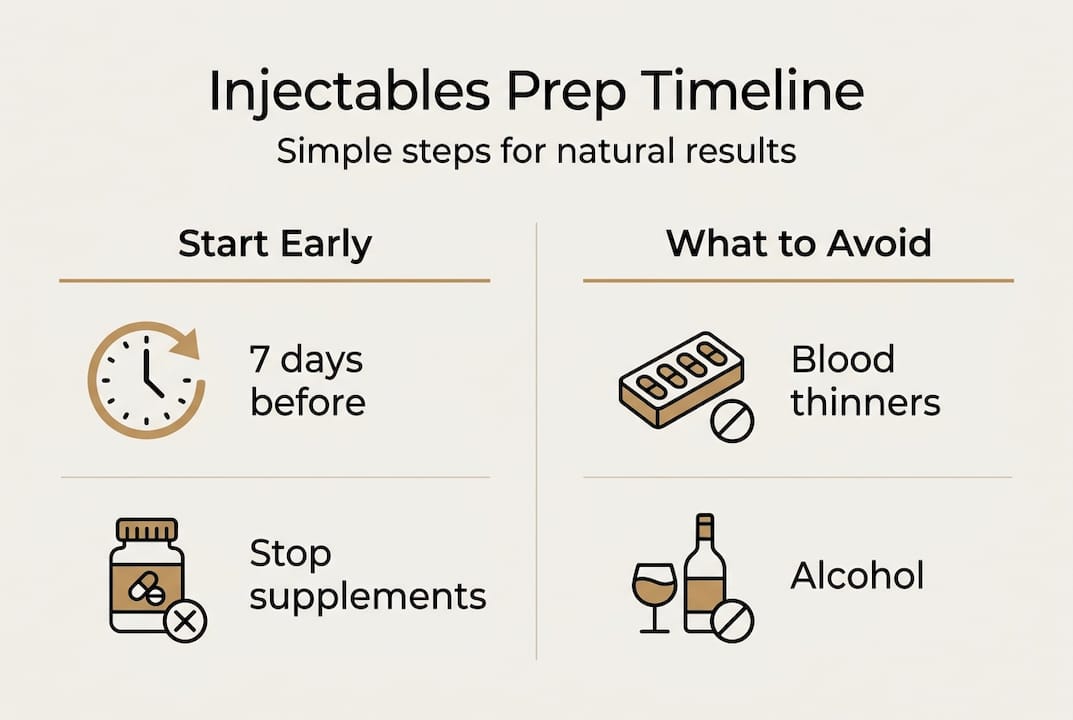
Begin avoiding certain medications and adjusting habits at least a week before your appointment.
Choose qualified providers
Selecting a board-certified, experienced injector ensures safer, more natural results.
Follow step-by-step guidance
A daily plan before your session reduces bruising, swelling, and complications.
Know safety basics
Understand common side effects and when to contact your provider for best outcomes.
Natural results are possible
With the right preparation and expertise, injectables can refresh your look without looking overdone.
Understanding injectables and why preparation matters
Injectables fall into two main categories: neurotoxins and dermal fillers. Neurotoxins like Botox, Dysport, and Xeomin work by temporarily relaxing the muscles responsible for expression lines. Dermal fillers, including hyaluronic acid (HA) fillers and calcium hydroxylapatite (CaHA), restore volume, define contours, and smooth deeper folds. Both categories are precise tools, and their outcomes depend heavily on how they’re used and how your body is prepared to receive them.
The role of injectables in modern aesthetics has grown significantly. Nearly 10 million Botox injections were performed in the U.S. in 2024 alone, with clinics reporting low complication rates when proper training and protocols are followed. That’s a reassuring number, but it also means the quality of your experience depends on the details.
Here’s what you need to know about how long results typically last:
HA fillers (lips, under eyes): Typically 6 to 12 months
HA fillers (cheeks, jawline): Can last 12 to 24 months
CaHA fillers: Generally 12 to 18 months
Proper preparation doesn’t just reduce your risk of bruising. It supports more even product distribution, reduces inflammation that can distort early results, and helps extend the longevity of what your injector places. Think of it like priming a wall before painting. The surface condition determines how well the finish holds.
“Conservative dosing and a staged approach are the foundation of natural-looking injectable results. The goal is always to enhance what’s already there, not replace it.”
Pro Tip: If you’re new to injectables for facial rejuvenation, start with a single area and assess results before adding more. Less is genuinely more when you’re building a long-term aesthetic plan.
What you need before your injectable appointment
Preparation starts well before you walk through the door. The most overlooked part of the process is what you put into your body and what you stop taking in the days leading up to treatment.
Certain substances increase bleeding and bruising risk by thinning the blood or dilating vessels. Avoiding blood thinners, NSAIDs, aspirin, alcohol, and caffeine for 3 to 7 days before your appointment significantly reduces swelling and bruising. This is one of the most impactful things you can do on your own before arriving.
“Minimizing bruising isn’t just cosmetic. Less trauma to the tissue means better product placement and a cleaner healing process.”
Here’s a quick reference table for what to bring and what to disclose:
Category
What to do
Identification
Bring a valid photo ID
Medical history
List current medications and supplements
Allergy records
Note any known reactions to lidocaine or fillers
Health disclosures
Inform provider of pregnancy, neuromuscular conditions, or thin skin
Transportation
Arrange a ride if you’re anxious about post-treatment driving
Beyond logistics, there are health conditions that require full disclosure before any injectable treatment:
Pregnancy or breastfeeding: Most providers will not treat during this period
Neuromuscular disorders (like myasthenia gravis or ALS): Neurotoxins can worsen symptoms
Active skin infections or cold sores: Treatment should be postponed
Blood clotting disorders or anticoagulant therapy: Requires medical clearance
When you choose injectables naturally, the process should feel collaborative, not rushed. A good provider will ask about all of this before touching a needle.
Pro Tip: Start your preparation a full week in advance. It gives you enough time to stop supplements, adjust your schedule, and arrive calm rather than scrambling the morning of your injectable treatments appointment.
Step-by-step: Preparing for your injectables appointment
Here’s a practical day-by-day plan that takes the guesswork out of preparation. Each step has a reason behind it, and following the full sequence makes a measurable difference in your outcome.
Preparation enhances longevity by reducing complications like product migration or vascular occlusion. The steps below are designed around that goal.
7 days out: Stop fish oil, vitamin E, flaxseed, and herbal supplements like ginkgo and garlic. These all thin the blood.
5 days out: Discontinue aspirin and NSAIDs (ibuprofen, naproxen) unless prescribed for a medical condition. Consult your doctor before stopping any prescribed medication.
3 days out: Avoid alcohol completely. Even moderate drinking increases bruising risk significantly.
2 days out: Skip intense exercise and saunas. Elevated heart rate and heat increase blood flow to the face.
1 day out: Avoid facials, waxing, laser treatments, and dental work. These create inflammation that can interfere with injectable placement.
Morning of: Skip caffeine, arrive with a clean face (no heavy makeup), eat a light meal, and stay hydrated.
Here’s a side-by-side comparison to keep it simple:
Pro Tip: Write down your top three concerns and questions before your appointment. Your injector can only address what you share. A prepared client gets a more tailored treatment plan every time.
Choosing the right provider: Why expertise and assessment matter
Your preparation only goes so far if the person holding the syringe isn’t qualified to use it well. Provider selection is arguably the most important decision in this entire process.
Here’s what to look for when evaluating a provider:
Board certification or advanced medical licensure (MD, NP, PA, RN with aesthetic training)
Documented training in facial anatomy and injection technique
A portfolio of before-and-after photos showing subtle, natural results
Willingness to do a full facial assessment before recommending any treatment
Access to reversal agents like hyaluronidase for HA fillers in case of complications
A conservative, staged approach rather than pushing maximum product in one session
Board-certified providers who prioritize facial assessment and anatomy knowledge consistently deliver safer, more natural outcomes. The anatomy of the face is complex. Vessels, nerves, and muscle layers vary between individuals, and an injector who understands those differences can work with your structure rather than against it.
“The best injectors are the ones who tell you what you don’t need as clearly as what you do. That kind of restraint is a skill, not a limitation.”
Understanding the role of medical providers in aesthetic care goes beyond credentials. It’s about clinical judgment. A medically trained injector can recognize early warning signs, respond to complications, and adjust technique in real time. That’s not something a weekend certification course can replicate.
For a deeper look at what separates clinical-grade care from cosmetic-only settings, medical aesthetics explained is worth reading before your first appointment. You can also explore Botox training techniques to understand what rigorous injector education actually involves.
Safety, side effects, and special situations
Even with excellent preparation and a skilled provider, your body will respond to injectables in its own way. Knowing what’s normal versus what needs attention keeps you safe and informed.
Common, expected side effects (usually resolve within 3 to 7 days):
Mild redness or warmth at injection sites
Swelling, especially around the lips and under-eye area
Light bruising that fades within a week
Tenderness to the touch for 24 to 48 hours
Less common but serious warning signs (contact your provider immediately):
Sudden or severe pain at the injection site
Skin blanching or a white/gray discoloration
Vision changes or double vision
Persistent swelling beyond 72 hours
Asymmetry that worsens rather than improves
Vascular occlusion is a rare but serious complication where filler blocks a blood vessel. It requires immediate treatment with hyaluronidase, which is why choosing a provider who stocks and knows how to use it is non-negotiable.
“If something feels wrong after an injectable treatment, don’t wait. Call your provider the same day. Early intervention makes all the difference in outcomes.”
Certain groups should avoid injectables entirely or proceed only with specialist guidance:
Pregnant or breastfeeding individuals
People with neuromuscular disorders like myasthenia gravis
Those with active skin infections, open wounds, or cold sores in the treatment area
Individuals on anticoagulant therapy without medical clearance
If you’re exploring non-surgical alternatives because injectables aren’t right for you right now, there are effective options that carry fewer contraindications.
Get expert guidance and achieve natural results in Raleigh, NC
Preparation gives you the foundation. The right provider gives you the outcome. At The Aesthetics Lounge and Spa Raleigh, every injectable appointment starts with a thorough facial assessment and a conversation, not a product menu. We believe in building a treatment plan that respects your anatomy, your timeline, and your goals.
Our injectable treatments Raleigh are guided by medical expertise and a commitment to results that look like you on your best day. Whether you’re considering neurotoxins for the first time or refining an existing filler plan, we approach every session with precision and intention. Explore our approach to medical-led aesthetics and learn more about the facial rejuvenation process we use to support long-term skin health. When you’re ready, we’re here on Six Forks Road.
Frequently asked questions
How long before my appointment should I start preparing?
Start at least seven days before your appointment. Stopping blood thinners and alcohol 3 to 7 days in advance gives your body enough time to reduce bruising risk before treatment.
Can I have injectables if I’m pregnant or breastfeeding?
No. Most providers recommend avoiding injectables entirely during pregnancy and breastfeeding. Safety in pregnancy has not been established for neurotoxins or fillers.
What medications should I avoid before injectables?
Avoid aspirin, ibuprofen, naproxen, and other NSAIDs for 3 to 7 days before treatment. Blood thinners, alcohol, and caffeine should also be paused during that window.
How soon will I see results and how long do they last?
Neurotoxin results typically appear within 3 to 7 days and last 3 to 4 months. HA fillers can last 6 to 24 months depending on the product and placement area.
What should I do if I notice side effects after my injection?
Contact your provider the same day if you experience unusual pain, skin discoloration, or vision changes. Vascular occlusion requires immediate treatment and should never be left to resolve on its own.
Many people assume that scheduling cosmetic treatments back to back will speed up visible improvements and maximize their investment. This belief drives clients to book aggressive timelines, often with little recovery between sessions. However, the opposite is true. Rushing aesthetic procedures can compromise natural outcomes, create complications, and accelerate signs of aging rather than reversing them. A slow-paced approach respects your facial anatomy, allows tissues to heal properly, and produces subtle enhancements that look like you, just more rested. This article explores why spacing treatments strategically leads to superior, longer-lasting results for adults in North Raleigh who value refined, non-surgical care.
Spacing treatments by six to eight weeks allows tissues to heal and fillers to settle, reducing complications and preserving a natural, rested look.
Spacing intervals matter
Giving time between sessions prevents overfilling and product migration, allows collagen remodeling, and reduces risks such as lumps, vascular occlusion, and prolonged swelling.
Longevity through gradual care
Conservative layering yields longer lasting results with fewer touch ups as tissues integrate the product more fully.
Facial harmony emphasis
The slow beauty philosophy prioritizes subtle enhancements that look rested rather than obviously altered.
Why rushing aesthetic treatments can compromise natural results
When you compress treatment schedules, you eliminate the recovery window your body needs to respond appropriately. Rushed treatments cause overfilling, migration, and complications because tissues have not finished integrating the previous intervention. Fast filler injections often lead to puffiness in areas like the under-eyes or lips, creating a swollen appearance that reads as obviously artificial. Short intervals between sessions prevent collagen remodeling and vascular adaptation, which are essential for smooth, natural settling.
Aggressive treatment pacing can also accelerate unnatural aging signs. When you overload facial zones with product too quickly, you risk stretching the skin envelope beyond its natural elasticity. This creates a paradox where you seek rejuvenation but end up with sagging or distorted contours. The solution lies in spacing procedures at least six to eight weeks apart, giving dermal fillers time to settle and your body’s healing mechanisms time to complete their work.
Pro Tip: Track your treatment dates in a calendar app with reminders set for the earliest safe follow-up window. This simple habit prevents impulsive booking and keeps your aesthetic plan aligned with your body’s natural timeline.
Common complications from rushed schedules include:
Lumps and bumps from uneven product distribution
Vascular occlusion when filler compresses blood vessels
Prolonged swelling that masks true results for weeks
Loss of natural facial movement and expression
One aesthetic expert emphasizes that proper spacing is not just a suggestion but a medical necessity. Without adequate intervals, you cannot assess how your face has responded to the initial treatment, making it impossible to adjust the next session intelligently. This reactive approach replaces thoughtful planning with guesswork, undermining the precision that defines quality aesthetic care.
How slow-paced treatments support natural aging and facial harmony
The slow beauty philosophy rejects the idea that more product or more frequent sessions equal better outcomes. Instead, it prioritizes imperceptible enhancements that make friends ask if you have been sleeping better or started a new skincare routine. This approach aligns perfectly with adults in North Raleigh who want to look refreshed without broadcasting that they have had work done. Gradual filler applications respect your bone structure, muscle movement, and skin thickness, creating a rested appearance rather than an obviously altered one.
One of the most compelling advantages of slow-paced care is extended longevity. While fast-track treatments often deliver results that fade within six to twelve months, refined aesthetic care built on conservative layering can last significantly longer. This happens because your tissues integrate the product more fully when given time, reducing breakdown and migration. You end up needing fewer touch-ups, which saves both time and money while maintaining a consistent, natural look.
Facial harmony becomes the central goal when you slow down. Rather than chasing the latest trend in lip size or cheek projection, you work with a provider who evaluates your entire face as a connected system. Facial balancing considers proportions, symmetry, and how different features interact when you smile, speak, or rest. This holistic view prevents the disjointed appearance that results from treating isolated areas in rapid succession.
Pro Tip: Bring reference photos of yourself from five to ten years ago to your consultation. These images help your provider understand your natural baseline and design a plan that restores rather than transforms.
Benefits of slow-paced aesthetic care include:
Undetectable results that enhance rather than change your appearance
Reduced risk of overcorrection and product migration
Longer intervals between maintenance sessions
Greater alignment with busy lifestyles that cannot accommodate frequent downtime
This method suits professionals who value subtlety and want their aesthetic care to fit seamlessly into their lives. You avoid the cycle of constant appointments and the anxiety of wondering if each new treatment will push you past the point of natural-looking results. Instead, you build a sustainable routine that supports healthy aging without drama or extremes.
The role of evidence-backed procedures and home care in slow-paced aesthetic success
Clinical research validates the slow-paced approach by demonstrating how certain treatments amplify skin quality over time when combined with proper aftercare. Microneedle RF improves pigmentation, wrinkles, and hydration within thirty days after a single session, making it an ideal complement to gradual filler strategies. This technology creates controlled micro-injuries that stimulate collagen production without requiring aggressive downtime, fitting perfectly into a conservative treatment plan.
Home care routines are not optional add-ons but essential components of lasting aesthetic success. When you support in-office treatments with medically guided skincare steps, you extend and enhance the improvements achieved during appointments. Products containing retinoids, peptides, and antioxidants help maintain collagen density and skin barrier function, which are critical for preserving the natural look that slow-paced treatments create.
Pro Tip: Start new skincare products one at a time, waiting two weeks between additions. This allows you to identify which items deliver results and which cause irritation, preventing wasted money and setbacks.
Treatment effect
Improvement at 30 days
Role of home care
Pigmentation reduction
Visible lightening of dark spots
Vitamin C serums amplify brightening
Wrinkle depth
Measurable decrease in fine lines
Retinoids support collagen turnover
Skin hydration
Increased moisture retention
Hyaluronic acid locks in hydration
Texture smoothness
Enhanced surface uniformity
Gentle exfoliants remove dead cells
The synergy between skin tightening procedures and daily skincare creates a compounding effect. Each session builds on the previous one, and your at-home routine maintains the progress between appointments. This layered strategy prevents the boom-and-bust cycle where results peak immediately after treatment and then decline sharply. Instead, you experience steady, incremental improvements that feel natural and sustainable.
When evaluating examples of aesthetic treatments, prioritize those with documented evidence for long-term skin health benefits. Microneedle RF, for instance, not only addresses immediate concerns but also strengthens the skin’s structural foundation for future resilience. This forward-thinking approach aligns with the slow beauty philosophy by investing in your skin’s capacity to age gracefully rather than relying on repeated quick fixes.
Key principles for combining treatments and home care:
Schedule in-office procedures during low-stress periods to optimize healing
Use medical-grade products recommended by your provider, not retail alternatives
Track your skin’s response in a journal to identify patterns and adjust routines
Avoid introducing new products immediately before or after treatments
Planning and pacing your aesthetic treatments for lasting, natural effects
Strategic scheduling transforms aesthetic care from reactive to proactive. By spacing treatments six to eight weeks apart, you give your body time to complete the healing cascade and reveal the true outcome of each intervention. This interval is not arbitrary but based on the biological timeline for collagen remodeling, inflammation resolution, and product integration. Rushing this process undermines the very improvements you seek.
Follow these steps to plan your aesthetic journey:
Schedule an initial consultation to assess your baseline and define realistic goals
Map out a twelve-month treatment calendar with specific procedures and target dates
Complete your first session and document results with photos at two, four, and eight weeks
Evaluate outcomes with your provider before booking the next appointment
Adjust the plan based on how your skin and tissues responded to the initial treatment
Maintain consistent home care between sessions to support and extend results
A comparison of treatment approaches clarifies why pacing matters:
Approach
Pros
Cons
Fast-paced (2-4 weeks between sessions)
Quicker initial visible changes
Higher risk of overcorrection, migration, and complications
Slow-paced (6-8 weeks between sessions)
Natural settling, reduced side effects, longer-lasting results
Requires patience and delayed gratification
Common pitfalls to avoid when rushing procedures:
Booking follow-ups before swelling has fully resolved
Treating multiple facial zones simultaneously without assessing interactions
Ignoring signs of overcorrection like stiffness or asymmetry
Skipping post-treatment instructions to accelerate recovery artificially
Pro Tip: Keep a treatment journal with dated photos and notes about how you felt at each stage. This record helps you and your provider make informed decisions about timing and product selection for future sessions.
When choosing aesthetic treatments naturally, prioritize providers who emphasize education over urgency. A medically led practice will walk you through the rationale for spacing, explain what to expect during each recovery phase, and adjust plans based on your unique response. This collaborative approach replaces the pressure to book aggressively with confidence that your timeline serves your best interests.
Understanding how to plan aesthetic treatments with fewer side effects requires recognizing that your body is not a machine that responds identically every time. Variables like stress levels, hormonal fluctuations, and seasonal changes affect healing and product integration. A flexible plan accommodates these factors by allowing buffer time between sessions, ensuring that each treatment builds on a stable foundation rather than compounding variables.
Explore slow-paced aesthetic treatments in North Raleigh
If you are ready to experience the benefits of medically guided, gradual aesthetic care, The Aesthetics Lounge & Spa offers a calm, evidence-based approach designed for adults who value natural results. Our North Raleigh location on Six Forks Road provides a boutique setting where treatment plans are built around your facial anatomy, lifestyle, and long-term goals rather than fleeting trends.
Every consultation begins with a thorough assessment of your skin health, bone structure, and aesthetic priorities. We take time to explain why spacing matters, how different treatments interact, and what realistic outcomes look like over months rather than days. This transparency removes the guesswork and pressure that often accompany cosmetic decisions. Explore our full range of aesthetic treatments in Raleigh to see how conservative, strategic care can help you look like yourself, just more supported. Learn more about choosing aesthetic treatments naturally and planning your 2026 aesthetic strategy with expert guidance.
Frequently asked questions
What is the ideal time gap between filler treatments?
Maintain at least six to eight weeks between filler sessions to allow tissues to heal and products to settle naturally. This spacing reduces risks like migration, vascular complications, and overcorrection while giving you and your provider time to assess true results. Shorter intervals prevent accurate evaluation and increase the likelihood of an artificial appearance.
How does microneedle RF complement slow-paced aesthetic treatments?
Microneedle RF enhances skin texture, reduces pigmentation, and boosts hydration within thirty days of a single session. When combined with consistent at-home skincare, these improvements amplify and extend the benefits of gradual filler or neurotoxin treatments. This synergy supports long-term skin health rather than relying on repeated aggressive interventions.
Why are slow-paced treatments preferred for busy adults in North Raleigh?
Slow-paced treatments require minimal downtime and fit seamlessly into demanding schedules without the drama of prolonged swelling or visible side effects. They emphasize facial harmony and natural aging over trend-driven extremes, making them ideal for professionals who want subtle enhancements that do not interfere with work or social commitments. This approach respects your time while delivering superior, lasting results.
Can I combine multiple aesthetic treatments in one session?
Combining treatments is possible but should be done conservatively under medical guidance. Stacking procedures like microneedle RF with light filler touch-ups can be safe when your provider evaluates interactions and monitors healing closely. However, treating too many areas simultaneously increases complication risks and makes it difficult to identify which intervention caused any adverse reactions. A slow-paced plan often sequences treatments across separate sessions for better control and outcomes.
How do I know if my treatment plan is too aggressive?
Warning signs include persistent swelling beyond two weeks, loss of natural facial movement, visible lumps or asymmetry, and feeling pressured to book follow-ups before you are ready. A well-designed plan includes built-in evaluation periods, encourages questions, and adjusts based on your feedback. If your provider dismisses concerns or rushes you into additional sessions, seek a second opinion from a medically led practice that prioritizes your safety and satisfaction over volume.
Generic skincare products promise results, but your skin is as unique as your fingerprint. Customized skincare is personalized regimens and formulations designed for an individual’s unique skin profile, including skin type, concerns, environment, lifestyle, genetics, and microbiome. Unlike off-the-shelf solutions, medically guided customized skincare uses dermatologist assessments, AI analysis, and biophysical measurements to create targeted treatments that enhance your natural beauty safely and effectively. This guide explains what customized skincare means, how it works, and why it matters for achieving the refined, natural-looking results you want.
Customized skincare analyzes your unique skin profile including skin type environment lifestyle genetics and microbiome to tailor regimens.
Dermal assessment and AI
Dermatologists perform thorough examinations while AI imaging and biophysical measurements like corneometer hydration and TEWL inform exact ingredient choices.
Benefits over off shelf
Medically guided regimens offer safety, efficacy and targeted actives that address specific concerns better than generic products.
Track progress plan
Request detailed baseline measurements and photos during the initial assessment to create an objective record for tracking improvements over time.
Understanding customized skincare: personalizing for your skin’s uniqueness
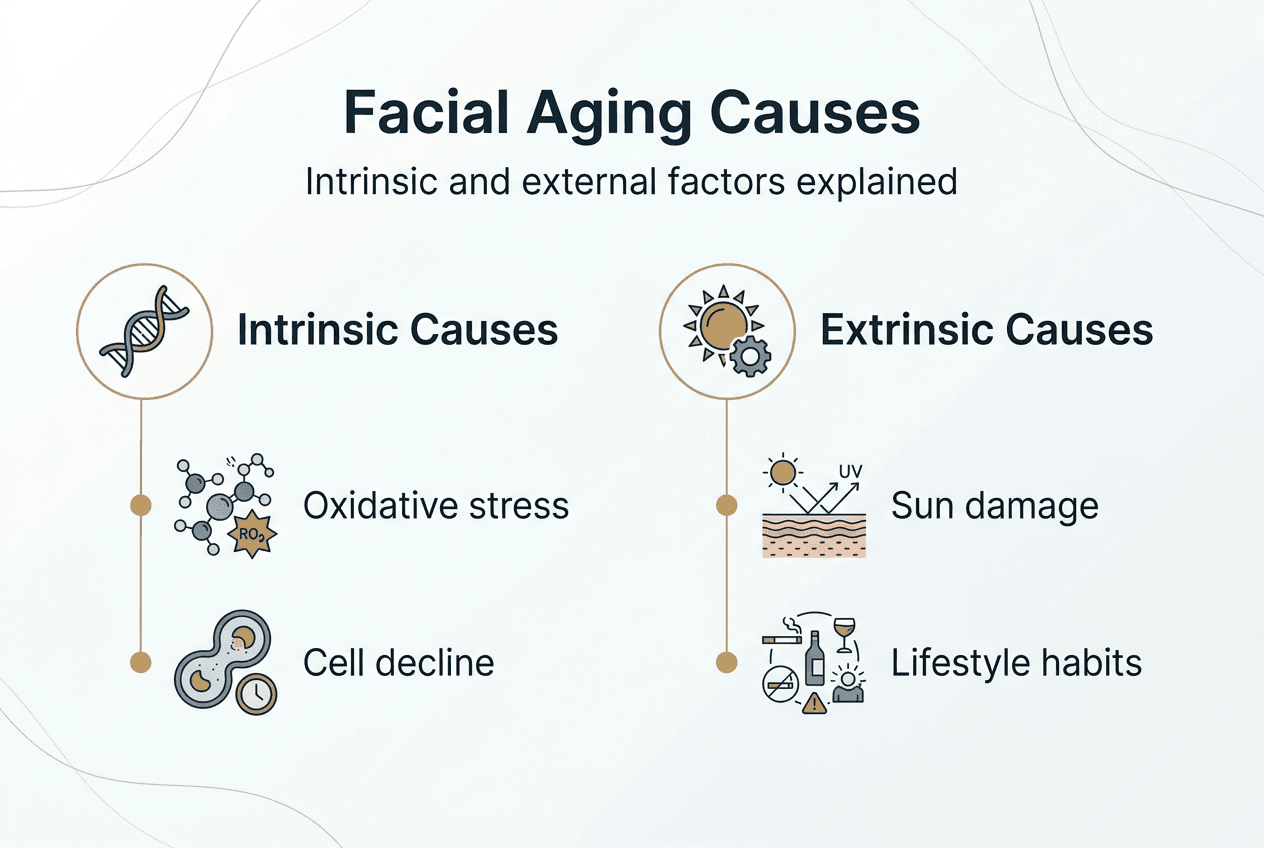
Customized skincare represents a fundamental shift from mass-market formulations to individualized treatment plans. Rather than selecting products based on broad categories like “oily” or “dry,” this approach analyzes your specific skin profile through multiple lenses. Your skin type, genetic predispositions, environmental exposures, lifestyle habits, and even your unique microbiome all influence how your skin responds to different ingredients and protocols.
The assessment process begins with professional evaluation. Dermatologists conduct thorough examinations to identify concerns like hyperpigmentation, fine lines, acne, or rosacea. Technology-driven skin analysis methods have advanced significantly, incorporating AI imaging systems that map skin texture, tone variations, and underlying damage invisible to the naked eye. Biophysical tools measure objective parameters like hydration levels using corneometers and transepidermal water loss (TEWL) using evaporimeters, providing quantifiable data about your skin barrier function.
These assessments inform every aspect of your customized regimen. If TEWL measurements reveal compromised barrier function, your formula might emphasize ceramides and cholesterol. If AI imaging detects early photoaging, specific peptides and antioxidants get prioritized at therapeutic concentrations. The role of dermatologist expertise cannot be overstated. While personalized skincare research shows promise for algorithm-based approaches, medical oversight ensures safety and efficacy, particularly when combining actives or addressing complex conditions.
Your genetic makeup influences how your skin ages, produces collagen, and responds to sun exposure. Some people metabolize retinoids faster, requiring adjusted dosages. Others have genetic variations affecting inflammation pathways, necessitating specific anti-inflammatory ingredients. Your microbiome, the ecosystem of bacteria living on your skin, also plays a crucial role. Disrupted microbiomes can trigger acne, eczema, or sensitivity, and customized formulations can include prebiotics or postbiotics to restore balance.
Environmental factors matter enormously. North Raleigh’s humid subtropical climate creates different skincare needs than arid regions. Seasonal variations, indoor heating or cooling, pollution exposure, and water quality all impact your skin’s requirements. Lifestyle considerations include stress levels, sleep patterns, diet, exercise habits, and medication use. A comprehensive customized skincare plan accounts for all these variables, creating a truly personalized approach.
Pro Tip: Request detailed documentation of your baseline skin measurements and photos during your initial assessment. This creates an objective record for tracking improvements and adjusting your regimen over time.
Mechanics and science behind customized skincare formulations and protocols
Creating customized skincare involves a sophisticated, stepwise process that transforms assessment data into effective formulations. The journey from skin analysis to finished product demonstrates how precision medicine principles apply to aesthetic care. Mechanics include skin assessments, ingredient selection with peptides and retinoids at precise dosages, formulation by compounding pharmacies or AI algorithms analyzing 80 to 150 factors, and timed protocols optimized for absorption and efficacy.
Ingredient selection represents the heart of customization. Consider peptides, which are short chains of amino acids that signal skin cells to produce collagen or reduce inflammation. Generic products might contain peptide concentrations of 2 to 5 percent, while customized formulations can reach 10 to 15 percent based on your specific collagen production needs and tolerance. Hyaluronic acid, a humectant that attracts moisture, comes in different molecular weights. Low molecular weight penetrates deeper for plumping effects, while high molecular weight stays on the surface for barrier protection. Your customized formula uses the optimal molecular weight blend for your hydration profile.
Retinoids exemplify the importance of dosage precision. Over-the-counter retinol products typically contain 0.25 to 1 percent concentrations, while prescription tretinoin ranges from 0.025 to 0.1 percent. Customized formulations can start at lower concentrations for sensitive skin or ramp up gradually based on your tolerance and response. Some formulations combine retinoids with buffering ingredients like niacinamide or ceramides to minimize irritation while maintaining efficacy.
Medically guided skincare steps follow timed application protocols that maximize results. The cleanse-treat-veil approach structures product layering for optimal absorption. Active ingredients apply to freshly cleansed skin when penetration is highest. Serums with smaller molecules go first, followed by treatments with larger molecules, and finally occlusives that seal everything in. Timing matters too. Some actives work better at night when skin enters repair mode, while antioxidants provide daytime protection against environmental stressors.
Advanced personalized skin science now incorporates machine learning algorithms that analyze hundreds of data points to predict ingredient efficacy. These systems consider interactions between actives, pH requirements, stability concerns, and delivery mechanisms. Compounding pharmacies can create formulations unavailable in commercial products, adjusting concentrations, combining incompatible ingredients through specialized techniques, and adding penetration enhancers for deeper delivery.
Ongoing regimen adjustments distinguish customized skincare from static generic products. Your skin changes with seasons, stress, hormones, and age. Regular follow-up assessments using the same biophysical tools track objective improvements in hydration, elasticity, pigmentation, and barrier function. If progress plateaus, formulations get modified. New concerns get addressed promptly. This dynamic approach ensures your skincare evolves with your skin’s changing needs.
Formulation Component
Generic Product
Customized Product
Peptide concentration
2 to 5%
10 to 15% (based on need)
Retinoid strength
0.25 to 1% retinol
0.025 to 0.1% tretinoin (titrated)
Hyaluronic acid
Single molecular weight
Blended molecular weights
pH optimization
Fixed at 5.5 to 6.5
Adjusted per ingredient stability
Active combinations
Limited by shelf stability
Compounded for compatibility
Pro Tip: Always patch test new customized formulations on your inner forearm for 48 hours before facial application. Introduce actives gradually, starting every third night and increasing frequency as tolerance builds to minimize irritation.
Proven benefits and important nuances of customized skincare versus generic options
Empirical evidence supports customized skincare’s superiority for achieving measurable skin improvements. Empirical data shows significant improvements in sebum, elasticity, hyperpigmentation, hydration, and dryness within weeks of using bespoke formulas. Studies document sebum reduction of 18 to 25 percent in acne-prone skin, elasticity improvements of 15 to 22 percent in aging skin, and hyperpigmentation fading of 30 to 40 percent with targeted brightening protocols. Hydration levels increase by 35 to 50 percent when formulations address specific barrier deficiencies.
These results stem from customized skincare’s precision targeting. Generic products contain lower active concentrations to minimize adverse reactions across diverse users. Customized formulations optimize concentrations for your tolerance level, maximizing benefits while minimizing risks. The continuous adjustment process means your regimen adapts as your skin improves, preventing the plateau effect common with generic products.
Sensitive skin and special conditions require particularly nuanced approaches. People with rosacea, eczema, or contact dermatitis benefit from hypoallergenic minimalist formulas that eliminate common irritants while including specific calming ingredients like azelaic acid, colloidal oatmeal, or centella asiatica. Pregnancy and breastfeeding necessitate avoiding certain actives like retinoids, hydroquinone, and high-dose salicylic acid. Customized protocols for expectant mothers emphasize safe alternatives like bakuchiol, vitamin C, and gentle AHAs at appropriate concentrations.
Cancer treatment affects skin profoundly through chemotherapy, radiation, and targeted therapies. These patients need fragrance-free, preservative-minimized formulations that support compromised barrier function without interfering with treatment. Medically led spa benefits include professional oversight that ensures safety during vulnerable periods.
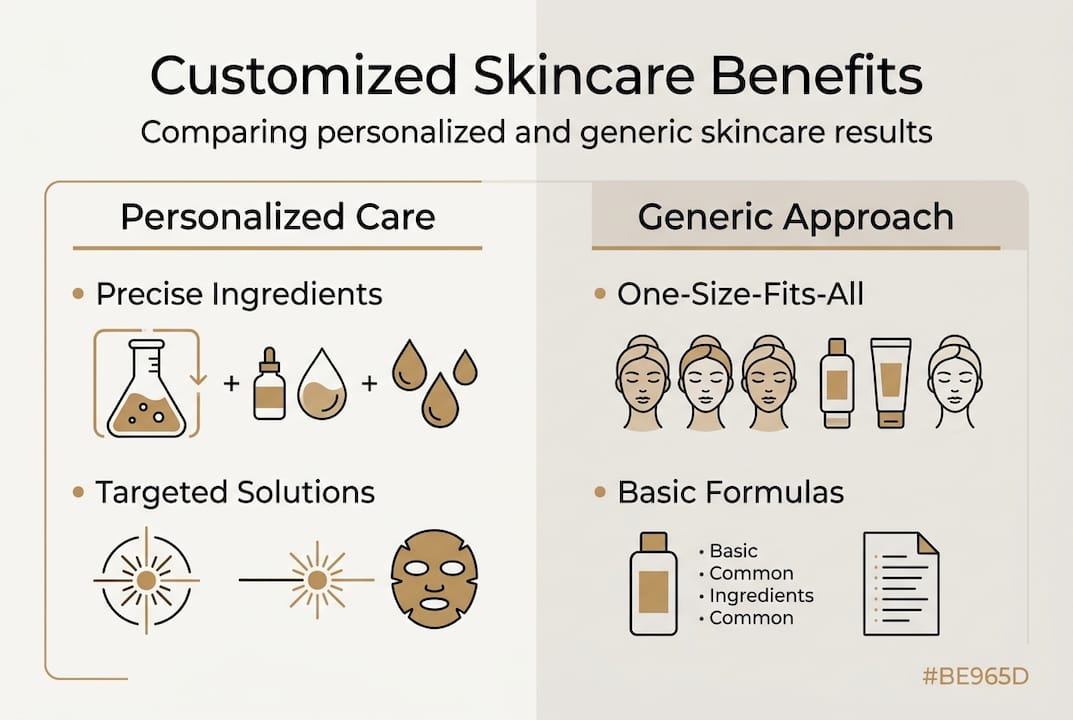
Comparing customized skincare to off-the-shelf products reveals distinct advantages and considerations:
Factor
Customized Skincare
Off-the-Shelf Products
Effectiveness
High active concentrations targeting specific concerns
Lower concentrations for broad appeal
Personalization
Formulated for your unique skin profile
One-size-fits-all approach
Adaptability
Continuous adjustment based on response
Static formulation
Safety for sensitive skin
Hypoallergenic options, irritant elimination
May contain common allergens
Cost
Higher upfront investment
Lower per-product cost
Professional oversight
Dermatologist-guided protocols
Self-directed selection
Results timeline
Faster improvements from optimized dosing
Slower, less predictable results
The cost consideration deserves attention. Customized skincare requires higher initial investment for assessments and specialized formulations. However, the targeted approach often reduces overall spending by eliminating trial-and-error purchases of ineffective generic products. You invest in what works rather than accumulating bathroom cabinets full of abandoned bottles.
Personalized skincare nuances include understanding when customization matters most. Mild concerns like occasional dryness might respond adequately to quality generic products. Complex conditions involving multiple concerns, sensitive skin, or previous treatment failures benefit significantly from customization. The decision depends on your specific situation, goals, and resources.
Pro Tip: Seek professional consultation for special conditions like pregnancy, active acne, rosacea, or post-procedure care rather than relying on online quizzes or unverified direct-to-consumer services. Medical oversight ensures safety and efficacy.
Applying customized skincare: practical guidance for adults in North Raleigh
Translating customized skincare concepts into actionable steps requires understanding how to identify credible guidance and integrate treatments effectively. The proliferation of direct-to-consumer skincare quizzes creates confusion about what constitutes genuine customization. True personalization requires professional evaluation, not algorithm-based questionnaires that lack medical oversight.
Identifying credible medical guidance starts with seeking dermatologists, physician assistants, or nurse practitioners with aesthetic training. These professionals conduct in-person assessments using diagnostic tools, interpret results within the context of your medical history, and create evidence-based treatment plans. They monitor your progress through objective measurements rather than subjective self-reporting. Beware of services that prescribe products based solely on selfies or brief questionnaires without professional review.
For North Raleigh adults seeking natural enhancements, prioritize dermatologist-led plans combined with local medspa treatments to rapidly improve hydration and skin barrier function. Combining customized skincare with complementary aesthetic treatments in Raleigh creates synergistic results. Laser treatments, chemical peels, microneedling, and injectable peptides address concerns at different skin depths than topical products. Your customized skincare regimen supports and extends results from these procedures.
Starting your customized skincare journey involves several practical steps:
Schedule a comprehensive skin assessment with a qualified professional who uses diagnostic tools like skin analyzers, moisture meters, and photography
Keep a skin diary for two weeks before your appointment, noting concerns, current products, reactions, and environmental factors
Discuss your goals, lifestyle constraints, budget, and any medical conditions or medications that might affect treatment
Request a detailed written protocol explaining each product’s purpose, application timing, and expected timeline for results
Start with core products (cleanser, treatment serum, moisturizer, sunscreen) before adding specialized items
Introduce new actives one at a time, spacing introductions by one to two weeks to identify any reactions
Schedule follow-up assessments every four to six weeks initially, then quarterly once your regimen stabilizes
Patch testing deserves emphasis for customized formulations with higher active concentrations. Apply a small amount to your inner forearm, cover with a bandage, and observe for 48 hours. Redness, itching, or burning indicates sensitivity requiring formula adjustment. Even if patch testing succeeds, introduce facial application gradually. Start with every third night for actives like retinoids or acids, increasing frequency as tolerance builds.
Medical-grade skincare products available through professional channels offer pharmaceutical-grade ingredients at therapeutic concentrations unavailable in retail products. These formulations undergo stability testing, use superior delivery systems, and maintain precise pH ranges for optimal efficacy. Combining these products with medically guided skincare maintenance ensures long-term success.
Seasonal adjustments matter in North Raleigh’s climate. Summer’s heat and humidity might require lighter moisturizers and more frequent antioxidant application. Winter’s lower humidity and indoor heating increase needs for occlusive moisturizers and barrier repair ingredients. Your customized regimen should flex with these changes while maintaining core active ingredients that address your primary concerns.
Pro Tip: Choose medspas with dermatologist oversight for best natural results. Medical supervision ensures treatments and products work synergistically, safety protocols are followed, and complications get addressed promptly by qualified professionals.
Discover customized skincare and aesthetic treatments in Raleigh
Applying these customized skincare principles locally means partnering with professionals who understand both the science and artistry of natural enhancement. The Aesthetics Lounge & Spa in North Raleigh offers medically guided skincare consultations that assess your unique skin profile and create personalized treatment plans. Our approach combines thorough evaluation with conservative, anatomically informed recommendations that enhance rather than alter your natural appearance.
Our team designs customized skincare protocols that integrate seamlessly with complementary aesthetic treatments in Raleigh like laser therapy, microneedling, and peptide treatments. We prioritize education and transparent expectations, ensuring you understand how each product and procedure supports your goals. Choosing aesthetic treatments naturally means working with professionals who respect your facial structure and skin health while delivering measurable improvements. Explore our medical-grade skincare products and schedule a consultation to discover how customized skincare can enhance your natural beauty with precision and care.
Frequently asked questions about customized skincare
What factors determine the customization of skincare?
Skin type, genetic predispositions, environmental exposures, lifestyle habits, and microbiome composition all influence customized skincare formulation. Professional assessments include dermatologist examinations, AI imaging that maps texture and tone variations, and biophysical measurements of hydration levels using corneometers and transepidermal water loss using evaporimeters. These objective data points inform ingredient selection, concentration levels, and application protocols tailored specifically to your skin’s needs rather than broad demographic categories.
How is customized skincare different from generic products?
Customized skincare contains higher concentrations of active ingredients precisely calibrated to your tolerance and concerns, while generic products use lower concentrations to minimize adverse reactions across diverse users. Customized protocols include timed application sequences optimized for absorption and continuous adjustments based on your skin’s response measured through follow-up assessments. Generic products remain static with one-size-fits-all formulations that cannot adapt to your changing skin needs or address multiple complex concerns simultaneously.
Can people with sensitive skin or special conditions benefit from customized skincare?
Sensitive skin benefits significantly from customized hypoallergenic minimalist formulas that eliminate common irritants while including specific calming ingredients like azelaic acid or centella asiatica at appropriate concentrations. Special conditions like pregnancy require professional oversight to avoid contraindicated actives like retinoids and hydroquinone while emphasizing safe alternatives like bakuchiol and vitamin C. Cancer treatment, rosacea, and eczema all necessitate specialized formulations that support compromised barrier function without triggering inflammation, making customization essential rather than optional for these populations.
How often should customized skincare regimens be updated?
Regimen updates typically occur every four to six weeks initially based on objective skin measurements and your subjective response to treatment. Once your protocol stabilizes and achieves desired improvements, quarterly assessments maintain results and address seasonal variations or new concerns. Ongoing professional monitoring ensures your formulations evolve with hormonal changes, aging, environmental shifts, and lifestyle modifications that affect your skin’s requirements over time.
Is professional consultation necessary for customized skincare?
Professional evaluation by dermatologists or trained aesthetic practitioners ensures accurate skin profiling through diagnostic tools and medical expertise that online quizzes cannot replicate. Medical oversight provides safety when combining active ingredients, adjusting concentrations, or addressing complex conditions that require prescription-strength formulations. Avoid relying solely on direct-to-consumer services without professional review, as improper ingredient selection or dosing can cause irritation, barrier damage, or adverse reactions that delay rather than accelerate your skincare goals.
Choosing the right aesthetic treatment in Raleigh can feel overwhelming when you want natural results that preserve your skin’s health. You’re looking for options that enhance without overdoing it, guided by medical expertise rather than trends. This article walks through the most effective non-surgical treatments available locally, helping you understand what works, why it matters, and how to make informed decisions that align with your goals. Whether you’re considering microneedling, laser therapies, or subtle injectables, you’ll find practical insights to guide your next step.
Medical oversight improves safety and tailors treatments to your skin.
Non surgical treatments
Non surgical approaches can deliver natural improvements in texture, tone, and firmness when tailored.
Microneedling benefits
Compared to needle mesotherapy, microneedling offers deeper stimulation for hydration and collagen production.
Skin type matters
Darker skin tones require specialized laser and IPL protocols to avoid pigmentation changes.
Tailored treatment plan
A personalized plan balances visible results with minimal side effects and reasonable timelines.
How to evaluate and choose aesthetic treatments
Selecting the right treatment starts with clarity about your goals. Are you targeting fine lines, uneven texture, dehydration, or loss of firmness? Each concern responds differently to various modalities, so defining your priorities helps narrow options quickly. Consider whether you want preventive care to maintain current skin health or corrective treatments to address existing concerns.
Your skin type plays a crucial role in treatment selection. Reactive skin, rosacea-prone complexions, or dehydrated tissue may not tolerate aggressive approaches well. Darker skin tones require specialized protocols for laser and light-based therapies to avoid pigmentation changes. Medically supervised providers assess these factors during consultation, ensuring treatments match your physiology rather than following one-size-fits-all protocols.
Pro Tip: Schedule consultations with providers who prioritize education over sales pressure. The best aesthetic partners explain why certain treatments fit your needs and which ones don’t, helping you build a long-term strategy rather than chasing quick fixes.
Medical oversight transforms aesthetic care from cosmetic service to health-focused practice. Providers with medical training understand skin anatomy, wound healing, and how treatments interact with medications or health conditions. This expertise reduces complications and improves outcomes, especially when combining multiple modalities or treating complex concerns.
Natural results come from restraint and precision. Overcorrection happens when providers ignore facial anatomy or apply treatments too aggressively. The goal is enhancement that respects your features, allowing natural movement and expression while improving skin quality. This philosophy guides every decision, from product selection to treatment frequency, ensuring you look refreshed rather than altered.
Key evaluation criteria include:
Treatment depth and intensity matched to your skin’s tolerance
Provider credentials and medical supervision protocols
Realistic timelines for visible results and maintenance needs
Compatibility with your skin type, tone, and health history
Transparent pricing and clear treatment plans
Microneedling and needle mesotherapy: collagen and hydration boosters
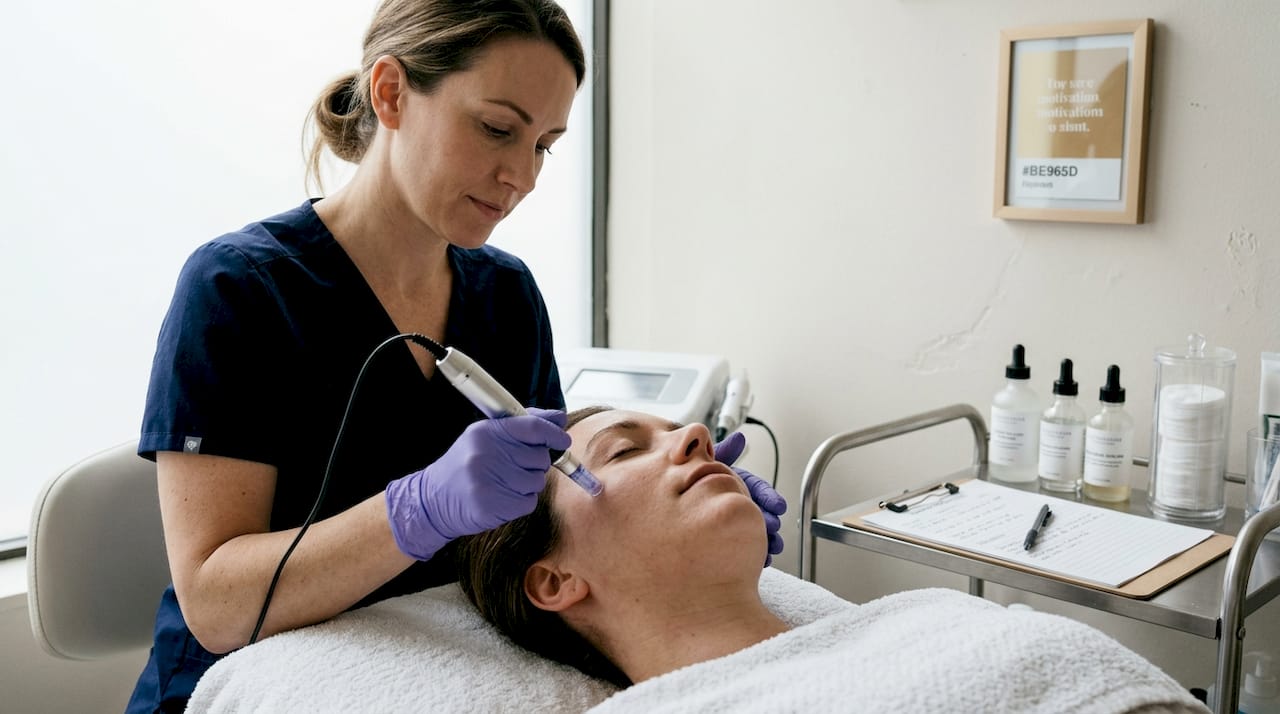
Microneedling stands out as one of the most versatile treatments for skin rejuvenation. The process uses fine needles to create controlled micro-injuries in the skin’s surface, triggering your body’s natural healing response. This stimulates collagen and elastin production, the structural proteins that keep skin firm and resilient. Unlike more aggressive procedures, microneedling works with your skin’s biology rather than forcing dramatic changes.
Research shows microneedling significantly improves hydration and skin markers compared to needle mesotherapy. While both treatments use needles, microneedling creates deeper, more consistent stimulation that translates to better collagen renewal. The study found microneedling enhanced skin pH balance, reduced trans-epidermal water loss, and improved overall skin quality more effectively than mesotherapy’s surface-level hydration approach.
Needle mesotherapy delivers vitamins, hyaluronic acid, and other hydrating substances directly into the skin through multiple small injections. It provides immediate moisture and plumping effects, making it appealing for quick hydration boosts. However, the collagen stimulation remains minimal compared to microneedling’s mechanical injury response. For those seeking long-term skin improvement rather than temporary hydration, microneedling offers more substantial benefits.
Pro Tip: Combine microneedling with quality topical serums immediately after treatment. The micro-channels created during the procedure enhance product absorption, maximizing results from growth factors, peptides, or hyaluronic acid applied during the session.
Microneedling suits reactive or dehydrated skin particularly well. The controlled injury depth allows customization for sensitive complexions, and the healing process actually strengthens skin barrier function over time. Most clients experience minimal downtime, with redness subsiding within 24 to 48 hours. Results build gradually over several months as collagen remodeling continues, creating natural improvements that don’t look suddenly different.
Ideal candidates for microneedling include those seeking:
Improved skin texture and reduced fine lines
Enhanced hydration and barrier function
Scar reduction and pore refinement
Natural collagen stimulation without aggressive peels or lasers
Treatments compatible with most skin types and tones
Understanding how microneedling works helps you set realistic expectations and commit to the recommended treatment series for optimal results.
Laser and intense pulsed light (IPL) therapies for skin tone and texture
Laser and IPL treatments target specific skin concerns using controlled light energy. These technologies address pigmentation irregularities, redness from broken capillaries, sun damage, and uneven texture. The light energy heats targeted chromophores in the skin, breaking down unwanted pigment or stimulating collagen production depending on the wavelength and settings used.
Skin tone significantly impacts laser and IPL safety and effectiveness. Darker complexions require careful parameter adjustment to prevent hyperpigmentation or burns. Fitzpatrick skin types IV through VI contain more melanin, which can absorb laser energy unintentionally if settings aren’t customized properly. This doesn’t mean these treatments are off-limits for darker skin, but it demands experienced providers who understand the nuances of treating higher melanin levels safely.
IPL differs from lasers in its light delivery. While lasers emit a single wavelength for precise targeting, IPL uses broad-spectrum light filtered to address multiple concerns simultaneously. This makes IPL effective for general skin rejuvenation, treating redness and pigmentation together. Lasers offer more focused treatment for specific issues like deep pigment or vascular lesions, with greater precision but potentially more downtime.
Medical oversight becomes critical with light-based therapies. Providers must assess your skin type, medical history, and current medications before treatment. Certain conditions or drugs increase photosensitivity, raising complication risks. A thorough consultation identifies these factors and adjusts protocols accordingly, ensuring safe, effective outcomes.
Treatment type
Best for
Skin tone considerations
Typical downtime
IPL photo rejuvenation
Overall tone, redness, mild pigmentation
Caution with Fitzpatrick IV-VI
1-3 days mild redness
Fractional laser
Texture, scars, deeper lines
Requires expertise for darker tones
3-5 days peeling
Vascular laser
Broken capillaries, rosacea
Safe for most skin types
Minimal to 1 day
Pigment-specific laser
Stubborn dark spots, melasma
High risk for darker skin without proper settings
1-2 weeks potential darkening before fading
Exploring laser and IPL therapies with a medically trained provider ensures you receive treatments matched to your skin’s unique characteristics. The goal is subtle, gradual improvement that enhances your natural complexion rather than creating obvious changes.
Key benefits of light-based treatments:
Reduced pigmentation and more even skin tone
Minimized redness and visible capillaries
Stimulated collagen for improved texture
Non-invasive with manageable recovery periods
Customizable intensity for different skin concerns
For those interested in gentle rejuvenation, IPL photo rejuvenation offers a balanced approach to addressing multiple signs of aging and sun damage simultaneously.
Other popular non-surgical treatments for natural results
Chemical peels remain a cornerstone of aesthetic skincare, using controlled acid solutions to exfoliate dead cells and stimulate renewal. Peels range from superficial treatments requiring no downtime to deeper options that create more dramatic improvements with longer recovery. The right depth depends on your skin concerns, tolerance, and lifestyle constraints. Superficial peels brighten and refine texture, while medium-depth peels address pigmentation and fine lines more aggressively.
Non-invasive skin tightening technologies use ultrasound or radiofrequency energy to heat deeper skin layers, triggering collagen contraction and new collagen formation. These treatments lift and firm without surgery, making them popular for addressing early signs of laxity. Results develop gradually over several months as collagen remodeling occurs, providing natural-looking improvements without the dramatic change or recovery associated with surgical options.
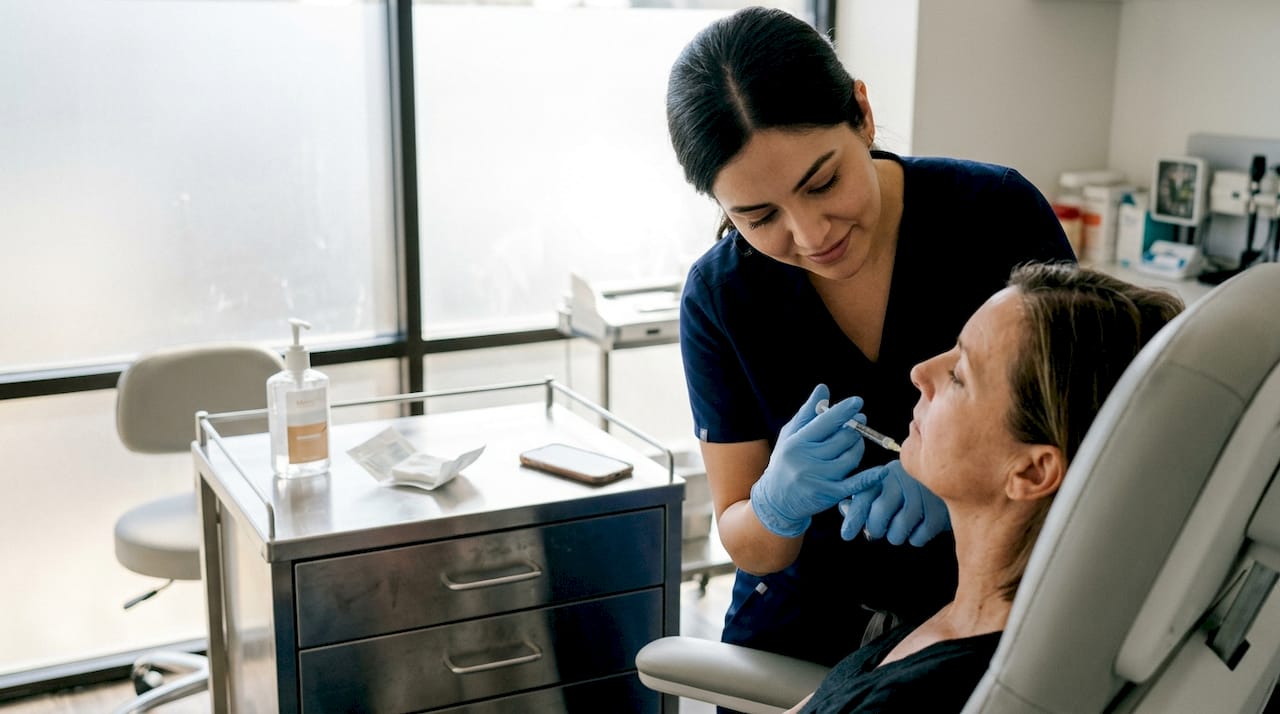
Injectables including neurotoxins and dermal fillers offer precise enhancements when administered conservatively. Neurotoxins relax muscles that create expression lines, softening wrinkles while preserving natural movement. Fillers restore volume loss or enhance features subtly, with careful placement preventing the overfilled appearance that signals obvious work. The key is respecting facial anatomy and using minimal amounts to achieve balanced results.
Recent research highlights the importance of adjusting injectable volume for GLP-1 users, as these medications can affect facial fat distribution and skin quality. Providers who stay current with such developments tailor treatments to account for medications, health conditions, and individual healing responses, ensuring optimal outcomes for every client.
Popular non-surgical treatment options:
Chemical peels for exfoliation and texture improvement
Radiofrequency or ultrasound skin tightening for firmness
Neurotoxin injections for expression line softening
Dermal fillers for volume restoration and subtle enhancement
LED light therapy for inflammation reduction and healing support
Exploring skin tightening treatments reveals options for addressing laxity without surgery, while injectables options demonstrate how precise placement creates natural enhancements.
Treatment category
Primary benefit
Maintenance frequency
Combines well with
Chemical peels
Exfoliation, renewal
Monthly to quarterly
Microneedling, LED therapy
Skin tightening
Firmness, lift
Every 6-12 months
Neurotoxins, fillers
Neurotoxins
Expression line softening
Every 3-4 months
Fillers, peels
Dermal fillers
Volume, contour
Every 6-18 months depending on product
Neurotoxins, skin tightening
Viewing examples of natural aesthetic treatments helps you visualize how these modalities work together in comprehensive treatment plans that respect your features while addressing multiple concerns.
Discover medically guided aesthetic treatments in Raleigh
Now that you understand the range of non-surgical options available, finding the right provider becomes your next priority. The Aesthetics Lounge & Spa Raleigh specializes in medically supervised treatments designed for clients who value natural results and long-term skin health. Located conveniently on Six Forks Road in North Raleigh, the practice combines medical expertise with a calm, educational approach that puts decision-making clarity first.
Every treatment plan begins with thorough consultation, assessing your skin type, health history, and aesthetic goals before recommending specific modalities. This personalized approach ensures treatments match your physiology and lifestyle rather than following generic protocols. The focus remains on subtle enhancements that maintain your natural appearance while improving skin quality, firmness, and tone over time.
What are the safest non-surgical aesthetic treatments for sensitive skin?
Microneedling typically works well for sensitive or reactive skin types because providers can adjust needle depth and treatment intensity to match your tolerance. The controlled micro-injuries stimulate healing without the harsh chemical exposure of aggressive peels or the heat intensity of some laser treatments. Medical supervision ensures protocols are customized to minimize irritation while maximizing collagen stimulation and skin barrier improvement.
How do microneedling and needle mesotherapy differ in skin rejuvenation?
Microneedling creates deeper collagen stimulation through controlled micro-injuries that trigger your skin’s natural healing response, while needle mesotherapy primarily delivers hydrating substances with minimal collagen impact. Microneedling produces more substantial improvements in skin firmness, texture, and long-term hydration by strengthening the skin’s structure. Mesotherapy offers quick moisture boosts but lacks the regenerative depth that makes microneedling effective for lasting rejuvenation. Understanding how microneedling works helps you appreciate why it delivers superior collagen renewal.
Can aesthetic treatments be customized for darker skin tones?
Yes, experienced providers tailor laser and IPL settings specifically for darker complexions to ensure both safety and effectiveness. Careful parameter adjustment prevents hyperpigmentation and other complications that can occur when treatments aren’t customized for higher melanin levels. Medical supervision becomes especially important for Fitzpatrick skin types IV through VI, as providers must understand how different wavelengths and energy levels interact with melanin to achieve desired results without adverse effects. Exploring laser treatment safety with qualified providers ensures you receive protocols designed for your specific skin characteristics.
How long do results from non-surgical treatments typically last?
Results vary significantly by treatment type and individual factors. Microneedling and chemical peels stimulate ongoing collagen production, with improvements developing over three to six months and lasting six to twelve months before maintenance becomes beneficial. Neurotoxins typically last three to four months, while dermal fillers can last anywhere from six months to two years depending on the product and placement area. Skin tightening treatments using radiofrequency or ultrasound show gradual improvements over several months, with results lasting up to a year or longer. Consistent maintenance and good skincare habits extend results and prevent regression.
What should I expect during recovery from non-surgical aesthetic treatments?
Most non-surgical treatments involve minimal downtime compared to surgical options. Microneedling typically causes redness for 24 to 48 hours, similar to a mild sunburn. Chemical peels may produce flaking or peeling for several days depending on depth. Laser and IPL treatments can cause temporary darkening of pigmented spots before they fade, along with mild swelling or redness lasting one to three days. Injectables may produce minor bruising or swelling at injection sites for a few days. Your provider will give specific aftercare instructions to optimize healing and results while minimizing any temporary side effects.
How do I know which treatment is right for my specific concerns?
A comprehensive consultation with a medically trained provider is essential for matching treatments to your goals. During this assessment, the provider examines your skin type, tone, texture, and specific concerns while discussing your health history and lifestyle factors. They explain which modalities address your priorities most effectively and how treatments can be combined or sequenced for optimal results. This personalized approach considers your tolerance for downtime, budget, and desired timeline, creating a treatment plan that feels manageable and aligned with your expectations rather than overwhelming or generic.
Many adults assume all dermal fillers deliver the same results, leading to confusion when selecting treatments for subtle facial enhancement. The truth is each filler type has distinct properties, longevities, and ideal uses that directly impact how natural your results appear. Understanding these differences empowers you to make informed decisions aligned with your aesthetic goals. This guide clarifies the main filler categories, their unique characteristics, and how to choose the right option for achieving refined, authentic outcomes that enhance rather than alter your natural features.
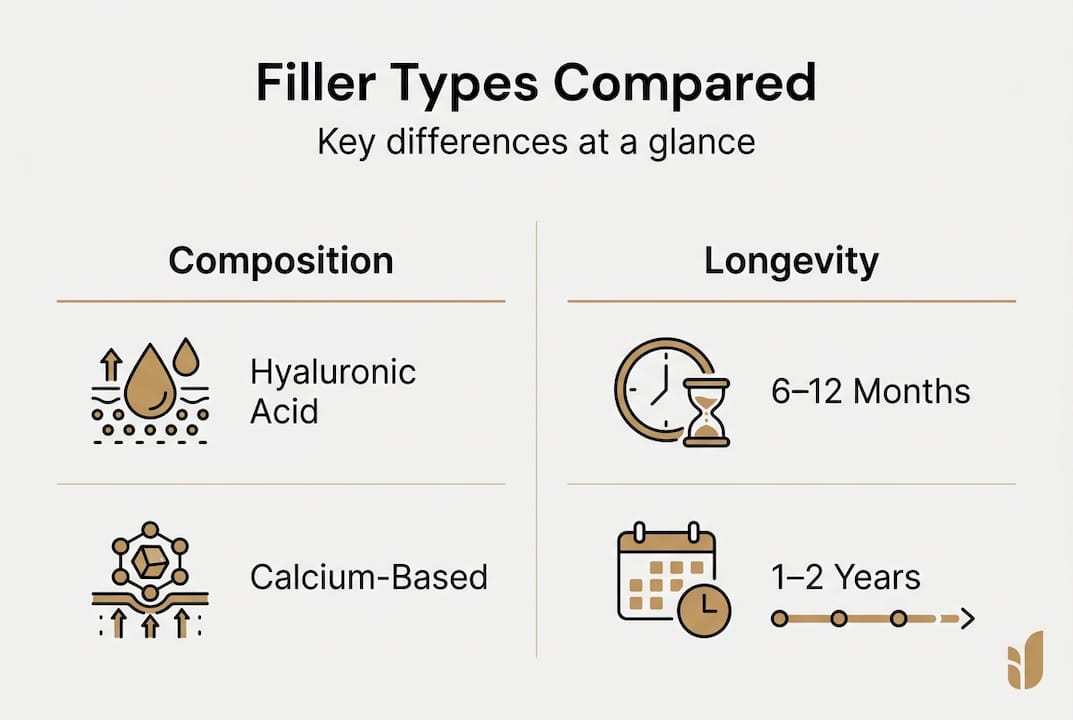
Fillers differ in composition, longevity, and best use, shaping how natural your results appear.
Hyaluronic acid natural feel
Hyaluronic acid fillers blend with surrounding tissue to provide soft, movable volume and typically last six to eighteen months.
Calcium hydroxylapatite effects
Calcium hydroxylapatite fillers deliver firmer immediate volume and stimulate collagen for longer term skin support.
Progressive collagen building
Poly L lactic acid fillers stimulate collagen over months, offering gradual improvement that can last two years or longer.
Overview of common non-surgical filler types
Understanding the fundamental categories of cosmetic fillers helps you navigate treatment options with confidence. Each type functions differently within facial tissue, offering distinct advantages depending on your enhancement goals.
Hyaluronic acid fillers are the most popular choice for subtle, natural volume enhancement. This sugar molecule occurs naturally in your skin, attracting and retaining moisture to create smooth, hydrated volume. Because your body recognizes hyaluronic acid, these fillers integrate seamlessly with surrounding tissue. They feel soft to the touch and move naturally with facial expressions, making them excellent for lips, under eye hollows, and fine lines. Their effects typically last six to eighteen months, and they can be dissolved if needed, providing flexibility during your aesthetic journey.
Calcium hydroxylapatite fillers consist of microscopic calcium particles suspended in a gel carrier. This mineral based composition creates firmer volume compared to hyaluronic acid products. Beyond immediate filling effects, these injectables stimulate your own collagen production over several months. The dual action provides both instant correction and gradual improvement in skin quality. These fillers work well for deeper facial folds, cheek augmentation, and jawline definition where structural support matters most.
Poly L lactic acid fillers take a different approach by stimulating collagen rather than providing immediate volume. Your body gradually builds new collagen around the injected particles over several months, creating subtle, progressive enhancement. Results develop slowly but can last two years or longer. This gradual timeline makes them ideal for clients seeking improvements that appear naturally evolved rather than suddenly changed.
Polymethylmethacrylate fillers contain tiny synthetic beads that remain in tissue permanently, creating a scaffold around which your collagen grows. While semi permanent results appeal to some clients, the irreversible nature makes them less common for subtle aesthetic goals. Most practitioners reserve these for very specific applications requiring long term structural support.
Pro Tip: Schedule a consultation with an experienced injector to evaluate your facial anatomy, discuss your aesthetic priorities, and determine which filler type aligns best with your treatment area and desired subtlety level.
Key characteristics to consider when comparing filler types:
Molecular composition determines how the product integrates with facial tissue
Texture and firmness affect how natural the filler feels during facial movement
Longevity ranges from several months to permanent, impacting maintenance schedules
Reversibility provides safety and flexibility, especially for first treatments
Comparing filler types by longevity, texture, and best uses
Examining fillers side by side reveals practical differences that influence treatment outcomes and patient satisfaction. This comparison helps you match product characteristics to your specific enhancement goals.
Filler type
Composition
Average duration
Typical texture
Best treatment areas
Hyaluronic acid
Natural sugar molecule
6 to 18 months
Soft, gel like
Lips, under eyes, fine lines, cheeks
Calcium hydroxylapatite
Mineral microspheres in gel
12 to 18 months
Firmer, structured
Deep folds, cheeks, jawline, hands
Poly L lactic acid
Synthetic collagen stimulator
2+ years
Gradual, subtle
Mid face volume, temples, overall facial rejuvenation
Polymethylmethacrylate
Permanent synthetic beads
Long term to permanent
Very firm
Deep wrinkles, acne scars (less common for subtle enhancement)
Hyaluronic acid fillers feel exceptionally soft because the gel mimics your skin’s natural moisture content. When injected skillfully, they move with your expressions rather than creating stiff, unnatural contours. Different fillers vary in lasting time from 6 months to over 2 years depending on type and area treated. Areas with more movement, like lips, metabolize the product faster than relatively static zones like cheeks. The reversibility of hyaluronic acid provides peace of mind during your first treatments or when trying a new enhancement area.
Calcium hydroxylapatite fillers offer firmer support, making them excellent for areas requiring structural lift or definition. The mineral particles create immediate volume while triggering your body’s collagen response over subsequent months. This dual mechanism means results actually improve during the weeks following treatment as new collagen forms. The firmer texture works beautifully for cheek augmentation, jawline contouring, and correcting deeper nasolabial folds where you need lasting architectural support.
Poly L lactic acid takes patience but rewards you with gradual, natural looking improvement. Rather than immediate correction, you see progressive enhancement as collagen builds over three to six months. Multiple treatment sessions spaced weeks apart optimize results. The slow timeline ensures changes appear evolved rather than sudden, which many clients prefer for maintaining discretion about their aesthetic treatments.
Pro Tip: Consider how much the treatment area moves during daily expressions and choose a filler texture that maintains natural motion; softer products work better in mobile zones while firmer options suit areas needing structural definition.
Factors affecting filler choice by facial region:
Skin thickness influences which product integrates most naturally
Underlying bone structure determines whether you need soft volume or firm support
Muscle movement patterns require products that flex appropriately
Proximity to delicate structures like eyes demands gentler formulations
Your aesthetic goals, whether subtle refinement or noticeable enhancement
Understanding these distinctions lets you have informed conversations with your injector about which lip filler options or other treatments best serve your enhancement vision.
How to choose the right filler type for natural and subtle enhancement
Selecting the optimal filler requires evaluating multiple factors specific to your facial anatomy and aesthetic priorities. A systematic approach ensures your treatment delivers the refined, authentic results you seek.
Customizing filler choice by facial anatomy and desired outcome leads to more natural aesthetic results. Your facial structure, skin characteristics, and enhancement goals should drive product selection rather than trends or one size fits all recommendations.
Five steps to choose filler type effectively:
Identify your primary concern area and understand its anatomical characteristics, including skin thickness, underlying support structures, and typical movement patterns during expressions.
Define your enhancement goal with specificity, whether adding subtle volume, smoothing lines, lifting sagging tissue, or improving overall facial balance and proportion.
Consider your lifestyle and maintenance preferences, including how often you’re willing to return for touch ups and whether you prefer gradual or immediate results.
Evaluate your medical history for any sensitivities, allergies, or conditions that might influence product safety or effectiveness in your specific case.
Consult with a medically trained injector who can assess your facial anatomy, discuss realistic outcomes, and recommend products aligned with your goals and tissue characteristics.
Common facial areas and recommended filler approaches for natural enhancement:
Lips benefit from soft hyaluronic acid fillers that maintain natural movement and can be adjusted gradually across multiple sessions to avoid overfilling
Cheeks often respond well to firmer products like calcium hydroxylapatite that provide lift and stimulate collagen for lasting structural improvement
Under eye hollows require specialized hyaluronic acid formulations designed for delicate tissue with minimal swelling and smooth integration
Nasolabial folds may need firmer fillers for deeper creases or softer products for fine lines, depending on severity and surrounding tissue
Jawline definition typically uses structured fillers that create architectural support and maintain shape over time
Medically led consultations provide crucial value beyond product selection. An experienced practitioner evaluates your facial proportions, identifies asymmetries, and develops a comprehensive treatment plan that may involve multiple product types across different areas. This holistic approach prevents the overfilled, unnatural appearance that results from treating isolated concerns without considering overall facial harmony.
Key considerations when finalizing your filler choice:
Longevity preference balances maintenance commitment against how long you want results to last before reassessing your aesthetic goals
Recovery time varies slightly between products, with some causing more initial swelling that requires social downtime
Sensitivity or allergy history may rule out certain formulations, making thorough medical screening essential
Budget considerations should account for both initial treatment and maintenance sessions needed to sustain results
Reversibility provides safety and flexibility, especially valuable when trying aesthetic treatments for the first time
Avoiding overfilling requires restraint and staged treatment. Starting conservatively lets you assess results, adjust to changes, and add more volume gradually if desired. This measured approach prevents the overdone appearance that occurs when too much product is placed too quickly. Natural enhancement means others notice you look refreshed and rested, not that you’ve obviously had work done.
Gradual enhancement also allows your facial tissues to adapt to changes. Sudden, dramatic volume shifts can look artificial because surrounding structures haven’t adjusted proportionally. Spacing treatments over several months creates harmony as each area settles and integrates naturally.
Your dermal filler choice should reflect your unique facial anatomy, aesthetic vision, and lifestyle rather than generic recommendations. The right product in skilled hands delivers subtle refinement that enhances your natural beauty without announcing itself.
Discover expert aesthetic treatments in Raleigh, NC
Now that you understand how different filler types create natural enhancement, partnering with experienced professionals ensures safe, beautiful results tailored to your facial anatomy. The Aesthetics Lounge & Spa in North Raleigh offers medically led expertise that prioritizes your safety, comfort, and aesthetic goals above all else.
Our team takes time during consultations to understand your enhancement vision, evaluate your facial structure, and recommend aesthetic treatments that deliver refined results without overdoing it. We believe in educating clients thoroughly so treatment decisions feel clear and confident rather than rushed or pressured. Our conservative, anatomically informed approach means you’ll still look like yourself, just more supported and refreshed. Whether you’re considering your first filler treatment or refining existing results, we’ll help you choose aesthetic treatments naturally suited to your unique features. Beyond injectables, we offer complementary skin health treatments that enhance and extend your dermal filler results for comprehensive facial rejuvenation.
Frequently asked questions about filler types
What are the main differences between hyaluronic acid and calcium hydroxylapatite fillers?
Hyaluronic acid fillers feel softer and more gel like, making them ideal for areas requiring natural movement like lips and under eyes. Calcium hydroxylapatite fillers provide firmer structural support and stimulate collagen production, working better for cheek augmentation and deeper folds. Hyaluronic acid can be dissolved if needed, while calcium hydroxylapatite cannot be reversed but metabolizes naturally over time.
How long do effects from different filler types typically last?
Hyaluronic acid fillers generally last six to eighteen months depending on the treatment area and product formulation. Calcium hydroxylapatite fillers typically maintain results for twelve to eighteen months. Poly L lactic acid stimulates collagen that can last two years or longer. Treatment area, metabolism, and lifestyle factors influence individual longevity, so maintenance schedules vary between clients.
Are some fillers safer for sensitive facial areas like under the eyes?
Yes, specialized hyaluronic acid formulations designed for delicate tissue work best under eyes because they integrate smoothly with minimal swelling and feel soft to avoid visible lumps. These products have smaller particle sizes and specific viscosity that suits thin, mobile skin. Medically led clinics reduce side effects and improve natural looking outcomes through proper product selection and precise injection technique.
Can fillers be reversed if I’m unhappy with the results?
Hyaluronic acid fillers can be dissolved quickly using an enzyme called hyaluronidase, which breaks down the product within hours to days. This reversibility provides safety and flexibility, especially for first time treatments or experimental areas. Other filler types like calcium hydroxylapatite and poly L lactic acid cannot be reversed but will metabolize naturally over their typical duration.
What should I expect during a consultation for filler treatments?
A thorough consultation includes discussing your aesthetic goals, reviewing your medical history, and examining your facial anatomy to identify areas that would benefit from enhancement. Your injector should explain which filler types suit your needs, show before and after examples, discuss realistic outcomes, and answer all questions. Medically led spas prioritize education and transparent expectations so you feel confident and informed before proceeding with treatment.
Choosing the right non-surgical facial rejuvenation approach can feel overwhelming when you want to maintain a natural, youthful appearance without looking overdone. With countless treatment options promising results, adults in North Raleigh often struggle to identify which methods deliver genuine, lasting improvements backed by medical evidence. This guide provides medically guided facial rejuvenation tips designed to help you make informed decisions about treatments that respect your facial structure while addressing visible signs of aging. You’ll discover evidence-based options that prioritize safety, natural outcomes, and long-term skin health.
Prioritize safety, medical supervision, and solid clinical evidence when choosing non surgical facial rejuvenation options.
Injectables deliver natural enhancement
Injectables such as incobotulinumtoxinA and hyaluronic acid fillers provide rapid improvements while preserving natural facial movement.
Energy based tightening with RF
HIFES with synchronized radiofrequency tightens skin and repositions tissue for noticeable contour improvements with minimal downtime.
Combination treatments boost results
Pairing injectables with skin tightening or peels addresses multiple aging concerns for more natural, long lasting outcomes.
Biostimulatory PLLA SCA fillers
Biostimulatory PLLA SCA fillers promote collagen production for gradual, durable wrinkle reduction.
Criteria for selecting effective facial rejuvenation tips
When evaluating non-surgical facial rejuvenation treatments, understanding key selection criteria helps you identify options that deliver natural, safe results. Safety should always be your top priority, followed by clinical evidence demonstrating real-world effectiveness.
Consider these essential factors when choosing treatments:
Safety profile and medical supervision requirements
Clinical efficacy data from peer-reviewed studies
Patient satisfaction scores from validated assessments
Treatment durability and maintenance schedules
Recovery time and impact on daily activities
Compatibility with your facial anatomy and skin type
Injectables and energy-based treatments show measured patient satisfaction and effectiveness in clinical studies, making them reliable choices for adults seeking natural enhancement. The facial rejuvenation process natural results approach emphasizes anatomical precision over aggressive correction.
Pro Tip: Schedule a consultation before committing to any treatment. A medically trained provider can assess your facial structure, discuss realistic expectations, and recommend options that align with your goals without compromising your natural appearance.
Combining modalities often enhances results by addressing multiple aging concerns simultaneously. For example, pairing injectables with skin tightening technologies can restore volume while improving skin quality. Understanding facial rejuvenation fewer side effects helps you select treatments with minimal downtime and maximum safety.
Top non-surgical facial rejuvenation options explained
Several scientifically validated treatments offer natural facial rejuvenation without surgery. Each targets specific aging concerns, allowing you to customize your approach based on individual needs.
Injectables remain the most popular option for quick, natural enhancement. IncobotulinumtoxinA and HA fillers improve facial appearance significantly, with FACE-Q satisfaction scores increasing to 80.1 at one month. These treatments smooth wrinkles, restore lost volume, and create subtle lifting effects that preserve natural facial movement. The injectables overview demonstrates how strategic placement achieves balanced, harmonious results.
High-intensity focused electromagnetic stimulation (HIFES) with synchronized radiofrequency (RF) represents an innovative approach to facial contouring. HIFES with synchronized RF shifts facial volume and achieves over 94% patient satisfaction by repositioning tissue for a more youthful contour. This technology stimulates muscle contractions while delivering controlled heat to tighten skin, offering comprehensive rejuvenation without needles or downtime.
Biostimulatory fillers provide long-lasting improvement through collagen stimulation. PLLA-SCA biostimulatory fillers show a 71.6% responder rate for cheek wrinkles at 12 months. Unlike traditional fillers that simply add volume, these treatments trigger your body’s natural collagen production, creating gradual, natural-looking improvements that develop over several months.
Chemical peels exfoliate damaged surface layers while stimulating deeper collagen renewal. Chemical peels improve skin texture and collagen with benefits visible within a week, making them ideal for addressing fine lines, uneven tone, and rough texture. The aesthetics skincare options include various peel strengths tailored to different skin concerns and types.
Pro Tip: Different treatments peak at different times. Injectables show immediate results, biostimulatory fillers develop over months, and chemical peels reveal improvements as skin regenerates. Understanding these timelines helps you plan treatments around important events.
Exploring skin tightening technologies reveals additional options for firming loose skin and improving facial definition without invasive procedures.
Comparing facial rejuvenation treatments: effectiveness and satisfaction
Understanding how different treatments perform helps you select the best option for your specific concerns and lifestyle. Clinical data provides objective comparisons of effectiveness and patient satisfaction.
Treatment
Primary benefit
Patient satisfaction
Ideal for
Recovery
Injectables
Global facial improvement
FACE-Q scores improve from 71.4 to 80+
Wrinkles, volume loss
Minimal
HIFES with RF
Volume repositioning
94.6% patient satisfaction
Facial contouring
None to mild redness
PLLA-SCA fillers
Collagen stimulation
71.6% responder rate at 12 months
Wrinkle reduction, volume
Minimal
Chemical peels
Texture and tone
High for appropriate candidates
Fine lines, pigmentation
Days to week
Injectables deliver fast, comprehensive improvement with high satisfaction scores. They excel at addressing multiple concerns simultaneously, from forehead lines to volume depletion in cheeks and temples. The quick results and minimal downtime make them ideal for busy adults seeking immediate enhancement.
HIFES with RF uniquely repositions facial volume through muscle stimulation and tissue tightening. This approach creates youthful contours without adding synthetic materials, appealing to those who prefer completely non-invasive options. The substantial patient satisfaction reflects its effectiveness for facial harmonization.
Biostimulatory PLLA-SCA fillers focus on long-term collagen building rather than instant volume. The gradual improvement appears more natural as your own tissue regenerates, making these treatments perfect for subtle, progressive enhancement that avoids sudden changes.
Chemical peels target surface concerns like texture irregularities, sun damage, and fine lines. They work best when combined with other treatments that address deeper structural changes, creating comprehensive rejuvenation from surface to foundation.
Consider your treatment goals when selecting options:
For immediate wrinkle reduction: injectables
For non-invasive contouring: HIFES with RF
For gradual, natural volume building: biostimulatory fillers
For skin texture and tone: chemical peels
For comprehensive rejuvenation: combination approach
Pro Tip: Your facial anatomy and aging pattern influence which treatments work best. A medically trained provider can identify whether you need volume restoration, skin tightening, texture improvement, or a combination based on your unique facial structure.
Exploring aesthetic treatments natural results demonstrates how different modalities complement each other. The skin tightening treatments category offers additional options for firming and lifting without surgery.
Explore medically guided facial rejuvenation in North Raleigh
Now that you understand the science behind effective facial rejuvenation, finding the right local provider ensures safe, natural results. The Aesthetics Lounge & Spa in North Raleigh offers medically led treatments designed to enhance your appearance while preserving your natural features.
Our boutique practice specializes in conservative, anatomically informed approaches to facial rejuvenation. We offer comprehensive aesthetic treatments including injectables, chemical peels, and advanced skin tightening technologies, all administered under medical supervision. Every treatment plan begins with thorough consultation to understand your goals, assess your facial structure, and recommend options that deliver lasting improvements without looking overdone. We prioritize education and transparent expectations, so you feel confident in every decision. Whether you’re exploring injectables facial rejuvenation or considering combination approaches, our team creates personalized strategies that respect your unique anatomy and aesthetic preferences. Discover examples of aesthetic treatments that demonstrate our commitment to refined, natural outcomes.
Frequently asked questions
What are the safest non-surgical options for facial rejuvenation?
Injectables, RF skin tightening, and chemical peels have strong safety records when administered by medically trained providers. Professional consultation ensures treatments match your skin type, health history, and aesthetic goals. Medical supervision minimizes risks and optimizes outcomes through proper technique and dosing.
How long do results from facial rejuvenation treatments last?
Injectables typically last several months before requiring touch-ups, while biostimulatory fillers can maintain improvements for 12 months or longer through ongoing collagen production. Chemical peel benefits vary from weeks to months depending on peel depth and your skincare routine. Combining treatments often extends overall results by addressing multiple aging factors.
Can combining different facial rejuvenation treatments improve results?
Combining injectables, skin tightening, and chemical peels addresses multiple aging signs simultaneously for more comprehensive rejuvenation. Strategic layering of treatments creates synergistic effects that individual modalities cannot achieve alone. Professional guidance ensures treatments complement rather than interfere with each other, and the examples of aesthetic treatments showcase successful combination approaches.
What is the recovery time after non-surgical facial rejuvenation procedures?
Most treatments like injectables require minimal downtime, allowing you to resume normal activities immediately with minor precautions. Chemical peels may cause temporary redness and flaking for several days depending on strength. Skin tightening procedures typically produce mild redness lasting a few hours to days, with no activity restrictions required.
Finding the right dermal fillers can feel overwhelming with so many options available. Each promises a fresher look or smoother skin, but not all deliver the same results. Some focus on subtle enhancements, while others aim for dramatic changes. Curious about which fillers stand out from the rest and what makes them unique? There are key differences in texture, longevity, and the effects you may notice. If you are thinking about trying something new, the choices ahead might surprise you. Which formulas are leading the way in 2026 and how can you decide which suits your goals best?
The Aesthetics Lounge and Spa Raleigh is a medical led, boutique clinic on Six Forks Road that prioritizes restrained, natural results and long term facial support. Their calm, modern setting and anatomy driven approach make them the obvious top choice for thoughtful patients.
Core Features
The practice offers a comprehensive menu including injectables, advanced lasers, skin care, and wellness options together with personalized treatment planning based on anatomy and goals. Medical oversight guides each plan so results focus on facial harmony and longevity rather than trends.
Pros
Expert medical led care: Clinical oversight from medical professionals ensures treatments follow safe protocols and anatomical precision for predictable, natural outcomes.
Emphasis on natural and balanced results: The team plans conservatively to enhance features subtly so you still look like yourself but more supported and rested.
Wide range of aesthetic and wellness services: Combining injectables, lasers, skin care, and wellness allows integrated programs that treat structure, texture, and skin health together.
Personalized treatment planning: Consultations map anatomy and movement to a staged plan, reducing overtreatment and improving long term satisfaction with measurable goals.
Calm, supportive environment: The modern clinical space on Six Forks Road is designed for low pressure decision making and clear communication during every appointment.
Who It’s For
This clinic suits adults in Raleigh who want subtle, medically guided aesthetic improvements delivered with restraint and clarity. If you prefer an expert led, personalized plan that respects facial structure and natural movement, this is the ideal match.
Unique Value Proposition
The Aesthetics Lounge and Spa Raleigh stands out because it pairs a broad service menu with a strict philosophy of restraint and anatomy first planning. That combination produces predictable, long lasting results that sophisticated buyers choose when they want quality over quick fixes.
The clinic outperforms competitors by making treatment strategy the priority rather than single procedures. Patients receive staged, medical led plans that protect facial integrity, prioritize skin health, and reduce the risk of overdone outcomes that undermine appearance over time.
Real World Use Case
A patient books a consultation for personalized injectables and laser work to address early volume loss and uneven texture. The clinician creates a phased plan, performs conservative injections, and schedules laser sessions to improve skin quality while preserving natural expression.
Pricing
Specific pricing is not published online; treatments are customized and priced after consultation to reflect the individualized plan, chosen technologies, and staged approach. Expect cost estimates to be provided during the initial medical consultation.
Amelia Aesthetics provides medically guided plastic surgery and medspa care with a focus on individualized patient collaboration and clear expectations. The practice emphasizes conservative, anatomy-based planning delivered by experienced surgeons in a caring environment.
This clinic works well for patients who want transparent pricing estimates and a full range of options without pressure. Bottom line takeaway: deliberate, patient centered care aimed at natural results.
Core Features
Amelia Aesthetics offers a wide range of procedures across breast, body, face, and medspa treatments with resources to guide decisions. The practice supports patients with orientations, before and after photos, and detailed procedure information.
Additional features include online booking and transparent pricing estimates plus patient testimonials that showcase outcomes and the patient experience. Takeaway: the practice pairs clinical depth with practical tools that make planning easier.
Pros
Comprehensive care with experienced surgeons: The team includes specialists who offer surgical and non surgical treatments so you can build a multi stage plan with medical oversight.
Multiple procedure options and locations: The practice lists several treatment categories and plans to expand locations which increases future accessibility for Raleigh area patients.
Transparent pricing and online booking: Price estimates and the ability to book online reduce friction during the decision process and help you plan finances.
Strong patient testimonials and reviews: Consistent positive feedback suggests reliable outcomes and caring staff interactions which matters when choosing a surgeon.
Resources for patient education: Orientations and procedure information prepare patients and set realistic expectations before any appointment.
Each point strengthens the case for medically guided, patient focused aesthetic care.
Cons
Many locations are listed as coming soon and not yet operational, which limits current in person access for some patients.
Pricing is approximate and will vary by individual case which means you should expect a personalized quote during consultation.
Limited current location availability means travel or scheduling flexibility may be necessary for Raleigh locals seeking same day consultations.
Takeaway: the practice is expanding but not every location is ready now.
Who It’s For
This practice suits women aged 25 to 55 in Raleigh who want medically led, conservative aesthetic care and clear communication from consultation through recovery. If you prefer collaborative planning over trend chasing this team matches that preference.
Takeaway: pick Amelia Aesthetics when you value surgical expertise and tailored treatment roadmaps.
Unique Value Proposition
Amelia Aesthetics combines a full spectrum of surgical and medspa services with an emphasis on empathy and transparency. The combination of educational resources, clear pricing estimates, and surgeon led care creates a unified experience for patients seeking longevity over quick fixes.
Takeaway: integrated planning with patient education is the practice differentiator.
Real World Use Case
A woman considering breast augmentation can review procedure options and before and after photos online, schedule an orientation or consultation through the website, and receive a personalized estimate before booking surgery. The process minimizes surprise and supports informed consent.
Takeaway: the patient journey is structured and predictable.
Pricing
Estimates vary by procedure. For example breast augmentation is listed between $7,300 and $10,000 per unit as an approximate range. Final pricing is confirmed during consultation based on surgical plan and individual needs.
Takeaway: plan financially for the quoted range and expect a tailored estimate.
Synergy Face + Body is a full service medical spa and plastic surgery practice serving Raleigh and surrounding communities. The clinic emphasizes medically guided care with multiple locations and a range of surgical and non surgical services for natural results.
Core Features
Synergy offers a broad menu that covers plastic surgery, med spa treatments, and well being services under one roof. Patients can book consultations online, access patient portals, and explore financing and membership programs to plan multi visit care.
Pros
Comprehensive surgical options: The practice lists facelift, rhinoplasty, breast procedures, and liposuction which allow coordinated, surgical treatment plans.
Wide med spa menu: Botox, fillers, laser resurfacing, and body contouring are available so you can pair surgical and non surgical care in one place.
Multiple convenient locations: Clinics in Raleigh, Wake Forest, Cary, and Virginia reduce travel time for patients across the region.
Patient resources and access: Online scheduling, patient portal access, membership options, and financing make planning and follow up easier.
Advanced technology and expertise: The practice highlights modern equipment and expert providers to support safer, evidence based procedures.
Cons
Pricing information is not specified on the website which makes cost comparison before consult difficult.
The site offers limited detail on specific treatment packages or documented outcome galleries so expectations require direct consultation.
Focus on North Carolina and Virginia means patients outside the region have less accessibility and fewer location choices.
Who It’s For
This practice fits adults in North Carolina and Virginia who want medically supervised cosmetic care and a one stop option for surgical and non surgical concerns. Ideal patients value conservative, anatomically informed treatments and predictable follow up through a clinic network.
Unique Value Proposition
Synergy positions itself as a medically led boutique that combines plastic surgery and aesthetic medicine with patient financing and membership options. That combination helps clients plan staged treatments and maintain results over time with consistent provider oversight.
Real World Use Case
A 45 year old Raleigh resident seeks a refreshed but natural look. She books an online consultation, reviews financing, schedules a facelift and follows with laser resurfacing at a nearby location to address texture and pigmentation.
Pricing
Pricing is not specified on the website and varies by treatment. Patients must request a consultation or estimate for specific procedure costs and available membership or financing terms.
Life Time delivers a broad wellness ecosystem that extends beyond a gym to include athletic country clubs, coworking, luxury living, and digital health tools. It fits members who want integrated support for fitness, community, and daily wellbeing.
Life Time emphasizes results driven programs and a welcoming community environment while offering services across multiple locations and platforms.
Core Features
Life Time combines facilities and services to support an active lifestyle and daily routines. Key elements include:
Athletic country clubs with facilities and structured programs for exercise and lessons.
Coworking spaces designed for productivity with health aware environments.
Luxury living options that include eco conscious amenities and community events.
Digital platforms that provide around the clock access to health resources and tracking.
Results driven fitness programs tailored to varied goals and experience levels.
These pieces work together so members can train, work, live, and track health in one network.
Pros
Comprehensive offerings: Life Time brings fitness, living, coworking, and digital solutions together under one membership, creating a cohesive wellness experience.
Community focused: The membership model encourages social events and supportive environments that help sustain healthy habits.
Program variety: There are structured programs and lessons for beginners through advanced members, which supports long term progress.
Luxury and sustainability: Living options prioritize higher end finishes and eco conscious features for those valuing comfort and environmental design.
Broad availability: Multiple locations allow members to access amenities across regions without needing multiple separate subscriptions.
Cons
Membership and program costs may vary and could be high for some members.
Access to certain amenities often requires additional fees or has usage restrictions.
The provided materials do not include specific pricing or clearly defined membership tiers.
Who It’s For
Life Time suits health conscious adults who prefer a single provider for fitness, social programming, and lifestyle amenities. It also fits professionals who value coworking spaces that respect wellbeing and members who want digital tools to track progress.
For adults in Raleigh, NC who want convenient access to training classes, social fitness options, and app based health resources, Life Time is a logical option to explore.
Unique Value Proposition
Life Time stands out by offering an integrated membership that links physical facilities, living spaces, and digital health tools. That combination supports sustained behavior change rather than short term gains. Members get convenience across daily life and consistent programming focused on measurable results.
Real World Use Case
A working professional signs up to use Life Time for gym access and personal training. They move into a Life Time luxury residence, use the digital app to schedule sessions and log workouts, and attend community classes for social connection and accountability.
Pricing
Pricing varies by location, service, and membership level. Memberships, amenity access, and program fees change depending on the club and residence selected. Prospective members must contact local sites for exact rates and tier details.
New Life Aesthetics is a Raleigh medical aesthetics clinic that emphasizes education and personalized care for adults seeking subtle, natural facial refinement. The practice offers a broad service mix including dermal fillers and aims for a private, comfortable experience, though specific pricing is not listed.
Core Features
The clinic provides a full set of aesthetic services such as Botox, dermal fillers, skin rejuvenation, laser treatments, body contouring, and hair restoration delivered by nurse practitioners and aestheticians. Consultations focus on tailored treatment plans with comprehensive patient education and follow up.
Pros
Wide variety of services: The clinic covers injectables, lasers, and body treatments so you can consolidate multiple treatments in one medically supervised setting.
Personalized patient experience: Consultations and individualized treatment plans prioritize your facial structure and long term results rather than one-size-fits-all protocols.
Experienced, trained staff: Care is delivered by nurse practitioners and licensed aestheticians which supports medically guided decision making and safety.
Private, convenient location: The practice operates in a private clinic setting in Raleigh that reduces the feeling of a busy spa and supports discreet visits.
Strong patient education and follow up: The team emphasizes information and ongoing care so you understand procedures, expectations, and aftercare.
Cons
Specific treatment prices are not listed on the website which makes upfront budgeting difficult for patients shopping for filler costs.
Appointments are by scheduled visits only and the lack of walk in availability may slow access for busy professionals with unpredictable schedules.
The website offers limited before and after outcome galleries which reduces the ability to evaluate expected visual results before booking.
Who It’s For
This clinic fits adults ages 25 to 55 in Raleigh who want medically supervised, conservative aesthetic care that preserves natural movement and facial anatomy. It suits people who value thorough consultation, ongoing education, and providers who plan treatments thoughtfully.
Unique Value Proposition
New Life Aesthetics combines a medical approach with a boutique, private atmosphere so treatments feel clinical yet intimate. The practice stands out for its focus on education, follow up, and customized plans delivered by licensed clinical staff.
Real World Use Case
A patient concerned about early cheek volume loss could schedule a consultation to discuss filler options and a layered plan that includes skin rejuvenation and follow up visits to refine results. The team creates a step by step plan tailored to facial anatomy and lifestyle.
Pricing
Pricing is not specified on the website which requires contacting the clinic for exact costs and package options.
Azura Skin Care Center is a medically oriented boutique spa in Cary, NC that focuses on natural, subtle enhancements guided by experienced clinicians. Their approach pairs personalized consultations with a wide menu of services so you get targeted care without overtreatment.
Core Features
Azura offers a comprehensive range of services including injectables, laser treatments, professional facials, microneedling, chemical peels, and an online shop for professional-grade skincare. They emphasize tailored treatment plans and community involvement while providing online booking and consultation options.
Pros
Wide Procedure Selection: The clinic offers many advanced treatments so you can combine procedures like fillers and laser therapy under one care plan.
Natural-Looking Philosophy: Staff prioritize subtle, anatomically informed results so enhancements preserve movement and facial balance.
Professional Product Access: Clients can buy clinical brands such as Skinbetter, ZO, and SkinMedica to continue results at home.
Community Commitment: Azura supports local nonprofits which reflects a practice rooted in Cary and the surrounding community.
Experienced Team: The practice presents an experienced clinical staff that supports medically guided care and consistent follow up.
Cons
Limited Location Information Provided: The available content gives few specifics about on-site facilities or exact hours which can slow early decision making.
Sparse Pricing Transparency: Service prices are not listed in detail and only a few product prices appear, making budget planning harder.
Overwhelming Service Menu for New Clients: The variety of options can feel daunting if you need clear first-step guidance for your skin goals.
Who It’s For
Azura fits adults in Cary and nearby Raleigh suburbs who want medically supervised, conservative cosmetic care rather than dramatic change. You are a 25 to 55 year old who prefers planned, longevity-focused treatments and values clinician guidance and product quality.
Unique Value Proposition
Azura combines medical oversight with boutique service: thorough consultations lead to treatment strategies that respect facial structure and skin health. The clinic pairs in-clinic procedures with access to clinical skincare so you maintain results between appointments.
Real World Use Case
A client books a consultation to address early jowl laxity and uneven texture. Their provider recommends targeted fillers with a series of gentle laser sessions and a Skinbetter home regimen to extend results over the next 6 to 12 months.
Pricing
Pricing varies by service and is provided at consultation. Some product prices are shown online, for example Hand Cream $36, KZO Recovery Cream $125, and SkinMedica Serum $295, while treatment fees require direct inquiry.
North Raleigh Plastic Surgery pairs a medically led practice with a broad service mix for surgical and non surgical care in Raleigh. The practice emphasizes patient focused planning and anatomic precision so results feel natural and long lasting.
Core Features
The practice offers a wide range of surgical procedures across face, breast, and body plus reconstructive and male procedures delivered by an experienced team led by Dr. Juan Ortiz.
They also provide comprehensive med spa treatments including injectables, skin tightening, cellulite treatments, and medical weight loss alongside a before and after gallery and multilingual support in Spanish.
Pros
Double board certified surgeon: The team is led by Dr. Juan Ortiz which signals advanced training and surgical expertise for both cosmetic and reconstructive cases.
Extensive procedure selection: Patients can choose from surgical and non surgical paths which allows coordinated strategies for longer term facial support and body contour goals.
Integrated med spa services: Offering injectables and skin tightening in house lets you combine surgical timelines with follow up nonsurgical maintenance for smoother transitions.
Visual outcome resources: The before and after gallery and patient testimonials provide tangible examples of results to inform realistic expectations.
Convenient Raleigh location: A central practice address makes follow up visits and consultations accessible for people living in North Raleigh and surrounding neighborhoods.
Cons
The website contains a lot of material which can overwhelm first time visitors when they try to find a single clear starting point.
Specific pricing is not listed on the site which means you must contact the practice directly to get procedure cost estimates.
Some content on the site appears inconsistent or formatted incorrectly which can create confusion when reviewing services and use cases online.
Who It’s For
This practice suits adults in the Raleigh area who want medically guided, conservative aesthetic care and value anatomical planning and longevity over trends. It fits people who prefer combining surgical expertise with on site med spa maintenance.
Unique Value Proposition
North Raleigh Plastic Surgery stands out for blending surgical depth with med spa options under one roof led by an experienced surgical director. That combination supports staged treatment plans where surgery and maintenance are coordinated for natural outcomes.
Real World Use Case
A patient seeking breast augmentation books a consultation, reviews the before and after gallery, chooses a surgeon and completes surgery with Dr. Ortiz followed by med spa touch ups for refined contour and sustained results.
Pricing
Pricing varies by procedure and is not posted publicly. Cost details are available during consultation or through the resources section on the practice website so you can get a tailored quote based on goals and clinical needs.
Amelia Aesthetics offers a compassionate, surgeon-led approach to cosmetic surgery and medspa care, with a clear focus on patient education and transparent policies. The practice suits patients who want thoughtful planning and direct online booking for personalized procedures.
Core Features
Amelia Aesthetics provides a wide range of plastic surgery procedures, including breast, body, and facial treatments, plus medspa services such as fillers and wrinkle relaxers. The practice highlights board-certified surgeons, multiple location options, patient testimonials, and visual guides for procedure education.
Pros
Comprehensive, empathetic care: The practice emphasizes a patient-centered approach that supports emotional comfort alongside surgical planning.
Large procedure menu: Patients can access surgical and non surgical options from breast augmentation to injectable treatments under one roof.
Multiple location strategy: Having several clinics and planned expansions gives patients geographic flexibility and future access.
Transparent initial pricing: Online price estimates and booking tools make it easier to start the consultation process without hidden steps.
Educational resources and testimonials: Visual guides and patient stories help you prepare and set realistic expectations before booking.
Cons
Many locations are still upcoming and not yet open to the public, which limits immediate access for some patients.
Pricing varies by procedure and location, so precise quotes require a consultation and can differ from initial estimates.
The service presentation and testimonials are primarily focused on women, which narrows the appeal for men seeking similar care.
Who It’s For
Amelia Aesthetics fits adults, especially women ages 25 to 55, who want medically supervised cosmetic enhancement with an emphasis on education and emotional support. It appeals to patients who value clear pricing, video orientation, and surgeon credentials when choosing care.
Unique Value Proposition
Amelia Aesthetics pairs surgical expertise with accessible medspa treatments and an emphasis on patient education. The combination of transparent online tools, video orientation, and surgeon led guidance makes the path from consultation to procedure easier and more predictable.
Real World Use Case
A patient considering breast augmentation watches the practice’s orientation videos, reads testimonials to understand recovery and satisfaction, schedules an online consult, receives a tailored quote, and books surgery with a surgeon she feels comfortable with.
Pricing
Estimates vary by procedure and location, and a consult is required for a final quote. For reference, breast augmentation is listed between $7,300 and $10,000 per unit, and financing options are available to help spread cost over time.
Comprehensive Comparison of Aesthetic Clinics in Raleigh, NC
The following table provides a concise comparison of prominent aesthetic clinics in Raleigh, NC, based on their services, unique features, and other key details as mentioned.
Personalized care, private clinic atmosphere, thorough patient education
Comprehensive service options, licensed staff, patient-centric planning
Consultation-based pricing
Azura Skin Care Center
Injectables, Skincare, Laser treatments
Community-focused, access to premium skincare products, involvement in philanthropy
Natural results approach, variety of procedures
Some product prices listed; treatment costs require consultation
North Raleigh Plastic Surgery
Plastic surgery and Medspa services
Double board-certified surgeon, multilingual service, surgical and non-surgical integration
Wide service mix, anatomy-focused planning
Pricing available during consultation
Discover the Best Dermal Fillers with Precision and Care
Choosing the right dermal filler can feel overwhelming with so many options promising instant results. This article highlights common challenges such as finding treatments that enhance your natural beauty without looking overdone and maintaining long-lasting outcomes. If your goal is subtle volume support that respects your facial anatomy and movement, you deserve a personalized, medically guided plan.
At The Aesthetics Lounge and Spa Raleigh, we specialize in conservative, anatomy-based aesthetic care that prioritizes longevity over quick fixes. Explore our Skin Care Archives to learn about integrated treatment options that combine dermal fillers with skin health strategies for balanced, natural results.
Ready to refine your look with a tailored plan? Visit our website at https://raleigh.theaestheticsloungeandspa.com to schedule your consultation today and take the first step toward a refreshed, supported you with expert care you can trust.
Frequently Asked Questions
What are dermal fillers used for?
Dermal fillers are primarily used to add volume and smooth out wrinkles and lines on the face. They can enhance facial contours, such as cheeks and lips, and improve overall skin texture. Consider scheduling a consultation to determine the best type of filler for your specific needs.
How long do the effects of dermal fillers last?
The effects of dermal fillers typically last anywhere from 6 months to 2 years, depending on the type of filler used and the treatment area. To maintain your desired appearance, plan for follow-up treatments based on individual results and the specific filler chosen.
Are there any side effects associated with dermal fillers?
Common side effects of dermal fillers can include swelling, bruising, and redness at the injection site. Most side effects subside within a few days, so monitor your condition and consult with your practitioner if any lasting symptoms occur.
How should I prepare for a dermal filler treatment?
To prepare for a dermal filler treatment, avoid blood thinners like aspirin and alcohol at least 24 hours prior to your appointment. This can help minimize the risk of bruising and swelling post-procedure, enhancing the overall results.
What should I expect during a dermal filler procedure?
During a dermal filler procedure, you can expect a consultation, application of a numbing agent, and then the injections of the filler itself, which typically take only a few minutes. Following the procedure, you should be able to return to your daily activities almost immediately, but follow specific aftercare instructions for the best results.
Many people assume that achieving a refreshed, youthful appearance requires going under the knife. This belief overlooks the growing field of non-surgical rejuvenation, which offers effective solutions with minimal downtime and natural looking outcomes. From injectables to energy based devices, these treatments address wrinkles, volume loss, and skin quality without incisions or lengthy recovery periods. This guide explains what non-surgical rejuvenation entails, the science behind its effectiveness, and how to choose the right options for your goals. Understanding these methods empowers you to make informed decisions about your aesthetic care.
Non-surgical rejuvenation uses minimally invasive techniques like injectables, lasers, and regenerative therapies to reverse aging signs without surgery.
Common techniques
Botulinum toxin, dermal fillers, radiofrequency, ultrasound, lasers, PRP, and PRF are widely used for natural results.
Safety profile
Complications are generally mild and rare, with lower risk and faster recovery compared to surgical procedures.
Patient satisfaction
Clinical trials report 70-90% satisfaction rates with noticeable improvements in skin tone and wrinkle reduction.
Longevity of results
Effects typically last 6 to 24 months depending on treatment type, with biostimulators offering extended benefits.
What is non-surgical rejuvenation? Defining the approach
Non-surgical rejuvenation refers to minimally invasive aesthetic procedures that reverse signs of facial aging such as wrinkles, sagging, and volume loss without surgery. These techniques include botulinum toxin, dermal fillers, energy based devices like lasers, radiofrequency, and ultrasound, plus regenerative therapies such as platelet rich plasma and platelet rich fibrin. Unlike surgical facelifts, these treatments require no incisions, general anesthesia, or extended downtime. They focus on enhancing your natural features rather than drastically altering your appearance.
The appeal lies in their ability to deliver subtle, gradual improvements that align with your facial anatomy. Botulinum toxin relaxes muscles that cause dynamic wrinkles, while dermal fillers explained restore volume and smooth static lines. Energy based devices stimulate collagen production, tightening skin and improving texture over time. Regenerative therapies harness your body’s healing mechanisms to rejuvenate from within. This comprehensive anti-aging review details how these methods work together for optimal outcomes.
Common non-surgical treatments include:
Botulinum toxin injections for forehead lines, crow’s feet, and frown lines
Hyaluronic acid fillers to plump lips, cheeks, and under eye hollows
Radiofrequency microneedling for skin tightening and texture improvement
Laser resurfacing to address pigmentation, scars, and fine lines
Ultrasound therapy for deep tissue lifting without surgery
PRP and PRF injections to enhance skin quality and promote natural healing
These options cater to busy adults who want noticeable results without the commitment of surgery. Skin tightening treatments and laser and light therapies can be scheduled around your work and social life, with most requiring little to no recovery time. The focus remains on preserving your unique appearance while addressing specific concerns.
Pro Tip: Start with a thorough consultation to identify which combination of treatments best suits your skin type, aging patterns, and aesthetic goals.
Scientific evidence and patient outcomes: What you can expect
Clinical trials consistently demonstrate the effectiveness of non-surgical rejuvenation methods. Randomized controlled trials show wrinkle reduction and improved skin tone with high satisfaction ranging 70 to 90 percent. Photobiomodulation and microneedle radiofrequency treatments have been particularly well studied, with measurable improvements in skin hydration, elasticity, and overall texture. These results are not anecdotal but backed by rigorous scientific methodology.
A Frontiers in Medicine 2025 clinical study found that microneedle RF achieved 84% improvement in skin tone and hydration, while poly-L-lactic acid showed a 71% responder rate. Patients reported visible reduction in fine lines, tighter skin, and a more youthful glow. These outcomes align with the benefits of medical aesthetics when performed under proper medical supervision.
Treatment Type
Primary Outcome
Satisfaction Rate
Duration of Results
Botulinum toxin
Wrinkle relaxation
85-90%
3-6 months
Hyaluronic acid fillers
Volume restoration
80-88%
6-18 months
Microneedle RF
Skin tightening, tone improvement
84%
12-18 months
Poly-L-lactic acid
Collagen stimulation
71% responder rate
18-24 months
Laser resurfacing
Texture, pigmentation
75-85%
12-24 months
These benchmarks help set realistic expectations. You won’t see overnight transformations, but gradual, natural looking improvements that develop over weeks to months. The medically led spa benefits include ongoing monitoring and adjustments to ensure optimal outcomes.
Pro Tip: When reviewing clinical data, focus on responder rates and satisfaction percentages rather than dramatic before and after images, which may not represent typical results.
Safety, risks, and nuances of non-surgical rejuvenation
While non-surgical treatments are generally safe, understanding potential risks helps you make informed choices. Complications are generally mild and rare, with vascular occlusion from fillers being the most serious but uncommon event requiring urgent treatment. Biostimulators are preferred for longevity and safety, as they gradually stimulate your own collagen rather than adding synthetic volume.
Common mild side effects include:
Temporary swelling, redness, or bruising at injection or treatment sites
Slight tenderness or discomfort lasting a few hours to days
Rare allergic reactions to injectable materials
Transient numbness or tingling in treated areas
Periorbital treatments, those around the eyes, require particular skill due to delicate anatomy and thin skin. Darker skin tones need specialized approaches to avoid post inflammatory hyperpigmentation from energy based devices. Choosing an experienced provider familiar with diverse skin types minimizes these risks. The safe aesthetic care 2026 standards emphasize medical oversight and individualized treatment plans.
Compared to surgical facelifts, non-surgical options carry significantly lower complication rates and shorter recovery times. You avoid risks like infection, scarring, anesthesia complications, and prolonged healing. Most people resume normal activities immediately or within 24 to 48 hours. This makes non-surgical rejuvenation ideal for busy professionals who cannot afford weeks of downtime. The fewer side effects in facial rejuvenation approach prioritizes your safety and comfort.
Pro Tip: Always verify that your provider is a licensed medical professional with specific training in aesthetic procedures, as this dramatically reduces the risk of complications.
Choosing the right treatments for natural, lasting results
Selecting the best non-surgical options depends on your specific concerns, lifestyle, and aesthetic goals. Results last 6 to 24 months, with biostimulators preferred for longevity and 70 to 90 percent satisfaction in trials, making them suitable for busy adults. Understanding each treatment’s strengths helps you build a personalized plan that delivers the subtle, natural outcomes you want.
Treatment
Typical Duration
Downtime
Best For
Botulinum toxin
3-6 months
None
Dynamic wrinkles, prevention
HA fillers
6-18 months
Minimal (1-2 days)
Volume loss, lip enhancement
Biostimulators (PLLA, PCL)
18-24 months
Minimal (1-3 days)
Gradual collagen building, longevity
Microneedle RF
12-18 months
2-5 days
Skin tightening, texture
Laser resurfacing
12-24 months
3-7 days
Pigmentation, scars, texture
PRP/PRF
6-12 months
Minimal (1-2 days)
Skin quality, natural healing
To choose the right treatments:
Identify your primary concerns, such as wrinkles, volume loss, skin texture, or laxity.
Consider your schedule and tolerance for downtime, even if minimal.
Research the longevity and maintenance requirements of each option.
Consult with a licensed medical provider to assess your skin type and facial anatomy.
Discuss realistic expectations and create a phased treatment plan if needed.
Prioritize treatments with strong clinical evidence and high satisfaction rates.
Medical supervision ensures that your treatment plan respects your facial structure and skin health. The facial rejuvenation process involves careful assessment, transparent communication, and thoughtful pacing to avoid overdone outcomes. When choosing aesthetic treatments naturally, you want a provider who listens to your concerns and tailors recommendations to your unique needs.
Pro Tip: Combine treatments strategically rather than relying on a single modality. For example, botulinum toxin for prevention paired with biostimulators for gradual collagen building often yields the most natural, lasting results.
Explore medical aesthetics for natural, safe rejuvenation in Raleigh
If you’re ready to explore non-surgical options that prioritize natural results and skin health, medically supervised aesthetic care offers a safe, effective path. In Raleigh, you can access medical aesthetics natural results tailored to your goals, whether you’re interested in dermal fillers in Raleigh for volume restoration or skin tightening treatments for improved texture and firmness.
Medically led practices focus on anatomical precision, conservative approaches, and transparent expectations. You receive a customized treatment plan that respects your facial structure and natural movement, ensuring you still look like yourself, just more supported. This is aesthetic care designed for longevity, not quick fixes.
Pro Tip: Schedule a consultation with a licensed medical provider to discuss your concerns, review treatment options, and develop a phased plan that fits your lifestyle and budget.
What is non-surgical rejuvenation?
Who is the ideal candidate for non-surgical rejuvenation?
Adults aged 25 to 55 with early to moderate signs of aging, such as fine lines, volume loss, or skin laxity, are ideal candidates. Those seeking subtle improvements without the commitment of surgery benefit most. Busy lifestyles favor minimally invasive options with low downtime, allowing you to maintain your routine while enhancing your appearance.
What are common side effects and recovery periods?
Mild swelling, redness, and bruising are common but usually resolve within days. Most people resume normal activities immediately or within 24 to 48 hours. Serious complications are rare, especially when treatments are performed by licensed medical professionals. Proper aftercare and following provider instructions minimize side effects.
How does non-surgical compare to surgical rejuvenation?
Non-surgical rejuvenation has less risk, shorter recovery, and delivers subtle, natural results. Surgery offers more dramatic changes but requires longer downtime, higher cost, and greater risk of complications. Non-surgical options are ideal for those who want gradual improvements and can commit to maintenance treatments. Surgery suits individuals seeking permanent, significant alterations.
How long do the results last?
Results typically last 6 to 24 months depending on treatment type and individual factors like skin quality, lifestyle, and metabolism. Botulinum toxin lasts 3 to 6 months, hyaluronic acid fillers 6 to 18 months, and biostimulators 18 to 24 months. Maintenance treatments are recommended for prolonged effects. Regular follow ups help sustain your desired appearance.
Can non-surgical rejuvenation maintain a natural appearance?
Medically supervised treatments are designed to enhance, not drastically change, your facial features. Natural and subtle results are the prioritized goal, especially when providers use conservative techniques and anatomical knowledge. Overdone outcomes typically result from inexperienced injectors or excessive treatment. Choosing a qualified provider ensures results that look like you, just refreshed.
Many people believe cosmetic treatments inevitably produce obvious, artificial results that announce themselves. This misconception keeps countless individuals from exploring enhancements that could genuinely boost their confidence. Outcome-driven aesthetics challenges this assumption by prioritizing personalized, subtle improvements guided by medical expertise. Rather than chasing dramatic transformations, this approach focuses on measurable progress that respects your natural features. You’ll discover what outcome-driven aesthetics truly means, why medical guidance matters, and how non-surgical treatments in Raleigh can deliver the natural results you’re seeking.
Outcome-driven aesthetics tailors treatments to your unique goals and anatomy for natural improvements
Medical expertise essential
Medically led care ensures safety, reduces complications, and delivers subtle enhancements
Non-surgical options available
Treatments like facials, peels, and injectables can be customized for measurable, lasting confidence
Planning drives success
Understanding treatment processes helps align your expectations with realistic, achievable outcomes
What is outcome-driven aesthetics? Understanding the core concept
Outcome-driven aesthetics emphasizes measurable, personalized results guided by medical expertise rather than simply performing procedures. This philosophy shifts focus from what’s trending to what actually works for your individual features, skin health, and aesthetic goals. Instead of applying generic techniques, practitioners assess your facial structure, movement patterns, and desired improvements to create a customized treatment strategy.
The difference from traditional cosmetic approaches becomes clear when you examine the planning process. Generic treatments often follow a one-size-fits-all protocol, overlooking the nuances that make your face uniquely yours. Outcome-driven aesthetics begins with comprehensive consultation, where medical professionals evaluate your anatomy and discuss realistic expectations. This collaborative approach ensures you understand exactly what each treatment can achieve and how long results typically last.
Several core principles define this methodology:
Personalized care based on individual anatomy and goals
Subtle changes that enhance rather than alter your appearance
Measurable progress tracked through follow-up assessments
Medical guidance ensuring safety at every treatment stage
Patient involvement in goal setting and decision making
Your active participation matters significantly. When you clearly communicate your concerns and desired improvements, medical providers can design treatments that address specific areas while maintaining facial harmony. This prevents the overdone appearance that worries many people considering cosmetic enhancements. The goal isn’t to look different but to look like a refreshed, supported version of yourself.
Pro Tip: Bring reference photos to your consultation, but choose images showing subtle improvements rather than dramatic transformations. This helps your provider understand the natural aesthetic you’re pursuing.
Realistic expectations form the foundation of satisfaction with any aesthetic treatment. Outcome-driven aesthetics prioritizes transparent communication about what’s achievable within your unique circumstances. Some concerns require multiple sessions or combined approaches, while others respond quickly to targeted treatments. Understanding these variables before starting prevents disappointment and builds trust between you and your medical team.
Why medical expertise matters in outcome-driven aesthetics
Medical professionals bring anatomical knowledge and clinical experience that directly impact treatment safety and effectiveness. They understand facial structure, blood flow patterns, muscle movement, and how different products interact with various skin types. This expertise allows them to customize treatments precisely, avoiding complications while maximizing natural-looking improvements. When aesthetics meet medicine, you benefit from both artistry and science working together.
Medically led aesthetics shows a 40% reduction in side effects while improving natural outcomes. This statistic reflects the value of proper training, assessment protocols, and ongoing monitoring that medical practitioners provide. They recognize warning signs early, adjust techniques based on your response, and intervene quickly if any concerns arise. This level of oversight simply isn’t possible without medical background and licensing.
Several specific benefits emerge from medically supervised aesthetic care:
Comprehensive health assessment before treatment begins
Customized product selection based on your skin physiology
Precise injection techniques that respect anatomical boundaries
Immediate response capability if adverse reactions occur
Evidence-based treatment protocols proven effective and safe
Continual assessment distinguishes medical aesthetics from purely cosmetic services. Your provider tracks how your skin responds, adjusts treatment intensity as needed, and modifies plans based on your evolving goals. This adaptive approach ensures you’re always receiving care appropriate for your current condition rather than following a rigid protocol designed for someone else.
Medical expertise transforms aesthetic treatments from guesswork into strategic interventions. When providers understand both the science of skin and the art of enhancement, they create results that look effortless rather than obvious.
Patient safety improves dramatically under medical supervision. Providers screen for contraindications, manage expectations realistically, and educate you about proper aftercare. They also maintain sterile environments and follow strict protocols that minimize infection risk. These standards protect your health while pursuing aesthetic improvements.
Pro Tip: Always verify your provider’s medical credentials and licensing status. Board-certified professionals have completed rigorous training specifically in aesthetic medicine, not just general cosmetic techniques.
Satisfaction rates increase when treatments are medically led because outcomes align more closely with expectations. Medical providers take time to explain what’s realistic, how long results last, and what maintenance involves. This transparency builds confidence in your decision and reduces the anxiety many people feel about trying aesthetic treatments for the first time.
Examples of outcome-driven non-surgical aesthetic treatments
Facials, peels, microneedling, and injectables can be customized for subtle, measurable improvements that enhance your natural features. Each treatment addresses specific concerns through different mechanisms, allowing providers to match techniques with your unique goals. Understanding how these treatments work helps you make informed decisions about which approaches suit your needs.
Facials range from gentle maintenance to intensive correction, depending on your skin’s current condition and desired improvements. Medical-grade facials incorporate active ingredients at concentrations higher than retail products, delivering visible results without downtime. They improve texture, tone, and hydration while addressing specific concerns like congestion or sensitivity.
Chemical peels use controlled exfoliation to reveal fresher skin beneath the surface. Depth varies from superficial to medium, with stronger peels producing more dramatic improvements but requiring longer recovery. Outcome-driven application means selecting the appropriate peel strength for your skin type and tolerance, ensuring results without excessive irritation.
Microneedling creates microscopic channels that trigger your skin’s natural healing response. This stimulates collagen production, improving firmness and reducing the appearance of scars or fine lines. When combined with growth factors or other serums, microneedling enhances product absorption for amplified benefits.
Injectables like Botox and dermal fillers offer precise control over specific areas. Botox relaxes muscles that create dynamic wrinkles, softening expression lines while maintaining natural movement. Fillers restore volume, smooth static wrinkles, and enhance contours with immediate but subtle improvements.
| Treatment Type | Primary Outcome | Subtle Effect | Typical Downtime |
| — | — | — |
| Medical Facials | Improved texture and tone | Refreshed, glowing complexion | None to minimal |
| Chemical Peels | Enhanced clarity and smoothness | More even skin appearance | 3 to 7 days |
| Microneedling | Increased firmness and reduced scarring | Refined texture and tone | 2 to 4 days |
| Botox Injections | Relaxed expression lines | Softer, natural movement | None |
| Dermal Fillers | Restored volume and contour | Supported, youthful structure | 1 to 3 days |
Treatment planning ensures these procedures align with your overall aesthetic goals rather than addressing isolated concerns. Your provider considers how different treatments interact, spacing sessions appropriately and combining approaches when beneficial. This strategic thinking prevents the piecemeal results that occur when treatments aren’t coordinated.
Follow-up appointments allow your provider to assess progress and make adjustments. Some treatments require series for optimal results, while others need periodic maintenance. Understanding this timeline helps you budget appropriately and commit to the process necessary for lasting improvements.
Outcome-driven focus means every treatment decision considers your individual skin health and aesthetic preferences. Providers won’t recommend aggressive treatments if gentler options achieve your goals. This conservative approach respects your features while delivering the confidence boost you’re seeking.
How to choose and plan outcome-driven aesthetic treatments in Raleigh
Selecting suitable treatments begins with honest self-assessment about your concerns and goals. Consider what bothers you most when you look in the mirror and what improvements would make you feel more confident. Be specific rather than vague, as clear goals help providers recommend appropriate treatments. Think about your lifestyle, budget, and tolerance for downtime when evaluating options.
Effective planning of aesthetic consultations focuses on aligning treatments with client goals for natural results. Preparing for your consultation maximizes the value of this appointment and helps you make informed decisions. Follow these steps to ensure productive discussions:
Document your concerns with photos taken in consistent lighting from multiple angles.
Research treatment options generally but avoid self-diagnosing what you need.
List questions about safety, expected results, and recovery requirements.
Prepare to discuss your medical history, current medications, and previous aesthetic treatments.
Set a realistic budget and timeline for achieving your goals.
Bring reference images showing the subtle improvements you find appealing.
Plan to discuss maintenance requirements and long-term treatment strategy.
Asking the right questions during consultation reveals whether a provider’s approach aligns with outcome-driven principles. Inquire about their training and experience with specific treatments you’re considering. Ask how they customize treatments for individual patients rather than using standard protocols. Request information about potential side effects and how they’re managed if they occur.
Communicating your natural enhancement goals clearly prevents misunderstandings about desired outcomes. Explain that you want to look like yourself, just refreshed and supported. Emphasize your preference for subtle improvements over dramatic changes. Good providers appreciate this clarity and will design treatments accordingly.
Realistic expectations protect your satisfaction with results. Understand that aesthetic treatments enhance your natural features but don’t create entirely new ones. Some concerns require multiple sessions or combined approaches for optimal improvement. Aging continues even with treatment, so maintenance becomes part of your long-term strategy.
Ongoing assessment and adjustments contribute significantly to lasting satisfaction. Your provider should schedule follow-up appointments to evaluate results and refine your treatment plan. Skin changes over time, and your goals may evolve, requiring modifications to your aesthetic strategy. This adaptive approach ensures you’re always receiving care appropriate for your current needs.
Pro Tip: Schedule consultations with multiple providers before committing to treatment. This allows you to compare approaches, assess communication styles, and choose the provider whose philosophy aligns best with your goals.
Discover outcome-driven aesthetics at The Aesthetics Lounge & Spa in Raleigh
Achieving natural, subtle results requires more than just technical skill. It demands a philosophy that prioritizes your unique features and long-term satisfaction over quick fixes. The Aesthetics Lounge & Spa in North Raleigh embodies this outcome-driven approach, offering medically led aesthetic treatments designed for clients who value refinement over drama.
Their conservative, anatomical approach ensures you still look like yourself, just more supported and refreshed. Every consultation focuses on understanding your goals and designing a personalized treatment strategy that respects your facial structure and natural movement. Whether you’re exploring facials, peels, microneedling, or injectables, their medical expertise ensures safe, effective results that enhance your confidence without announcing themselves. Ready to experience aesthetic care designed for longevity? Plan your consultation to discover how medical aesthetics can deliver the subtle improvements you’re seeking.
Frequently asked questions
What is the main difference between outcome-driven aesthetics and traditional cosmetic procedures?
Outcome-driven aesthetics prioritizes personalized, subtle, and measurable improvements guided by medical expertise, whereas traditional procedures might focus more on the procedure itself without tailored goals. This approach reduces risks and enhances natural appearance by treating you as an individual rather than applying generic techniques. The emphasis shifts from performing treatments to achieving specific results that align with your unique features and aesthetic preferences.
How does medical expertise improve the safety of non-surgical aesthetic treatments?
Medical experts assess individual health and tailor treatments, minimizing risks and side effects through comprehensive evaluation before procedures begin. They monitor progress closely and adjust plans to maintain safety and natural results as your skin responds. This clinical oversight allows immediate intervention if concerns arise, protecting your health while pursuing aesthetic improvements. Their anatomical knowledge also ensures precise technique that respects facial structure and function.
Can outcome-driven aesthetics provide visible but natural-looking improvements?
Yes, outcome-driven aesthetics focuses on subtle, natural enhancements that improve confidence without obvious changes that announce themselves. Personalized planning ensures results align with your unique features rather than following generic beauty standards. The goal is looking like a refreshed, supported version of yourself, not like someone different. This approach delivers visible improvements that others notice as you looking great, not as you having work done.
How long do results from outcome-driven aesthetic treatments typically last?
Results duration varies significantly depending on the specific treatment, your skin’s natural aging process, and lifestyle factors. Botox typically lasts three to four months, while dermal fillers can last six months to two years depending on the product and placement. Treatments like microneedling and chemical peels stimulate natural processes that continue improving skin for weeks after the procedure, with results lasting several months. Your provider will explain expected duration during consultation and recommend appropriate maintenance schedules.
Facial aging begins subtly in your late 20s and early 30s, often unnoticed until fine lines, volume loss, or texture changes become visible. By then, you might feel behind on prevention. The good news is that medically guided, non-surgical approaches can effectively slow or prevent aging while preserving your natural appearance. This comprehensive guide walks you through the biological causes of facial aging, the preparation you need, actionable prevention strategies combining skincare and treatments, and how to monitor progress. Whether you are in your 30s starting early intervention or your 40s refining your approach, these evidence-based methods will help you maintain healthy, resilient skin for years to come.
Intrinsic factors like oxidative stress and extrinsic factors like UV exposure drive facial aging.
Start early for best results
Prevention in your 30s improves skin resilience and reduces need for invasive treatments later.
Combine multiple approaches
Daily skincare, procedural treatments, and lifestyle changes deliver the most effective outcomes.
Prioritize sun protection
Consistent broad-spectrum SPF use is foundational to halting visible aging.
Seek medical guidance
Personalized, medically led plans ensure safe, natural, and effective results.
Understanding facial aging: causes and biology
Skin aging is multifactorial, driven by both intrinsic and extrinsic mechanisms. Intrinsic aging involves biological processes like telomere shortening, oxidative stress from free radicals, hormonal decline, and slowed cell turnover. These internal factors are largely genetic and progress gradually over decades. Extrinsic aging, however, accelerates skin deterioration through environmental exposures including UV radiation, pollution, smoking, and poor diet. UV exposure alone accounts for up to 80% of visible facial aging, breaking down collagen and elastin fibers that keep skin firm and smooth.
Genetic and epigenetic variations influence how quickly wrinkles form and how old your face appears. Some people naturally produce more protective antioxidants or repair DNA damage more efficiently, while others are more vulnerable to environmental insults. Epigenetic changes, which alter gene expression without changing DNA sequences, accumulate over time and correlate strongly with visible aging markers. Understanding your unique genetic profile can help tailor prevention strategies to your specific needs.
Collagen decline begins in your late 20s, reducing skin firmness and texture. You lose approximately 1% of collagen per year after age 30, leading to sagging, thinning skin, and deeper wrinkles. Muscle changes also affect facial expression over time, as repetitive movements create dynamic lines that eventually become static wrinkles. Fat compartments shift and diminish, causing volume loss in cheeks and temples while fat may accumulate under the chin or around the jawline.
Understanding both intrinsic and extrinsic aging factors allows you to address the root causes of facial aging, not just the symptoms. This knowledge empowers you to choose prevention strategies that work with your biology, not against it.
Recognizing these causes early helps you tailor prevention and treatment strategies effectively. By addressing both internal biological processes and external environmental damage, you can slow visible aging and maintain a natural, youthful appearance. The facial rejuvenation process natural results approach focuses on supporting your skin’s natural resilience rather than masking aging signs.
Preparation: what you need for effective facial aging prevention
Healthy, resilient skin is your strongest defense against facial aging. Building this foundation requires essential daily skincare products, medical-grade topical agents, and lifestyle adjustments. Start with a broad-spectrum sunscreen of at least SPF 15, applied every morning regardless of weather or season. Pair this with antioxidants like vitamin C or E to neutralize free radicals, retinoids to accelerate cell turnover and collagen production, and moisturizers to support the skin barrier and hydration.
Medical-grade topical agents offer superior efficacy compared to over-the-counter products. Ingredients like Acetyl Dipeptide-31 Amide show promising results in pre-aging prevention by stimulating collagen synthesis and improving skin texture. Niacinamide reduces inflammation and enhances barrier function, while peptides signal skin cells to produce more structural proteins. These active ingredients penetrate deeper and work more efficiently when formulated at clinical concentrations.
Lifestyle factors play a critical role in skin health and aging prevention. A balanced diet rich in omega-3 fatty acids, vitamins A, C, and E, and polyphenols supports collagen production and reduces oxidative stress. Hydration maintains skin plumpness and elasticity, so aim for at least eight glasses of water daily. Avoiding smoking and minimizing pollution exposure protect against environmental damage that accelerates aging. Stress management through sleep, exercise, and relaxation techniques reduces cortisol levels, which otherwise break down collagen and impair skin repair.
Medical consultations help identify your skin type, biological age, and personalized needs. A trained professional can assess your unique aging patterns, recommend appropriate treatments, and monitor progress over time. This personalized approach ensures you invest in strategies that work for your specific biology and lifestyle. Explore aesthetics & skincare treatments and skin tightening procedures to understand available options.
Balanced diet, hydration, no smoking, stress management
Support skin health, reduce oxidative stress
Professional Guidance
Medical consultation, skin assessment
Personalize treatment, monitor progress
Pro Tip: Consistent sunscreen use of at least SPF 15 can halt visible aging effectively over years, making it the single most impactful prevention step you can take.
Execution: step-by-step guide to preventing facial aging naturally
Preventing facial aging requires a multi-pronged approach combining daily habits, topical treatments, and procedural interventions. Follow these steps to build a comprehensive prevention plan that delivers natural, lasting results.
Apply broad-spectrum SPF 15+ sunscreen every morning to prevent UV damage. UV radiation is the primary extrinsic cause of facial aging, so daily sun protection is non-negotiable. Choose a formula that suits your skin type, whether lightweight for oily skin or hydrating for dry skin, and reapply every two hours if you are outdoors.
Use topical agents with proven efficacy including retinoids, niacinamide, antioxidants, and Acetyl Dipeptide-31 Amide. Retinoids accelerate cell turnover and stimulate collagen production, reducing fine lines and improving texture. Niacinamide strengthens the skin barrier and reduces inflammation. Antioxidants like vitamin C neutralize free radicals that damage collagen and elastin. Acetyl Dipeptide-31 Amide signals skin cells to produce more structural proteins, supporting firmness and elasticity.
Incorporate procedural options like microneedling, LED red light therapy, and laser treatments to stimulate collagen remodeling. Procedural treatments support deeper skin repair and regeneration that topical products alone cannot achieve. Microneedling creates controlled micro-injuries that trigger collagen production and improve product absorption. Red light therapy reduces wrinkles by 35% by stimulating cellular energy production and collagen synthesis. Laser treatments resurface skin, remove damaged layers, and promote new collagen growth. Explore laser and light therapy treatments, injectable aesthetic treatments, and microneedling for collagen renewal to understand how these options work.
Adopt healthy habits including hydration, balanced diet, avoiding smoking and pollution, and stress management. Drink at least eight glasses of water daily to maintain skin plumpness. Eat foods rich in antioxidants, omega-3 fatty acids, and vitamins to support collagen production and reduce inflammation. Avoid smoking, which constricts blood vessels and depletes oxygen and nutrients from skin cells. Minimize pollution exposure by cleansing thoroughly each evening and using antioxidant serums. Manage stress through adequate sleep, regular exercise, and relaxation techniques to reduce cortisol levels that break down collagen.
Pro Tip: Start prevention in your early 30s for the best long-term impact and fewer invasive treatments later, as early intervention maximizes your skin’s natural resilience.
Verification: monitoring progress and adjusting your facial aging prevention plan
Tracking skin changes helps you measure success and identify when adjustments are needed. Take consistent photos in the same lighting and angles every six to twelve months to document improvements or changes. Use skin hydration meters to measure moisture levels and wrinkle assessment tools to quantify fine lines and texture. These objective measures provide clear feedback on whether your prevention plan is working or needs modification.
Be aware of plateaus or negative effects that indicate the need to adjust treatment frequency or products. If you notice irritation, redness, or peeling, you may be using active ingredients too frequently or at concentrations too high for your skin. Conversely, if you see no improvement after several months, you might need to increase treatment intensity, add procedural options, or switch to more potent formulations. Plateaus are normal as skin adapts to treatments, so periodic adjustments keep progress moving forward.
Consult medical professionals regularly for personalized evaluation and regimen updates. A trained aesthetician or dermatologist can assess your skin’s response to treatments, recommend new approaches, and ensure you are using products safely and effectively. Regular check-ins every six to twelve months allow for proactive adjustments based on your evolving needs and goals. Discover more about choosing aesthetic treatments naturally to make informed decisions.
Key Insight: Accelerated epigenetic aging correlates strongly with visible aging markers and perceived age. Epigenetic clocks like GrimAge can guide proactive intervention by revealing biological age versus chronological age, helping you tailor prevention strategies to your unique aging trajectory.
Common challenges that may require plan adjustments include:
Skincare inconsistency due to busy schedules or travel
Sun exposure lapses from outdoor activities or forgetting reapplication
Inadequate hydration affecting skin plumpness and barrier function
Stress effects from work, family, or life events impacting cortisol and skin repair
Adjust plans realistically to maintain natural, subtle improvements without chasing unrealistic youth. Prevention is about supporting your skin’s health and resilience over time, not reversing decades of aging overnight. Set achievable goals, celebrate incremental progress, and remember that consistency matters more than perfection. Small, sustainable changes yield better long-term results than aggressive treatments that risk overdone or unnatural outcomes.
Explore medically guided facial aging prevention in Raleigh, NC
Discover personalized, medical-led aesthetics designed to prevent facial aging with natural, subtle results. At The Aesthetics Lounge & Spa in North Raleigh, we combine expert guidance with advanced non-surgical treatments to help you maintain healthy, youthful skin without overdone outcomes. Our approach respects your facial structure, skin health, and natural movement, ensuring you still look like yourself, just more supported.
Choose from expert non-surgical treatments including microneedling, injectables, and laser therapies tailored to your skin’s unique needs. Access premium medical-grade skincare products guided by professionals to maintain skin health daily. Our team provides transparent consultations to build a prevention plan that fits your goals, lifestyle, and timeline. Visit medical-led aesthetics safer natural results to learn more about our philosophy.
Top benefits of medically guided prevention:
Expert guidance from trained professionals who understand facial anatomy and skin biology
Customized plans based on your skin type, aging patterns, and personal goals
Safe procedures performed with medical oversight and precision
Natural outcomes that enhance your appearance without dramatic changes
Starting prevention in your early 30s is ideal to maintain collagen and skin firmness longer. Early interventions in the 30s and 40s have been shown to slow visible aging effectively. Beyond your 40s, prevention can still reduce progression but may require combined therapies including procedural treatments alongside topical products. Sunscreen use should begin even earlier, ideally in your 20s, to prevent UV damage that accumulates over decades and becomes visible later.
How effective are non-surgical treatments for facial aging prevention?
Non-surgical options like red light therapy and tretinoin have clinically demonstrated significant wrinkle reduction. Red light therapy can reduce wrinkles by 35%, while tretinoin improves wrinkles by 25% through increased collagen production and cell turnover. Results vary based on consistency, individual skin biology, and how early you start treatment. Combining multiple non-surgical approaches delivers better outcomes than relying on a single method.
What daily habits support facial aging prevention?
Consistent daily sunscreen application is crucial to prevent UV damage, the primary driver of extrinsic aging. Daily SPF 15 use can halt visible aging over several years by protecting collagen and elastin from degradation. A healthy diet rich in antioxidants, omega-3 fatty acids, and vitamins enhances skin resilience and reduces inflammation. Hydration maintains skin plumpness, avoiding smoking prevents vascular damage, and managing stress reduces cortisol levels that break down collagen. Regular use of antioxidants and moisturizers supports the skin barrier and protects against environmental damage.
How do I choose the right treatments for my skin?
Consult medical professionals to assess your skin type, aging signs, lifestyle, and goals. Personalized plans maximize safety and effectiveness while maintaining a natural appearance. A trained aesthetician or dermatologist can recommend treatments based on your unique biology, monitor your progress, and adjust your regimen as needed. Learn more about choosing aesthetic treatments naturally to make informed decisions that align with your values and desired outcomes.