
You want to look like yourself, just more rested. Not frozen, not filled beyond recognition. Just quietly renewed. Yet with so many devices, serums, and social media protocols competing for your attention, knowing where to start feels overwhelming. This guide cuts through that noise with a medically grounded, step-by-step approach designed specifically for adults in their 30s through 50s who want real, lasting improvements without sacrificing their natural appearance. You will learn the science, the preparation, the sequencing, and the aftercare that separates sustainable rejuvenation from short-lived fixes.
Table of Contents
- Understanding how skin rejuvenation works
- What you need before starting: Assessment and preparation
- Step-by-step skin rejuvenation protocol
- Monitoring, aftercare, and sustainable results
- A specialist’s take: Why slow, sequenced rejuvenation beats quick-fix trends
- Take the next step: Medically led, natural results in Raleigh
- Frequently asked questions
Key Takeaways
| Point | Details |
|---|---|
| Science-based process | Skin rejuvenation relies on harnessing your body’s natural healing mechanisms for sustainable results. |
| Sequence matters | Properly sequencing deeper and surface treatments is critical for maximizing benefits and minimizing risks. |
| Preparation is essential | Custom assessment and pre-treatment protocols set the stage for natural outcomes and fewer side effects. |
| Consistency yields results | Long-term skin improvements come from repeated, medically guided routines rather than quick fixes. |
| Expert guidance required | Consulting with a medical professional ensures safety and individualized care tailored to your skin’s needs. |
Understanding how skin rejuvenation works
Effective rejuvenation is not about erasing your face. It is about supporting the biology that already exists beneath your skin. After age 30, collagen declines roughly 1% yearly, and fibroblast activity slows, meaning your skin loses its ability to repair and rebuild at the pace it once did. Texture becomes uneven, elasticity softens, and fine lines settle in. Understanding this process is the first step toward reversing it thoughtfully.
Most medically guided treatments work by triggering a controlled healing response. Microneedling creates micro-injuries that stimulate fibroblasts to produce new collagen and elastin. Radiofrequency (RF) energy heats deeper tissue layers, causing collagen contraction and new fiber formation. Intense Pulsed Light (IPL) targets pigment and vascular irregularities at the surface. Retinoids accelerate cellular turnover by binding to skin receptors that regulate gene expression. Each method speaks to your skin’s natural repair system in a different language, and multimodal techniques data confirms that combining them produces outcomes far superior to any single approach.
Here is a quick overview of common methods:
| Method | Primary target | Mechanism |
|---|---|---|
| RF energy | Deep dermis | Heat-induced collagen remodeling |
| Microneedling | Mid-dermis | Controlled micro-injury response |
| IPL | Surface pigment/vessels | Selective light absorption |
| Retinoids | Epidermal turnover | Receptor-mediated cell renewal |
| Chemical peels | Outer skin layers | Exfoliation and resurfacing |
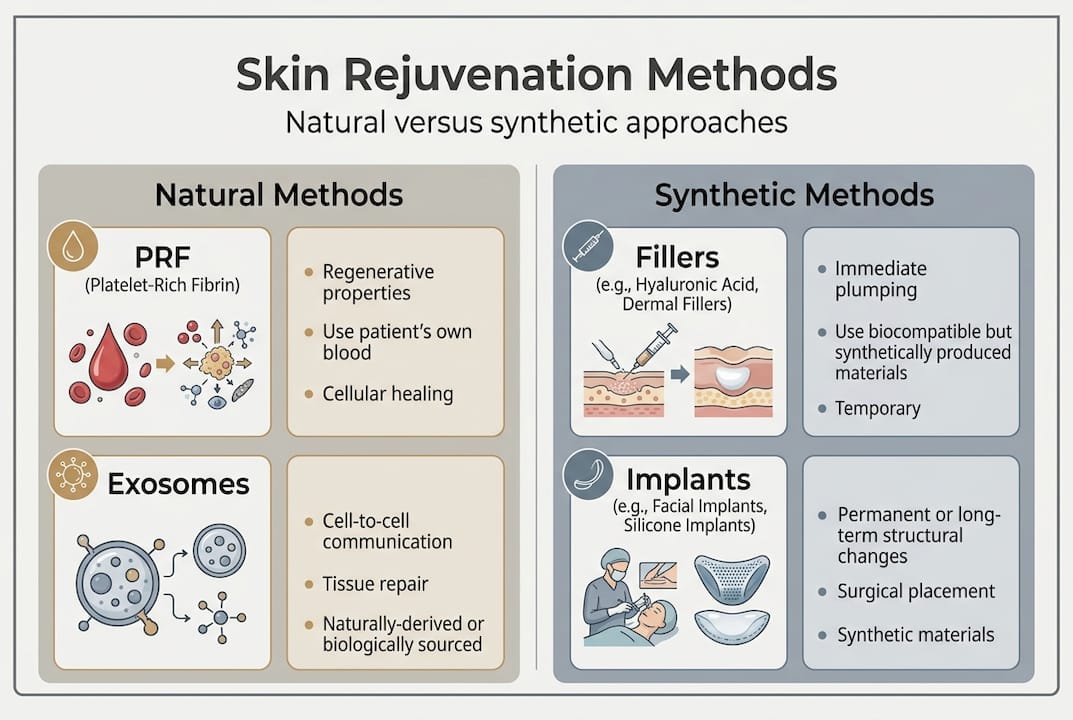
The critical distinction between natural rejuvenation and synthetic quick fixes comes down to biology. Filler placed without a structural plan, or aggressive lasers applied too frequently, bypasses your skin’s own healing intelligence. The results often look artificial precisely because they skip the regenerative process entirely.
Pro Tip: Always seek types of skin rejuvenation that are supervised by a medical professional. Protocols designed around your anatomy and biology consistently outperform over-the-counter alternatives in both safety and longevity.
What you need before starting: Assessment and preparation
Armed with knowledge of how rejuvenation works, it is crucial to assess your starting point and prepare your skin correctly. Skipping this step is one of the most common reasons people experience disappointing results or unnecessary irritation.
Begin with an honest skin assessment. Identify your skin type (dry, oily, combination, or sensitive), note any active concerns such as rosacea, melasma, or acne, and document your current product routine. This baseline matters because sequencing and preparation directly influence how well your skin responds to active treatments.
A medically guided pre-treatment checklist typically includes:
- Discontinue retinoids 5 to 7 days before energy-based treatments
- Apply broad-spectrum SPF 30 or higher daily for at least 2 weeks prior
- Avoid prolonged sun exposure and tanning for 4 weeks before treatment
- Introduce oral collagen peptides 4 to 6 weeks ahead to support tissue repair
- Confirm no active skin infections, cold sores, or inflammatory flares
- Discuss all medications and supplements with your provider, especially blood thinners
Research confirms that multimodal approaches yield 39% collagen increase when topical and oral collagen support is integrated alongside energy-based treatments. Preparation is not optional. It is part of the protocol.
Here is a practical tool and purpose reference:
| Tool or product | Purpose |
|---|---|
| Medical-grade SPF | Protect treated skin and prevent pigment rebound |
| Oral collagen peptides | Pre-load tissue repair capacity |
| Gentle cleanser | Reduce barrier disruption before treatment |
| Hyaluronic acid serum | Maintain hydration during active treatment phases |
| Retinoid (paused pre-treatment) | Accelerate cellular renewal in maintenance phase |
Expert note: Sequence deeper treatments like how microneedling works or RF before surface-level treatments. Pair with medical-grade skincare to reinforce results between sessions.
Pro Tip: If your skin is sensitive or reactive, introduce one new product or treatment at a time. A slow, low-dose approach reduces the risk of flares and gives your provider clearer data on what your skin actually needs.
Step-by-step skin rejuvenation protocol
Once you are set up and prepared, here are the specific steps to safely optimize your natural rejuvenation process. The order matters as much as the treatments themselves.
- Start deep: RF microneedling or RF energy. Begin with treatments that address the dermis and subdermal layers. RF microneedling stimulates collagen at depth while tightening lax tissue. Schedule this first and allow 4 to 6 weeks of healing before the next layer.
- Address the surface: IPL or chemical peels. Once deeper healing is underway, target surface irregularities. IPL photo rejuvenation clears pigment and redness, while peels refine texture. Layering these after RF maximizes results without overwhelming your skin.
- Support with topicals and oral supplements. Retinoids, antioxidant serums (vitamin C), and oral collagen peptides work continuously between sessions. They are not optional add-ons. They are the foundation that sustains your in-clinic gains.
- Schedule strategically. Most deep treatments are done every 4 to 8 weeks. Surface treatments can be spaced monthly. Seasonal planning (fall and winter for more intensive work, spring for maintenance) aligns with natural UV exposure patterns.
Research on treatment sequence advice confirms that sequencing deep before surface treatments enhances outcomes and reduces irritation risk. Multimodal approaches consistently outperform monotherapy.
| Approach | Collagen improvement | Elastin improvement | Longevity |
|---|---|---|---|
| Single treatment | Moderate | Minimal | 3 to 6 months |
| Multimodal sequenced | Up to 39% increase | Up to 130% increase | 12 to 24 months |
Explore the full range of laser light therapy options to understand which combination suits your skin goals.
Pro Tip: Never treat all skin layers in a single session. Stacking deep RF, surface IPL, and a peel on the same day dramatically increases downtime and reduces the precision of each treatment’s effect.
Monitoring, aftercare, and sustainable results
After completing your rejuvenation protocol, here is how to maximize and protect your outcome. Results do not just happen in the treatment room. They are built and preserved in the weeks that follow.

Tracking progress is essential. Take standardized photos in consistent lighting every 4 weeks. Note changes in skin hydration, pore size, texture smoothness, and how makeup sits on your skin. These are reliable, practical markers of collagen and elastin improvement. Research shows that exosomes combined with microneedling produced a 41% pore reduction sustained over 21 months, which illustrates how durable well-executed protocols can be.
Signs of healthy progress include:
- Smoother texture and more even tone within 4 to 8 weeks
- Reduced pore visibility and improved hydration retention
- Gradual softening of fine lines over 3 to 6 months
- Skin that feels firmer and more resilient to touch
Warning signs of over-treatment include persistent redness beyond 72 hours, increased sensitivity to products you previously tolerated, breakouts in areas not previously prone to them, or a tight, uncomfortable feeling that does not resolve.
Important: More treatment is not always better. Skin needs recovery time to rebuild. Pushing too hard, too fast, disrupts the very healing cycle you are trying to activate.
Aftercare steps for sustaining your gains:
- Apply SPF 30 or higher every morning without exception
- Use a gentle, fragrance-free cleanser for at least 2 weeks post-treatment
- Reintroduce retinoids slowly, starting with 2 nights per week after full healing
- Maintain oral collagen supplementation daily for ongoing tissue support
- Schedule a maintenance session every 3 to 6 months based on your provider’s guidance
For ongoing support between appointments, rejuvenation tips and non-surgical options are worth exploring to keep results feeling fresh without overloading your skin.
Pro Tip: A maintenance schedule of one deep treatment per year and one surface treatment per quarter is a reliable baseline for most adults in their 40s and 50s. Adjust based on how your skin responds, not on trend cycles.
A specialist’s take: Why slow, sequenced rejuvenation beats quick-fix trends
Here is something most clinics will not say directly: aggressive treatment calendars are often driven by revenue, not results. We have seen clients arrive having received three different energy-based treatments in a single month, their skin sensitized, their barrier compromised, and their results paradoxically worse than before they started.
The research is clear. Regenerative options like PRF and exosomes yield more natural, durable outcomes compared to traditional fillers precisely because they work with your biology rather than around it. Gradual improvement is not a limitation. It is the mechanism.
What we have observed in our North Raleigh practice is consistent: clients who follow a medically guided workflow with appropriate spacing between sessions look better at the two-year mark than those who pursued faster timelines. Their results read as rested, not treated.
The hidden cost of ignoring individual anatomy is real. A protocol designed for someone else’s skin type, age, or lifestyle will not serve yours. Personalized assessment is not a luxury. It is the baseline requirement for results that last and look believable.
Pro Tip: Before committing to any treatment, ask your provider to walk you through the full sequence, the expected timeline, and what success looks like at 6 months. If that conversation feels rushed, find a different provider.
Take the next step: Medically led, natural results in Raleigh
If this guide has clarified what thoughtful skin rejuvenation actually looks like, the next step is a conversation with a provider who can apply it to your specific anatomy and goals.
At The Aesthetics Lounge and Spa Raleigh, our aesthetic treatments in Raleigh are built around the same principles covered here: sequenced, measured, and designed for longevity. We do not rush results. We plan them. Whether you are exploring your first treatment or refining an existing routine, our medically led team is here to guide you clearly and without pressure. Learn more about what medical-led skincare means in practice, and discover the benefits of medically led spas for adults who want results that still look like them.
Frequently asked questions
How soon will I see results from a medically guided skin rejuvenation protocol?
Most patients notice visible improvements within 4 to 12 weeks, with optimal collagen and elastin changes appearing at 3 to 6 months. Daily collagen peptides over 12 weeks show measurable elasticity and wrinkle improvements that compound when paired with in-clinic treatments.
Are there risks to combining multiple skin rejuvenation treatments?
Combination therapies are safe when a medical professional sequences them correctly. Sequencing deep before surface treatments is essential; poor timing or overuse increases irritation and can actually reduce your results.
What’s the difference between natural, regenerative treatments and fillers?
Regenerative options like PRF or exosomes work gradually by supporting your skin’s own healing process, producing durable, natural-looking improvements. Traditional fillers add volume immediately but offer shorter-term results and carry different risk profiles.
How do I know if a treatment is right for my skin type?
A medical professional will evaluate your skin type, concerns, and history before recommending a tailored protocol. Medically guided assessment is especially important for sensitive or reactive skin, where sequencing and pacing make the difference between progress and setback.