What Is Facial Rejuvenation? Options and Side Effects

Many people assume facial rejuvenation means dramatic surgery with long recovery times. In reality, most facial rejuvenation treatments today are non-surgical procedures accounting for over 80% of cases, focusing on subtle enhancement through anatomy-based planning and skin health. This guide clarifies what modern facial rejuvenation involves, helping you understand non-invasive options that prioritize natural aesthetics and long-term results.

Table of Contents

Key takeaways

Point Details
Non-surgical focus Most treatments use injectables, lasers, or microneedling to restore youthful appearance without surgery.
Anatomy-driven planning Medical expertise ensures precise placement, preserving natural movement and reducing overcorrection risks by over 50%.
Skin health foundation Consistent hydration, collagen support, and UV protection extend treatment benefits by 30-40%.
Combination strategies Pairing modalities like neuromodulators with fillers decreases adverse effects by approximately 40%.
Misconceptions debunked Treatments avoid ‘frozen’ looks and suit adults of various ages seeking preventative, subtle improvements.

Definition and overview of facial rejuvenation

Facial rejuvenation aims to restore a youthful appearance by improving skin quality, volume, and tissue support. It favors non-surgical, conservative approaches that produce natural outcomes while respecting individual anatomy. Medical guidance centers each treatment plan around your unique facial structure and long-term skin health goals.

Surgery represents a minority approach in facial rejuvenation and often involves greater risk, cost, and recovery time. Most facial rejuvenation treatments today are non-surgical, with surgical procedures accounting for less than 20% of cases, focusing instead on subtle enhancement. Non-surgical options appeal to adults seeking lasting improvements without dramatic intervention.

Key benefits of non-surgical facial rejuvenation include:

  • Minimal downtime allowing you to return to daily activities quickly
  • Gradual, natural-looking results that preserve facial expressivity
  • Lower risk profiles compared to surgical alternatives
  • Customizable treatment pacing that adapts to your comfort level
  • Long-term skin health improvements beyond immediate aesthetic changes

This approach appeals to adults aged 25 to 55 who prioritize refined, sustainable results over quick fixes or trendy alterations.

Non-surgical facial rejuvenation treatments

Common non-invasive options address different aging concerns through targeted mechanisms. Understanding how each treatment works helps you make informed decisions aligned with your goals.

Neuromodulators relax specific facial muscles to reduce dynamic wrinkles like forehead lines and crow’s feet. Results typically last 3 to 6 months, requiring periodic maintenance. Dermal fillers restore lost volume and hydration in areas like cheeks, nasolabial folds, and lips, with effects lasting 6 to 18 months depending on product type and placement.

Laser skin resurfacing and microneedling stimulate collagen remodeling through controlled dermal injury, improving texture, pigmentation, and fine lines gradually over weeks to months. These modalities enhance skin quality at a deeper level than surface treatments alone.

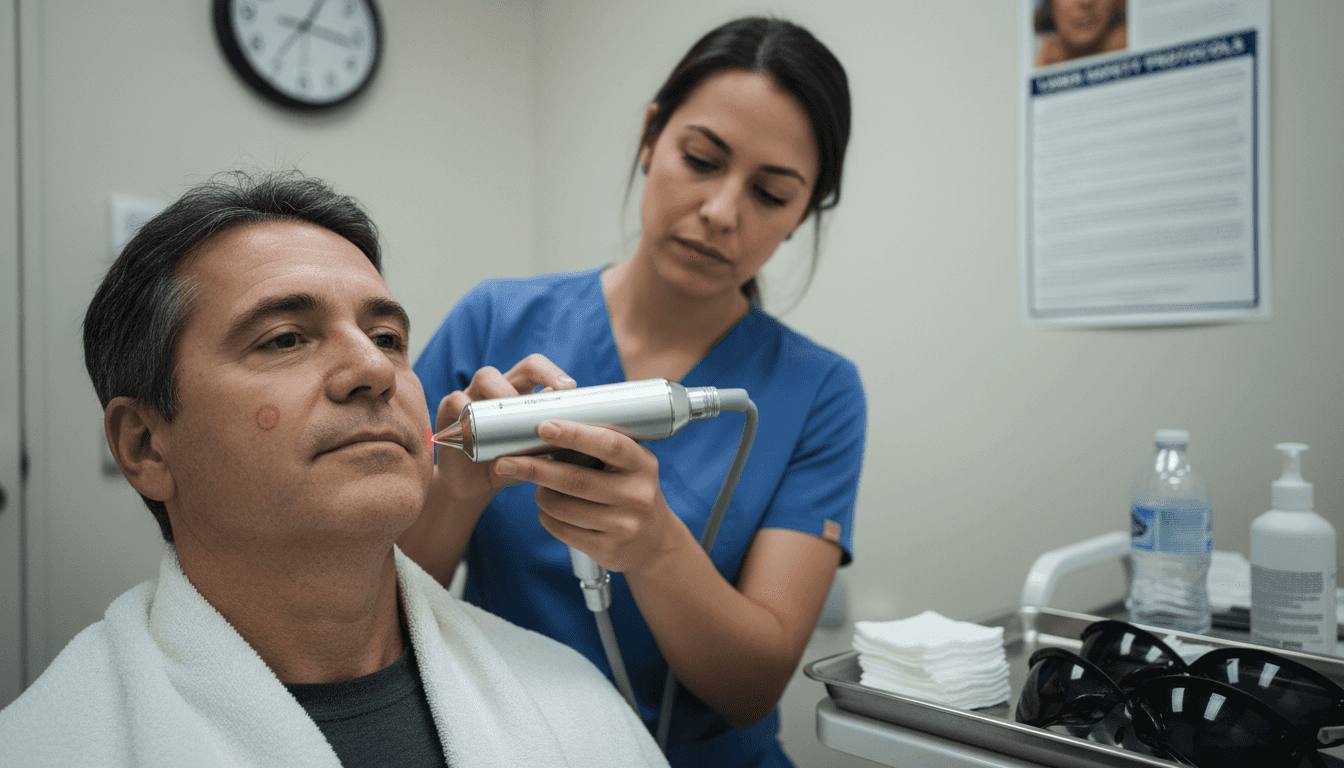
Laser and microneedling facial treatment room

Treatment Primary Effect Typical Duration Best For
Neuromodulators Muscle relaxation 3-6 months Dynamic wrinkles, prevention
Dermal fillers Volume restoration 6-18 months Volume loss, contour enhancement
Laser resurfacing Collagen stimulation 12+ months Texture, pigmentation, fine lines
Microneedling Collagen production 6-12 months Texture, scars, overall skin quality

Treatment choice depends on your target concerns, whether you need wrinkle reduction, volume restoration, or texture improvement. Combining modalities often yields better, more natural results with less downtime than relying on a single approach.

Understanding the complete facial rejuvenation process helps you set realistic expectations. Familiarizing yourself with facial rejuvenation industry terms clarifies treatment discussions with providers. Learning about injectables in facial rejuvenation reveals how different products serve specific aesthetic needs.

Pro Tip: Start with one or two treatments addressing your primary concern, then expand your plan as you become comfortable with the process and observe initial results.

Importance of anatomy in treatment planning

Deep understanding of facial anatomy ensures treatments balance aesthetic improvement with natural movement. Thorough anatomy knowledge guides precise product placement and dosing, preventing complications and unnatural appearances.

Preserving natural facial expressions after treatment requires expert anatomical awareness. Anatomy-based planning maintains natural movement and prevents overcorrection, with personalized pacing decreasing risk of unnatural appearance by over 50%. This approach supports harmonious results that blend with your unique features rather than creating a standardized look.

Key anatomical considerations include:

  • Mapping facial muscle groups to avoid disrupting natural expression patterns
  • Understanding vascular networks to minimize bruising and vascular complications
  • Assessing bone structure and soft tissue distribution for balanced volume placement
  • Identifying dynamic versus static aging patterns to select appropriate treatments
  • Respecting ethnic and individual variations in facial proportions and aging patterns

Medical expertise is critical for safe, effective, and natural-looking improvements. Understanding facial anatomy importance reveals why expert providers consistently deliver superior outcomes. Exploring various aesthetic treatments in Raleigh shows how anatomy-focused care applies across different modalities.

Pro Tip: Ask your provider to explain their anatomical approach during consultation. A detailed explanation signals expertise and commitment to personalized, safe treatment.

Prioritizing long-term skin health

Healthy skin is foundational for natural, lasting rejuvenation results. Integrating skincare with professional treatments maximizes and prolongs benefits beyond what procedures alone can achieve.

Hydration, collagen support, and UV protection form the cornerstone of effective skin health maintenance. Consistent skin health maintenance can extend treatment benefits by 30 to 40%, making daily care routines essential rather than optional. This synergy between professional treatments and home care creates cumulative improvements over time.

Skin health regimens are not add-ons but integral components of comprehensive treatment plans. Combining professional interventions with daily practices addresses aging from multiple angles, creating more sustainable results. Prioritizing skin health also reduces treatment risks and supports a youthful appearance between appointments.

Essential skin health practices include:

  • Daily broad-spectrum SPF 30+ sunscreen preventing cumulative UV damage
  • Retinoid or retinol products stimulating collagen production and cell turnover
  • Antioxidant serums neutralizing free radicals that accelerate aging
  • Hydrating ingredients like hyaluronic acid maintaining skin barrier function
  • Professional-grade cleansers and moisturizers tailored to your skin type

Understanding medically led spa benefits reveals how clinical oversight ensures product recommendations align with medical treatments. Exploring benefits of medical aesthetics demonstrates how professional guidance optimizes both safety and efficacy.

Common misconceptions about facial rejuvenation

Widespread myths confuse potential patients and create unrealistic expectations. Addressing these misconceptions helps you approach treatments with clarity and confidence.

Many believe facial rejuvenation is exclusively surgical, but the reality is dramatically different. Non-surgical options avoid unnatural ‘frozen’ looks if done conservatively, with overuse risks mitigated through medical planning and anatomical precision. Medically guided treatment preserves movement by respecting muscle function and placement.

Another common myth suggests only older adults seek facial rejuvenation. Younger adults increasingly pursue subtle preventative treatments, starting in their late twenties or early thirties. This proactive approach delays more significant interventions and maintains natural appearance over decades.

Key misconceptions to understand:

  • Myth: All facial rejuvenation involves surgery. Reality: Over 80% of procedures are non-surgical with minimal downtime.
  • Myth: Treatments create unnatural, frozen expressions. Reality: Conservative, anatomy-driven approaches preserve natural movement.
  • Myth: Only people over 50 benefit from rejuvenation. Reality: Preventative treatments in younger adults delay aging signs effectively.
  • Myth: Results always look obvious or overdone. Reality: Subtle enhancements often go unnoticed while improving overall appearance.
  • Myth: Non-surgical treatments carry no risks. Reality: All procedures have risks, but medical supervision minimizes complications significantly.

Learning how to choose aesthetic treatments naturally helps you navigate options with realistic expectations. Understanding that professional planning reduces risks allows you to pursue improvements confidently.

Treatment planning and combination strategies

Creating personalized, staged treatment plans combining modalities produces balanced, natural outcomes with enhanced safety profiles. Medical experts develop customized strategies respecting your anatomy and goals.

Combining neuromodulators, fillers, and skin treatments balances effects across different aging dimensions. Combination therapy reduces adverse effects by approximately 40% compared to uncoordinated single treatment approaches. Careful timing and dosing prevent over-treatment while maintaining naturalness.

Effective combination planning follows structured principles:

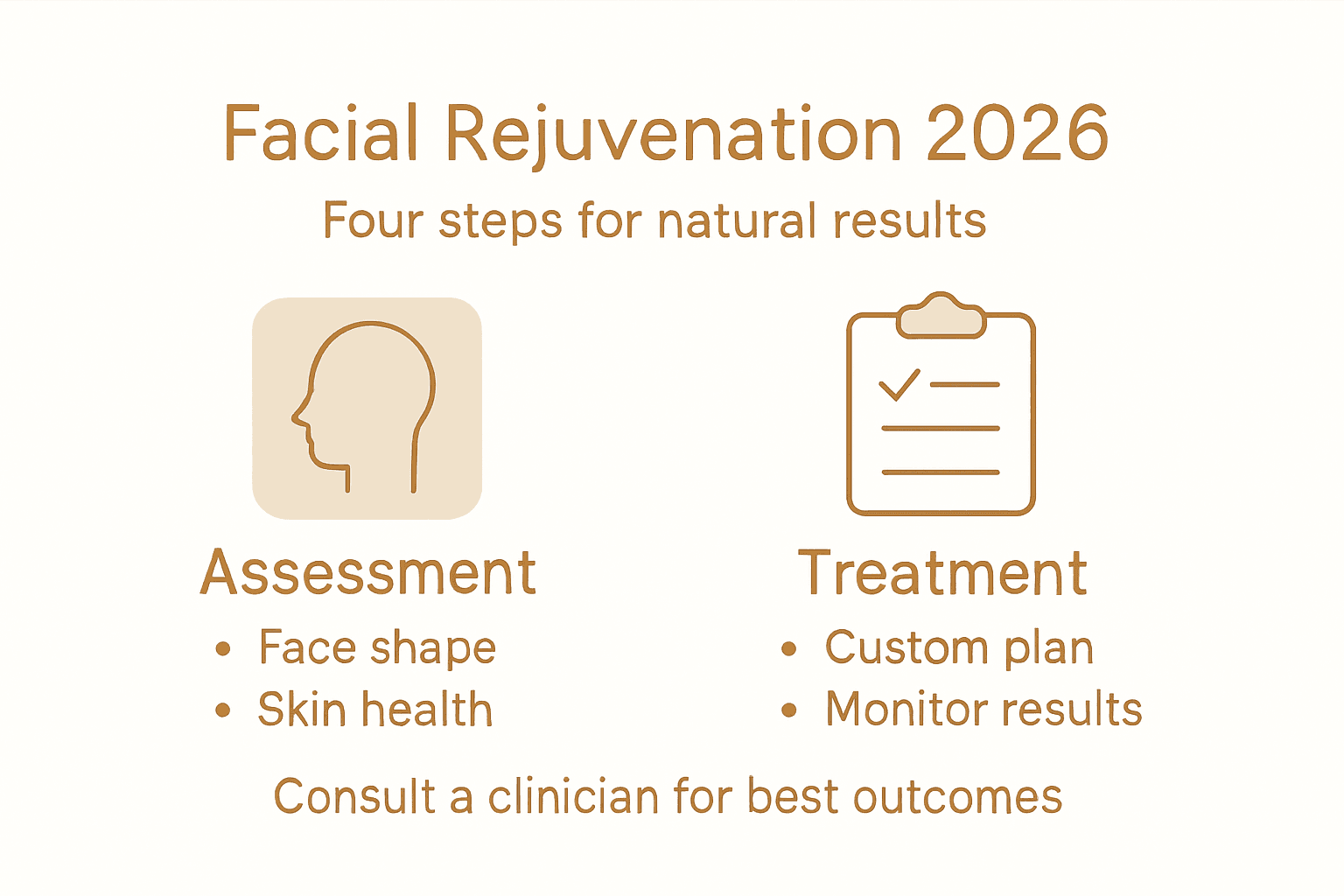
  1. Initial assessment identifying primary and secondary aging concerns
  2. Anatomical mapping determining optimal treatment zones and sequencing
  3. Selecting complementary modalities addressing different tissue layers
  4. Establishing realistic timelines allowing proper healing between treatments
  5. Building in adjustment periods to evaluate results before advancing
  6. Incorporating skin health protocols supporting and extending treatment benefits

Patients with volume loss benefit particularly from tailored filler placement combined with collagen-stimulating treatments. This dual approach restores structure while improving skin quality for more comprehensive, natural-looking rejuvenation.

Strategy Components Primary Benefit Ideal Candidate
Preventative Neuromodulators + skincare Delays aging signs Ages 25-35, minimal concerns
Restorative Fillers + laser treatments Addresses moderate aging Ages 35-50, volume loss
Comprehensive All modalities combined Maximum improvement Ages 45+, multiple concerns

Exploring aesthetic treatments in Raleigh reveals available combination options. Understanding how to plan aesthetic treatments ensures safer, more effective results. Learning about different types of facial treatments helps you build a comprehensive strategy.

Real-world outcomes and patient satisfaction

Clinical evidence and patient experiences confirm the reliability of medically guided, natural-focused facial rejuvenation approaches. Data demonstrates both safety and effectiveness across diverse patient populations.

Clinical studies show over 85% satisfaction rates with natural-looking results lasting 12 months or more, with minimal adverse effects reported when treatments are medically supervised. Patients preserve facial expressivity and avoid unnatural stiffness that concerns many considering rejuvenation procedures.

Evidence supports staged, anatomy-focused rejuvenation protocols as superior to aggressive, single-visit approaches. Positive experiences reinforce the value of choosing expert providers and maintaining realistic goals throughout your treatment journey.

Patient satisfaction factors include:

  • Natural appearance allowing them to still look like themselves
  • Preserved ability to express emotions through facial movement
  • Gradual improvements feeling more comfortable than sudden dramatic changes
  • Long-lasting results reducing maintenance burden and cost over time
  • Minimal complications when treatment follows medical protocols

“The difference between good and great facial rejuvenation lies not in the products used, but in the expertise guiding their application. Anatomy, restraint, and patience consistently produce the most satisfying, natural outcomes.”

These outcomes validate the conservative, medically supervised approach to facial rejuvenation. When you prioritize natural aesthetics and work with experienced providers, you can expect results that enhance rather than alter your appearance.

Explore expert facial rejuvenation treatments in Raleigh, NC

Now that you understand what facial rejuvenation truly involves, you can take the next step toward personalized care. The Aesthetics Lounge and Spa Raleigh offers medically guided services prioritizing natural results and long-term skin health.
https://raleigh.theaestheticsloungeandspa.com

Our local Raleigh experts customize plans honoring your unique anatomy and aesthetic goals. We build treatment strategies around facial structure, skin health, and natural movement rather than chasing trends or offering one-size-fits-all solutions. Every appointment combines medical expertise with thoughtful pacing and transparent expectations.

Explore our comprehensive aesthetic treatments in Raleigh to discover available options. Learn how to choose aesthetic treatments naturally before your consultation. Understand how to plan aesthetic treatments for fewer side effects and optimal outcomes. Visit us to begin your journey toward subtle, lasting enhancements that make you look like yourself, just more supported.

Frequently asked questions

What distinguishes non-surgical facial rejuvenation from surgery?

Non-surgical facial rejuvenation uses injectables, lasers, and energy-based devices to improve appearance without incisions or general anesthesia. These treatments involve minimal downtime, lower risks, and gradual results that preserve natural facial movement, unlike surgery which restructures tissues and requires significant recovery.

How do treatments preserve natural facial expressions?

Anatomy-based planning ensures product placement and dosing respect underlying muscle function. Conservative approaches avoid over-relaxing muscles or over-filling areas, maintaining your ability to express emotions naturally. Medical expertise in facial dynamics prevents the frozen or mask-like appearance associated with aggressive or improperly administered treatments.

Who is a good candidate for non-surgical rejuvenation?

Adults with realistic expectations seeking subtle improvements in wrinkles, volume loss, or skin quality make ideal candidates. Good candidates have overall good health, understand treatment limitations, and commit to recommended skincare maintenance. Age is less important than skin condition and personal goals, with patients ranging from late twenties to seventies benefiting from tailored approaches.

What does a typical treatment plan include?

Comprehensive plans begin with detailed consultation assessing your anatomy, aging patterns, and goals. Treatment typically combines modalities like neuromodulators, fillers, and skin resurfacing staged over several months. Plans also incorporate home skincare protocols and scheduled follow-ups to monitor results and adjust strategy as needed for optimal, natural outcomes.

How long do non-surgical rejuvenation results last?

Duration varies by treatment type, with neuromodulators lasting 3 to 6 months and dermal fillers lasting 6 to 18 months. Collagen-stimulating treatments like microneedling provide improvements lasting 6 to 12 months or longer. Consistent maintenance treatments and proper skincare extend results significantly, with combination approaches often producing cumulative benefits that improve over time.

What Is Laser Resurfacing? Benefits, Downtime and Results

Many people assume laser resurfacing creates an overdone or artificial appearance. Clinical data tells a different story. Studies show 40-70% improvement in skin texture and fine lines after proper treatment protocols, with results emerging gradually over months as your body builds new collagen. This medically guided procedure offers North Carolina adults a path to subtle, natural skin rejuvenation without surgery. We’ll break down how it works, what makes each approach different, and how to choose safely.

Table of Contents

Key takeaways

Point Details
Improvement range Laser resurfacing improves skin texture and fine lines by 40-70% after multiple treatments with medical guidance.
Timeline for results Visible improvements develop gradually over 3 months as collagen remodels beneath the surface.
Treatment types Ablative lasers remove skin layers for deeper results; non-ablative lasers heat tissue with minimal downtime.
Safety requires expertise Medical providers customize laser selection by skin type to ensure natural outcomes and minimize risks.
Recovery varies Aftercare and sun protection are essential for healing, with timelines ranging from 1-14 days depending on laser type.

Introduction to laser resurfacing

Laser resurfacing is a non-surgical technique that uses focused light energy to improve skin quality. Rather than relying on incisions or fillers, this approach targets specific skin layers to trigger your body’s natural healing response. The result is smoother texture, reduced fine lines, and a more even tone that develops over time.

The technology evolved from decades of clinical dermatology research. Early laser systems were aggressive and carried higher risks. Modern platforms offer precise control over depth, energy levels, and treatment areas. This precision allows providers to customize treatments based on individual skin structure and goals.

Adults in North Carolina often seek laser resurfacing for these common reasons:

  • Reducing fine lines around the eyes and mouth
  • Improving uneven texture caused by sun damage
  • Minimizing shallow acne scars
  • Achieving subtle rejuvenation without extended downtime
  • Restoring a fresher appearance while maintaining natural features

The appeal lies in balancing effectiveness with practicality. You want visible improvement without looking like you’ve had work done. That balance requires both advanced technology and medical judgment. When choosing aesthetic treatments naturally, understanding the science behind laser resurfacing helps you make informed decisions about timing, intensity, and expected outcomes.

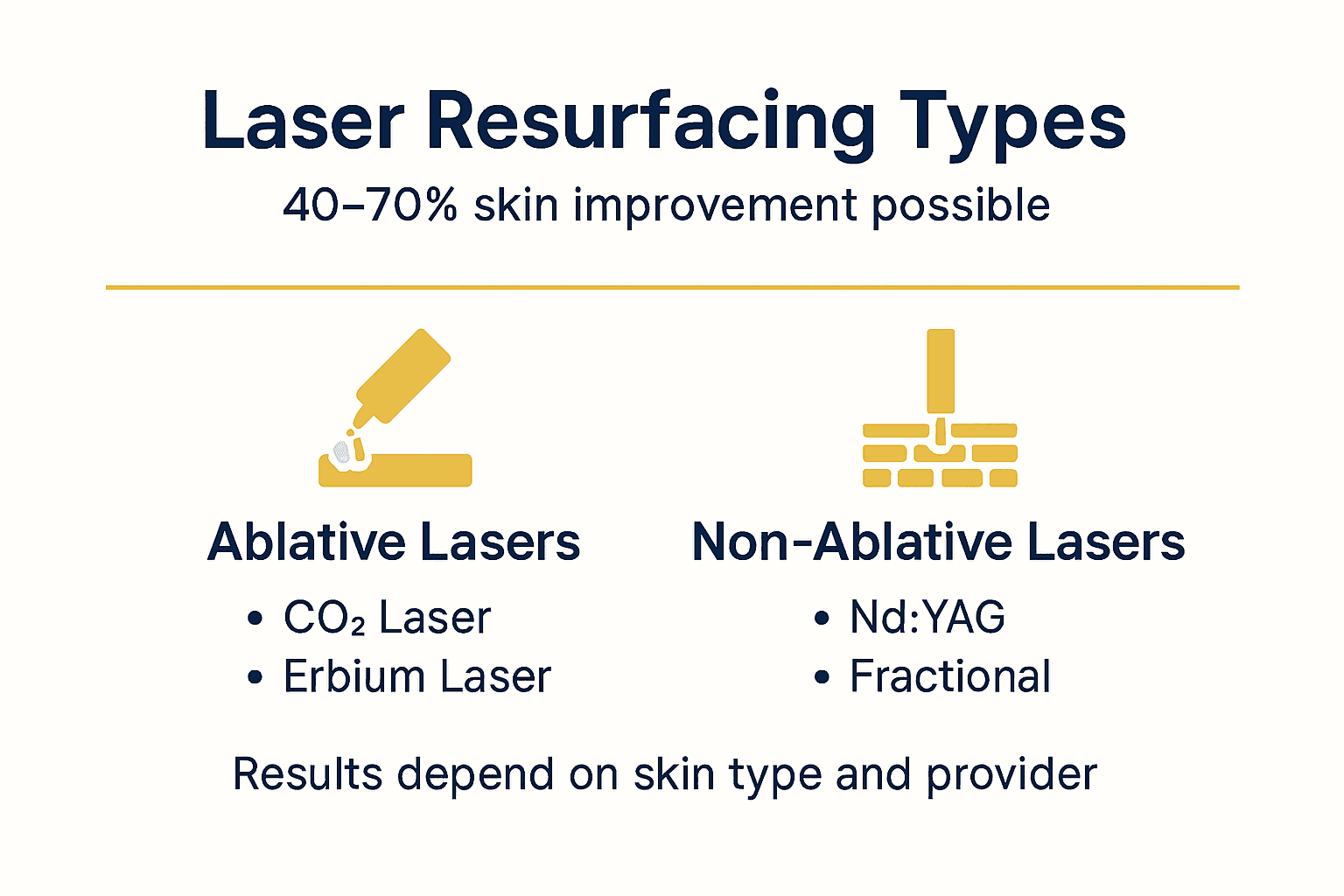
Infographic summarizes laser types and improvement ranges

Treatment success depends on matching laser type to skin condition. Not everyone needs the most aggressive option. Many patients achieve their goals with moderate approaches that respect skin biology and recovery capacity.

How laser resurfacing works

Laser resurfacing operates through controlled energy delivery to skin tissue. The laser emits light at specific wavelengths that target water molecules in your skin cells. When these molecules absorb the energy, they heat up rapidly. This process either vaporizes surface cells or heats deeper layers without removing them.

Your body interprets this controlled damage as an injury requiring repair. The healing cascade activates fibroblasts, specialized cells that produce collagen and elastin. These structural proteins form the scaffolding that keeps skin firm and smooth. As new collagen accumulates, it gradually fills in fine lines and improves overall texture.

Here’s the timeline for how your skin responds:

  1. Immediate phase (0-72 hours): Inflammation, redness, and swelling as blood flow increases to the treated area
  2. Proliferation phase (3 days to 3 weeks): New cells multiply and migrate to resurface treated zones
  3. Remodeling phase (3 weeks to 6 months): Collagen remodeling peaks around 3 months post-treatment, which is why visible improvements often emerge gradually rather than immediately

The laser’s depth and intensity determine how much tissue you remove or stimulate. Shallow treatments affect only the epidermis (outer layer). Deeper treatments reach into the dermis where collagen lives. More depth typically means more dramatic results but also longer recovery.

“The key to natural laser results is respecting the skin’s biological healing timeline. Forcing faster outcomes through excessive energy often backfires, creating complications instead of improvements.”

Understanding these mechanisms helps set realistic expectations. You’re not erasing years overnight. You’re initiating a biological process that unfolds over months. Following medically guided skincare steps during this period supports optimal collagen production and protects healing tissue.

Providers adjust laser parameters based on anatomical factors like skin thickness, pigment density, and oil gland activity. Areas with thinner skin require gentler settings. Darker skin tones need wavelengths that minimize pigment disruption. This customization prevents complications while maximizing benefits.

Types of laser resurfacing and their differences

Two main categories define laser resurfacing approaches: ablative and non-ablative. Each offers distinct advantages depending on your goals, lifestyle, and tolerance for downtime.

Ablative lasers remove the skin’s outer layers completely. CO2 and erbium lasers fall into this category. They deliver 40-70% improvement in skin texture and fine lines after proper treatment series. The tradeoff is recovery time ranging from 7 to 14 days, during which your skin actively heals and regenerates.

Dermatologist performs ablative laser treatment

Non-ablative lasers heat the dermis without removing surface tissue. Nd:YAG and certain fractional lasers use this method. They provide 20-40% improvement with minimal visible downtime, usually 1 to 3 days of mild redness. Results accumulate more slowly, often requiring multiple sessions spaced weeks apart.

Feature Ablative Lasers Non-Ablative Lasers
Mechanism Remove outer skin layers Heat dermis without surface removal
Improvement 40-70% after treatment series 20-40% with gradual accumulation
Downtime 7-14 days of active healing 1-3 days of mild redness
Sessions Often 1-2 treatments Typically 3-5 treatments
Risk profile Higher for scarring, infection if not managed Lower complications, safer for darker skin

Choosing between them depends on several factors:

  • Severity of concerns: Deep wrinkles and significant sun damage respond better to ablative approaches
  • Available recovery time: Professionals with limited time off often prefer non-ablative options
  • Skin type: Darker complexions generally tolerate non-ablative lasers with less risk of pigment changes
  • Comfort with intensity: Some patients prefer gradual improvement; others want maximum results from fewer sessions

Pro Tip: Many experienced providers recommend starting with less aggressive treatments and building intensity only if needed. This staged approach lets you gauge your skin’s response and adjust expectations before committing to longer recovery periods.

Medical supervision matters most when selecting laser type and settings. Laser and light treatments require expertise in skin biology, laser physics, and complication management. A provider who rushes you toward the most aggressive option without proper evaluation may prioritize revenue over your safety.

Common misconceptions about laser resurfacing

Several myths about laser resurfacing create unnecessary hesitation or unrealistic expectations. Clearing these up helps you approach treatment with accurate information.

Myth: Laser resurfacing always creates an unnatural, overdone look.
Reality: Proper technique and conservative energy levels produce subtle improvements. The overdone appearance comes from excessive treatment depth or poor aftercare, not the technology itself. When medical providers customize settings to your anatomy, results enhance rather than erase your natural features.

Myth: Results appear immediately after treatment.
Reality: Your skin looks red and swollen initially. Actual improvements emerge as collagen rebuilds over 8 to 12 weeks. Expecting instant transformation leads to disappointment and poor treatment decisions.

Myth: Laser resurfacing is equally safe for all skin types.
Reality: Darker skin tones carry higher risk for post-inflammatory hyperpigmentation or hypopigmentation. This doesn’t make treatment impossible, but it requires specialized protocols, careful wavelength selection, and test spots before full treatment. Providers experienced with diverse skin types adjust parameters to minimize these risks.

Myth: Recovery is always quick and easy.
Reality: Recovery varies dramatically based on laser type and individual healing capacity. Ablative treatments involve real downtime with crusting, peeling, and sensitivity. Non-ablative options are gentler but still require sun avoidance and careful skincare. Anyone promising zero recovery likely uses such conservative settings that results may be minimal.

Myth: Any spa or clinic can safely perform laser treatments.
Reality: Laser devices are medical tools requiring proper training and ongoing education. Complications including burns, scarring, and permanent pigment changes occur when inexperienced operators use inappropriate settings. The role of medical providers extends beyond just operating equipment to recognizing contraindications, managing complications, and customizing treatments to individual physiology.

Understanding these realities helps you evaluate providers critically and set achievable goals. Laser resurfacing works well when expectations align with biological reality and treatments follow medical protocols.

Patient selection, safety, and medical guidance

Not everyone qualifies as an ideal candidate for laser resurfacing. Medical evaluation identifies who can safely proceed and who should consider alternatives.

A thorough consultation covers:

  • Medical history: Active acne, recent isotretinoin use, autoimmune conditions, and keloid tendency all affect healing and complication risk
  • Skin assessment: Fitzpatrick type, thickness, elasticity, and existing damage patterns guide laser selection
  • Goal alignment: Understanding what you want to achieve helps providers recommend appropriate treatments or suggest when expectations exceed what lasers can deliver
  • Lifestyle factors: Sun exposure habits, smoking status, and ability to follow aftercare protocols influence outcomes

Customization reduces side effects while enhancing natural appearance. Your provider adjusts these variables:

  • Laser wavelength and type
  • Energy density per pulse
  • Treatment depth and coverage percentage
  • Number of passes over each area
  • Interval between sessions if multiple treatments are planned

Pro Tip: Ask potential providers about their experience with your specific skin type and concerns. A provider who has successfully treated patients similar to you is more likely to anticipate challenges and optimize your protocol.

Safety protocols include:

  • Pre-treatment skin conditioning with prescribed topicals
  • Test spots on inconspicuous areas before full-face treatment
  • Proper pain management during procedures
  • Immediate post-treatment care including cooling and barrier protection
  • Clear instructions for home care and red-flag symptoms requiring contact

Risk mitigation matters most for patients with darker skin, those prone to hyperpigmentation, or anyone with compromised healing capacity. Staged treatments allow assessment of your individual response before proceeding with more aggressive parameters.

When choosing aesthetic treatments naturally, prioritize providers who take time to educate rather than sell. Transparent discussion of risks, realistic timelines, and alternative options indicates a patient-centered approach. Medically guided laser treatments balance desired outcomes with safety margins appropriate to your unique physiology.

Recovery, aftercare, and realistic timelines

Healing unfolds in predictable phases, though individual timelines vary based on treatment intensity and personal biology.

For ablative laser resurfacing:

  1. Days 1-3: Expect significant redness, swelling, and oozing. Your skin forms a protective crust as new cells develop underneath.
  2. Days 4-7: Crusting peaks then begins lifting. Itching intensifies as healing progresses. Avoid picking or pulling at peeling skin.
  3. Days 8-14: New pink skin emerges. Sensitivity to temperature and products remains high. Most patients return to normal activities by day 10 to 14.

For non-ablative treatments, recovery compresses dramatically. Most people experience 1 to 3 days of mild redness and swelling, manageable with makeup after 24 hours. Underlying collagen remodeling continues for months even though surface healing completes quickly.

Essential aftercare practices:

  1. Gentle cleansing: Use lukewarm water and mild, fragrance-free cleansers. Pat dry rather than rubbing.
  2. Consistent moisturization: Apply prescribed ointments or barrier creams to support healing and prevent excessive dryness.
  3. Strict sun protection: UV exposure during healing causes pigmentation problems and compromises results. Use mineral-based SPF 30 or higher daily.
  4. Avoid irritants: Skip retinoids, acids, and other active ingredients until your provider clears you to resume them.
  5. Stay hydrated: Internal hydration supports skin repair processes.

Visible improvements emerge gradually. Initial redness fades over 4 to 6 weeks. Texture refinement becomes apparent around 6 to 8 weeks. Maximum collagen deposition occurs near the 3-month mark. Some patients continue seeing subtle enhancement up to 6 months post-treatment.

Follow-up appointments let your provider assess healing, address concerns, and determine if additional sessions would benefit you. Skipping these check-ins means missing opportunities to optimize results or catch early complications.

Enhancing and maintaining results post-treatment

Laser resurfacing initiates improvement, but maintaining those gains requires ongoing skin health practices.

Your provider may prescribe topical therapies to support collagen remodeling:

  • Retinoids to stimulate continued cell turnover
  • Growth factors to enhance fibroblast activity
  • Antioxidants to protect new collagen from environmental damage

Lifestyle factors directly impact longevity of results:

  • Sun protection: UV exposure degrades collagen faster than aging alone. Daily broad-spectrum sunscreen preserves your investment.
  • Hydration: Well-hydrated skin maintains plumpness and elasticity. Aim for adequate water intake and use humectants in skincare.
  • Nutrition: Vitamin C, amino acids, and healthy fats provide building blocks for ongoing collagen synthesis.
  • Sleep: Growth hormone secreted during deep sleep supports tissue repair.
  • Stress management: Chronic cortisol elevation accelerates collagen breakdown.

Avoid behaviors that accelerate skin aging:

  • Smoking constricts blood vessels and impairs healing
  • Excessive alcohol dehydrates skin and generates inflammatory byproducts
  • Unprotected sun exposure reverses laser benefits within months

Regular skin evaluations help you and your provider track long-term outcomes. Most patients benefit from maintenance treatments every 12 to 18 months to sustain improvements. These follow-up sessions typically use gentler settings than initial treatments since you’re maintaining rather than correcting.

Complementary treatments may enhance laser results:

  • Chemical peels for continued exfoliation
  • Microneedling to stimulate collagen in different patterns
  • Medical-grade skincare tailored to your post-laser skin condition

Following medically guided skincare steps ensures your daily routine supports rather than undermines laser outcomes. Consistency matters more than expensive products. Simple, science-backed regimens often outperform complicated routines with trendy ingredients.

Discover expert laser resurfacing in Raleigh, NC

If you’re ready to explore laser resurfacing with a team that prioritizes natural, subtle results, The Aesthetics Lounge & Spa offers medically led treatments designed around your unique skin structure and goals. Located in the heart of North Raleigh on Six Forks Road, we approach every consultation with the same principle: you should still look like yourself, just more supported.

https://raleigh.theaestheticsloungeandspa.com

Our providers customize laser protocols based on thorough skin assessment and transparent discussion of what realistic improvement looks like for your specific concerns. We don’t rush you toward aggressive treatments or promise overnight transformations. Instead, we build treatment strategies that respect healing timelines, minimize risks, and deliver results that develop gradually over months. Explore our full range of aesthetic treatments in Raleigh, NC, or learn more about how to choose aesthetic treatments naturally. When you’re ready to discuss laser and light treatments in Raleigh, we’ll guide you through options that align with your lifestyle and expectations.

Frequently asked questions

What is the recovery time for different types of laser resurfacing?

Ablative lasers typically require 7 to 14 days of downtime during which your skin actively heals, crusts, and peels. Non-ablative approaches need only 1 to 3 days of mild redness and swelling. Individual healing capacity and treatment intensity cause variation, so your provider should give you a personalized timeline based on your specific protocol.

Are laser resurfacing results immediate?

No, results develop gradually as your body builds new collagen beneath the surface. Initial redness and swelling may obscure early improvements. Most patients notice visible texture refinement around 6 to 8 weeks, with continued enhancement through the 3-month mark as collagen remodeling peaks.

Is laser resurfacing safe for all skin types?

Darker skin tones face higher risk for post-inflammatory pigment changes and require customized protocols with specific wavelengths and conservative energy levels. Medical supervision ensures appropriate laser selection, test spots before full treatment, and careful monitoring during healing. When performed by experienced providers, laser resurfacing can be safe and effective across diverse skin types.

How do I choose the right provider for laser resurfacing?

Look for medical credentials, extensive laser experience, and a portfolio of results from patients with similar skin types and concerns as yours. During consultation, assess whether the provider listens to your goals, explains risks transparently, and customizes recommendations rather than pushing predetermined packages. Providers who emphasize natural outcomes and conservative approaches typically deliver more satisfying long-term results. When choosing aesthetic treatments naturally, trust your instincts about whether a provider prioritizes your safety and satisfaction over sales pressure.

Medical-Led Aesthetics: Safer Care, Natural Results

Medical aesthetics often gets misunderstood. Many assume treatments automatically mean overdone looks or dramatic changes. The reality? Medical-led aesthetics prioritize your anatomy, your goals, and natural, subtle enhancements designed to look like you on your best day. This approach combines medical expertise with personalized care plans, focusing on skin health and lasting results over quick fixes. You maintain control, transparency, and facial harmony.

Table of Contents

Key Takeaways

Point Details
Medical-led aesthetics combine expert supervision with personalized treatment plans Treatments are tailored to your unique anatomy, lifestyle, and realistic goals for natural outcomes.
Minimally invasive procedures reduce risks and downtime Medical professionals use precise techniques for safer, longer-lasting results compared to surgery.
Advanced technologies enhance treatment precision AI skin analysis and 3D facial mapping optimize customization and patient satisfaction.
Patient collaboration improves transparency and trust Clear communication about realistic outcomes empowers you to make informed, pressure-free decisions.
Common myths about unnatural results are debunked Medical-led care emphasizes subtlety and anatomical respect, not overdone transformations.

Understanding Medical-Led Aesthetics

Medical-led aesthetics means your treatments are performed or directly supervised by qualified medical professionals like physicians, nurse practitioners, or physician assistants. This model emphasizes medical supervision and personalized care leading to natural, patient-centered results. Your anatomy, lifestyle habits, and personal goals shape every decision.

Non-medical providers often deliver standardized, trend-driven treatments without the depth of training to assess facial structure or anticipate complications. Medical providers bring anatomical knowledge, emergency response skills, and ethical oversight. The difference matters when injectables are placed near blood vessels or nerves.

Medical aesthetics explained shows how this approach protects you while delivering the refined results you want. Patient demand increasingly favors subtlety and safety over quick, dramatic fixes. In North Carolina, awareness of medically guided aesthetics continues growing as people prioritize long-term skin health.

Key characteristics of medical-led aesthetics include:

  • Comprehensive facial assessment before any treatment
  • Evidence-based treatment selection tailored to your skin type
  • Ongoing monitoring and adjustment for optimal safety
  • Focus on natural movement and expression preservation
  • Conservative dosing with staged enhancements over time

Personalized Medical-Led Aesthetic Care Explained

Personalization is the cornerstone of aesthetic medicine in 2026 with significant patient collaboration in planning. Your provider assesses facial anatomy, lifestyle habits like sun exposure or stress levels, and your personal aesthetic goals. Medical expertise customizes treatment modalities and dosage for the best fit. Patient collaboration ensures treatment aligns with your comfort and expectations.

Plans often involve staged, conservative enhancements rather than one-off dramatic changes. This approach respects your facial structure and allows adjustments as you see results. You avoid overcorrection and maintain natural movement.

Follow these steps to experience personalized care:

  1. Schedule an in-depth consultation where your provider examines skin health, bone structure, and volume distribution.
  2. Discuss your lifestyle factors like skincare routine, sleep quality, and health conditions that affect treatment choices.
  3. Set realistic goals together, clarifying what subtle enhancement means for your unique face.
  4. Develop a phased treatment plan with timelines, expected outcomes, and follow-up schedules.
  5. Begin with conservative treatments, then adjust based on your response and satisfaction.
  6. Maintain results through periodic touch-ups and skin health strategies your provider recommends.

Pro Tip: Bring photos of yourself from five years ago to your consultation. This helps your provider understand how your face has changed naturally and design treatments that restore your features rather than alter them.

Explore natural aesthetics benefits and benefits of medical aesthetics to see how personalized care transforms outcomes. Ethica Creative medical aesthetics trends shows industry-wide shifts toward patient-centered planning.

Benefits of Medical Expertise in Minimally Invasive Procedures

Medical providers ensure precise facial contouring using deep knowledge of facial anatomy. They understand muscle groups, blood vessel pathways, and nerve locations. This expertise achieves subtle facial contouring and rejuvenation with less risk and downtime than surgery.

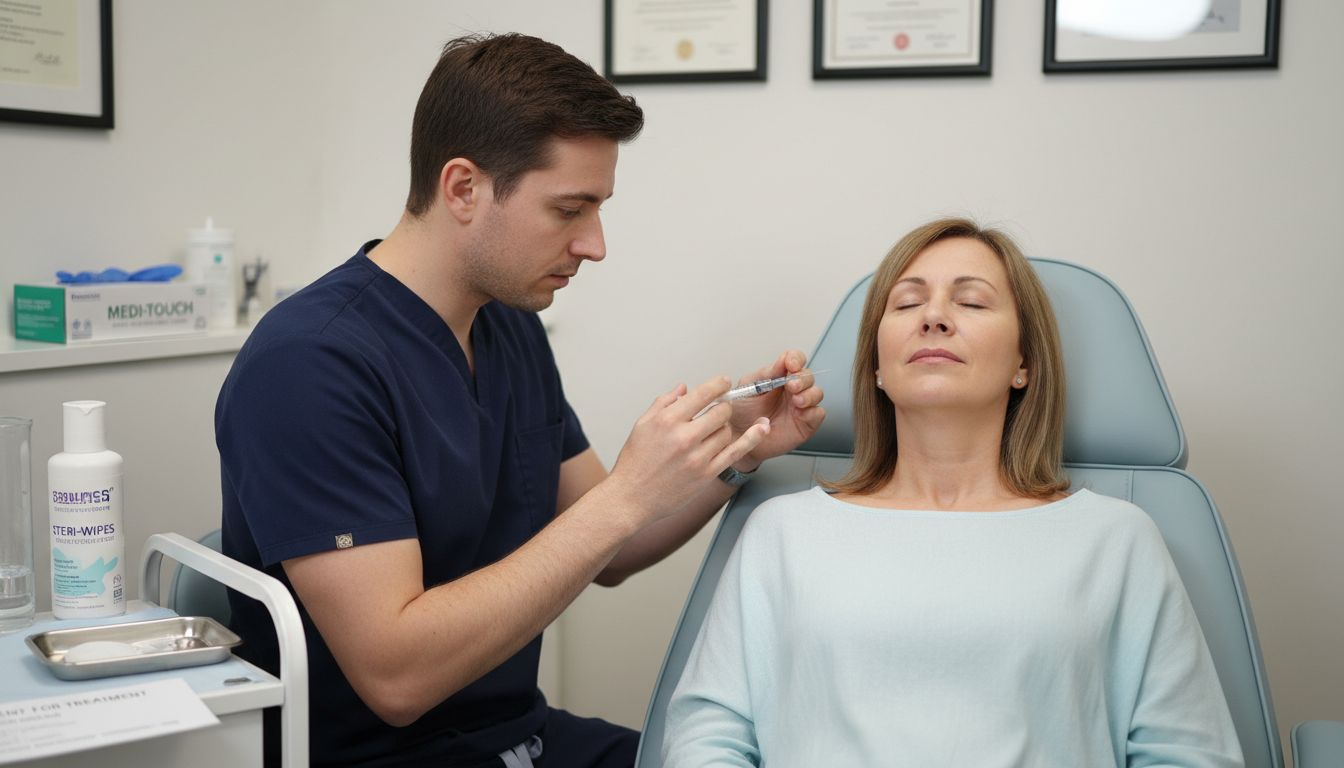
Provider performs facial contouring injection in clinic

Risks of side effects like bruising, swelling, or asymmetry decrease significantly under medical supervision. Injectables and thread lifts are leading non-surgical treatments preferred by patients seeking natural-looking results. These procedures align with your desire for subtle rejuvenation without the recovery time or expense of surgical facelifts.

Over 15 million minimally invasive aesthetic procedures are performed annually in the United States alone. Demand continues rising as people discover they can refresh their appearance without going under the knife.

Key benefits of medical expertise include:

  • Accurate injection depth and placement for optimal product distribution
  • Immediate complication management if rare adverse events occur
  • Customized dosing based on your tissue response and goals
  • Reduced downtime through precise technique and post-treatment care
  • Long-term planning that considers aging patterns and maintenance

Discover medical spa benefits and review aesthetic medicine trends shaping the industry.

Long-Term Skin Health and Structural Support in Treatments

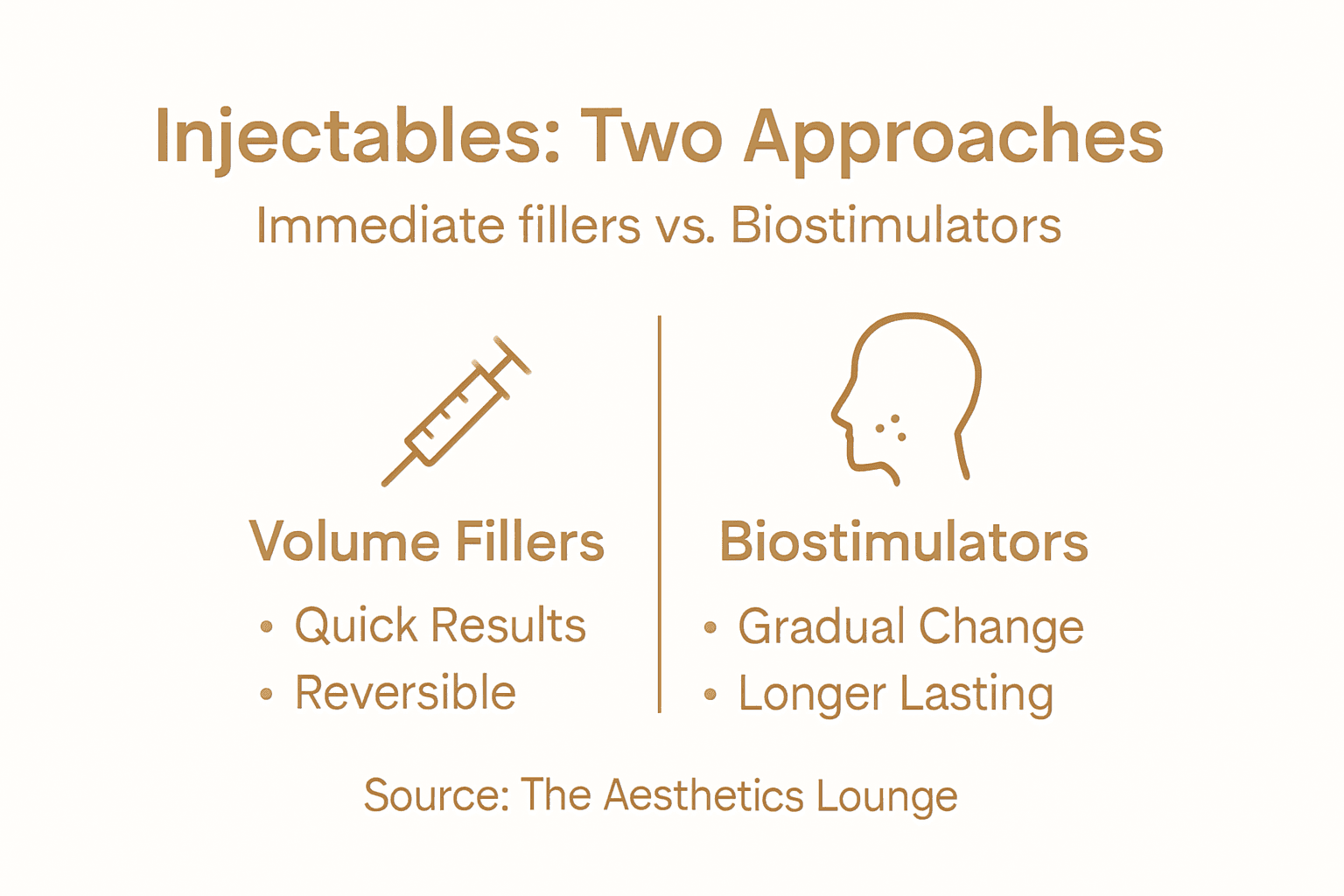
Collagen stimulation maintains youthful skin and volume as you age. Biostimulatory injectables promote collagen production offering longer-term volume restoration aligned with medical-led aesthetics priorities. These treatments work with your body’s natural healing process rather than simply filling space.

Injectable moisturizers like hyaluronic acid-based products hydrate skin at a cellular level, creating natural-looking restoration. Medical providers focus on preserving facial structural harmony and avoiding excessive volume that distorts your features.

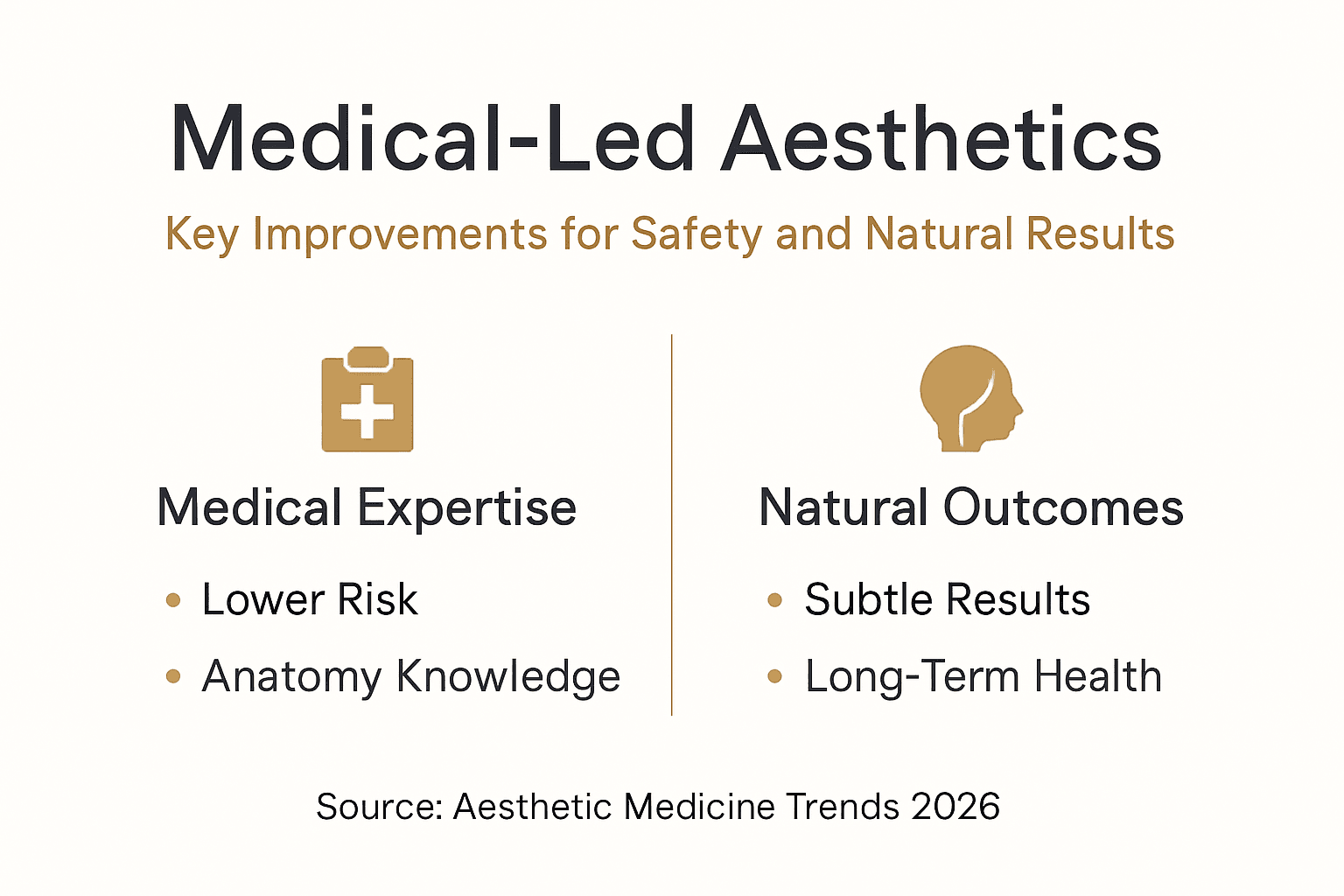
Infographic comparing medical versus non-medical aesthetics

Injectable Type Duration Primary Benefit Ideal For
Hyaluronic Acid Fillers 6-18 months Immediate volume and hydration Lines, lips, cheeks
Biostimulatory Injectables 2+ years Gradual collagen rebuilding Volume loss, skin laxity
Neurotoxins 3-4 months Muscle relaxation and wrinkle prevention Forehead lines, crow’s feet
Injectable Moisturizers 6-9 months Deep skin hydration and glow Overall skin quality

Pro Tip: Schedule biostimulatory treatments in your late 30s or early 40s before significant volume loss occurs. This proactive approach maintains your facial structure naturally and reduces the need for more invasive corrections later.

Learn about aesthetic treatment examples and explore biostimulatory injectables trends transforming longevity in aesthetics.

Technological Advancements Supporting Medical-Led Approaches

Advanced diagnostics integrating AI skin analysis, 3D facial mapping, and genetic lifestyle data enable precision care. AI-driven skin type and condition analysis detects issues invisible to the naked eye. Your provider identifies pigmentation concerns, texture irregularities, and underlying inflammation before creating your treatment plan.

3D facial mapping respects individual anatomy to enhance natural outcomes. This technology captures your facial proportions, asymmetries, and volume distribution. Integration of genetic and lifestyle data improves prediction of treatment responses, reducing trial and error.

Technology helps reduce risks and increase patient confidence through data-driven planning. You see visual projections of potential outcomes before committing to treatment. This transparency removes guesswork and builds trust.

Key technologies revolutionizing medical aesthetics:

  • AI-powered skin analyzers that assess moisture levels, pore size, and elasticity
  • 3D imaging systems that simulate post-treatment appearance
  • Genetic testing to predict collagen breakdown rates and filler longevity
  • Digital treatment planning software for precise injection mapping
  • Real-time ultrasound guidance for safer filler placement near vessels

See how to choose injectables naturally and review AI diagnostics in aesthetics shaping modern care.

Patient Collaboration and Education in Medical-Led Aesthetics

Clear discussions about realistic outcomes and risks form the foundation of medical-led care. Transparent patient education and collaboration improve trust, reduce pressure, and lead to better outcomes in medical aesthetics. Your provider explains what each treatment can and cannot achieve.

Avoidance of pressure tactics and rushed decisions by medical professionals protects you from buyer’s remorse. You receive time to consider options, research treatments, and return with questions. Patient empowerment leads to improved adherence and satisfaction with results.

Tips for collaborating effectively with providers:

  • Request before and after photos of patients with similar features and goals
  • Ask about the provider’s training, certification, and years of experience
  • Clarify the full cost including follow-up visits and potential touch-ups
  • Discuss what happens if you’re unsatisfied with initial results
  • Inquire about emergency protocols if complications arise

Pro Tip: Write down your top three aesthetic concerns before your consultation. This focused approach helps your provider understand priorities and design a treatment sequence that addresses your most important goals first.

Explore how to choose aesthetic treatments naturally and learn from patient education in aesthetics best practices.

Common Misconceptions About Medical-Led Aesthetics

Myth 1: Medical aesthetics cause unnatural, overdone looks. Reality: They emphasize subtlety and anatomical respect to enhance your features without dramatic transformation. The goal is refinement, not reinvention.

Myth 2: Non-medical providers deliver equally safe treatments. Reality: Medical expertise significantly improves safety through anatomical knowledge, complication management skills, and ethical oversight. Non-medical settings lack this depth of training.

Patient demand favors subtle, believable outcomes over dramatic transformations. You want to look refreshed, not different. Medical-led aesthetics align with this preference through conservative treatment approaches.

Factor Medical-Led Aesthetics Non-Medical Aesthetics
Personalization Comprehensive assessment with customized plans Often standardized protocols
Safety Oversight Medical training, emergency protocols, complication management Limited medical supervision or emergency response
Outcome Focus Natural enhancement respecting anatomy May prioritize trends over individual features
Patient Satisfaction Higher due to realistic expectations and quality results Variable, risk of disappointment or adverse events

Understand medical providers role in delivering superior, safer outcomes.

Making an Informed Choice: How to Select Medical-Led Aesthetic Care

Verify medical credentials such as board certifications and specialized training in aesthetic medicine. Look for providers certified by recognized boards in dermatology, plastic surgery, or aesthetic medicine. Training matters as much as licensure.

Look for evidence-based, personalized treatment plans focusing on natural results. Your provider should explain why specific treatments suit your anatomy and goals. Be alert for red flags: lack of medical supervision, pushy sales tactics, or missing consultative care.

Steps to prepare for your consultation:

  1. Research the provider’s credentials, reviews, and before/after galleries online.
  2. Prepare a list of questions about treatment options, risks, costs, and expected timelines.
  3. Bring a list of current medications, supplements, and known allergies.
  4. Ask about the provider’s complication rate and how they handle adverse events.
  5. Request a detailed treatment plan in writing with costs broken down.
  6. Take time to decide without feeling pressured to book immediately.

Pro Tip: Review before and after photos critically. Look for subtle improvements rather than dramatic changes. Natural results should make you wonder what changed, not immediately identify the work done.

Learn more about choosing aesthetic treatments and discover why choosing a medical spa matters for safety and quality.

Discover Personalized Medical-Led Aesthetic Treatments in Raleigh, NC

Ready to experience medical-led aesthetics designed for natural, lasting results? The Aesthetics Lounge & Spa in North Raleigh offers medically supervised treatments that respect your anatomy and goals.

https://raleigh.theaestheticsloungeandspa.com

Our range includes facials, chemical peels, and microneedling tailored for subtle enhancement and skin health. Expert medical supervision ensures every treatment is safe, precise, and aligned with your vision. Advanced diagnostics help us customize your care plan from consultation through maintenance.

Schedule a personalized consultation to discuss your aesthetic goals without pressure. Explore aesthetic treatments in Raleigh and learn how to choose aesthetic treatments naturally. Discover the benefits of medical aesthetics for your unique needs.

Frequently Asked Questions About Medical-Led Aesthetics

What qualifications should I look for in a medical aesthetic provider?

Seek providers with active medical licenses, board certification in relevant specialties like dermatology or plastic surgery, and advanced training in aesthetic procedures. Membership in professional organizations like the American Society for Aesthetic Plastic Surgery signals commitment to standards.

How long do results from medical-led minimally invasive treatments typically last?

Results vary by treatment type. Neurotoxins last three to four months, hyaluronic acid fillers six to eighteen months, and biostimulatory injectables two years or longer. Your provider creates a maintenance schedule tailored to your medical aesthetics results and goals.

Are medical-led aesthetic treatments safe for sensitive skin?

Yes, when performed by qualified medical professionals who assess your skin type and sensitivities first. Medical providers customize treatment intensity, product selection, and post-care protocols to minimize irritation and maximize safety for sensitive skin.

What should I expect during my first consultation?

Expect a comprehensive facial assessment, discussion of your aesthetic goals and medical history, explanation of suitable treatment options with realistic outcomes, and a customized treatment plan with cost estimates. No pressure to book immediately; you should leave with information to make an informed decision.

How can I maintain results long-term after treatments?

Follow your provider’s skincare recommendations, protect skin from sun damage with daily SPF, stay hydrated, manage stress, and schedule periodic maintenance treatments as advised. Choose aesthetic treatments that align with your lifestyle for sustainable, long-term results.

How to Plan Aesthetic Treatments to Reduce Side Effects

Many adults in North Carolina worry about looking overdone after aesthetic treatments or facing complications from rushed procedures. Recent data shows that improper treatment pacing increases adverse effects by 40%. This guide teaches you how to plan treatments safely with medical guidance, ensuring natural results and long-term skin health through proper assessment, personalized planning, and strategic pacing.

Table of Contents

Key Takeaways

Point Details
Medically guided planning tailored to your facial anatomy improves natural results by 35%. Personalized assessment respects your unique features and goals.
Spacing treatments 4-6 weeks apart reduces side effects by 40%. Proper intervals allow skin recovery and enhance safety.
Thorough medical screening cuts complications by 50%. Pre-treatment evaluation identifies contraindications early.
Avoiding overfilling reduces revision risks by 30%. Conservative approach prevents unnatural appearance.
Alternative treatments offer safer but slower improvements. Non-invasive options prioritize skin health over speed.

Prerequisites and Medical Evaluation

Before starting any aesthetic treatment, a comprehensive medical evaluation ensures safety and effectiveness. Your provider needs a complete picture of your health history to identify potential risks and customize your approach.

Pre-treatment screening reduces complications by 50% by catching contraindications early. Your medical history should include:

  • Autoimmune disorders like lupus or rheumatoid arthritis that may affect healing
  • Known allergies to medications, anesthetics, or injectable components
  • Current medications including blood thinners, supplements, and topical prescriptions
  • Previous cosmetic procedures and any complications experienced
  • Active skin conditions or chronic inflammations

A baseline skin evaluation documents your starting point. Your provider examines skin texture, elasticity, pigmentation, and existing volume loss. This assessment guides treatment selection and helps track improvements over time.

Screening for contraindications prevents adverse events. Active infections, open wounds, or inflammation in treatment areas require resolution before proceeding. Pregnancy, breastfeeding, or certain medical conditions may temporarily exclude you from specific treatments. Honest disclosure protects your safety and ensures optimal outcomes.

Pro Tip: Bring a list of all medications, including over the counter supplements, to your consultation. Some common items like fish oil or aspirin affect treatment safety.

Stepwise Personalized Planning

After medical clearance, personalized planning begins with understanding your unique facial anatomy. Every face has distinct proportions, movement patterns, and aging characteristics that require individualized approaches.

Tailored aesthetic treatment plans improve patient satisfaction by 35% compared to standardized protocols. Your provider should:

  1. Analyze your facial structure including bone architecture, fat distribution, and muscle activity
  2. Observe natural facial movement and expressions to preserve authenticity
  3. Identify specific concerns like volume loss, wrinkles, or texture issues
  4. Develop incremental treatment steps that respect anatomical boundaries
  5. Select appropriate modalities matching your goals and lifestyle

Conservative planning prevents overcorrection. Starting with subtle improvements allows adjustments based on your response. You can always add more, but reversing excessive treatment proves difficult and stressful.

Treatment sequencing matters. Address foundational issues like skin health through medically guided skincare steps before adding injectables. Understanding the step-by-step Botox process helps set realistic expectations for neuromodulator treatments.

Key planning elements include:

  • Prioritizing areas with highest visual impact
  • Scheduling complementary treatments strategically
  • Building gradual improvement over multiple sessions
  • Planning maintenance intervals for lasting results

Pro Tip: Request before photos from multiple angles during your initial assessment. These images provide objective comparison points and help track subtle changes that you might not notice day to day.

Active participation improves satisfaction. Share your concerns openly and ask questions about each recommended treatment. Understanding how choosing aesthetic treatments naturally aligns with your goals empowers informed decisions. Explore various aesthetic treatments in Raleigh, NC to understand your options.

Treatment Scheduling and Pacing

Proper treatment pacing protects your skin and optimizes results. Rushing procedures increases risks while providing minimal additional benefit.

Spacing aesthetic treatments 4-6 weeks apart reduces adverse effects by 40%. This interval allows complete healing between sessions. Your skin needs time to respond, regenerate collagen, and stabilize before additional intervention.

Patient scheduling aesthetic treatment intervals

Gradual build-up prevents overtreatment. Starting conservatively and adding incrementally maintains natural appearance. Excessive initial treatment often requires correction, causing frustration and additional expense.

Treatment Type Recommended Interval Typical Sessions
Neuromodulators 12-16 weeks 3-4 per year
Dermal Fillers 6-12 months 1-2 per area annually
Laser Resurfacing 4-6 weeks 3-5 initial series
Chemical Peels 4-6 weeks 4-6 initial series
Microneedling 4-6 weeks 3-6 initial series

Monitoring between sessions enables personalized adjustments. Your provider assesses healing, addresses concerns, and modifies the plan based on your response. Some patients need longer intervals, while others progress faster.

Consistent skincare steps for lasting results between treatments enhances outcomes. Medical-grade products support skin healing and extend treatment benefits.

Pro Tip: Keep a simple treatment journal noting dates, procedures, immediate reactions, and how you feel after two weeks. This record helps identify patterns and guides future planning with your provider.

Patient Education and Managing Expectations

Clear communication builds trust and improves treatment satisfaction. Understanding realistic outcomes prevents disappointment and supports informed consent.

Your provider should discuss:

  • Specific risks associated with each recommended treatment
  • Realistic timeline for visible improvements
  • Expected duration of results before maintenance needed
  • Potential side effects and management strategies
  • Cost considerations for initial treatment and ongoing maintenance

Realistic expectations prevent dissatisfaction. Aesthetic treatments enhance your natural features but cannot completely transform your appearance or stop aging. Understanding limitations helps appreciate subtle improvements.

Maintenance requirements vary by treatment type. Neuromodulators require regular sessions every three to four months. Fillers last six to eighteen months depending on product and placement. Skin treatments provide cumulative benefits but need periodic refreshers.

The role of medical providers in aesthetics includes ongoing education. Ask questions about aftercare, warning signs requiring immediate attention, and when to schedule follow-up appointments.

Active participation improves outcomes. Provide honest feedback about your comfort level, aesthetic preferences, and any concerns during treatment. Your input guides adjustments and ensures alignment with your goals.

Common Mistakes and Troubleshooting

Avoiding frequent planning errors protects your safety and aesthetic outcomes. Learning from common pitfalls helps you make better decisions.

Inadequate assessment and rushing treatments increase complications by 25%. Skipping thorough initial evaluation leads to inappropriate treatment selection or missed contraindications. Always insist on comprehensive consultation before proceeding.

Rushing treatment cycles causes multiple problems:

  • Insufficient healing time between sessions
  • Increased inflammation and prolonged recovery
  • Higher risk of unnatural appearance from accumulation
  • Greater expense from complications or corrections

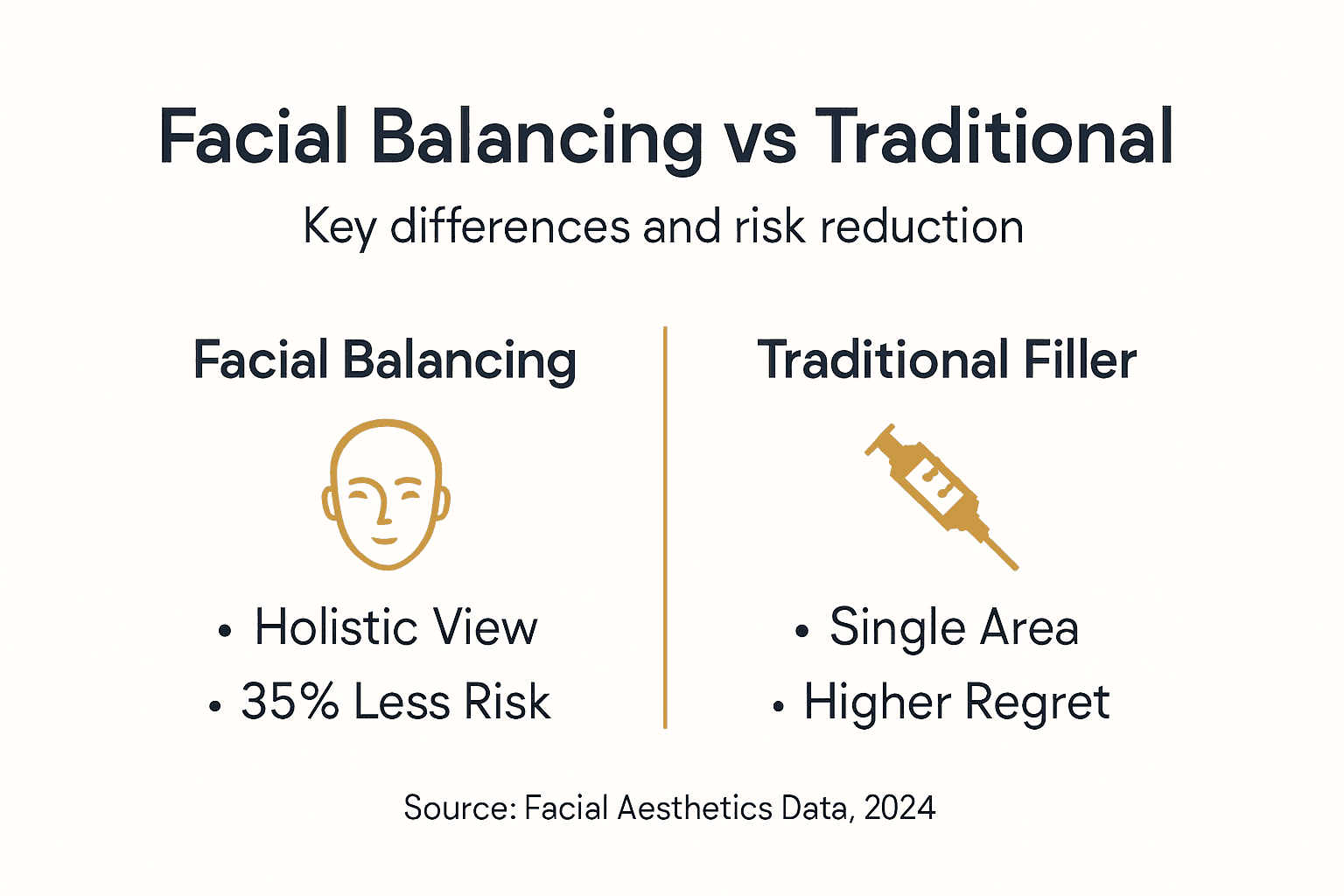
Avoiding overfilling volumizing fillers reduces revision treatments by 30%. Excessive filler creates an overdone look that requires dissolution or waiting for natural breakdown. Conservative placement preserves facial movement and authenticity.

Monitor your response carefully. Persistent swelling beyond expected timeframes, asymmetry, or unusual symptoms require immediate provider contact. Early intervention addresses complications before they worsen.

Troubleshooting common issues:

  • Bruising lasting beyond two weeks may indicate underlying bleeding disorders
  • Prolonged redness or warmth suggests possible infection
  • Lumps or bumps require evaluation to rule out nodules or granulomas
  • Dissatisfaction with results benefits from waiting full treatment duration before adjustments

Expected Results and Timelines

Realistic benchmarks help you evaluate progress and plan effectively. Treatment timelines vary by modality and individual response.

Most patients observe initial improvements after two to three monthly sessions. Skin texture and elasticity respond gradually to regenerative treatments. Immediate results from injectables refine over two weeks as swelling subsides and products integrate.

Result Type Timeline Duration
Neuromodulator effect 3-7 days onset, 2 weeks peak 3-4 months
Filler integration 2 weeks settling 6-18 months
Skin texture improvement 4-6 weeks cumulative Ongoing with maintenance
Collagen stimulation 8-12 weeks visible 6-12 months

Typical treatment cycles range from three to six sessions depending on your goals and starting condition. Mild concerns may achieve desired improvement in three sessions, while more advanced aging requires extended series.

Average treatment costs in North Carolina vary by modality:

  • Neuromodulators: $300 to $600 per area
  • Dermal fillers: $600 to $1,200 per syringe
  • Laser resurfacing: $500 to $2,500 per session
  • Chemical peels: $150 to $600 per session
  • Microneedling with PRP: $400 to $800 per session

Signs of successful natural enhancement include subtle improvements that respect your facial structure, maintenance of natural movement and expression, positive feedback noting you look refreshed rather than different, and results lasting six to twelve months with appropriate maintenance.

Alternative Treatments and Tradeoffs

Non-invasive options provide gentler approaches for patients prioritizing skin health over immediate visible changes. Understanding alternatives helps you choose treatments matching your values and timeline.

Microneedling with platelet-rich plasma offers gradual but safer collagen stimulation compared to injectables. This regenerative approach uses your body’s healing factors to improve texture, tone, and firmness over several months.

Treatment Speed Risk Level Cost Best For
Injectables Fast (days) Moderate Higher per session Immediate volume/wrinkle correction
Microneedling + PRP Slow (months) Low Moderate per session Overall skin quality improvement
Chemical Peels Moderate (weeks) Low to moderate Lower per session Texture and pigmentation issues
Laser Resurfacing Moderate (weeks) Moderate Higher per session Significant texture concerns

Patients seeking natural, gradual improvement often prefer regenerative treatments. These modalities enhance your skin’s own repair processes rather than adding foreign substances. Results develop slowly but typically appear more natural.

Injectables provide faster visible correction but require careful technique to avoid overdone appearance. When administered conservatively by experienced providers, they offer predictable improvement with manageable risks.

Your priorities guide treatment selection. If you value speed and dramatic correction, injectables may suit you better. If you prioritize skin health and accept slower progress, regenerative options align with your goals. Many patients combine both approaches strategically.

Explore Medically Guided Aesthetic Treatments in Raleigh, NC

Ready to experience expert care that prioritizes your natural beauty and long-term skin health? The Aesthetics Lounge & Spa in North Raleigh delivers evidence-based aesthetic treatments in Raleigh, NC with medical precision and personalized attention.

https://raleigh.theaestheticsloungeandspa.com

Our boutique practice on Six Forks Road specializes in anatomically sound planning that respects your facial structure and movement. We educate first, treat conservatively, and pace strategically so you look like yourself, just more supported. Discover how to choose aesthetic treatments naturally with guidance from experienced medical professionals who understand the role of medical providers in aesthetics. Schedule your consultation to begin your journey toward refined, lasting results.

Frequently Asked Questions

How long should I wait between aesthetic treatments?

Wait four to six weeks between most aesthetic treatments to allow complete skin healing and reduce adverse effects by 40%. Neuromodulators require longer intervals of twelve to sixteen weeks between sessions. Your provider adjusts timing based on your individual response and treatment type.

Are non-invasive treatments effective for natural results?

Non-invasive treatments like microneedling with PRP effectively improve skin quality through gradual collagen stimulation. Results appear slower than injectables but often look more natural and support long-term skin health. These options suit patients prioritizing safety and authenticity over speed.

What should I disclose during my medical evaluation?

Disclose all medical conditions, medications including supplements, known allergies, previous cosmetic procedures, and current skin concerns. Mention autoimmune disorders, blood thinners, and any history of adverse reactions. Complete disclosure reduces complications by 50% through proper risk assessment.

Can too many filler treatments cause harm?

Excessive filler accumulation creates unnatural appearance, restricts facial movement, and increases revision needs by 30%. Overfilling may cause vascular complications in rare cases. Conservative placement with appropriate intervals maintains natural aesthetics and safety. Always choose providers who prioritize restraint over dramatic correction.

How do I know if my treatment plan is tailored to me?

A personalized plan includes detailed facial assessment, consideration of your unique anatomy and goals, incremental treatment steps, and flexibility for adjustments based on your response. Your provider should explain why specific treatments suit your needs and involve you actively in decision making throughout the process.

Safe Aesthetic Care in 2026: The Shift Toward Natural Treatments

Many adults mistakenly believe non-surgical aesthetic treatments inevitably create overdone, unnatural appearances. This misconception keeps people from exploring options that could enhance their confidence. Safe aesthetic care prioritizes subtle, natural results under medical supervision. This guide clarifies what safe care truly means, empowering you to make informed, confident choices about treatments that respect your unique features while delivering refined enhancements.

Table of Contents

Key Takeaways

Point Details
Medical oversight matters Qualified providers with proper certifications dramatically reduce complication risks.
Popular treatments are safe Botox and fillers deliver natural results when medically administered by trained professionals.
Safety protocols protect you Strict hygiene standards and regulatory compliance ensure patient protection.
Myths create fear Non-surgical treatments don’t cause unnatural looks when performed conservatively.
Provider choice is critical Selecting qualified practitioners ensures safe, natural outcomes aligned with your goals.

Defining Safe Aesthetic Care

Safe aesthetic care blends medical expertise with cosmetic enhancement goals. Modern medical aesthetics prioritize subtle, natural enhancements tailored to individual anatomy, ensuring you look like yourself, just more supported. The focus is preserving your facial identity through measured improvements, never drastic alterations.

Individualized treatment plans respect your anatomy and desired outcomes. Your bone structure, muscle movement, and skin quality all influence which treatments suit you best. Medical supervision ensures realistic expectations from the start, preventing disappointment and complications.

Key principles of safe aesthetic care include:

  • Medical expertise guiding every decision
  • Personalized plans based on facial anatomy
  • Conservative approaches favoring gradual enhancements
  • Transparent communication about risks and benefits
  • Follow-up care ensuring optimal healing

Pro Tip: Always prioritize providers who emphasize natural looks over dramatic changes. If someone promises to transform you completely, walk away. Safe care enhances who you already are.

Medical Oversight and Provider Qualifications

Board certification and specialized training are non-negotiable for safe injectors and aestheticians. Qualified medical providers significantly reduce the risk of complications compared to untrained practitioners. The difference isn’t subtle; it’s the gap between safe enhancement and potential harm.

North Carolina requires licensure and adherence to state regulations for aesthetic providers. Before any treatment, verify your provider holds active licenses and operates under physician supervision. Medical providers in aesthetics bring anatomical knowledge that protects you from complications.

Patients should verify credentials and physician involvement before treatment. Ask direct questions about training, experience with specific procedures, and complication management protocols. Legitimate providers welcome these inquiries.

Essential qualifications to confirm:

  • Active medical license in North Carolina
  • Specialized training in cosmetic injectables
  • Certification from recognized aesthetic boards
  • Ongoing education in latest techniques
  • Malpractice insurance coverage

Medical oversight drastically lowers complication rates by ensuring anatomical precision, sterile technique, and immediate response capability if issues arise.

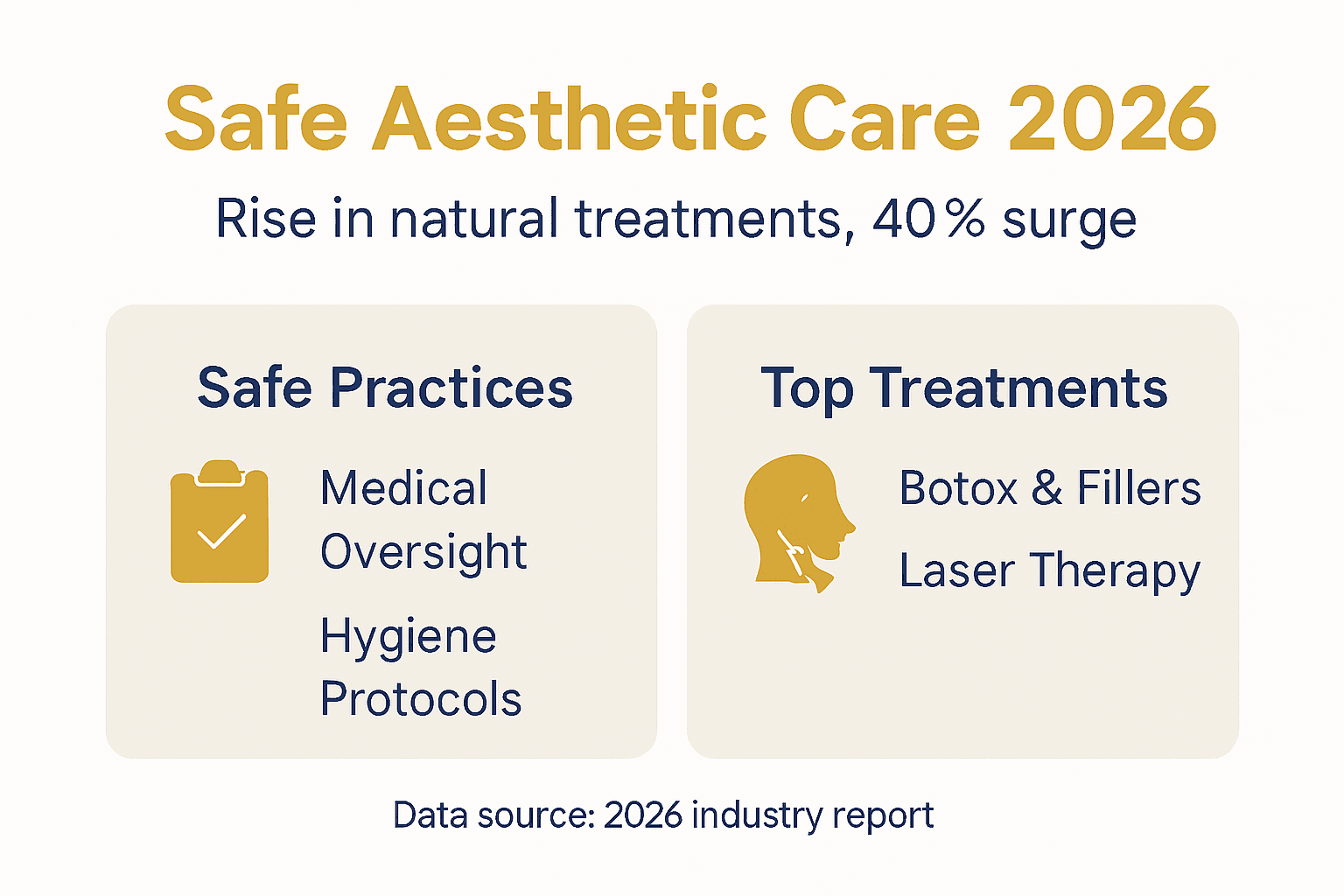
Non-surgical cosmetic treatments have surged globally, with a 40% increase in procedures over four years, reflecting their safety and patient preference. This growth demonstrates that people trust these options when performed correctly. Understanding your choices helps you make informed decisions.

Popular treatments include Botox, dermal fillers, laser therapy, ultrasound lifting, chemical peels, and CoolSculpting®. Each addresses different concerns with varying timelines and results. Injectable neurotoxins like Botox are among the most popular and safest treatments when administered by experienced providers.

Botox and fillers offer fast, subtle results with low complication rates when performed medically. Botox relaxes muscles causing wrinkles, while fillers restore volume and smooth lines. Both treatments take minutes with minimal downtime, making them ideal for busy adults.

Energy-based treatments stimulate collagen to tighten skin, often requiring multiple sessions. Lasers and ultrasound penetrate deeper layers, triggering your body’s natural healing response. Results appear gradually over weeks to months.

Treatment Type Duration of Results Downtime Safety Profile
Botox 3 to 4 months None Very high when properly administered
Dermal Fillers 6 to 18 months Minimal swelling High with qualified injectors
Energy-Based 1 to 2 years Mild redness High with approved devices

Safety Protocols and Regulatory Landscape

Licensing and registration of providers and facilities are legally mandated to ensure safety. Every legitimate clinic operates under state oversight, with regular inspections confirming compliance. Safety standards for non-surgical cosmetic procedures involve strict provider licensure, facility hygiene, equipment safety, and ongoing competency training.

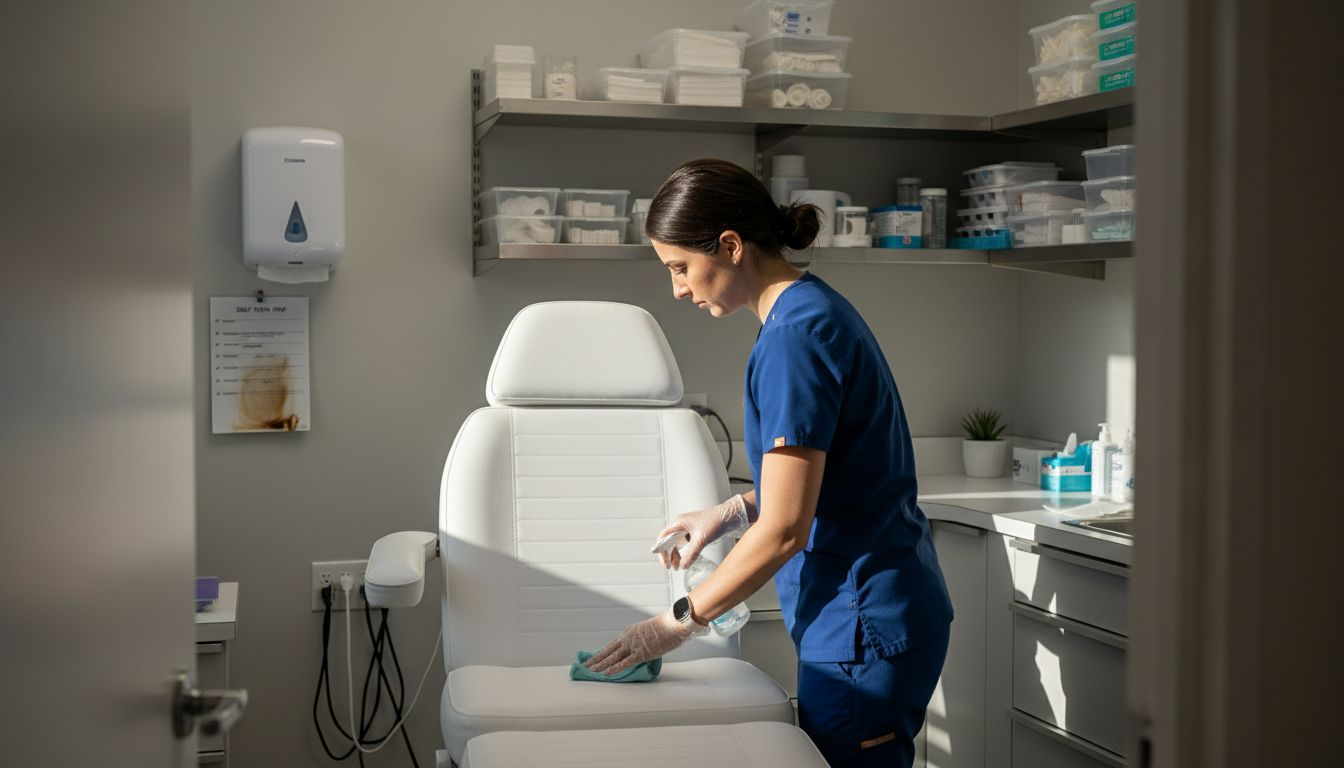
Assistant disinfects chair in clinic room

Clinics must follow strict hygiene and infection control protocols to prevent complications. This includes sterile technique for injections, proper equipment sterilization, and single-use items where appropriate. Cross-contamination risks are eliminated through rigorous protocols.

Equipment safety, including FDA approvals, is monitored regularly. Devices must meet federal standards before use on patients. Your provider should use only approved products from verified suppliers, never counterfeit or diluted substances.

Providers participate in ongoing training and competency evaluations to maintain skills. Techniques evolve, and new research emerges constantly. The best practitioners commit to lifelong learning, ensuring you benefit from current best practices.

Patients should confirm their clinic complies with these safety protocols:

  • Current facility licenses displayed publicly
  • Staff credentials and certifications available for review
  • Clear infection control procedures
  • FDA-approved products and equipment only
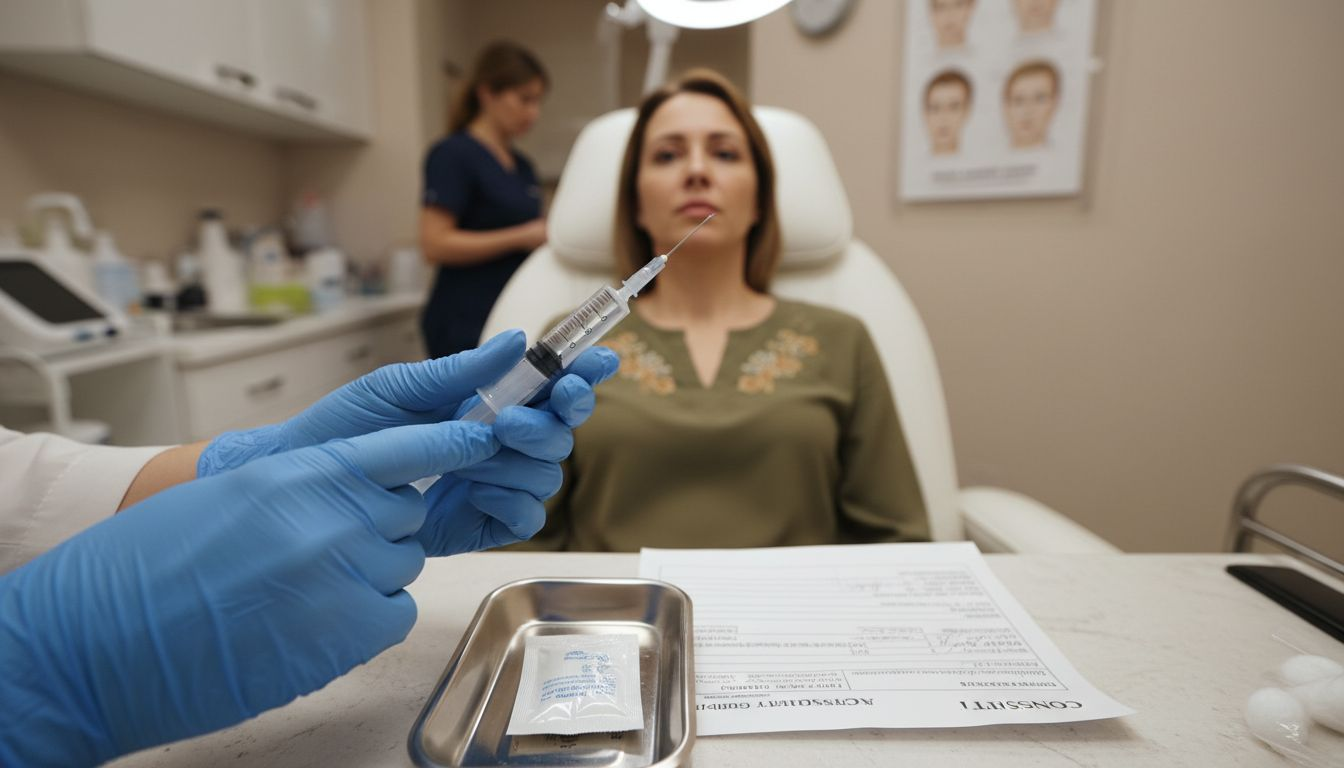
  • Detailed consent forms explaining risks

Common Misconceptions and Clarifications

Myth 1: Non-surgical treatments cause unnatural, overdone looks. Reality: Modern practices prioritize subtle, age-appropriate enhancements when performed conservatively. The frozen faces and overfilled lips you fear result from poor technique or patient requests for extreme results, not the treatments themselves.

Myth 2: Only young people benefit from these treatments. Reality: People across adult ages maintain youthful vitality safely. Whether you’re preventing early lines in your thirties or refreshing your appearance in your sixties, treatments can be customized. Age is less important than realistic goals and good skin health.

Myth 3: These treatments don’t require medical supervision. Reality: All procedures carry risks needing qualified oversight. Even “minor” injectables can cause complications if administered incorrectly. Vascular occlusion, infection, and allergic reactions require immediate medical intervention.

Common fears about safety often stem from:

  • Media coverage of botched procedures by unqualified providers
  • Extreme celebrity results setting unrealistic expectations
  • Lack of understanding about conservative approaches
  • Marketing that overpromises dramatic transformations

Pro Tip: Always discuss expectations with your provider to ensure realistic and natural outcomes. Bring photos of yourself at a younger age rather than celebrities. This helps your provider understand your personal aesthetic goals.

Planning and Patient Education for Natural Results

Consultation includes discussing goals, anatomy, risks, and expectations clearly. This conversation forms the foundation of safe care. Your provider should listen more than talk initially, understanding what bothers you before proposing solutions. Rushing this step often leads to disappointing results.

Respecting facial anatomy in aesthetics ensures enhancements preserve natural expressions and balance. Your face moves uniquely. Treatments must account for muscle dynamics, bone structure, and fat distribution. Cookie-cutter approaches ignore these individual factors.

Infographic natural aesthetic care key trends

Treatment pacing favors incremental changes over drastic alterations. Starting conservatively allows adjustments at follow-up appointments. You can always add more filler or Botox; removing excess is far more complicated.

Patient education covers maintenance, potential side effects, and follow-up care. Understanding what to expect prevents anxiety and helps you identify problems early. Knowing normal healing versus complications empowers you to seek help when needed.

Your involvement in planning safe aesthetic care:

  1. Research providers and verify credentials before booking
  2. Prepare questions about specific treatments and outcomes
  3. Communicate honestly about medical history and medications
  4. Review before-and-after photos of actual patients
  5. Understand the full cost including follow-up visits
  6. Commit to recommended pre- and post-treatment protocols

Benefits of thorough patient education:

  • Confidence in your treatment decisions
  • Realistic expectations preventing disappointment
  • Better recognition of potential complications
  • Improved treatment outcomes through proper aftercare
  • Long-term satisfaction with aesthetic investments

When you understand how to choose aesthetic treatments naturally, you avoid common pitfalls. Education transforms you from passive recipient to active participant. This partnership with your provider creates examples of aesthetic treatments for natural results that enhance rather than alter.

Risks and How to Avoid Unsafe Practices

Complications can arise from unlicensed injectors or counterfeit products. The underground aesthetic market thrives on bargain seekers, but savings aren’t worth permanent damage. Counterfeit Botox and fillers lack quality control, potentially containing harmful substances. Unlicensed injectors lack training to manage emergencies.

Signs of unsafe providers include lack of medical oversight and poor hygiene standards. Red flags are obvious once you know what to look for. If the price seems too good to be true, it probably is. If the setting looks more like a salon than a medical facility, proceed with caution.

Patients should verify provider licenses, read reviews, and visit facilities beforehand. Online research takes minutes but protects you from years of regret. State licensing boards publish provider credentials publicly. Reviews reveal patterns of satisfaction or problems.

Avoid providers promising dramatic changes with “no risk” claims. All medical procedures carry some risk, and honest providers acknowledge this upfront. Guarantees of perfection or pressure tactics suggest profit motives outweigh patient safety.

Protecting yourself from unsafe practices:

  • Never accept treatments in non-medical settings like homes or hotels
  • Refuse procedures from providers who won’t disclose product brands
  • Walk away from high-pressure sales tactics or limited-time offers
  • Verify your provider carries malpractice insurance
  • Trust your instincts if something feels wrong

Pro Tip: Trust only clinics that transparently discuss risks and show credentials. Legitimate providers want informed patients who understand both benefits and potential complications. Transparency builds trust and protects everyone involved.

Step-by-Step Guide to Choosing a Safe Provider

Selecting the right provider determines your safety and satisfaction. Following these steps systematically reduces risks and increases the likelihood of natural, beautiful results.

  1. Research provider’s medical credentials and licensure status carefully. Start with state medical boards to verify active licenses. Check for disciplinary actions or complaints. Review educational background and specialized training in aesthetic medicine.

  2. Schedule an initial consultation to discuss goals, options, and risks. Use this meeting to assess communication style and comfort level. Does the provider listen? Do they pressure you toward specific treatments? Are they realistic about what’s achievable?

  3. Confirm the clinic’s hygiene protocols and use of approved products. Ask to see the treatment room. Observe cleanliness and organization. Request information about product sourcing and storage. Reputable providers eagerly share this information.

  4. Choose conservative treatment approaches focusing on natural outcomes. Discuss starting with minimal amounts and adjusting gradually. Providers who recommend aggressive first treatments may prioritize revenue over your best interests.

  5. Follow post-treatment care and attend all follow-up appointments. Your provider should schedule check-ins to assess results and address concerns. Skipping these appointments risks missing complications and limits your ability to refine results.

Additional considerations when choosing your provider:

  • Years of experience specifically with desired treatments
  • Portfolio of before-and-after photos showing natural results
  • Clear pricing structure without hidden fees
  • Emergency contact information for after-hours concerns
  • Patient testimonials describing the entire experience

The time invested in careful provider selection pays dividends in safety, satisfaction, and natural-looking enhancement. Rushing this decision invites regret and potential harm.

Discover Safe, Natural Aesthetic Treatments in Raleigh, NC

If you’re seeking medically guided aesthetic care that prioritizes your natural appearance, The Aesthetics Lounge & Spa offers precisely that approach. Our conservative treatment philosophy ensures you look like yourself, just more supported. Every appointment begins with education, not sales pressure.

https://raleigh.theaestheticsloungeandspa.com

We believe aesthetic care should enhance your confidence without announcing itself. Our team brings medical expertise to every consultation, creating personalized plans that respect your facial anatomy and goals. From examples of aesthetic treatments for natural results to guidance on how to choose aesthetic treatments naturally, we’re here to support your journey. Discover more about medical aesthetics explained and schedule your consultation today.

What Is Safe Aesthetic Care? Frequently Asked Questions

How do I verify if my provider is qualified?

Check the North Carolina Medical Board website for active licenses and any disciplinary history. Ask your provider directly about board certifications, specialized training in aesthetic medicine, and years of experience with specific treatments. Legitimate providers welcome these questions and provide documentation readily.

What non-surgical treatments are safest for beginners?

Botox and dermal fillers are excellent starting points when administered conservatively by qualified providers. These treatments offer predictable, temporary results with minimal downtime. Starting with small amounts allows you to assess how your body responds before committing to more extensive treatments.

How can I ensure my results look natural?

Communicate clearly with your provider about wanting subtle enhancement, not dramatic change. Bring photos of yourself from younger years rather than celebrities. Choose providers who favor conservative approaches and gradual improvements. Natural results come from respecting your existing facial structure rather than fighting against it.

What should I expect during my first consultation?

Expect a thorough discussion of your concerns, goals, medical history, and realistic outcomes. Your provider should examine your facial anatomy and explain which treatments suit your needs. You’ll learn about risks, benefits, costs, and recovery expectations. Never feel pressured to book treatments during this initial visit.

Are non-surgical procedures safe for all adult ages?

Yes, when properly selected and customized for individual needs. Younger adults often focus on prevention, while mature adults address existing concerns. Your overall health matters more than chronological age. Medical clearance may be necessary for certain conditions, and a qualified provider will screen appropriately before treating you.

What Is Facial Balancing? A Guide to Natural Results

Many people believe adding more filler guarantees better, younger looking results. This couldn’t be further from the truth. Overfilling leads to up to 30% increased reports of unnatural appearance and restricted facial mobility. Facial balancing offers a medically guided alternative that honors your natural proportions while restoring youthful volume. You’ll learn how anatomical precision and expert care create authentic outcomes that enhance rather than erase your identity.

Table of Contents

Key Takeaways

Point Details
Natural Proportions Facial balancing uses the Golden Ratio and anatomical science to create harmony, not just add volume.
Medical Guidance Expert assessment reduces patient dissatisfaction by over 40% compared to trend driven treatments.
Holistic Approach Treating the face as an interconnected system prevents asymmetry and maintains dynamic movement.
Conservative Strategy Gradual, precise treatments preserve your identity while restoring youthful support.

Understanding Facial Balancing: Definition and Principles

Facial balancing is the art and science of harmonizing your features using anatomical proportions rather than simply injecting product wherever wrinkles appear. The approach relies on established mathematical relationships, particularly the Golden Ratio of approximately 1.618, which defines facial harmony perceived as naturally beautiful across cultures.

This isn’t arbitrary aesthetics. Specific facial features are prioritized in balancing: mid-face volume, jawline contour, chin projection, and periorbital areas. When these zones work together proportionally, your face reads as youthful and balanced even as you age.

Mid-face volume loss is particularly telling. As fat pads descend and bone resorbs over time, the cheeks flatten and jowls appear. This creates a tired, aged appearance that no amount of isolated temple filler can fix. True facial balancing addresses these interconnected changes.

Key principles guiding facial balancing include:

  • Restoring support where facial structure has weakened
  • Maintaining natural facial proportions based on your unique anatomy
  • Preserving dynamic movement so expressions remain authentic
  • Creating symmetry without erasing individuality
  • Using conservative amounts to avoid the overfilled look

Think of your face as architectural. Just as a building needs balanced load bearing walls, your facial features need proportional support. Remove one element or overemphasize another, and the entire structure feels off. Understanding the Golden Ratio in facial aesthetic surgery helps practitioners identify where subtle adjustments create the most harmonious results.

How Facial Balancing Works: Non-Surgical Techniques and Tools

The tools for facial balancing are straightforward: dermal fillers and neuromodulators, applied with surgical precision. Dermal fillers can restore up to 80% of volume loss in the mid-face, the area most critical for youthful appearance. These hyaluronic acid based products physically replace lost volume where fat pads have thinned.

Gloved hands prepare facial dermal filler procedure

Neuromodulators like Botox work differently. They relax overactive muscles that create asymmetry or pull features downward. When your forehead muscles constantly furrow or your mentalis muscle creates chin dimpling, strategic neuromodulator placement restores balance without freezing your face.

What makes dermal fillers in Raleigh effective for facial balancing isn’t the product itself but the placement strategy. A skilled injector maps your facial anatomy, identifies areas of lost volume or asymmetry, then creates a treatment plan that addresses root causes rather than chasing individual lines.

The typical facial balancing timeline follows this sequence:

  1. Initial consultation with detailed facial analysis and photography
  2. First treatment session focusing on foundational volume restoration
  3. Two week follow up to assess results and make minor adjustments
  4. Maintenance appointments every 9 to 18 months depending on metabolism and product choice
  5. Ongoing refinement as natural aging continues

Results from non-surgical facial rejuvenation typically become visible within one to two weeks as any initial swelling subsides and products integrate into tissue. Most treatments last nine to eighteen months before your body naturally metabolizes the material.

Pro Tip: Always start conservatively. You can add more filler at a follow up appointment, but removing excess product requires dissolving enzymes and waiting weeks for full correction. Gradual enhancement preserves your natural appearance and allows adjustment as you see results.

The Role of Medical Expertise in Facial Balancing

Anyone can inject filler into skin. Creating balanced, natural results requires understanding three dimensional facial anatomy, muscle interaction patterns, and how aging affects underlying structures. This is where medical expertise in facial balancing becomes non-negotiable.

A medically trained provider doesn’t just see surface wrinkles. They assess bone structure, fat compartments, ligamentous support, and muscle dynamics. This comprehensive view prevents the overfilled, distorted look that happens when practitioners treat isolated concerns without considering the whole face.

Dynamic facial movement analysis is particularly important. Your face isn’t static. It smiles, frowns, talks, and expresses dozens of emotions daily. Placing filler without considering how muscles move creates an unnatural, frozen appearance that screams “work done.” Medical providers trained in anatomy understand which areas tolerate volume and which require restraint.

Clinical guidance reduces patient dissatisfaction by over 40% compared to less rigorous approaches. When you work with someone who prioritizes education, realistic expectations, and conservative treatment pacing, you’re far more likely to love your results long term.

Benefits of medically supervised facial balancing include:

  • Precise product placement based on anatomical landmarks
  • Prevention of vascular complications through knowledge of danger zones
  • Strategic treatment planning that addresses root causes
  • Ability to assess overall health factors affecting treatment outcomes
  • Access to reversal agents and emergency protocols if needed

Pro Tip: During consultations, ask about your provider’s specific training in facial anatomy and how many years they’ve performed injectable treatments. Look for practitioners who discuss facial proportions and movement patterns, not just which products they’ll use. This signals an anatomy focused, thoughtful approach.

Common Misconceptions About Facial Balancing

The cosmetic treatment industry thrives on myths that keep clients confused and practitioners busy correcting mistakes. Let’s address the most damaging misconceptions directly so you can make informed choices.

Myth one: more filler creates better or younger results. Reality: overfilling leads to up to 30% increased reports of unnatural appearance and restricted facial mobility. Your face has limited capacity for product. Exceed that threshold and you get the pillow face, duck lips, or chipmunk cheeks that scream artificial enhancement.

Myth two: facial balancing will change how you look. Proper balancing enhances your existing features by restoring proportions lost to aging. You’ll look like yourself from ten years ago, not like someone else. The goal is recognition, not transformation.

Myth three: non-surgical treatments are risk free. While complications are rare with qualified providers, any injection carries risks including bruising, swelling, asymmetry, or in extreme cases vascular occlusion. This is exactly why medical expertise matters. Knowing anatomy minimizes risk and ensures proper response if complications occur.

Additional myths to dismiss:

  • Younger clients don’t need facial balancing (prevention is easier than correction)
  • All providers achieve similar results (technique and artistic eye vary dramatically)
  • Results should be immediately dramatic (natural enhancement is subtle and develops over weeks)
  • One treatment session is sufficient forever (maintenance is required as products metabolize)

Understanding the risks of overfilling helps you recognize when a provider is prioritizing sales over your aesthetic goals. If someone suggests large volumes during a first appointment or dismisses your concerns about looking natural, find another practitioner.

Comparative Framework: Facial Balancing vs Traditional Aesthetic Approaches

How does facial balancing differ from walking into a medical spa and asking for lip filler or Botox to erase forehead lines? The distinction lies in philosophy, assessment depth, and treatment strategy.

Aspect Facial Balancing Traditional Isolated Treatment
Assessment Approach Comprehensive facial analysis considering proportions, symmetry, and aging patterns across all features Focus on specific concerns client identifies without broader context
Treatment Strategy Addresses underlying volume loss and structural changes causing visible aging Treats surface symptoms like individual wrinkles or single area volume loss
Risk of Asymmetry Significantly lower due to whole face consideration and proportional planning Higher when treating isolated areas without assessing impact on overall harmony
Patient Satisfaction Over 35% reduction in regret and dissatisfaction compared to isolated approaches More frequent requests for correction or reversal due to unbalanced outcomes
Result Longevity Structural support creates lasting framework that ages gracefully Isolated treatments require more frequent touch ups as adjacent areas continue aging
Natural Movement Preserved through strategic placement respecting muscle dynamics Often compromised when focusing only on wrinkle elimination

Facial balancing reduces risk of asymmetry and patient regret by over 35% compared to isolated filler approaches. This isn’t surprising. When you treat the face as an interconnected system rather than a collection of independent parts, results naturally harmonize.

Facial balancing versus traditional infographic

Traditional approaches aren’t necessarily wrong. They’re simply incomplete. If you only address nasolabial folds without restoring cheek volume, those folds reappear quickly as the midface continues descending. Facial balancing prevents this cycle by addressing cause rather than symptom.

The holistic versus traditional aesthetic approaches debate ultimately centers on goals. Do you want a quick fix for one visible concern, or comprehensive support that maintains natural proportions as you age? Most clients seeking long term, authentic results choose the balancing approach once they understand the difference.

Applying Facial Balancing: Practical Guidance for Raleigh Clients

Understanding facial balancing theory matters little if you can’t identify qualified providers and know what to expect during treatment. Here’s how to successfully pursue facial balancing services in Raleigh while protecting your interests and achieving natural results.

Start by researching medically supervised clinics with demonstrated anatomy expertise. Look for providers who display before and after photos showing subtle, natural enhancements rather than dramatic transformations. Read reviews mentioning words like “natural,” “conservative,” and “listened to my concerns” rather than “dramatic” or “lots of product.”

Prioritize conservative, strategic treatments over aggressive volume addition. The best dermal fillers in Raleigh practices will suggest starting with less product than you might expect, then refining at follow up appointments. This gradual approach prevents overcorrection while allowing your face to adjust to new volume.

Typical treatment timelines span nine to eighteen months from initial session to first maintenance appointment. Your metabolism, activity level, and product choice all influence longevity. Faster metabolizers may need touch ups closer to nine months, while those with slower turnover can extend to eighteen months between sessions.

Key steps for choosing providers and maintaining results:

  • Verify medical credentials and specific training in facial anatomy
  • Schedule consultation focused on assessment before discussing treatment
  • Ask to see before and after photos of natural, subtle results
  • Discuss your aesthetic goals and ensure provider shares your vision for restraint
  • Plan follow up appointments for assessment rather than automatic retreatment
  • Consider combining treatments like medical grade facials in Raleigh to support skin quality

Pro Tip: During your consultation, ask these specific questions to gauge provider philosophy: “How do you determine product placement?” “What’s your approach if I feel results are too subtle or too dramatic?” “How do you preserve natural facial movement?” Answers should reference anatomical assessment, conservative dosing, and willingness to adjust based on your feedback. Avoid providers who seem rushed or dismissive of your concerns.

Discover Expert Facial Balancing in Raleigh, NC

Ready to experience facial balancing guided by medical expertise and anatomical precision? The Aesthetics Lounge and Spa Raleigh specializes in conservative, proportion based aesthetic treatments in Raleigh that enhance rather than alter your appearance.

https://raleigh.theaestheticsloungeandspa.com

Our medically led approach prioritizes thorough facial assessment, transparent education, and strategic treatment planning. We focus on creating support that respects your natural structure while restoring youthful volume where aging has created imbalance. Every treatment plan considers your unique anatomy, aesthetic goals, and long term maintenance needs. Whether you’re exploring dermal fillers in Raleigh for the first time or seeking more refined, natural results than previous treatments delivered, our team provides the expertise and conservative approach that distinguishes true facial balancing services in Raleigh. Schedule a consultation to discuss how proportional enhancement can help you look like yourself, just more supported.

Frequently Asked Questions About Facial Balancing

What is the typical recovery time for non-surgical facial balancing?

Most clients experience mild swelling and possible bruising for two to five days after treatment. You can return to normal activities immediately, though strenuous exercise should wait 24 hours. Final results become visible within two weeks as any swelling resolves and products settle into their intended position.

How often should treatments be maintained for lasting results?

Maintenance typically occurs every nine to eighteen months depending on your metabolism, the specific products used, and treatment areas. Faster metabolizers or those treating highly mobile areas like lips may need touch ups closer to nine months, while others extend maintenance to eighteen months. Your provider will assess longevity during follow up appointments.

Can facial balancing address asymmetry caused by aging?

Yes, facial balancing excels at correcting age related asymmetry from uneven volume loss, muscle weakening, or bone resorption. Strategic filler placement restores support where structure has diminished, creating improved symmetry while maintaining your natural features. Severe asymmetry from injury or congenital conditions may require additional assessment.

Is facial balancing suitable for all skin types and ages?

Facial balancing works across all skin types and is most commonly performed on adults aged 30 to 65 experiencing visible signs of facial volume loss. Younger clients may benefit from preventive treatments if early volume loss is evident, while older clients can achieve significant improvement even with advanced aging. Individual assessment determines candidacy.

How do I know if I’m a good candidate for facial balancing?

Ideal candidates notice facial volume loss, developing asymmetry, or loss of definition in cheeks, jawline, or chin areas. You should be in overall good health, have realistic expectations for natural enhancement rather than dramatic change, and be willing to follow post treatment guidelines. A consultation with comprehensive facial assessment determines your specific candidacy and treatment approach.

6 Benefits of Medical Spa Services for a Natural Look

Choosing where to trust your skin and aesthetic goals can feel overwhelming when you want results that look natural and last. With so many options promising quick changes, it is difficult to find real expertise and care that puts your needs first. You deserve both comfort and confidence—without risking your health or ending up with results that do not feel like you.

A medical spa blends clinical skill with a soothing environment, making every step centered on you and your unique features. Backed by scientific advances and professional oversight, each treatment is designed for safety and lasting improvement—not just surface-level changes. Keep reading to discover how these expert-led benefits support your natural look while helping you enjoy real, noticeable results that fit your life.

Table of Contents

Quick Summary

Takeaway Explanation
1. Medical oversight ensures personalized care Licensed healthcare professionals tailor treatment plans to your unique skin type and concerns, maintaining safety and efficacy.
2. Subtle enhancements preserve your natural look Treatments focus on enhancing natural features, ensuring you look refreshed rather than dramatically altered.
3. Comprehensive assessments lead to customized plans A thorough evaluation of your skin and goals lays the foundation for effective, long-lasting aesthetic results.
4. Advanced treatments target real skin issues Procedures like laser therapy and microneedling stimulate collagen production to improve skin texture and appearance over time.
5. Transparent education fosters confident choices Clear explanations about treatments and expected outcomes help you make informed decisions without pressure or upselling.

1. Expert Care Guided by Medical Professionals

When you walk into a medical spa, you’re entering a space where clinical expertise meets refined aesthetic care. The difference between a traditional spa and a medically led facility is profound—licensed healthcare professionals oversee every treatment, ensuring safety and precision.

Medical spas employ doctors, nurse practitioners, and licensed aestheticians who bring scientific rigor to your care. These professionals stay current with the latest advances in skin science and treatment protocols. Your results reflect their training, not just technique.

Here’s what professional medical oversight actually provides:

  • Evidence-based treatment plans customized to your unique facial anatomy
  • Real-time adjustment of procedures based on your skin’s response
  • Reduced risk of complications through proper screening and preparation
  • Access to clinical-grade treatments and equipment not available elsewhere
  • Ongoing monitoring and follow-up to ensure lasting, natural results

Medical professionals in aesthetic settings ensure procedures like laser therapy, injectables, and chemical peels are grounded in science rather than trends. They understand facial structure deeply—knowing exactly where to place a filler for subtle support or how much energy a laser needs for your specific skin type.

Professional medical oversight means your treatment plan respects who you are, not what’s fashionable.

This matters because amateur or unlicensed providers often create overdone results. A medical professional sees you not as a canvas for dramatic transformation, but as someone with specific concerns and natural beauty to preserve. They ask questions about your goals, examine your face carefully, and explain why certain approaches work better than others.

You benefit from their experience with thousands of faces. They recognize subtle differences in skin texture, bone structure, and expression patterns. They know which treatments work together and which require spacing. This knowledge prevents the rushed, trend-driven decisions that lead to regrettable outcomes.

Your comfort during treatment matters too. Medical professionals maintain clinical standards for hygiene, sterilization, and patient safety. They’re trained to handle complications if they arise, though their expertise usually prevents them entirely.

Pro tip: Ask your provider about their specific training and credentials before your first appointment—knowing their medical background builds confidence in your care plan.

2. Subtle Enhancements That Preserve Your Look

The goal of modern aesthetic care isn’t to transform you into someone else—it’s to reveal a more rested, supported version of yourself. Subtle enhancements work with your natural features, not against them.

Medical spas focus on non-surgical treatments designed to enhance what you already have. These include injectables, laser therapies, and skin rejuvenation procedures that reduce fine lines and refresh your appearance without dramatic changes. The key difference is restraint.

When done correctly, these treatments make people say you look rested, not that you’ve “had work done.” That’s the philosophy behind every procedure at a medically led spa—your face should still be recognizably yours.

Here’s how subtle enhancements actually work:

  • Botox relaxes specific muscles causing expression lines, maintaining natural movement in other areas
  • Dermal fillers add volume where you’ve lost it, restoring proportion rather than creating fullness
  • Laser treatments stimulate your skin’s own collagen production for gradual, natural-looking improvement
  • Microneedling encourages your body’s healing response without visible trauma or downtime
  • Chemical peels gently resurface skin to improve texture and tone incrementally

Many medical spa treatments focus on stimulating collagen production through procedures like microneedling or laser therapy. Your body does the actual work—the treatment simply signals your skin to renew itself. Results appear gradually, feeling completely natural because they are.

The best aesthetic results are the ones nobody notices because you still look like yourself.

This approach respects your unique facial structure. Your bone shape, proportions, and expression patterns are part of your identity. A skilled medical professional enhances these features rather than erasing them or imposing a cookie-cutter standard of beauty.

The timing matters too. Medical spas recommend spacing treatments strategically so changes integrate smoothly into your appearance. You’re not chasing quick fixes—you’re building a sustainable, long-term strategy for looking like your best self.

Pro tip: During your consultation, ask your provider to show you before-and-after photos of clients with similar features and concerns—this helps you envision realistic, natural-looking results that honor your unique look.

3. Personalized Plans for Long-Lasting Results

One-size-fits-all aesthetic treatments rarely deliver lasting satisfaction. Your skin, face shape, and aging patterns are uniquely yours—your treatment plan should reflect that reality.

Medical spas begin with comprehensive assessment rather than jumping straight to procedures. Your provider examines your skin type, studies your facial structure, reviews your health history, and listens to your specific concerns. This foundation ensures every recommendation serves your actual goals.

Personalization extends beyond your first appointment. Expert assessments and consultations lead to customized treatment plans suited to your skin type, health history, and aesthetic goals. These tailored approaches combine skincare, professional treatments, and strategic timing for results that compound over time.

Here’s what a personalized plan considers:

  • Your skin’s unique response to treatments and sensitivity patterns
  • Your timeline and how gradually you want changes to appear
  • Which concerns matter most versus which are secondary
  • Your daily habits and skincare routine capacity
  • Your professional or social calendar and downtime tolerance
  • How your face naturally ages and where you’re losing volume or elasticity

Medical spas increasingly utilize personalized wellness plans tailored to individual health profiles. This means your treatment strategy aligns with your overall wellness, not just isolated aesthetic concerns. Better results come from addressing skin health comprehensively.

Lasting results come from plans built for your specific situation, not from trends or standard packages.

Strategy matters more than any single treatment. A skilled medical provider spaces procedures thoughtfully, layers complementary treatments, and adjusts recommendations based on how your skin responds. You’re not getting five treatments at once—you’re building a measured progression toward your goals.

This approach delivers higher satisfaction because results feel natural and gradual. People notice you look refreshed, not dramatically different. Your confidence builds because changes integrate seamlessly into how you see yourself.

Long-lasting results also require commitment beyond the treatment room. Your provider recommends professional-grade skincare and maintenance schedules customized to your plan. Consistency matters more than intensity—regular, appropriate care sustains what your treatments achieve.

Pro tip: Ask your provider to outline a 12-month strategy during your consultation, including which treatments happen first and why—this transparency helps you understand the thoughtful reasoning behind your personalized plan.

4. Advanced Treatments for Skin Health

Traditional spa facials feel nice, but they don’t address deeper skin concerns or stimulate lasting change. Medical spas offer advanced technology-driven treatments that deliver measurable improvements in skin health and appearance.

These procedures go beyond surface-level pampering. They target aging at the cellular level, improve skin texture, fade discoloration, and address concerns like acne scars or sun damage. The results speak for themselves—your skin actually changes, not just feels soft temporarily.

Medical spas offer advanced skin treatments like fractional laser therapy, chemical peels, and microneedling that promote collagen synthesis and improve skin texture. These procedures provide what traditional spa treatments simply cannot.

Here’s what advanced treatments accomplish:

  • Stimulate your skin’s natural collagen production for firmer, more resilient skin
  • Improve skin texture and tone by removing damaged outer layers
  • Fade age spots, sun spots, and other pigmentation irregularities
  • Reduce the appearance of acne scars and other textural concerns
  • Tighten and refresh skin through radiofrequency or laser energy
  • Address fine lines and wrinkles from the inside out

The science is straightforward. These treatments signal your skin to heal itself and renew. Your body responds by producing fresh collagen and elastin—the proteins that keep skin firm and youthful. Results improve gradually over weeks and months as your skin actually rebuilds itself.

Advanced treatments work because they harness your body’s natural healing response, not because of harsh chemicals or invasive surgery.

Downtime varies depending on the treatment intensity. Some procedures require minimal recovery, while others involve a few days of mild redness or flaking as your skin naturally sheds damaged cells. Your provider chooses treatments appropriate for your schedule and skin’s sensitivity.

Consistency amplifies results. A single laser treatment improves your skin noticeably. A series of treatments, spaced appropriately, creates dramatic transformation. Many professionals in North Raleigh build quarterly or biannual treatment schedules into their wellness routine—similar to dental cleanings or gym membership commitment.

These treatments also complement your skincare routine. Professional treatments create the foundation, while medical-grade skincare products maintain momentum between appointments.

Pro tip: Start with a consultation to understand your skin’s specific concerns and which treatment modality addresses them best—not all skin issues respond equally to all technologies.

5. Calm, Comforting Environment Without Pressure

You’ve probably experienced the anxiety of sitting in a clinical medical office. Fluorescent lights, sterile walls, and rushed interactions can make any procedure feel stressful. Medical spas intentionally offer something different.

The environment matters more than people realize. A serene, spa-like atmosphere supports both emotional and physical healing during aesthetic treatments. You’re not sitting in an exam room under bright lights—you’re in a thoughtfully designed space that feels restorative.

Medical spas provide a relaxing environment that contrasts with traditional medical offices, allowing clients to feel comfortable without pressure. This calm setting supports your body’s natural healing response while reducing anxiety about your treatment.

Here’s why environment shapes your experience:

  • Reduced anxiety means your body relaxes, making injections and treatments more comfortable
  • Calm surroundings promote better healing and faster recovery from procedures
  • A welcoming atmosphere builds trust and confidence in your care team
  • Peaceful settings allow you to reflect on your goals without feeling rushed
  • Pleasant experiences encourage consistency with your long-term treatment plan
  • Stress reduction supports overall wellness beyond just aesthetic concerns

Combining medical expertise with a serene spa atmosphere creates an environment that reduces anxiety and promotes relaxation. You receive world-class medical care in a space that actually feels good to be in.

The best treatment happens when you feel supported, comfortable, and unhurried.

There’s no pressure to make decisions immediately or book multiple treatments at once. Your provider educates you thoroughly and answers questions without rushing. If you need time to think, that’s respected. You control the pace of your aesthetic journey.

This philosophy extends to how recommendations are made. Your provider suggests treatments based on what serves you best, not what generates the most revenue. You might be advised to wait between procedures or suggested to start conservatively. That kind of restraint builds lasting trust.

The staff maintains this calm professionalism throughout your visit. Check-in is warm, not transactional. Your provider listens more than they talk. Aftercare instructions feel like guidance from someone invested in your success, not a checklist to rush through.

Many clients find that medical spa visits become the highlight of their month. It’s not just about the results—it’s about how the experience makes you feel.

Pro tip: Schedule your appointment when you have time to arrive early and settle in without rushing—this allows you to fully experience the calming environment and start your treatment in a relaxed state.

6. Transparent Education for Confident Choices

Confident decisions come from understanding exactly what you’re choosing and why. A medically led spa prioritizes transparent education over sales tactics, ensuring you know what to expect before committing.

Your provider explains procedures in clear language, not medical jargon designed to impress. They describe what the treatment does, how long results take, realistic outcomes for your specific situation, and what happens if you decide it’s not right for you. No pressure. No upselling.

Education happens throughout your entire journey, not just at the beginning. Before your first treatment, you understand the process completely. Before follow-up appointments, your provider reviews what happened, what you noticed, and whether adjustments make sense. After treatment, you receive detailed aftercare guidance tailored to your specific procedure.

Here’s what transparent education covers:

  • Honest discussion of realistic results for your unique facial features and skin type
  • Detailed explanation of what happens during treatment and recovery expectations
  • Clear timeline for when you’ll see results and how long they typically last
  • Potential side effects and how they’re managed or prevented
  • Cost breakdown without surprise fees or pressure to add treatments
  • Your actual options, including the option to wait or do nothing
  • Why certain treatments work together and why spacing matters
  • How your results compare to other approaches or providers

Transparency also means acknowledging limitations. Your provider won’t promise results that are unrealistic. They won’t recommend treatments that don’t serve your actual goals. They won’t pressure you into decisions on the same day as your consultation.

Knowledge eliminates doubt. When you understand your treatment plan completely, you move forward with genuine confidence.

You’re encouraged to ask questions repeatedly. If something doesn’t make sense, your provider explains it differently. If you want to research on your own, that’s supported, not discouraged. Your provider sees you as a partner making an informed decision together, not a customer to convert.

This approach means some people decide aesthetic treatments aren’t right for them. That’s okay. Your provider respects that choice because the relationship is built on honesty, not transactions.

Professionals in North Raleigh appreciate this philosophy. You’re busy, successful, and skeptical of hard-sell tactics. Transparent education respects your intelligence and your time.

Pro tip: Write down your questions before your consultation and take notes during the discussion—this helps you remember details and shows your provider you’re seriously evaluating your options.

Below is a comprehensive table summarizing the important aspects and benefits of medical spa services as discussed throughout the article.

Topic Description Key Considerations
Expert Care Medical spas are led by licensed healthcare professionals who ensure safe and precise treatments. Evidence-based, personalized plans created by experts with comprehensive training.
Subtle Enhancements Focus on non-surgical treatments that enhance your natural beauty while preserving your identity. Gradual improvements through methods such as Botox, dermal fillers, and laser therapy.
Personalized Plans Treatment strategies tailored to individual skin type, timeline, and aging patterns. Customized approach ensures sustainable, long-lasting results based on your unique goals.
Advanced Treatments Utilizes cutting-edge therapeutic technology targeting deep skin concerns effectively. Treatments like fractional laser therapy and microneedling promote collagen synthesis.
Comfortable Environment Spa-like atmosphere provides a serene setting for rejuvenating aesthetic treatments. Enhances emotional and physical relaxation, aiding in recovery and wellness.
Transparent Education Providers ensure clarity in procedures, outcomes, costs, and alternatives. Comprehensive guidance enables informed decision-making and builds trust.

Discover the Natural Beauty Benefits of Medically Guided Aesthetic Care

If you are searching for subtle enhancements that preserve your unique look while prioritizing safety and long-term results the solutions discussed in “6 Benefits of Medical Spa Services for a Natural Look” align perfectly with our approach at The Aesthetics Lounge and Spa Raleigh. Many clients want to avoid overdone outcomes and seek expert care that respects facial structure and promotes skin health with personalized, evidence-based treatment plans overseen by medical professionals.

We specialize in gentle yet effective treatments including expert injectables, collagen-stimulating procedures, and advanced skin care therapies that work with your natural features to reveal a rested and refreshed appearance rather than dramatic changes. Visit our Skin Care Archives – The Aesthetics Lounge and Spa Raleigh | Medical Spa in Raleigh, NC for more on how we foster skin health and lasting radiance.

https://raleigh.theaestheticsloungeandspa.com

Take the first step toward a carefully planned and thoughtfully paced aesthetic strategy designed just for you. Learn more about our medically led boutique services by exploring The Aesthetics Lounge and Spa Raleigh and schedule a consultation to experience the difference that true expertise and transparency bring to your confidence and glow. Don’t settle for quick fixes trust care built for longevity and your best self.

Frequently Asked Questions

What types of treatments are offered at medical spas for a natural look?

Medical spas offer a variety of treatments, including injectables, laser therapies, and skin rejuvenation procedures. These aim to enhance your natural features without significant changes, making you appear more rested and refreshed.

How do personalized treatment plans work at medical spas?

Personalized treatment plans at medical spas assess your unique facial anatomy and skin type to create customized approaches for your aesthetic goals. Schedule an initial consultation to receive recommendations tailored specifically to your needs.

What should I expect during a consultation at a medical spa?

During a consultation, you can expect a comprehensive assessment of your skin and a detailed discussion of your concerns and goals. Bring a list of questions to ensure you fully understand the recommended procedures and how they align with your desired outcomes.

How do medical spa treatments promote long-lasting results?

Medical spa treatments promote long-lasting results by utilizing advanced technologies and personalized strategies designed to stimulate your skin’s natural processes. Maintain consistency with a recommended schedule to see improvements that can last several months or years.

Is there any downtime associated with treatments at medical spas?

Downtime varies depending on the treatment type; many procedures have little to no recovery time, while some may require a few days of mild redness or flaking. Discuss your schedule with your provider to choose treatments that fit your lifestyle and minimize downtime.

How can I ensure I’m making informed choices about my treatments?

You can ensure informed choices by engaging in transparent discussions with your provider about the procedures, expected outcomes, and any potential side effects. Take notes during your consultation to help process the information and guide your decisions.

6 Benefits of Medical Aesthetics for Natural Results

Wanting to look refreshed and confident without losing what makes you unique is a common goal, but finding safe and natural ways to achieve it can feel overwhelming. With so many options available, it’s tough to know which medical aesthetic treatments actually support your natural features and provide lasting benefits. You might worry about overdoing it or risking your skin’s health with the wrong approach.

The good news is that modern medical aesthetic treatments offer subtle improvements that work with your individual facial structure. Backed by professional guidance, these treatments go beyond surface changes to support your skin’s health, confidence, and well-being. By understanding what sets safe, effective options apart, you can make choices that help you look and feel like your best self—no dramatic transformations required.

Get ready to discover exactly how medical aesthetic treatments can enhance your features, support skin health, and protect your well-being. The following insights offer clear steps, expert-backed advice, and practical tips to help you achieve natural results.

Table of Contents

Quick Summary

Takeaway Explanation
1. Focus on Natural Enhancements Aesthetic treatments should refine, not erase, your natural features for safer results.
2. Prioritize Long-Term Skin Health Consistent treatments enhance skin resilience and health, preventing visible aging.
3. Use Personalized Treatment Plans Customized strategies based on your unique anatomy yield the best results.
4. Engage in Thoughtful Aging Management Subtle enhancements help manage aging while preserving your authentic appearance.
5. Choose Medically Supervised Care Medical supervision minimizes risks and ensures professional oversight in aesthetic procedures.

1. Enhances Natural Facial Features Safely

Medical aesthetics isn’t about erasing who you are. It’s about refining what you already have. When you choose treatments designed for safety and subtlety, you’re investing in enhancements that work with your natural structure, not against it.

The key difference lies in personalization. Modern aesthetic treatments prioritize tailoring procedures to your unique facial geometry and skin type. This means your dermatologist or injector assesses your proportions, bone structure, and skin characteristics before recommending anything.

How treatments enhance without overdoing it:

  • Injectables are placed to restore volume where it naturally diminishes with age, supporting your existing features rather than creating new ones
  • Laser therapies target specific skin concerns like texture or tone while preserving your natural skin character
  • Fillers respect facial balance by working within anatomical landmarks you already have
  • Dosing follows the principle of restraint, prioritizing natural results over dramatic transformation

Medical aesthetic treatments enhance natural features safely by focusing on gradual improvement and individual proportions. Your provider considers your age, skin elasticity, and personal goals before proceeding.

Think of it this way. A skilled approach respects your identity. You’ll look more rested, more supported, more like yourself. Not different. Not overdone.

Natural results happen when treatment aligns with your existing facial structure and personal aesthetic goals.

The safety element matters equally. Procedures performed by trained medical professionals in controlled settings minimize complications. Consultation conversations establish clear expectations about what’s realistic for your face.

What makes this approach work for your goals:

  • You maintain your expressiveness and natural movement
  • Results develop gradually, allowing adjustment over time
  • Long-term skin health improves rather than deteriorates
  • Changes feel authentic to people who know you

Pro tip: During your consultation, ask your provider to show you before-and-after photos of clients with similar facial structure to yours. This helps you visualize realistic, natural outcomes for your specific features.

2. Supports Long-Term Skin Health

Most people think of medical aesthetics as a quick fix. But the real value lies in what happens beneath the surface. Strategic treatments actually strengthen your skin’s foundation, improving its health and resilience for years to come.

Your skin ages differently at different depths. Surface wrinkles and fine lines are just one layer of the story. Deeper down, collagen breaks down and elasticity diminishes. Medical aesthetic procedures address these structural changes rather than just masking them.

How procedures support skin renewal:

  • Microneedling and chemical peels stimulate collagen production, rebuilding the framework that keeps skin firm and youthful
  • These treatments promote natural skin renewal, improving texture and tone from the inside out
  • Regular procedures maintain skin integrity by addressing damage before it becomes severe
  • Consistent treatment prevents accelerated aging by supporting ongoing cellular repair

Regular medical aesthetic treatments coupled with proper skincare create a compounding effect. Your skin doesn’t just look better today. It becomes healthier and more resilient overall.

This is where the partnership between professional treatment and daily skincare becomes essential. Procedures initiate renewal. Your at-home routine maintains it.

Long-term skin health comes from combining professional treatments that rebuild collagen with consistent skincare that protects and nourishes.

Think of it as investment in your skin’s future. A 45-year-old client who starts a strategic aesthetic plan today will have noticeably healthier skin at 50 than someone who waits. The difference compounds over time.

What your skin gains from this approach:

  • Improved elasticity and firmness that develops gradually
  • Better texture as surface irregularities smooth out
  • Enhanced natural glow from improved skin renewal
  • Reduced appearance of age-related concerns before they become pronounced
  • Stronger skin barrier that handles environmental stressors better

The key is consistency and patience. Medical aesthetics isn’t about dramatic one-time results. It’s about supporting your skin’s natural ability to repair and regenerate itself.

Pro tip: Work with your provider to develop a maintenance schedule rather than waiting until problems become obvious. Preventive treatments preserve skin health more effectively than reactive ones.

3. Minimizes Signs of Aging Without Overdoing

There’s a fine line between looking refreshed and looking altered. The goal of thoughtful medical aesthetics is to address visible signs of aging while preserving your natural appearance and authentic expression. This requires restraint, precision, and expertise.

Aging shows up in different ways across your face. Fine lines appear around the eyes. Volume depletes in the cheeks. Skin texture becomes uneven. The problem isn’t these changes themselves. It’s addressing them proportionally without erasing the characteristics that make you recognizable.

What responsible aging management looks like:

  • Starting with conservative doses that can always be adjusted upward, never downward
  • Treating areas strategically rather than comprehensively to maintain facial balance
  • Spacing treatments appropriately so changes develop gradually and naturally
  • Respecting your existing facial structure and bone anatomy
  • Prioritizing procedures that support skin health alongside cosmetic improvement

The professionals you trust understand that subtle enhancements maintain your authentic identity while addressing your concerns. They assess proportion, symmetry, and movement before recommending treatment.

Consider how people perceive age. It’s not usually about individual wrinkles. It’s about overall appearance of fatigue, heaviness, or loss of definition. Targeted treatments restore these qualities without creating an “overdone” appearance.

The most effective anti-aging approach enhances what you already have rather than replacing it with something new.

Timing matters significantly. Starting treatments in your 40s means addressing early changes gradually. By the time you reach 50 or 55, your skin has been consistently supported rather than dramatically altered at once.

Signs you’re on the right track:

  • People comment that you look “rested” rather than “different”
  • Your expression remains natural and mobile
  • Changes are subtle enough that you feel comfortable not disclosing your treatments
  • Family members recognize you immediately without confusion
  • Results feel like an enhancement of your baseline, not a transformation

The restraint principle applies to frequency as well. Regular, measured treatments spaced appropriately maintain results and prevent cumulative overdoing. Your provider establishes a sustainable maintenance plan rather than recommending aggressive or frequent procedures.

Pro tip: Ask your provider specifically about their “before” goal during your consultation. Do they want you to look 10 years younger, or simply well-rested for your current age? This conversation establishes realistic expectations aligned with natural results.

4. Uses Medically Guided, Personalized Plans

One-size-fits-all aesthetic treatments don’t exist in reality. Your face is uniquely yours, with its own proportions, skin type, and aging patterns. A truly effective approach requires a customized strategy developed specifically for your needs, concerns, and goals.

This is where medical guidance makes all the difference. A qualified provider doesn’t just recommend treatments. They assess your facial anatomy, skin condition, and desired outcomes before creating a thoughtful plan.

What a personalized plan includes:

  • A comprehensive evaluation of your facial structure and how it’s aging
  • Clear discussion of your realistic goals and aesthetic preferences
  • Specific treatment recommendations tailored to your unique situation
  • A timeline that respects your skin’s healing and adaptation capacity
  • Regular reassessment to adjust the plan as needed
  • Integration of professional treatments with your daily skincare routine

Medical guidance means your provider has clinical expertise and can identify subtle issues you might miss. They understand how different treatments interact with each other. They know which combinations work and which don’t.

Personalized plans respect your individual anatomy and prioritize your specific goals, not a template applied to everyone.

Consider this scenario. Two people with similar ages and skin types might need completely different approaches. One person may benefit from injectables while another needs laser therapy or skincare optimization first. A medically guided skincare strategy considers these individual differences.

Personalization also extends to pacing. Your provider spaces treatments appropriately so your skin adapts gradually. They monitor progress and adjust subsequent treatments based on your response.

Why this matters for your results:

  • You avoid unnecessary treatments that don’t address your actual concerns
  • Results develop in logical sequence rather than haphazardly
  • Your provider can catch potential issues early
  • Adjustments happen before problems compound
  • You save time and money by treating strategically
  • Outcomes feel authentic to your face and goals

This collaborative approach means you’re not just following instructions. You’re partnering with an expert who understands your concerns and adjusts recommendations as your skin responds.

Pro tip: During your initial consultation, ask your provider to explain their reasoning for each recommended treatment and how it connects to your specific goals. A thorough explanation signals medical expertise and personalized thinking.

5. Improves Confidence Through Subtle Changes

Confidence isn’t built on dramatic transformation. It comes from feeling more like yourself, just supported and refreshed. When aesthetic treatments are done thoughtfully, the psychological impact extends far beyond what you see in the mirror.

The shift happens quietly. You catch your reflection and notice you look rested. Your cheekbones feel more defined. The tension lines between your brows have softened. These subtle improvements accumulate into a powerful realization: you look like yourself again.

How subtle changes build genuine confidence:

  • You stop self-editing in photos and social situations
  • Conversations flow more naturally without mental distraction about how you look
  • You feel comfortable attending events without worrying about your appearance
  • Your outer appearance aligns with how you feel internally
  • Social interactions feel more authentic because you’re not managing insecurity

Aesthetic treatments boost self-confidence and emotional wellness in ways that go beyond physical appearance. Research shows patients report feeling more empowered, comfortable in their skin, and emotionally uplifted after treatment.

This is different from chasing perfection. You’re not trying to look flawless. You’re trying to look like the best version of yourself. And that distinction matters enormously for how you feel.

True confidence comes from looking like yourself, only more supported and rested.

Consider the professional context. When you feel confident about your appearance, you show up differently in meetings and presentations. You maintain better eye contact. Your voice projects differently. These subtle shifts in your own perception create measurable effects on how others perceive you.

The confidence compounds over time:

  • Early results give you permission to invest in yourself more intentionally
  • Improved skin health encourages better daily skincare habits
  • Feeling supported motivates healthier lifestyle choices
  • Positive momentum creates genuine emotional wellness
  • You stop seeking validation and start living with quiet assurance

The beauty of the subtle approach is sustainability. You never have to explain or defend your appearance. No one questions whether you’ve had work done. You simply look well, rested, and like yourself.

Pro tip: Notice how you feel emotionally in the weeks following treatment, not just how you look physically. Many clients report unexpected improvements in social comfort and professional presence that far exceed their initial expectations.

6. Reduces Risks Compared to Non-Medical Treatments

Not all aesthetic treatments are created equal. The difference between medically supervised procedures and unregulated alternatives can be significant for your safety, results, and long-term skin health. Understanding these distinctions empowers you to make informed choices about where you invest your time and money.

Medical aesthetic procedures operate under strict protocols. A qualified provider follows established safety standards, uses FDA-approved products, maintains proper sterilization, and has training to handle complications. Non-medical treatments often lack these safeguards entirely.

Why medical supervision reduces risks:

  • Providers have formal training in facial anatomy and injection techniques
  • Equipment is properly sterilized and maintained to prevent infection
  • Products are FDA-approved and traceable to legitimate sources
  • Documentation creates accountability and safety records
  • Qualified providers can identify and address complications immediately
  • Follow-up care ensures proper healing and monitoring

Medically supervised treatments demonstrate significantly higher safety profiles compared to unsupervised alternatives. Research shows that complications decrease substantially when procedures occur under medical guidance and professional oversight.

Consider what happens when treatment goes wrong. With a medical provider, you have documentation, insurance coverage, and professional recourse. With non-medical treatments, you’re often left managing complications alone.

Medical supervision reduces complications and ensures professional oversight throughout your entire treatment experience.

Real risks of non-medical alternatives:

  • Counterfeit or contaminated products that cause allergic reactions or infections
  • Improper placement leading to asymmetry, lumps, or nerve damage
  • Unsanitary conditions resulting in serious infections
  • No qualified professional available if complications arise
  • Products stored or handled improperly, losing efficacy
  • No recourse if results are unsatisfactory or harmful

The cost difference might seem appealing at first. But a complication from an unsupervised treatment often costs far more to correct than the original procedure would have.

Choosing medically led care ensures safer, more reliable results for your aesthetic goals. Your provider’s medical training, credentials, and professional standards directly impact your safety and satisfaction.

Pro tip: Before any aesthetic treatment, verify your provider’s credentials, ask about their training and experience, request to see before-and-after photos of actual clients, and understand what happens if complications arise.

Below is a comprehensive table summarizing the main insights and strategies discussed throughout the article regarding natural enhancements through aesthetic treatments.

Aspect Description Benefits
Safety During Enhancements Procedures prioritize working with natural facial features for tailored results. Maintains individuality and ensures realistic outcomes.
Supporting Skin Health Techniques strengthen the foundation of the skin for improved resilience over time. Gradual enhancement of elasticity, tone, and overall skin wellness.
Thoughtful Aging Management Subtle treatments address signs of aging while respecting natural anatomy and expression. Prevents overdone appearance, promoting authentic rejuvenation.
Personalization in Care Providers create custom plans based on individual goals, anatomy, and skin health. Ensures effective, goal-oriented strategies that align with the individual’s needs.
Confidence Development Subtle aesthetic changes enhance self-perception and emotional comfort. Leads to improved self-esteem and alignment of internal and external self-image.
Medically Supervised Procedures Qualified professionals ensure safe, reliable, and effective treatments. Reduces risks associated with improper care and enhances outcomes.

Discover Natural Enhancements That Celebrate Your Unique Beauty

If you value subtlety and long-lasting skin health, medical aesthetics offer solutions that enhance what makes you, you. This approach addresses concerns like aging and skin resilience with precision while honoring your natural facial structure. At The Aesthetics Lounge and Spa Raleigh, our medically guided plans focus on gradual improvements that support both your appearance and confidence.

https://raleigh.theaestheticsloungeandspa.com

Explore our Skin Care Archives to learn more about the treatments tailored to your skin’s needs. Ready to embrace a refreshed yet authentic look with safety and expertise? Visit https://raleigh.theaestheticsloungeandspa.com today to schedule your personalized consultation and begin a treatment strategy designed just for you.

Frequently Asked Questions

What are the main benefits of medical aesthetics for achieving natural results?

Medical aesthetics enhances your natural features without dramatic changes. By using personalized treatments like injectables and laser therapies, you can achieve a refreshed look that feels authentic to you.

How do medical aesthetic treatments support long-term skin health?

These treatments promote collagen production and skin renewal, addressing deeper structural changes in your skin. To maintain long-term health, consider regular procedures combined with a good skincare routine.

Can medical aesthetics help minimize signs of aging without changing my appearance significantly?

Yes, responsibly managed medical aesthetics focuses on subtle enhancements that refresh your look while preserving your natural expression. Consult with your provider to develop a treatment plan that targets specific concerns gradually.

How can I ensure my medical aesthetic treatments are personalized to my needs?

A thorough consultation with a qualified provider is key. During this process, be open about your goals and concerns so they can create a tailored plan that respects your unique facial features and skin type.

What safety measures should I look for when considering medical aesthetic treatments?

Ensure that your provider follows strict medical protocols and uses FDA-approved products. Before proceeding, ask about their training, experience, and what safety procedures they have in place to minimize risks.

How can subtle changes from medical aesthetics boost my confidence?

Subtle enhancements that reflect your natural look can significantly improve your self-esteem. After treatment, pay attention to how you feel in social situations and note any positive shifts in your confidence and overall presence.

Role of Injectables in Facial Rejuvenation: Natural Results

Strong facial features tell the story of a life well lived, yet time can quietly soften those contours and leave you wishing for subtle support. In North Raleigh, many adults want understated enhancements that help them look refreshed without obvious signs of treatment. With injectables offering minimally invasive treatments proven to restore volume and promote your natural structure, this guide explains how expert care can rejuvenate your look while keeping your results natural and personalized.

Table of Contents

Key Takeaways

Point Details
Injectables Offer Minimal Invasiveness They restore facial volume and enhance contours without the need for surgery, allowing for quick recovery and immediate return to normal activities.
Types and Mechanisms Matter There are immediate volume fillers and stimulatory injectables, each suited to different patient goals, balancing quick results with long-term enhancements.
Expertise is Key for Safety and Results Choosing a trained medical professional ensures natural-looking outcomes and reduces risks associated with improper placement of injectables.
Understanding Your Goals is Crucial Clients should clearly convey their desired results to their providers to receive tailored treatment plans that best meet their aesthetic needs.

Injectables Defined for Facial Rejuvenation

Injectables are minimally invasive treatments designed to restore facial volume, smooth wrinkles, and enhance contours without surgery. They work by either physically filling hollow areas or stimulating your skin to regenerate its own support structure.

As you age, your face naturally loses volume beneath the skin surface. Collagen breaks down, bone density decreases, and skin loses elasticity. This creates the hollowed cheeks, deepened folds, and sagging appearance many people notice in their 40s and 50s.

Injectables counteract this process by restoring what time has taken away.

How Injectables Work

There are two main categories, each with a different mechanism:

  • Volume Fillers physically replace lost tissue and restore facial contours
  • Stimulators trigger your body to produce new collagen and structural support

Both approaches address the same problem—volume loss—but take different paths to get there.

Common Injectable Types

Injectable fillers use materials like hyaluronic acid, collagen-stimulating compounds, and other biocompatible substances. Here’s what sets them apart:

  • Hyaluronic Acid Fillers — hold moisture, feel natural, reversible if needed
  • Collagen Stimulators — encourage your body’s own rebuilding over time
  • Synthetic Options — designed for longer-lasting structural support

Each has different longevity, feel, and integration with your tissue.

Why Injectables Appeal to North Raleigh Adults

You’re looking for results that read as rested, not overdone. Injectables offer quick recovery—no downtime like surgery requires. You can return to normal activities immediately.

They’re also reversible and adjustable. If something doesn’t feel right, your provider can modify or dissolve certain fillers. This flexibility matters when you’re seeking subtle enhancement, not dramatic transformation.

The best injectables are those you don’t notice—results that make people say you look well-rested, not that you’ve had work done.

The Medical Approach Matters

Not all injectables produce natural results. Placement, amount, and product choice determine whether you look refreshed or filled. This is why understanding how to choose injectables naturally requires working with someone trained in facial anatomy, not just technique.

At The Aesthetics Lounge, the focus is on conservative, anatomical placement. You plan before treating, educate always, and proceed with precision so you maintain your identity while looking supported.

Pro tip: When consulting about injectables, ask your provider to explain exactly where they’ll place product and why—this shows they’re thinking about your unique face, not applying a template.

Types of Injectables and Their Distinctions

Not all injectables work the same way. Some restore volume immediately, while others work quietly behind the scenes to rebuild your skin’s structural support. Understanding the difference helps you know what to expect from treatment.

Injectable fillers vary in their composition, longevity, and mechanism—either immediate volume replacement or gradual collagen stimulation. This variation is intentional. Your provider selects based on your specific goals and facial anatomy.

Infographic comparing injectable filler types

Immediate Volume Fillers

These restore lost volume right away. You see results within days, and the effect is noticeable but natural when placed correctly.

Hyaluronic Acid (HA) is the most common choice in this category:

  • Holds moisture like a sponge beneath skin
  • Feels soft and natural
  • Fully reversible if you change your mind
  • Lasts 6-12 months depending on placement
  • Works well for lips, cheeks, and under-eye hollowing

HA is popular among North Raleigh clients seeking subtle enhancement because it doesn’t feel foreign in the face. Your own body eventually metabolizes it, so there’s no permanent commitment.

To better understand how injectables differ, see this side-by-side comparison:

Feature Immediate Volume Fillers Biostimulatory Injectables
Onset of Results Within 1-7 days Develops over weeks to months
Typical Longevity 6-12 months 12-24 months or more
Reversibility Often reversible Not easily reversible
Primary Benefit Rapid volume replacement Gradual collagen stimulation
Ideal Use Events or quick refresh Subtle, long-term restoration

Biostimulatory Injectables

These take a different approach. Rather than filling space, they encourage your body to regenerate its own collagen and elastin over weeks and months.

Common biostimulators include:

  • Poly-L-Lactic Acid (PLLA) — stimulates gradual collagen production over months
  • Polycaprolactone (PCL) — triggers long-lasting structural rebuilding
  • Calcium Hydroxylapatite (CaHA) — hybrid approach: immediate support plus collagen stimulation

These work slower than HA but produce sustained results that can last 12-24 months or longer.

Biostimulators shine when your goal is looking progressively more rested over time, not transformed overnight.

Why This Distinction Matters

Your choice depends on your timeline and goals. If you want immediate softness before an event, HA fillers deliver. If you prefer gradual improvement that builds naturally over time, biostimulators align better with a conservative approach.

At The Aesthetics Lounge, treatment planning considers your unique needs—not just what’s trending. Your provider discusses longevity expectations, feel, reversibility, and whether you want instant results or patient enhancement.

Mixing both types is also an option. Some clients use HA for immediate contouring combined with biostimulators for long-term structural support. This layered approach creates depth and natural-looking fullness.

Pro tip: Ask your provider which injectable type they recommend and why—their answer reveals whether they’re thinking about your face individually or applying a standard protocol.

How Injectables Restore Youthful Features

Your face ages in layers. Bone density decreases, fat compartments shrink, skin thins, and collagen breaks down. Injectables address these changes by replacing what’s been lost and stimulating your body to rebuild on its own.

The result isn’t a filled appearance—it’s restoration of the natural proportions and support your face had before these changes accumulated.

Nurse prepares facial injectable in treatment room

The Volume Loss Problem

You probably notice hollowed cheeks before you notice wrinkles. This happens because volume loss occurs beneath the skin surface through fat pad descent, dermal thinning, and bone resorption. Without that underlying support, skin sags, folds deepen, and age becomes visible.

Injectables solve this from the inside out, not by stretching skin tighter but by restoring the structural foundation underneath.

Two Restoration Pathways

Injectables work through two distinct mechanisms:

  • Immediate Volume Replacement — hyaluronic acid and similar fillers physically restore lost tissue right away
  • Biostimulation — poly-L-lactic acid and calcium hydroxylapatite trigger your fibroblasts to produce new collagen and elastin over time

Both strategies restore youthful proportions. The difference is timing: one works now, the other builds strength over months.

Where Restoration Happens

Injectables work in specific zones where aging manifests:

  • Cheekbones — restore lift and fullness that descends with age
  • Jawline — rebuild definition lost to soft tissue sagging
  • Temples — fill hollowing that creates a tired appearance
  • Under Eyes — address the shadowed look from volume loss
  • Lips — restore shape and subtle fullness that naturally thins
  • Smile Lines — soften creases by supporting tissue beneath wrinkles

Strategic placement in these zones creates the appearance of youthfulness without looking enhanced.

When injectables restore facial structure rather than add volume, results read as rested—like you’ve had good sleep and proper nutrition, not like you’ve had work done.

Natural Rejuvenation vs. Overfilling

The difference between natural results and overdone outcomes comes down to provider judgment. Restoring your face means understanding your original facial proportions and working within them, not changing them.

This is why examples of aesthetic treatments designed for natural results emphasize conservative placement and thoughtful timing. Your provider should explain exactly what they’re restoring and why—not how much they can add.

At The Aesthetics Lounge, restoration means supporting what you have, not replacing it with something new.

Pro tip: When meeting with your provider, ask them to point out which specific facial structures have lost volume—a good clinician can articulate exactly what they’re restoring and why, revealing whether they’re thinking about your face’s geometry or just filling hollows.

Risks, Safety, and Choosing Medical Expertise

Injectables are safe when administered by trained medical professionals who understand facial anatomy, injection technique, and patient assessment. But like any procedure, they carry real risks—especially when placed in untrained hands.

Understanding these risks and knowing what separates safe practice from dangerous shortcuts helps you make an informed decision about where to seek treatment.

Real Risks Worth Understanding

Adverse events from injectables range from mild to severe. Common minor complications include bruising, swelling, and temporary discomfort that resolve within days.

More serious but rare complications include:

  • Granulomas — inflammatory nodules that form months after injection
  • Vascular occlusion — when filler blocks blood flow, risking tissue death
  • Vision loss or blindness — extremely rare but possible from arterial injection near the eye
  • Infection — from non-sterile technique or contaminated products

The good news: these serious events are preventable through proper technique, anatomical knowledge, and patient selection.

Why Provider Expertise Matters

Complication rates drop dramatically with experienced, medically trained injectors. Someone who understands facial blood vessel anatomy won’t inject where vessels run. Someone trained in precise placement won’t use excessive volume.

Expertise includes:

  • Deep knowledge of facial anatomy and vascular patterns
  • Ability to assess which patients are good candidates
  • Skill in proper injection depth, angle, and technique
  • Recognition of early signs of complications
  • Sterile protocol and proper product handling

These aren’t optional skills—they’re the difference between natural results and preventable harm.

The cheapest injectable experience often carries the highest risk. Price should never be your primary decision factor when choosing where to place injectables in your face.

Choosing a Medical Provider

Medical expertise in aesthetics means working with licensed medical professionals—physicians, nurse practitioners, or physician assistants under medical supervision—not cosmetologists or untrained aestheticians.

A reputable provider will:

  • Conduct thorough consultation and medical history review
  • Discuss realistic expectations and risks transparently
  • Use only FDA-approved products with traceable sources
  • Maintain sterile injection protocols
  • Have clear plans for managing complications
  • Provide realistic before-and-after examples
  • Never pressure you into treatment

At The Aesthetics Lounge, the focus is on informed consent and conservative planning. You discuss risks openly, understand exactly what’s being done and why, and feel confident in your provider’s credentials and approach.

Red Flags to Avoid

Be cautious of providers who:

  • Guarantee results or promise you’ll look a certain way
  • Rush consultation or skip medical history questions
  • Use non-FDA-approved products or refuse to name what they’re injecting
  • Lack verifiable credentials or won’t discuss their training
  • Pressure you into larger treatments or multiple areas
  • Price injectables significantly below market rate

These shortcuts aren’t worth the risk to your face and vision.

Pro tip: Before your first appointment, ask your provider directly: “What is your training in facial anatomy, and what is your protocol if a complication occurs?” A confident, knowledgeable provider can answer clearly without defensiveness.

Comparing Injectables to Surgical Approaches

Injectables and surgery aren’t competitors—they’re different solutions for different needs. Understanding where each excels helps you choose what actually matches your goals and lifestyle.

Most people in their 40s and 50s start with injectables. A minority eventually explore surgery. Knowing the distinction prevents disappointment and wasted money.

Why Injectables Appeal First

Minimally invasive facial rejuvenation with injectables offers immediate appeal: no surgery, no general anesthesia, no recovery time, no scars. You walk in, get treated, and return to normal activities the same day.

Injectables are also reversible and adjustable. If results aren’t what you hoped, your provider can modify or dissolve fillers. This flexibility matters when you’re testing what works for your face.

Here’s a summary of how injectables compare to surgical alternatives:

Consideration Injectables Surgical Procedures
Recovery Time Usually none 1-3 weeks typical
Customization Highly adjustable Fixed after surgery
Addressed Issues Volume loss, mild sagging Significant laxity, structural descent
Duration of Effect 6-24 months 7-10 years or longer
Scarring None Small, hidden scars
Flexibility Easily modified Permanent until revised

What Injectables Can and Cannot Do

Injectables excel at:

  • Restoring lost volume in cheeks, temples, and under eyes
  • Softening wrinkles and creases through support
  • Defining lips and jawline
  • Creating subtle fullness and lift
  • Maintaining natural facial movement and expression

Injectables cannot:

  • Address significant skin laxity or sagging
  • Tighten loose neck skin
  • Remove excess skin
  • Provide the dramatic lift of a surgical facelift
  • Reshape bone structure

If your primary concern is loose, drooping skin rather than volume loss, injectables alone won’t deliver what you need.

When Surgery Becomes Necessary

Surgery remains the gold standard for significant structural changes. Facelifts, necklift procedures, and brow lifts address skin and tissue that have genuinely lost elasticity and descended.

Surgery is indicated when:

  • Skin sags significantly despite volume restoration
  • Jowls form along the jawline
  • Neck skin becomes loose and crepey
  • You want permanent, long-lasting results
  • Injectables alone haven’t addressed your concerns

Surgical results last 7-10 years or longer. Injectables typically last 6-18 months depending on type.

The best approach isn’t always the most dramatic one—it’s the one that solves your actual problem without overtreatment.

A Realistic Timeline

Many people follow this progression: start with injectables in their 40s, maintain with regular treatments, then explore surgery in their 50s or 60s if they want more dramatic results.

This staged approach lets you understand your face, test what works, and make surgery decisions from experience rather than assumption. It also allows you to enjoy injectable results for years before considering a more invasive commitment.

At The Aesthetics Lounge, the philosophy is conservative planning regardless of approach. Whether you’re starting injectables or exploring surgery eventually, the focus remains on supporting your face’s structure, respecting your identity, and avoiding overdone outcomes.

Your provider should discuss both options openly during consultation. If someone pushes surgery when injectables would serve you better—or vice versa—that’s a red flag about their priorities versus yours.

Pro tip: If considering surgery someday, start with injectables now. Learning how volume changes your face prepares you for surgical planning and helps surgeons understand your aesthetic goals more clearly.

Discover Natural Facial Rejuvenation with Expert Injectables in North Raleigh

Aging brings volume loss beneath the skin and subtle changes that can make you look tired or worn down. If you want to restore that youthful, well-rested appearance without looking overdone or unnatural, injectables offer a precisely tailored solution. At The Aesthetics Lounge and Spa Raleigh, we understand how crucial it is to approach facial rejuvenation with a calm, anatomical, and intentionally conservative plan that respects your unique facial structure and natural movement.

https://raleigh.theaestheticsloungeandspa.com

Explore our Skin Care Archives to learn more about treatments designed for lasting skin health and harmony. Begin your journey now by visiting our main website. Our medically led team listens carefully to your goals and crafts injectable strategies that focus on restoring volume, enhancing contours, and supporting your natural beauty with smart, reversible options. Contact us today to schedule a consultation and take the first step toward looking like yourself, only more refreshed and supported.

Frequently Asked Questions

What are injectables in facial rejuvenation?

Injectables are minimally invasive treatments that restore facial volume, smooth wrinkles, and enhance contours without the need for surgery. They can physically fill hollow areas or stimulate your skin to regenerate its own support structure.

How do different types of injectables work?

Injectables can be divided into two main categories: volume fillers, which provide immediate restoration of lost tissue, and stimulators, which trigger your body to produce new collagen and elastin over time.

What is the difference between hyaluronic acid fillers and biostimulatory injectables?

Hyaluronic acid fillers provide immediate volume and are reversible, lasting 6-12 months. Biostimulatory injectables, like poly-L-lactic acid, encourage gradual collagen production, with results developing over weeks to months and lasting 12-24 months or longer.

Are injectables safe, and what risks are associated with them?

Injectables are generally safe when administered by trained medical professionals. However, potential risks include bruising, swelling, granulomas, vascular occlusion, vision loss, and infection. It’s important to choose a knowledgeable provider to minimize these risks.

Facial Rejuvenation Process 2026 for Natural Results

Finding a natural balance between looking refreshed and staying true to yourself can feel challenging as you notice subtle shifts in your skin and features. For so many adults in North Raleigh, the goal is not drastic change but thoughtful improvement that highlights your individuality. Medically guided rejuvenation now means personalized plans, consistent follow-up, and long-lasting, natural results rather than one-size-fits-all fixes or dramatic makeovers.

Table of Contents

Quick Summary

Key Point Explanation
1. Assess facial structure and skin health Understand your unique facial proportions and skin condition to inform personalized treatment recommendations.
2. Develop a customized rejuvenation plan Create a treatment strategy tailored to your unique concerns, age, and lifestyle for optimal results.
3. Choose medically guided treatment options Select appropriate treatments with professional guidance to ensure safety and effectiveness for your individual needs.
4. Monitor progress systematically Track visible changes through consistent documentation to recognize improvements and adjust your treatment plan as necessary.
5. Refine strategy based on feedback Regularly review your treatment outcomes with your provider to make necessary adjustments and maintain desired results over time.

Step 1: Assess your facial structure and skin health

Before any treatment plan takes shape, you need a clear picture of what you’re actually working with. This isn’t about comparing yourself to anyone else—it’s about understanding your unique facial proportions, bone structure, and skin condition so any recommendations feel believable and personalized to you.

Start by examining your face in natural, indirect light. Avoid harsh overhead lighting or phone flashlights, which distort shadows and create false impressions. Position yourself at arm’s length from a mirror and look straight ahead. Notice the overall shape of your face: are your features balanced side to side? Does your jawline feel defined, or has it softened over time? Look at the relationship between your cheekbones, nose, and chin—these structural anchors matter far more than minor flaws.

Next, assess skin texture and tone across different areas. Your forehead, cheeks, and jawline likely age differently. Pay attention to these zones:

  • Periorbital region: The skin around your eyes shows age earliest and deserves specific attention. Research on periorbital skin aging reveals that wrinkles, fine lines, and pigmentation in this delicate area are reliable indicators of both skin age and overall biological health—not just cosmetic concerns.
  • Cheek and temple areas: Notice whether volume has shifted downward or if pigmentation is uneven.
  • Jawline and neck: Skin quality here often differs from the face and signals cumulative sun exposure.

Look for specific changes: fine lines versus deeper creases, skin texture (smooth, rough, or bumpy), redness or hyperpigmentation, and overall radiance or dullness. Understanding facial anatomy principles helps you recognize which changes relate to loss of support versus sun damage or dehydration.

Consider scheduling a professional assessment if self-evaluation feels unclear. Clinical tools like skin imaging provide objective baseline data and guide treatment planning with precision.

Your facial structure is your foundation. Treatments should enhance it, never fight against it.

Pro tip: Take consistent baseline photos in neutral lighting and the same angle—this removes guesswork and helps you track actual changes over months, making subtle improvements visible when they’re easy to miss in the mirror.

Step 2: Develop a customized rejuvenation plan

Now that you understand your facial structure and skin condition, it’s time to create a plan that feels authentic to you. A customized approach means your treatment strategy reflects your age, genetics, lifestyle, and specific concerns—not a template applied to everyone.

Start by listing your primary concerns in order of importance. Are you most bothered by fine lines around the eyes? Loss of cheek volume? Uneven skin tone? Pigmentation from sun exposure? Texture irregularities? Be honest about what matters to you, not what you think should matter. This clarity prevents expensive treatments that address the wrong problems.

Next, consider your timeline and commitment level. Some results develop gradually over months, while others appear within days. Think about whether you prefer one comprehensive plan or a phased approach that spreads treatments over time. Personalized treatment plans now emphasize tailoring interventions to your specific age, genetics, ethnicity, and lifestyle factors for safe, precise outcomes.

Your plan should prioritize these elements:

  • Medical-grade skincare foundation: Before any professional treatments, your skin needs proper support with clinical products that address your specific concerns.
  • Structural support first: Volume loss and skin laxity often matter more than wrinkles alone. Restoring support creates a foundation for subtle, believable results.
  • Skin quality optimization: Treatments targeting texture, tone, and pigmentation often deliver the most noticeable natural improvement.
  • Conservative pacing: Starting with less and adding more later feels better than over-treating and backing down.

A strong plan includes realistic expectations about timing. Most injectables settle over 2 weeks. Laser treatments show gradual improvement over 6 to 12 weeks. Skincare results compound over months. Understanding these timelines prevents frustration and helps you recognize actual progress.

Schedule a consultation with a medical professional who listens more than they sell. Your plan should address your concerns, respect your preferences, and feel sustainable long-term—not flashy or overdone.

Your plan is a roadmap, not a prescription. It should evolve as your skin changes and your comfort grows.

Pro tip: Write down your treatment plan and expected timeline, then review it monthly—this creates accountability and helps you spot subtle improvements you’d otherwise miss in daily life.

Step 3: Choose medically guided treatment options

Now comes the practical part: selecting treatments that align with your plan and concerns. The key is understanding your options before committing, so you feel confident in each decision. Medical guidance matters more here than anywhere else in your journey.

Clinician prepares facial rejuvenation treatment

Start by familiarizing yourself with the main treatment categories. Minimally invasive techniques such as botulinum toxin injections, dermal fillers, PRP, and thread lifting each address different concerns—from wrinkle reduction to skin tone improvement to volumetric support. No single treatment solves every problem, which is why your plan prioritizes what matters most to you first.

Understand that treatments work better together than alone. Medical supervision ensures appropriate selections based on your needs, expected outcomes, and realistic satisfaction levels. A professional assessment determines whether your primary concern benefits most from structural support, skin quality work, or a combination approach.

Consider these treatment categories as you review options:

Here’s how common minimally invasive treatments compare in approach and outcomes:

Treatment Type Primary Goal Typical Result Timing Notable Benefit
Botulinum Toxin Smooth dynamic wrinkles 5–14 days Refreshed, rested look
Dermal Fillers Restore facial volume Immediate to 2 weeks Subtle lift and definition
Laser/Radiofrequency Improve tone and texture 6–12 weeks Brighter, more even skin
PRP/Biostimulators Gradual tissue regeneration 1–3 months Long-lasting collagen boost
  • Injectables: Botulinum toxin relaxes dynamic wrinkles; fillers restore volume and support sagging skin.
  • Energy-based devices: Lasers, radiofrequency, and microneedling stimulate collagen and improve texture, tone, and pigmentation.
  • Topical and clinical skincare: Medical-grade products address aging at a cellular level and support all other treatments.
  • Biostimulators and regenerative treatments: Emerging options that activate your skin’s natural healing response for gradual, lasting improvement.

A systematic approach integrating these modalities ensures safe application, optimal efficacy, and treatments tailored to your individual aging patterns and skin biology. This means your provider customizes the strategy to you, not fitting you into a preset package.

During consultation, ask how each treatment works, what results look like, when you’ll see them, and potential side effects. A provider who educates thoroughly builds confidence. Trust your instincts if something feels rushed or oversold.

The best treatment is one you understand completely and feel genuinely comfortable pursuing.

Pro tip: Request before-and-after photos of patients with similar concerns and skin tone, then ask specific questions about their timeline and satisfaction—this realistic preview prevents unrealistic expectations.

Step 4: Monitor progress and refine your strategy

Treatment doesn’t end when you leave the appointment. Real results develop over weeks and months as your skin heals, regenerates, and settles into its new baseline. This step is about paying attention, documenting change, and adjusting your approach when needed.

Start tracking visible changes systematically. Take photos at consistent intervals—two weeks, one month, three months, and six months after treatments. Use the same lighting, angle, and time of day each time. This removes the bias of daily mirror checks and lets you spot improvements you’d otherwise miss. Small changes compound into noticeable transformation over time.

Infographic of four facial rejuvenation steps

This summary helps you track and refine your rejuvenation journey over time:

Time Point Photo and Journal Goal Potential Adjustments
2 Weeks Initial healing and early changes Address any reactions
1 Month Visible treatment effect emerging Consider pacing changes
3 Months Full results from most treatments Add or adjust modalities
6 Months Long-term progress, subtle shifts Plan maintenance strategy

Notice how your skin responds to treatments and products. Does your skin feel firmer after a certain treatment? Did your tone even out faster than expected? Are new concerns emerging? Long-term patient follow-up is integral to the 360-degree rejuvenation model, allowing adjustments to your plan and ensuring sustained outcomes as your skin evolves.

Schedule regular check-ins with your provider. Bring your photos and notes. Discuss what’s working and what isn’t. This partnership approach means your treatment plan stays dynamic, not static. Systematic facial assessment involves evaluating outcomes and your feedback to guide subsequent interventions and optimize results through adjusted treatment parameters.

Refinement might mean:

  • Extending intervals between treatments if results are lasting longer than expected.
  • Adding complementary work if one area needs additional support.
  • Adjusting technique based on how your skin healed from the first treatment.
  • Addressing new concerns that emerge as skin quality improves elsewhere.
  • Modifying skincare to support and extend treatment results.

Remember that facial aging continues, so maintenance becomes part of your long-term strategy. Strategic touch-ups prevent regression and keep results looking current and natural. Your provider should guide timing based on your individual healing and results.

Progress isn’t always dramatic. Sometimes it’s subtle. That’s actually the goal.

Pro tip: Keep a simple treatment journal noting dates, what was done, how your skin felt during healing, and when you noticed visible changes—this personal data helps your provider make smarter decisions for future appointments.

Elevate Your Facial Rejuvenation Journey with Expert Care

Understanding your unique facial structure and skin health is the key to achieving natural and lasting rejuvenation results. If you are looking for a clear, medically guided roadmap that respects your anatomy and personal goals you deserve a treatment plan focused on subtle enhancement and real improvement. The challenges of balancing volume restoration with skin texture and tone optimization can feel overwhelming. That is why a thoughtful, conservative approach combined with ongoing assessment can make all the difference.

At The Aesthetics Lounge and Spa Raleigh we specialize in customized facial rejuvenation strategies built on foundational principles like volume support, skin quality improvement, and realistic pacing. Explore our Skin Care Archives to discover medical-grade solutions that prepare your skin for professional treatments and maintain healthy radiance long term.

https://raleigh.theaestheticsloungeandspa.com

Ready to transform your reflection with natural, anatomically precise care? Visit our main site to schedule a consultation and start your personalized plan today so you can enjoy confident results that evolve beautifully over time. Your journey to subtle, supported rejuvenation begins at The Aesthetics Lounge and Spa Raleigh.

Frequently Asked Questions

What should I assess before starting my facial rejuvenation process in 2026?

To start your facial rejuvenation journey, assess your facial structure and skin health. Examine your face in natural light to understand your features, skin texture, and any aging signs, and consider documenting what you observe.

How can I develop a customized rejuvenation plan for my specific needs?

Begin by listing your primary concerns, such as fine lines or uneven skin tone, and prioritize them based on what bothers you most. Work with a medical professional to create a tailored plan that reflects your age, lifestyle, and treatment preferences.

What types of medical treatments are available for facial rejuvenation in 2026?

Facial rejuvenation treatments include minimally invasive techniques like botulinum toxin injections, dermal fillers, and laser treatments. Research and ask your provider about these options to determine which align best with your rejuvenation goals.

How can I monitor my progress after undergoing facial rejuvenation treatments?

Track your progress by taking photos of your face at consistent intervals, such as every month, and note any visible changes. This can help you and your provider assess the effectiveness of treatments and make necessary adjustments over time.

What steps should I take to maintain my facial rejuvenation results long-term?

To maintain your results, continue with a regular skin care routine and schedule touch-up treatments based on your individual healing and results. Discuss a maintenance strategy with your provider to ensure your skin stays vibrant and youthful over time.

How quickly can I expect to see results from facial rejuvenation treatments?

Results can vary: for injectables, you might see effects in 5–14 days, while skin treatments typically show improvements over 6–12 weeks. Be patient and follow your provider’s advice on treatment timelines to track your progress effectively.