
Many people assume laser resurfacing creates an overdone or artificial appearance. Clinical data tells a different story. Studies show 40-70% improvement in skin texture and fine lines after proper treatment protocols, with results emerging gradually over months as your body builds new collagen. This medically guided procedure offers North Carolina adults a path to subtle, natural skin rejuvenation without surgery. We’ll break down how it works, what makes each approach different, and how to choose safely.
Table of Contents
- Introduction To Laser Resurfacing
- How Laser Resurfacing Works
- Types Of Laser Resurfacing And Their Differences
- Common Misconceptions About Laser Resurfacing
- Patient Selection, Safety, And Medical Guidance
- Recovery, Aftercare, And Realistic Timelines
- Enhancing And Maintaining Results Post-Treatment
- Discover Expert Laser Resurfacing In Raleigh, NC
- Frequently Asked Questions
Key takeaways
| Point | Details |
|---|---|
| Improvement range | Laser resurfacing improves skin texture and fine lines by 40-70% after multiple treatments with medical guidance. |
| Timeline for results | Visible improvements develop gradually over 3 months as collagen remodels beneath the surface. |
| Treatment types | Ablative lasers remove skin layers for deeper results; non-ablative lasers heat tissue with minimal downtime. |
| Safety requires expertise | Medical providers customize laser selection by skin type to ensure natural outcomes and minimize risks. |
| Recovery varies | Aftercare and sun protection are essential for healing, with timelines ranging from 1-14 days depending on laser type. |
Introduction to laser resurfacing
Laser resurfacing is a non-surgical technique that uses focused light energy to improve skin quality. Rather than relying on incisions or fillers, this approach targets specific skin layers to trigger your body’s natural healing response. The result is smoother texture, reduced fine lines, and a more even tone that develops over time.
The technology evolved from decades of clinical dermatology research. Early laser systems were aggressive and carried higher risks. Modern platforms offer precise control over depth, energy levels, and treatment areas. This precision allows providers to customize treatments based on individual skin structure and goals.
Adults in North Carolina often seek laser resurfacing for these common reasons:
- Reducing fine lines around the eyes and mouth
- Improving uneven texture caused by sun damage
- Minimizing shallow acne scars
- Achieving subtle rejuvenation without extended downtime
- Restoring a fresher appearance while maintaining natural features
The appeal lies in balancing effectiveness with practicality. You want visible improvement without looking like you’ve had work done. That balance requires both advanced technology and medical judgment. When choosing aesthetic treatments naturally, understanding the science behind laser resurfacing helps you make informed decisions about timing, intensity, and expected outcomes.
Treatment success depends on matching laser type to skin condition. Not everyone needs the most aggressive option. Many patients achieve their goals with moderate approaches that respect skin biology and recovery capacity.
How laser resurfacing works
Laser resurfacing operates through controlled energy delivery to skin tissue. The laser emits light at specific wavelengths that target water molecules in your skin cells. When these molecules absorb the energy, they heat up rapidly. This process either vaporizes surface cells or heats deeper layers without removing them.
Your body interprets this controlled damage as an injury requiring repair. The healing cascade activates fibroblasts, specialized cells that produce collagen and elastin. These structural proteins form the scaffolding that keeps skin firm and smooth. As new collagen accumulates, it gradually fills in fine lines and improves overall texture.
Here’s the timeline for how your skin responds:
- Immediate phase (0-72 hours): Inflammation, redness, and swelling as blood flow increases to the treated area
- Proliferation phase (3 days to 3 weeks): New cells multiply and migrate to resurface treated zones
- Remodeling phase (3 weeks to 6 months): Collagen remodeling peaks around 3 months post-treatment, which is why visible improvements often emerge gradually rather than immediately
The laser’s depth and intensity determine how much tissue you remove or stimulate. Shallow treatments affect only the epidermis (outer layer). Deeper treatments reach into the dermis where collagen lives. More depth typically means more dramatic results but also longer recovery.
“The key to natural laser results is respecting the skin’s biological healing timeline. Forcing faster outcomes through excessive energy often backfires, creating complications instead of improvements.”
Understanding these mechanisms helps set realistic expectations. You’re not erasing years overnight. You’re initiating a biological process that unfolds over months. Following medically guided skincare steps during this period supports optimal collagen production and protects healing tissue.
Providers adjust laser parameters based on anatomical factors like skin thickness, pigment density, and oil gland activity. Areas with thinner skin require gentler settings. Darker skin tones need wavelengths that minimize pigment disruption. This customization prevents complications while maximizing benefits.
Types of laser resurfacing and their differences
Two main categories define laser resurfacing approaches: ablative and non-ablative. Each offers distinct advantages depending on your goals, lifestyle, and tolerance for downtime.
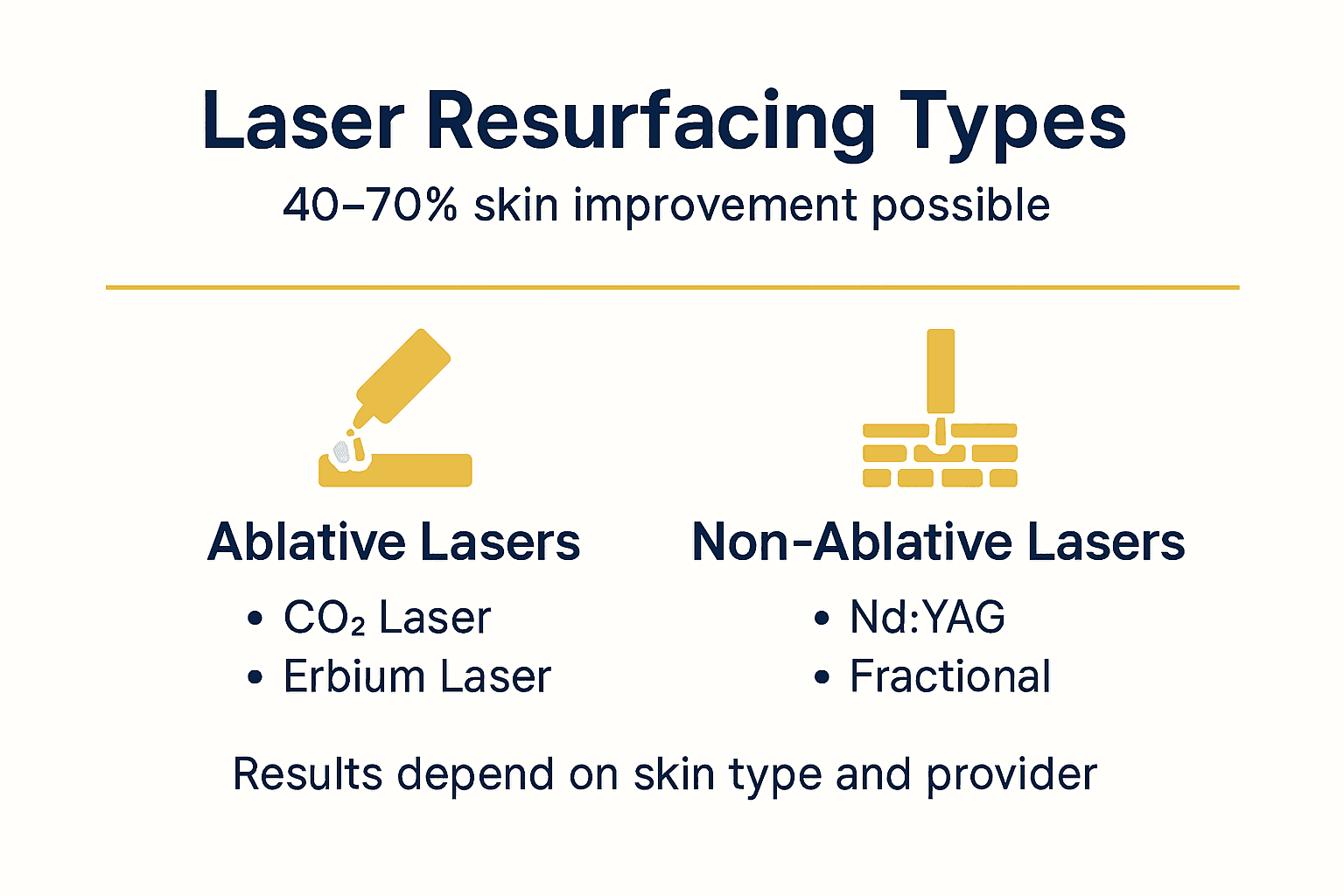
Ablative lasers remove the skin’s outer layers completely. CO2 and erbium lasers fall into this category. They deliver 40-70% improvement in skin texture and fine lines after proper treatment series. The tradeoff is recovery time ranging from 7 to 14 days, during which your skin actively heals and regenerates.
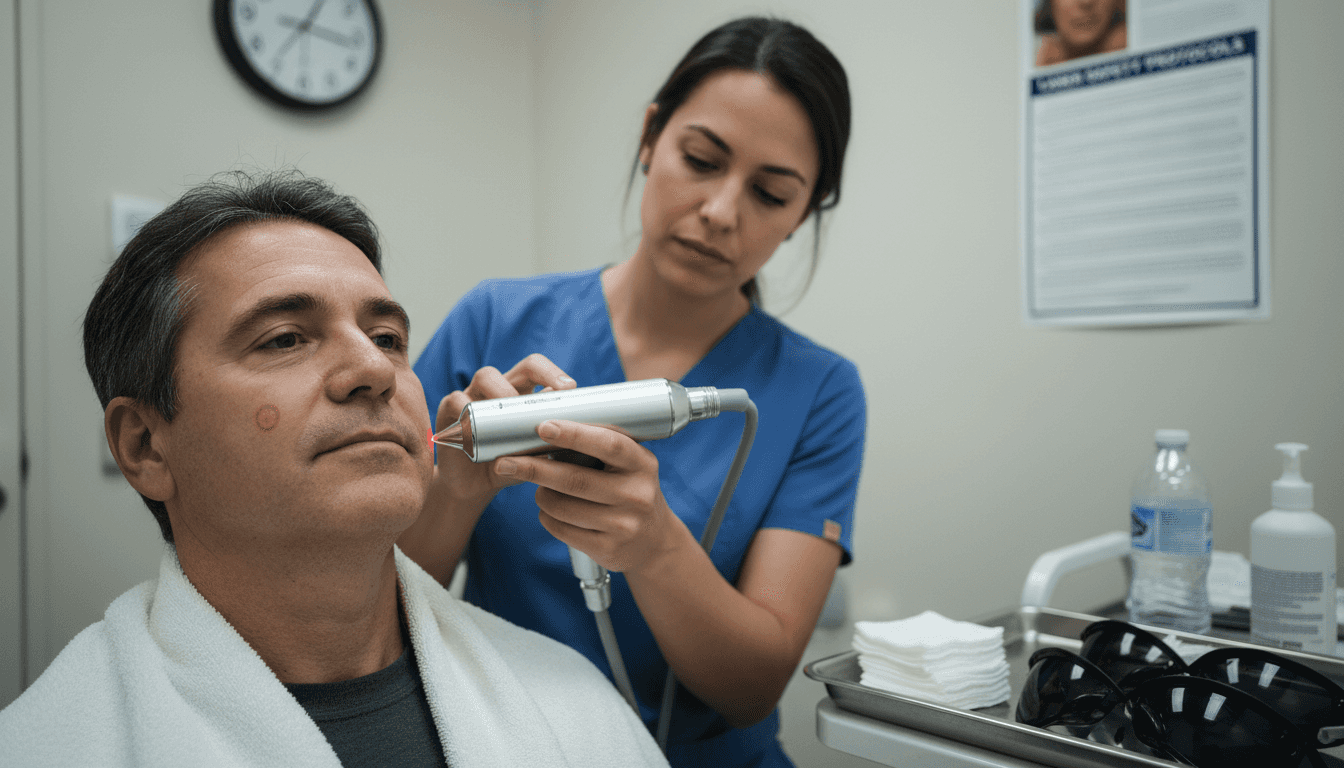
Non-ablative lasers heat the dermis without removing surface tissue. Nd:YAG and certain fractional lasers use this method. They provide 20-40% improvement with minimal visible downtime, usually 1 to 3 days of mild redness. Results accumulate more slowly, often requiring multiple sessions spaced weeks apart.
| Feature | Ablative Lasers | Non-Ablative Lasers |
|---|---|---|
| Mechanism | Remove outer skin layers | Heat dermis without surface removal |
| Improvement | 40-70% after treatment series | 20-40% with gradual accumulation |
| Downtime | 7-14 days of active healing | 1-3 days of mild redness |
| Sessions | Often 1-2 treatments | Typically 3-5 treatments |
| Risk profile | Higher for scarring, infection if not managed | Lower complications, safer for darker skin |
Choosing between them depends on several factors:
- Severity of concerns: Deep wrinkles and significant sun damage respond better to ablative approaches
- Available recovery time: Professionals with limited time off often prefer non-ablative options
- Skin type: Darker complexions generally tolerate non-ablative lasers with less risk of pigment changes
- Comfort with intensity: Some patients prefer gradual improvement; others want maximum results from fewer sessions
Pro Tip: Many experienced providers recommend starting with less aggressive treatments and building intensity only if needed. This staged approach lets you gauge your skin’s response and adjust expectations before committing to longer recovery periods.
Medical supervision matters most when selecting laser type and settings. Laser and light treatments require expertise in skin biology, laser physics, and complication management. A provider who rushes you toward the most aggressive option without proper evaluation may prioritize revenue over your safety.
Common misconceptions about laser resurfacing
Several myths about laser resurfacing create unnecessary hesitation or unrealistic expectations. Clearing these up helps you approach treatment with accurate information.
Myth: Laser resurfacing always creates an unnatural, overdone look.
Reality: Proper technique and conservative energy levels produce subtle improvements. The overdone appearance comes from excessive treatment depth or poor aftercare, not the technology itself. When medical providers customize settings to your anatomy, results enhance rather than erase your natural features.
Myth: Results appear immediately after treatment.
Reality: Your skin looks red and swollen initially. Actual improvements emerge as collagen rebuilds over 8 to 12 weeks. Expecting instant transformation leads to disappointment and poor treatment decisions.
Myth: Laser resurfacing is equally safe for all skin types.
Reality: Darker skin tones carry higher risk for post-inflammatory hyperpigmentation or hypopigmentation. This doesn’t make treatment impossible, but it requires specialized protocols, careful wavelength selection, and test spots before full treatment. Providers experienced with diverse skin types adjust parameters to minimize these risks.
Myth: Recovery is always quick and easy.
Reality: Recovery varies dramatically based on laser type and individual healing capacity. Ablative treatments involve real downtime with crusting, peeling, and sensitivity. Non-ablative options are gentler but still require sun avoidance and careful skincare. Anyone promising zero recovery likely uses such conservative settings that results may be minimal.
Myth: Any spa or clinic can safely perform laser treatments.
Reality: Laser devices are medical tools requiring proper training and ongoing education. Complications including burns, scarring, and permanent pigment changes occur when inexperienced operators use inappropriate settings. The role of medical providers extends beyond just operating equipment to recognizing contraindications, managing complications, and customizing treatments to individual physiology.
Understanding these realities helps you evaluate providers critically and set achievable goals. Laser resurfacing works well when expectations align with biological reality and treatments follow medical protocols.
Patient selection, safety, and medical guidance
Not everyone qualifies as an ideal candidate for laser resurfacing. Medical evaluation identifies who can safely proceed and who should consider alternatives.
A thorough consultation covers:
- Medical history: Active acne, recent isotretinoin use, autoimmune conditions, and keloid tendency all affect healing and complication risk
- Skin assessment: Fitzpatrick type, thickness, elasticity, and existing damage patterns guide laser selection
- Goal alignment: Understanding what you want to achieve helps providers recommend appropriate treatments or suggest when expectations exceed what lasers can deliver
- Lifestyle factors: Sun exposure habits, smoking status, and ability to follow aftercare protocols influence outcomes
Customization reduces side effects while enhancing natural appearance. Your provider adjusts these variables:
- Laser wavelength and type
- Energy density per pulse
- Treatment depth and coverage percentage
- Number of passes over each area
- Interval between sessions if multiple treatments are planned
Pro Tip: Ask potential providers about their experience with your specific skin type and concerns. A provider who has successfully treated patients similar to you is more likely to anticipate challenges and optimize your protocol.
Safety protocols include:
- Pre-treatment skin conditioning with prescribed topicals
- Test spots on inconspicuous areas before full-face treatment
- Proper pain management during procedures
- Immediate post-treatment care including cooling and barrier protection
- Clear instructions for home care and red-flag symptoms requiring contact
Risk mitigation matters most for patients with darker skin, those prone to hyperpigmentation, or anyone with compromised healing capacity. Staged treatments allow assessment of your individual response before proceeding with more aggressive parameters.
When choosing aesthetic treatments naturally, prioritize providers who take time to educate rather than sell. Transparent discussion of risks, realistic timelines, and alternative options indicates a patient-centered approach. Medically guided laser treatments balance desired outcomes with safety margins appropriate to your unique physiology.
Recovery, aftercare, and realistic timelines
Healing unfolds in predictable phases, though individual timelines vary based on treatment intensity and personal biology.
For ablative laser resurfacing:
- Days 1-3: Expect significant redness, swelling, and oozing. Your skin forms a protective crust as new cells develop underneath.
- Days 4-7: Crusting peaks then begins lifting. Itching intensifies as healing progresses. Avoid picking or pulling at peeling skin.
- Days 8-14: New pink skin emerges. Sensitivity to temperature and products remains high. Most patients return to normal activities by day 10 to 14.
For non-ablative treatments, recovery compresses dramatically. Most people experience 1 to 3 days of mild redness and swelling, manageable with makeup after 24 hours. Underlying collagen remodeling continues for months even though surface healing completes quickly.
Essential aftercare practices:
- Gentle cleansing: Use lukewarm water and mild, fragrance-free cleansers. Pat dry rather than rubbing.
- Consistent moisturization: Apply prescribed ointments or barrier creams to support healing and prevent excessive dryness.
- Strict sun protection: UV exposure during healing causes pigmentation problems and compromises results. Use mineral-based SPF 30 or higher daily.
- Avoid irritants: Skip retinoids, acids, and other active ingredients until your provider clears you to resume them.
- Stay hydrated: Internal hydration supports skin repair processes.
Visible improvements emerge gradually. Initial redness fades over 4 to 6 weeks. Texture refinement becomes apparent around 6 to 8 weeks. Maximum collagen deposition occurs near the 3-month mark. Some patients continue seeing subtle enhancement up to 6 months post-treatment.
Follow-up appointments let your provider assess healing, address concerns, and determine if additional sessions would benefit you. Skipping these check-ins means missing opportunities to optimize results or catch early complications.
Enhancing and maintaining results post-treatment
Laser resurfacing initiates improvement, but maintaining those gains requires ongoing skin health practices.
Your provider may prescribe topical therapies to support collagen remodeling:
- Retinoids to stimulate continued cell turnover
- Growth factors to enhance fibroblast activity
- Antioxidants to protect new collagen from environmental damage
Lifestyle factors directly impact longevity of results:
- Sun protection: UV exposure degrades collagen faster than aging alone. Daily broad-spectrum sunscreen preserves your investment.
- Hydration: Well-hydrated skin maintains plumpness and elasticity. Aim for adequate water intake and use humectants in skincare.
- Nutrition: Vitamin C, amino acids, and healthy fats provide building blocks for ongoing collagen synthesis.
- Sleep: Growth hormone secreted during deep sleep supports tissue repair.
- Stress management: Chronic cortisol elevation accelerates collagen breakdown.
Avoid behaviors that accelerate skin aging:
- Smoking constricts blood vessels and impairs healing
- Excessive alcohol dehydrates skin and generates inflammatory byproducts
- Unprotected sun exposure reverses laser benefits within months
Regular skin evaluations help you and your provider track long-term outcomes. Most patients benefit from maintenance treatments every 12 to 18 months to sustain improvements. These follow-up sessions typically use gentler settings than initial treatments since you’re maintaining rather than correcting.
Complementary treatments may enhance laser results:
- Chemical peels for continued exfoliation
- Microneedling to stimulate collagen in different patterns
- Medical-grade skincare tailored to your post-laser skin condition
Following medically guided skincare steps ensures your daily routine supports rather than undermines laser outcomes. Consistency matters more than expensive products. Simple, science-backed regimens often outperform complicated routines with trendy ingredients.
Discover expert laser resurfacing in Raleigh, NC
If you’re ready to explore laser resurfacing with a team that prioritizes natural, subtle results, The Aesthetics Lounge & Spa offers medically led treatments designed around your unique skin structure and goals. Located in the heart of North Raleigh on Six Forks Road, we approach every consultation with the same principle: you should still look like yourself, just more supported.
Our providers customize laser protocols based on thorough skin assessment and transparent discussion of what realistic improvement looks like for your specific concerns. We don’t rush you toward aggressive treatments or promise overnight transformations. Instead, we build treatment strategies that respect healing timelines, minimize risks, and deliver results that develop gradually over months. Explore our full range of aesthetic treatments in Raleigh, NC, or learn more about how to choose aesthetic treatments naturally. When you’re ready to discuss laser and light treatments in Raleigh, we’ll guide you through options that align with your lifestyle and expectations.
Frequently asked questions
What is the recovery time for different types of laser resurfacing?
Ablative lasers typically require 7 to 14 days of downtime during which your skin actively heals, crusts, and peels. Non-ablative approaches need only 1 to 3 days of mild redness and swelling. Individual healing capacity and treatment intensity cause variation, so your provider should give you a personalized timeline based on your specific protocol.
Are laser resurfacing results immediate?
No, results develop gradually as your body builds new collagen beneath the surface. Initial redness and swelling may obscure early improvements. Most patients notice visible texture refinement around 6 to 8 weeks, with continued enhancement through the 3-month mark as collagen remodeling peaks.
Is laser resurfacing safe for all skin types?
Darker skin tones face higher risk for post-inflammatory pigment changes and require customized protocols with specific wavelengths and conservative energy levels. Medical supervision ensures appropriate laser selection, test spots before full treatment, and careful monitoring during healing. When performed by experienced providers, laser resurfacing can be safe and effective across diverse skin types.
How do I choose the right provider for laser resurfacing?
Look for medical credentials, extensive laser experience, and a portfolio of results from patients with similar skin types and concerns as yours. During consultation, assess whether the provider listens to your goals, explains risks transparently, and customizes recommendations rather than pushing predetermined packages. Providers who emphasize natural outcomes and conservative approaches typically deliver more satisfying long-term results. When choosing aesthetic treatments naturally, trust your instincts about whether a provider prioritizes your safety and satisfaction over sales pressure.
Recommended
- Laser & Light Treatments in Raleigh, NC | The Aesthetics Lounge & Spa Raleigh
- LASER Archives – The Aesthetics Lounge and Spa Raleigh | Medical Spa in Raleigh, NC
- Laser & Light Therapy Archives – The Aesthetics Lounge and Spa Raleigh | Medical Spa in Raleigh, NC
- Laser Pigment Rejuvenation Raleigh, NC | Sun Spots + Tone