
TL;DR:
- Aesthetic decisions are significantly influenced by a patient’s education and health literacy, affecting understanding of risks and realistic outcomes. Higher literacy levels lead to more active engagement and better-informed choices, while effective communication and trust-focused relationships improve safety and satisfaction. Healthcare providers play a crucial role by tailoring education and fostering open, clear dialogue to ensure truly informed, confident aesthetic decisions.
Not everyone walks into an aesthetic consultation with the same knowledge, and that gap matters more than most people realize. Your educational background and health literacy quietly influence how you assess risk, interpret treatment options, and ultimately decide what feels right for your face. This isn’t about intelligence. It’s about how well the information you receive actually lands. Understanding this connection is the first step toward making aesthetic choices that are genuinely informed, genuinely safe, and genuinely yours.
Table of Contents
- Why education matters in aesthetic decisions
- Health literacy: The key to informed aesthetic choices
- Beyond education: What really influences your aesthetic choices?
- How tailored education improves safety and satisfaction
- The overlooked truth: Education is powerful, but relationships matter most
- Explore medically led aesthetic options in Raleigh
- Frequently asked questions
Key Takeaways
| Point | Details |
|---|---|
| Education boosts safety | Higher health literacy improves aesthetic outcomes and safer choices. |
| Communication is essential | Effective provider-patient communication matters as much as formal education for achieving natural results. |
| Tailored guidance reduces risk | Education strategies like teach-back help avoid misunderstandings and minimize complications. |
| Check provider credentials | Always verify the qualifications of anyone performing your aesthetic enhancements. |
Why education matters in aesthetic decisions
Most people assume aesthetic choices come down to personal taste. You see something you like, you book an appointment, you move forward. But the reality is more layered than that. Your ability to understand risk, interpret consent forms, and evaluate provider recommendations is shaped significantly by your educational background and health literacy.
Higher education levels correlate with increased likelihood of undergoing facial aesthetic procedures. That’s a meaningful finding. It suggests that education doesn’t just influence what you choose, it influences whether you feel equipped to choose at all. Patients with stronger educational foundations tend to approach consultations with more specific questions, a clearer sense of their goals, and a more realistic understanding of what outcomes are achievable.
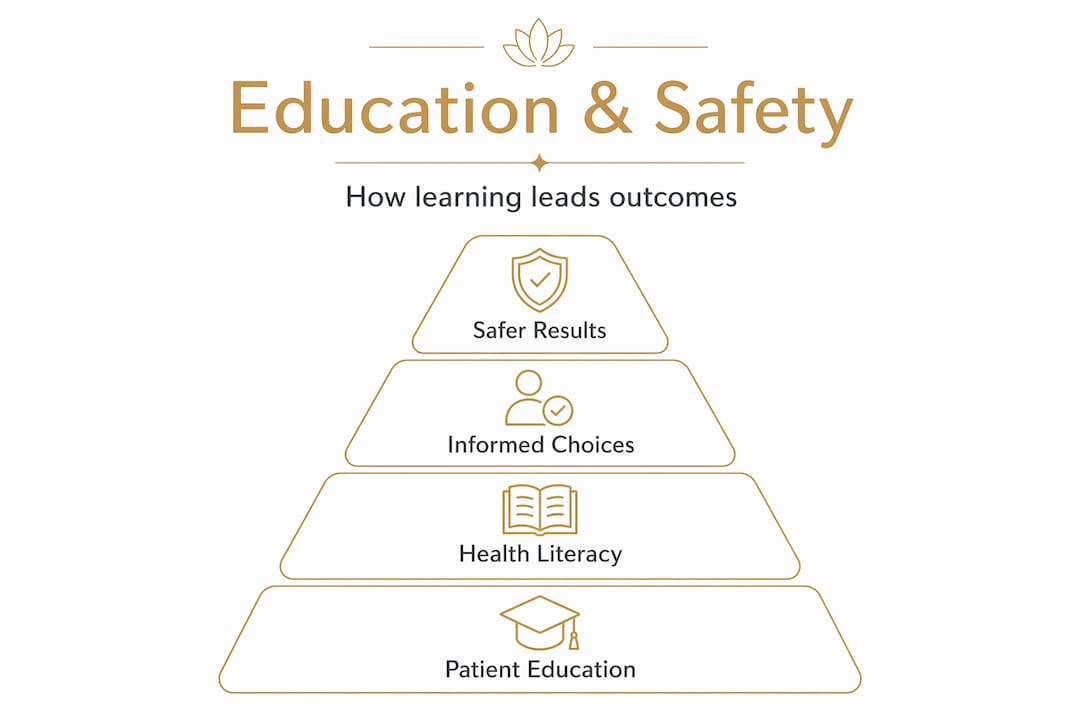
The concern, though, is what happens on the other side of that equation. Inadequate health literacy affects about 50% of plastic surgery patients, which means a significant portion of people seeking aesthetic care may struggle to fully understand what they’re consenting to. That’s not a small issue. Informed consent isn’t a signature on a form. It’s a genuine understanding of what’s being done, why, and what the realistic outcomes look like.
This is why patient education in aesthetics isn’t a bonus feature at a quality practice. It’s the foundation. And it’s why the role of medical providers extends well beyond the treatment room.
Here’s a quick look at how education level tends to shape the aesthetic decision process:
| Factor | Lower health literacy | Higher health literacy |
|---|---|---|
| Risk interpretation | Often misunderstood | Generally accurate |
| Consent comprehension | Frequently incomplete | More thorough |
| Question-asking behavior | Passive, less frequent | Active, more specific |
| Outcome expectations | Sometimes unrealistic | Generally well-calibrated |
| Provider evaluation | Based mostly on reputation | Includes credentials and training |
Key ways education shapes your aesthetic experience:
- Risk awareness: Understanding what complications are possible and how likely they are
- Consent quality: Genuinely grasping what you’re agreeing to, not just signing
- Expectation setting: Knowing the difference between what’s achievable and what’s aspirational
- Provider selection: Evaluating qualifications alongside reviews and social media presence
- Follow-through: Understanding aftercare instructions and why they matter
The Raleigh demographic skews well-educated, which is encouraging. But even among highly educated patients, health-specific literacy can vary widely. A PhD in engineering doesn’t automatically translate to comfort reading a clinical risk disclosure. That’s why the conversation in the consultation room matters as much as the credentials on the wall.
Health literacy: The key to informed aesthetic choices
Health literacy is your ability to find, understand, and use health information to make decisions. Health numeracy is a subset of that: your ability to interpret numbers, percentages, and statistics in a medical context. Both matter enormously when you’re considering a non-surgical enhancement.
Postgraduate education is associated with improved health numeracy, which helps patients better interpret risks in procedures like breast augmentation and facial injectables. That means someone with advanced education is more likely to correctly understand what “a 2% complication rate” actually means in practical terms. They’re more likely to ask whether that statistic applies to their specific situation. They’re more likely to compare it to alternative options.
But here’s where it gets genuinely surprising. Even among educated patients, the format of information matters enormously. Low health literacy leads to misinterpretation of data formats: in one study, only 5.4% of patients correctly identified the safest implant option when data was presented in a standard statistical format. That’s not a failure of intelligence. That’s a failure of communication. And it’s a problem that falls squarely on the provider’s shoulders to solve.
Consider this scenario: a patient is told that a particular filler carries a “less than 1% risk of vascular occlusion.” Without context, that number is almost meaningless. Is that high? Low? How does it compare to other options? What does vascular occlusion actually feel like, and what happens if it occurs? A patient with strong health numeracy will ask those follow-up questions. A patient without it may nod and sign the form without truly understanding.
“The goal of patient education isn’t to overwhelm with data. It’s to ensure that when a patient says yes, they mean it fully, with clarity and confidence.”
Here’s a numbered breakdown of how higher health literacy actually changes the consultation experience:
- You interpret risk percentages accurately rather than defaulting to “it probably won’t happen to me”
- You ask clarifying questions when something in the consent form doesn’t make sense
- You evaluate before-and-after images critically rather than assuming they represent typical results
- You understand the difference between short-term and long-term outcomes and plan accordingly
- You recognize when a recommendation doesn’t align with your goals and feel confident saying so
This is why planning consultations for results requires more than a checklist. And it’s why knowing how to communicate your aesthetic goals clearly is a skill worth developing before you ever sit down with a provider.
A broader study on health literacy in plastic surgery reinforces that methods like teach-back, where a provider asks you to repeat information back in your own words, significantly improve comprehension and reduce misunderstandings.
Pro Tip: Before your next consultation, write down two or three questions where you want the answer explained without medical jargon. Asking your provider to “explain it like I’ve never heard of this before” is not a sign of weakness. It’s one of the smartest things you can do.
Beyond education: What really influences your aesthetic choices?
Here’s something that complicates the picture in an interesting way. While higher education increases the likelihood of seeking medically led procedures, it doesn’t actually determine which procedures you want. Research shows no significant association between education level and the specific types of cosmetic procedures requested. In other words, whether you want lip filler, a brow lift, or laser resurfacing has very little to do with how many degrees you hold.
That’s a meaningful distinction. Education shapes how you make decisions. It doesn’t determine what you want. Your aesthetic preferences are shaped by a much more personal mix of influences.
What actually drives the specific choices people make:
- Social environment and peer influence: What you see normalized in your social circle carries significant weight
- Media and social platforms: Filtered images and trending treatments shape what feels desirable
- Provider trust: A warm, credible provider can influence your choices more than any brochure
- Real-world results: Seeing a friend look naturally refreshed, not overdone, is often the most compelling factor
- Personal milestones: Life events like a career change, a reunion, or a relationship shift often prompt aesthetic consideration
- Emotional readiness: Sometimes the timing matters more than the information
The trust factor deserves particular attention. Many aesthetic patients lack knowledge of provider qualifications, prioritizing subjective factors like friendliness, office atmosphere, and word-of-mouth over verified credentials and training. That’s understandable. Warmth matters. But it shouldn’t replace due diligence.
Understanding the natural aesthetics benefits of a medically led approach helps you see why provider qualifications aren’t just a technicality. They’re the difference between results that look like you and results that don’t.
Pro Tip: Before booking any aesthetic treatment, verify your provider’s medical license and specific training in the procedure you’re considering. Most state medical boards have public lookup tools that take less than two minutes to use. Reputation is a starting point, not a finish line.
How tailored education improves safety and satisfaction
Knowing that education matters is one thing. Knowing how to use that understanding in a real appointment is another. The good news is that the burden of education doesn’t rest entirely on you. A skilled, ethical provider meets you where you are.
Patient education and health literacy are crucial for shared decision-making, informed consent, and realistic expectations in aesthetic medicine. The word “shared” is important here. It means the conversation flows both ways. You bring your goals and your questions. Your provider brings clinical knowledge and the responsibility to translate it clearly.
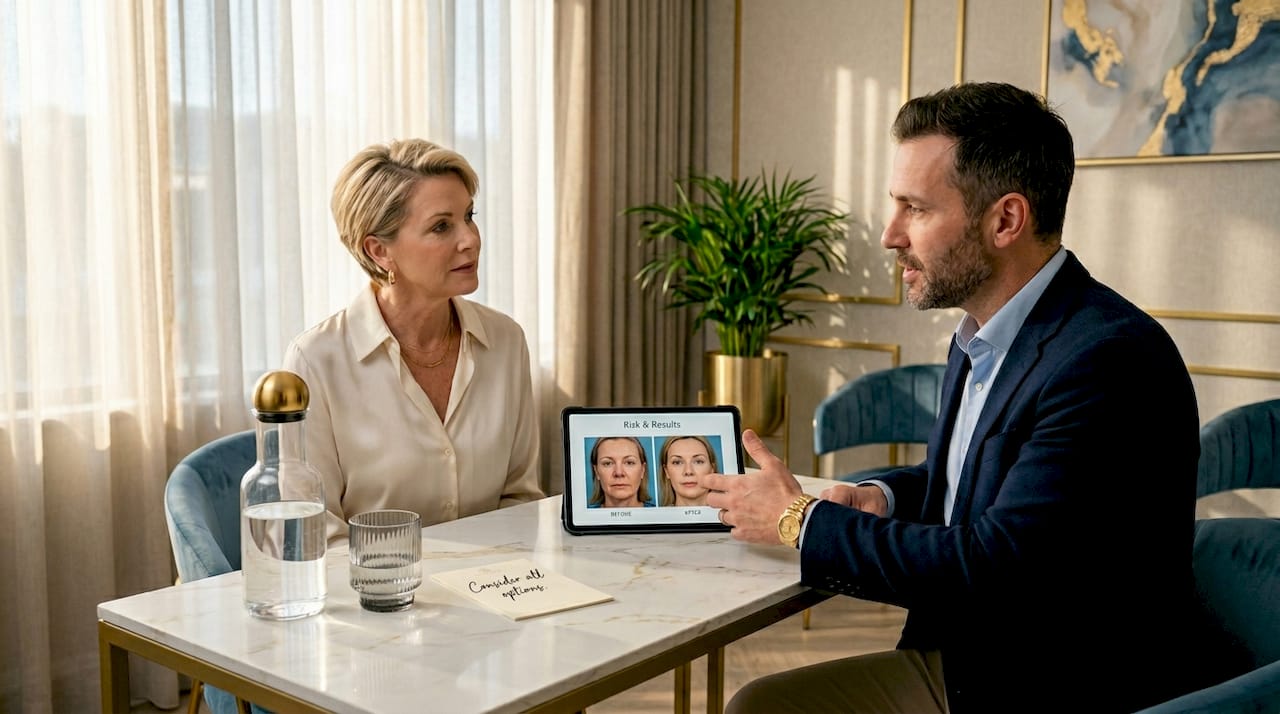
Tailoring education to patient literacy levels via methodologies like teach-back and visual aids improves decision-making and reduces complications in aesthetic contexts. That’s not a theoretical benefit. It’s a measurable one.
Effective patient education methods used in quality aesthetic practices include:
- Teach-back: You explain the procedure back to your provider in your own words, confirming real understanding rather than passive receipt of information
- Visual aids: Anatomical diagrams, before-and-after photo reviews, and digital simulations that make abstract concepts concrete
- Repeat sessions: A second consultation or follow-up call before treatment to revisit questions that arise after the first appointment
- Written handouts and digital resources: Take-home materials that let you review information at your own pace, without the pressure of the appointment room
- Paced disclosure: Releasing information in digestible stages rather than front-loading everything at once
“When a patient truly understands what they’re agreeing to, the entire experience changes. Anxiety decreases. Trust increases. And the results are better because expectations were set with clarity from the start.”
For those seeking safer, natural medical aesthetics, this kind of structured, patient-specific education isn’t optional. It’s what separates a refined outcome from a regrettable one. And it’s why medical expertise for results includes the ability to communicate as clearly as the ability to treat.
The overlooked truth: Education is powerful, but relationships matter most
Here’s something most guides on this topic won’t tell you. Education, yours and your provider’s, is necessary but not sufficient. The variable that actually determines whether you walk away feeling confident and supported is the quality of the relationship you build in that consultation room.
We’ve seen patients with impressive academic credentials leave appointments with completely unrealistic expectations, because they never felt comfortable asking the questions they actually had. And we’ve seen patients with minimal formal education make beautifully informed, measured decisions, because they found a provider who made them feel safe enough to speak honestly.
The research confirms what experience shows: safer results with medical-led care come from practices where communication is built into the process, not treated as an afterthought. A provider who checks your understanding, invites your questions, and slows down when something isn’t clear is worth more than any credential list.
What this means practically: don’t measure the quality of a consultation by how much information was delivered. Measure it by how much you understood, how comfortable you felt asking for clarification, and whether you left with a plan that genuinely reflected your goals. If a consultation felt rushed, or if you left with unanswered questions you were too uncertain to raise, that’s important information. It tells you something about whether that practice is truly built around your care.
Education opens the door. The relationship is what you walk through it with.
Explore medically led aesthetic options in Raleigh
Understanding how education and communication shape your aesthetic outcomes is the first step. The next is finding a practice where those principles are built into every appointment, not just described on a website.
At The Aesthetics Lounge and Spa Raleigh, every consultation is designed around clarity, not pressure. We plan first, educate always, and treat with precision. Whether you’re exploring medical-led aesthetics safer results for the first time or refining an existing approach, we meet you where you are and move at your pace. If you’re ready to choose your aesthetic treatment with genuine confidence, or simply want to explore medical aesthetics insights before committing to anything, we’re here for that conversation. Calm, informed, and entirely yours.
Frequently asked questions
Does having a higher education level guarantee better aesthetic results?
No. While higher education improves your ability to understand information, results depend equally on the quality of communication with your provider. Research confirms no significant association between education level and the specific procedures patients choose, which means the conversation in the room matters just as much as the knowledge you bring to it.
What is the most important question to ask my provider before a non-surgical enhancement?
Ask for risks and expected outcomes to be explained in plain, everyday language, and request clarification on anything that feels unclear. Shared decision-making and informed consent are ethical standards in aesthetic medicine, which means your provider is responsible for ensuring you genuinely understand, not just that you’ve been told.
Can patient education really reduce the risk of complications?
Yes. Teach-back and visual aids have been shown to reduce misunderstandings and complications in aesthetic contexts by ensuring patients genuinely comprehend what they’ve agreed to before treatment begins.
How do I know if my provider is medically qualified?
Check for a valid medical license, board certifications, and documented training specific to the procedure you’re considering. Studies show that many aesthetic patients lack knowledge of provider qualifications and prioritize subjective impressions over verified credentials, which is a gap worth closing before you book.