
Many people believe adding more filler guarantees better, younger looking results. This couldn’t be further from the truth. Overfilling leads to up to 30% increased reports of unnatural appearance and restricted facial mobility. Facial balancing offers a medically guided alternative that honors your natural proportions while restoring youthful volume. You’ll learn how anatomical precision and expert care create authentic outcomes that enhance rather than erase your identity.
Table of Contents
- Understanding Facial Balancing: Definition and Principles
- How Facial Balancing Works: Non-Surgical Techniques and Tools
- The Role of Medical Expertise in Facial Balancing
- Common Misconceptions About Facial Balancing
- Comparative Framework: Facial Balancing Vs Traditional Aesthetic Approaches
- Applying Facial Balancing: Practical Guidance for Raleigh Clients
- Discover Expert Facial Balancing in Raleigh, NC
- Frequently Asked Questions About Facial Balancing
Key Takeaways
| Point | Details |
|---|---|
| Natural Proportions | Facial balancing uses the Golden Ratio and anatomical science to create harmony, not just add volume. |
| Medical Guidance | Expert assessment reduces patient dissatisfaction by over 40% compared to trend driven treatments. |
| Holistic Approach | Treating the face as an interconnected system prevents asymmetry and maintains dynamic movement. |
| Conservative Strategy | Gradual, precise treatments preserve your identity while restoring youthful support. |
Understanding Facial Balancing: Definition and Principles
Facial balancing is the art and science of harmonizing your features using anatomical proportions rather than simply injecting product wherever wrinkles appear. The approach relies on established mathematical relationships, particularly the Golden Ratio of approximately 1.618, which defines facial harmony perceived as naturally beautiful across cultures.
This isn’t arbitrary aesthetics. Specific facial features are prioritized in balancing: mid-face volume, jawline contour, chin projection, and periorbital areas. When these zones work together proportionally, your face reads as youthful and balanced even as you age.
Mid-face volume loss is particularly telling. As fat pads descend and bone resorbs over time, the cheeks flatten and jowls appear. This creates a tired, aged appearance that no amount of isolated temple filler can fix. True facial balancing addresses these interconnected changes.
Key principles guiding facial balancing include:
- Restoring support where facial structure has weakened
- Maintaining natural facial proportions based on your unique anatomy
- Preserving dynamic movement so expressions remain authentic
- Creating symmetry without erasing individuality
- Using conservative amounts to avoid the overfilled look
Think of your face as architectural. Just as a building needs balanced load bearing walls, your facial features need proportional support. Remove one element or overemphasize another, and the entire structure feels off. Understanding the Golden Ratio in facial aesthetic surgery helps practitioners identify where subtle adjustments create the most harmonious results.
How Facial Balancing Works: Non-Surgical Techniques and Tools
The tools for facial balancing are straightforward: dermal fillers and neuromodulators, applied with surgical precision. Dermal fillers can restore up to 80% of volume loss in the mid-face, the area most critical for youthful appearance. These hyaluronic acid based products physically replace lost volume where fat pads have thinned.
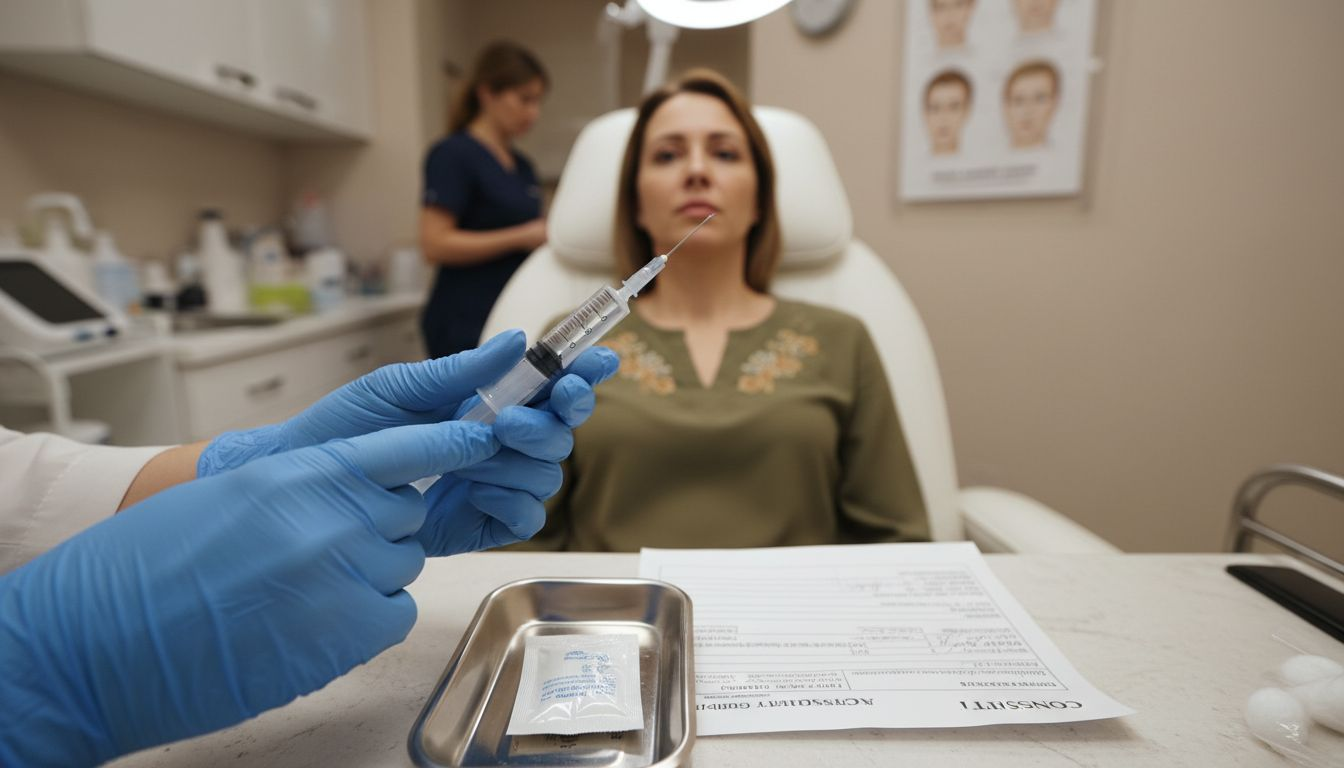
Neuromodulators like Botox work differently. They relax overactive muscles that create asymmetry or pull features downward. When your forehead muscles constantly furrow or your mentalis muscle creates chin dimpling, strategic neuromodulator placement restores balance without freezing your face.
What makes dermal fillers in Raleigh effective for facial balancing isn’t the product itself but the placement strategy. A skilled injector maps your facial anatomy, identifies areas of lost volume or asymmetry, then creates a treatment plan that addresses root causes rather than chasing individual lines.
The typical facial balancing timeline follows this sequence:
- Initial consultation with detailed facial analysis and photography
- First treatment session focusing on foundational volume restoration
- Two week follow up to assess results and make minor adjustments
- Maintenance appointments every 9 to 18 months depending on metabolism and product choice
- Ongoing refinement as natural aging continues
Results from non-surgical facial rejuvenation typically become visible within one to two weeks as any initial swelling subsides and products integrate into tissue. Most treatments last nine to eighteen months before your body naturally metabolizes the material.
Pro Tip: Always start conservatively. You can add more filler at a follow up appointment, but removing excess product requires dissolving enzymes and waiting weeks for full correction. Gradual enhancement preserves your natural appearance and allows adjustment as you see results.
The Role of Medical Expertise in Facial Balancing
Anyone can inject filler into skin. Creating balanced, natural results requires understanding three dimensional facial anatomy, muscle interaction patterns, and how aging affects underlying structures. This is where medical expertise in facial balancing becomes non-negotiable.
A medically trained provider doesn’t just see surface wrinkles. They assess bone structure, fat compartments, ligamentous support, and muscle dynamics. This comprehensive view prevents the overfilled, distorted look that happens when practitioners treat isolated concerns without considering the whole face.
Dynamic facial movement analysis is particularly important. Your face isn’t static. It smiles, frowns, talks, and expresses dozens of emotions daily. Placing filler without considering how muscles move creates an unnatural, frozen appearance that screams “work done.” Medical providers trained in anatomy understand which areas tolerate volume and which require restraint.
Clinical guidance reduces patient dissatisfaction by over 40% compared to less rigorous approaches. When you work with someone who prioritizes education, realistic expectations, and conservative treatment pacing, you’re far more likely to love your results long term.
Benefits of medically supervised facial balancing include:
- Precise product placement based on anatomical landmarks
- Prevention of vascular complications through knowledge of danger zones
- Strategic treatment planning that addresses root causes
- Ability to assess overall health factors affecting treatment outcomes
- Access to reversal agents and emergency protocols if needed
Pro Tip: During consultations, ask about your provider’s specific training in facial anatomy and how many years they’ve performed injectable treatments. Look for practitioners who discuss facial proportions and movement patterns, not just which products they’ll use. This signals an anatomy focused, thoughtful approach.
Common Misconceptions About Facial Balancing
The cosmetic treatment industry thrives on myths that keep clients confused and practitioners busy correcting mistakes. Let’s address the most damaging misconceptions directly so you can make informed choices.
Myth one: more filler creates better or younger results. Reality: overfilling leads to up to 30% increased reports of unnatural appearance and restricted facial mobility. Your face has limited capacity for product. Exceed that threshold and you get the pillow face, duck lips, or chipmunk cheeks that scream artificial enhancement.
Myth two: facial balancing will change how you look. Proper balancing enhances your existing features by restoring proportions lost to aging. You’ll look like yourself from ten years ago, not like someone else. The goal is recognition, not transformation.
Myth three: non-surgical treatments are risk free. While complications are rare with qualified providers, any injection carries risks including bruising, swelling, asymmetry, or in extreme cases vascular occlusion. This is exactly why medical expertise matters. Knowing anatomy minimizes risk and ensures proper response if complications occur.
Additional myths to dismiss:
- Younger clients don’t need facial balancing (prevention is easier than correction)
- All providers achieve similar results (technique and artistic eye vary dramatically)
- Results should be immediately dramatic (natural enhancement is subtle and develops over weeks)
- One treatment session is sufficient forever (maintenance is required as products metabolize)
Understanding the risks of overfilling helps you recognize when a provider is prioritizing sales over your aesthetic goals. If someone suggests large volumes during a first appointment or dismisses your concerns about looking natural, find another practitioner.
Comparative Framework: Facial Balancing vs Traditional Aesthetic Approaches
How does facial balancing differ from walking into a medical spa and asking for lip filler or Botox to erase forehead lines? The distinction lies in philosophy, assessment depth, and treatment strategy.
| Aspect | Facial Balancing | Traditional Isolated Treatment |
|---|---|---|
| Assessment Approach | Comprehensive facial analysis considering proportions, symmetry, and aging patterns across all features | Focus on specific concerns client identifies without broader context |
| Treatment Strategy | Addresses underlying volume loss and structural changes causing visible aging | Treats surface symptoms like individual wrinkles or single area volume loss |
| Risk of Asymmetry | Significantly lower due to whole face consideration and proportional planning | Higher when treating isolated areas without assessing impact on overall harmony |
| Patient Satisfaction | Over 35% reduction in regret and dissatisfaction compared to isolated approaches | More frequent requests for correction or reversal due to unbalanced outcomes |
| Result Longevity | Structural support creates lasting framework that ages gracefully | Isolated treatments require more frequent touch ups as adjacent areas continue aging |
| Natural Movement | Preserved through strategic placement respecting muscle dynamics | Often compromised when focusing only on wrinkle elimination |
Facial balancing reduces risk of asymmetry and patient regret by over 35% compared to isolated filler approaches. This isn’t surprising. When you treat the face as an interconnected system rather than a collection of independent parts, results naturally harmonize.
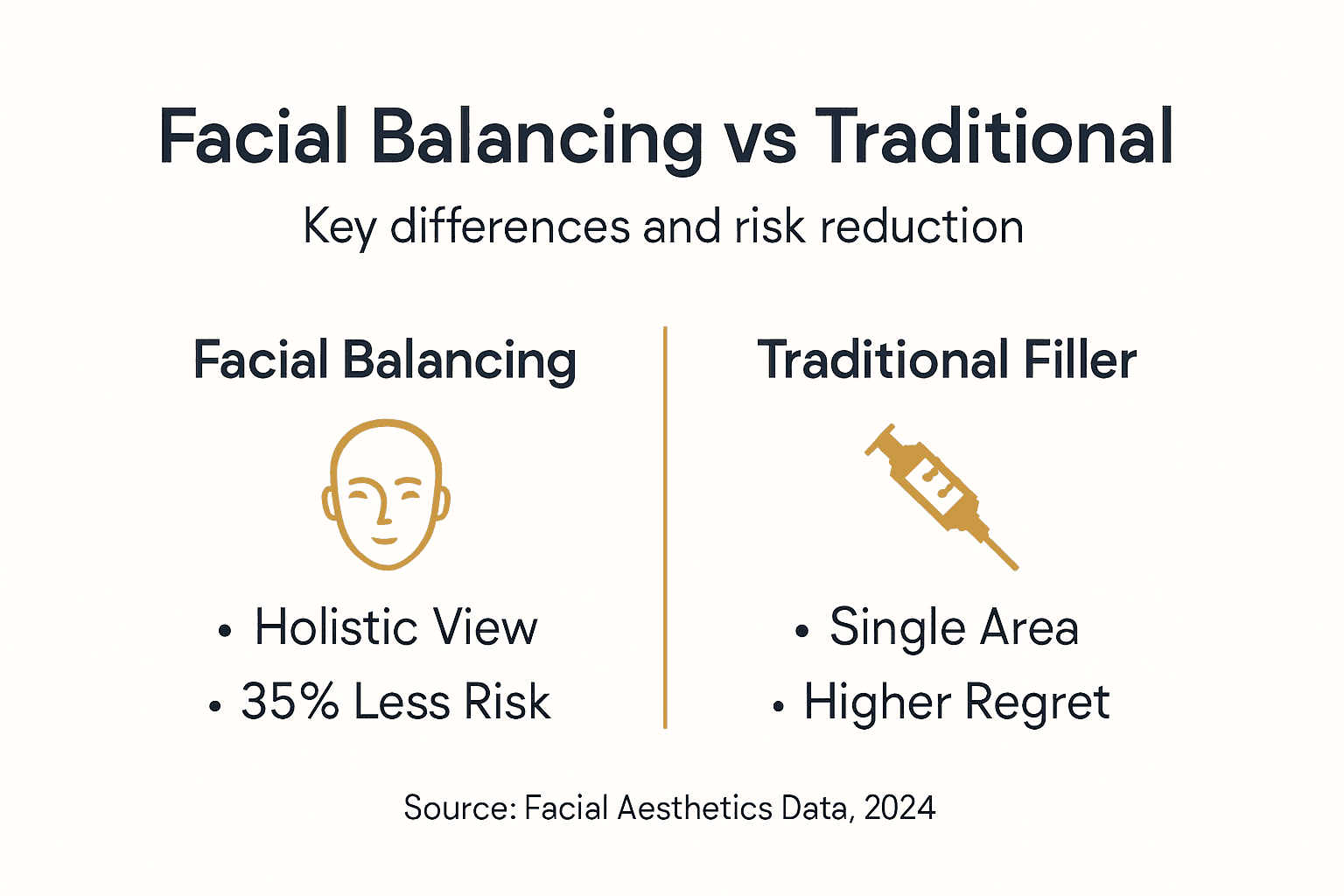
Traditional approaches aren’t necessarily wrong. They’re simply incomplete. If you only address nasolabial folds without restoring cheek volume, those folds reappear quickly as the midface continues descending. Facial balancing prevents this cycle by addressing cause rather than symptom.
The holistic versus traditional aesthetic approaches debate ultimately centers on goals. Do you want a quick fix for one visible concern, or comprehensive support that maintains natural proportions as you age? Most clients seeking long term, authentic results choose the balancing approach once they understand the difference.
Applying Facial Balancing: Practical Guidance for Raleigh Clients
Understanding facial balancing theory matters little if you can’t identify qualified providers and know what to expect during treatment. Here’s how to successfully pursue facial balancing services in Raleigh while protecting your interests and achieving natural results.
Start by researching medically supervised clinics with demonstrated anatomy expertise. Look for providers who display before and after photos showing subtle, natural enhancements rather than dramatic transformations. Read reviews mentioning words like “natural,” “conservative,” and “listened to my concerns” rather than “dramatic” or “lots of product.”
Prioritize conservative, strategic treatments over aggressive volume addition. The best dermal fillers in Raleigh practices will suggest starting with less product than you might expect, then refining at follow up appointments. This gradual approach prevents overcorrection while allowing your face to adjust to new volume.
Typical treatment timelines span nine to eighteen months from initial session to first maintenance appointment. Your metabolism, activity level, and product choice all influence longevity. Faster metabolizers may need touch ups closer to nine months, while those with slower turnover can extend to eighteen months between sessions.
Key steps for choosing providers and maintaining results:
- Verify medical credentials and specific training in facial anatomy
- Schedule consultation focused on assessment before discussing treatment
- Ask to see before and after photos of natural, subtle results
- Discuss your aesthetic goals and ensure provider shares your vision for restraint
- Plan follow up appointments for assessment rather than automatic retreatment
- Consider combining treatments like medical grade facials in Raleigh to support skin quality
Pro Tip: During your consultation, ask these specific questions to gauge provider philosophy: “How do you determine product placement?” “What’s your approach if I feel results are too subtle or too dramatic?” “How do you preserve natural facial movement?” Answers should reference anatomical assessment, conservative dosing, and willingness to adjust based on your feedback. Avoid providers who seem rushed or dismissive of your concerns.
Discover Expert Facial Balancing in Raleigh, NC
Ready to experience facial balancing guided by medical expertise and anatomical precision? The Aesthetics Lounge and Spa Raleigh specializes in conservative, proportion based aesthetic treatments in Raleigh that enhance rather than alter your appearance.

Our medically led approach prioritizes thorough facial assessment, transparent education, and strategic treatment planning. We focus on creating support that respects your natural structure while restoring youthful volume where aging has created imbalance. Every treatment plan considers your unique anatomy, aesthetic goals, and long term maintenance needs. Whether you’re exploring dermal fillers in Raleigh for the first time or seeking more refined, natural results than previous treatments delivered, our team provides the expertise and conservative approach that distinguishes true facial balancing services in Raleigh. Schedule a consultation to discuss how proportional enhancement can help you look like yourself, just more supported.
Frequently Asked Questions About Facial Balancing
What is the typical recovery time for non-surgical facial balancing?
Most clients experience mild swelling and possible bruising for two to five days after treatment. You can return to normal activities immediately, though strenuous exercise should wait 24 hours. Final results become visible within two weeks as any swelling resolves and products settle into their intended position.
How often should treatments be maintained for lasting results?
Maintenance typically occurs every nine to eighteen months depending on your metabolism, the specific products used, and treatment areas. Faster metabolizers or those treating highly mobile areas like lips may need touch ups closer to nine months, while others extend maintenance to eighteen months. Your provider will assess longevity during follow up appointments.
Can facial balancing address asymmetry caused by aging?
Yes, facial balancing excels at correcting age related asymmetry from uneven volume loss, muscle weakening, or bone resorption. Strategic filler placement restores support where structure has diminished, creating improved symmetry while maintaining your natural features. Severe asymmetry from injury or congenital conditions may require additional assessment.
Is facial balancing suitable for all skin types and ages?
Facial balancing works across all skin types and is most commonly performed on adults aged 30 to 65 experiencing visible signs of facial volume loss. Younger clients may benefit from preventive treatments if early volume loss is evident, while older clients can achieve significant improvement even with advanced aging. Individual assessment determines candidacy.
How do I know if I’m a good candidate for facial balancing?
Ideal candidates notice facial volume loss, developing asymmetry, or loss of definition in cheeks, jawline, or chin areas. You should be in overall good health, have realistic expectations for natural enhancement rather than dramatic change, and be willing to follow post treatment guidelines. A consultation with comprehensive facial assessment determines your specific candidacy and treatment approach.