
TL;DR:
- Facial harmonization focuses on balancing facial features for natural results rather than perfect symmetry.
- It uses layered, staged treatments like fillers and neuromodulators tailored to individual anatomy.
- Ideal candidates seek subtle improvements, while severe issues may require surgical options.
More Raleigh clients are asking for something specific: results that look like them, only more rested. Not pulled. Not frozen. Just quietly supported. Facial harmonization is the approach behind that goal, and it’s growing fast, yet it’s also widely misunderstood. Many people assume it means chasing perfect symmetry or filling every hollow. It doesn’t. Facial balancing in Raleigh is available non-surgically and is well-suited for clients who want natural, believable outcomes. This guide breaks down what facial harmonization actually means, which techniques are involved, who benefits most, and what honest results look like.
Table of Contents
- What is facial harmonization? Core principles, not just symmetry
- Techniques and treatments used in facial harmonization
- Who is a good candidate, and when is facial harmonization not right?
- Expected results, satisfaction, and criticisms
- Our perspective: True facial harmony means prioritizing the individual, not the algorithm
- Discover natural facial harmonization options in Raleigh
- Frequently asked questions
Key Takeaways
| Point | Details |
|---|---|
| Holistic approach wins | Facial harmonization works best when all facial features are analyzed and balanced together, not treated in isolation. |
| Subtlety is key | Gradual, conservative treatments produce the most natural-looking and satisfying results. |
| Choose expert providers | Select board-certified, medically led professionals for optimal safety and customized outcomes. |
| Not for everyone | Facial harmonization is ideal for many but may not address severe or surgical cases. |
What is facial harmonization? Core principles, not just symmetry
Facial harmonization is not about making your face mathematically perfect. It’s about bringing the different regions of your face into a more balanced, cohesive relationship with each other. Think of it less as correction and more as calibration.
The face is typically assessed in three zones: the upper third (forehead and brow), the mid-face (cheeks, under-eye area, nose), and the lower third (chin, jawline, lips). When one zone draws too much attention or appears disproportionate relative to the others, the overall impression feels off, even if you can’t pinpoint exactly why. Harmonization addresses that imbalance without erasing what makes your face distinctly yours.
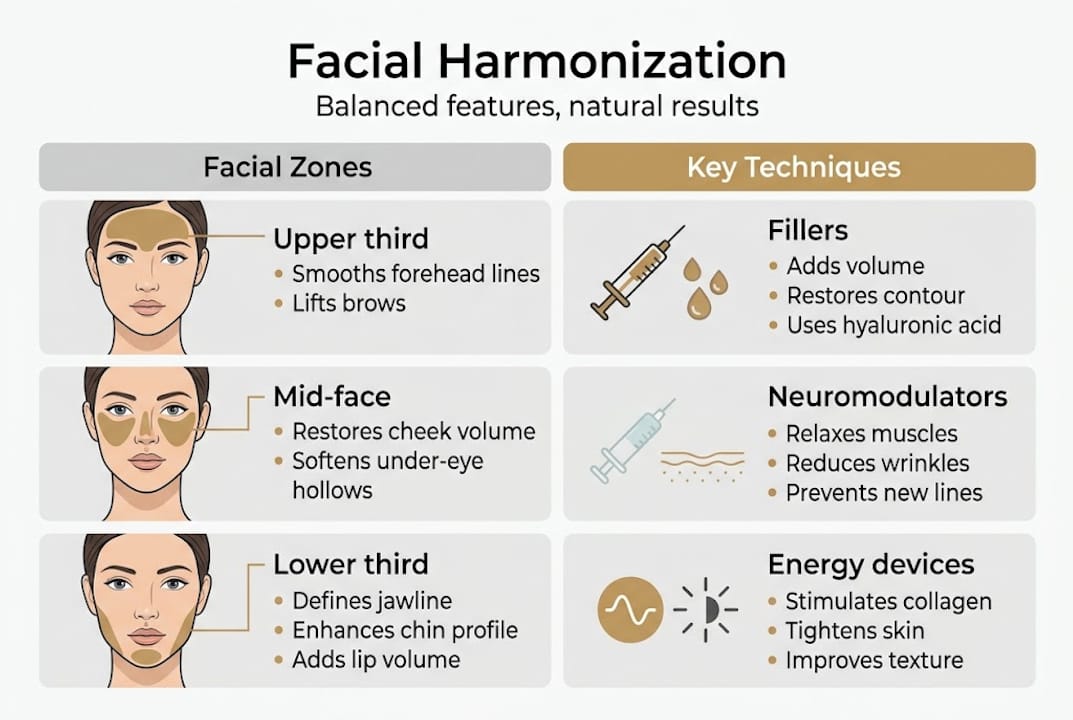
Understanding facial anatomy in aesthetics is foundational to this work. A provider who treats each feature in isolation, without considering how it relates to the whole, is not practicing harmonization. They’re practicing piecemeal correction, which is a very different thing.
The methods used vary by individual. Most plans incorporate injectables such as dermal fillers and neuromodulators, and some include energy-based devices for skin texture and tightening. But the tools matter less than the philosophy guiding them.
“Methodologies prioritize holistic assessment: conservative dosing, a layered approach, and combination treatments that respect the face as a whole.”
Key principles that define genuine facial harmonization:
- Proportion over symmetry. Perfect symmetry is rare in nature and not the goal. Balance is.
- Staged, gradual treatment. Results are built over time, not in a single session.
- Personalized planning. No two faces are treated the same way.
- Restraint as a standard. Less product, placed precisely, consistently outperforms more.
- Skin health as part of the plan. Surface quality affects how structural changes read.
This is aesthetic care that starts with looking, listening, and planning, before a single syringe is prepared.
Techniques and treatments used in facial harmonization
With a grasp of what harmonization means, let’s look at the specific treatments making it possible.
The most common tools in a harmonization plan include dermal fillers, neuromodulators (like Botox or Xeomin), and occasionally energy-based devices. Each serves a distinct purpose, and their power comes from how they’re combined and sequenced.
Dermal fillers restore or redistribute volume. They can define a jawline, project a chin, soften a hollow, or add structure to flat cheeks. Explore dermal fillers options to understand the range of products available and how they differ in texture, lift capacity, and longevity.
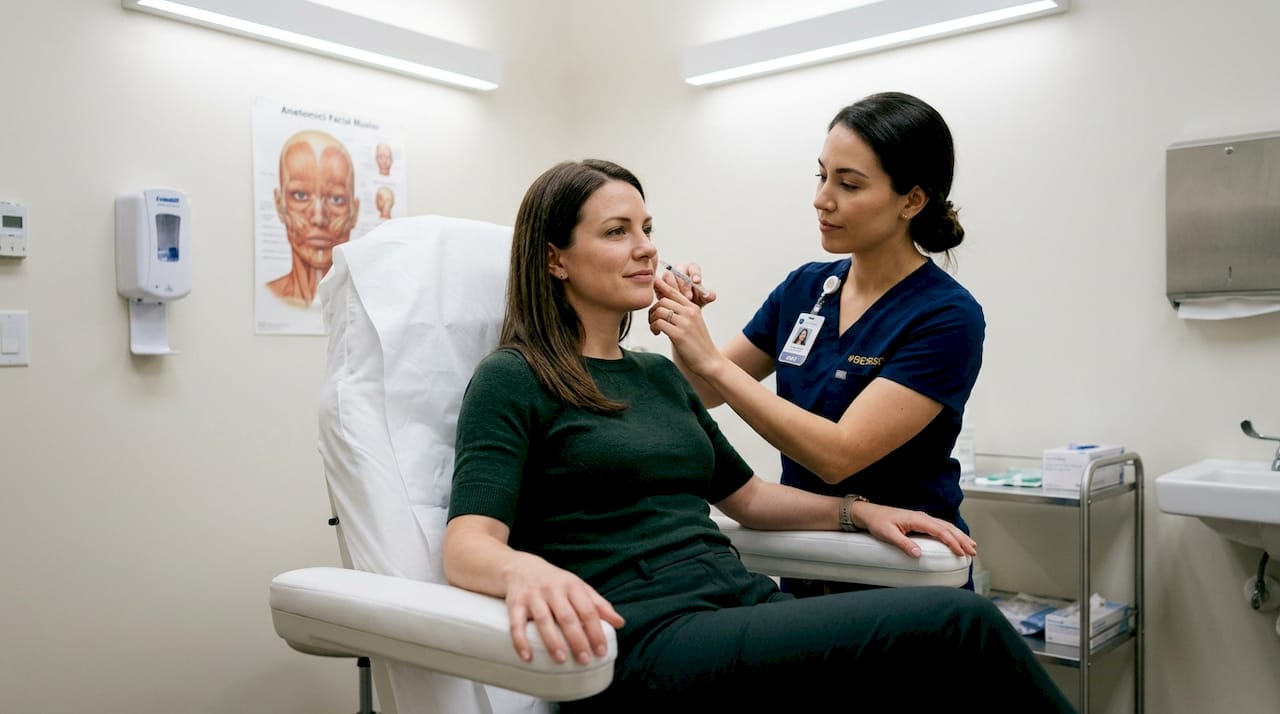
Neuromodulators relax overactive muscles. Combination with Botox for muscle relaxation or energy devices for skin tightening is common in well-rounded harmonization plans. The Xeomin and filler approach is one example of how these two categories work together.
Energy-based devices such as radiofrequency treatments address skin laxity and texture without adding volume. They’re often used alongside injectables to improve the overall canvas.
| Treatment | Primary role | Typical longevity |
|---|---|---|
| Hyaluronic acid filler | Volume, contour | 12 to 18 months |
| Calcium hydroxylapatite filler | Structure, lift | 12 to 24 months |
| Botox or Xeomin | Muscle relaxation | 3 to 4 months |
| Radiofrequency | Skin tightening | 6 to 12 months |
A well-structured harmonization process typically follows these steps:
- Full-face assessment with photos and discussion of your goals
- Identification of the zones that most affect overall balance
- A staged treatment plan with realistic timelines
- Conservative first session to establish a baseline
- Follow-up evaluation before any additional product is added
Pro Tip: Ask your provider to show you a treatment map before anything is injected. A provider who can explain exactly what they’re placing and why is one worth trusting.
The injectables category is broad. Understanding the Botox process and how it fits into a larger harmonization plan helps you ask better questions and feel more confident in the chair.
Who is a good candidate, and when is facial harmonization not right?
Knowing the techniques, it’s important to see who truly benefits, and who may need something different.
Facial harmonization works best for adults with mild to moderate disproportions, early signs of volume loss, or specific features they’d like to bring into better balance. Common goals include a more defined jawline, softer under-eye hollows, a more projected chin, or a smoother transition between the mid-face and lower face.
Ideal candidates tend to share a few characteristics:
- Realistic expectations. They want to look like themselves, improved, not transformed.
- Good overall skin health. Significant laxity or sun damage may need to be addressed first.
- Mild to moderate concerns. Non-surgical methods have limits, and honest providers name them.
- Patience for staged results. The best outcomes are built gradually, not rushed.
There are situations where non-surgical harmonization is not the right fit. Severe volume loss, significant structural asymmetry, or major skin laxity may require surgical consultation. Asymmetry correction risks include edge cases such as ethnic-specific proportion considerations, vascular occlusion in high-risk areas, and situations where surgical referral is the more appropriate path.
High-risk anatomical zones, including the tear troughs, nose, and temples, require particular expertise. These areas have complex vascular anatomy, and filler placed incorrectly can cause serious complications. This is not a reason to avoid treatment. It’s a reason to choose your provider carefully.
| Concern level | Non-surgical fit | Notes |
|---|---|---|
| Mild asymmetry | Strong fit | Fillers and neuromodulators effective |
| Moderate volume loss | Good fit | Staged filler approach recommended |
| Severe laxity | Limited fit | May need surgical evaluation |
| Major structural change | Poor fit | Surgery often more appropriate |
For those exploring broader facial rejuvenation tips, understanding candidacy early saves time and sets the right expectations from the start.
Expected results, satisfaction, and criticisms
After considering if facial harmonization is right for you, what can you realistically expect?
Results are gradual. Most clients notice the most meaningful change after two or three sessions, not one. The goal is a look that reads as rested and natural, not treated. Friends may comment that you look well or refreshed without being able to identify why.
Satisfaction data is encouraging. Clinical outcomes from non-surgical asymmetry correction show high satisfaction with minimal downtime. Studies using combined HIFES and radiofrequency protocols reported marked improvements in facial contour and skin quality, with satisfaction rates reaching 94.6% in recent research.
That said, it’s worth knowing the criticisms too. Some cultural critics and aesthetic researchers argue that facial harmonization, when applied without individualization, can push clients toward a homogenized look rather than celebrating their unique features. Trend analysis points out that the golden ratio is not a universal standard of beauty and that over-reliance on algorithmic ideals risks erasing individuality rather than enhancing it.
This is a fair and important critique. It’s also exactly why provider selection matters so much.
“The best harmonization results are the ones that make people ask what you’ve been doing differently, not what you’ve had done.”
Pro Tip: Review facial enhancement examples before your consultation. Seeing real, conservative results helps calibrate your own expectations and gives you a shared visual language with your provider.
What harmonization cannot do: replace surgery in advanced cases, permanently correct significant asymmetry, or reverse decades of structural change in a single session. Honest providers say this clearly, and that honesty is a sign of quality care.
Our perspective: True facial harmony means prioritizing the individual, not the algorithm
Here’s what years of medically led aesthetic practice have reinforced for us: beauty is not a formula. The golden ratio is a reference point, not a prescription. When providers chase an idealized template instead of listening to the person in front of them, the results look borrowed. They don’t belong to the face wearing them.
The medical spa benefits of working with a medically supervised team go beyond safety. They include the discipline to say less is enough, the experience to know when to stop, and the confidence to push back on trends that don’t serve a specific client’s anatomy.
Our advice: choose a provider who asks more questions than they answer in the first appointment. Who shows you a plan before touching a syringe. Who combines structural treatment with skin health, because both matter. Patience and conservative pacing are not limitations. They’re the method. The most confident results we see are the ones built slowly, with intention, and without pressure.
Discover natural facial harmonization options in Raleigh
If natural, confidence-boosting results sound appealing, Raleigh residents have trusted options right nearby.
At The Aesthetics Lounge and Spa Raleigh, every harmonization plan begins with a thorough consultation, not a treatment menu. We explore facial balancing options in Raleigh that are tailored to your anatomy, your goals, and your timeline. Whether you’re curious about one specific concern or ready to explore a broader strategy, our team is here to guide you without pressure. Browse our full range of aesthetic treatments in Raleigh or read our guide on how to choose aesthetic treatments to feel prepared before your first visit.
Frequently asked questions
How long do facial harmonization results last?
Fillers and neuromodulators offer results lasting from several months to two years, depending on the product and placement, with maintenance sessions recommended to sustain balance over time.
Is facial harmonization painful?
Most clients experience only minor discomfort, as minimally invasive techniques including topical anesthetics and fine needles or cannulas are standard practice in non-surgical harmonization.
Are there risks or side effects to facial harmonization?
Risks are rare with expert care, but swelling, bruising, and vascular occlusion in high-risk areas are possible, which is why provider selection and anatomical expertise are essential.
How do I find a reputable provider for facial harmonization in Raleigh, NC?
Look for board-certified providers with a portfolio of natural results at a medically supervised clinic, such as The Aesthetics Lounge in North Raleigh, where care is guided by medical expertise and conservative principles.